
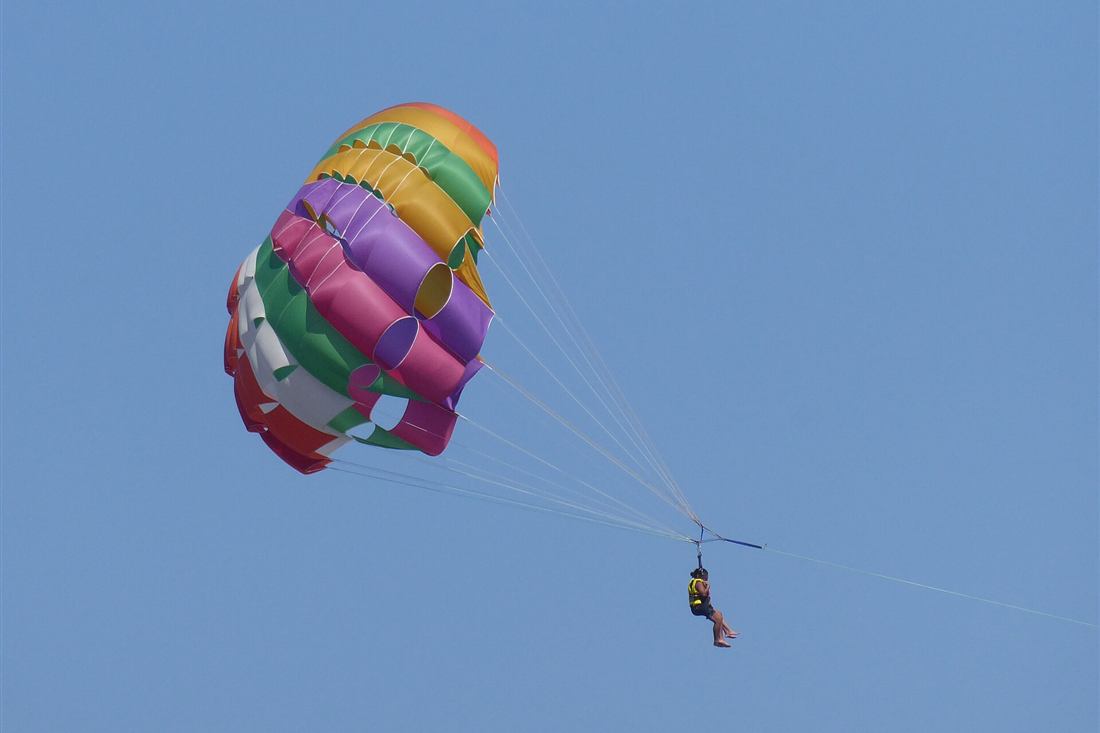
Crete Parasailing
Crete parasailing is a towed flight in a harness under a parasail canopy behind a speedboat, and the bookable flights leave from Rethymno on the north coast. The crew launches and lands every flyer on the back deck, so no experience is needed. Greece Tours lists two Rethymno flights, one over the Aegean and one with a boat ride.
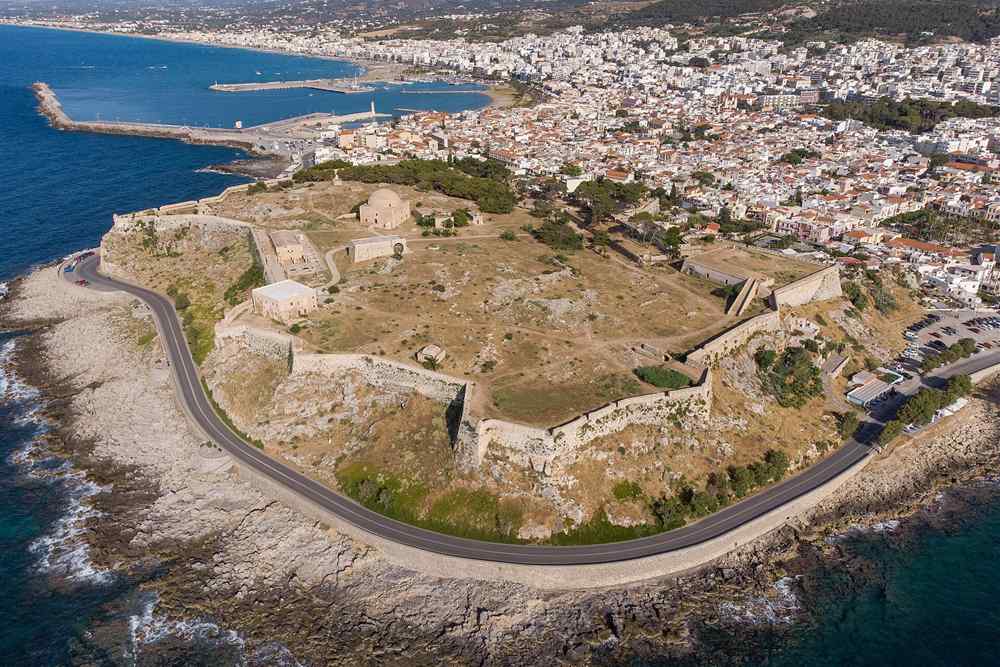
A Crete parasailing flight shows the Venetian Fortezza, the old harbour and the long sandy beach east of Rethymno from the air. Flights run from about May to October, and the summer meltemi wind cancels some July and August slots. Age, weight and health rules apply to every flyer, and each listing states them.
What is Crete parasailing?
Crete parasailing is a towed flight in which a passenger sits in a harness under a parasail canopy while a speedboat pulls it up into the air on a long tow line off the Cretan coast.
The flight starts and ends on the back deck of the boat. A hydraulic winch lets the tow line out, the canopy fills with wind and the passenger rises behind the boat. At the end of the ride the winch pulls the line back in and the passenger lands on the same deck. Crete parasailing on a winch boat keeps flyers dry unless the crew offers a dip in the sea before landing.
No experience is needed. The crew handles the boat, the winch and the harness, and the passenger only sits back and follows the hand signals agreed in the briefing. The activity belongs to the beach water-sports season on the north coast of Crete, where calm summer mornings and long sandy beaches give the boats open water to work in. The flight suits travellers who want height and sea views without any training.
Which Crete parasailing flights can travellers book at Rethymno?
Two Crete parasailing flights are on sale from Rethymno: the Parasailing Flight Experience over the Aegean and the Parasailing Experience with Boat Ride. Both put the flyer in the air above the sea off the town.
The Rethymno: Parasailing Flight Experience over the Aegean centres on the flight itself. The title names the Aegean, the sea that fills the view north of Rethymno, and the product is built around time in the air under the canopy. Flight height, time aloft and the single, tandem or triple options vary, so check the listing before booking this Crete parasailing flight. Travellers who want the flight as the main event pick this option.
The Rethymno: Parasailing Experience with Boat Ride pairs the flight with a boat ride, as the title states. The flyer spends time on the speedboat as well as under the canopy, which makes this Crete parasailing option a longer outing. Whether friends who do not fly can ride along is set by the operator, so check the listing. For a full day at sea, the Rethymno boat trips run along the same coast.
How does a first flight work step by step?
A first Crete parasailing flight follows five steps: a safety briefing, fitting the harness and life jacket, lift-off from the back deck, the flight itself, and the winch-in back to the deck. The crew runs every step.
On board, the crew explains the hand signals, how to sit in the harness and where to keep the hands. Flyers then step into the harness and a life jacket, and the crew clips the harness to the canopy lines. The first-timer walkthrough on Crete parasailing boats is short and practical, because the crew does the technical work and the passenger only needs to sit, hold the straps and relax.
At lift-off the flyer sits on the deck at the stern while the boat gains speed. The canopy fills, the winch lets the line out and the flyer rises smoothly off the deck and climbs behind the boat. At the end, the winch reels the line in, the boat slows and the flyer drops gently back onto the deck. The crew steadies the flyer, guides the feet down and unclips the harness.
- Briefing – the crew explains signals.
- Fitting – the crew fits the harness.
- Lift-off – the winch lets the line out.
- Flight – the canopy holds the flyer aloft.
- Winch-in – the winch reels the flyer back.
Which equipment and safety habits does a flight rely on?
Every Crete parasailing flight relies on five pieces of kit: the canopy, the harness, the life jacket, the tow rope and the hydraulic winch. Flyers add their part by following crew instructions and keeping both hands on the straps.
The crew sets up and checks the kit before each flight. The canopy is laid out and attached to the tow line, the winch is tested, and every flyer gets a harness and life jacket sized to fit. Passengers do not touch the rigging at any point. Throughout the outing, the crew watches the wind and the sea state and brings flyers down early if the waves or gusts pick up.
The flyer’s side of safety is simple. Follow every instruction from the crew, keep both hands on the harness straps for the whole flight, and watch for the crew’s signals at landing. Loose items such as hats and phones stay on the boat or in a secure pouch. Crete parasailing crews ask flyers to stay seated in the harness and never to unclip or adjust anything while in the air.
- Canopy – lifts the flyer on the wind.
- Harness – holds the flyer under the canopy.
- Life jacket – keeps the flyer afloat.
- Tow rope – links the canopy to the boat.
- Winch – lets the line out and in.
Why do operators offer single, tandem and triple flights?
Crete parasailing operators offer single, tandem and triple flights so one, two or three people fly together under the same canopy. The format changes who shares the view, not how the flight works, and each listing states its formats.
A single flight puts one person in the air, which suits flyers who want the view to themselves. A tandem flight carries two people side by side on one harness bar, which suits couples, friends and a parent flying with a child. A triple flight lifts three people at once. The combined weight of the group affects how the canopy flies, so the crew decides the final setup on the day.
Flight heights, time in the air and the formats on offer vary between operators and between the two Rethymno listings, so check the listing before choosing. A tandem or triple flight helps a nervous first-timer, because a friend sits alongside for the whole flight. Group flights also put every flyer in the same photo frame. Solo flyers on a Crete parasailing boat get an uninterrupted view of the coast instead.
- Single – one flyer under the canopy.
- Tandem – two flyers side by side.
- Triple – three flyers on one flight.
What does Crete parasailing over Rethymno look and feel like?
Crete parasailing over Rethymno feels calm and quiet once the canopy is up, with the engine noise fading below. The view takes in the long sandy beach east of the town, the Venetian Fortezza and the old harbour.
Lift-off brings a gentle pull on the harness as the canopy fills, then a steady climb. A first-timer who expects a rush finds a slow, floating ride instead, with the harness holding the body upright like a swing seat. Wind moves across the face and the sea sounds drop away. On Crete parasailing flights the only strong sensations come at lift-off, at the dip if offered, and at the winch-in.
From the air, Rethymno reads like a map. The Rethymno Fortezza sits on its headland above the old town, the old harbour with its lighthouse lies just east of it, and the long sandy beach runs east along the coast. Behind the town, the land rises toward the mountains of the interior. A Crete parasailing flight over this stretch of the north coast frames the town between the fortress and the open sea.
When is the wind right for Crete parasailing?
The wind is right for Crete parasailing when it blows calm to moderate and the sea is flat enough for the boat. The strong north meltemi wind of July and August, along with high waves, cancels flights on some days.
The season runs from about May to October, when beach water sports operate along the north coast. May, June, September and October bring calmer wind on most days, while July and August bring the hottest weather and the meltemi. The morning sea is calmer on most days, because the wind tends to build through the afternoon. For Crete parasailing in high summer, an early slot gives the best chance of a smooth flight.
Wind planning is simple. Check the forecast the day before and again in the morning, and book early in the trip so a cancelled flight can move to another day. Operators cancel when the wind or waves are too strong and then reschedule or refund, so check the cancellation terms on the listing. Travellers who keep one or two spare days free give the flight the best chance to fit around the weather.
Who can fly under the age, weight and health rules?
Most Crete parasailing operators set minimum age and weight rules, and children fly tandem with an adult. Flights are not advised for pregnant travellers or people with heart, neck or back conditions. The exact limits sit on each listing.
Age and weight rules exist because the canopy needs enough load to fly steadily and because the harness fits within a set size range. Light flyers, including children, are paired in a tandem flight with an adult, and heavier groups are balanced by the crew on the day. Check the listing for the exact minimum age and weight before booking a Crete parasailing flight, and share accurate weights with the crew.
Health matters more than fitness. The flight needs no strength or stamina, but the lift-off and winch-in put light loads on the neck and back, and the harness presses around the hips. Pregnant travellers and people with heart, neck or back conditions sit this one out. Non-swimmers wear the same life jacket as every other flyer, and Crete parasailing from a winch boat keeps them dry unless a dip is offered.
- Age – children fly tandem beside an adult.
- Weight – each flyer fits the listed range.
- Health – no pregnancy, heart, neck or back condition.
- Swimming – no skill needed with a life jacket.
What do flyers wear and bring on the boat?
Flyers wear swimwear and bring sunscreen, sunglasses with a strap and a waterproof phone pouch, or leave valuables ashore. Crete parasailing happens in open sun on the water, so light kit that can get wet is the right choice.
Swimwear under light clothing works best, because the harness fits over it and spray reaches the deck during the outing. Sunscreen goes on before boarding, since the sea reflects the sun and there is no shade in the air. Sunglasses need a strap, as the wind at height pulls loose items away. Hats come off for the flight. Speedboats have limited dry space on deck, so keep any bag small and light.
Valuables are safest left at the hotel. Phones go in a sealed waterproof pouch with a lanyard, or stay in a dry bag on the boat. Flip-flops or water shoes are easy to slip off before lift-off. A towel and a bottle of water help on warm days, since a speedboat offers little shade from the sun. Following crew instructions matters more than any item on a Crete parasailing packing list.
- Swimwear – worn under light clothes.
- Sunscreen – applied before boarding.
- Sunglasses – held on with a strap.
- Phone pouch – sealed and on a lanyard.
Can flyers get photos and video of the flight?
Some Crete parasailing operators sell photos and video of each flight, and others allow flyers to carry their own waterproof camera. The rules differ between operators, so check the listing before assuming a camera is allowed in the air.
Crew photos are taken from the boat and show the flyer under the canopy with the coast behind, which a phone in the air cannot capture. Delivery of the images varies, so ask the crew on board. For flyers who carry their own camera, a wrist strap or chest mount keeps it secure, and both hands still return to the harness straps for lift-off and landing on a Crete parasailing flight.
The best photo moments come at three points. Lift-off shows the canopy opening above the stern. The top of the flight gives the widest view of Rethymno, the Fortezza and the beach. The winch-in brings the flyer low over the water and the wake. Friends on the boat, when the listing allows them aboard, get the clearest shots of a Crete parasailing flight from the stern, facing the canopy.
Where else on Crete’s north coast is parasailing available?
Beyond Rethymno, Crete parasailing runs from beach water-sports stations at resort beaches along the north coast, including Hersonissos, Malia and Platanias. These stations sit on busy summer beaches and run flights alongside other water sports.
Hersonissos and Malia sit east of Heraklion and form a large resort strip, with long beaches lined with hotels and water-sports stations. Platanias lies west of Chania, on the long sandy bay that runs along that part of the coast. Crete parasailing at these beaches faces the same north-coast wind, so the meltemi planning above applies there too. Formats and flight details differ from beach to beach, so compare them before booking.
Beyond formats, Crete parasailing spots differ in how the flight is booked. The two Rethymno flights can be reserved in advance with set cancellation terms, while beach stations at the resorts take walk-up bookings on the day, subject to wind and queue length. Travellers staying in Rethymno fly there, and travellers based in the east or west choose the nearest resort beach. For parasailing on another island, Rhodes parasailing follows the same format.
How does Crete parasailing compare with paragliding and jet skis?
Crete parasailing is a towed flight from a boat with a crew in control, while paragliding is a free flight from a hill with a pilot. Jet ski and stand-up paddle stay on the water surface.
Crete paragliding starts on a hillside, with the passenger strapped to a pilot who steers the wing and lands on the ground. It shows the land and the coast from above rather than the open sea alone. Crete parasailing stays tied to the boat on its tow line, needs no run-off and lands on the deck, which makes it the simpler choice for a first taste of height over the sea.
A Crete jet ski ride puts the traveller in control of speed and direction on the surface, and stand-up paddle offers a slow, quiet session close to the shore. Both are hands-on, while a flight is passive. Travellers building a water-sports day around a flight pair it with a jet ski ride for speed or a paddle session for calm, since the north-coast resort beaches host all three.
How does booking work, and what are the cancellation terms?
Travellers book the two Rethymno flights online by picking a date and a time slot. Each listing sets out the cancellation terms, the weather policy and the meeting point, so read all three before confirming a Crete parasailing flight.
Booking early in the trip secures a slot in July and August, when beach water sports are busiest, and leaves room to move the flight if the meltemi blows. Online booking also shows the formats on offer, so couples and families can reserve a tandem or triple flight together. Enter each flyer’s details accurately, since age and weight rules apply to every flight and the crew plans the setup around them.
Weather is the main reason flights move. When the wind or waves are too strong, operators reschedule the flight or refund it, and the listing states which option applies and how much notice travellers need to give for their own changes. Keep the booking confirmation on the phone, arrive at the meeting point on time, and follow the crew’s instructions from the moment the Crete parasailing boat leaves the shore.
Is Crete parasailing worth it?
Crete parasailing is worth it for travellers who want a calm, high view of the coast with no training. The crew handles everything, first-timers and families fly with ease, and the Rethymno flights frame the Fortezza and the harbour.
The flight gives a view that no beach walk or boat deck matches, with the whole Rethymno waterfront and the Fortezza laid out below. It takes up part of a day, leaves the rest free and needs only swimwear, sunscreen and a strap for the sunglasses. For travellers who want height without the hill launch of paragliding, Crete parasailing is the easiest way to see the north coast from the air.
The limits are clear. Wind and waves decide whether a flight goes ahead, so flexible dates matter in July and August. Pregnant travellers and people with heart, neck or back conditions skip it, and age and weight rules apply. For everyone else, a Crete parasailing flight from Rethymno pairs well with a day at the beach, a boat trip or a walk through the old town, and it needs no skill at all.
Frequently Asked Questions
Do you get wet on a Crete parasailing flight?
No, a flight from a winch boat starts and ends on the back deck, so flyers stay dry. Some crews offer a dip in the sea before landing, and flyers who want to stay dry say so during the briefing.
Is Crete parasailing safe for first-timers?
Yes, Crete parasailing suits first-timers because the crew handles the canopy, the winch and the harness, and every flyer wears a life jacket. Flyers follow crew instructions, keep their hands on the harness straps and fly only in calm to moderate wind.
Can children go parasailing in Rethymno?
Yes, children fly on most parasailing boats in a tandem flight with an adult, provided they meet the operator’s minimum age and weight rules. The exact limits sit on each listing, so check them before booking.
What happens if the wind is too strong?
When the wind or waves are too strong, the crew cancels the flight and the operator reschedules or refunds it. The north meltemi of July and August is the main wind that stops Crete parasailing, so check the cancellation terms on the listing.
When is the best time of day for Crete parasailing?
Morning is the best time of day for Crete parasailing, because the sea is calmer on most mornings and the wind tends to build in the afternoon. An early slot also leaves room to rebook if the wind rises.