
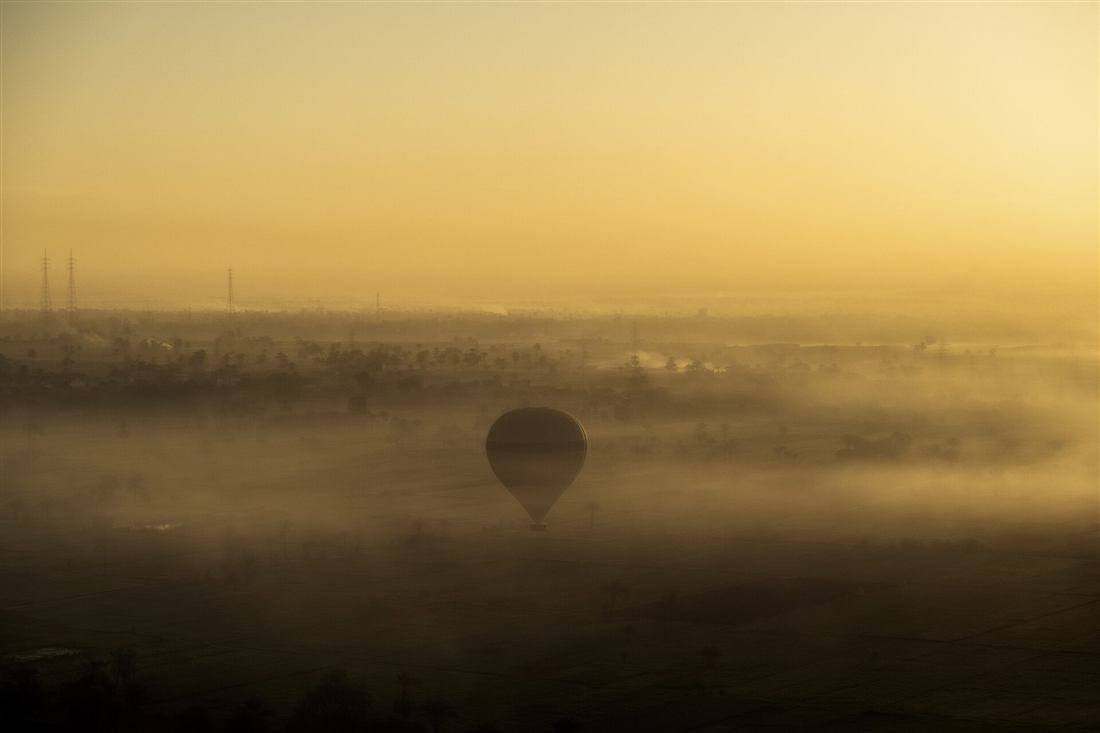
A Crete hot air balloon flight lifts off at first light over the Lasithi Plateau, the high stone-walled plain ringed by the Dikti mountains, and stays in the air for about an hour before the chase crew brings the basket down among the fields. Plan the rest of the island with Greece Tours.
This guide covers the whole experience: the pickup hours from Heraklion, Hersonissos and Malia, the plateau and what the landscape reads like from the basket, the shared and private options, the breakfast and the brunch, the catamaran combination, the capacity and the restrictions, the price ranges, the season, and the weather rules that move a flight.
What is a hot air balloon flight in Crete and where does it launch from?
A Crete hot air balloon flight is a sunrise ascent over the Lasithi Plateau in the east of the island. The balloon lifts from a farm field at first light, drifts across the windmill plain for one hour, then lands on open ground a few kilometres downwind.
The inflation of a Crete hot air balloon takes about half an hour on the ground. A Crete hot air balloon flight lifts off at first light over the Lasithi Plateau. Crete runs its ballooning from the plateau rather than the coast, and the reason is meteorological. Sea breezes along the north shore build within an hour of sunrise and make a coastal launch unworkable for a craft that travels with the wind. The limestone bowl of Lasithi holds cold, still air until the sun clears the eastern ridge, handing the crew a clean window for inflation and lift-off.
The stone villages and the field walls read clearly from a Crete hot air balloon. Photographers favour a Crete hot air balloon because the basket holds steady in the air. This is free flight, not a tethered ride on a rope. The pilot steers by altitude alone, climbing and descending through layers of air that run in different directions above the plateau, so the ground track changes every morning and the landing field is chosen from the basket rather than booked in advance.
A shared Crete hot air balloon basket carries the group in compartments beside the pilot. Breakfast on the ground closes a Crete hot air balloon morning with bread, cheese and wine. The morning slots into an island itinerary without eating a whole day, and it pairs neatly with the rest of the things to do across Crete. Three products carry the experience on GetYourGuide: a shared sunrise flight with Greek breakfast, a private basket with brunch, and a full-day balloon-and-catamaran combination.
What does the Lasithi Plateau look like from the basket?
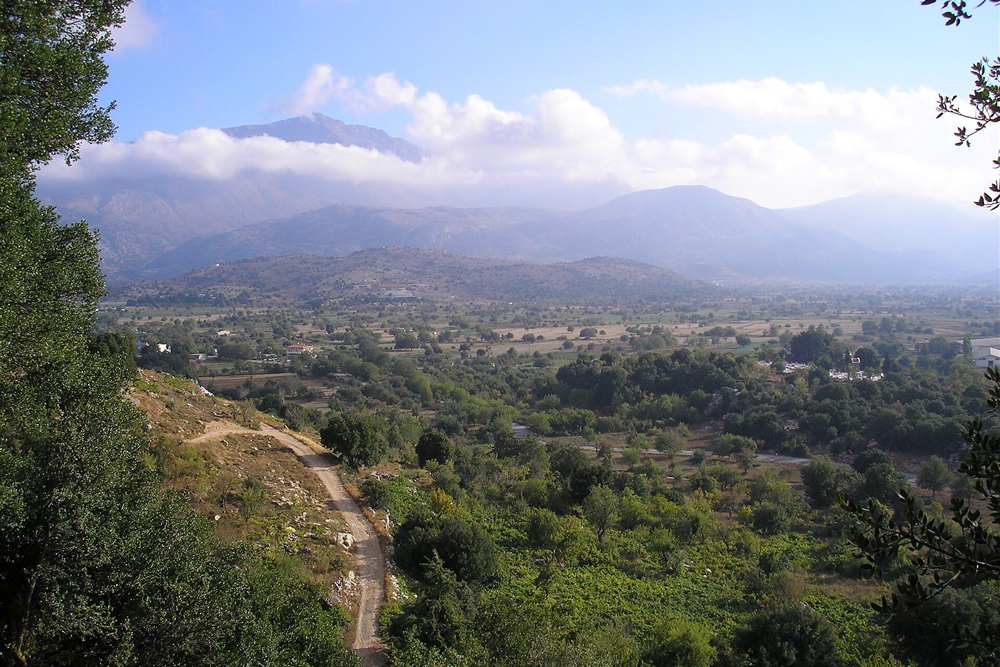
The plateau reads as a flat green oval ringed by bare grey limestone. From the basket that oval resolves into a mosaic of small field plots, whitewashed villages on the rim, the iron frames of surviving stone windmills, and the Dikti wall standing to the south.
A landing certificate and a toast close every Crete hot air balloon flight. The basket on a Crete hot air balloon rises while the plain is still in shadow. The plain sits at about 840 metres above sea level and measures roughly twenty-five square kilometres of flat alluvial soil, the largest cultivated upland in Crete. From 300 metres up the field boundaries turn into a quilt of rectangles, each one worked by a different family, cut by drainage channels that the Venetians engineered to drain the winter meltwater.
Couples book a Crete hot air balloon for proposals and for honeymoon mornings. The full-day option pairs a Crete hot air balloon at dawn with a catamaran at dusk. Twenty villages ring the plain rather than sitting on it, because farmland here is too valuable to build on. Tzermiado, Agios Georgios, Psychro and Magoulas show as tight white clusters against the slope, each one with a bell tower catching the first sun. The Kera Kardiotissa monastery, its cypress trees and stone terraces, stands on the approach road below the Seli Ambelou pass, and the surviving line of stone windmills along that pass makes the sharpest landmark of the whole flight.
The private option turns a Crete hot air balloon into a basket for two. The chase vehicle follows a Crete hot air balloon across the fields to the landing point. The Dikti range closes the southern horizon above two thousand metres, still holding snow in early spring, with the mouth of the Psychro cave dark against the slope. Walkers who tackle those same ridges on foot follow the mountain trails of Crete that thread the plateau rim, and the aerial view maps in one hour what a trekker covers in three days. Fuller ground detail on the plain sits in the Lasithi Plateau guide.
Why do the flights lift off at sunrise and what time is the hotel pickup?
Balloons fly at sunrise because the air above the plateau is coldest, densest and stillest in the half hour before the sun clears the Dikti ridge. Hotel collection runs between 04:00 and 05:30 by resort, around two hours before the burner fires.
A Crete hot air balloon flight lifts off at first light over the Lasithi Plateau. Hotel pickup for a Crete hot air balloon runs in the dark, well before sunrise. Heat drives everything in ballooning. Cold morning air gives the envelope maximum lift for minimum propane, and it holds the surface wind under the ten-knot ceiling the crew works to. Within ninety minutes of sunrise the plateau floor warms, thermals punch upward, and the air turns rough enough to unsettle an approach. That physics leaves exactly one flyable slot per day, which is why no operator sells an afternoon flight.
Photographers favour a Crete hot air balloon because the basket holds steady in the air. The pilot of a Crete hot air balloon holds a commercial licence and briefs the basket first. The transfer explains the early alarm call. The plateau lies roughly 55 kilometres from the city of Heraklion, 40 from Hersonissos, 35 from Malia and 45 from Agios Nikolaos, and the final stretch climbs a series of hairpins to the Seli Ambelou pass at 900 metres. A minibus needs seventy to ninety minutes from the coastal resorts, and the driver builds in a margin because the balloon does not wait.
Breakfast on the ground closes a Crete hot air balloon morning with bread, cheese and wine. A Crete hot air balloon stays in the air for about one hour from the lift. Pickup is door to door, confirmed by the operator the evening before with an exact time and a meeting point at the hotel entrance. Coffee waits at the launch field.
What is the balloon built from and what is the basket capacity?
The envelope holds between 5,000 and 8,000 cubic metres of heated air across ripstop nylon panels, a twin propane burner hangs beneath the crown lines, and the woven wicker basket splits into compartments. The shared basket carries up to sixteen passengers; the private basket flies two to four.
The basket on a Crete hot air balloon rises while the plain is still in shadow. The Dikti mountains ring the plain a Crete hot air balloon crosses. Two propane burners fire in alternation, each producing a column of flame that pushes internal temperature toward 100 degrees. Redundancy is deliberate: one burner sustains flight alone, and the fuel cylinders in the basket corners carry enough gas for double the advertised airtime.
The full-day option pairs a Crete hot air balloon at dawn with a catamaran at dusk. Booking a Crete hot air balloon ahead secures the morning slot through the season. The pilot controls the flame with a blast valve and trims with a whisper burner that runs quieter for conversation. Ripstop nylon panels carry the load through webbing tapes to the steel cables at the mouth, and a parachute vent at the crown dumps hot air for the descent.
The burner and the envelope of a Crete hot air balloon are checked before every flight. Wicker remains the basket material because it flexes on touchdown and absorbs impact that aluminium transmits straight to ankles. Interior partitions hold four passengers each, with padded rims, rope handles and foot holes moulded into the weave for climbing in. The pilot stands in a central compartment with the fuel, the instruments and the radio to the chase vehicle.
What happens on the ground before and after the flight?
Passengers watch the crew unroll the envelope, drive cold air in with a petrol fan, then heat it until the balloon stands upright. A safety briefing covers the landing position. After touchdown the chase vehicle arrives, the toast is poured and a flight certificate is signed.
Hotel pickup for a Crete hot air balloon runs in the dark, well before sunrise. A shared Crete hot air balloon basket carries the group in compartments beside the pilot. Ground handling starts before the passengers arrive. The pilot launches a helium pilot balloon to read wind direction at height, picks a field that matches that track, and the crew unloads the trailer. The envelope is stretched flat downwind of the basket, the crown line is walked out, and a fan pushes cold air into the mouth until the fabric fills into a long tunnel.
The pilot of a Crete hot air balloon holds a commercial licence and briefs the basket first. A Crete hot air balloon operates from the spring through to the middle of autumn. The briefing is short and specific. Passengers learn the landing stance: face the direction of travel, grip the rope handles inside the basket, bend the knees, hold on until the pilot confirms the balloon is down and standing. Loose objects go into zipped pockets, hats come off, and boarding happens quickly once the balloon is upright and buoyant.
Wind at ground level and aloft decides whether a Crete hot air balloon flies that morning. A chase vehicle follows the flight by radio and reaches the landing field within minutes of touchdown. The crew packs the envelope, with passengers helping to squeeze the air out. Then comes the champagne or local wine toast, a habit inherited from the first French aeronauts, and a certificate carrying the date, the pilot’s signature and the landing location.
What does the sunrise flight with Greek breakfast and wine include?
The Sunrise Balloon Flight with Breakfast covers hotel pickup and return, the shared-basket flight over the Lasithi Plateau, a full Greek breakfast served after landing, a glass of local wine for the traditional toast, and a signed flight certificate.
The Dikti mountains ring the plain a Crete hot air balloon crosses. The private option turns a Crete hot air balloon into a basket for two. This is the core Crete hot air balloon product and the one most visitors book. The basket is shared with other passengers, which keeps the per-head price at its lowest, and the compartment layout gives every passenger an outside edge and an unobstructed view over the rim. Pilot commentary names the villages, the monastery, the caves and the peaks as they pass beneath, in English.
Booking a Crete hot air balloon ahead secures the morning slot through the season. Warm layers suit a Crete hot air balloon, because the plain is cold before the sun. Breakfast is laid out at the landing site or at a village taverna nearby, and it is Greek in the proper sense rather than a continental tray. The spread runs to thick sheep-milk yoghurt with thyme honey, staka with eggs, cheese pies baked that morning, rusks with tomato and mizithra, olives, seasonal fruit from the plateau orchards, Greek coffee and orange juice. The wine is a local white poured for the toast rather than a full tasting.
A cancelled Crete hot air balloon flight moves to the next clear morning at no charge. Elapsed time from pickup to drop-off runs five to six hours, which returns passengers to the coast before the beach heat builds. Transfers cover hotels in Heraklion, Malia, Stalis, Sissi and Agios Nikolaos, with the collection time confirmed the previous evening.
What is included in the private hot air balloon flight with brunch?
The private flight books the entire basket for one party. It carries a dedicated pilot, a route flown to the group’s preference within wind limits, a seated brunch after landing with sparkling wine, private transfer both directions, and space in the basket for cameras and staging.
A shared Crete hot air balloon basket carries the group in compartments beside the pilot. Breakfast on the ground closes a Crete hot air balloon morning with bread, cheese and wine. Exclusivity changes the character of the morning rather than the flight path. A smaller basket lifts faster and gives the pilot a wider altitude range, so descents between the villages run closer to the ground than a sixteen-seat basket allows. Conversation is with the pilot throughout, and requests for a low pass over a particular village or a longer hold over the windmill line get answered where the wind cooperates.
A Crete hot air balloon operates from the spring through to the middle of autumn. The inflation of a Crete hot air balloon takes about half an hour on the ground. The brunch upgrades the shared breakfast into a laid table: linen, cutlery, a hot course, Cretan cheeses and charcuterie, fruit, pastries, coffee and a bottle of sparkling wine rather than a poured glass. Operators set the table at a private spot on the plateau or at a family taverna reserved for the party.
The stone villages and the field walls read clearly from a Crete hot air balloon. Proposals drive a large share of private bookings, and the crew handles the choreography: a ring kept safe until the moment, the chase team filming from the ground, or a banner rigged on the envelope.
What does the sunrise balloon and sunset catamaran day cover?
The combination day opens with the dawn balloon flight over Lasithi and closes with a luxury catamaran cruise on the north coast. Between them sits a rest window at the hotel. The sail includes swim stops, on-board food and drinks, and sunset from the deck.
The private option turns a Crete hot air balloon into a basket for two. The chase vehicle follows a Crete hot air balloon across the fields to the landing point. The structure works because the two halves sit at opposite ends of the day and use opposite conditions. The balloon needs the dead-calm dawn air; the catamaran wants the afternoon breeze that makes the same air unflyable. Passengers land, eat, return to the coast by mid-morning and rest through the hot middle of the day before the boat boards in the afternoon.
Warm layers suit a Crete hot air balloon, because the plain is cold before the sun. A landing certificate and a toast close every Crete hot air balloon flight. The catamaran departs from a marina on the north coast, with the resort strip around Hersonissos supplying most of the transfers. The vessel sails with trampolines forward, shaded seating aft, a swim ladder and a sound system, and the crew anchors in a bay for swimming and snorkelling before turning west into the light. A meal is served on board with wine, beer and soft drinks included, and the boat holds position offshore for the sunset itself.
Couples book a Crete hot air balloon for proposals and for honeymoon mornings. Total commitment runs from a 04:30 pickup to a return after dark: one calendar day for two contrasting perspectives, the mountain interior at first light and the Cretan Sea at eye level as the sun drops.
How long is the flight in the air against the total experience time?
Airtime runs 45 to 60 minutes from lift-off to touchdown. The complete experience takes five to six hours door to door for the shared flight, four to five for a private one with a shorter transfer, and a full day for the catamaran combination.
Breakfast on the ground closes a Crete hot air balloon morning with bread, cheese and wine. A Crete hot air balloon stays in the air for about one hour from the lift. The hour in the air is a target rather than a stopwatch figure, because the pilot lands where the terrain and the wind allow. A morning with a steady light breeze carries the balloon across the plateau and into a landing field on the far rim within fifty minutes.
The inflation of a Crete hot air balloon takes about half an hour on the ground. A Crete hot air balloon flight lifts off at first light over the Lasithi Plateau. A near-still morning stretches the flight while the balloon hangs over the same villages, and a brisk one shortens it. Fuel reserves cover double the planned duration in every case.
Photographers favour a Crete hot air balloon because the basket holds steady in the air. Ground time accounts for the rest. Transfer from the coast takes seventy to ninety minutes each way, inflation and briefing take thirty to forty minutes, packing the envelope after landing takes twenty, and breakfast with the toast and the certificate takes another forty-five. Add the chase drive from the landing field back to the launch site and the arithmetic reaches five hours before anyone is back at a hotel pool.


What do the shared, private and combination flights cost in euros?
Advertised prices sit in bands rather than at fixed points. The shared sunrise flight with breakfast falls in the 250 to 340 euro range per person, the private basket with brunch in the 1,200 to 2,200 euro range per party, and the balloon-and-catamaran day in the 350 to 480 euro range per person.
The chase vehicle follows a Crete hot air balloon across the fields to the landing point. The burner and the envelope of a Crete hot air balloon are checked before every flight. Crete hot air balloon pricing is dominated by fixed inputs that do not shrink with passenger numbers. A single flight burns 60 to 90 litres of propane and needs a pilot, a ground crew of three or four, a chase vehicle, a trailer and a maintained aircraft.
A landing certificate and a toast close every Crete hot air balloon flight. The basket on a Crete hot air balloon rises while the plain is still in shadow. Three factors move the number within each band: basket exclusivity, catering level and season. The shared basket spreads those fixed costs across up to sixteen passengers, which is why it sits at the bottom of the scale. The private basket carries the same overhead across two to four people, which explains the jump. Peak-summer weeks and public holidays sit at the upper end of each band, while the shoulder edges of the season sit at the lower end.
The full-day option pairs a Crete hot air balloon at dawn with a catamaran at dusk. Every product includes transfer, flight, catering, insurance and the certificate, so the headline figure is the figure paid. Gratuities for the crew stay voluntary. Check the live listing on GetYourGuide before booking, since bands shift across the season.
Which season do the balloons operate in and what weather cancels a flight?
Balloons fly on Crete from spring through late autumn, with the plateau season running from April into November. Surface wind above ten knots, rain, low cloud, poor visibility and any thunderstorm risk cancel the flight. Winter closes the operation entirely.
A Crete hot air balloon stays in the air for about one hour from the lift. Wind at ground level and aloft decides whether a Crete hot air balloon flies that morning. The plateau’s altitude sets the calendar. At 840 metres the Lasithi basin holds frost and fog through the cold months, and the mountain road to the pass takes snow, so the operator stands down until spring. Peak reliability arrives in high summer, when the plateau delivers long runs of settled dawns and cancellation rates drop to a handful of mornings per month.
A Crete hot air balloon flight lifts off at first light over the Lasithi Plateau. Hotel pickup for a Crete hot air balloon runs in the dark, well before sunrise. The decision is made twice: once the evening before, from the forecast, and again at the field at first light from the pilot balloon and the anemometer. Ten knots at the surface is the working ceiling, because a balloon lands at the speed of the wind and a fast arrival drags a wicker basket across a field. Cloud base below the planned altitude, visibility under five kilometres, rain on the envelope and any convective forecast all ground the flight regardless of how the sky appears from the coast.
The pilot of a Crete hot air balloon holds a commercial licence and briefs the basket first. Cancellation policy is uniform across the three products: the operator offers a rescheduled slot on a later date, and where no date works within the stay, a full refund. Passengers who book early in the holiday rather than on the final day give themselves a second and a third attempt at no extra cost.
What safety standards, pilot licensing and insurance apply?
Commercial balloon flights in Greece run under European aviation regulation. The pilot holds a balloon pilot licence with a commercial rating and a current medical certificate, the aircraft carries an airworthiness certificate and a logged maintenance record, and passenger liability insurance is mandatory and included.
The burner and the envelope of a Crete hot air balloon are checked before every flight. A cancelled Crete hot air balloon flight moves to the next clear morning at no charge. A commercial balloon pilot qualifies through ground examinations in air law, meteorology, navigation, principles of flight and human performance, followed by supervised flying hours, a skill test and a recurrent check with an examiner. The commercial rating adds hour minimums and an operator’s licence held by the company.
The basket on a Crete hot air balloon rises while the plain is still in shadow. The Dikti mountains ring the plain a Crete hot air balloon crosses. Pilots on Crete file flight intentions with air traffic services and coordinate with Heraklion airport traffic where the track approaches controlled airspace. Aircraft records log envelope hours, burner and cable checks, and an annual airworthiness review.
Booking a Crete hot air balloon ahead secures the morning slot through the season. Statistically the balloon is the calmest aircraft in the sky, because it travels with the air rather than through it, meaning there is no felt wind and no turbulence in level flight. Risk concentrates in the landing, which is why the brace position gets briefed and re-briefed. Passenger cover forms part of the booking; travel policies that exclude adventure activities are worth checking beforehand.
Who does the flight suit and what restrictions apply?
The flight suits couples on honeymoon, proposals, photographers and families with older children. Restrictions are firm: a minimum age of six to eight by operator, minimum height around 1.2 metres, no pregnancy at any stage, and passengers stand unaided for the whole hour.
Wind at ground level and aloft decides whether a Crete hot air balloon flies that morning. The stone villages and the field walls read clearly from a Crete hot air balloon. Proposals and honeymoons dominate the private bookings, and the crew is practised at both. Photographers value the plateau for a reason that has nothing to do with romance: an unobstructed 360-degree platform, no vibration, no wing in the frame and a landscape lit by raking low-angle sun at the exact hour the balloon is airborne.
Hotel pickup for a Crete hot air balloon runs in the dark, well before sunrise. A shared Crete hot air balloon basket carries the group in compartments beside the pilot. Children fly with an accompanying adult and need enough height to see over the basket rim, since a passenger who cannot see out has a poor hour. Teenagers manage the experience without difficulty. Pregnancy rules out the flight at every stage because of the landing impact, and this is not negotiable at the field.
A Crete hot air balloon operates from the spring through to the middle of autumn. Mobility is the practical filter. Boarding means climbing into a chest-high wicker basket using foot holes, standing for the full flight without a seat, and absorbing a firm touchdown with bent knees. Passengers with recent surgery, back or hip problems, or a knee replacement clear it with the operator at booking. Weight declarations are collected in advance, since the pilot calculates lift against payload for the temperature on the day.
What do passengers wear and bring, and how do photographs work from a moving basket?
Wear closed walking shoes, long trousers and layers for a 10-degree dawn that reaches 25 by breakfast. Bring a wrist-strapped camera, sunglasses and a hat that packs away. Shoot handheld at a fast shutter, since the basket drifts with the wind and stays steady.
A cancelled Crete hot air balloon flight moves to the next clear morning at no charge. Couples book a Crete hot air balloon for proposals and for honeymoon mornings. Footwear matters more than anything else in the bag. Landing fields are ploughed earth, stubble or rough pasture, and the walk to the chase vehicle crosses uneven ground, so trainers beat sandals. Trousers protect the shins during boarding. A fleece or windproof layer handles the pre-dawn chill on the plateau, and it comes off within the hour once the sun is up and the burner is radiating heat overhead.
The Dikti mountains ring the plain a Crete hot air balloon crosses. The private option turns a Crete hot air balloon into a basket for two. Photography from a balloon is easier than from any other aircraft. There is no glass, no vibration and no relative wind, so the platform behaves like a slow tripod at altitude.
Warm layers suit a Crete hot air balloon, because the plain is cold before the sun. A wide lens between 16 and 35 millimetres holds the whole plateau; a short telephoto isolates the windmills and the village rooftops. Set a shutter of 1/500 or faster, push ISO in the first ten minutes while the light is thin, and shoot the shadow of the balloon on the fields below for the frame nobody expects.
Frequently Asked Questions
Where does a Crete hot air balloon flight take off from?
From the Lasithi Plateau in the east of the island, about an hour inland from Heraklion. Hotel pickup runs from Heraklion, Hersonissos, Malia, Stalis and Agios Nikolaos in the dark before dawn.
What does a Crete hot air balloon flight cost?
The shared sunrise flight runs from about 250 to 340 euros per passenger. The private basket runs from about 1,200 to 2,200 euros. The balloon and catamaran day costs about 350 to 480 euros per person.
What happens when the weather cancels a Crete hot air balloon flight?
The operator moves the flight to the next clear morning at no charge, or refunds the booking in full. Wind speed at ground level and at altitude, rain and low cloud are the three grounds for a cancellation.