
To get from Chania to Vryses, drive east on the E75/A90 national road to the Vryses exit, about 32 kilometres in 30 to 35 minutes, reaching the green, spring-fed village in the Apokoronas where the road south to Sfakia leaves the coast. The trip from Chania to Vryses runs on the fast national road. Plan the whole trip with Greece Tours.
This guide covers the trip from Chania to Vryses in full: where it is, how to get there by car and by KTEL bus, the plane-tree village on its spring-fed river with its yogurt-and-honey cafes, its role as the gateway to Sfakia, the Askifou plateau and Imbros gorge on the road south, the Kournas lake and Vamos nearby, and whether this trip is worth it.
Where is Vryses and how far is it from Chania?
Vryses, also spelled Vrisses, sits 32 kilometres east of Chania in the Apokoronas area of the Chania regional unit. The village stands at the junction where the road south to Sfakia and Chora Sfakion leaves the coastal corridor, a 30 to 35 minute drive from the city.
Every itinerary that includes Chania to Vryses gains an easy, scenic leg. The Chania to Vryses journey ends at a place that repays an unhurried stay. Both the car and the bus make Chania to Vryses a simple leg of a west-Crete plan. The drive from Chania to Vryses is direct enough to slot into a wider day out. The name Vryses means “springs”, and the village earns it. Spring water rises straight out of the ground here and feeds the Vrysanos river that runs through the centre of the settlement. That position, at the foot of the White Mountains where the fertile Apokoronas lowland meets the climb into the interior, gives Vryses its role as a crossroads. Traffic heading east along the north coast of Crete passes close to it, and every vehicle bound for the mountains and the Libyan Sea turns south here.
Vryses belongs to the wider Apokoronas district, a green belt of olive groves, orange trees and stone villages east of Chania. Georgioupoli and Lake Kournas lie to the east, the traditional village of Vamos and the northern Apokoronas villages sit to the north, and the Askifou plateau, the Imbros gorge and the peaks of the White Mountains rise to the south. This places Vryses at the exact hinge between the coast and the mountains, which is why the village functions as both a rest stop and an interchange.
The distance of 32 kilometres is short by Cretan standards, and the modern national road covers most of it. That closeness makes Vryses one of the easiest inland destinations to reach from the city, and a natural first stop on the way to the deep south of the island. From the harbour and old town of Chania, a traveller reaches the plane trees of Vryses before the morning heat builds.
How do you drive from Chania to Vryses?
Drive east from Chania on the E75/A90 national road and take the signposted Vryses exit. The route runs 32 kilometres and takes 30 to 35 minutes on fast, well-graded tarmac, then drops off the highway onto the short village approach road.
The drive from Chania to Vryses is direct enough to slot into a wider day out. For a first visit, the Chania to Vryses drive is the straightforward choice. The time from Chania to Vryses holds steady outside the peak-season traffic. Travellers who plan the trip from Chania to Vryses reach it comfortably in the times given. The E75, also numbered A90, is the main national road that runs the length of the north coast of Crete, linking Chania with Rethymno and Heraklion. From Chania the road climbs gently away from the coastal plain and holds a steady line east, with the sea on the left and the foothills of the White Mountains on the right. The surface is smooth, the lanes are wide, and the gradient stays easy, so the 32 kilometres pass quickly. Signs for Vryses and for Sfakia mark the exit clearly.
Leaving the highway, the approach road descends into the village along the river. Parking is straightforward, with roadside space beside the cafes and under the plane trees, and the stone bridges over the Vrysanos sit within a short walk of where a driver leaves the car. Drivers continuing south to Sfakia pass through the village and pick up the mountain road at the far end, where the climb to the Askifou plateau begins.
The drive suits a self-guided day out, and Vryses works well as the pivot of a longer loop that takes in Lake Kournas, Georgioupoli and the Apokoronas villages. For travellers building an itinerary of day trips from Chania, the eastward run to Vryses combines an easy highway drive with a shaded riverside village and an onward gateway into the mountains. A hire car gives the freedom to stop at the yogurt cafes, cross the old bridges on foot, and then decide whether to press on south to Sfakia or turn off to the lake.
Fuel stations sit along the national road and near the exit, and the village itself has tavernas and cafes for a break. The road is open all year, and the descent into Vryses stays cool even in high summer because the springs and the river hold the temperature down under the tree canopy.
How do you reach Vryses by bus?
KTEL runs frequent buses that stop at Vryses on the coastal line and on the Chania-to-Chora-Sfakion service. The ride from Chania takes 40 to 50 minutes, and Vryses is the interchange where travellers change onto the mountain buses for Sfakia.
Travellers who plan the trip from Chania to Vryses reach it comfortably in the times given. The distance from Chania to Vryses is covered on a single, well-built road. Fitting Chania to Vryses into a morning leaves the afternoon free for the coast. The route from Chania to Vryses runs the same way whether you drive or take the bus. KTEL is the regional bus company for Crete, and its Chania network reaches Vryses on more than one route. The coastal line that heads east toward Rethymno passes the village, and the dedicated Chania-to-Chora-Sfakion service stops here on its way into the mountains. Departures are frequent through the day, which makes the bus a genuine option rather than a fallback, and the fare is low compared with hiring a car for a single trip.
The seat time of 40 to 50 minutes reflects the bus stopping at settlements along the way and the short detour off the highway into the village. Buses set down at Vryses within walking distance of the plane trees, the river and the cafes, so a visitor with no car steps off almost on top of the sights. The village square and the yogurt tavernas are a few minutes’ walk from where the bus halts.
Vryses matters above all to bus travellers as an interchange. The mountain buses that climb to the Askifou plateau and drop down to Chora Sfakion on the Libyan Sea start their run through Vryses, so a passenger heading to the south coast changes here. This turns the village into a transport hub for the whole Sfakia region: arrive from Chania on the coastal bus, wait under the trees with a bowl of yogurt and honey, and board the connecting service south. Checking the KTEL timetable in advance lines the two legs up, since the mountain departures are fewer than the coastal ones.
What is Vryses like, with its plane trees, river and cafes?
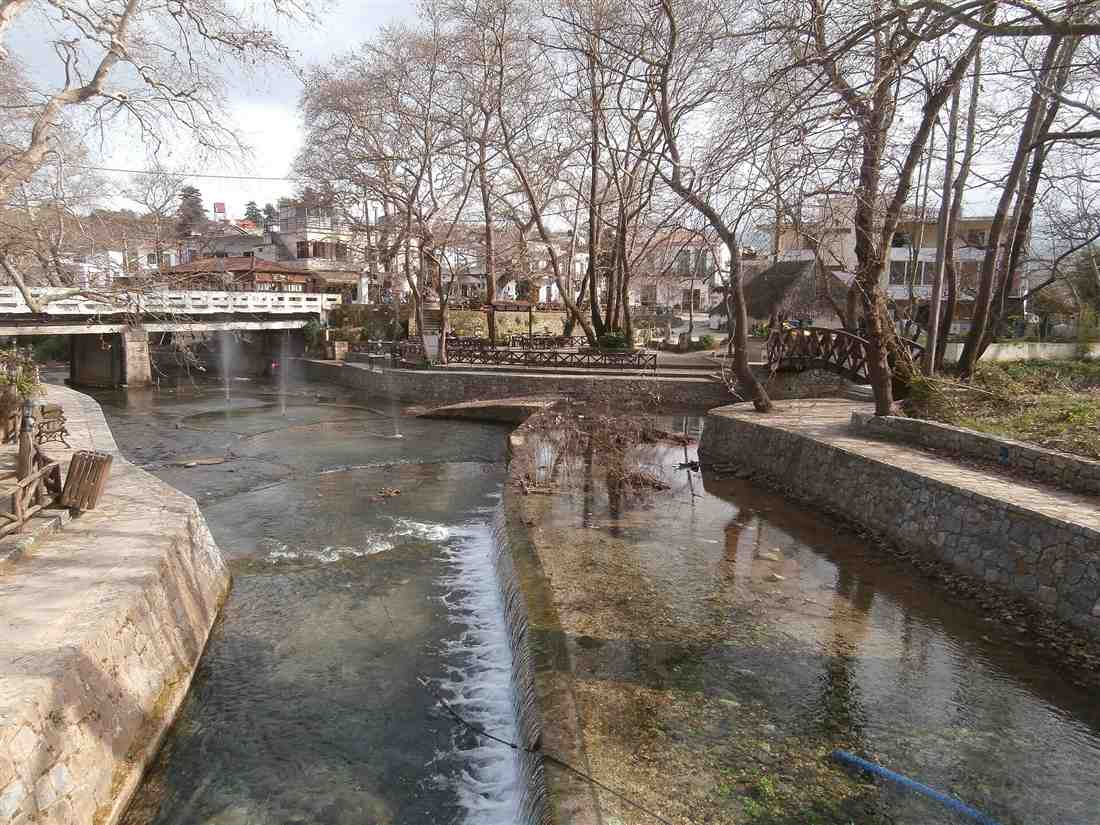
Vryses is a green, shaded village built along the spring-fed Vrysanos river under enormous plane trees. Old stone bridges cross running water, the air stays cool through summer, and traditional cafes serve the local yogurt with honey that made the village famous.
The route from Chania to Vryses runs the same way whether you drive or take the bus. Setting out early on the Chania to Vryses run beats both the heat and the crowds. The road from Chania to Vryses is paved and well signed the whole way. Anyone weighing the journey from Chania to Vryses finds the distance short by Cretan standards. The character of Vryses comes straight from its water. Springs rise in and around the village and feed the Vrysanos, which runs clear and cold through the centre. Giant plane trees, the largest of them enormous and old, arch over the river and the streets, throwing dense shade across the cafe terraces. Under that canopy the temperature drops sharply, so even in the fierce heat of a Cretan July the village stays fresh while the coast bakes. This cooling effect is the reason drivers have treated Vryses as a rest stop for generations.
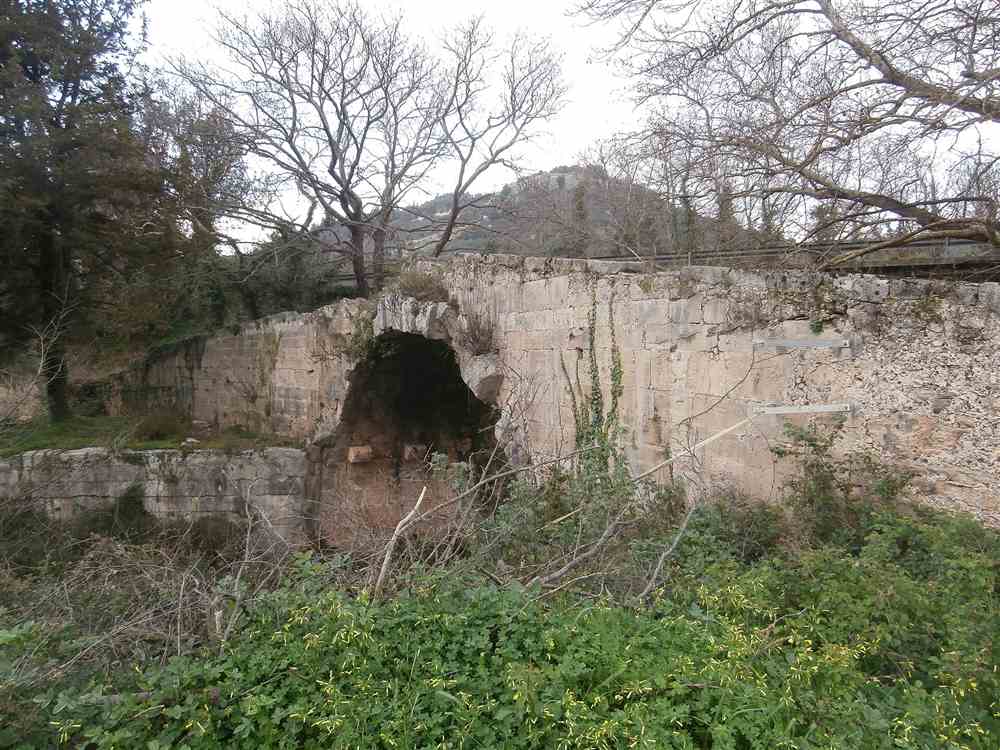
Stone bridges span the Vrysanos, worn and mossed with age, and the sound of running water carries through the village. Cafe tables sit at the water’s edge, ducks work the shallows, and the whole scene feels more like a mountain retreat than a lowland junction. The yogurt of Vryses is the signature dish: thick sheep’s yogurt poured into a bowl and topped with local honey, eaten slowly in the shade with a coffee. Tavernas alongside serve Cretan staples for a full meal.
The village keeps a traditional layout, with old houses, plane-shaded squares and the constant presence of water setting the pace. There is no coastal resort bustle here; the appeal is calm, greenery and the ritual of stopping. A visitor walks the bridges, sits by the river, orders the yogurt with honey, and lets the shade do its work before moving on. That simple pleasure, repeated by travellers heading south for decades, is the core of what Vryses offers.
Why is Vryses the gateway to Sfakia?
Vryses is the gateway to Sfakia because the mountain road south leaves the coastal corridor here. From the village the road climbs to the Askifou plateau, threads the Imbros gorge, and drops to Chora Sfakion and the Libyan Sea coast, so every route into Sfakia passes through Vryses.
Anyone weighing the journey from Chania to Vryses finds the distance short by Cretan standards. The Chania to Vryses route is served by frequent buses through the season. Drivers on the Chania to Vryses route follow the national road for the fast section. The short run from Chania to Vryses keeps the village within easy reach of the city. Sfakia is the rugged southern district of the Chania regional unit, a land of high plateaus, deep gorges and a wild coast on the Libyan Sea. The only practical road link from the north coast runs through Vryses. Leaving the village, the tarmac climbs steadily into the White Mountains, gaining height through switchbacks until it reaches the Askifou plateau, a flat green bowl ringed by peaks and dotted with farming hamlets. This makes Vryses the doorway to a whole mountain world that begins the moment the road turns south.
Beyond Askifou the road reaches the head of the Imbros gorge, a dramatic ravine walked by hikers on the way down toward the coast, and then descends toward Chora Sfakion, the small port that faces the Libyan Sea. From Chora Sfakion, boats run west along the roadless coast to Loutro and to the mouth of the Samaria gorge at Agia Roumeli. Every one of these places, plateau, gorge, port and beach, sits at the far end of the road that starts in Vryses.
For the traveller this dual role defines the village. Vryses is a destination in its own right for the plane trees and the yogurt, and it is the staging post for the south. Drivers refuel and rest here before the climb; bus passengers change here for the mountain service. A day that begins in Chania reaches Vryses in half an hour, and from Vryses the whole of Sfakia opens up, from the Askifou plateau to the Imbros gorge to the black-and-grey beaches of the Libyan coast.
What is near Vryses: Kournas, Vamos, the Askifou plateau and the sights around it?
Vryses sits within reach of Lake Kournas and Georgioupoli to the east, the traditional village of Vamos and the Apokoronas villages to the north, and the Askifou plateau, the Imbros gorge and the White Mountains to the south. The village anchors a cluster of contrasting destinations.
A car makes the Chania to Vryses trip flexible, but the bus covers it too. The Chania to Vryses trip is one of the more rewarding short runs from the city. On a map, Chania to Vryses traces a clear line that the road follows closely. Lake Kournas lies a short drive east and is the only natural freshwater lake on Crete. Ringed by hills and fed by springs, its turquoise and green water draws visitors for pedal boats, walks around the shore and lakeside tavernas. Close to it, Georgioupoli stands where the Almyros river meets the sea, a green resort village with a long sandy beach, a river mouth full of ducks, and the tiny chapel of Agios Nikolaos reached along a stone causeway. Kournas and Georgioupoli together make an easy eastward extension from Vryses.
North of Vryses spread the Apokoronas villages, a network of stone-built settlements in olive-grove country. Vamos is the best known: a restored traditional village that has become a centre for agrotourism, with old houses turned into guest lodgings, workshops and tavernas serving Cretan food. The surrounding hamlets hold Byzantine churches, cobbled lanes and quiet squares, and the whole district looks north to the Drapanos peninsula and the sea. This is the gentle, cultivated face of the region, in contrast to the mountains to the south.
South of the village the land turns wild. The Askifou plateau is a high, flat farming basin ringed by peaks, worth the drive for its scenery and its war-history museum. Below it the Imbros gorge cuts down toward the coast, a walkable ravine of narrow passages and towering walls that ends near Chora Sfakion. Above and around them all rise the White Mountains, the Lefka Ori, snow-capped into late spring and the highest range in western Crete. From a single base at Vryses a traveller reaches a lake, a beach, a heritage village and a mountain plateau, each within a short drive.
Is the trip to Vryses worth it, and when to go?
The trip is worth it for the shade, the spring water and the yogurt with honey, and for the village’s role as the gateway to Sfakia. Go in late spring, summer or early autumn, and treat Vryses as a cool stop on a longer drive into the mountains.
The Chania to Vryses drive rewards the effort with the sights at the end of it. Planning Chania to Vryses by the light and the meals makes the most of the visit. The trip from Chania to Vryses pairs well with the neighbouring stops on the same road. Vryses rewards a visit on two counts. As a place to stop, it delivers a rare thing in a Cretan summer: deep shade, cold running water and a real drop in temperature under the plane trees, paired with the local yogurt and honey and unhurried cafe terraces beside the river. As a hub, it opens the road to Sfakia, so a stop here doubles as the start of an adventure into the Askifou plateau, the Imbros gorge and the Libyan Sea coast. Few villages combine such an easy pleasure with such a strategic position.
Timing favours the warm half of the year. From late spring through summer and into early autumn the coast is hot, and that is exactly when the cool of Vryses feels best; the springs and the tree canopy hold the heat off while the rest of the island swelters. Summer is the peak season for the yogurt stop and for onward travel into Sfakia, since the mountain buses and the coastal boats run at full frequency. Spring adds green hills and snow still capping the White Mountains to the south, and autumn brings quieter roads and mild days.
The ideal way to use Vryses is as a link in a chain rather than a single endpoint. Drive out from Chania in the morning, stop under the plane trees for yogurt and honey, then choose a direction: east to Lake Kournas and Georgioupoli, north to Vamos and the Apokoronas villages, or south into the mountains toward Askifou, Imbros and Chora Sfakion. At 32 kilometres and 30 to 35 minutes from the city, Vryses is close enough to fold into any day out and central enough to shape a whole route around. The verdict is plain: it is worth the short drive, and it earns its place on the map as both a rest and a beginning.
Frequently Asked Questions
How do you get from Chania to Vryses?
From Chania to Vryses, drive east on the E75/A90 national road to the Vryses exit, 32 kilometres in 30 to 35 minutes. The KTEL coastal line and the Chania-to-Chora-Sfakion bus both stop at Vryses on frequent departures, a ride of 40 to 50 minutes; Vryses is the interchange for the Sfakia mountain buses.
How far is Vryses from Chania?
Vryses lies 32 kilometres east of Chania in the Apokoronas area of the Chania regional unit, at the junction where the road south to Sfakia leaves the coastal corridor. The drive from Chania to Vryses takes 30 to 35 minutes.
Is the trip from Chania to Vryses worth it?
The trip from Chania to Vryses rewards visitors with a cool, green village of plane trees and running water, cafes famous for yogurt with honey, and the gateway to Sfakia and the White Mountains. The short distance makes Vryses an easy stop and a base for the Apokoronas and the south.