
To get from Chania to Tavronitis, drive west on the old coastal national road or the E75/A90, about 19 kilometres in 20 to 25 minutes, reaching the village at the mouth of the Tavronitis river, next to Maleme on the road to Kissamos. The trip from Chania to Tavronitis follows the west-coast corridor. Plan the whole trip with Greece Tours.
This guide covers the trip from Chania to Tavronitis in full: where it is, how to get there by car and by KTEL bus, the working river village and the fertile valley behind it, the Tavronitis river and the long quiet beach, the Battle of Crete and the fight for the river bridge, the German War Cemetery at Maleme and Kolymbari nearby, and whether this west-coast trip is worth it.
Where is Tavronitis and how far is it from Chania?
Tavronitis sits on the north-west coast of Crete, 19 kilometres west of Chania in the Chania regional unit. The village stands at the mouth of the Tavronitis river, next to Maleme, on the coastal road that runs toward Kolymbari and Kissamos.
Every itinerary that includes Chania to Tavronitis gains an easy, scenic leg. The Chania to Tavronitis journey ends at a place that repays an unhurried stay. Both the car and the bus make Chania to Tavronitis a simple leg of a west-Crete plan. The drive from Chania to Tavronitis is direct enough to slot into a wider day out. The location fixes Tavronitis at the junction of two worlds: the open north-west shoreline of Crete on one side, and the fertile inland valley that feeds it on the other. The river gives the village its name and its western edge, and the coastal highway threads straight through the settlement, so a traveller heading from the city of Chania toward the far west of the island passes through Tavronitis without a detour. The village functions as a marker on that route, the point where the built-up coastal strip west of the city thins out into farmland and beach.
Distance and direction stay simple. From the centre of Chania the bearing is due west along the coast, and the 19-kilometre gap closes in 20 to 25 minutes by car. Maleme lies immediately to the east, close enough that the two names blur together on the ground; Kolymbari and the Gonia Monastery sit to the west; and the ridge of Hill 107, the high ground that overlooks the river crossing, rises just east of the settlement. That cluster of places, each within a short drive, turns Tavronitis into a base from which the whole north-west corner opens up.
The regional unit around it is Chania, the westernmost of Crete’s administrative divisions, and Tavronitis holds a place among the string of coastal villages between the city and the Kissamos peninsula. The Tavronitis valley reaches south from the river mouth into the foothills, a broad agricultural corridor of orange and avocado groves that supplies the village with its produce and its year-round working rhythm. Everything about the position points to a place that earns its living from the land and the sea rather than from tourism alone.
How do you drive from Chania to Tavronitis?
Drive west from Chania on the old coastal national road, or take the E75/A90 that skirts the shoreline, and reach Tavronitis after 19 kilometres in 20 to 25 minutes. Both routes run parallel along the north coast and meet the village at the river mouth.
The drive from Chania to Tavronitis is direct enough to slot into a wider day out. For a first visit, the Chania to Tavronitis drive is the straightforward choice. The time from Chania to Tavronitis holds steady outside the peak-season traffic. Travellers who plan the trip from Chania to Tavronitis reach it comfortably in the times given. The drive is one of the more direct on the whole north coast. Leaving Chania, the road tracks the sea westward through the coastal fringe, past the airfield ground at Maleme, and arrives at the Tavronitis bridge where the river reaches the shore. The old national road hugs the coast and passes through each village along the way, which slows the pace but rewards the driver with sea views and roadside tavernas; the E75/A90 runs a straighter, faster line and shaves the journey to the lower end of the 20-to-25-minute band. Signposting for Kissamos and Kolymbari points the way west, and Tavronitis appears on the same boards.
Parking in the village is straightforward. The main road widens through the settlement, and side streets down toward the beach hold room to leave a car near the tavernas and the pebble shore. Fuel stations, a bakery, and small shops line the through-road, so the stop doubles as a supply point for anyone pushing on to the far west. Drivers heading for the Kissamos beaches of Balos and Falasarna, or for the Gramvousa boats, treat Tavronitis as the last easy pause before the road climbs and narrows past Kolymbari.
The route also anchors a wider circuit. Tavronitis pairs naturally with the German War Cemetery at Maleme just to the east and the Gonia Monastery to the west, so a single westbound drive strings the three together inside half a day. For travellers building a set of day trips from Chania, the short hop to Tavronitis works as a stepping stone into the whole north-west, a first leg that opens onto the beaches, the monasteries, and the Battle of Crete ground beyond.
How do you reach Tavronitis by bus?
Take the KTEL coastal line from Chania toward Kissamos, which stops at Tavronitis on frequent departures. The ride runs 30 to 40 minutes, tracing the same north-coast road a car takes, and drops passengers on the main road through the village.
Travellers who plan the trip from Chania to Tavronitis reach it comfortably in the times given. The distance from Chania to Tavronitis is covered on a single, well-built road. Fitting Chania to Tavronitis into a morning leaves the afternoon free for the coast. The route from Chania to Tavronitis runs the same way whether you drive or take the bus. The KTEL network makes Tavronitis reachable without a car. Buses bound for Kissamos leave the Chania terminal through the day and call at the coastal villages en route, Tavronitis among them. Departures are frequent, spaced across the morning and afternoon, so a traveller without a fixed timetable still finds a service within a short wait. The bus follows the coastal corridor, pausing at Maleme and the intermediate stops, which stretches the run to 30 to 40 minutes against the 20 to 25 by car.
The stop sits on the through-road in the heart of the village, steps from the tavernas and a short walk down to the beach. That places a rider within easy reach of everything Tavronitis offers on arrival, and it keeps the return simple: the eastbound service back toward Chania uses the same roadside stop. Fares on the coastal line are low, and tickets sell at the Chania terminal or on board, so the bus turns Tavronitis into an affordable half-day out for anyone based in the city.
The same line threads the whole north-west coast, which lets a bus traveller chain destinations without a rental. A rider steps off at Tavronitis, walks the village and the shore, then reboards a westbound bus for Kolymbari or Kissamos, or an eastbound one back to Chania. That flexibility suits travellers who want the Battle of Crete ground at Maleme and the quiet beach at Tavronitis in one outing, using the frequent coastal service as the thread that ties the stops together.
What is Tavronitis like as a village?
Tavronitis is a working agricultural village at a river mouth, a hub for the orange and avocado groves of the valley behind it. A long, quiet pebble-and-sand beach fronts the sea, tavernas line the streets, and the character stays everyday and non-resort throughout the year.
The route from Chania to Tavronitis runs the same way whether you drive or take the bus. Setting out early on the Chania to Tavronitis run beats both the heat and the crowds. The road from Chania to Tavronitis is paved and well signed the whole way. Anyone weighing the journey from Chania to Tavronitis finds the distance short by Cretan standards. The feel of the place is unhurried and lived-in. This is not a purpose-built resort strip; it is a real Cretan village where farming sets the daily pace and the tourist season overlays a settlement that runs on its own terms the rest of the year. Tractors and produce trucks move through the main road, the bakery and grocery serve residents first, and the tavernas cook for a local table as much as for a visiting one. That authenticity is the draw: a traveller finds Crete as it lives, not as it performs.
The valley behind the village supplies the economy. Orange and avocado groves fill the fertile corridor that reaches inland from the river, and their harvest flows through Tavronitis on the way to market. Avocado growing has taken firm hold in this pocket of west Crete, and the groves paint the valley floor a deep green that contrasts with the dry hills above. The produce turns up on taverna menus and at roadside stalls, so a meal in the village carries the taste of the land immediately behind it.
Along the shore, the beach runs long and flat, a mix of pebble and sand that stays quiet even at the height of summer. There are no crowds pressing for space, no wall of loungers; instead there is open shingle, a few tavernas with tables near the water, and the wide north-coast horizon. The everyday character extends to the sea front, where swimmers share the beach with families from the village and the pace never rises above calm. That combination of a genuine agricultural village and an uncrowded shore defines the appeal of Tavronitis.
What are the Tavronitis river, the beach and the valley like?
The Tavronitis river holds water into the summer, one of the few in west Crete to do so, and reaches the sea at the village. Its mouth forms a long pebble-and-sand beach, while the fertile valley upstream carries the orange and avocado groves that feed the village.
Anyone weighing the journey from Chania to Tavronitis finds the distance short by Cretan standards. The Chania to Tavronitis route is served by frequent buses through the season. Drivers on the Chania to Tavronitis route follow the national road for the fast section. The short run from Chania to Tavronitis keeps the village within easy reach of the city. Water sets this river apart. Across west Crete the streams run dry once the heat sets in, their beds turning to bleached stone by midsummer, but the Tavronitis keeps a flow through the season. That persistent water feeds the greenery of the valley and keeps the river mouth alive where it meets the sea, a band of freshwater meeting saltwater that draws birds and gives the shoreline a character distinct from the arid coast to either side. The river is the reason the valley behind it stays fertile when the surrounding land bakes.
The beach at the mouth stretches long and open. Pebble grades into sand along its length, the water shelves gently, and the north-coast breeze keeps the air fresh through the afternoon. Space is the defining feature: even in high summer the shore holds room to spread out, a contrast with the packed beaches nearer the city. A handful of tavernas sit back from the water with tables angled toward the horizon, so a swim and a meal fold into a single quiet afternoon by the sea.
Upstream, the valley opens into the agricultural heart of the district. Orange groves and avocado plantations fill the corridor, irrigated by the river’s steady flow, and the inland villages of the valley, Voukolies chief among them, punctuate the farmland. Voukolies holds a weekly market that pulls in growers and buyers from across the district, a lively trading day that shows the valley’s produce at its source. From the beach at the river mouth to the market town upstream, the Tavronitis valley reads as a single working landscape, tied together by the one river in west Crete that refuses to run dry.
What is the Battle of Crete link, and what sights lie nearby?
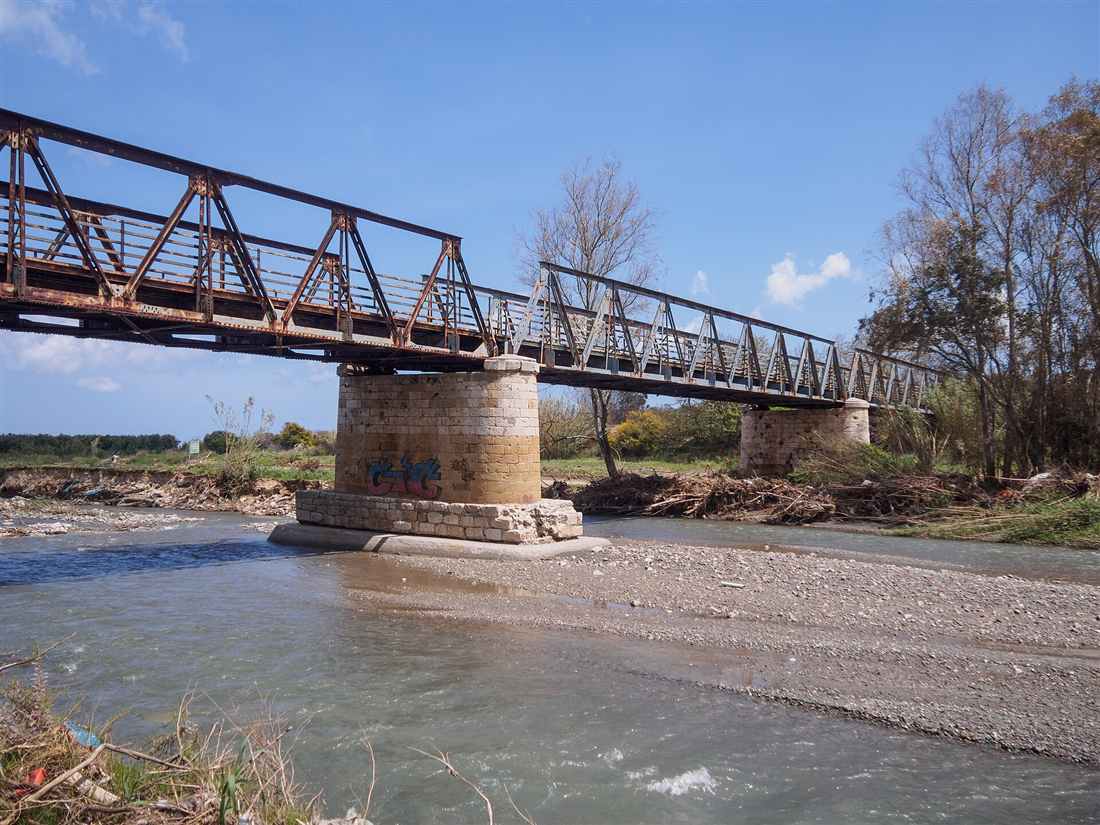
The road bridge over the Tavronitis river was a key objective in the Battle of Crete, at the western edge of the Maleme airfield. The fight for the river crossing and Hill 107 beside it decided the battle, and the German War Cemetery now stands on that hill just east at Maleme.
A car makes the Chania to Tavronitis trip flexible, but the bus covers it too. The Chania to Tavronitis trip is one of the more rewarding short runs from the city. On a map, Chania to Tavronitis traces a clear line that the road follows closely. The ground here carries decisive weight in the history of the war. During the Battle of Crete, airborne forces landed to seize the Maleme airfield, and the Tavronitis bridge at its western edge marked the objective that opened the crossing. Hill 107, the high ground overlooking both the airfield and the river, commanded the whole position, and the struggle for that hill and the bridge below it turned the course of the battle. The loss of Hill 107 handed control of the airfield to the attackers, and with it the island. Standing at the river bridge, a visitor looks across the exact ground where the fighting swung.
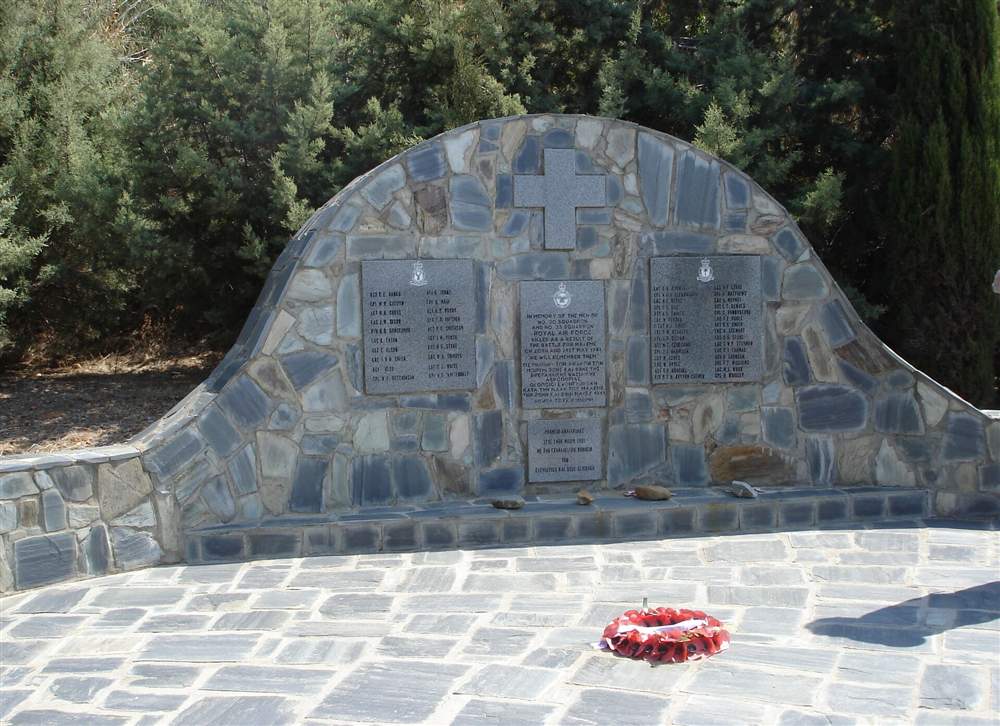
The German War Cemetery crowns Hill 107 just east at Maleme. Row upon row of flat grave markers cover the hillside above the airfield, and the terrace at the top gives a wide view over the coastal plain, the airfield ground, and the sweep of sea beyond. The cemetery is a sombre, well-kept place of pilgrimage, and its position on the hill that decided the battle ties the history to the land in the plainest way. A short drive from the Tavronitis bridge brings a visitor to the cemetery gate.
Beyond the wartime ground, the district holds a spread of sights within a few kilometres. Kolymbari and the Gonia Monastery lie to the west, a coastal monastery of long standing set above the sea at the neck of the Rodopou peninsula. The inland villages of the Tavronitis valley, led by Voukolies and its weekly market, sit to the south. The west-coast beaches stretch on toward Kissamos, and the whole cluster, war cemetery, monastery, market town, and shore, gathers within a compact ring around the village.
Is the trip to Tavronitis worth it, and when to go?
The trip rewards travellers who want authentic west Crete over a resort strip. Tavronitis pairs a quiet beach, real tavernas, and a working valley with the decisive Battle of Crete ground next door. Late spring through early autumn brings warm sea and full valley greenery.
The Chania to Tavronitis drive rewards the effort with the sights at the end of it. Planning Chania to Tavronitis by the light and the meals makes the most of the visit. The trip from Chania to Tavronitis pairs well with the neighbouring stops on the same road. The value lies in the combination. Few stops on the north coast fold together a genuine agricultural village, a long uncrowded beach, a river that keeps its water, and a piece of ground that decided a battle, all within walking or a short drive. A traveller reaches Tavronitis in 20 to 25 minutes from Chania by car, or 30 to 40 by the frequent KTEL bus, so the outlay in time is small against the range of what the village and its surroundings hold. For anyone assembling a west-Crete itinerary, the stop earns its place as both a destination and a gateway to the far west.
Timing shapes the experience. Late spring through early autumn delivers warm, swimmable sea and the valley at its greenest, when the orange and avocado groves stand full and the river runs clear to the shore. The shoulder months at either end of that window bring softer light, cooler air for walking the war ground on Hill 107, and an even quieter beach. Midsummer keeps the shore calm here where busier coasts fill, so the village holds its unhurried character across the whole season.
The verdict is straightforward: Tavronitis suits the traveller who values the real texture of Crete. It is a working village first and a beach stop second, with the weight of history built into the ground beneath the river bridge. Combined with Maleme’s cemetery, the Gonia Monastery at Kolymbari, and the market at Voukolies, the short journey west from Chania opens a full and honest slice of the island’s north-west, well worth the road out.
Frequently Asked Questions
How do you get from Chania to Tavronitis?
From Chania to Tavronitis, drive west on the old coastal national road or the E75/A90, 19 kilometres in 20 to 25 minutes. The KTEL coastal line from Chania toward Kissamos stops at Tavronitis on frequent departures, a ride of 30 to 40 minutes.
How far is Tavronitis from Chania?
Tavronitis lies 19 kilometres west of Chania on the north-west coast of Crete, at the mouth of the Tavronitis river next to Maleme in the Chania regional unit. The drive from Chania to Tavronitis takes 20 to 25 minutes.
Is the trip from Chania to Tavronitis worth it?
The trip from Chania to Tavronitis rewards visitors with a quiet river village, a long uncrowded beach, and the ground of the Battle of Crete around the river bridge and Maleme. The short distance makes Tavronitis an easy half-day of history and coast.