
To get from Chania to Agia Galini, drive east on the E75/A90 national road to Rethymno, then south on the inland road through the village of Spili to the coast, about 130 kilometres in 2 to 2.25 hours, reaching the tiered fishing-village resort on the Gulf of Messara. Plan the whole trip with Greece Tours.
This guide covers the trip from Chania to Agia Galini in full: where it is, how to get there by car and by KTEL bus, the drive through Spili and the Amari country, the amphitheatre village above its harbour, the beaches, the Minoan palace of Phaistos, the caves of Matala and the palm beach of Preveli, and whether this south-coast trip is worth it or better as a base.
Where is Agia Galini and how far is it from Chania?
Agia Galini sits on the south coast of Crete in the Rethymno regional unit, at the north-west corner of the Gulf of Messara where the Platis river reaches the Libyan Sea. It lies 130 kilometres from Chania across the island’s width.
The village faces the open Libyan Sea, the stretch of the Mediterranean between Crete and the coast of North Africa. Chania sits on the north-west shoulder of the island, on the Cretan Sea; Agia Galini sits diagonally opposite on the south, so the journey crosses Crete from one coast to the other and traverses two regional units, Chania and Rethymno. The straight-line distance is shorter than the road distance, because the route bends east to Rethymno before turning south through the mountains.
The name Agia Galini means Saint Serenity, a fitting label for a sheltered inlet that turned from a fishing anchorage into a resort. Local legend ties the spot to the myth of Icarus and Daedalus, the father and son who built wings of wax and feathers and took flight from the south coast of Crete. The harbour tucks into a fold of the hills, protected from the north winds that scour the island’s other shore, which is one reason its water stays calm through the long summer.
For a traveller based in Chania, the trip is a full cross-island transfer rather than a coastal hop. The distance of 130 kilometres and the mountain leg put Agia Galini at the edge of comfortable day-trip range, so the settlement rewards an overnight stay as much as a single-day visit. Anyone weighing wider options from the north-west base finds it listed among the longer day trips from Chania, alongside closer south-coast targets.
How do you drive from Chania to Agia Galini?
Drive east from Chania on the E75/A90 national road to Rethymno, 60 kilometres in 50 minutes, then turn south on the inland road through the village of Spili and the Amari country to Agia Galini, 70 kilometres in 1.25 hours. The total is 130 kilometres and 2 to 2.25 hours.
The first leg is fast and simple. The E75/A90 is the island’s north-coast trunk road, a wide dual-carriageway-standard highway that hugs the Cretan Sea between Chania and Rethymno. Traffic moves quickly, fuel stations line the route, and the 60-kilometre run to the Rethymno junction takes 50 minutes at a steady pace. Leave the highway at the Rethymno exits and pick up the signed road toward Spili and Agia Galini, which climbs inland from the coast.
The second leg is the character of the drive. The road rises through the foothills of the Kedros and Psiloritis ranges into the Amari country, a green interior of olive terraces, gorges and stone villages. Spili, halfway along, is the landmark stop: a hillside village famous for its Venetian fountain of nineteen carved lion heads, each spouting mountain spring water into a long stone trough. Past Spili the road descends toward the Messara side and drops the final kilometres to the coast, delivering the first view of Agia Galini stacked above its harbour.
The mountain section is paved throughout, with tight bends, gradients and blind corners that set the pace, so the 70 kilometres take 1.25 hours rather than the time a flat road of that length demands. A hire car is the practical way to make the trip, and it turns Agia Galini into a base for the surrounding south-coast sites. Drivers starting the day in Chania gain the freedom to add Preveli or Plakias on the return leg without waiting on a timetable.
How do you get from Chania to Agia Galini by KTEL bus?
No direct KTEL line runs from Chania to Agia Galini. The journey splits in two: Chania to Rethymno on the frequent coastal KTEL, 1 hour, then a change onto the Rethymno to Agia Galini service, 1.5 hours, with a handful of departures a day in summer and thinner service off-season.
KTEL is the regional bus network of Crete, and its north-coast corridor is one of the busiest routes on the island. Buses depart Chania for Rethymno at short intervals through the day, so the first leg needs no advance planning; buy the ticket at the Chania KTEL terminal and board the next departure. The coastal run takes 1 hour and drops passengers at the Rethymno bus station, the interchange point for the southbound service.
The second leg is the constraint. Rethymno to Agia Galini crosses the same mountain interior as the drive, through Spili and the Amari villages, and takes 1.5 hours. The service runs a handful of departures a day in the summer season and thins to a sparse timetable in winter, so the connection governs the whole trip. Check the departure board at Rethymno on arrival and confirm the return times before committing, because a missed evening bus strands a day-tripper overnight.
Total bus time is 2.5 hours of riding plus the wait at Rethymno, which stretches the door-to-door figure beyond the driving time. The bus suits travellers set on an overnight in the village rather than a same-day return, and it removes the strain of the mountain bends from anyone uneasy with narrow roads. Fares are low, the buses are air-conditioned coaches, and the interchange at Rethymno is straightforward, with the two services using the same station.
What is Agia Galini like as a resort?
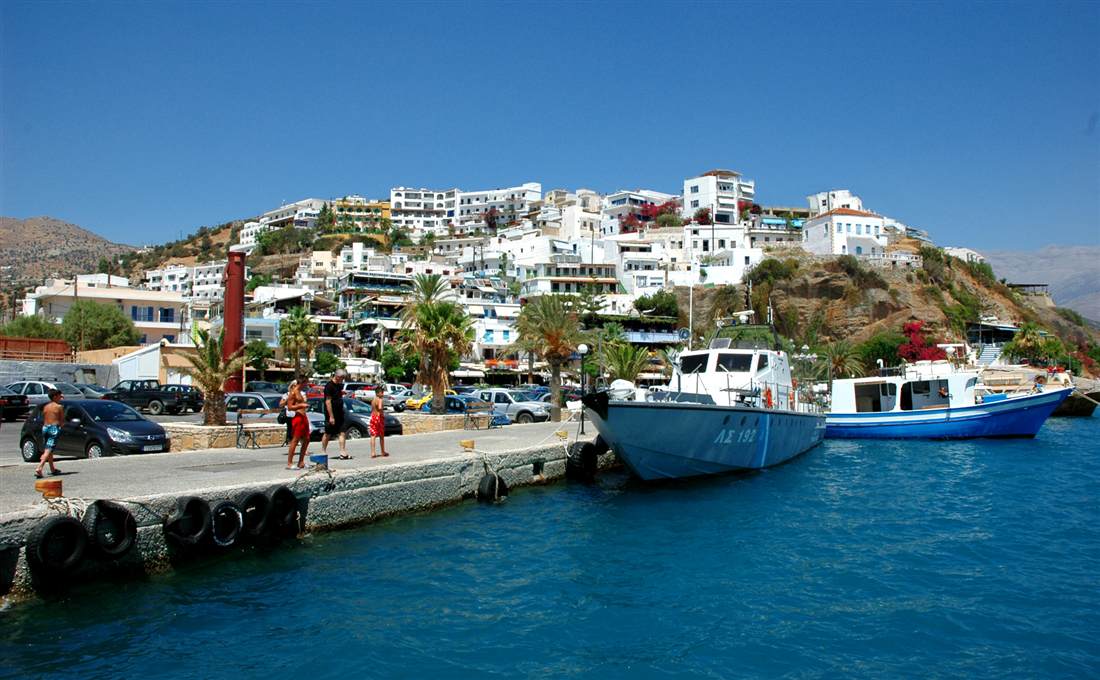
Agia Galini is a former fishing village stacked in tiers up a steep hillside above a small harbour, now a compact resort of tavernas, bars and rooms. Whitewashed houses climb the slope in stepped lanes, the harbour front lines up seafood tavernas, and the whole settlement packs into a tight, walkable core.
The layout is the appeal. Houses rise in tiers from the water, linked by stepped alleys too narrow for cars, so the village reads as a vertical maze of terraces, balconies and flowerpots. At the base sits the harbour, still working as a mooring for small fishing boats and excursion caiques, ringed by tavernas whose tables spill to the quayside. Fresh fish comes off the boats to the grills, and the evening promenade along the harbour is the centre of village life.
The resort scale is deliberately modest. Agia Galini trades on charm and calm rather than high-rise sprawl; accommodation runs to family-owned rooms, studios and small hotels built into the hillside, and the nightlife is a strip of harbour bars rather than clubs. The population swells through the summer and quietens sharply in the shoulder months, when the village returns to a slower rhythm. Steep lanes reward walkers and challenge anyone with mobility limits, so the upper terraces stay the province of the fit.
The setting frames everything. From the top of the village the view opens across the Gulf of Messara to the Libyan Sea, and sunsets over the water draw diners to the western-facing terraces each evening. The Platis river mouth beside the harbour and the green Amari hills at the back give Agia Galini a softer, greener backdrop than the bare rock of much of Crete’s south coast, and the sheltered position keeps its water flat when the meltemi wind roughens exposed beaches elsewhere.
What are the beaches of Agia Galini?
Agia Galini has a sandy main beach beside the harbour and the longer Agios Georgios beach over the headland to the east. The main beach is a compact strip of sand and shingle within a two-minute walk of the tavernas; Agios Georgios is a broad open sweep with more room and calmer water.
The main beach sits at the very foot of the village, where the Platis river meets the sea beside the harbour. It is a short, convenient stretch of coarse sand and fine shingle, lined with sunbeds and umbrellas and backed by the harbour tavernas, so it serves swimmers who want the water a step from lunch. The river mouth keeps one end of the sand soft and the sea shallow, which suits families with young children.
Agios Georgios beach lies over the eastern headland, reached on foot along a path from the harbour or by a short drive. It is the longer and wider of the two, a generous run of sand and pebble with far more space to spread out, plus sunbeds, a taverna and calm, clean water. The extra length absorbs the summer crowds that pack the tight main beach, and its open aspect catches the sun through the day.
Beyond the two village beaches, the coast either side opens more options within a short drive. West along the shore lie quieter coves and the run toward Preveli and Plakias; the sheltered Gulf of Messara position keeps the local water calmer than the wind-exposed beaches of the far south. Boat trips from the harbour reach hidden strands accessible only from the sea, and the excursion caiques run a shuttle service through the season to the nearby sandy inlets.
What is there to do near Agia Galini \u2014 Phaistos, Matala and Preveli?
Agia Galini sits within a short drive of the Minoan palace of Phaistos and the villa of Agia Triada on the Messara plain, the Roman site of Gortyna, the beach and caves of Matala, the palm beach of Preveli, and the resort of Plakias. The village works as a base for the whole south-central Crete circuit.
East and inland lie the great archaeological sites of the Messara plain. Phaistos is the second palace of Minoan Crete after Knossos, a vast terraced ruin on a ridge above the plain with commanding views to Psiloritis, and the source of the undeciphered Phaistos Disc. Beside it, the villa of Agia Triada holds fine Minoan frescoes and a compact royal residence. Further east, Gortyna is a sprawling Roman provincial capital, home to the Gortyn law code carved in stone and the basilica of Saint Titus.
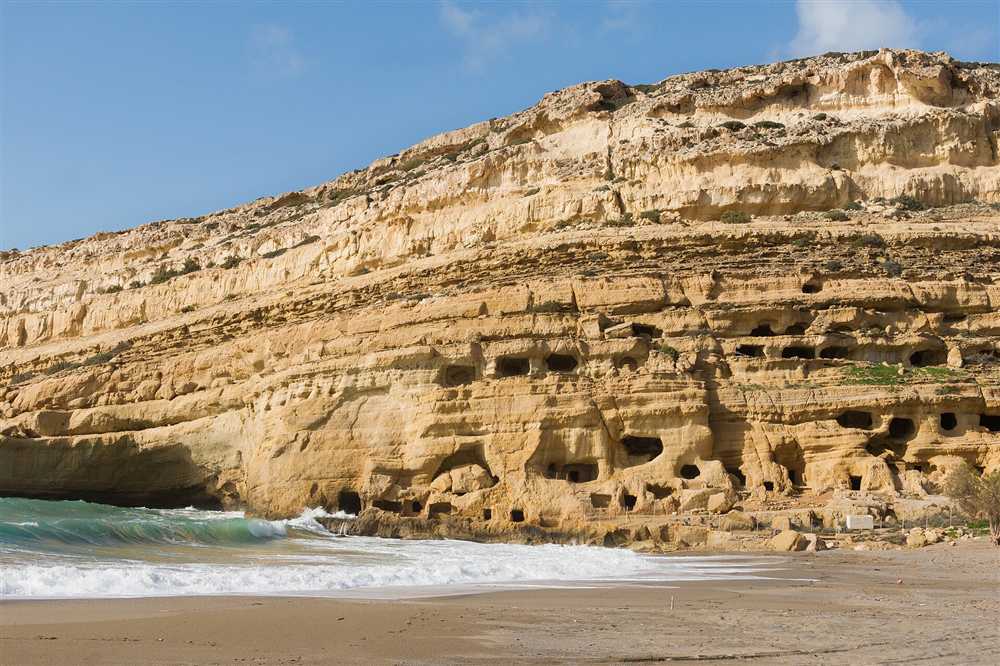
Along the coast the draws are beaches and caves. Matala, a short drive south, is famous for its cliff of hand-cut caves used as tombs in Roman times and as a hippie colony in the sixties, fronting a sandy bay of clear water. Its neighbour Red Beach and the cave-riddled cliffs make it the best-known coastal excursion from Agia Galini. West along the south coast, Preveli is the celebrated palm beach where a river gorge lined with date palms meets a sandy cove below a historic monastery.
Plakias, the low-key resort further west, adds a run of broad sandy beaches and a base for the gorges of the interior. Threaded between these targets are the mountain villages of the Amari valley, the Kedros and Psiloritis slopes, and Spili with its lion-head fountain. The clustering is Agia Galini’s strength: Phaistos, Agia Triada, Gortyna, Matala and Preveli all sit within a short drive west or east along the south coast, so a single base reaches an entire region of sites and shores.
Is the trip from Chania worth it and when to go?
The trip earns its distance for travellers who want the calm south coast and its Minoan and beach circuit, and it rewards an overnight over a rushed same-day return. Go in late spring or early autumn for warm sea, thinner crowds and gentler heat; high summer brings full tavernas and hot mountain roads.
The verdict turns on time. At 130 kilometres and 2 to 2.25 hours each way by car, Agia Galini is a long day trip from Chania and a comfortable two-night base. A same-day visitor spends more than four hours on the road for a few hours at the coast, which strains the value; a traveller who stays overnight unlocks the sunset village, the two beaches and the ring of sites without the clock running. The bus route, split at Rethymno, tilts the decision further toward an overnight because the return timetable is tight.
Season shapes the experience as much as distance. Late spring warms the Libyan Sea early and dresses the Amari valley in green, with wildflowers on the mountain leg and space on the beaches. Early autumn holds the summer sea temperature while the crowds thin and the heat eases, the strongest window for the drive through Spili. High summer fills the harbour tavernas and the main beach, bakes the mountain road, and pushes accommodation to its peak, so the shoulder months deliver the same coast at a calmer pace.
The sheltered position seals the case. While the north-coast beaches face the meltemi wind through July and August, Agia Galini’s fold in the Gulf of Messara keeps its water flat and swimmable when exposed shores turn choppy. For a base that pairs a picturesque tiered village, two sandy beaches, calm sea and a short drive to Phaistos, Matala and Preveli, the cross-island journey from Chania returns its cost, above all for those who give it a night rather than a single afternoon.
Frequently Asked Questions
How do you get from Chania to Agia Galini?
From Chania to Agia Galini, drive east on the E75/A90 national road to Rethymno, 60 kilometres in 50 minutes, then turn south on the inland road through the village of Spili for 70 kilometres to the coast. The total run is 130 kilometres in 2 to 2.25 hours. The KTEL bus links Chania to Rethymno, then Rethymno to Agia Galini.
How far is Agia Galini from Chania?
Agia Galini lies 130 kilometres from Chania on the south coast of the Rethymno regional unit, at the north-west corner of the Gulf of Messara. The route splits into a 60-kilometre national-road leg to Rethymno and a 70-kilometre inland leg through Spili, a drive of 2 to 2.25 hours.
Is the trip from Chania to Agia Galini worth it?
The trip from Chania to Agia Galini rewards visitors with a tiered harbour village, sandy beaches and the Minoan palace of Phaistos, Matala and Preveli within a short drive. The 130-kilometre distance suits a day out and rewards a multi-day south-coast base.