
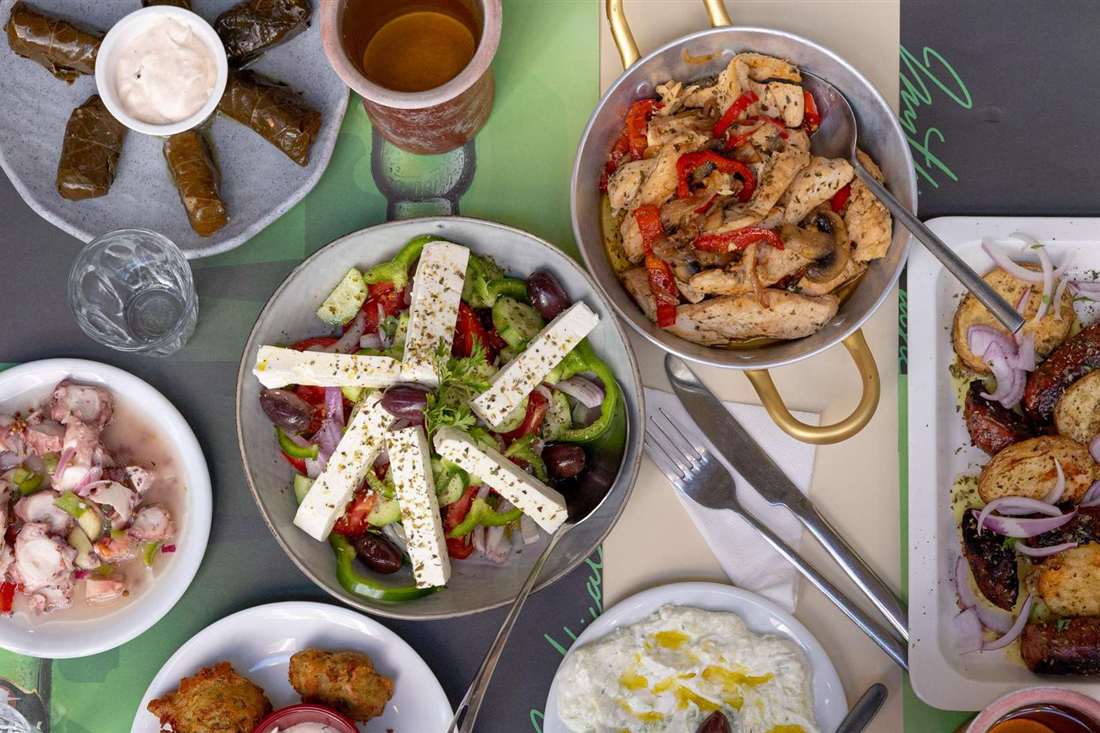
Athens traditional cuisine rests on wheat, olive oil and wine, and three Attica products flavour it: thyme honey from Mount Hymettus, Savatiano white wine from the Mesogeia and fish from Piraeus. Lent lasts 40 days and gives the same kitchen a second menu built on shellfish, bread and halva.
Six districts and nine kinds of eatery carry the cooking today, from the grills of Monastiraki to the fish tavernas of Piraeus. A cooking class takes 3 to 4 hours, and a food tour takes 2.5 to 4 hours with 8 to over 18 tastings. Planning a food stop beyond the capital? The Greece Tours homepage groups every tour by region.
What is Athens traditional cuisine, and what defines it?
Athens traditional cuisine is the home cooking of the Greek capital. Olive oil, bread, vegetables, pulses, fish, sheep and goat dairy, honey and wine make it up. People share it at one table.
UNESCO lists the Mediterranean diet as intangible cultural heritage, and Greece is one of the countries on that listing. The listing covers skills, rituals and traditions around crops, harvesting, fishing, cooking and the sharing of food. It calls eating together the foundation of cultural identity. Athens traditional cuisine belongs to that tradition.
The Wikipedia article on the Mediterranean diet describes high intakes of olive oil and plants. It describes moderate intakes of fish, dairy and red wine, and low intakes of red meat. The same article says the diet was inspired by eating habits in Greece. Athens traditional cuisine sits close to that pattern.
It also says elements of the diet trace back to the Greeks and Romans. They used olive oil, seafood, bread and wine.
The Wikipedia article on Greek cuisine says the cooking is founded on a triad of wheat, olive oil and wine. Athens traditional cuisine follows that triad and builds six pillars on top of it.
The same article lists regional kitchens, from the Cyclades, Rhodes and Lesbos to the Peloponnese, Epirus, Crete, Macedonia and Thrace. Each keeps its own dishes. Wikipedia’s article on Piraeus says migrants kept arriving at the port after Athens became the capital. They came mainly from the Aegean islands.
An island kitchen stays tied to its own island. The kitchen of the capital sits where those traditions meet. That is why Athens traditional cuisine gathers dishes from every region.
- Olive oil. The Wikipedia article on Greek cuisine calls it the characteristic, ancient element of the cooking. Home-cooked meals include seasonal vegetables stewed in it.
- Bread. Wheat bread is everywhere, and the same article traces paximadi, a hard bread baked from wheat, barley and rye, to Byzantium.
- Greens. Khorta, literally “greens”, are a side dish eaten hot or cold and seasoned with olive oil and lemon, according to Wikipedia’s article on leaf vegetables.
- Pulses. Fasolada is a soup of dry white beans, olive oil and vegetables, and fakes, a lentil soup, sits beside it in the article on Greek cuisine.
- Fish. The article on Greek cuisine ties fish dishes to the coast and the islands.
- Sheep and goat dairy. Wikipedia’s article on feta says the cheese is made from sheep milk or a mix of sheep and goat milk. The climate and terrain favor goats and sheep over cattle.
On a menu, these six foods turn into named plates. The list of Greek dishes to try in Athens names those plates. Use it to trace each plate back to its pillar. A menu of Athens traditional cuisine reads clearly once you know the pillars.
How did history shape Athens traditional cuisine?
Ancient Athens ate barley, wheat bread, olives, figs, fish and wine. Byzantine cooks added nutmeg and basil, and Ottoman kitchens left halva and kadaifi. Those layers, all laid down before the twentieth century, built Athens traditional cuisine.
The Wikipedia article on ancient Greek cuisine says the table rested on cereals, olives and grapes. Eating was frugal for the majority. Wheat and barley were the two main grains. Bread came with an opson, a relish of meat, fish, fruit or vegetables. Figs, raisins, dates and pomegranates were the important fruits.
Athens had its own habits. Sardines and anchovies were regular fare for citizens, sold fresh or, more frequently, salted. Solon, an Athenian lawmaker of the sixth century BCE, reserved leavened bread for feast days. The same article says Plato described the baker Thearion as an Athenian novelty who sold goods otherwise made at home.
Lentil soup, called phake, was the dish of the workman. The article on Greek cuisine traces lentil soup to ancient Greece, so Athens traditional cuisine still carries that dish.
The first known cookbook in any culture was written by Mithaecus in the fifth century BCE. One fragment survives, a fish recipe that ends with the words “add cheese and oil”.
The symposium, a Greek word for a gathering of drinkers, had two parts. The first was a simple meal. The second was drinking, with a libation to open it. Chestnuts, beans, toasted wheat and honey cakes came with the wine. A king of the banquet, chosen by a draw, told the slaves how strongly to mix the wine.
Byzantine cooking continued the ancient table. The article on Byzantine cuisine names three cheeses the Byzantines produced: anthotiro, kefalotyri and feta. It also says bread played a major part in the diet. Athens traditional cuisine inherited that cheese and that bread.
The article on Greek cuisine adds that lemon came in the second century. It was used as medicine before it entered the diet. The same article traces paximadi, moustalevria and avgotaraho, cured fish roe, to Byzantium.
Ottoman rule left sweets. The article on Greek cuisine lists kadaifi and halva as dishes inherited from Ottoman cuisine. It lists pastitsio and stifado as Italian borrowings. The article on Ottoman cuisine adds that visiting Europeans noticed sweet dishes served between other courses, not at the end.
Which Attica ingredients anchor Athens traditional cuisine?
Five products tie Athens traditional cuisine to Attica: honey, olive oil, wine, fish and greens. Hymettus gives thyme honey, the Mesogeia gives Savatiano wine, and Piraeus gives fish.
Mount Hymettus runs 16 kilometers from Athens toward the Saronic Gulf. Its highest point, Evzonas, stands 1,026 meters tall. Wikipedia’s article on the mountain says it was noted for its thyme honey. The article on Greek cuisine names thyme honey and pine honey among the honeys of Greece.
Beekeeping around Athens was so widespread in 594 BCE that Solon passed a law on hive spacing. A new hive had to stand 300 feet from existing ones, according to Wikipedia’s article on honey. That law shows how old the honey habit is in Athens traditional cuisine.
Wikipedia’s article on olive oil says Athens is named after the goddess Athena. Her gift of an olive tree was held to be worth more than the salt spring Poseidon offered. Olive oil ties Athens traditional cuisine to the myth that named the city.
Wikipedia says the oil in the Panathenaic prize jars came from the sacred grove of Athena at Akademia. Greece has the highest per capita olive oil consumption in the world, according to the article on olive oil. Oil is the first pillar of Athens traditional cuisine.
The Mesogeia is the central part of East Attica, and Hymettus separates it from the Athens basin. Visit Greece, the national tourism site, lists wine tours through Mesogeia vineyards with the Savvatiano grape.
The article on Savatiano says that grape grows throughout central Greece, particularly in Attica near Athens. It resists drought. The article on Greek wine calls it the predominant white grape in Attica. It gives Athens traditional cuisine its local white.
The article on retsina says the resinated wine has been made for at least 2,000 years. Major production centers sit around Attica, Boeotia and Euboea. In Kantza, a village east of Paiania, one Savatiano wine is made without pine resin.
Piraeus lies on the east coast of the Saronic Gulf, and Visit Greece points visitors there for fresh fish. When people resettled the port as a modern town, its population consisted largely of fishermen, says Wikipedia. Seafood tavernas now line Mikrolimano and Piraiki.
Wikipedia’s article on leaf vegetables says Greek cooks use at least 80 kinds of greens, depending on area and season. Dandelion, chicory, fennel and chard are on that list. The article on Greek cuisine adds the herbs: oregano, mint, dill, bay laurel and thyme. That thyme is the plant behind the honey of Hymettus.
How did refugees from Asia Minor change Athens traditional cuisine?
Refugees from Asia Minor and Constantinople brought cumin, cinnamon, yogurt sauces and spiced meat into Athens traditional cuisine. The exchange of nineteen twenty-three displaced more than 1.2 million Greek Orthodox Christians. Athens took in a share of them.
The Wikipedia article on the population exchange gives the census count of nineteen twenty-eight. Refugees made up 19 percent of the people in Athens and 20 percent of all Greeks. The article says the exchange grew out of a convention signed at Lausanne.
The numbers from Piraeus show the scale for Athens traditional cuisine. The Wikipedia article on Piraeus says its population almost doubled, from 133,482 in nineteen twenty to 251,659 in nineteen twenty-eight. It credits the refugees from Asia Minor. The article on Nikaia, called Kokkinia before nineteen forty, tells the same story.
A travel blog on Athens food says refugees from Asia Minor profoundly shaped the cuisine of the city. The blog adds that they introduced a complex palette of spices and techniques. The Wikipedia article on Kallithea says thousands of refugees reached that town in the nineteen twenties.
Politiki kouzina means cuisine of the City, and the City is Constantinople. The Wikipedia article on a Greek film with that title says the name refers to the cooking of Constantinople.
The Wikipedia article on Greek cuisine lists Mikrasiatiki cooking, from the Greeks of Asia Minor. Politiki is its Constantinople branch. The article ties Politiki to a significant Anatolian and Ottoman influence. The five dishes below show how that influence reached Athens traditional cuisine.
Spice marks the change in Athens traditional cuisine. The Wikipedia article on Greek cuisine names cumin among the flavourings Greek cooks use more than other Mediterranean cooks.
- Soutzoukakia Smyrneika. The Wikipedia article on Smyrna meatballs says Greek refugees from Asia Minor brought this dish to Greece. The cook flours oblong meatballs, spices them with cumin and cinnamon, fries them in olive oil and serves them in tomato sauce.
- Kebab. The official Athens guide says the Greek word kebab names an eastern dish that Armenian and Greek refugees from Istanbul and Asia Minor imported. Minced lamb and beef carry garlic, cumin and other Middle Eastern spices.
- Yogurt kebab. The Wikipedia article on Greek cuisine lists giaourtlou kebab as a recipe from Asia Minor and Constantinople. It combines spicy ground lamb, yogurt sauce and tomato sauce.
- Gyros. The Wikipedia article on gyros says the Greeks of Asia Minor brought their version after the exchange. By nineteen seventy the gyros wrap was already a popular fast food in Athens.
- Politiki salad. The Wikipedia article on Greek cuisine lists a cabbage salad called pikantiki, also known as politiki. It mixes finely chopped white and purple cabbage, pickled Florina peppers, carrot, celery, parsley, garlic, lemon juice, vinegar and olive oil.
Two more details come from the Wikipedia article on Smyrna meatballs, a dish now at home in Athens traditional cuisine. Cooks serve the meatballs with pilaf or mashed potatoes. A variation called soutzoukakia politika means meatballs from Constantinople.
A food-history site on Athens says the newcomers kept Anatolian customs, cuisine included, that set them apart from the locals. When a menu lists soutzoukakia or a politiki salad, it shows the refugee branch of Athens traditional cuisine.
Which districts keep which parts of Athens traditional cuisine alive?
Six districts hold six parts of Athens traditional cuisine. Plaka keeps the old-town taverna, Psyrri the live-music taverna and Monastiraki the grill. The Central Market area keeps the food shops, Piraeus the fish and Nea Smyrni the Asia Minor link.
The Wikipedia article on Plaka calls it the oldest district of Athens. People have lived there from the Neolithic age to today. The Wikipedia article on Athens places the restaurants and tavernas of the historic centre in Plaka and the Trigono area. That is where Athens traditional cuisine meets visitors in a taverna.
The official Athens guide has a page on where to eat and drink in Plaka. It runs from traditional Greek food to old-school cafés. Our own page on where to eat in Plaka covers the historic tavernas.
The Wikipedia article on Psyri calls it a gentrified neighbourhood known for its restaurants, bars and live-music tavernas. It adds that the quarter, one of the oldest in Athens, had an ill reputation until the early nineteen nineties. Psyrri is the district for Athens traditional cuisine with music.
A travel blog on Athens food names a bougatsa shop in Psyrri for its spanakopita, the spinach pie.
The Wikipedia article on Monastiraki calls it a flea-market neighbourhood in the old town. It is one of the main shopping districts of Athens. Pandrossou and Adrianou are its main streets. The Monastiraki metro station serves Line 1 and Line 3.
Grilled meat is the Monastiraki share of Athens traditional cuisine. The official Athens guide lists 17 shop addresses in its article on souvlaki. Monastiraki holds three, the highest count of any district. The Wikipedia article on souvlaki adds that people around Athens call the skewer kalamaki.
The Wikipedia article on Athinas Street puts the Varvakeios municipal market in the middle of the street. Athinas Street runs from Ermou Street north to Omonoia Square, through the Psiri neighbourhood. The official Athens guide lists local food shops on Evripidou, Aiolou, Athinas and Ermou streets.
The official Athens guide says one of the old basement tavernas, a koutouki, stands right behind the Varvakios Agora. These backstreet cellars serve traditional food and drink, and the wine comes from barrels in the room. Our page on the Central Market of Athens covers the halls.
Food tours of Athens traditional cuisine reach the market too. One two-hour listing pairs a Plaka tasting with a Central Market visit. It names spanakopita, olive oil and yogurt among the foods.
The official Athens guide says Piraeus holds the central fish auction in Drapetsona. It also names an organised fish market in the central shopping district.
The Wikipedia article on Piraeus says the tavernas and restaurants along the coasts of Mikrolimano and Piraiki specialise in seafood. The same article says Piraeus first grew back as a small town whose population consisted largely of fishermen. Piraeus is the fish chapter of Athens traditional cuisine.
Nea Smyrni means New Smyrna. The Wikipedia article on the town says refugees from Smyrna settled there. They came after the burning of the city in nineteen twenty-two. Construction of the settlement began in nineteen twenty-six. The population grew from 210 in nineteen twenty-eight to 6,500 by nineteen thirty-three.
A travel guide to Athens lists Nea Ionia and Nea Philadelphia as other refugee settlements. The Wikipedia article on Smyrna meatballs says Greek refugees from Asia Minor brought soutzoukakia to Greece. Nea Smyrni carries the Asia Minor part of Athens traditional cuisine in its very name.
Monastiraki, Psyrri and the market sit close together. The Wikipedia article on Monastiraki lists Psyri as its northern neighbour. Athinas Street, which holds the market, runs through Psiri. Plan a food walk of Athens traditional cuisine across those three first.
How does a day of eating run in Athens traditional cuisine?
A pie or a sesame bread ring opens the day. Restaurants fill around 2 pm, dinner starts at 8 pm, and the plates sit in the middle of the table. That rhythm defines Athens traditional cuisine from breakfast to the last drink.
The Wikipedia article on Greek cuisine lists the foods of a Greek breakfast. They include koulouri, a sesame bread ring, strained yogurt, bougatsa, tiropita, spanakopita and boiled eggs. Athens traditional cuisine uses the same pies. A bakery at the foot of Philopappou Hill sells fresh tiropita, a cheese pie, the official Athens visitor guide says.
Wikipedia calls bougatsa a breakfast food, a mid-morning snack or a midday snack. Cooks wrap hand-made phyllo around the filling and serve it hot in small pieces. A visitor who tries Athens traditional cuisine at breakfast finds the Athens cream version sweet and full of cream. For a seated version of the same meal, read about Athens brunch.
Lunch starts late in Greece, and the official Athens visitor guide says restaurants fill around 2 pm. Wikipedia says tavernas open at noon. Their menus list magirefta, baked dishes built on seasonal vegetables, such as moussaka, next to grilled meat and soups. So the cooked dishes of Athens traditional cuisine are on the table from noon.
A travel blog reports that a large number of Athens restaurants close between lunch and dinner. The afternoon needs a plan. The Wikipedia article on the ouzeri puts ouzo and mezedes in the afternoon, sipped slowly through the afternoon.
On Sunday, Athens traditional cuisine becomes a group event. The official Athens visitor guide calls long seaside lunches a favourite Sunday pastime of Athenians. It describes a parea, a group lunch, that can include the family, the in-laws, the godparents and close friends.
Sunday lunch starts around 2 pm. The guide advises booking for 1 pm, which gives a calm window to order. Greeks put small plates, called mezedes, and main dishes in the middle of the table, sti mesi, to share. The guide describes one person ordering for the whole group.
Wikipedia says a meze can be one course of a larger meal or can form a meal in itself. A food-walk operator names parea, sharing small plates with friends, as the authentic way to eat Athens traditional cuisine.
Wikipedia lists loaf bread and flat bread on a taverna menu. The official Athens visitor guide tells diners to scoop dips with grilled mini pitas or with the bread basket. A spoon sweet is a gesture of hospitality, Wikipedia says. It comes on a teaspoon with coffee and a glass of cold water.
Dinner comes late. The Wikipedia article on the taverna gives dinner hours from 8 pm, with a peak near 10 pm. Late dinners are part of Athens traditional cuisine. One listing for an evening walking tour lasts 3 hours and ends with a meze dinner. It includes a tasting of dakos, Cretan barley rusks, with olives.
After dinner, the official Athens visitor guide says, Athenians pair ouzo, beer or cocktails with small snacks. The guide calls patsas, tripe soup, a traditional end to a night of drinking. These late snacks close the day of Athens traditional cuisine.
Which kinds of eatery serve Athens traditional cuisine?
Nine kinds of eatery carry the food: the mageirio, taverna, psistaria, ouzeri, kafeneio, pastry shop, dairy shop, bakery and grocer. Each has its own Greek name and its own menu, and together they make up Athens traditional cuisine.
- Mageirio. The Wiktionary entry defines it as a cookhouse or a folksy restaurant. The official Athens visitor guide describes a market version, an oinomageirion, inside the Central Market. It cooks at least five soups a day, with patsas, tripe soup, as the star dish.
- Taverna. The Wikipedia article describes the taverna as a small restaurant for Greek cuisine, a part of Greek culture. Its menu lists the staples of Athens traditional cuisine: bread, grilled meat, salads, dips, soups, fish and desserts such as baklava.
- Psistaria. The Wiktionary entry gives chophouse or grill house. The official Athens visitor guide calls these grill houses no-frills tavernas that specialise in char-grilled meats. The guide uses the form psitopolio, which joins the verbs for to grill and to sell.
- Ouzeri or mezedopolio. The Wikipedia article defines the ouzeri as a type of Greek tavern that serves ouzo and mezedes, small finger foods. Other names are tsipouradiko, mezedopolio and ouzopolio. The kitchen prepares the meals on site, unlike a kafenio.
- Kafeneio. The Wikipedia article, spelling it kafenio, defines it as a Greek café that serves Greek coffee, beer, retsina and ouzo. Kafenia provide meze or snacks and rarely serve full meals.
- Zacharoplasteio. The Wiktionary entry gives cake shop or patisserie. The official Athens visitor guide says family-run pastry shops in the southern suburbs specialise in politika glyka, syrupy sweets.
- Galaktopoleio. The Wiktionary entry gives dairy shop or milk bar. The Wikipedia article on Greek cuisine says these milk shops sold milk, butter, yogurt, sweets and honey, and served the old Greek breakfast. Today a small number remain.
- Fournos. The Wiktionary entry gives oven or bakery. The official Athens visitor guide says artisan bakeries sell freshly baked cheese, spinach and sweet pies.
- Bakaliko. The Wiktionary entry gives grocer shop. The official Athens visitor guide lists old-school grocers beside delis and butchers. It names an olive seller behind the Central Market with 30 types of olives.
A kafeneio sells the snacks and small plates that Athens traditional cuisine pairs with a drink. The official Athens visitor guide says kafenia have been part of Athenian social life since the nineteenth century. Customers spend hours there talking politics or playing backgammon over a coffee.
The official Athens visitor guide says grill houses need a special licence. The barbecue makes smoke that Greeks call tsikna. The guide places grill houses on the outskirts of Athens too, and says locals travel there for the day.
The guide tells diners to order lamb chops by the kilo and eat them with their hands. One grill house on its list ends the meal with a spoon sweet and Greek yogurt. That ending shows the hospitality built into Athens traditional cuisine.
The ouzeri is where Athens traditional cuisine slows down. The official Athens visitor guide describes an ouzeri in Exarchia. Its menu centres on meze: small fry, grilled octopus, vlita and ladotiri. Vlita are wilted greens with olive oil and lemon, and ladotiri is a sheep cheese from Lesvos. Lunches there last a long while, the guide says.
The Wikipedia article calls a plate with a variety of small dishes a pikilia. Order one to taste the range of Athens traditional cuisine. The page on meze and ouzo in Athens covers the meze ritual in more detail.
The taverna and the estiatorio are widespread, Wikipedia says, and both serve home cooking to locals and tourists. The page on restaurants in Athens lists traditional tavernas and modern Greek restaurants. Both kinds of place carry Athens traditional cuisine.
One food-tour listing lets a visitor taste Athens traditional cuisine in a single walk. The listing runs 4 hours. It visits local bakeries for savoury and sweet pastries and stops at specialty food stores for wine and olive oil. It ends with a meal at a downtown taverna.
How do Lent and fasting shape Athens traditional cuisine?
Great Lent lasts 40 days and removes meat, fish, eggs, dairy products, wine and oil from the supper table. That rule gives Athens traditional cuisine a second menu built on shellfish, fish roe, bread, vegetables and plain sweets.
The Wikipedia article on Great Lent sets the dates that Athens traditional cuisine follows in spring. The season starts on Clean Monday, seven weeks before Pascha, and runs for 40 continuous days. It closes with the Presanctified Liturgy on the Friday of the sixth week. Fasting then continues through Holy Week until the Paschal Vigil early on Easter Sunday.
The rule bends at the weekend. The same article says wine and oil are allowed on Saturdays, Sundays and certain feast days. Fish is allowed on Palm Sunday. Wednesday and Friday are fast days throughout the year. The church calendar therefore reaches into Athens traditional cuisine every week, not only in spring.
The first week of Lent, called Clean Week, is the strictest. The article calls for no food at all on Monday, and only uncooked food on Tuesday and Thursday. Saturday and Sunday meals are fasting meals without meat, dairy products or fish.
Two dates loosen the fish rule. The Annunciation on 25 March lets the faithful eat fish, unless it falls on Good Friday or Holy Saturday. Caviar is permitted on Lazarus Saturday, the day before Palm Sunday. On those dates, fish returns to Athens traditional cuisine for a day.
Athens traditional cuisine goes outdoors on Clean Monday. The Wikipedia article on the day calls it a public holiday in Greece and Cyprus. People take outdoor excursions, eat shellfish and other fasting food, and fly kites. The kite symbolises trying to reach the Divine. The article adds that the day marks the start of spring.
The same article says fish is eaten only on major feast days, while shellfish is permitted. That created the habit of elaborate dishes of shellfish, molluscs and fish roe. Seafood therefore carries the Lenten side of Athens traditional cuisine.
- Lagana: a flat, oval bread pressed with fingertips and baked for Clean Monday. Sesame seeds are a common topping, and leavened loaves are now more common than unleavened ones.
- Taramasalata: a meze of salted, cured roe mixed with olive oil, lemon juice and a base of bread or potato. In Greece it is served on Clean Monday with onions and lemon.
- Xerophagy: “dry eating” of raw or simply prepared food without oil, such as bread and honey, fruit, nuts and halva.
- Kolyva: boiled wheat with honey and raisins. The priest blesses it at the end of the first Friday service of Lent and hands it out to the faithful.
A vegetarian or vegan guest skips the shellfish and the roe. The menu still holds the vegetable dishes of Athens traditional cuisine. One travel blog calls briam, a vegetable casserole, a fit for a vegan dinner. Another names gemista, stuffed vegetables, as a go-to main for vegetarians.
A third blog describes a mixed vegetable plate at one Athens taverna, with courgette, okra, green beans, aubergine and tomatoes. A plate like that gives a guest who avoids animal foods a full meal in a traditional setting.
Lent ends with Easter, and the calendar of Athens traditional cuisine turns again. Our seasonal guide to Greek festivals places these dates beside the music, food and traditions of each season.
Which feast days bring out the dishes of Athens traditional cuisine?
Tsiknopempti, Easter, Christmas and New Year each have a named dish in Athens traditional cuisine. Name days and 15 August add two more tables. The year runs from grilled meat before Lent to a cake with a coin hidden inside.
Tsiknopempti is the Thursday of Meat Week, one of three themed weeks of the Greek Carnival season. It falls 11 days before Clean Monday, according to Wikipedia. Large outdoor parties grill or roast meat. For Athens traditional cuisine, it is the big meat feast before Lent.
The name joins tsikna, the smell of roasting meat, with the word for Thursday. Cheese Week follows, and its feast, Tirofagos, centres on cheese, eggs and dairy. Dairy products are allowed on every day of that week. Meat ends on the Sunday after Tsiknopempti.
Magiritsa, a soup of lamb offal, breaks the Great Lent fast in Athens traditional cuisine. The offal is removed from the lamb before roasting. The cook makes the soup on Holy Saturday with the next day’s lamb. Families eat it right after the midnight Divine Liturgy.
On Easter morning, the table of Athens traditional cuisine adds salad, cheese, tsoureki and red eggs to the magiritsa. Women dye the eggs with onion skins and vinegar on Thursday. Dark red stands for the blood of Christ. Friends and family crack the eggs together, and the egg that stays whole is believed to bring good luck.
- Lamb on the spit: a whole lamb roasted on a rotisserie or over charcoal, following the Greek Orthodox Easter Sunday tradition.
- Tsoureki: a sweet yeast bread of flour, sugar, eggs, butter and milk, with red eggs pressed into the dough and flavours such as mahlep, mastic resin or orange zest. Children can give it as an Easter gift to their godparents.
- Name day: an open house like a birthday, with a meal, drinks, desserts and music. The guests bring gifts, and anyone named Basil celebrates on New Year’s Day.
- 15 August: the Dormition feast, observed on the same date as the Western Assumption. On 6 August, the Transfiguration, fish, wine and oil are allowed.
- Christopsomo: a round Christmas loaf with a cross made from dough, decorated with walnuts, sesame seeds and slivered almonds. The dough can hold raisins, dried apricots, figs, orange zest and cinnamon.
- Vasilopita: tied to Saint Basil’s day on 1 January. One family bakes it from tsoureki dough, another uses a custard base called galatopita, and in Thessaly a phyllo pie with pork hides the coin.
Every day of the year honours at least one saint in the Greek Orthodox calendar. Greek calendars print name-day lists. People named Maria or Marios celebrate on the Dormition, 15 August. Each name day adds a table to Athens traditional cuisine.
The two-week Dormition Fast before the feast runs from 1 to 14 August. It is stricter than the Nativity Fast, with only wine and oil allowed at weekends.
Melomakarona and kourabiedes are the two Christmas sweets. Melomakarona are egg-shaped biscuits of flour, olive oil and honey. Right after baking, the baker dips them briefly in cold honey syrup and tops them with ground walnut. For the wider sweet counter, read our page on Greek sweets in Athens.
Kourabiedes resemble a light shortbread made with almonds. The baker shapes them into crescents or balls and rolls them in icing sugar while hot. In parts of Greece, a Christmas kourabie carries one whole clove. Kourabiedes also mark baptisms. Together the two biscuits set the Christmas sweet table of Athens traditional cuisine.
The vasilopita is the New Year cake of Athens traditional cuisine. Families cut it at midnight on New Year’s Eve to bless the house. A coin goes into the dough before baking. A knife etches a cross on top, and slices go out from eldest to youngest. Extra slices can go to the Lord, Saint Basil or the poor.
Clubs, workplaces and societies cut their own vasilopita between New Year’s Day and the start of the Great Fast. The coin closes the year of Athens traditional cuisine, and it brings good luck to whoever finds it.
Where can you learn Athens traditional cuisine in a cooking class?
Athens traditional cuisine is taught in hands-on classes that run 3 to 4 hours. You cook a menu with a chef, and the listings pair the cooking with a meal. Listings show 3 hours, 3 hours 30 minutes and 4 hours.
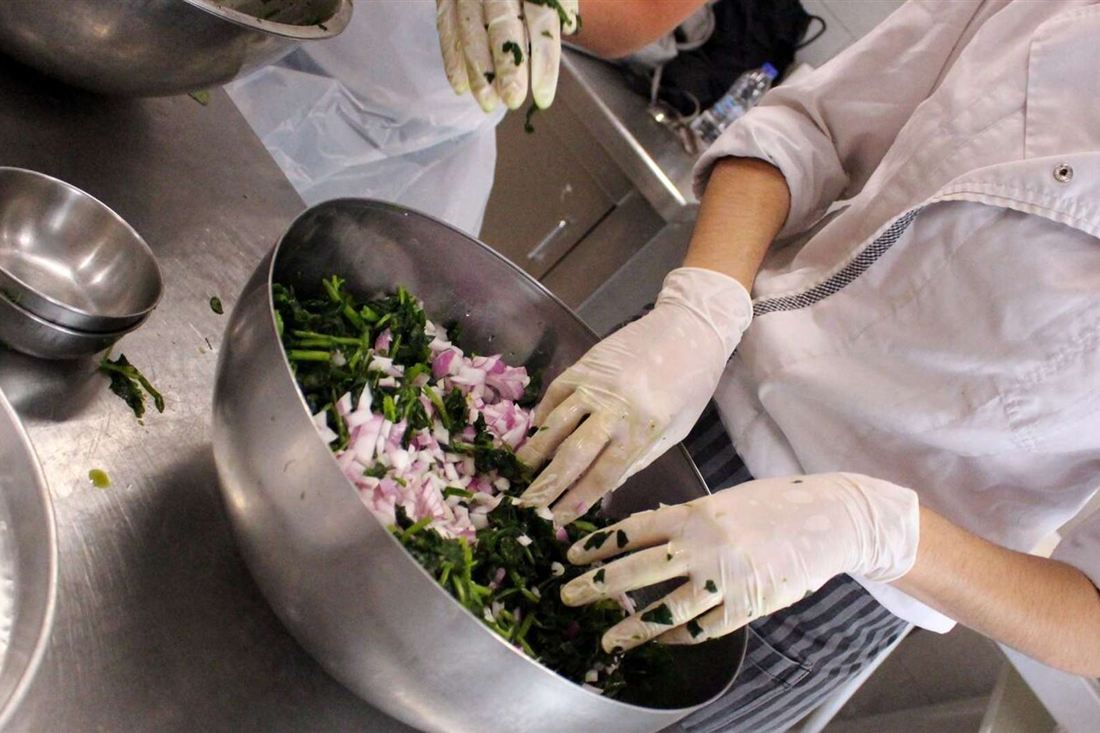
The highest-reviewed class for Athens traditional cuisine has 522 reviews and a 5-star rating. It lasts 4 hours. You make traditional pies and a salad inspired by the Greek islands, then eat dinner on a rooftop.
A second class on Athens traditional cuisine also lasts 4 hours and has 284 reviews. You prepare a 3-course meal. The listing offers a private option and asks you to book at least 10 hours ahead.
Athens traditional cuisine also fits a class of 3 hours 30 minutes. One listing with 233 reviews teaches a vegan menu in central Athens. It uses fresh, seasonal ingredients in a small group, suits all levels and is wheelchair accessible.
One class with 206 reviews cooks Athens traditional cuisine in a stone house in the Kerameikos district. You cook 6 Greek dishes in 3.5 hours. Then you eat in the garden. The listing holds a 5-star rating.
Another class serves Athens traditional cuisine with a view of the Acropolis. You cook a five-course meal with a local chef. The menu lists tzatziki, spinach pie and galatopita. Wikipedia describes tzatziki as strained yogurt mixed with cucumbers, garlic, salt and olive oil. It is served as a cold appetiser.
Wikipedia describes the filling of a spinach pie as chopped spinach, feta, onions or scallions and egg. The filling is wrapped in filo with butter or olive oil. A class puts that recipe in your hands, and you cook the pie yourself.
Two listings say what you take home. One promises techniques you can use for a lifetime, for beginners and seasoned food lovers alike. The 284-review class gives you a copy of all the recipes. A tour hands you the finished plate, while a class hands you the steps. Athens traditional cuisine becomes a skill you can repeat.
One small-group class with 64 reviews starts with a visit to the market. You then cook traditional dishes in a spacious room with a balcony and city views. It runs 3 hours 30 minutes and is wheelchair accessible.
Two 3-hour classes keep the mood loose. In one, a local teaches souvlaki, pita and gyros. You pick a beer or a glass of wine from the fridge. In the other, a shared dinner with traditional desserts and drinks follows the cooking. That class adds dancing and stories.
The classes sort into four formats. Each one teaches Athens traditional cuisine in a different setting:
- Rooftop class: 3 to 4 hours in all, with cooking and then dinner on a roof terrace or in a roof garden.
- Stone-house class: 6 dishes cooked in a Kerameikos house, then a meal in the garden.
- Market-and-cook class: a market visit first, then cooking in a kitchen with a balcony.
- Design-your-menu class: one handmade pie and one dip per person, plus one main and one salad per group.
Read the Athens cooking class page to compare the market visit and the kitchen steps before you book.
Which tastings show Athens traditional cuisine through oil, honey, wine and ouzo?
Tastings show Athens traditional cuisine one product at a time, in sessions from 20 minutes to 3 hours. The listings pour olive oil, honey, wine and ouzo, with olives, cheese and local bites on the side.
Wine fills the highest-reviewed tastings for Athens traditional cuisine. One listing with 439 reviews pours five Greek wines from PDO and PGI regions with local bites. A sommelier leads the 2 hours, and the venue sits close to the Acropolis Museum.
Two shorter wine listings add food. One lasts 1 hour, has 419 reviews and serves cheese and olives, with a virtual tour and a private option. The other lasts 1 hour 30 minutes, has 326 reviews and serves Greek tapas under the Acropolis.
Two longer wine listings go further. A 2-hour workshop with 41 reviews lets you create your own bottle of wine and take it home. A 3-hour estate tour with 33 reviews walks through olive groves and a neogothic tower. It then pours wine with local delicacies. It offers pickup and a private option.
Olive oil sessions for Athens traditional cuisine run from 20 minutes to 1.5 hours. The 20-minute session has 51 reviews. You taste 4 types of extra virgin olive oil with herbs and a glass of wine. A 1.5-hour olive mill tour with 18 reviews ends with tasting and snacks.
A 1-hour oil session with 18 reviews pours two premium Cretan oils. You learn to judge aroma, texture and aftertaste. You then sample olive paste, thyme honey and Cretan raki. The session is wheelchair accessible and runs in a small group.
Honey follows the same pattern in Athens traditional cuisine tastings. The honey listing is a 20-minute session with 25 reviews and a 4.9 rating. You taste five honeys from all over Greece in a small group. You learn honey types, production methods and food pairing.
A market breakfast of 2.5 hours adds olive oil and honey tasting. You also meet the oil producer and the family of beekeepers.
Spirits finish the table in Athens traditional cuisine. The ouzo listing lasts 30 minutes, has 47 reviews and pours five labels of ouzo for a small group. Certified sommeliers lead it.
Each tasting in Athens traditional cuisine rests on a plain product definition. These are the facts the sources give:
- PDO wine: the grapes come only from the home area, says the European Commission page on quality schemes. A PGI wine needs at least 85% of its grapes from the area.
- Extra virgin olive oil: Wikipedia says it has no more than 0.8% free acidity, and the International Olive Council requires a fruity note above zero.
- Peppery or bitter oil: Wikipedia says this taste points to higher polyphenol content.
- Pine honey: a honeydew honey that makes up 60 to 65% of honey production in Greece, according to Wikipedia.
- Monofloral honey: made mainly from the nectar of one flower, and thyme is a European example.
- Ouzo: a dry, anise-flavoured aperitif that turns milky white when you add water, says Wikipedia.
- Tsipouro: an un-aged brandy of 40 to 45% alcohol, made from grape pomace, says Wikipedia.
- Feta: a brined white cheese from sheep milk, or sheep milk with up to 30% goat milk, and a PDO in the EU.
Wikipedia adds that ouzo starts from a 96% rectified spirit with anise added, and the legal minimum strength is 40.5%. The EU lists ouzo, tsipouro and tsikoudia as spirit drinks with a protected geographical indication.
Wikipedia lists four stages of wine tasting: appearance, aroma in the glass, sensations in the mouth and the finish. Tasting a set of wines side by side is called a flight, and it makes the comparison more objective. Five wines in a row, as in the 2-hour listing, make a flight.
Each product has its own page. The Athens olive oil tasting page covers the oil sessions. The Athens honey tasting page covers the honey. The Athens wine tasting page covers the glass.
How does a food tour teach Athens traditional cuisine?
On a food tour you learn Athens traditional cuisine bite by bite, at the shops and markets that make it. The GetYourGuide food-tour listings run from 2.5 to 4 hours and state 8 to more than 18 tastings.
Listings sort into three kinds: the street-food walk, the market tour and the tour with a seated meal. The Athens food tour page lays out the foods, the format and the dietary options of a standard route.
The street-food walk is the short form of Athens traditional cuisine. One listing runs 3 hours and holds 4.9 stars from 4,200 reviews. It states street food with beer or wine, desserts and wheelchair access. Another 3-hour listing states regional food and specialties.
A third listing runs 2.5 hours as a guided street-food walk. The Athens street food guide names the snacks you meet on such a walk.
The market tour goes deeper. The listing with 3,671 reviews takes 4 hours around Varvakios Agora. It states mezze, souvlaki, gyros, pastries from local bakeries and tastes of wine and olive oil at specialty food shops. It also offers a private option.
A smaller market listing runs 3 hours 30 minutes. It states 8 to 10 tastings, food markets and local food shops. It also names one of the oldest bakeries in Athens and its award-winning bread.
A travel magazine names seasonal produce from neighbourhood markets as one base of the local food culture. A market stop puts you at the source of Athens traditional cuisine.
Two listings tie the food to people and streets. One states a visit to what it calls the hippest neighbourhoods in Athens and the main shopping district. Another states that you meet the people who create the culinary story of the city.
The classic route stays in the historical city centre. The listing runs 3 to 3.5 hours and states more than 18 delicacies. It holds 4.9 stars from 412 reviews and states a small group and wheelchair access.
The page of a food-tour operator shows the teaching side of a 3.5-hour route. It lists a Greek charcuterie with three types of cheese and local cured meats. It also lists a comparison of sweet and savory pies made with phyllo and bougatsa dough. Groups hold a maximum of 12.
The seated meal is the long form. The 4-hour market listing states a Greek meal at a downtown taverna. A listing of the same length states more than 15 foods in eateries away from the beaten path. It adds the history of Greek gastronomy. Only the first of the two states a meal at a taverna.
Two evening listings run after dark. One 4-hour listing pairs foods and wines and moves from hidden bars to family taverns, for small groups only. A 3-hour evening listing holds 4.9 stars from 628 reviews.
Every tour listing above states free cancellation, and the booking cut-off runs from 1 to 10 hours. Six of them offer a private option. For a first taste of Athens traditional cuisine, take the 3-hour street-food listing; for depth, take the 4-hour market listing.
Which dinners and shows serve Athens traditional cuisine with music?
Four GetYourGuide dinner listings run from 2 to 4 hours, and three add live music or folk dance. Each serves Athens traditional cuisine differently: a taverna show, a dinner theater or a walk to the table.
The taverna show has the highest review count: 331 reviews at 3.8 stars over 3 hours. The listing states Greek dancing and local food in the heart of Plaka. It names Mediterranean dishes at a historic taverna and folk dances performed by dancers. Pickup is available, and bookings close 4 hours ahead.
The dinner theater is the short form. A 2-hour listing states a regional dinner of five dishes with live theater and folk music. It holds 4.4 stars from 109 reviews and offers skip-the-line entry and wheelchair access. Bookings close 1 hour ahead.
The word regional matters here. The Wikipedia article on Greek cuisine lists regional cuisines that include the Aegean islands, Crete, the Peloponnese and Macedonia. The same article says that apart from the dishes found throughout Greece, there are also regional dishes.
The walk-and-dinner formats give Athens traditional cuisine the longest evening. A 4-hour listing passes the illuminated sights of Athens and ends at a traditional restaurant for local food. It holds 4.9 stars from 34 reviews.
A 3.5-hour small-group listing states a traditional Greek dinner, dessert and drinks at a local spot. It ends with live music and dancing. Its rating is 4.7 stars from four reviews. It also states wheelchair access.
Review counts across the four listings run from 4 to 331. The star rating of the smallest listing rests on four votes. Ratings run from 3.8 to 4.9 stars.
Choose by length first. Two hours fits a short evening. Three hours fits a taverna show, and three and a half to four hours adds a walk. A dinner gives one fixed sitting of Athens traditional cuisine; a food tour gives a run of small bites.
Every dinner listing states free cancellation. Three of them state a booking cut-off, set between 1 and 4 hours. The Greek night in Athens page covers the dances, the music and the plate-smashing question in detail.
What do visitors ask about Athens traditional cuisine?
Athens traditional cuisine asks you to sample a little of everything, as a travel magazine puts it. Visitors ask about island food, spice, vegetarian dishes, children and the season.
Is Athens traditional cuisine the same as island food?
No. Athens traditional cuisine, a travel magazine says, never built a tightly codified food culture, unlike regions and islands. Wikipedia says fish dishes are common on the coast and islands. One evening tour listing lets you taste dakos, a Cretan barley rusk, with olives.
How much time does the cuisine need?
One afternoon or evening gives a short sample of Athens traditional cuisine. A food-tour operator states 5 stops in a 3.5-hour route around Monastiraki and Psyrri. A dinner listing then fills the next evening.
Is it spicy?
The seasoning of Athens traditional cuisine follows Greek cooking. Wikipedia says Greek cuisine uses oregano, mint, garlic, onion, dill, cumin and bay laurel more than other Mediterranean cuisines do. It lists hot pepper among the appetizers, as grilled chili with olive oil and vinegar.
What suits vegetarians?
Greek home cooking includes lathera, which Wikipedia describes as seasonal vegetables stewed with olive oil, herbs and tomato sauce. A travel blog calls briam, a vegetable casserole of potato, zucchini and aubergine, a dish for vegans. A food-tour operator lists its tours as vegetarian-friendly.
Can children join a class or tour?
On one tour, yes. The page of a food-tour operator states ages 4 and up for its route. Children under 4 join free. It lists separate tickets for ages 4 to 12 and 13 to 17.
Which season suits tasting it?
Tastings of Athens traditional cuisine meet less heat in April and October. Wikipedia gives downtown Athens average highs of 21.1 degrees Celsius in April, 24.4 in October and 34.3 in July. A travel magazine says spring in Athens is all about artichokes.