
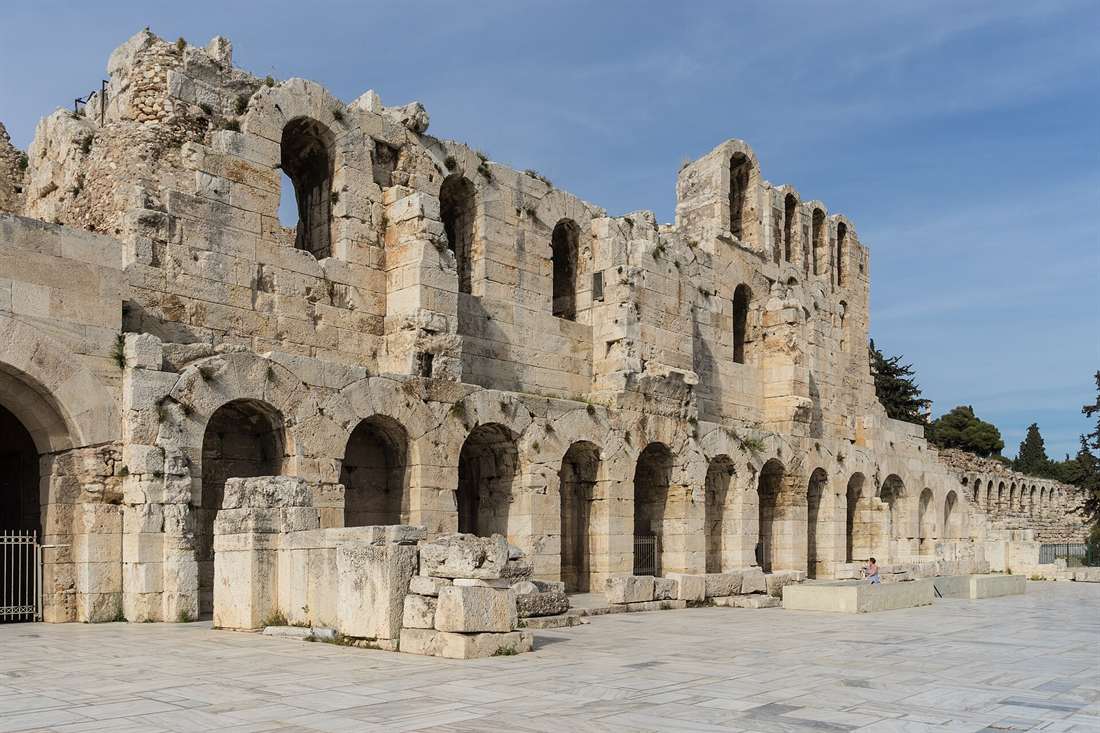
The Odeon of Herodes Atticus, completed in AD 161, seats 5,000 below the Acropolis, and the Athens and Epidaurus Festival still stages ancient tragedy on its stage. A craft class in the same city runs two to three hours and ends with a ceramic cup, a leather sandal or a painted silk scarf in your hands.
Walking tours of two to four hours cover the Acropolis, the Agora and Pnyx Hill, while a street art walk and a rebetiko night fill the evenings. If you are still deciding what to do in Greece beyond the capital, the Greece Tours homepage shows each region and the tours behind it.
What are Athens cultural experiences, and which kinds can you book?
Athens cultural experiences cover six kinds: stage shows, craft classes, myth walks, street art tours, live rebetiko and Greek nights. Each kind has a page of its own on this site. The listings behind them run from one hour to four hours.
Athens cultural experiences differ from a museum visit because you take part. You sit in a theater or shape clay with your hands. Or you walk beside the ruins while a guide tells the story. Every stage, class and walk listing in these kinds carries a free cancellation label.
- Stage shows: live theater in English, from an interactive play to a festival night at an ancient theater. Read about the Athens theater show options.
- Myth walks: a guided walk past ancient ruins, where the guide tells the old stories. The Athens mythology tour page covers the route.
- Craft classes: a workshop where you finish an object to take home. The Athens pottery class page covers clay work.
- Street art: a guided walk past murals and graffiti in the city’s districts. The Athens street art page covers the scene.
- Live music: an evening of rebetiko, a style of urban Greek popular music, played live. Read about live rebetiko music in Athens.
- Greek nights: a meal paired with a show. The page on a Greek night in Athens covers the choices.
The six kinds sort into three formats. You sit and watch at stage shows, live music nights and Greek nights. You walk and listen on myth walks and street art tours. You make something in a craft class. That split helps a group with mixed tastes choose among Athens cultural experiences.
Which ancient theater performances count as Athens cultural experiences?
Two kinds of stage outing count. One is a festival night at the Odeon of Herodes Atticus. The other is an English-language show of one to three hours. Both are Athens cultural experiences with roots in the ancient stage.
The Theatre of Dionysus sits on the south slope of the Acropolis. Wikipedia’s article on it calls it the oldest theater. It says the theater hosted the City Dionysia, a festival for the god Dionysus. That history sits behind the Athens cultural experiences on stage today.
Wikipedia’s article on the Odeon says it was completed in AD 161. It stands on the southwest slope of the Acropolis, on Dionysiou Areopagitou Street. The article gives a capacity of 5,000 and 33 rows of marble seats.
Restorers used Pentelic marble on the audience stands and the orchestra in the mid twentieth century. Since then the Odeon has been the main venue of the Athens Festival, which runs from late spring through October.
The Athens and Epidaurus Festival presents tragedies by Aeschylus, Sophocles and Euripides, and comedies by Aristophanes. It also presents revivals of ancient myths and new plays based on ancient dramas. Its other home is the ancient theater of Epidaurus, which holds 10,000 people.
For Athens cultural experiences on this stage, check the festival programme and the venue status before you pick a date. The official visitor guide of the city names the Lycabettus Theatre as another open-air stage.
The highest-reviewed stage listing sits at the foot of the Acropolis. The performance runs in English and lasts 1 hour 15 minutes. In it, a tourist wakes in fifth-century Athens and meets Medea and Odysseus. A skip-the-line label shows on the listing.
Another listing is a one-hour interactive murder mystery in English. Costumes, props and sets recreate ancient Athens, and the listing is marked wheelchair accessible.
A third listing pairs Greek dancing with local food in Plaka over three hours, with pickup available. The Athens cultural experiences here differ by venue type: a festival theater, an interactive set and a taverna table.
Which hands-on Athens cultural experiences teach a craft?
Craft classes are the hands-on side of Athens cultural experiences. The craft listings run two to three hours. You make a ceramic cup, a clay Hermes face, leather sandals or a silk scarf and keep the result.
The beginner pottery listing lasts 2 hours 30 minutes in a small group. You create your own ceramic mug from scratch, and the listing is marked wheelchair accessible. It runs in English and Greek.
The sculpture listing lasts two hours. You shape the face of Hermes in air-drying clay with expert guidance and carry it home. The silk listing also lasts two hours and suits beginners, who paint on silk in a small group.
The sandal listing lasts three hours at a workshop on the Athens Riviera coast. You pick a design and a leather color, then handcraft a pair with traditional methods. The Athens sandal workshop page covers that class, and the listing offers a private option.
Food classes sit beside the crafts as Athens cultural experiences. Three cooking listings last four hours each. One starts at a market and ends with wine. One ends with dinner on a rooftop. One teaches a three-course meal and hands you a copy of the recipes.
A class differs from a tour because you stay at one workbench or table from start to finish. A tour moves between stops. Among Athens cultural experiences, a class is the one that ends with an object or a meal.
Craft has a long record in the city. Wikipedia’s article on the Temple of Hephaestus says Hephaestus was believed to be the patron god of craftsmanship. It also places potters’ workshops and metal-working shops near the temple, on the edge of the Agora.
Two more Athens cultural experiences of the craft kind have pages of their own. For a mosaic class, read the Athens mosaic workshop page. For a jewelry class, the Athens jewelry workshop page lists the formats.
Which walking tours turn history and myth into Athens cultural experiences?
Guided walks of two to four hours turn ruins into Athens cultural experiences. The listings cover the Acropolis, the Ancient Agora, the Tower of the Winds and Pnyx Hill. Guides work in English, French or Spanish.
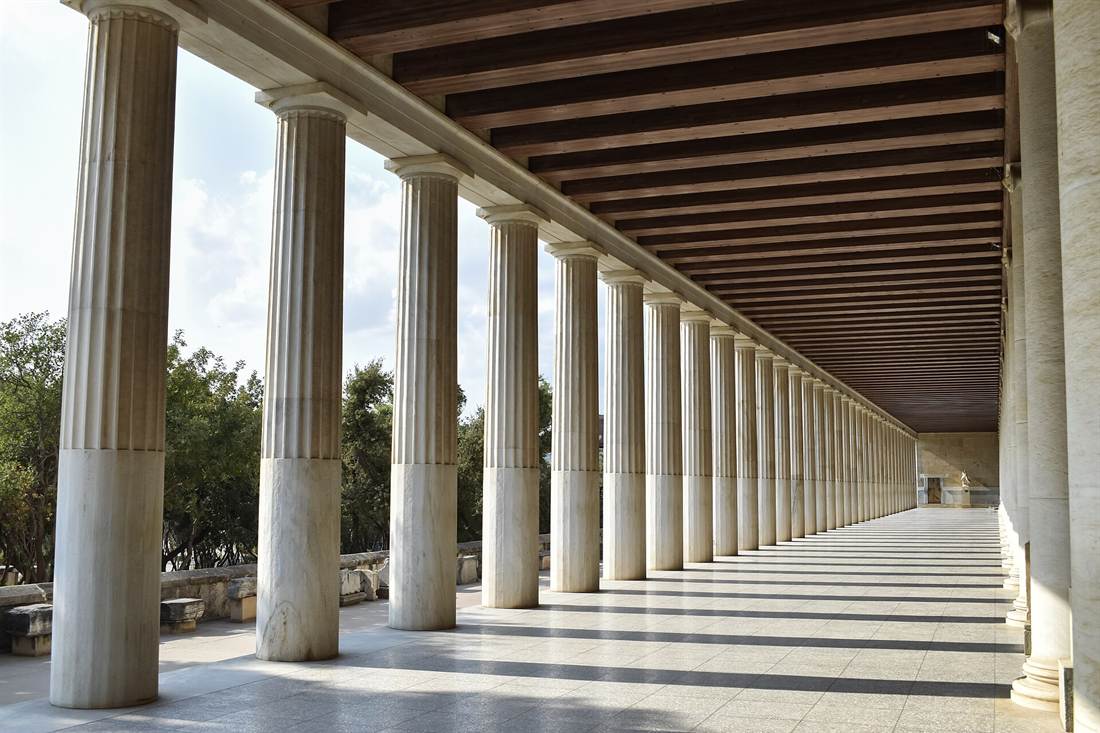
The 2-hour heritage listing covers the Acropolis and the Parthenon. It carries a skip-the-line label and runs in English or Spanish. An upgrade adds the old town and its last surviving public baths.
The 4-hour heritage listing uses a licensed guide. It makes the Agora one of the longer Athens cultural experiences on foot. It starts with the Parthenon and the Erechtheion, then passes the Temple of Athena Nike. The Agora part adds the Stoa of Attalos and the Temple of Hephaestus.
The highest-reviewed mythology listing runs two to four hours in a small group, with English and French guides. It tells the myths behind the Acropolis, the Temple of Zeus and the Ancient Agora. It carries a bestseller label.
Myth shows in the stone too. Wikipedia’s article on the Temple of Hephaestus says ten metopes on the east side show the Labors of Heracles. Metopes at the east end of the long sides show the Labors of Theseus.
Wikipedia’s article on the Tower of the Winds says eight large wind-god reliefs circle the top of the tower. It calls the tower the only surviving clock tower from classical antiquity.
Walks sort into Athens cultural experiences by theme: heritage, myth or philosophy. Heritage listings stress the monuments, the mythology listing stresses the stories and the philosophy listing stresses democracy.
The philosophy and democracy listing lasts 3.5 hours in English. It stops at Pnyx Hill, the Ancient Agora and Hadrian’s Library, and ends at the Tower of the Winds. The Athens philosophy tour page covers that theme in depth. For other routes, read the Athens walking tour page.
How does street art fit into Athens cultural experiences?
Street art is the walking kind of Athens cultural experiences. A guide leads you from mural to mural. The three street-art listings run 2 hours, 2 hours 30 minutes and 3 hours, and each offers English.
The Wikipedia article on street art says the Greek scene has been active since the late 1980s. It gained momentum in Athens before the financial crisis. Artists used walls for resistance, allegory and social comment in the historic centre and in Exarcheia.
The same article says street art in neighbourhoods such as Psiri includes work filed under “artivism”. The Wikipedia article on Psyri says the old quarter had an ill reputation until the early 1990s.
Today it is known for restaurants, bars and live-music tavernas, and its central square is Heroes Square. It sits between Monastiraki to the south and Omonoia to the north.
The Wikipedia article on Metaxourgeio says the name means silk mill. After years of abandonment, the area gained a name as an artistic neighbourhood as galleries, museums and cafés opened. Avdi Square, at its centre, holds theatres and an art gallery. Line 2 of the metro serves the district.
The Wikipedia article on Exarcheia calls it an art hub, with theatre shows and concerts around the central square. The district lies close to the National Technical University of Athens. The indoor side of Athens cultural experiences is covered by our Athens art galleries page, which names the gallery districts.
Three listings put a guide in front of the murals. One names a street-artist guide, offers English and French and has a private option. Another is labelled a small group.
The listing with the highest review count shows 4.9 stars from 400 reviews. The walks differ in length, so pick by hours: these Athens cultural experiences run from 2 to 3 hours.
Which music and dance evenings are Athens cultural experiences?
Rebetiko and regional Greek dance are the two music and dance Athens cultural experiences with official backing. UNESCO lists rebetiko, and a Philopappos Hill theatre stages Greek dances with a company of 75 dancers, musicians and singers.
The UNESCO page on rebetiko says the practice joined the Representative List, the register of intangible heritage that UNESCO keeps. That happened at the 12th session of the Intergovernmental Committee. The page calls the practice open to all.
It adds that performers play in public and encourage the audience to join in. That makes rebetiko one of the Athens cultural experiences where the audience takes part.
The same page says rebetiko began among urban lower and working-class people in the early twentieth century. Older musicians passed it on by mentoring younger ones, and recordings, mass media and cinema now help. Music schools, conservatories and universities teach it more and more.
The Wikipedia article on rebetiko calls it the urban popular song of the Greeks. The article says the bulk of the songs rest on traditional Greek or Anatolian dance rhythms. They include the zeibekiko, in a 9/4 or 9/8 meter, and the tsifteteli, a cheerful dance for women.
That link to dance is why music and dance evenings sit together among Athens cultural experiences. A folk-dance night shows you regional steps in costume.
The website of the Dora Stratou theatre says its programme changes every second Thursday. Each show lasts 90 minutes without an interval, a fixed running time among Athens cultural experiences.
The shows present the regions of Greece, each village or island through its own dances, costumes, instruments and songs. The wardrobe holds 2,000 historical costumes, handmade in villages more than a century ago.
The garden theatre was designed for the company and sits on the back of Philopappos Hill, opposite the Acropolis. The website names Acropolis station on metro line 2 as the stop for the pedestrian entrance. That entrance opens only for summer events.
The same website says the Ministry of Culture and the National Tourism Organization fund its cultural and educational work.
How do you choose between Athens cultural experiences?
Six checks decide between Athens cultural experiences: duration, language, group size, indoor or outdoor, time of day, access and age. The listings differ on each check, from 75 minutes to 4 hours and from one language to six.
- Duration. The stage-show listing runs 75 minutes and the street-art walks 2 to 3 hours. The two Acropolis and museum listings run 2 hours and 2 to 4 hours, and the food tour runs 4 hours.
- Language. One Acropolis listing offers English, Italian and French. Another offers English, French, Greek, Italian, Spanish and German. The street-art listings and the food tour offer English, and one street-art listing adds French.
- Group size. One street-art listing, the pottery listing and the silk-scarf listing carry a small-group label. Two street-art listings, both Acropolis listings and the food tour offer a private option.
- Indoor or outdoor. Two street-art listings are walking tours. A museum visit adds indoor halls. The Dora Stratou theatre is a garden theatre.
- Time of day. The Dora Stratou theatre starts shows at 9:30 pm on Thursday and Friday and at 8:30 pm on Saturday and Sunday. That makes it an evening plan.
- Access and age. The pottery and silk-scarf listings carry a wheelchair accessible label. The stage-show listing sets its adult category at 15 and over and its child category at 5 to 14.
Museum visits sit at the indoor end of the list. One museum listing lets you see excavations beneath glass floors and walkways. Read the Athens museums guide before you pick between indoor Athens cultural experiences.
Review counts help too when you compare Athens cultural experiences. Of the two Acropolis and museum listings, one has 14,451 reviews at 4.8 stars. The other has 10,146 at 4.7 stars. The food tour shows 4.9 stars from 3,671 reviews and a bestseller label.
Add the durations before you book two Athens cultural experiences on one day. A 3-hour street-art walk plus a 75-minute stage show makes 4 hours 15 minutes.
What do visitors ask about Athens cultural experiences?
How long does a craft class last?
Hands-on Athens cultural experiences run 2 to 3 hours across four listings. Pottery takes 2.5 hours, a silk-scarf class 2 hours, a clay-sculpture class 2 hours and leather sandals 3 hours.
Do performances run in English?
Yes for the stage show. Its listing states English for all ages and says wine or juice is included.
Which district suits street art?
Exarcheia suits graffiti, since the Wikipedia article says the district contains examples of anti-capitalist graffiti. If you cannot choose, one 3-hour listing visits three neighbourhoods with a street-artist guide.
Can children join?
Yes, where a listing sets a child category. Child categories for these Athens cultural experiences start at age 6 on the 3-hour street-art walk. They start at age 4 on the Acropolis and museum tour and age 5 on the food tour.
Is booking ahead needed?
Athens cultural experiences set different booking cut-offs. The stage show needs a booking 5 minutes ahead, and one street-art walk needs 2 hours. Two street-art walks need 10 hours, and one Acropolis and museum tour needs 24 hours.
Can visitors learn the dances themselves?
Yes. The website of the Dora Stratou theatre lists group and private dance classes for beginners and advanced dancers. It says classes run on any day of the year and in English.