
Athens is a paradise for Greek sweets — honey-soaked baklava, crisp loukoumades and creamy galaktoboureko, served in patisseries that have run for generations. Discover them alongside skip-the-line sightseeing tickets and tours from My Greece Tours.
Sweets are a delicious thread through the Athens travel guide. The sections below cover the classic Greek desserts, where to try baklava and loukoumades, the historic pastry shops, the sweet rituals and customs, and tips for a dessert tour of the city.
What are the classic Greek sweets to try?
The classic Greek sweets to try in Athens are baklava (layered filo with nuts and honey syrup), loukoumades (honey-drenched fried dough balls), galaktoboureko (custard baked in filo with syrup), kataifi (shredded-pastry nut rolls), bougatsa (custard or cheese pie), and ekmek kataifi. Also try Greek yoghurt with honey, spoon sweets (fruit preserves), halva and rizogalo (rice pudding). Most are syrup-soaked and intensely sweet, rooted in centuries of Greek and Ottoman tradition, and found in every patisserie across the city.
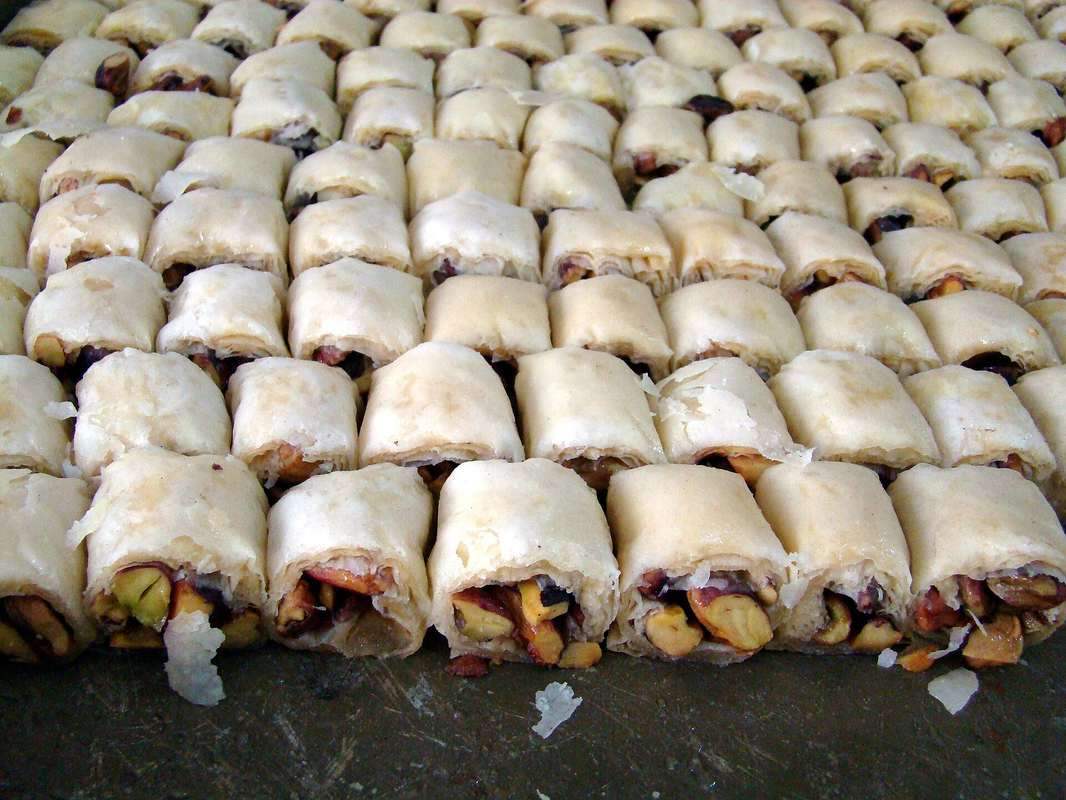
Greek desserts are a world of honey, nuts, filo pastry and syrup, and Athens is the perfect place to explore them. The most famous is baklava, made of many paper-thin layers of filo packed with crushed walnuts or pistachios and drenched in honey syrup, but it is only the start.
Equally beloved are loukoumades, little balls of fried dough soaked in honey and dusted with cinnamon, often called Greek doughnuts, and galaktoboureko, a luscious semolina custard baked between sheets of crisp filo and bathed in syrup. Look out too for kataifi, nut rolls wrapped in shredded pastry like fine threads, for ekmek kataifi layered with cream, and for bougatsa, a breakfast pastry filled with custard or cheese. Beyond the pastry counter lie simpler pleasures: thick Greek yoghurt drizzled with honey and walnuts, glistening spoon sweets of preserved fruit served with coffee, dense blocks of halva, and creamy rice pudding called rizogalo. Most Greek sweets are gloriously syrup-soaked and rich, the legacy of centuries of Greek and Ottoman confectionery.
Where can you try the best baklava and loukoumades?
For the best baklava in Athens, try Ta Serbetia stou Psyrri, near Hadrian’s Library, which offers versions with pistachios, walnuts and almonds, or Karavan, a tiny long-running shop famed for its syrup pastries. For loukoumades, the historic Krinos on Aiolou Street has served honey-soaked, cinnamon-dusted loukoumades since, while Stani near Omonia has made them since. These historic shops specialise in single sweets perfected over decades, and seeking them out is part of the pleasure.
Athens rewards the dessert hunter with historic specialist shops that have perfected single sweets over generations. For baklava, a fine destination is Ta Serbetia stou Psyrri, in the lively Psyrri district near Hadrian’s Library and a short walk from the Acropolis, which explores the full potential of the pastry with versions layered with different nuts, from pistachios to walnuts and almonds.
For loukoumades, the honey-soaked fried dough balls that are perhaps the most addictive of all Greek sweets, the classic address is Krinos on Aiolou Street, a beautifully old-fashioned shop that has been frying them since, getting them perfectly crisp outside and soft within, dressed in honey syrup and cinnamon. Another historic name is Stani, an authentic dairy patisserie open since, also celebrated for its loukoumades and its dairy sweets. These long-lived shops, with their nostalgic interiors and single-minded devotion to one or two desserts, are part of the experience, so tracking them down across the city centre is half the fun.
Which historic pastry shops are worth visiting?
Athens has several historic patisseries (zacharoplasteia) worth visiting. Varsos in Kifissia, open since 1892, is a beloved institution for galaktoboureko and traditional sweets. Kosmikon claims the longest history in galaktoboureko since. Chara on Patission Street, open since, specialises in syrup pastries and ice cream. These family-run shops keep secret recipes passed down for decades, serve sweets with old-world charm, and offer an authentic taste of Athenian sweet culture beyond the tourist trail.
The traditional Greek pastry shop, the zacharoplasteio, is an institution in Athens, and several historic examples are destinations in their own right. The grande dame is Varsos in the leafy northern suburb of Kifissia, open since 1892 and treasured by generations of Athenians for its galaktoboureko, its rice pudding and its array of old-fashioned sweets served in a wonderfully nostalgic setting.
For galaktoboureko in particular, Kosmikon claims the longest pedigree, specialising in the custard pastry since, while Chara, open since on Patission Street, is a nostalgically styled gem known for its syrup-soaked pastries and its voluptuous ice creams. What these shops share is continuity: many are family-run, guarding recipes handed down and kept secret for decades, and serving their sweets with an unhurried, old-world charm that the modern café cannot replicate. Visiting one is a step into the Athens of the past, and a far more authentic taste of the city’s sweet culture than anything found on the tourist trail. They are best enjoyed slowly, with a coffee.
What are the sweet rituals and customs?
Greek sweets are tied to rituals of hospitality and celebration. A guest is traditionally offered a spoon sweet, a fruit preserve served on a spoon with a glass of water and coffee, as a welcome. Sweets mark festivals: melomakarona and kourabiedes at Christmas, tsoureki and red eggs at Easter, vasilopita on New Year’s Day. Desserts are usually enjoyed with coffee in the afternoon rather than straight after dinner. Understanding these customs makes a sweet tour of Athens richer and more meaningful.
In Greece, sweets are bound up with hospitality and the calendar, not merely indulgence. The oldest custom is the spoon sweet, a single spoonful of fruit preserved in syrup, cherry, bitter orange, quince or fig, offered to a guest on arrival with a glass of cold water and a cup of coffee as a gesture of welcome, a tradition still alive in homes and old cafés.
Many sweets belong to particular festivals. Christmas brings honey-soaked melomakarona and snowy, sugar-dusted kourabiedes; Easter is marked by sweet braided tsoureki bread and red-dyed eggs; and New Year’s Day is celebrated with vasilopita, a cake baked with a lucky coin inside. In daily life, Greeks tend to enjoy their pastries not immediately after dinner but in the afternoon, with a coffee, as a sociable pause in the day, often shared. Knowing these rhythms, when a sweet is offered, what it means, and when Athenians actually eat dessert, adds depth to a sweet tour and helps you taste the city the way locals do, rather than simply ordering at random.
It helps to understand where Greek sweets come from, as the history adds flavour to the tasting. Many of the syrup-soaked pastries, baklava, kataifi and galaktoboureko among them, share roots with the wider eastern Mediterranean and the Ottoman world, refined over centuries into distinctly Greek forms, while others, like spoon sweets and semolina halva, are village traditions of preserving the harvest.
This heritage is why the historic patisserie, the zacharoplasteio, matters so much in Greek culture: these shops are keepers of recipes and rituals as much as sellers of cakes. Seeking out the old, family-run establishments rather than modern chains connects you to that continuity, and tasting a galaktoboureko or a tray of loukoumades made the traditional way is a small but genuine encounter with the city’s living food heritage, well worth building a morning around.
How do you plan a sweet tour of Athens?
To plan a sweet tour of Athens, focus on the central districts of Psyrri, Monastiraki and the area around Aiolou and Athinas streets, where many historic patisseries cluster within walking distance. Go mid-morning or mid-afternoon when shops are freshly stocked, order one or two sweets to share at each, and pair them with a Greek coffee. Bring cash for the smaller shops, and consider a guided food or dessert tour to learn the stories behind the sweets and discover hidden gems.
A dessert crawl through Athens is easy to arrange because so many of the historic sweet shops cluster in the walkable central districts. A good area to focus on is the heart of the old commercial centre around Aiolou and Athinas streets, near Monastiraki and Psyrri, where landmark patisseries and loukoumades shops stand within a few minutes of one another, with the Acropolis never far away.
Timing helps: visit in the mid-morning or mid-afternoon, when the day’s sweets are freshly made and the shops are at their best, and resist the urge to over-order, instead choosing one or two desserts to share at each stop so you can sample several places without overwhelming your sweet tooth. Pair each with a small Greek coffee, the traditional accompaniment, to cut the sweetness. Carry some cash, as the smaller, older shops may not take cards. And if you want to go deeper, a guided food or dessert tour will lead you to the best counters, explain the history and traditions behind each sweet, and uncover hidden gems you would never find alone. The questions below cover what visitors ask most.
However you taste them, the syrup-soaked, honey-rich sweets of Athens, enjoyed slowly with a coffee in a historic patisserie, are a delicious window onto the city’s living traditions of hospitality, craft and celebration. Whether you hunt down the best loukoumades, share a tray of baklava, or simply accept a spoon sweet offered in welcome, the sweets of Athens are a small but heartfelt taste of Greek generosity that lingers long after the trip.
Frequently Asked Questions
What is the most famous Greek dessert?
The most famous Greek dessert is baklava, made of many layers of thin filo pastry filled with crushed nuts and soaked in honey syrup. Other beloved classics include loukoumades, honey-drenched fried dough balls, and galaktoboureko, a custard baked in crisp filo and bathed in syrup. All three are widely available in Athens patisseries, and most Greek sweets share the same rich, honey-and-filo character rooted in Greek and Ottoman tradition.
Where can you try Greek sweets in Athens?
You can try Greek sweets at historic patisseries across central Athens. For loukoumades, visit Krinos on Aiolou Street, frying them since; for baklava, try Ta Serbetia stou Psyrri near Hadrian’s Library; and for galaktoboureko, Varsos in Kifissia or Kosmikon. These family-run shops in districts like Psyrri and Monastiraki specialise in traditional sweets, often perfected over decades, and are best enjoyed with a Greek coffee.
When do Greeks eat dessert?
Greeks usually eat sweets in the afternoon with a coffee, as a sociable pause, rather than immediately after dinner. Desserts are also tied to celebrations: melomakarona and kourabiedes at Christmas, sweet tsoureki at Easter, and vasilopita on New Year’s Day. A guest is traditionally welcomed with a spoon sweet, a fruit preserve served with water and coffee. This makes sweets in Athens part of hospitality and ritual as much as a treat.