
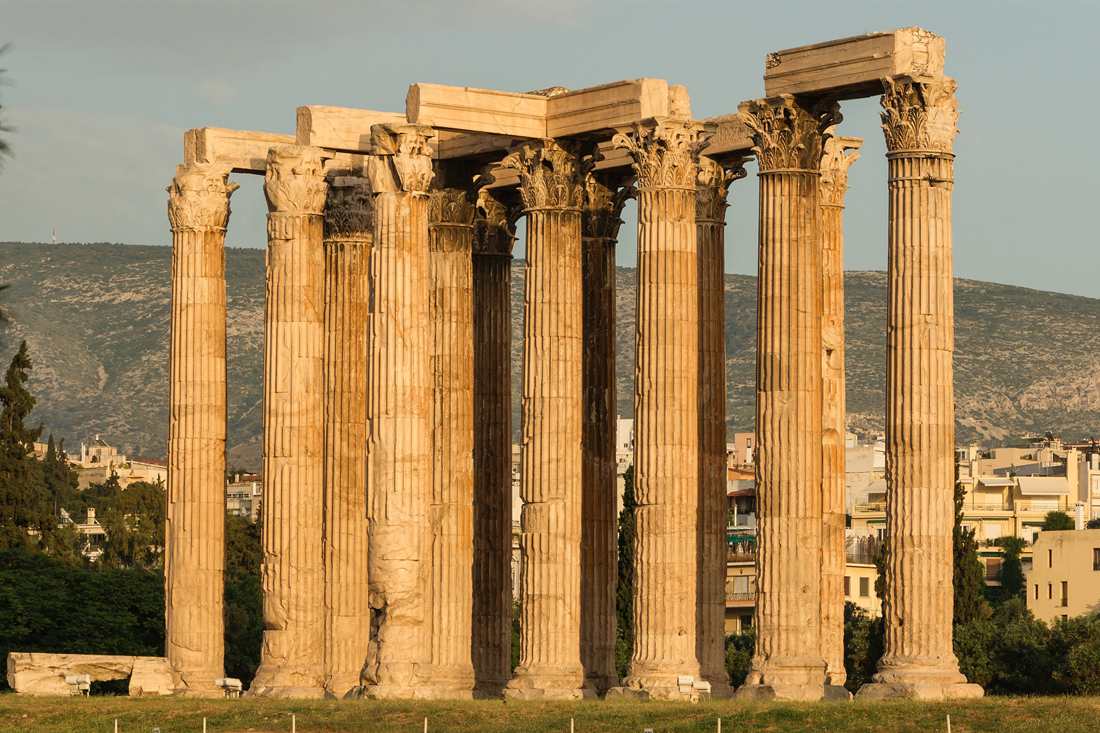
The Athens avoid crowds time starts with the calendar. The airport counted 3.76 million passengers in July and 1.75 million in February. The Ancient Agora and Olympieion admit their first visitors at 8:00. The Syntagma guard ceremony draws its crowd at 11:00 every Sunday.
Tours shift the visit as well. Two listings start with an early-morning Acropolis entry, and a third limits its group to eight guests. If the trip also includes an island, the Greece Tours homepage sorts boat trips and day tours by region.
What is the Athens avoid crowds time on a normal day?
Fixed opening hours set the Athens avoid crowds time. The Ancient Agora and the Olympieion open at 8:00. The first weekday metro train leaves Syntagma at 5:37. Summer closing times of 19:30 and 20:00 leave a late window.
The day starts with the metro. The first Line 2 train towards Anthoupoli leaves Syntagma at 5:37 on weekdays and at 5:43 on Sunday. The last one leaves at 00:23 from Monday to Thursday and on Sunday, in both directions.
A full Line 2 ride from Anthoupoli to Elliniko takes about 32 minutes by the timetable. That figure shows how early to leave an outer district for the 8:00 Athens avoid crowds time.
The Ancient Agora opens at 8:00 in winter and in summer. The Olympieion also opens at 8:00 in both seasons. These two sites give the earliest fixed start of the day. That makes the opening hour the first Athens avoid crowds time window.
The National Archaeological Museum opens later in winter. From Wednesday to Monday its doors open at 8:30 and close at 15:30. In summer it opens at 8:00 and closes at 20:00. That sets the museum’s Athens avoid crowds time 30 minutes later in winter than in summer.
Closing times set the other end of the day. The Ancient Agora closes at 16:30 in winter and 19:30 in summer. The Olympieion closes at 15:00 in winter and 20:00 in summer.
Last entry comes before closing. The Agora lists 16:10 in winter and 19:00 in summer. The Olympieion lists 14:40 in winter and 19:30 in summer. The museum lists 15:00 in winter and 19:30 in summer.
Together these hours form a simple Athens avoid crowds time plan. The first window is the start of opening hours. The second is the stretch before last entry, which runs later in summer than in winter.
Ministry pages also carry urgent notices that change the hours for a single day. Check the page of each site before fixing a plan around the Athens avoid crowds time.
Queue tactics for the Acropolis itself sit in our guide to avoiding crowds at the Acropolis. This part covers the rhythm of the wider city instead.
Which day of the week is the Athens avoid crowds time?
A weekday is the Athens avoid crowds time for the two Sunday events in the centre. The guard ceremony at the Tomb of the Unknown Soldier starts at 11:00 every Sunday. The visitor guide singles out Sunday morning for the Monastiraki flea market.
The National Archaeological Museum has its own weekly pattern. On Tuesday it opens at 13:00 and closes at 20:00 in both winter and summer, with last admission at 19:30. Tuesday morning suits other sites, and Tuesday afternoon suits this museum.
The Ancient Agora and the Olympieion list one set of hours for each season. Their Ministry pages name no weekday exception. A weekday Athens avoid crowds time plan puts both sites in the morning and the museum on Tuesday afternoon.
The Tomb of the Unknown Soldier lies off Syntagma Square, below the Hellenic Parliament. Every Sunday at 11:00 the Evzones march there with a military band. They set out from their barracks behind the Parliament and walk along Vasilissis Sofias Avenue.
The Evzones also stand a 24-hour honour guard, with a sentry change every hour in slow motion. The Sunday change at 11:00 is the ceremonial one. A changing-the-guard guide calls it a popular tourist attraction.
The Athens visitor guide says the Monastiraki flea market has bargains galore, especially on Sunday morning. Traders sell bric-a-brac on the streets around Avissinia Square and Thissio station.
A visitor who wants space around Syntagma and Monastiraki finds the Athens avoid crowds time on a weekday. A visitor who wants to watch the two events picks Sunday on purpose.
The metro also changes with the weekday. On Friday the last Line 2 departure from Syntagma is at 2:00. On Saturday Lines 2 and 3 run a 24-hour service, and the airport routes are excluded.
Greek residents add short domestic breaks. The Hellenic Statistical Authority’s latest annual travel data count 2.1 million trips of up to three nights. That is a rise of 26.7%, and overnight stays on those trips rose by 27.8%.
In the same data, 85% of personal trips took place inside Greece. A stay of up to three nights fits inside a weekend. The figures do not name Athens. They give a national backdrop for any weekend Athens avoid crowds time choice.
Which months bring the biggest crowds to Athens?
July is the busiest month in the airport figures, with 3.76 million passengers. February had 1.75 million and January 1.83 million. The lowest totals sit in winter, so the Athens avoid crowds time leans towards those months.
Athens International Airport publishes passenger totals every month. Its July release lists each month from January to July. Those seven months give a clear picture of how the totals climb.
Totals rose every month from February. February had 1.75 million passengers and March had 2.22 million. April had 2.71 million and June had 3.45 million.
January traffic stood 14.5% above the same month a year earlier. July traffic stood 4.1% above its comparison month. Over January to July the airport counted 18.83 million passengers, 6.9% above the earlier period.
July handled more than twice the January total. That gap is the clearest sign in the data that the Athens avoid crowds time shifts with the calendar.
The Hellenic Statistical Authority counts visits to museums and archaeological sites. It reports 1,369,460 visitors for March and 2,163,455 for July. Those totals cover all the museums and sites in its survey, not only Athens.
The Acropolis of Athens recorded 420,901 visitors in March and 493,802 in July. The National Archaeological Museum recorded 48,770 in March and 68,135 in July.
Against the same month a year earlier, July brought 10.9% fewer visitors to archaeological sites and 3.8% fewer to museums. Airport traffic rose 4.1% in that month.
The two datasets measure different things. Airport figures count passengers, and the Statistical Authority counts entries at museums and sites. Both put July above the other months they list. A planner looking for the Athens avoid crowds time reads July as the high end of both.
Seasonal hours move the late Athens avoid crowds time window with the calendar. The Ancient Agora closes at 19:00 from 1 September. Closing drops to 18:30 on 16 September, 18:00 on 1 October and 17:30 on 16 October.
The National Archaeological Museum splits its year at two dates. Winter hours begin on 16 November and run to the first days of late spring. Summer hours then run until 15 November.
For temperatures and rain, read our guide to Athens weather by month. This page keeps to visitor counts.
One plan follows from the figures. Choose a month with a lower airport total, then arrive at opening. That is an Athens avoid crowds time plan built on published numbers.
Which Athens sights fill up first, and what is the Athens avoid crowds time for each?
The Acropolis leads the annual table of the Hellenic Statistical Authority with 4,557,693 visitors. The Acropolis Museum follows with 1,994,251. Each official page sets the Athens avoid crowds time through its opening hour.
The Hellenic Statistical Authority publishes visitor counts for state museums and archaeological sites. Its annual table gives the Acropolis 4,557,693 visitors, the largest named figure. The National Archaeological Museum has 642,956 visitors in the same table.
Hellenic Heritage says the Acropolis opens at 08:00 daily. Closing moves from 20:00 in April to August to 17:00 from November to March. Last admission is 20 minutes before closing. For this rock, the Athens avoid crowds time is the opening hour.
The Acropolis Museum is the second-largest entry in that table, with 1,994,251 visitors. Our highlights page covers what its galleries hold.
In the summer season the National Archaeological Museum is open from Wednesday to Monday, closing at 20:00. Last admission is 19:30. The last hour before 19:30 is one Athens avoid crowds time window for this museum.
In the winter season the same days run from 08:30 to 15:30, with last admission at 15:00. Then the morning opening gives a clear Athens avoid crowds time, because the afternoon is short.
Tuesday follows its own timetable. The museum opens at 13:00 in both seasons and closes at 20:00. Last admission is 19:30. A morning at another site and an afternoon here make a different route for an Athens avoid crowds time plan.
The annual table has no separate line for Kerameikos, the Ancient Agora or the Temple of Olympian Zeus. It counts other sites together in one row called “Other archaeological sites”.
The Ministry of Culture lists the Ancient Agora as an archaeological area. It also lists the Stoa of Attalos, the Temple of Hephaistos, the Bouleuterion and the Tholos as monuments.
Hellenic Heritage gives the Ancient Agora an 08:00 opening every day. In winter it closes at 17:00, and last admission is 20 minutes before closing. The Museum of the Stoa of Attalos opens at 10:00 on Tuesdays. The site opens earlier, and that early hour is its Athens avoid crowds time.
The Ministry also lists the Temple of Olympian Zeus among its monuments. From April to August, Hellenic Heritage gives it daily hours that start at 08:00 and end at 20:00. From November to March it closes at 15:00. Last admission is 20 minutes before closing.
That short winter day makes a morning arrival the Athens avoid crowds time for the temple. These hours are timetable facts, not attendance counts. Check the official page again before you fix a plan around any of them.
Which quiet Athens sights give the same history with fewer people?
Kerameikos, the Roman Agora, Hadrian’s Library, the Pnyx and three museums tell the same ancient story as the Acropolis. Each one publishes its hours and fits an Athens avoid crowds time plan built around its opening hour.
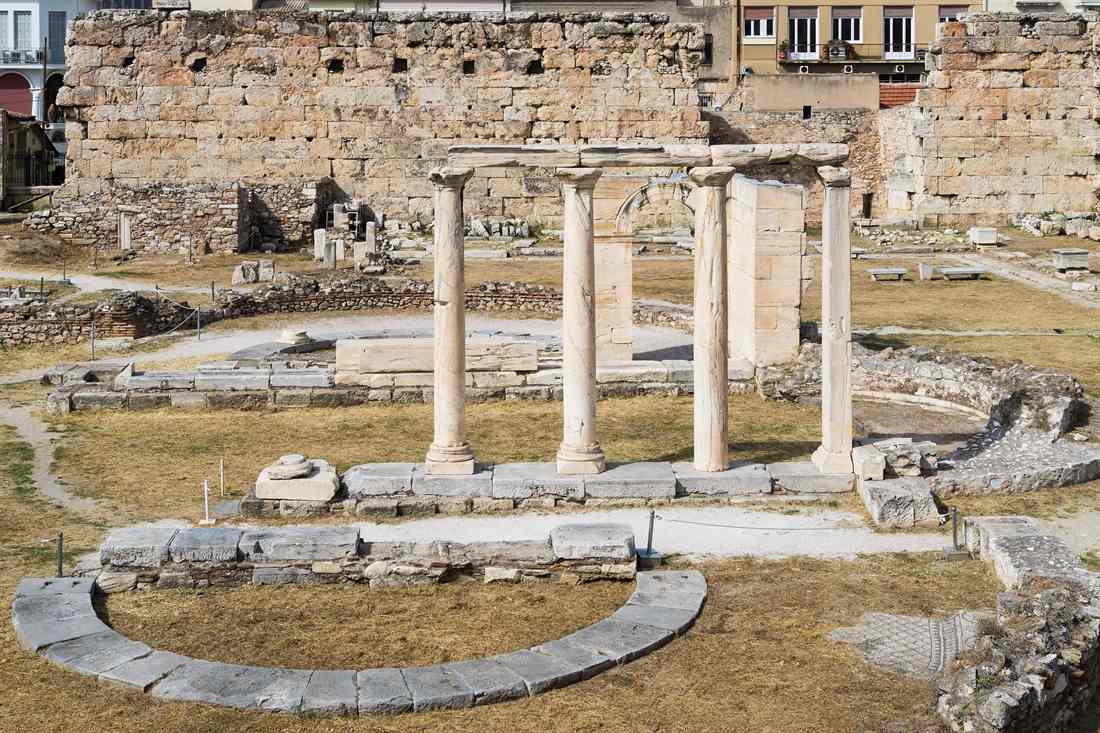
Kerameikos is Athens’ main ancient cemetery. Its museum holds finds from the excavations of the German Archaeological Institute. The displays are mainly sculpture and ceramics, largely funerary, arranged in chronological sections.
The museum page lists winter hours of 08:30 to 15:30 on Monday, Wednesday, Thursday and Friday. Saturday and Sunday run from 08:00 to 17:00. Tuesday opens at 10:00. Summer hours are 08:00 to 18:00, with Tuesday again opening at 10:00.
The 08:00 summer opening is the natural Athens avoid crowds time at Kerameikos, since the museum closes at 18:00. On Tuesday the opening moves to 10:00 in both seasons.
The Greek tourism body’s page says Julius Caesar and Augustus paid for the Roman Agora. It dates the build to between 19 and 11 BC. The page also describes the Tower of the Winds. This octagonal structure of the 1st century BC worked as a clock and weather station.
The same page dates Hadrian’s Library to AD 132, when Emperor Hadrian erected it. The complex included reading rooms, classrooms and a garden, plus a central reservoir.
The page gives summer opening at 08:00 and closing at 20:00. Last admission is 19:30. In winter the site closes at 15:00, and last admission is 14:40. That 08:00 start is a clear Athens avoid crowds time for these Roman sites.
The Pnyx is a hilltop clearing. The official Athens guide says the Athenian assembly gathered there in the earliest days of democracy. The same guide recommends the Pnyx for sunset, so a morning visit gives a different Athens avoid crowds time.
The Philopappos Monument, a Roman mausoleum, stands on Mouseion Hill, southwest of the Acropolis. The official guide also lists Philopappou Hill as a place to hike up.
The Numismatic Museum occupies Iliou Melathron at 12 Panepistimiou Street. Its page lists hours of 08:30 to 15:30 from Wednesday to Monday between April and October. Tuesday is closed. With a 15:30 close, the opening hour is the Athens avoid crowds time here.
The Byzantine and Christian Museum opens from 08:30 to 15:30 on Monday and from Wednesday to Sunday. Its page shows one timetable with no seasonal change, and it shows Tuesday as closed.
The Museum of Cycladic Art occupies two buildings, the Main Building and the Stathatos Mansion. They have separate entrances and a connecting corridor. Its page lists Thursday hours of 10:00 to 20:00 and shows Tuesday as closed.
Monday, Wednesday, Friday and Saturday run from 10:00 to 17:00. Sunday runs from 11:00 to 17:00. Last entrance is 15 minutes before closing. Thursday evening is an Athens avoid crowds time for this museum once the other two have closed at 15:30.
None of these sites replaces the Acropolis. Together they add funerary finds, Roman buildings, early democracy and three museums with their own timetables. Each one gives a separate Athens avoid crowds time through a published hour.
Where do crowds gather in Athens outside the ancient sites?
The official Athens guide tells readers to expect crowds in Plaka. Monastiraki, the Central Market, Lycabettus Hill, the Panathenaic Stadium, Syntagma Square and the Athens Riviera draw visitors too. An Athens avoid crowds time plan therefore covers public spaces as well as ruins.
The official Athens guide calls Plaka a top attraction for visitors. The guide adds a warning to be prepared for the crowds. It describes historic landmarks and shops along its streets.
Streets have no opening hours, so the Athens avoid crowds time there depends on when you walk. The Acropolis and the Ancient Agora open at 08:00, which marks an early start for a quiet walk.
Wikipedia calls Monastiraki a flea market neighbourhood in the old town of Athens. It also names the area as one of the city’s main shopping districts. The square takes its name from the Church of the Pantanassa. The official guide describes the area as a hub of commerce and craftsmanship.
The metro station on the square serves Line 1 and Line 3. Visit before the shops open for the quietest Athens avoid crowds time in the district.
The official Athens guide says the Central Market occupies a large block between Athinas, Sofokleous, Euripidou and Aiolou Streets. It calls the fish market the largest fresh fish market in Europe.
The guide gives hours of 8am to 6pm and says the market is closed on Sundays. The 8am opening is the earliest Athens avoid crowds time at the market. The guide adds that seafood availability varies with the seasons.
Lycabettus Hill rises 277 metres above sea level. No other spot in Central Athens stands higher. The Lycabettus Funicular starts from Aristippou Street, in the Kolonaki district.
The official guide lists the hill as a hike and as a place for the view. Its two peaks carry the Chapel of St George, a theatre and a restaurant. Choose a morning ascent as the Athens avoid crowds time for the view.
The Panathenaic Stadium stands 1,000 metres from Syntagma, Akropoli and Evangelismos metro stations. Its official page says a ticket covers the stadium and the site. It also allows a run onto the field and entry to the Stadium Museum. The audio tour lasts 30 minutes and comes in 11 languages.
The stadium opens at 8:00 all year. It closes at 19:00 from March to October and at 17:00 from November to February. Last entry is at closing time. The 8:00 start is the Athens avoid crowds time at this site.
The official Athens guide says the changing of the guard takes place every hour outside Parliament on Syntagma Square. The metro station under the square connects Lines 2 and 3.
A plan for Syntagma Square keeps clear of the hour mark, because the ceremony repeats all day. The gap between two ceremonies is the quieter Athens avoid crowds time there.
Visit Greece says the southern coastline, known as the Athens Riviera, stretches from Faliro to Sounio. From Syntagma, the official Athens guide lists 40 minutes to Akti tou Iliou.
It lists 45 to 55 minutes to Glyfada, 55 minutes to Vouliagmeni Lake and 60 minutes to Limanakia Vouliagmenis. Trips take up to an hour. An early start is the practical Athens avoid crowds time choice for a coastal day.
Which free-entry days and holidays fill Athens during an Athens avoid crowds time plan?
The Ministry of Culture lists five free-entry dates for State sites, plus winter Sundays. They are 6 March, 18 April, 28 October, the closing weekend of September and International Museums Day in late spring. The Athens avoid crowds time of your trip sits outside them.
The Hellenic Ministry of Culture publishes the list. Admission to State-owned archaeological sites, historical sites, monuments and museums is free for all visitors on those dates. Cross them off first when you pick a quiet Athens avoid crowds time.
18 April is International Monuments Day on the Ministry list. Late spring brings International Museums Day. The last weekend of September is European Heritage Days, so that free entry covers two days, not one.
Winter has its own rule. From 1 November until 31 March, the first Sunday and the third Sunday of every month are free. A Sunday that is not the first or third of the month is not on the list. Choose one of those Sundays for Athens avoid crowds time windows in winter.
According to Wikipedia, Greek law makes every Sunday of the year a public holiday. When a holiday lands on a Sunday, the date stays put. Labour Day is the only exception.
28 October is both a free-entry date and a national holiday. Wikipedia lists it as Ohi Day among the mandatory public holidays. Our guide to Greek public holidays has the full calendar for choosing an Athens avoid crowds time.
15 August is a mandatory public holiday for the Dormition of the Mother of God. Wikipedia describes it as the main celebration of the Virgin Mary. Independence Day on 25 March and Christmas Day appear on the same list.
Easter holidays move each year. Good Friday falls on the day before Orthodox Easter, and Easter Monday on the day after. Whit Monday follows Orthodox Pentecost, and Clean Monday follows Orthodox Carnival. Look up all four dates before you fix the Athens avoid crowds time of an Easter trip.
How do the metro, the airport and the ferry port change an Athens avoid crowds time?
The metro runs daily from 5am to midnight, with trains every 5 to 6 minutes at peak hours. Airport routes run every 36 minutes, every day. A quiet Athens avoid crowds time keeps clear of the rush bands.
The Athens metro has 3 lines and links to the tram, the bus routes and the suburban railway. Lines 2 and 3 run until 2am on Fridays and all night on Saturdays. The Saturday all-night service skips the airport routes.
On Line 3, Monday to Thursday trains come every 4 minutes from 7am to 10am. They come every 4 minutes 15 seconds from 2pm to 6pm. A ride between 10.30am and 1.30pm falls outside both bands, with trains every 6 minutes. That timing suits the Athens avoid crowds time on this line.
At the weekend the spacing changes. Saturday trains come every 7 minutes from 1pm to 9pm. Sunday trains come every 7 minutes 30 seconds from 11am to 7pm. On Fridays a 15-minute service runs from 12.20am until 2am.
Routes to and from the airport run every 36 minutes, every day of the week. The stations Pallini, Peania-Kantza and Koropi share that spacing. A missed train means a 36-minute wait, so build slack into your Athens avoid crowds time at the airport.
Express buses run 24 hours a day. They connect Athens International Airport with Syntagma Square, Piraeus port and the Intercity Bus Terminal. The suburban railway links Piraeus port and the airport directly. It runs from 4.30am until 11pm daily.
The airport asks passengers to arrive at least 2.5 hours before departure. That time covers check-in, security screening and passport control, where applicable. Airline check-in counters open 2 to 3 hours before departure. That opening sets the earliest start for an Athens avoid crowds time at the terminal.
The European Entry/Exit System now covers all third-country nationals, and the airport warns of long waits at passport control. Late arrival at the gate can mean denied boarding. The airport also tells passengers to check in online and keep their documents handy.
Gate numbers appear on the screens 90 to 60 minutes before the flight. Flights from Gates C leave from the Satellite Terminal. The airport tells passengers to allow an extra 15 minutes to reach the gate.
Piraeus is the main link between the mainland, the Aegean islands and Crete. The port authority gives a throughput of about 20 million passengers a year. About 8 million of them use the Salamis-Perama ferry. Line 1 of the metro runs from Kifissia to the port of Piraeus.
The port authority publishes an arrivals and departures schedule on its website. Passengers with a vehicle must reach the waiting area 1 hour before departure. Every passenger must board before the scheduled departure. Count back from the sailing time to fix your Athens avoid crowds time at the port.
When do Athens restaurants fill up during an Athens avoid crowds time?
Greeks go out to dinner at 10pm, which is the local dinner hour. Restaurants for visitors, such as those in Plaka, open all day or earlier than the usual 7pm. A table before 9pm gives a quiet Athens avoid crowds time.
A travel guide to Greek food says the midday meal is the biggest of the day. It is eaten at home around 2 or 3pm, after being cooked in the morning. Students leave school around 1pm. Shops and businesses close between 1.30pm and 3pm.
In summer a siesta follows lunch because of the heat. After that come the evening stroll and then dinner at 10pm. A visitor who eats at 7pm sits between the two Greek meal hours. That gap suits an Athens avoid crowds time at the table.
Greeks seldom eat dinner earlier than 9pm. When they go out, they do not think of eating before 10pm. A table at 7pm therefore comes well ahead of the local crowd. A table at 9pm sits at the edge of the local window.
The guide’s rule for a sure table is to try the off hours. It adds that you can expect the place to yourself and other foreigners. For a visitor, that trade defines an Athens avoid crowds time at dinner.
In summer, Greeks head to a cafe for ice cream around 8pm. Breakfast is a small meal there. The guide says Greeks skip it or take a light snack in midmorning. Cheese pies, spinach pies and koulouri bread rings are sold on the street.
Taverna and restaurant kitchens prepare stews, called magireio, in advance. The guide says these dishes taste better at lunch than in the evening, because they have sat for hours. A stew lunch also fits an Athens avoid crowds time away from the 10pm dinner hour.
A guide to Athens restaurants suggests booking at the tavernas it lists. It says one taverna in the upper Plaka gets quite busy at night in the summer. For that place it advises an e-mail to ask for directions and to reserve.
The travel guide calls dinner in Greece boisterous. Meals with Greek friends start late and run late. A 7pm booking is the practical Athens avoid crowds time for a calm meal.
Which tours help you reach the Athens avoid crowds time?
Two of the five listings offer an early-morning Acropolis visit that lasts two to four hours. A third caps its group at eight people. Match each wording to your Athens avoid crowds time goal before you book.
One listing promises that you will be among the first visitors on the Acropolis. The tour goes directly to the Parthenon and visits the Theatre of Dionysus. It lasts two to four hours and carries a skip-the-line label. Guiding is in English, Spanish, Italian, German, French or Greek, and a private option is available.
Its highlights promise an early visit away from both crowds and summer heat. Earsets are included, so you hear the guide clearly in a group. Judge every other listing against this Athens avoid crowds time benchmark.
A second listing combines the Acropolis and the Acropolis Museum in the early morning. It lasts two to four hours, runs in English and carries a skip-the-line label. The description promises early access to the Acropolis and a walk above excavations, seen through glass floors and walkways. It adds an indoor stop to the outdoor visit.
A third listing keeps the group to eight people. It lasts two hours, runs in English and carries a skip-the-line label. The route covers the Acropolis and the Parthenon, with a panoramic view of Athens. It is wheelchair accessible and must be booked at least 10 minutes ahead.
A group of eight does not promise an early start, so look at the departure hour. Treat small groups as one Athens avoid crowds time tool, not the whole plan.
A fourth listing caps its group at 12 guests and lasts two hours. A licensed guide leads it in English, French, Italian or Spanish. The stops include the Temple of Athena Nike, the Erechtheion and the Parthenon. It must be booked at least 10 hours ahead, so decide the evening before an early start.
The fifth listing is a sunset walk, not a morning one. It lasts two hours, runs in English or German and offers optional skip-the-line entry. The description names the Parthenon and the Theatre of Dionysus. The highlights add the Porch of the Caryatids. Choose it when your Athens avoid crowds time falls late in the day.
All five listings carry a free cancellation label. You can adjust an Athens avoid crowds time booking if your plans change. Read whether Acropolis guided tours are worth it before you choose. A guide shapes the visit as well as the entry.
How do you plan a day in Athens around the Athens avoid crowds time?
Enter the Acropolis at its 08:00 opening. Walk 920 metres to the Acropolis Museum for its 09:00 opening, then end on Philopappou Hill. This Athens avoid crowds time day alternates open air with a roof and keeps a quiet indoor stop at midday.
The Ministry of Culture publishes that opening time. Its rules ask you to follow marked routes and keep out of restricted areas. They also ban food and drink on the site, so eat before you enter. Once you pass the gate, there is no shelter from rain or sun. The Ministry recommends footwear made for walking.
Finish everything you want on the rock before you leave. The combined Acropolis and Slopes ticket is used only once, so you cannot re-enter with it after an exit. This outdoor start anchors an Athens avoid crowds time morning, because the site opens an hour before the museum does.
Mid-morning, walk from the Parthenon to the Acropolis Museum. This leg opens the indoor half of your Athens avoid crowds time route. A route planner gives an 11-minute walk. The museum ticket covers all exhibition areas and the excavation beneath the building. The excavation entrance is in the courtyard, so decide whether to add it before you go indoors.
Leave large bags in the cloakroom and keep your phone on silent in the galleries, as the museum asks. Photos and videos are not allowed in the Archaic Acropolis Gallery, where the sculptures still keep traces of ancient colour. Food and drink stay out of the exhibition galleries.
At midday, use the museum’s Reading Lounge as your indoor stop. It sits on the second floor, and the museum calls it a quiet space. Fit this pause into your Athens avoid crowds time schedule instead of another climb.
You can browse books on the Acropolis and ancient Greece there. The room also has a view of the Caryatids and the Hekatompedon pediment. Read about a monument you have just seen before you move on.
In late afternoon, walk to the Philopappos Monument on Philopappou Hill. It is a Roman tomb on Mouseion Hill, south-west of the Acropolis. A route planner puts the walk from the museum at 1.1 kilometres and 13 minutes.
The Ministry’s regular schedule lists the Western Hills, which include Muses’ Hill, as open 24 hours. That leaves an Athens avoid crowds time finish on the hill with no closing time. The same page has carried a closure notice for a day of restricted entry to parkland and forest. Check notices before you climb.
Sunset gives the Athens avoid crowds time day its last clock check. On 21 June the sunset table for Athens gives 20:50. On 21 December it gives 17:08, which is 3 hours 42 minutes earlier. Both times are local Athens time. Check the table for your own date before you decide how long to stay on the hill.
For a longer route across the city, read the Athens itinerary for first-time visitors. Do not add stops to this worked day.
What do travellers ask about the Athens avoid crowds time?
Online tickets from the museum’s official service grant access through a priority entry lane. That is a queue benefit, not a promise of empty galleries. An Athens avoid crowds time plan needs separate choices about entry, weather, daylight and the size of your guided group.
Leave extra time for the entrance when you join a museum group visit. A group of 16 to 40 people must reserve, and groups without a reservation can be refused entry. Even a reserved group can wait at busy hours. Visitors and their belongings also pass through X-ray checks.
Is it ever empty at the Acropolis?
Ordinary admission is not exclusive access, even with an Athens avoid crowds time booking. A Ministry of Culture programme offers dawn and sunset visits outside regular hours to groups of one to five people. A ticket for public hours is a different arrangement.
Is early morning or late afternoon quieter?
Neither window guarantees solitude. A local visitor guide recommends the last two hours before closing. For a site closing at 20:00, it gives 18:00 as the tour start. Choose the Athens avoid crowds time window you can reach without rushing.
Does the Acropolis Museum sell timed tickets?
Yes. Its online service sells individual tickets for a set date and entry time. The booking time is the time of entry to the exhibition. The ticket arrives by email as a PDF. Show it on a phone screen or print it.
Does rain thin the crowds?
One traveller’s account says rain cut visitor numbers. A large crowd reached the main entrance as soon as the rain stopped. The stone steps became very slippery. Treat wet weather as a safety decision, not a dependable Athens avoid crowds time shortcut.
When can a group phone the Acropolis Museum to book?
The group-booking line answers Monday to Friday, from 09:00 to 17:00, except on public holidays. Requests made outside those hours wait until the next working day. This is a contact schedule, not a sign of quieter galleries.
What if a group arrives late at the museum?
A group more than half an hour late must tell the museum by email or telephone. Quote the group booking code. Build that margin into any Athens avoid crowds time plan.