
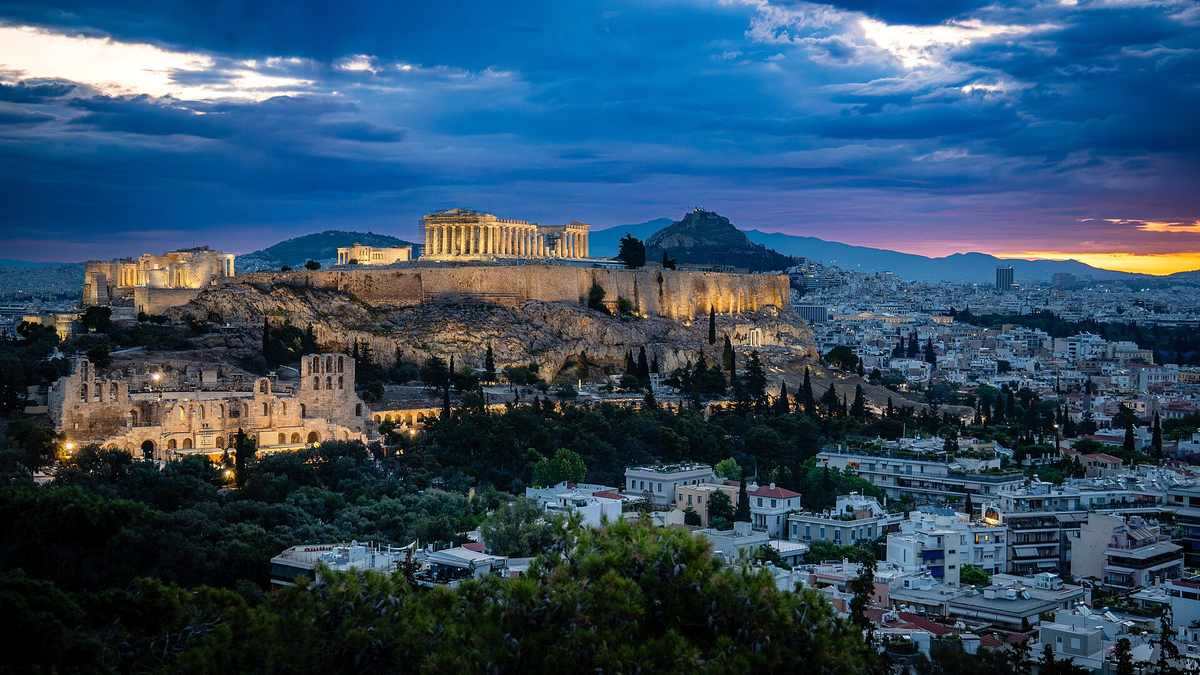
This Athens 3 day itinerary covers the Acropolis and Plaka on day one, the museums, hills and neighbourhoods on day two, and a day trip to Cape Sounion, Delphi or the islands on day three. Lock in the headline sights with skip-the-line tickets and tours from My Greece Tours so you waste no time in queues. Plan the whole trip with Greece Tours.
A clear three-day plan makes the most of a longer stay in the Athens travel guide. The sections below cover whether three days is enough, each day, where to eat, evenings and practical tips.
Is three days enough for Athens?
Yes, three days is ideal for Athens. Day one covers the Acropolis and ancient sites, day two the museums, hills and central neighbourhoods, and day three a full trip beyond the city to Cape Sounion, Delphi or the islands.
For a first visit, three days is the ideal length of stay in the Greek capital, striking a comfortable balance between the essential sights and a taste of the wider region. The compact historic centre, with its cluster of ancient monuments linked by pedestrian promenades, can be explored thoroughly in two days, leaving a third free to venture beyond the city. This itinerary devotes day one to the Acropolis and the ancient core, day two to the major museums, the Roman monuments, the central squares and the city’s hills and neighbourhoods, and day three to a rewarding day trip out of Athens.
Such a structure means you experience the headline attractions, dig a little deeper into the city’s culture and atmosphere, and still enjoy a change of scene, whether a clifftop temple at sunset, an ancient oracle, an island swim or a Bronze Age citadel. Two full days handle the ancient sites, the two great museums and the viewpoints without a scramble, so the third can point outward or slow down.
With three days you travel at a relaxed pace, pausing for long lunches and sunset views rather than rushing between tickets. The city stays small and walkable throughout, which is why a short stay here delivers so much. Fewer than three days forces hard cuts; more than three starts to repeat. Three is the sweet spot, enough to leave feeling you have genuinely seen Athens. It builds on the shorter plan in the Athens 2 day itinerary guide. The first day belongs to ancient Athens.
What should you do on day one in Athens?
Spend day one on the ancient core: start early at the Acropolis for the Parthenon and Erechtheion, then the Acropolis Museum. The afternoon suits the Ancient Agora, Plaka, hidden Anafiotika, and dinner in Monastiraki.
Your first day is devoted to the ancient heart of Athens, the reason most visitors come. Begin as early as possible at the Acropolis, ideally right at opening. Climbing the sacred rock before the heat and the largest crowds pays off. Here you meet the iconic Parthenon, the elegant Erechtheion with its Caryatid porch, the little Temple of Athena Nike and the monumental Propylaea gateway. The summit gives superb views over the city. Descend afterwards to the modern Acropolis Museum at the foot of the hill. Its galleries display the original sculptures and the Parthenon frieze, with the temple itself visible through the glass.
Lunch over, the afternoon suits the nearby Ancient Agora, where the Temple of Hephaestus still stands almost complete. Wander up into Plaka next, the old quarter of neoclassical houses and narrow lanes below the Acropolis. Seek out the hidden Cycladic-style village of Anafiotika tucked against the rock. Monastiraki closes the day with its shops, a rooftop drink over the floodlit Acropolis and dinner in a taverna. The hidden village is detailed in the Anafiotika guide. The second day broadens the picture.
What should you do on day two in Athens?
Day two starts at the National Archaeological Museum, then the Temple of Olympian Zeus and Hadrian’s Arch. Walk the National Garden to Syntagma for the guard, climb Filopappos, and end with sunset on Lycabettus Hill.
The second day moves beyond the Acropolis to the city’s great museum, its Roman monuments, its green spaces and its viewpoints. Begin the morning at the National Archaeological Museum, a short ride north of the centre. It holds the most important collection of ancient Greek art anywhere, from the gold Mask of Agamemnon and Cycladic figurines to the bronze statues recovered from the sea. Allow two hours for its highlights. Returning toward the centre, visit the towering columns of the Temple of Olympian Zeus and the adjacent Arch of Hadrian. Stroll then through the shady National Garden to emerge at Syntagma Square, where the ceremonial changing of the guard plays out outside Parliament.
In the afternoon, explore a central neighbourhood such as Kolonaki for its museums and cafés, or walk the wooded paths of Filopappos Hill for the best free view of the Parthenon. The Panathenaic Stadium, the white-marble arena of the first modern Olympic Games, sits close by and rewards a short detour. As the day ends, climb or ride the funicular up Lycabettus Hill, the highest point in central Athens at roughly two hundred and seventy metres, to watch the sun set over the city and the Acropolis from its summit chapel. The viewpoint is covered in the Lycabettus Hill guide. The third day ventures beyond the city.
What should you do on day three: the day trip?
Use day three for a day trip from Athens. The choices are Cape Sounion and the Temple of Poseidon at sunset, the oracle of Delphi, a Saronic cruise to Hydra, Poros and Aegina, or Mycenae, Nafplio and Epidaurus.
By the third day you have seen the city’s top sights, making it the perfect time to venture beyond Athens, as several outstanding destinations lie within a day’s reach. The closest and simplest is Cape Sounion, where the marble Temple of Poseidon stands on a headland above the Aegean. The temple glows at sunset and sits around ninety minutes away along the scenic coast, roughly seventy kilometres from the centre. For ancient history and mountain scenery, a full-day trip to Delphi visits the sanctuary of the oracle of Apollo on the slopes of Mount Parnassus. Island lovers can join a one-day Saronic Gulf cruise calling at Hydra, Poros and Aegina, or take a quick ferry to a single island.
History enthusiasts head into the Peloponnese for the Bronze Age citadel of Mycenae, the elegant town of Nafplio and the great theatre of Epidaurus, often combined in one tour. If you would rather not travel, you can instead spend the day on more of the city’s museums, such as the Benaki or Cycladic Art, the Stavros Niarchos Foundation Cultural Center by the sea, or further neighbourhoods. One island option appears in the Poros day trip guide. Good meals run through all three days.
Where should you eat over three days in Athens?
Eat traditional food in Plaka and Psiri tavernas, grab souvlaki around Monastiraki, and book one rooftop dinner with Acropolis views. Try a meze lunch near the central market, coffee in Kolonaki, and modern Greek cuisine in Koukaki.
Three days give plenty of opportunity to sample the full range of Athenian eating, from street food to fine dining. In the old quarters of Plaka and the lively district of Psiri, traditional tavernas and mezedopoleia serve classic dishes such as moussaka, grilled meats, fresh salads and small sharing plates of meze, ideal for relaxed dinners. For a quick, cheap and delicious bite between sights, the souvlaki and gyros shops around Monastiraki are an Athens institution. At least one dinner is worth booking at a rooftop restaurant in Plaka, Monastiraki or Thissio, where you can dine with the floodlit Acropolis as a backdrop, a memorable meal that fills up fast.
By day, the atmospheric tavernas around the central Varvakios market suit a hearty lunch, the cafés of Kolonaki are perfect for a stylish coffee, and the up-and-coming neighbourhood of Koukaki near the Acropolis Museum offers excellent modern Greek restaurants. After dark, the bars of Gazi, Psiri and Koukaki keep the evenings lively. Sampling this spread rounds out the city experience. A fuller survey appears in the guide to the best restaurants in Athens. A few tips keep three days smooth.
What practical tips help for three days in Athens?
Buy the Acropolis combined ticket to cover seven sites and skip queues, start sightseeing early to beat heat and crowds, and wear sturdy shoes. Use the metro, book your day trip and rooftop dinners ahead, and stay centrally.
A few practical pointers help a three-day Athens stay run smoothly so you can focus on enjoying it. The most useful purchase is the Acropolis combined ticket, a multi-site pass covering the Acropolis along with the Ancient Agora, the Temple of Olympian Zeus, Kerameikos and other monuments. It saves both money and time. Booking your timed Acropolis entry online in advance is strongly advised. Always start your sightseeing early in the morning. Early starts beat the crowds and tour groups and dodge the fierce midday heat in summer. Sturdy shoes are essential, since the ancient sites and old-town lanes are uneven and slippery.
Getting around is easy: the clean, efficient metro links the airport, the port and the main sights, while the historic centre is best explored on foot. In the hotter months, carry water, a hat and sunscreen. For day three, book your chosen day trip or cruise ahead, and reserve any rooftop dinners in advance, as the best tables go quickly. Finally, choosing a central base in Plaka, Koukaki, Monastiraki or around Syntagma puts almost everything within walking distance. The best areas are compared in the where to stay in Athens guide. The questions below cover the points visitors ask most.
Where should you stay in Athens for three days?
Stay in the walkable historic centre. Plaka and Monastiraki put you beside the Acropolis, Koukaki sits by the Acropolis Museum, Thissio hugs the ancient promenade, and Syntagma anchors the metro and transport. Each keeps the main sights within a short walk.
The right base turns three days into a walking holiday rather than a commute. Plaka is the picturesque old town directly below the Acropolis, all neoclassical houses, bougainvillea and car-free lanes. You wake within five minutes of the sacred rock and end each evening among tavernas. Monastiraki, just north, trades quiet charm for buzz: the flea market, the metro interchange and rooftop bars over the Roman ruins sit on your doorstep. Both put the ancient core at your feet.
Koukaki, the neighbourhood behind the Acropolis Museum, has grown into a favourite for its residential calm, its modern Greek restaurants and its short walk to the pedestrian promenade. Thissio faces the Acropolis and the Ancient Agora across the marble Apostolou Pavlou walkway, giving open temple views and easy access to two metro lines. Syntagma, around the central square, is the transport hub: the airport metro, the Parliament and the shopping streets all meet here, so it suits travellers who value connections over quiet. A full comparison of these bases appears in the where to stay in Athens guide.
Whichever quarter you pick, keep the base central and within the ring of the historic promenade. A room in Plaka, Monastiraki, Koukaki, Thissio or Syntagma means you return to freshen up between sights rather than crossing the city. It also puts dinner, rooftop views and the metro within a short stroll, so the three days flow together instead of fragmenting into transfers. The compactness of central Athens is its great advantage for a short stay.
How do you get around Athens in three days?
Walk the historic centre and use the metro for longer hops. Three lines link the airport, Syntagma, Monastiraki and the port of Piraeus. Trams and buses reach the coast, while the airport metro and express bus connect the city in about forty minutes.
The heart of Athens rewards walking above all. The pedestrian promenade of Dionysiou Areopagitou and Apostolou Pavlou loops the Acropolis, linking the Acropolis Museum, the ancient theatres, the Agora and Thissio without a single road crossing. Day one and much of day two happen almost entirely on foot. Comfortable shoes matter more than any transport pass, since the marble underfoot turns slick and the old-town cobbles run uneven.
For the longer stretches the metro is fast, clean and cheap. Line 1 runs to the port of Piraeus for island ferries and the Saronic cruise. Lines 2 and 3 cross at Syntagma and stop at Monastiraki, Akropoli and Panepistimio, covering most sights on this plan. The National Archaeological Museum sits a short ride or a twenty-minute walk north of the centre. A single ticket covers ninety minutes of transfers, and a multi-day pass suits three full days of hopping.
The airport connects to the centre two ways: the metro on Line 3 direct to Syntagma and Monastiraki, or the X95 express bus to Syntagma, each taking roughly forty minutes. Details on both routes sit in the Athens airport guide. For the coast and Cape Sounion, KTEL coastal buses and organised tours leave from central stops, while taxis and ride apps fill any gaps. The tram runs south from Syntagma to the seaside suburbs and the beaches of the Athenian Riviera, useful for a late-afternoon swim between sights. With walking plus the metro and tram, three days need no rental car at all.
How much should a 3-day Athens trip cost?
The main costs are entry tickets, food and your day trip. The Acropolis combined ticket bundles seven sites for far less than separate entries, the single biggest saving. Meals run from cheap souvlaki to rooftop dinners, and the excursion is the largest variable.
Sightseeing is where planning pays back. Rather than buying separate entries, the Acropolis combined ticket covers the Acropolis together with the Ancient Agora, the Roman Agora, the Temple of Olympian Zeus, Kerameikos, Hadrian’s Library and the Aristotle’s School site. Since day one and two hit several of these, the bundle undercuts single tickets and skips extra queues. The Acropolis Museum and the National Archaeological Museum charge their own entry on top.
Food scales to any budget. A souvlaki or gyros around Monastiraki costs a fraction of a sit-down meal, a taverna dinner in Plaka lands in the middle, and a rooftop restaurant with Acropolis views sits at the top. Mixing the three across three days keeps the overall food spend reasonable while still buying one memorable view dinner. Coffee in Kolonaki and a market lunch near Varvakios add local flavour without much outlay. Water refills from public fountains and a picnic on Filopappos trim the bill further, leaving room for the one rooftop splurge that most three-day visitors remember best.
The day trip is the swing factor. Cape Sounion by public bus is the cheapest excursion, an organised Delphi or Peloponnese coach tour costs more for the transport and guide, and a Saronic cruise with lunch sits between them. Booking transport and the combined ticket online ahead avoids gate premiums. Between free viewpoints such as Filopappos and Lycabettus, walkable sights and one splurge dinner, three days flex comfortably from lean to generous.
What is the best time of year for three days in Athens?
Spring and autumn are the finest windows. April to early June and September to October bring mild days, lighter crowds and warm light. Summer runs hot and busy, while winter stays quiet and cheap, with short cool days.
The shoulder seasons suit this three-day plan best. Spring, from April into early June, wraps the ruins in wildflowers and comfortable walking temperatures, ideal for the long open-air days on the Acropolis and the hills. Autumn, across September and October, holds the summer warmth for sea swims on a Cape Sounion or Saronic day while the peak crowds thin out. Both seasons give golden late light for the sunset viewpoints on Lycabettus and Filopappos.
High summer, July and August, delivers reliable sun but real heat. The early-start rule becomes essential then: climb the Acropolis at opening, retreat for a long shaded lunch through the fiercest hours, and save the hills for the cooler evening. Water, a hat and sunscreen turn from advice into necessity. Crowds peak alongside the temperature, so pre-booked timed entry matters more.
Winter, from November through March, is the quiet counterpoint. Days shorten and cool, an umbrella earns its place, yet the great sites stay open and near empty, and room rates drop. A crisp bright winter morning on an uncrowded Acropolis has its own reward. For most first visits the spring and autumn windows win, balancing weather, daylight and manageable crowds across all three days.
Is a 3-day Athens itinerary suitable with kids or in one long weekend?
Yes on both counts. The compact centre, short walks and open-air sites work well for families with early starts and rest breaks. A long weekend fits the plan: two city days and one day trip, or three city days without the excursion.
Families do well with this structure because the distances stay short and the sights stay varied. The Acropolis climb rewards children with a hilltop and a story, the Acropolis Museum’s glass floors and giant statues hold young attention, and the National Garden offers a green break with a small playground and pond. Souvlaki stops, gelato in Plaka and the changing of the guard at Syntagma break up the ancient history with movement and colour. Early mornings dodge both heat and crowds, and an afternoon pause keeps small legs going.
A long weekend maps onto the same three-day frame. Fly in, spend day one on the Acropolis and Plaka, day two on the museum, monuments and hills, and use the third day for a single excursion such as Cape Sounion at sunset. Travellers who would rather not leave the city can trade the day trip for a slower pace: more museums, the coastal Stavros Niarchos centre, or deeper neighbourhood wandering. The plan bends to a Friday-to-Monday break without losing the highlights.
What does the 3-day Athens route look like?
The route forms three tight loops. Day one circles the Acropolis, museum, Agora and Plaka on foot. Day two runs north to the archaeological museum, then back through the Roman monuments, Syntagma and the hills. Day three heads out for one excursion.
Seen on a map, the itinerary keeps walking to a minimum by clustering each day. Day one is a compact circle on the south and west slopes of the Acropolis: up the sacred rock, down to the Acropolis Museum, across to the Ancient Agora and the Temple of Hephaestus, then a slow drift through Plaka and Anafiotika into Monastiraki for the evening. Everything links by the pedestrian promenade, so the whole day unfolds without a bus.
Day two is a north-then-central sweep. It opens with a short metro hop or walk to the National Archaeological Museum, returns to the Temple of Olympian Zeus and Hadrian’s Arch, crosses the National Garden to Syntagma, and finishes on the green heights of Filopappos and Lycabettus for two contrasting sunset views over the Acropolis. Day three breaks the pattern entirely, pointing outward: south to Cape Sounion, north-west to Delphi, out to the Saronic islands, or into the Peloponnese for Mycenae, Nafplio and Epidaurus. Three loops, one city core and one journey beyond it, cover the essentials with little backtracking.
How should you spend the evenings across three days?
Give each night a different character. Close day one with a rooftop drink and taverna dinner in Monastiraki, day two with sunset on Lycabettus and Kolonaki, and day three, back from your trip, with the bars of Psiri or Gazi.
The evenings deserve as much thought as the daytime sights. On the first night, Monastiraki and Plaka glow after dark: the flea-market streets fill with strollers, rooftop bars open over the Roman Agora, and tavernas spill onto the lanes below the lit-up Acropolis. A pre-dinner drink on a terrace with the temple floodlit above is the classic Athens first night, and a slow taverna meal of meze and grilled dishes rounds it off.
The second evening pairs a viewpoint with a neighbourhood. Time the climb up Lycabettus for sunset, watch the city and the Acropolis turn gold from the summit chapel, then descend into stylish Kolonaki for cocktails and late dining, or cross to Koukaki behind the Acropolis Museum for its modern Greek kitchens. The Lycabettus Hill guide covers the funicular and the timing. The third night, returning from your excursion, suits the livelier bar quarters of Psiri and Gazi, where the crowd stays out late. Rotating the three nights this way samples the calm, the elegant and the energetic sides of the city.
Which Acropolis tickets and passes save the most time?
The Acropolis combined ticket is the key buy, covering seven archaeological sites on one pass. Book a timed Acropolis slot online to skip the main queue. The Acropolis Museum and National Archaeological Museum sell entry separately, so plan those two alongside the combined pass.
Getting the tickets right removes the biggest source of wasted time. The combined ticket bundles the Acropolis with the Ancient Agora, the Roman Agora, Hadrian’s Library, the Temple of Olympian Zeus, Kerameikos and the Aristotle’s School site, valid across several days. Because day one and day two already visit the Acropolis, the Agora and the Temple of Olympian Zeus, the bundle pays for itself and clears you past separate ticket lines at each gate.
The single most useful step is reserving a timed Acropolis entry online before arrival. The sacred rock draws the longest queues of the trip, and a booked slot at opening lets you walk straight up ahead of the tour groups. The two great indoor collections, the Acropolis Museum at the foot of the hill and the National Archaeological Museum to the north, run their own ticketing, so buy those directly. With the combined pass in hand and the Acropolis slot booked, the three days lose almost no time to queues, leaving the hours for the sights themselves.
What are some surprising things to know about Athens?
Athens holds twists first-timers rarely expect. The Parthenon marble was once painted in bright colour, the modern Olympic stadium is built of white marble, a Cycladic island village hides beneath the Acropolis, and a tall peak crowns the city.
The white ruins mislead the eye. In their day the Parthenon and its sculptures blazed with red, blue and gold paint, and the gleaming marble we admire is a stripped-back version of a once-colourful temple. The Acropolis Museum’s displays hint at how vivid the originals looked. The marble theme runs on at the Panathenaic Stadium, the horseshoe arena rebuilt entirely in white Pentelic marble for the first modern Olympic Games, the only stadium of its kind in the world.
Tucked against the north-east slope of the Acropolis, the tiny quarter of Anafiotika feels transplanted from the Cyclades: whitewashed cube houses, blue shutters and stepped lanes built by island stonemasons who came to work on the royal palace. Few visitors find it, yet it sits minutes from the crowds. Above it all rises Mount Lycabettus, whose summit chapel gives the widest city panorama, while the mountains ringing the basin remind you that Athens is a city wrapped in high ground and sea light. These quirks reward the extra time three days allow.
Frequently Asked Questions
Is three days enough to see Athens?
Yes, three days is ideal for Athens. It gives you time to see the Acropolis and ancient sites on day one, the major museums, Roman monuments and hills on day two, and a full day trip beyond the city on day three, to Cape Sounion, Delphi, the Saronic islands or the Peloponnese, without feeling rushed.
What is the best day trip on a 3-day Athens itinerary?
The best day trip depends on your interests: Cape Sounion for a sunset temple by the sea, Delphi for the ancient oracle and mountains, a Saronic cruise to Hydra, Poros and Aegina for islands, or Mycenae, Nafplio and Epidaurus for Peloponnesian history. All are doable in a single day from Athens.
How should you spend three days in Athens?
Spend day one on the Acropolis, Acropolis Museum, Ancient Agora, Plaka and Anafiotika; day two on the National Archaeological Museum, Temple of Olympian Zeus, Syntagma, Filopappos and Lycabettus Hill for sunset; and day three on a day trip such as Cape Sounion, Delphi, the Saronic islands or the Peloponnese.
Where is the best area to stay for a 3-day Athens trip?
Stay in the walkable historic centre. Plaka and Monastiraki sit beside the Acropolis, Koukaki lies behind the Acropolis Museum, Thissio faces the ancient promenade, and Syntagma anchors the metro and airport link. All keep the main sights within a short walk, so you avoid daily transfers across the city.
Do you need a car for three days in Athens?
No. The historic centre is best explored on foot along the pedestrian promenade, and the metro covers the longer hops, including the airport, the port of Piraeus and the National Archaeological Museum. For the day-three excursion, an organised tour or a coastal bus handles the driving, so no rental car is needed.
What is the best time of year to visit Athens for three days?
Spring, from April to early June, and autumn, across September and October, are the finest windows, with mild days, warm light and lighter crowds. Summer brings heat and peak visitors, so start early and rest at midday. Winter stays quiet and cheap, with cool short days and open, near-empty sites.
How far is Cape Sounion from Athens for the day trip?
Cape Sounion lies roughly seventy kilometres south-east of central Athens, about ninety minutes each way along the scenic coastal road. That distance makes it the closest major day trip, ideal for an afternoon departure timed so the Temple of Poseidon glows at sunset over the Aegean before the evening return to the city.
Should you book the Acropolis ticket in advance?
Yes. A timed Acropolis entry booked online lets you walk straight up at opening, ahead of the tour groups and the longest queue of the trip. Pair it with the Acropolis combined ticket, which covers seven archaeological sites including the Ancient Agora and the Temple of Olympian Zeus on this three-day plan.