
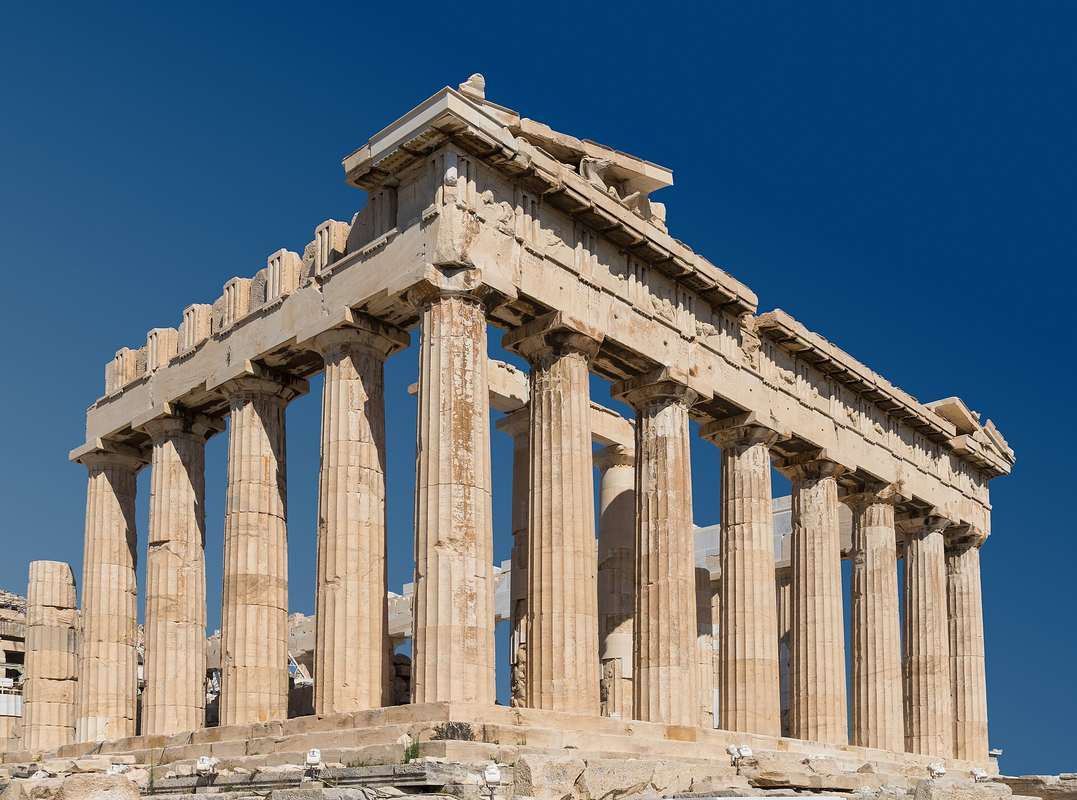
This Athens 2 day itinerary covers the Acropolis, Plaka and the Agora on day one, then museums, neighbourhoods and Lycabettus on day two, giving first-time visitors the perfect two days. Lock in the headline sights with skip-the-line tickets and guided tours from My Greece Tours so you waste no time in queues. Plan the whole trip with Greece Tours.
A clear plan makes the most of a short stay in the Athens travel guide. The sections below cover whether two days is enough, day one, day two, where to eat, evening ideas and practical tips.
Is two days enough for Athens?
Yes, two days is enough to see the highlights of Athens. Day one covers the Acropolis, the Acropolis Museum, the Ancient Agora, Plaka and Monastiraki. Day two adds the National Archaeological Museum, the central squares and Lycabettus Hill.
For a first visit, a well-organised two days lets you enjoy the essential Athens without feeling rushed. The historic core is compact and largely walkable. The major ancient sites cluster around the Acropolis and connect by pedestrian promenades, so you cover a great deal on foot in a short stay. Two full days are enough to climb the Acropolis and stand before the Parthenon. They also fit the Acropolis Museum, the Ancient Agora, the old quarters of Plaka and Monastiraki, the National Archaeological Museum and a sunset from Lycabettus Hill.
The plan below splits the city sensibly. Day one concentrates on the ancient sites around the Acropolis. Day two turns to the great museum, the central squares and neighbourhoods, and the city’s hills and viewpoints. Extra time beyond two days lets you add day trips to Cape Sounion, Delphi or the Saronic islands from the same base. Used well, forty-eight hours delivers a deeply satisfying first taste of the Greek capital. It draws on the wider overview in the guide to things to do in Athens. The first day belongs to ancient Athens.
What should you do on day one in Athens?
Spend day one on the ancient sites. Start early at the Acropolis for the Parthenon, the Erechtheion and the Temple of Athena Nike, then the Acropolis Museum. In the afternoon explore the Ancient Agora, then wander Plaka and Monastiraki.
Your first day is devoted to the ancient heart of the city, the reason most visitors come to Athens. Begin as early as possible at the Acropolis, ideally right at opening time, to climb the sacred rock before the midday heat and the largest tour groups arrive; here you will see the iconic Parthenon, the elegant Erechtheion with its Caryatid porch, the dainty Temple of Athena Nike and the monumental Propylaea gateway. From the summit the views over the city are superb. Descending, head to the modern Acropolis Museum at the foot of the hill, whose light-filled galleries display the original sculptures and the Parthenon frieze with the temple visible through the glass.
A relaxed lunch splits the day. Spend the afternoon in the nearby Ancient Agora, the civic and commercial centre of classical Athens. The beautifully preserved Temple of Hephaestus still stands almost complete here, and a museum fills the reconstructed Stoa of Attalos. In the evening stroll into the old neighbourhood of Plaka, with its narrow lanes and neoclassical houses below the Acropolis. Adjoining Monastiraki suits souvenir shopping, a rooftop drink with Acropolis views and dinner in a traditional taverna. The citadel itself is detailed in the Acropolis Museum guide. The second day broadens the picture.
What should you do on day two in Athens?
Start day two at the National Archaeological Museum, the finest collection of ancient Greek art in the world. Then see the Temple of Olympian Zeus and Hadrian’s Arch, cross the National Garden to Syntagma Square, and finish with sunset from Lycabettus Hill.
The second day moves beyond the Acropolis to the city’s great museum, its Roman monuments and its modern centre. Begin the morning at the National Archaeological Museum, a short ride north of the centre. It holds the most important collection of ancient Greek art anywhere, from the gold Mask of Agamemnon and Cycladic figurines to the bronze statues recovered from the sea. Allow two hours for its highlights.
Returning toward the centre, visit the towering columns of the Temple of Olympian Zeus, the largest temple in ancient Greece, and the adjacent Arch of Hadrian. Both belong to the Roman emperor’s grand building programme. From there, cross the green National Garden to reach Syntagma Square. Outside the Greek Parliament you can watch the ceremonial changing of the guard, performed by the Evzones in their distinctive uniforms.
Spend the afternoon browsing the shops of Ermou Street or the boutiques of Kolonaki, before climbing or riding the funicular up Lycabettus Hill, the highest point in central Athens, to watch the sun set over the city and the Acropolis from its summit chapel. It is a fitting finale to two days in the capital. The square’s ceremony is covered in the Syntagma Square guide. Good meals punctuate both days.
Where should you eat during two days in Athens?
Eat traditional Greek food in Plaka and Psiri tavernas, grab souvlaki around Monastiraki, and book one rooftop dinner with Acropolis views. Add a meze lunch near the central market, coffee in Kolonaki and modern Greek cuisine in Koukaki.
Eating well is one of the joys of Athens, and a two-day visit gives plenty of chances to sample its range. In the old quarters of Plaka and the lively district of Psiri, traditional tavernas and mezedopoleia serve classic Greek dishes such as moussaka, grilled meats, fresh salads and small sharing plates of meze, ideal for a relaxed evening meal. For a quick, cheap and delicious bite between sights, the souvlaki and gyros shops around Monastiraki and Mitropoleos street are an Athens institution. At least one dinner is worth booking at a rooftop restaurant in Plaka, Monastiraki or Thissio, where you can dine with the floodlit Acropolis as your backdrop, an unforgettable experience that fills up fast, so reserve ahead.
By day, the area around the central Varvakios market and Athinas street offers atmospheric tavernas for a hearty lunch, while the cafés of Kolonaki are perfect for a stylish coffee break, and the up-and-coming neighbourhood of Koukaki near the Acropolis Museum has excellent modern Greek restaurants. Sampling this spread, from street food to rooftop dining, rounds out the city experience. A fuller survey appears in the guide to the best restaurants in Athens. Evenings offer their own pleasures.
What practical tips help for two days in Athens?
Buy the Acropolis combined ticket to skip queues, start early to beat the heat, and wear comfortable shoes for marble and cobbles. Use the metro, carry water and sun protection in summer, and base yourself in Plaka, Monastiraki, Koukaki or Syntagma.
A few practical pointers make a short Athens stay run smoothly and let you focus on the sights rather than logistics. The most useful purchase is the Acropolis combined ticket, a multi-site pass that covers the Acropolis along with the Ancient Agora, the Temple of Olympian Zeus, Kerameikos and other monuments, saving both money and time in queues; booking your timed Acropolis entry online in advance is strongly advised. Always start your sightseeing early in the morning, both to enjoy the major sites before the crowds and tour groups arrive and to avoid the fierce midday heat in summer. Comfortable, sturdy shoes are essential, as the ancient sites, marble paths and old-town lanes are uneven and slippery.
Getting around is easy: the clean, efficient metro links the airport, the port and the main sights, while the historic centre is best explored on foot via its pedestrian promenades. In the hotter months, carry water, a hat and sunscreen, as shade is limited at the archaeological sites. Finally, choosing a central base in Plaka, Monastiraki, Koukaki or around Syntagma puts almost everything within walking distance, maximising your two days. The best areas are compared in the where to stay in Athens guide. The questions below cover the points visitors ask most.
What day trips can you add after two days in Athens?
The best day trips from Athens are Cape Sounion and the Temple of Poseidon at sunset, Delphi and its oracle sanctuary, the Saronic islands by cruise, the Argolid sites of Mycenae and Epidaurus, and the clifftop monasteries of Meteora by train.
Two days cover the city itself, but the same central base makes a wealth of rewarding excursions easy if your trip runs longer. The closest and simplest is Cape Sounion, where the marble Temple of Poseidon stands on a headland above the sea, especially magical at sunset and reachable in around ninety minutes along the scenic Athens Riviera. For ancient history and dramatic scenery, Delphi, the sanctuary of the oracle of Apollo on the slopes of Mount Parnassus, makes a classic full-day trip. Island lovers can join a one-day Saronic Gulf cruise visiting Hydra, Poros and Aegina, or take a quick ferry to a single island such as Aegina or Hydra independently.
History enthusiasts head into the Peloponnese for the Bronze Age citadel of Mycenae, the elegant town of Nafplio and the theatre of Epidaurus, often combined in one day. For the most spectacular landscape of all, a long day or overnight trip reaches Meteora, where Byzantine monasteries perch atop towering rock pinnacles, easily visited by direct train from Athens. Any of these extends a city break into a fuller Greek experience. The island option is detailed in the Hydra day trip from Athens guide. The questions below cover the points visitors ask most.
How do you get around Athens in two days?
Walk the historic core and use the metro for longer hops. The pedestrian Dionysiou Areopagitou promenade links the Acropolis, the Agora and Thissio. Metro Line 2 reaches Syntagma and the Acropolis station, and Line 3 serves the airport.
The compact centre rewards walking, and a short two-day plan barely needs any other transport. The Grand Promenade, a broad pedestrian route, ties the Acropolis, the Ancient Agora, Kerameikos and the Thissio cafés into one continuous stroll. Distances between the day-one sights measure only a few hundred metres each, so you rarely wait for a bus or train.
The metro handles the longer connections cleanly. Line 2 (the red line) stops at Syntagma, Panepistimio and the Acropolis station, placing you within a short walk of the National Archaeological Museum and the Temple of Olympian Zeus. Line 3 (the blue line) runs directly to Athens International Airport and to the port of Piraeus. A single validated ticket covers transfers across all three lines for ninety minutes. Taxis and ride-hailing apps fill the gaps late at night, when the metro closes.
Lycabettus Hill sits beyond the walkable core, so plan for the climb or the funicular that rises from Kolonaki. The teleferik carries you to the summit chapel in under three minutes, a welcome shortcut at the end of a long sightseeing day.
When is the best time to visit Athens for two days?
Spring and autumn suit a two-day Athens trip best. April, May, September and October bring mild days, thinner crowds and comfortable sightseeing. Summer turns hot at the open archaeological sites, while winter stays quiet with shorter daylight.
The shoulder seasons balance weather and crowds most favourably for a packed itinerary. From April to early June the city warms gradually, wildflowers cover the hills around the Acropolis, and daytime temperatures sit in a pleasant range for walking between ruins. The autumn window from September into late October mirrors those conditions, with sea-warmed evenings ideal for rooftop dinners.
High summer demands an early start and careful pacing. July and August push midday temperatures well above thirty degrees, and the exposed marble of the Acropolis offers almost no shade. Begin at opening time, retreat to air-conditioned museums during the hottest hours, and resume sightseeing in the cooler late afternoon. Winter trades warmth for calm: December to February brings crisp, quiet days, occasional rain and the lowest visitor numbers, though daylight is short and some sites close earlier.
How do you get to Athens and reach the centre?
Most visitors arrive at Athens International Airport, east of the city. The metro Line 3, the express bus X95 and taxis all reach Syntagma in the centre. Ferries and the metro connect the port of Piraeus for island arrivals.
Athens International Airport (Eleftherios Venizelos) handles nearly every flight into the capital and lies about thirty kilometres east of the centre. The blue metro Line 3 runs from the airport to Syntagma and Monastiraki, a journey of roughly forty minutes that drops you beside the main sights. The X95 express bus follows the same corridor around the clock, a useful option during the metro’s overnight closure. A fixed-fare daytime taxi covers the trip in around forty minutes, subject to traffic.
Arrivals by sea dock at Piraeus, the largest passenger port in Europe and the gateway to the Aegean islands. The green metro Line 1 links Piraeus with Monastiraki and the historic centre in about twenty minutes. Travellers pairing this Athens itinerary with an island add-on find the same station handles both the ferry and the city sightseeing, making a two-day base easy to combine with a wider Greek trip. Book airport transfers and skip-the-line tickets ahead of arrival day to protect your limited time.
Where should you stay for a two-day Athens visit?
Stay in a central neighbourhood so both days run on foot. Plaka and Monastiraki place you beside the ancient sites, Koukaki sits by the Acropolis Museum, and Syntagma offers transport links and hotels close to the shops and squares.
A central base is the single biggest time-saver on a two-day trip, because it removes the daily commute to the sights. Plaka, the old town below the Acropolis, wraps you in neoclassical lanes and taverna courtyards within a five-minute walk of the citadel entrance. Neighbouring Monastiraki adds a livelier edge, with its flea market, rooftop bars and the Monastiraki metro interchange on your doorstep.
Koukaki has grown into a favourite for design-led hotels and small guesthouses, sitting quietly behind the Acropolis Museum and a short stroll from the pedestrian promenade. Syntagma suits travellers who value transport above atmosphere: the square anchors the metro network, the airport bus and a spread of larger hotels, and it borders both the National Garden and the Ermou shopping street. Each of these areas keeps the whole itinerary within walking range, and the where to stay in Athens guide compares them in detail.
What does an hour-by-hour two-day Athens plan look like?
Day one runs Acropolis at opening, Acropolis Museum before lunch, Ancient Agora in the afternoon, then Plaka at dusk. Day two opens at the National Archaeological Museum, adds the Temple of Olympian Zeus and Syntagma, and closes with a Lycabettus sunset.
A loose timetable keeps both days flowing without turning the trip into a checklist. On the first morning, arrive at the Acropolis ticket gate for the eight o’clock opening, spend around ninety minutes on the summit, then descend to the Acropolis Museum for the frieze and the Caryatids. Break for a taverna lunch in Makrigianni, the quarter beside the museum, before the afternoon.
The first afternoon belongs to the Ancient Agora and the Temple of Hephaestus, reached by the shaded promenade below the citadel. As the light softens, drift into Plaka and Monastiraki for shopping, a rooftop aperitif and dinner. The second day starts north of the centre at the National Archaeological Museum when it opens, giving the collection the fresh attention it deserves.
Midday on day two returns you to the Temple of Olympian Zeus and Hadrian’s Arch, followed by the National Garden and the guard change at Syntagma. Reserve the late afternoon for Ermou Street or Kolonaki, then time the climb up Lycabettus Hill for golden hour. The summit sunset over the floodlit Acropolis makes a fitting close to the two days.
What should you do on your arrival day in Athens?
Use arrival day to settle in and orient yourself gently. Check into a central hotel, walk the Plaka lanes, climb to Areopagus Hill for a first Acropolis view, and enjoy an early taverna dinner before the two full sightseeing days begin.
An arrival afternoon works best as a soft landing rather than a packed programme, since travel fatigue and hotel check-in eat into the hours. Drop your bags, then wander the pedestrian streets of Plaka and Monastiraki to fix the city’s layout in your mind. The rocky outcrop of Areopagus Hill, just below the Acropolis entrance, delivers a free panorama of the citadel and the sprawling city, an ideal spot to watch your first Athenian sunset.
A relaxed evening meal rounds off the day and sets you up for an early start. Choose a taverna in Psiri or Plaka, order a spread of meze to share, and turn in early so day one can begin at the Acropolis gates when they open. This gentle arrival protects the momentum of the two full days that follow.
What can you add if you have more than two days in Athens?
A third day suits slower neighbourhoods, museums and hills. Add the Benaki Museum, the Museum of Cycladic Art, the Kerameikos cemetery and the Anafiotika lanes, or use the extra time for a day trip to Cape Sounion, Delphi or the Saronic islands.
Two days cover the essentials, and any additional time lets the city breathe. A relaxed third day works well for the collections the core plan skips, such as the Benaki Museum of Greek Culture and the Museum of Cycladic Art in Kolonaki. The green quarter of the National Garden and the Zappeion rewards a slow morning, while the island-style lanes of Anafiotika, tucked below the Acropolis, feel a world away from the busy centre.
Extra days also open the door to excursions from the same central base. Cape Sounion and its Temple of Poseidon make a half-day sunset trip along the coast, while Delphi and the Argolid sites of Mycenae and Epidaurus fill full days. Island lovers reach Hydra, Poros and Aegina on a one-day Saronic cruise. These add-ons turn a compact city break into a broader Greek journey without changing your Athens hotel.
Frequently Asked Questions
Is two days enough to see Athens?
Yes, two days is enough to see the main highlights of Athens. You can cover the Acropolis, Acropolis Museum, Ancient Agora, Plaka and Monastiraki on day one, then the National Archaeological Museum, Temple of Olympian Zeus, Syntagma and Lycabettus Hill on day two, exploring the essentials comfortably on foot.
What is the best order to see Athens in two days?
The best order is to tackle the ancient sites first: start day one early at the Acropolis, then the Acropolis Museum, Ancient Agora, Plaka and Monastiraki. Use day two for the National Archaeological Museum, the Temple of Olympian Zeus, Syntagma Square and a sunset climb up Lycabettus Hill.
Should you buy the Acropolis combined ticket for two days in Athens?
Yes, the Acropolis combined ticket is worth buying for a two-day visit, as it covers the Acropolis plus the Ancient Agora, Temple of Olympian Zeus, Kerameikos and other sites, saving money and time in queues. Book your timed Acropolis entry online in advance to skip the longest lines.
How much walking does a two-day Athens itinerary involve?
Expect several kilometres of walking each day across uneven marble, cobbles and hill paths. The historic centre is compact, so most sights connect on foot, but the Acropolis climb and Lycabettus Hill add steep sections. Comfortable, grippy shoes and regular water breaks keep both days comfortable.
Can you combine two days in Athens with the Greek islands?
Yes, two days in Athens pairs neatly with an island add-on. The metro links the centre to the port of Piraeus in about twenty minutes, and fast ferries reach the Saronic and Cycladic islands from there. Spend your two city days first, then sail on for a beach or island extension.