
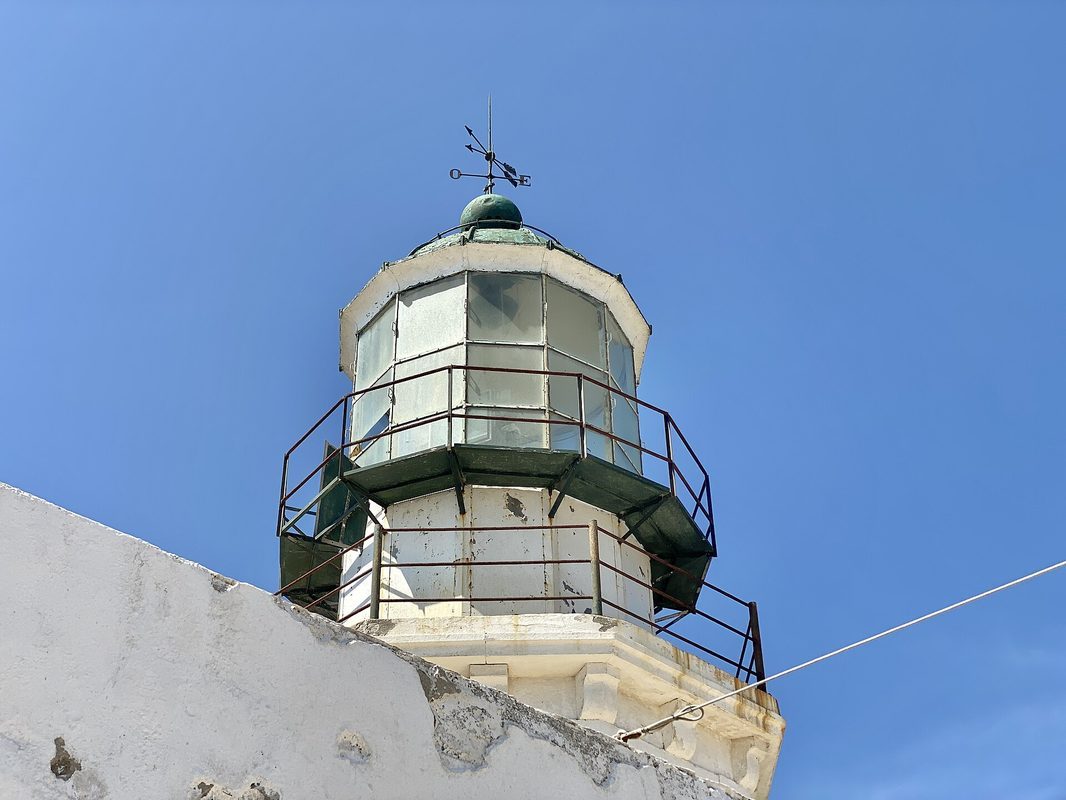
Armenistis lighthouse on Mykonos is a historic stone lighthouse built in 1891 on the rugged north-west tip of the island, offering sweeping views across the strait to the island of Tinos and some of the most peaceful sunsets on Mykonos, away from the crowds. This guide covers the history, the views, how to get there, what to do and when to visit.
Armenistis is one of the most scenic and historic sights in the Mykonos travel guide, a quiet alternative to the busy sunset spots. The sections below cover it in full.
What is Armenistis lighthouse?
Armenistis lighthouse is a historic stone lighthouse on the north-west cape of Mykonos, built in 1891 and standing about 19 metres tall. Set on a rugged, windswept headland overlooking the strait to Tinos, it is still operational and is one of the island’s most scenic landmarks, prized for its views and sunsets.
The Armenistis lighthouse stands on Cape Armenistis, the rugged north-western tip of Mykonos, in a dramatic, windswept setting high above the sea. Built in 1891, it is a handsome stone tower around 19 metres tall, attached to the keeper’s quarters, and remains an active navigational light to this day, guiding ships through the busy channel. Its position commands wide, open views across the strait that separates Mykonos from the neighbouring island of Tinos, with the Aegean stretching out in every direction. Unlike the crowded sunset spots in Mykonos Town, the lighthouse sits in a peaceful, natural landscape of low scrub and rock, reached by a short drive and walk, which makes it a tranquil place to take in the scenery. As one of the oldest and most evocative structures on the island, combining maritime history with a spectacular outlook, Armenistis is a rewarding destination for those wanting a quieter, more scenic side of Mykonos, set out alongside the guide to things to do. Its history is tied to a shipwreck.
Why was the Armenistis lighthouse built?
The Armenistis lighthouse was built in 1891 to make the dangerous waters around Mykonos safer for shipping, prompted in part by the 1887 sinking of the British steamship Volta nearby. It guarded the busy strait between Mykonos and Tinos, and has guided vessels through these waters ever since.
The lighthouse owes its existence to the perils of the surrounding sea. The waters of the strait between Mykonos and Tinos are busy and can be treacherous, and the need for a navigational light was made tragically clear by the sinking of the British steamship Volta, which went down near the cape in 1887 with loss of life. In response, the Greek authorities built the Armenistis lighthouse in 1891 to warn and guide passing ships and reduce the risk of further wrecks on this rocky, exposed coast. Since then it has stood watch over the channel, its light helping countless vessels navigate safely between the islands. Over more than a century it has become both a working aid to navigation and a cherished historic landmark, a reminder of the island’s maritime past and of the dangers the Aegean once posed to sailors. This blend of practical purpose and history adds depth to a visit beyond the simple beauty of the spot, set out alongside the guides to Delos and the windmills. The views are the main draw today.
What are the views and sunset like?
Armenistis lighthouse offers sweeping, unobstructed views across the strait to the island of Tinos and over the open Aegean, making it one of the best and most peaceful sunset spots on Mykonos. As the sun sets over the sea and neighbouring islands, the sky glows, far from the crowds of Little Venice.
The chief reason most visitors make the trip is the view, and Armenistis does not disappoint. From its elevated, exposed headland the lighthouse looks out over a vast, open seascape: directly across the narrow strait rises the island of Tinos, with its mountains often clear on the horizon, while the Aegean spreads in every direction, sometimes revealing other Cycladic islands in the distance. This wide, unobstructed outlook makes it a magnificent place to watch the sunset, when the lowering sun paints the sea and sky in shifting golds, oranges and pinks and silhouettes the surrounding islands. Crucially, because the lighthouse lies away from the town, the sunset here is enjoyed in calm and quiet, a world apart from the packed bars and crowds of the famous Little Venice sunset. For photographers, couples and anyone seeking a serene, scenic evening, the lighthouse offers one of the most beautiful and peaceful sunset experiences on Mykonos, set out alongside the guide to Little Venice. Reaching it takes a short journey.
How do you get to Armenistis lighthouse?
Armenistis lighthouse is about 6 to 7 km north-west of Mykonos Town, near Agios Stefanos, a 15 to 20 minute drive followed by a short walk. The best way to reach it is by car, taxi or scooter, as there is no public bus, with parking near the end of the road and a brief stroll to the lighthouse.
Armenistis sits on the remote north-west cape of Mykonos, roughly 6 to 7 kilometres from Mykonos Town and not far from the resort area of Agios Stefanos, so reaching it takes a little effort that keeps the crowds away. The practical way to get there is with your own transport: by car, taxi or scooter the drive takes around 15 to 20 minutes from town along roads that grow narrower and rougher towards the cape, and there is a parking area near where the road ends. From there a short, easy walk of a few minutes over the headland brings you to the lighthouse itself. There is no public bus service to the lighthouse, so a hire car, scooter or taxi is essential, and if taking a taxi you should arrange a return pick-up, as none wait at this isolated spot. Sturdy footwear helps on the rocky path, and the exposed cape can be windy. The slightly adventurous approach is part of the appeal, rewarding visitors with solitude and scenery, set out alongside the guides to getting to Mykonos and day trips. There is more to enjoy around the cape.
What is there to do at and around the lighthouse?
At Armenistis you can admire the historic lighthouse, take in the panoramic views to Tinos, watch the sunset and photograph the rugged scenery, though the tower itself is not open inside. Nearby are Agios Stefanos and Houlakia beaches, the Maritime Museum in town with the original lighthouse lantern, and Mykonos Town.
A visit to Armenistis centres on the setting rather than facilities, as the cape is wild and undeveloped. At the lighthouse you can admire the historic 1891 stone tower from outside, since the lighthouse itself is not generally open to the public inside, soak up the sweeping panorama across the strait to Tinos, watch the sunset, and photograph the dramatic, windswept landscape of rock, sea and sky, which is especially striking in the golden evening light. Bring water and any refreshments, as there are no shops or tavernas at the cape itself. Nearby, the resort area and beach of Agios Stefanos, with its calm water, sunbeds and tavernas, lies a short drive away for a swim and a meal, and the small Houlakia bay with its pebble beach is also close. Back in Mykonos Town, the Aegean Maritime Museum displays the original lantern mechanism of the Armenistis lighthouse, adding context to a visit. Combining the lighthouse with a nearby beach and the museum makes a rewarding half-day, set out alongside the guides to Mykonos Town and the beaches. Timing your visit improves it.
When is the best time to visit Armenistis lighthouse?
The best time to visit Armenistis lighthouse is the late afternoon into sunset, when the views glow and the light is at its most beautiful for photography. The shoulder months of May, June, September and October offer pleasant weather and fewer people, while midday in high summer is hot, exposed and windy.
Timing makes a real difference to a lighthouse visit, both in the season and the time of day. Within the day, the late afternoon into sunset is by far the most rewarding, when the lowering sun bathes the cape, sea and the silhouette of Tinos in warm golden light, creating the magical, peaceful sunset the spot is loved for and the best conditions for photography; arriving an hour or so before sunset lets you settle in and enjoy it fully. Across the year, the shoulder months of May, June, September and October are ideal, with warm but comfortable weather, clear views and few other visitors, so the solitude that makes Armenistis special is at its best. In the high summer of July and August the cape is hot and fully exposed to the sun, and the strong meltemi wind can blow hard on this northern headland, so bring sun protection, water and a windproof layer, and take care near the rocky edges. Whenever you go, aim for the golden hour for the finest experience, set out alongside the guides to when to visit and Mykonos weather. The questions below cover the points travellers ask most.
Can you go inside the Armenistis lighthouse?
No, you cannot generally go inside the Armenistis lighthouse, as it is an active navigational structure and is not open to the public. You can walk up to it, admire the historic stone tower from outside and enjoy the views and sunset. The original lantern is displayed at the Aegean Maritime Museum in Mykonos Town.
Visitors sometimes hope to climb the lighthouse, but Armenistis is a working aid to navigation rather than a tourist attraction with interior access, so the tower itself is not open to the public. This does not diminish a visit, because the appeal of Armenistis lies in its setting rather than its interior. You are free to walk right up to the base of the handsome 1891 stone lighthouse, admire its architecture and the attached keeper’s house from outside, and above all soak up the sweeping panorama across the strait to Tinos and over the open Aegean, which is the real reason to make the trip, especially at sunset.
For those interested in the lighthouse’s history and workings, there is a rewarding connection in Mykonos Town: the Aegean Maritime Museum displays the original lantern and optical mechanism of the Armenistis lighthouse in its garden, allowing you to see up close the very light that once shone from the tower, along with other maritime exhibits that set the lighthouse in the context of the island’s seafaring past. Combining a visit to the cape for the views and sunset with a stop at the museum to see the original lantern gives a fuller appreciation of this historic landmark, even though the tower stays closed. The scenery and the story together make Armenistis well worth the journey, set out alongside the guide to Mykonos Town. The sunset remains the highlight.
Frequently Asked Questions
When was the Armenistis lighthouse built?
The Armenistis lighthouse was built in 1891 on the north-west cape of Mykonos, prompted in part by the 1887 sinking of the British steamship Volta nearby. The stone tower stands about 19 metres tall, is still operational, and has guided ships through the strait between Mykonos and Tinos ever since.
Is Armenistis lighthouse good for sunset?
Yes, Armenistis lighthouse is one of the best and most peaceful sunset spots on Mykonos, with sweeping, unobstructed views across the strait to Tinos and over the open Aegean. As the sun sets the sky and sea glow with colour, enjoyed in calm and quiet far from the crowds of Little Venice.
How do you get to Armenistis lighthouse?
Armenistis lighthouse is about 6 to 7 km north-west of Mykonos Town near Agios Stefanos, a 15 to 20 minute drive followed by a short walk. The best way to reach it is by car, taxi or scooter, as there is no public bus, with parking near the end of the road and a brief stroll to the lighthouse.