
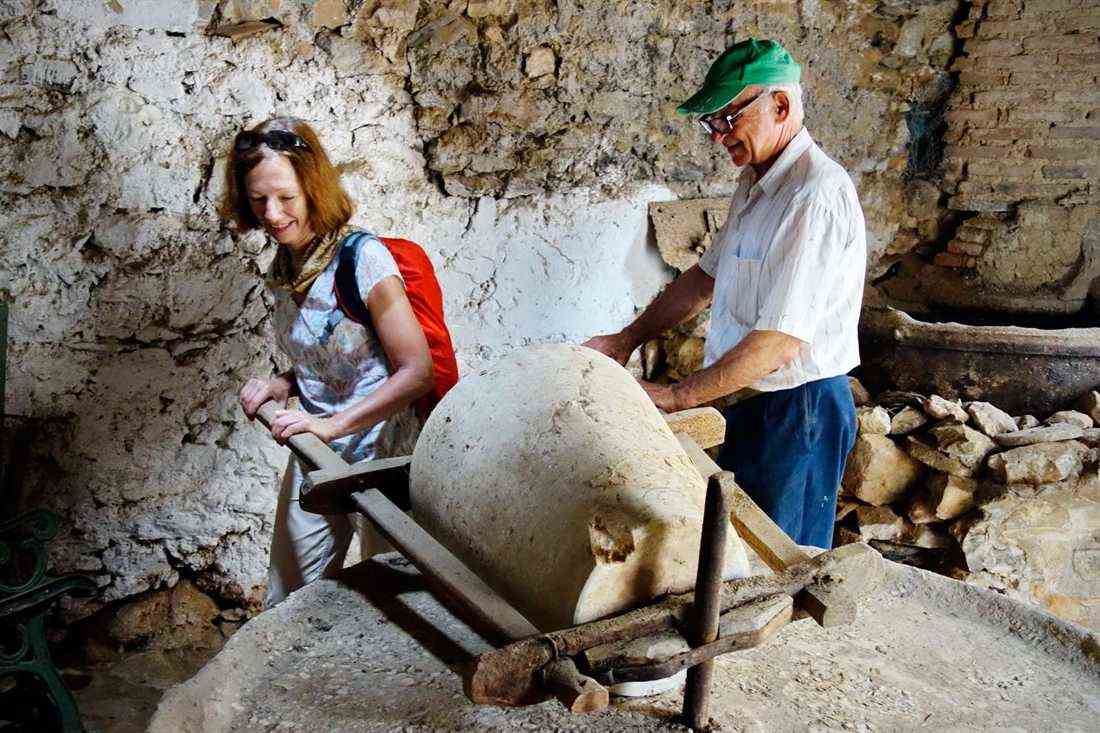
An Amorgos olive oil tasting comes inside a guided walk or a food tour around the village of Langada and the island’s olive groves. Find more trip ideas on Greece Tours.
The guide below covers the olive-press hike, the Olive Route, the terraces, the food tour, the local products, the tasting method and the harvest for an Amorgos olive oil tasting.
What is an Amorgos olive oil tasting?
An Amorgos olive oil tasting is a guided visit built around the island’s own olive oil. GetYourGuide lists no stand-alone tasting on the island. The one listing that names an olive press is a hike around Langada village.
The GetYourGuide feed for this search returns walks, food tours, a wine tasting and a cooking class on the island. None of those titles says Amorgos olive oil tasting.
Amorgos is the island that lies furthest east in the Cyclades. The ancient writer Heraclides Lembus wrote that the island produced wine, olive oil and fruits. An Amorgos olive oil tasting therefore tastes a product that an ancient writer already recorded.
Read the Langada hike as a press visit, not as an Amorgos olive oil tasting. The FindinGreece page for the walk names no tasting. Tastings of local products sit inside two other Langada tours, which later sections cover.
Which Amorgos tour stops at an olive press?
The hike around Langada village visits an old olive press in the village itself. GetYourGuide lists it as a guided tour of 2.5 hours, offered in English, French, Greek and Spanish, with free cancellation.
FindinGreece describes a walk called Peaceful Langada, with the same one-line summary as the GetYourGuide listing. Its page says the walk first visits the old olive press, where you learn the secrets of olive oil production.
From the press, the path leads to the church of Epanochoriani. You take the direct path, or you take an extended route past the wells of Chalinaras. The extended route adds 1 hour of walking.
The route then circles Pangos hill, where the page names local plants and traditional water springs. It crosses the hamlet of Stroumbos and follows the gorge of Araklos. Wikipedia places the ancient town of Aigiali close to Stroumbos and Tholaria.
The walk ends back in Langada, at the main square called Loza. The meeting point is the main parking area, at the bus stop by Loza. The start time is 9:00 am. FindinGreece adds that an earlier start can be necessary on hot days.
The page gives the end time as about 11:30 am, or 12:30 pm with the Chalinaras extension. It rates the walk easy to medium and lists it as available all year round.
What does the tour include? The FindinGreece inclusions list names two items: the walking tour and the visit to the old olive press. Water, drinks, snacks and transfers to the meeting point are not included. No Amorgos olive oil tasting is on that list.
Bring at least 1.5 litres of water in summer, a hat, sunscreen, sturdy shoes and comfortable clothing, says the page. A backpack is convenient. GetYourGuide asks for a booking at least 10 hours ahead.
Wikipedia describes the general method that turns olives into the oil served at an Amorgos olive oil tasting. The first step is washing the olives. A press then applies pressure to olive paste, which separates the liquid oil and vegetation water from the solid material.
A traditional press grinds the olives and their pits into pulp with a large cylindrical millstone. Wikipedia gives 30 to 40 minutes for the paste under the millstones in the basic method. These steps are the general method, not a description of the Langada press.
What is the Olive Route on Amorgos?
The Olive Route is a guided walk around Langada village that follows olives from the grove to the plate. FindinGreece runs it for 2 to 10 people, from April to October, and it lasts 2.5 hours.
The route doubles as an Amorgos olive oil tasting on foot. Its light meal is built on local olives and home-produced olive oil. FindinGreece also lists a taste of local products among its three highlights.
The stops of this Amorgos olive oil tasting walk come in this order. First, you see small olive groves around Langada. Next, you walk to an old olive press and learn how olives turn into oil. Last, you sit down in a small traditional restaurant.
The walk begins and ends at the main car park of Langada, next to the Loza bus stop. It starts at 11:00 am and finishes at about 13:30. The listed guide languages are Greek, English, French and Spanish.
FindinGreece names three inclusions: the guided tour, the visit to the old olive press and the light lunch. Water, other drinks and transport to and from Langada are left out. Book the Olive Route if you want the press and the meal in one Amorgos olive oil tasting outing.
Why do dry stone terraces matter for an Amorgos olive oil tasting?
On Amorgos, dry stone terraces follow the slopes and hills. They hold back soil and rainwater, says The Aegean Islands portal. FindinGreece runs a 2.5-hour Dry Stone Heritage Tour around Langada that explains this terraced landscape on foot.
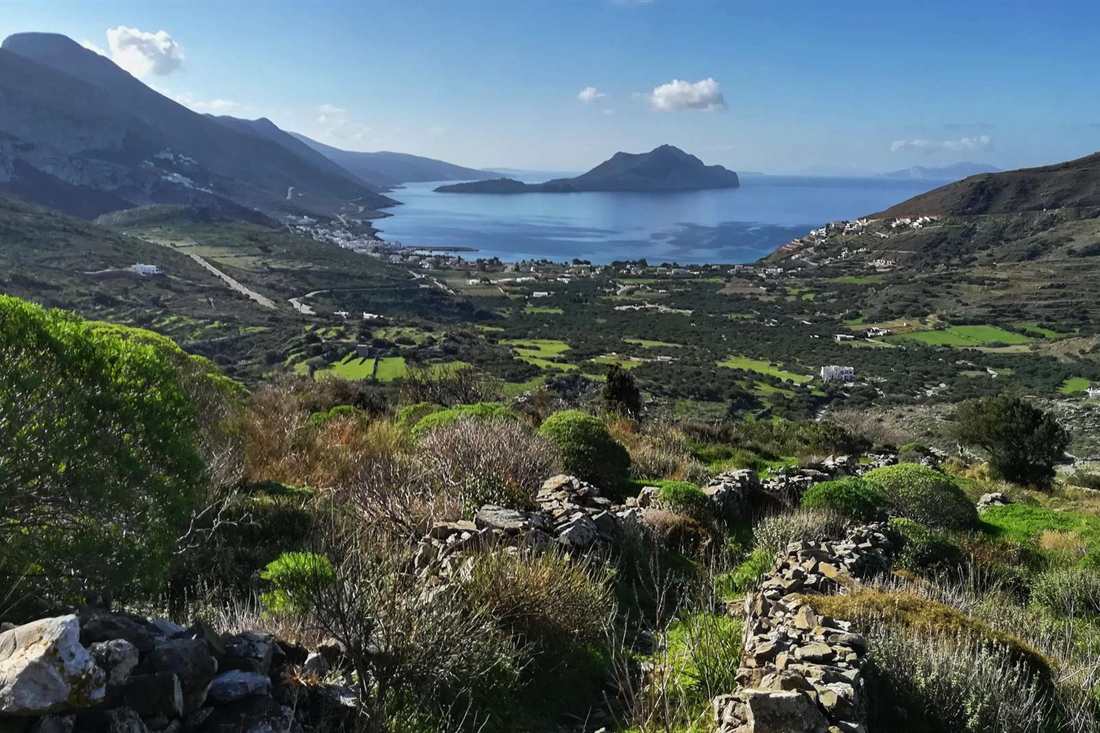
Islanders call the terraces pezoules or akmasies. The walls also mark property lines and shield the land from strong winds. Stables, ovens, old farmhouses, wine presses and threshing floors form inseparable units with the terraces. The threshing floors use the same stone.
The landscape around an Amorgos olive oil tasting is handmade. FindinGreece calls the Cyclades a handmade stone landscape. Its Dry Stone Heritage Tour starts in Langada, the same village as the Olive Route. It walks to the terraces on the slopes of Pangos hill.
The tour leaves the lower part of Langada and crosses the gorge of Araklos. On the slopes, you study walls and other structures in different states of maintenance. The guide links their form to the local stone. The talk covers the need that drove islanders to such intense labour.
The route then passes the site of recent Dry Stone Workshops. Local groups there preserve and promote dry stone masonry, a craft on the UNESCO Intangible Cultural Heritage List. Greece is among the countries named on that list. The tour holds no Amorgos olive oil tasting. Its inclusions are an interpretive walk and a handout.
FindinGreece’s Peaceful Langada hike also passes dry stone walls on its circle around Pangos hill. Wikipedia explains the method: builders set stones without mortar, and carefully chosen interlocking stones hold the wall together. Field boundaries and retaining walls for terracing are traditional uses. Other trails on the island are on our Amorgos hiking page.
The Aegialis hotel’s culture page adds the local reasons. Farmers build walls to protect field crops, mark their land and keep goats and sheep in. The walls also prevent landslides and floods. Locals, and at times visitors, give days to restore weak walls.
Wikipedia says olive trees prefer limestone slopes and coastal climates. Its sturdy, extensive roots help it tolerate drought. A tree can stay productive for centuries when growers prune it correctly and regularly.
Together, the two FindinGreece walks cover both halves of an Amorgos olive oil tasting trip. The Olive Route follows the oil from grove to meal. The Dry Stone Heritage Tour reads the stone land around the village.
What does the Langada foodie tour put on the table?
The Langada foodie tour serves a light lunch of local cheese and fava, followed by dessert. It also includes a taste of psimeni raki, a liqueur of raki, honey, herbs and spices. A guide leads the walk through the village.
A traveller who wants an Amorgos olive oil tasting finds the oil in two places on this listing. The guide explains olive oil production at selected stops in Langada. The tour also includes a visit to an old olive press.
Plan an Amorgos olive oil tasting here around the 11:00 am start. The tour lasts 3.5 hours and ends at about 2:30 pm. Both the start and the end are at the Langada car park by the Loza bus stop.
GetYourGuide shows the same 3.5 hours and free cancellation. Book before the cut-off, which is 10 hours ahead of the start.
The FindinGreece listing names four highlights.
- A walk through a traditional village
- A meeting with the locals
- Tastings of Amorgian products
- A look at an old olive press
The listing includes a guide, a stop at the old olive press, a light lunch and dessert. Water and other drinks are not included, except the drinks at lunch. Transfers to and from the meeting point are not included either.
Groups run from 2 to 10 people, so this Amorgos olive oil tasting stays a small outing. The guide works in Greek, English, French and Spanish. The listing shows April to October as the season. Our guide to the Amorgos villages places Langada among its neighbours.
Which Amorgos products go with an Amorgos olive oil tasting?
Thyme honey, island cheeses, Katsouni fava and psimeni raki share the table with the oil. The oil is pale yellowish green with low acidity, and the groves that make it grow mainly around Aegiali.
The local products page puts the island’s olive oil output at about 120 tons. Travel.gr names three olive varieties in the groves: Manaki, Koroneiki and Chontrolia. It says the groves make extra virgin olive oil in good quantities. These oils are what an Amorgos olive oil tasting sets out to show.
The honey comes from bees in the mountains. The local products page calls it mainly thyme honey and flower honey. Travel.gr says the herbs of the island support beekeeping. The products page lists mint, fennel, marjoram, oregano and rosemary among those herbs.
The island’s cheeses use goat and sheep milk. Ladotyri is hard and salty, and it matures in oil. Malaka is soft and sweet. Xinomyzithra has a creamy texture that blends with capers. Kopanisti is a soft, peppery cheese served as a starter. Ladotyri gives an Amorgos olive oil tasting a cheese with its own link to oil.
Fava comes from the Katsouni pea. That pea differs from the Lathouri pea behind the fava of Santorini. People eat it warm, alone or with onion, oil, capers and lemon. The dressed version is called fava pantremeni, or married fava.
Olive oil also goes into methismena, the traditional Lenten Easter cookies. The recipe on the products page lists flour, white wine, olive oil, baking powder and salt.
Psimeni raki is on the foodie tour’s tasting list, so it joins this Amorgos olive oil tasting. It has a story too: the products page says island women did not drink the strong raki that men drank.
So they made a liqueur from raki, honey, herbs and spices. Travel.gr adds that people drank it hot to ease colds and coughs.
The wine tasting with local snacks is a separate tour of 2 hours. The GetYourGuide text says you learn the island’s wine heritage and taste Cycladic wines. You also eat local cheeses, cold cuts and traditional delicacies. The guide speaks English or Greek, the tour is wheelchair accessible and cancellation is free.
The products page names four local grape varieties: Mantilaria, Strihi, Patiniotiko and Fokiano. Anyone who books an Amorgos olive oil tasting inside a food tour can add this wine tour too.
How do you taste olive oil at an Amorgos olive oil tasting?
Warm the oil in a covered glass, swirl it and smell it. Then take a small sip and spread it over the whole mouth. The International Olive Council sets these steps for its official tasting panels.
The council’s glass suits an Amorgos olive oil tasting. The dark coloured glass hides the colour of the oil, so the taster forms no prejudice. The narrow mouth concentrates the odours and makes them easier to identify.
Each glass holds 14 to 16 ml of oil and carries a watch-glass as a lid. The oil sits at 28 degrees Celsius, give or take 2 degrees. At lower temperatures the aromas evaporate poorly, and higher temperatures create the smells of heated oil.
Next, the taster bends the covered glass gently and rotates it to wet the inside. Then the lid comes off, and the taster smells the oil with slow, deep breaths for up to 30 seconds. An Amorgos olive oil tasting that follows this method starts with the nose.
After the nose comes a small sip of about 3 ml. The oil must reach the front of the tongue, the sides, the palate and the throat. Short, successive breaths drawn through the mouth carry the aromas to the back of the nose.
Judge an Amorgos olive oil tasting by three positive notes in the council’s method: fruity, bitter and pungent. Fruity is the smell of sound, fresh olives, and it depends on the variety. Bitter is the taste of oil from green olives or olives turning colour.
Tasters feel the bitter note on the V region of the tongue. At an Amorgos olive oil tasting, spread the oil slowly over the back of the tongue. If it moves fast, the pungent bite can hide the bitter taste. The method asks tasters to follow the order in which the two appear.
When is the olive harvest on Amorgos?
The olive harvest in Greece begins in October and lasts until March, depending on the variety. A Greek lifestyle article adds that local presses start working day and night from late October. The Cyclades, the island group that holds Amorgos, list olive oil among their produce.
Wikipedia gives the same autumn pattern for the whole Mediterranean: olives are harvested in the autumn, from October onwards. No source for this page names an exact Amorgos picking date. Ask the producer for the week before you plan an Amorgos olive oil tasting.
Harvest timing shapes what you meet at an Amorgos olive oil tasting. The council ties pungency to oils from the start of the crop year, mainly from unripe olives. Wikipedia adds that early harvesting and pressing within hours of picking help an oil keep its polyphenols.
What do travellers ask about an Amorgos olive oil tasting?
Travellers ask about the grade on the label, the peppery bite and faults. They also ask what to eat between oils, when to taste and how to cook with the oil. The answers below come from the International Olive Council method and from Wikipedia.
Travellers who want to cook can book the GetYourGuide class Amorgos: Greek Cooking or Pastry Class. It lasts 1.5 hours and runs as a small group. The meal comes on a hotel terrace with views of the Aegean.
The listing shows free cancellation and wheelchair access, with English and Greek as the languages. The class teaches cooking, and its summary names no tasting. Read the details on the Amorgos cooking class page.
What makes an oil extra virgin?
Extra virgin is the grade to look for at an Amorgos olive oil tasting. It is the highest grade of virgin olive oil, made by cold mechanical extraction without solvents or refining. It holds no more than 0.8% free acidity, a fruity note and no defined sensory defects. Virgin oil allows up to 2.0%.
Why does the oil bite the throat?
The council calls this note pungent: a biting sensation felt through the mouth, especially in the throat. Wikipedia says a peppery or bitter taste indicates a higher polyphenol content. The method advises ingesting the oil, so the taster can judge the pungency.
What do you eat between oils at an Amorgos olive oil tasting?
The method recommends a small slice of apple, chewed and then put in a spittoon. The taster then rinses the mouth with a little water at room temperature. A session covers up to four oils, and at least 15 minutes pass before the next session.
What does a faulty olive oil taste like?
Rancid is the flavour of oil that has gone through intense oxidation. Musty-humid-earthy comes from olives stored in humid conditions, or collected with earth on them and not washed. Winey-vinegary comes from fermentation in the olives or in paste left on dirty pressing mats.
What time of day suits an Amorgos olive oil tasting?
The method recommends sessions between 10 in the morning and 12 noon. Taste and smell sensitivity rises before meals and falls after them. Tasters avoid smoking and coffee for 30 minutes before the test and wear no fragrance.
Can you cook with extra virgin olive oil?
Yes. Extra virgin oil serves mainly as a raw condiment and in salad dressings. It also suits sautéing. Heated above 210 to 216 degrees Celsius, its unrefined particles burn and the taste deteriorates. Refined oils suit deep frying because of their higher smoke point.