
Amorgos is inseparable from The Big Blue, Le Grand Bleu. Luc Besson’s cult film about free-diving that was largely shot on the island and brought its deep, clear waters to a global audience. The images of impossibly blue sea and stark Cycladic light made Amorgos famous, and the film’s legacy still shapes the island’s diving culture and its allure for travellers today. Plan the whole trip with Greece Tours.
This guide covers Amorgos and The Big Blue: the film and its link to the island, the locations at Agia Anna. Chora and the wild south, why it made the island famous, its diving legacy. How to visit the filming locations today. Read it beside the guides to Amorgos beaches and diving in Amorgos.
What is The Big Blue and its link to Amorgos?
The Big Blue, Le Grand Bleu, is Luc Besson’s cult film about free-diving, largely shot on Amorgos. Its images of the island’s deep, clear water made Amorgos world-famous and remain central to its identity and its diving culture today.
The Big Blue, released in and directed by Luc Besson, is a film about the rivalry and friendship of two free-divers. Loosely based on real figures, whose story unfolds in some of the clearest, deepest water in the Mediterranean. Besson chose Amorgos, at the eastern edge of the Cyclades, as a principal location, and the island’s stark beauty became part of the film’s identity.
The film was a huge success, especially in France, and it turned Amorgos, until then a quiet and little-visited island, into a place of pilgrimage for its fans. Its images of the intense blue sea gave the island its enduring nickname, the island of the Big Blue, and drew a new wave of visitors.
Decades on, the connection remains central to how Amorgos presents itself and to why many people visit. The film’s celebration of the deep. Clear sea still colours the island’s diving and free-diving culture. Its locations are sought out by travellers who know the film and by those who simply come for the water it made famous.
Where was The Big Blue filmed on Amorgos?
The Big Blue was filmed at locations on Amorgos: above all Agia Anna beach below the Hozoviotissa Monastery, along with the capital Chora, the monastery itself, and the wild southern bays of Kalotaritissa and Liveros with the Olympia shipwreck.
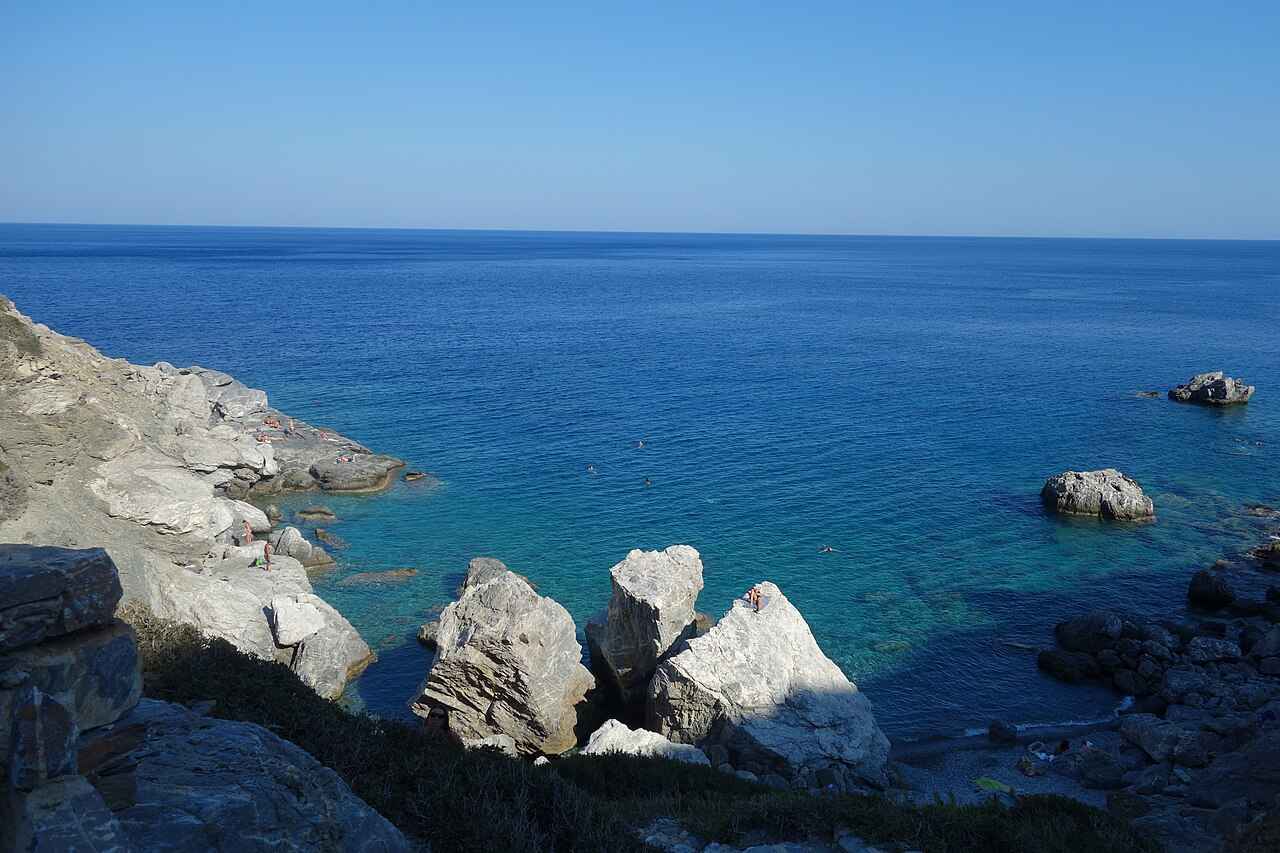
The island’s most famous Big Blue location is Agia Anna, the small pebbly cove of dazzling clear water on the coast below the Hozoviotissa Monastery. Where key scenes, including childhood scenes of the diver Jacques Mayol, were shot. Its turquoise water and the little white chapel appear on screen and remain the beach most associated with the film.
Other locations spread across the island: the whitewashed capital Chora and the emblematic Hozoviotissa Monastery on its cliff feature in the film. The monastery providing a backdrop for a memorable scene. The wild south around Kalotaritissa and Liveros bay, with the rusting hull of the Olympia shipwreck, also appears, tied to the film’s diving drama.
Together these locations, the beach, the capital, the monastery and the southern bays, made the whole island a character in the film. Visiting them is a way of tracing The Big Blue across Amorgos, and each is a fine sight in its own right, as the guides to the beaches and the monastery describe.
What is Agia Anna, the beach of The Big Blue?
Agia Anna is the pebbly turquoise cove below the Hozoviotissa Monastery where key scenes of The Big Blue were filmed.
Set on the coast below Chora and the cliff-hanging monastery, Agia Anna is a compact beach. In fact a series of small pebbly coves, lapped by extraordinarily clear, deep blue water. It is not large, and it has facilities. But its beauty and its film fame make it the best-known shore on Amorgos and the heart of the Big Blue story.
The crystalline water, the rocky ledges and small caves. The little white chapel of Agia Anna, with the monastery high above. Are exactly the scene that appears in the film, and fans still come to swim where its images were made. The clear water is superb for snorkelling among the rocks.
Agia Anna sits a short drive or a scenic walk from Chora and the monastery, so it combines easily with the island’s central icons. As the film’s key location and one of its loveliest beaches, it is essential to any Big Blue tour of the island, covered also in the Amorgos beaches guide.
What other Big Blue locations can you see on Amorgos?
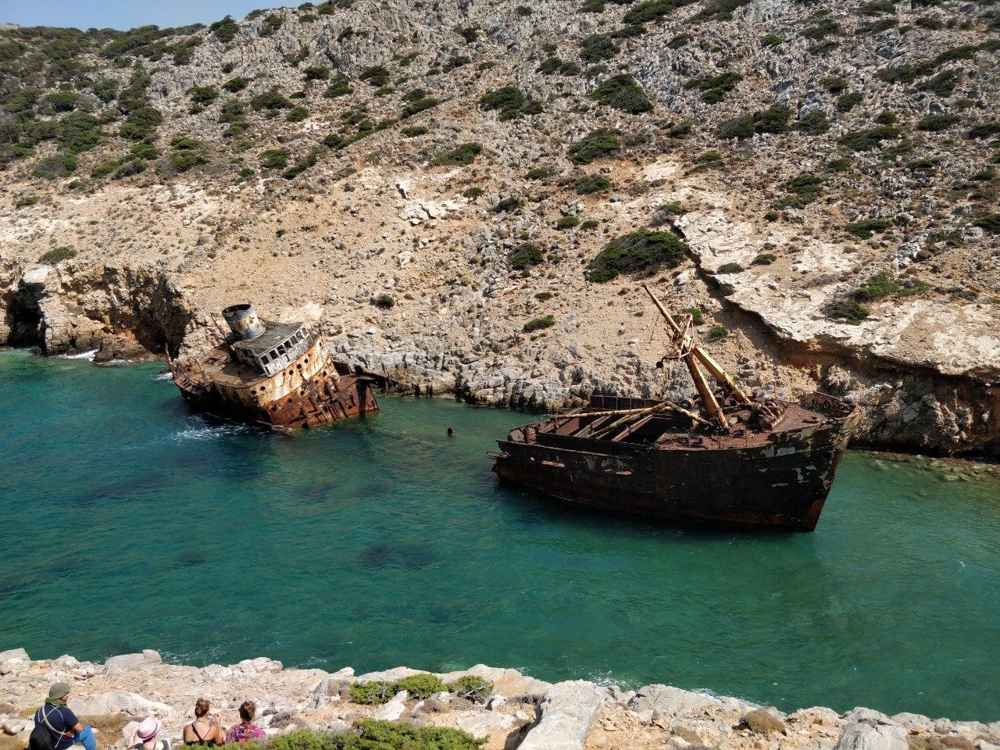
Beyond Agia Anna, Big Blue locations on Amorgos include the capital Chora, the Hozoviotissa Monastery, and the wild southern bays of Kalotaritissa and Liveros, where the rusting Olympia shipwreck, tied to the film, still lies half-submerged near the shore.
The film ranges across the island. The whitewashed capital Chora, with its lanes, castle and windmills. The emblematic Hozoviotissa Monastery pressed into its cliff both feature. The monastery famously providing the backdrop for a scene as the friends return to the island. Seeing them ties the film to the island’s greatest sights.
In the wild south, the bays of Kalotaritissa and Liveros are linked to the film’s diving drama. It is here that the wreck of the cargo ship Olympia. Run aground in , still lies rusting in the shallows against a backdrop of cliffs and clear water. The dramatic, slightly eerie wreck has become a Big Blue landmark in its own right.
Touring these locations, from the capital and the monastery in the centre to the shipwreck in the south. Traces the film across the whole of Amorgos and takes in the island’s finest sights along the way. Each rewards a visit whether or not you know the film.
Why did The Big Blue make Amorgos famous?
The Big Blue made Amorgos famous by showcasing its deep, clear sea and stark beauty to a huge international audience, especially in France.
Amorgos was one of the quietest and least-visited of the Cyclades, remote at the eastern edge of the group. The Big Blue changed that, its striking images of the island’s blue water and dramatic landscape reaching millions, above all in France, where the film became a lasting cult classic.
The film drew a new wave of visitors, many of them fans tracing its locations. Gave the island its identity as the island of the Big Blue. A name still used across Amorgos in bars, boats and tourism. It brought the island a modest, character-preserving tourism rather than the mass kind that overtook other islands.
most lasting, the film’s celebration of free-diving and the deep sea helped shape the island’s water culture, inspiring the diving and free-diving that remain among the best things to do on Amorgos, as the guide to diving in Amorgos describes.
What is the diving and free-diving legacy of The Big Blue?
The Big Blue, about free-divers, made Amorgos a magnet for diving and free-diving.
Its legacy on Amorgos is above all an underwater one. The clear, deep water it made famous is genuinely among the finest in the Cyclades for diving and snorkelling. The film’s fame helped establish the island as a destination for these pursuits.
A diving centre and free-diving school on the island, based around the bay of Aegiali, run trips and courses to the reefs, walls and caves of the coast and around the islet of Nikouria, welcoming everyone from beginners to experienced divers and the free-divers drawn by the film’s spirit. The dramatic underwater scenery lives up to the film.
For visitors, trying a dive or a free-diving lesson in the water of the Big Blue is the natural way to connect with the film and the island. Experiencing first-hand the clear, deep sea that Besson chose to celebrate. The diving legacy is a large part of what The Big Blue left to Amorgos.
How can you visit the Big Blue locations on Amorgos today?
The Big Blue locations are easily visited today: Agia Anna beach and the Hozoviotissa Monastery lie just below Chora, reached by car, bus or on foot, while the Olympia shipwreck sits in the south near Kalotaritissa.
The film’s central locations are among the island’s main sights and simple to reach. Agia Anna beach and the Hozoviotissa Monastery lie just below the capital Chora in the centre of the island, reached by the monastery road. By the local bus to Agia Anna, or on foot from Chora in around twenty minutes. The heart of the Big Blue tour is easy.
The southern locations take a little more effort: the Olympia shipwreck and the bays of Kalotaritissa and Liveros lie at the far southern end. Reached by the winding road through Arkesini or by a boat trip along the coast. A hire car or a boat excursion is the practical way to reach them, as the boat trips guide describes.
With a hire car, the film’s locations across the island can be seen in a day or two. Combining Agia Anna, Chora and the monastery in the centre with the shipwreck in the south. Whether you are a fan of the film or simply drawn to the island’s beauty, tracing The Big Blue is a rewarding way to explore Amorgos.
Frequently Asked Questions
Where was The Big Blue filmed?
The Big Blue, Le Grand Bleu, was filmed partly on Amorgos in the Greek Cyclades, along with locations in Italy, France, Peru and elsewhere. On Amorgos the key location is Agia Anna beach, the pebbly turquoise cove below the Hozoviotissa Monastery, where childhood diving scenes were shot, while the capital Chora, the monastery itself and the wild southern bays of Kalotaritissa and Liveros, with the Olympia shipwreck, also feature in the film.
Is Amorgos worth visiting for Big Blue fans?
Yes. Amorgos is a place of pilgrimage for fans of The Big Blue, who can visit the film’s locations, above all Agia Anna beach below the Hozoviotissa Monastery. Along with the capital Chora and the Olympia shipwreck in the south. Swim and dive in the clear, deep water the film made famous. Even beyond the film, the island rewards visitors with its dramatic scenery, its monastery, its beaches and its superb diving and free-diving.
Can you dive where The Big Blue was filmed?
Yes. The clear, deep water of Amorgos that The Big Blue made famous is superb for diving, snorkelling and free-diving. A diving centre and free-diving school on the island. Based around the bay of Aegiali, run trips and courses to the reefs, walls and caves of the coast for all levels. You can also simply snorkel in the film’s key location at Agia Anna beach, whose crystalline water and rocky coves are ideal for exploring with a mask.