
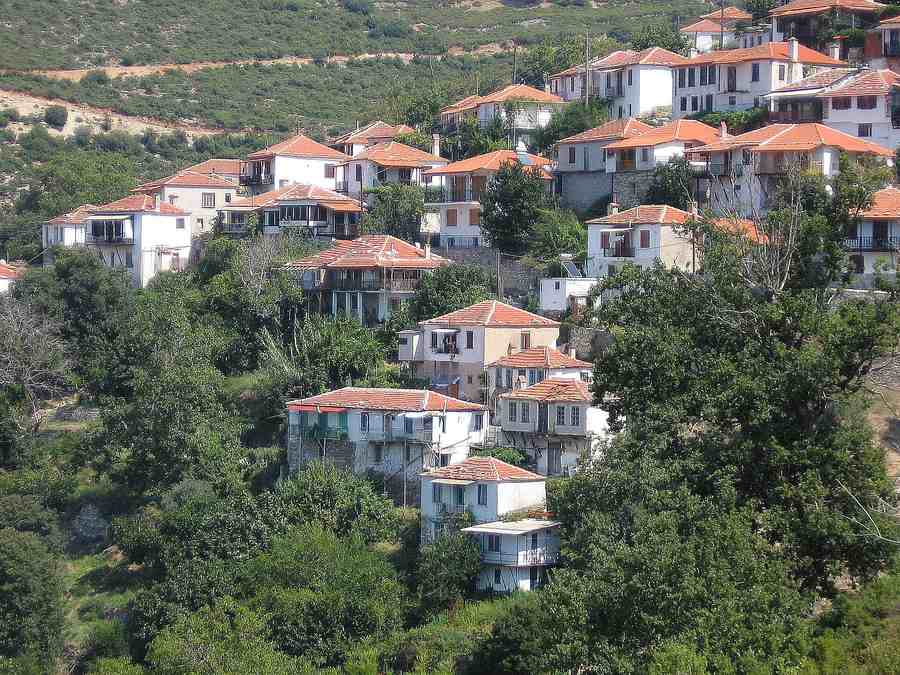
Sotiras is a mountain village on the western side of Thassos, built amphitheatrically at about 300 metres on the green foothills of Mount Ypsario. Stone and tiled houses climb the slope around a shaded square, where enormous plane trees and a marble spring mark the heart of the settlement. Miners once filled these lanes, and their old galleries still scatter the hills above the village. Travellers come for the guaranteed Aegean sunsets, the cool mountain air and the slow pace that the coast resorts lack. A single taverna under the plane trees serves coffee, ouzo and village food to visitors who climb the road from the shore. Sotiras rewards anyone who wants quiet, height and long views over the open sea.
Sotiras draws visitors who prefer mountain calm and sweeping views to sand and sunbeds. The village sits well inland from its coastal namesake, and the sections below separate the two clearly. Details cover the location on Thassos, the plane-tree square and its spring, the famous sunsets, the mining heritage in the hills, the church of the Transfiguration, the road up from the coast and the walks that start here. Each heading answers one question with concrete numbers, so a half-day trip fits neatly around a taverna lunch and a sunset. Read on to place the village in a wider island plan and pair it with a beach base near the western coast.
Where is Sotiras village on Thassos?
Sotiras sits in western Thassos, built amphitheatrically at about 300 metres on the foothills of Mount Ypsario. The village lies 22 kilometres southwest of Limenas and three kilometres above its own coast, well inland from the beaches.
Sotiras occupies a green shelf on the western flank of Thassos, high above the coast road. The village faces the open Aegean, so the sea fills the view from almost every lane and terrace. Mount Ypsario, the island’s highest peak at 1,204 metres, rises behind the settlement to the east. Slopes of olive, pine and plane cloak the ground around the houses, and springs feed the greenery through summer. This western position gives the village its long sunsets, since the sun drops straight into the sea ahead. Ridges shelter the site from the harshest weather while leaving the seaward view wide open. The setting explains why settlers chose this exact shelf, high enough for cool mountain air yet fully open to the water below.
Distances place Sotiras within easy reach of the west-coast resorts yet clearly apart from them. The village stands 22 kilometres southwest of Limenas, the island port and main town on the north coast. Its own coast, Skala Sotiros, lies just three kilometres downhill, close enough for a swim before or after a visit. The resort of Limenaria sits a short drive further along the west coast, giving a busier base with more rooms and services. Kallirachi village lies about four kilometres away on foot along the mountain trails. These short distances let the village work as a half-day trip from any west-coast base, paired with a beach and a taverna meal.
Terraced lanes step up the hillside in the amphitheatrical plan typical of Thassos mountain villages. Houses stand in rows on the slope, each looking over the roofs below towards the sea. Narrow cobbled streets link them, and cars stay mostly at the edges, so the core keeps a quiet, walkable feel. Green-painted houses with red-tiled roofs give the village a softer look than the grey slate of the eastern hill villages. Gardens, vines and fruit trees fill the gaps between the homes and the church. This inland shelf once kept residents safe from the coastal raids that plagued the Aegean shore. The layout still shapes every visit, since the whole village reads as one slope tilted towards the sunset and the water.
Skala Sotiros on the shore below is a separate place with its own character and history. The coastal settlement holds the island’s prehistoric remains, including a Bronze Age fortified site and standing stones, and earns its own visit. Mountain Sotiras, by contrast, is the older residential village, where families lived inland while fishermen worked the coast. This split between a hill village and its Skala repeats all along the west coast of the island, at Kallirachi, Rachoni and Prinos. Knowing which is which saves confusion, since maps and signs use the shared name for both. The upper village delivers height, sunsets and mountain calm, while the Skala delivers sand, tavernas and the sea. Pairing the two in one day gives the fullest sense of this western corner of Thassos.
What makes the plane-tree square and its spring the heart of Sotiras?
Sotiras centres on a shaded square where enormous plane trees ring a marble spring built in the nineteenth century. A single taverna under the branches serves coffee, ouzo and village food, making the square the meeting point for the whole community.
Plane trees dominate the square of Sotiras and give the village its cool green heart. The huge old trees throw dense shade across the paving even at the height of summer. Their branches spread wide enough to cover the whole gathering space, keeping it fresh when the coast bakes below. Villagers and visitors sit beneath them for hours over coffee, ouzo or a slow lunch. The trees draw their water from the same springs that feed the marble fountain beside them. Generations have met, talked and rested in this exact spot, so the square carries the memory of the whole community. This shaded centre, more than any single building, defines the character and pace of the mountain village for every traveller who climbs up to see it.
The marble spring in the square is a preserved village monument and a working source of mountain water. Carved from local stone in the nineteenth century, the fountain still runs cold and clear straight from the hillside. Walkers fill bottles here before setting off on the trails, and the water tastes of the mountain rather than the tap. The fountain sits under the plane trees, tying the two landmarks into a single shaded centre. Its age and craft mark it as one of the oldest surviving features of the settlement. Stone troughs around it once watered animals and served the daily needs of the households nearby. The spring explains why the village grew on this exact shelf, since reliable fresh water was the first requirement for any inland settlement.
The village taverna under the plane trees is the only cafe-restaurant in Sotiras and the natural gathering point. Tables spread across the square in the shade, filling at lunch and again for the sunset hour. The kitchen serves simple mountain cooking, grilled meats, garden salads and local wine, matched to the slow pace of the village. Coffee and ouzo carry the long afternoons, and the same tables turn to dinner as the light fades over the sea. Prices stay modest and the welcome is unhurried, in keeping with a village where time seems to stop. For a fuller picture of island dishes and regional flavours, see our guide to Thassos food and cuisine. The taverna, the trees and the spring together make the square a destination in itself.
Narrow cobbled lanes lead off the square and climb between the green-painted houses of the village. Cars stay at the edges, so the centre keeps a quiet, walkable calm rarely found in the coast resorts. Cats doze in doorways, flowers spill over walls, and the sound of running water follows every lane. The square works as the hub from which short strolls fan out to the church, the viewpoints and the old miners’ quarters above. Benches and low walls give places to pause and take in the sea beyond the rooftops. Long-settled residents keep the gardens and houses in good order. This blend of shade, water, food and quiet is why travellers linger far longer than a quick photo stop would suggest.
Why is Sotiras famous for its Aegean sunsets?
Sotiras faces due west over the open Aegean, so the sun sets straight into the sea ahead of the village. The height above the coast clears the view, making sunsets from the square and terraces almost guaranteed on clear evenings.
The western aspect of Sotiras is the single reason its sunsets outshine most on the island. Perched on the seaward slope of Ypsario, the village looks over an open horizon with no land to block the view. The sun drops directly into the Aegean, and on clear evenings the whole sky and sea turn gold, orange and deep red. Height adds to the effect, lifting the viewpoint above the coastal haze that can dull sunsets at sea level. The show repeats almost every clear night through the long summer season. Photographers and couples climb up from the beaches specially to catch it from the square or a terrace. This reliable, wide-open sunset is the headline attraction that has spread the village’s name well beyond the island.
Viewpoints for the sunset ring the village, from the plane-tree square to the higher lanes and terraces. The square itself gives a framed view between the branches, matched with a drink from the taverna. Climbing a few streets higher opens the horizon fully, with the coastline and distant hills laid out below. Rented rooms and terraces on the upper slope sell partly on this westward outlook over the sea. The quiet, romantic mood of the hour makes the village a favourite for couples seeking calm away from the resort crowds. For more ideas on romantic corners of the island, see our guide to Thassos for couples and its quiet viewpoints. Arriving an hour before dusk secures a table and time to watch the colours build over the water.
Timing a sunset visit to Sotiras takes a little planning around the drive and the light. Evenings in high summer bring dusk late, so a visit pairs well with a beach afternoon and an early dinner in the square. The road up from the coast takes only minutes, but headlights help on the descent once the light has gone. Arriving before the sun reaches the sea leaves time for a drink and a table under the trees. Clear, dry evenings give the strongest colours, while a light haze can soften them into pastels. Warm layers help, since the mountain air cools quickly once the sun is down. A sunset dinner in the square turns a short trip into the highlight of a west-coast day on the island.
Sunsets at sea level on the west coast are fine, but the height of Sotiras lifts them into something rarer. The village clears the beach umbrellas, buildings and haze that crowd the shoreline view below. Cooler air and a quieter setting add to the mood, replacing the bustle of the resorts with birdsong and running water. The same drive that brings a taverna lunch delivers the best sunset seat on this side of the island. Couples, walkers and photographers all make the short climb for exactly this reward. The experience ties the village firmly to its landscape, since the sunset depends on the western slope and the open sea. This single evening spectacle, free and reliable, has become the village’s calling card across Thassos.
What mining and quarrying heritage survives in the hills around Sotiras?
Miners settled Sotiras in the early twentieth century to work a lead and zinc mine in the surrounding hills. Old galleries, ruined miners’ houses and administrative buildings still stand above the village, alongside the wider marble-working tradition of Thassos.
Mining shaped the growth of Sotiras far more than farming or fishing did. Workers came to the hills above the village to dig a lead and zinc deposit in the early twentieth century. Families from nearby Kallirachi and further afield swelled the population during the mining years. The mine brought wages, buildings and a small industrial community to what had been a quiet farming shelf. Ore was cut from galleries driven into the mountain, then hauled down towards the coast for shipping. The work was hard and the boom did not last, but it left a clear mark on the village and its hills. This industrial chapter sets Sotiras apart from the purely agricultural mountain villages elsewhere on the island.
Galleries and ruined buildings from the mining era still dot the slopes above the village. Dark mine entrances cut into the hillside mark where crews once followed the ore underground. Roofless miners’ houses and old administrative offices stand among the trees, slowly returning to the landscape. Walkers on the trails above Sotiras pass these relics and read the outline of the vanished industry. The ruins carry a quiet, haunting mood, a reminder of the boom that filled and then emptied the village. Care is needed near the old shafts, which are unfenced and unsafe to enter. Left as they are, the remains turn a hillside walk into a route through the village’s working past, layered over the older farming terraces around them.
Marble carries the wider stone heritage of Thassos into the story of Sotiras. The island’s white marble, quarried since antiquity, appears in the very fountain that anchors the village square. Stone-working skills ran through these hills alongside the metal mining, shaping houses, churches and monuments across Thassos. The families who built and worked the village came in part from Kallirachi village, a short walk north along the mountain. That link between the two settlements still shows in shared surnames, trails and festivals. The combined heritage of ore and stone gives the western hills a depth that the beaches alone cannot match. Reading the marble fountain and the mine galleries together sets the village firmly within the long working history of the island.
Depopulation followed the closing of the mine, and the village shrank to a fraction of its busy years. Younger residents left for the coast and the cities as the work dried up. Empty houses stood for decades until foreign buyers and returning families began to restore them. Around 500 people now live in the village, many of them settled Germans, Dutch and English drawn by the calm and the views. The mining ruins remain as monuments rather than workplaces, folded into the walks and the scenery. This shift from industry to quiet retreat is written across the hillside for any visitor to read. The village now trades on the very peace that the busy mining decades once broke, a full turn in its long story.
What is the church of the Transfiguration and the village’s ties to Mount Athos?
Sotiras takes its name from the church of the Metamorphosis, the Transfiguration of the Savior, built in the nineteenth century. Monks from nearby Mount Athos carved its wooden iconostasis, a tie that has bound the village to the monastic peninsula for generations.
The church of the Transfiguration gives Sotiras both its heart and its name. Sotiras means Savior in Greek, and the village grew around this parish church on its central shelf. The stone building sits close to the plane-tree square, tying worship and daily life into one compact centre. Built in the nineteenth century, the church served the mining and farming families through the village’s busiest years. Its bell still marks the hours and the feast days for the scattered community. The Transfiguration feast in August is the high point of the village calendar, drawing former residents home. As the spiritual centre of the settlement, the church carries the same weight for Sotiras that a cathedral holds for a town.
The wooden iconostasis inside the church is the finest work of craft in the village. Monks from Mount Athos carved the screen by hand in the early twentieth century, a gift of skill from the holy peninsula. Intricate figures and patterns cover the wood, framing the icons that face the congregation. The screen ranks among the most valued religious artworks on this side of the island. Its Athonite origin marks the deep bond between Sotiras and the monastic community across the water to the east. Visitors who step inside find a richly worked interior at odds with the plain stone exterior. The iconostasis alone repays a pause at the church during any walk through the quiet lanes of the village.
Ties to Mount Athos run through the history of Sotiras and the wider island. Thassos lies within sight of the Holy Mountain, and its monasteries long held land and influence across the region. Village families sent sons to the monasteries and drew priests and craftsmen from them in return. The carved iconostasis is the clearest surviving proof of that exchange in Sotiras itself. Feast days, icons and customs in the village still echo the Athonite tradition. Nearby the monastery of Saint Panteleimon sits above the Kazaviti villages, a further link in the monastic network of the west. These bonds gave the mountain settlements a spiritual anchor that outlasted the mines and the farms.
Visitors to the church find it open around services and often through the day in summer. Modest dress suits the setting, with covered shoulders and knees as at any Greek village church. The courtyard and its shade trees give a quiet pause on a walk between the square and the viewpoints. Photographs of the exterior are welcome, though the interior asks for respect during prayer. The August feast of the Transfiguration fills the village with music, food and returning families, the best day to see the community whole. A visit to the church rounds out the story that the square, the spring and the mine ruins begin. Together these landmarks let a short walk read the full life of the mountain village.
How do visitors reach Sotiras and get around the village?
Visitors reach Sotiras by a short mountain road that climbs from Skala Sotiros and the west coast. A hire car or taxi is the practical way to arrive, since the village lies well off the main coastal bus route around the island.
The mountain road to Sotiras climbs three kilometres inland from Skala Sotiros on the west coast. The turning leaves the coastal ring road and rises through olive groves and pine towards the village shelf. The surface is paved and needs no special vehicle beyond a normal hire car. A few minutes of steady driving carry travellers from the beach to the square, gaining height with every bend. Views back over the coast widen as the road climbs, previewing the sunset outlook above. Signposts on the coast road point the way, so first-time visitors find the route without trouble. This short, scenic climb is the classic approach and the reason the village pairs so easily with a beach base on the west coast.
A hire car gives the most freedom for a visit and suits the mountain setting well. Own transport lets travellers choose the sunset hour, linger over dinner and stop for views on the drive. Parking sits at the edges of the village, from where the cobbled lanes run on foot. The flexibility of a car allows a swim on the coast before or after the climb. Taxis run up from the west-coast resorts and give a fixed-price alternative for a small group or an evening out. Booking a taxi return in advance avoids a wait once the light has gone. Either choice turns the trip into an easy half-day, with the square, the church and a sunset all comfortably within reach of the coast.
Cobbled lanes and steps make up the core of the village, so exploring happens on foot. Cars stay parked at the margins, leaving the centre quiet and free of traffic. The square forms the natural starting point, with short walks fanning out to the church, the viewpoints and the mine ruins above. Sturdy shoes help on the uneven stone and the steeper upper streets. Distances within the village stay small, so even a relaxed wander covers the main sights in an hour or two. Benches and the taverna give places to rest along the way. This walkable, car-free core is part of the village’s charm, keeping the pace slow and the air clear for everyone who climbs up to see it.
Public buses follow the coast road but rarely climb the three kilometres up to Sotiras itself. Services around the island link Limenas, Limenaria and the west-coast villages down at sea level. A traveller relying on buses would ride to Skala Sotiros and then face the steep walk or a taxi up. This gap in the timetable makes a car or taxi the sensible choice for the village. The 22-kilometre run from Limenas takes well under an hour along the western coast road. Most visitors fold Sotiras into a wider tour of the west, pairing it with beaches, the Kazaviti villages or a coastal lunch. Planned this way, the mountain village slots neatly into a relaxed day of driving around this side of the island.
What can travellers do around Sotiras beyond the village?
Sotiras works as a quiet base for hiking, sunsets and slow mountain days. Trails climb to Kallirachi, the peak of Ypsario and the Kazaviti villages, while the coast below offers beaches and tavernas a short drive down the hill.
Hiking trails fan out from Sotiras across the western slopes of the island. A four-kilometre path leads north to Kallirachi through olive terraces and old mining ground. More ambitious walkers aim for Mount Ypsario, the island’s 1,204-metre summit, reached by longer routes climbing east from the village. Shorter loops take in the mine ruins, the springs and the viewpoints on the slopes just above the houses. The cool mountain air and the shade of the trees make Sotiras a comfortable trailhead even in high summer. For routes, distances and difficulty across the island, see our guide to hiking on Thassos and its marked mountain paths. The village fountain gives walkers a place to fill bottles before setting out.
Nearby villages add easy half-day trips from a base at Sotiras. The twin Kazaviti settlements, wrapped in plane trees and monastery land, lie a short drive or e-bike ride to the north. Kallirachi and its own Skala sit close along the coast, sharing the mining and farming history of the western hills. Prinos and Rachoni continue the string of hill villages and their coastal Skalas further north again. Each offers its own square, church and tavernas, so a tour of the west links several in one relaxed day. The monastery of Saint Panteleimon above Kazaviti rewards a detour for its quiet and its views. These short hops let travellers build a full picture of western Thassos around the calm anchor of Sotiras.
Beaches on the coast below give the swimming that the mountain village cannot. Skala Sotiros, three kilometres downhill, offers the nearest sand and a line of tavernas along the shore. The longer beaches around Limenaria and Potos lie a short drive south for a full day by the sea. Pairing a morning swim with an afternoon and sunset up in Sotiras gives two sides of the island in one day. The quick road between hill and coast makes this combination easy to arrange from any west-coast base. Sun, sand and sea handle the daytime, while the village supplies the shade, the views and the evening meal. This balance of beach and mountain is the whole appeal of staying on this side of Thassos.
Sotiras suits travellers who want a calm, scenic base away from the resort strip. Rented rooms and restored houses on the slope trade on the views, the quiet and the mountain air. Couples, walkers and older visitors find the pace and the setting a welcome change from the busy coast. The single taverna, the spring and the sunset supply enough for a restful stay without the crowds. Days here run on walking, swimming down the hill and long evenings in the square. Families after nightlife and wide sands may prefer the coast, using the village for day trips instead. For the right traveller, though, this green mountain shelf with its guaranteed sunsets is among the most rewarding places to stay on the whole island.
Frequently Asked Questions
Is Sotiras worth visiting on a Thassos holiday?
Sotiras rewards a half-day trip for travellers who want mountain calm, history and long sea views beside their beach time. The village offers a shaded plane-tree square, a nineteenth-century marble spring, the church of the Transfiguration and famous Aegean sunsets. A single taverna under the trees serves village food and drinks through the afternoon and into the evening. Old mine galleries and ruined miners’ houses on the slopes above add a haunting industrial layer to a hillside walk. The short three-kilometre climb from Skala Sotiros makes the visit easy to fold into any west-coast holiday. The mix of shade, spring water, sunset and slow pace makes Sotiras one of the most rewarding mountain stops on Thassos.
What is the difference between Sotiras and Skala Sotiros?
Sotiras is the mountain village on the western slope, while Skala Sotiros is its separate coastal settlement three kilometres downhill. The upper village sits at about 300 metres and delivers shade, sunsets, a plane-tree square and mining heritage. Skala Sotiros lies on the shore and holds the island’s prehistoric remains, including a Bronze Age fortified site and standing stones. Families once lived up in the mountain village for safety while fishermen worked the coast below. This split between an inland village and its coastal Skala repeats along the west coast, at Kallirachi, Rachoni and Prinos. Maps and road signs use the shared name for both, which often confuses first-time visitors. Pairing the two in one day gives the fullest sense of this western corner of the island.
Why are the sunsets from Sotiras so famous?
Sotiras faces due west over the open Aegean from a shelf about 300 metres above the sea, so the sun sets straight into the water ahead. The height clears the coastal haze and beach clutter that can dull sunsets at sea level, leaving a wide, uninterrupted horizon. On clear evenings the sky and sea turn gold, orange and deep red, and the show repeats almost every night through the summer. Villagers and visitors watch from the plane-tree square, the taverna tables or the higher lanes above. Warm layers help, since the mountain air cools quickly once the sun is down. This reliable, wide-open sunset is the headline draw that has spread the village’s name well beyond Thassos.
How do you get to Sotiras on Thassos?
Sotiras is reached by a short paved mountain road that climbs three kilometres inland from Skala Sotiros on the west coast. A hire car or taxi is the practical way to arrive, since public buses follow the coast road and rarely climb up to the village. The turning leaves the coastal ring road and rises through olive groves and pine, gaining height with every bend. Drivers reach the square in a few minutes, and parking sits at the edges of the largely car-free village. The run from Limenas, the main port on the north coast, covers 22 kilometres and takes well under an hour. Taxis from the west-coast resorts give a fixed-price alternative, worth booking for the return once the light has gone.
What food and drink can you get in Sotiras?
Sotiras has one taverna under the plane trees in the square, and it serves as the village’s only cafe and restaurant. The kitchen offers simple mountain cooking, grilled meats, garden salads, local cheese and village wine, matched to the slow pace of the place. Coffee and ouzo carry the long afternoons, and the same shaded tables turn to dinner as the sun drops over the sea. Cold spring water runs from the marble fountain a few steps away, free for anyone to drink or fill a bottle. Prices stay modest and the welcome is unhurried, in keeping with a village where time seems to stand still. Sunset is the busiest hour, so arriving early secures a table beneath the branches for the evening.
When is the best time to visit Sotiras?
Sotiras is at its best from late spring through early autumn, when the taverna is open, the trails are dry and the sunsets run long. Summer brings the warmest evenings for dinner in the square, though the mountain air stays cooler and fresher than the coast below. Late afternoon into evening is the ideal part of the day, timed to catch a meal and the sunset from the terraces. The August feast of the Transfiguration fills the village with music, food and returning families, the liveliest day of its calendar. Spring and autumn suit walkers best, with mild temperatures for the climbs to Kallirachi and Ypsario and fewer crowds. Clear, dry evenings give the strongest sunset colours, so a check of the forecast helps.