
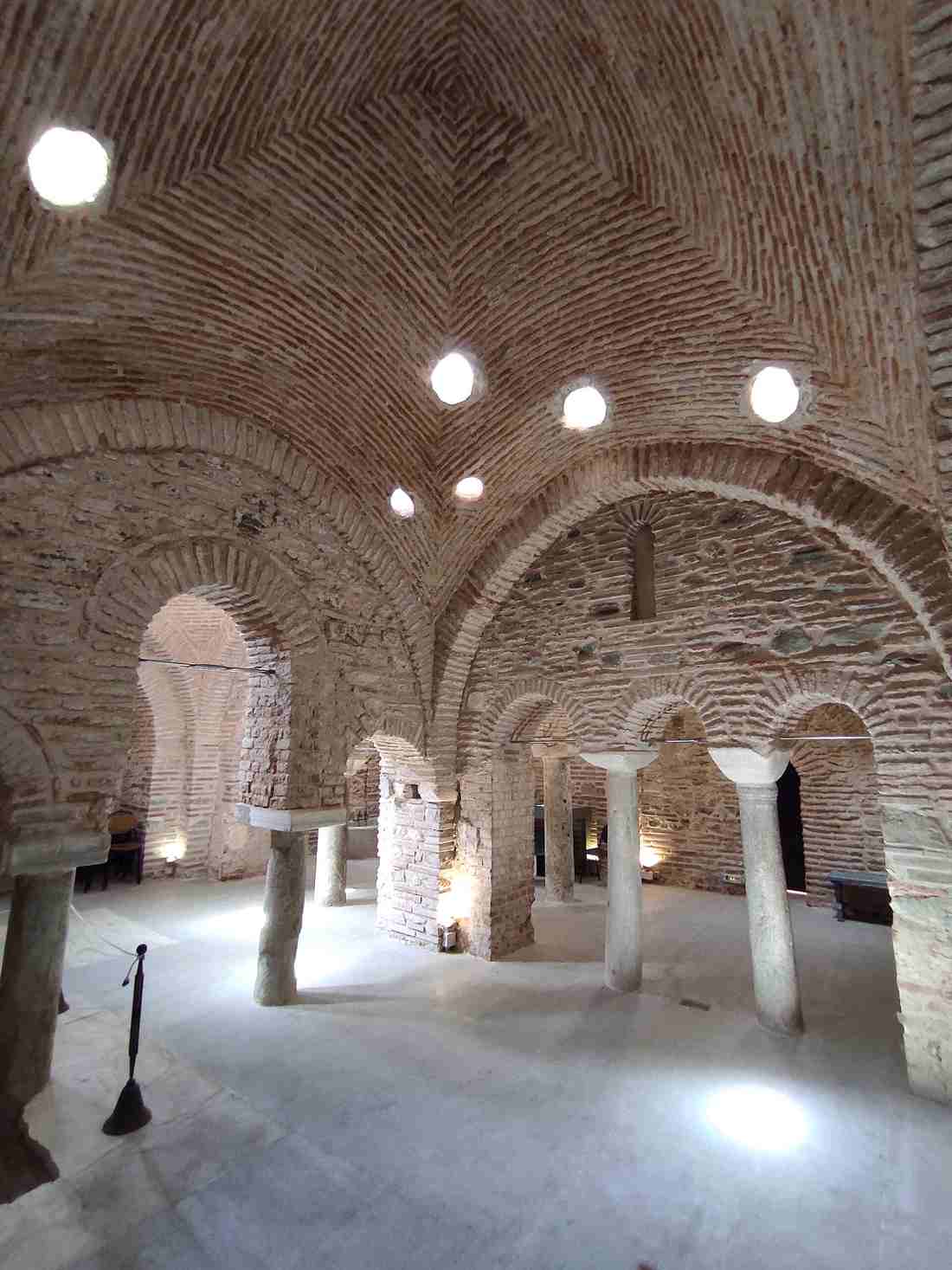
Perched high in the upper town of Thessaloniki, the Byzantine Bath stands as a unique testament to the architectural and cultural legacy of the Byzantine era. This small brick bathhouse, built around the turn of the fourteenth century, is the only Byzantine public bath still standing in Thessaloniki and one of very few that survive in Greece. It offers a glimpse into the past, having functioned through the Ottoman centuries and into the twentieth century, alternating its service between the sexes on different days. Today, it is part of the UNESCO Palaeochristian and Byzantine Monuments of Thessaloniki, inviting visitors to explore its historic charm with My Greece Tours.
The Byzantine Bath is a fascinating structure that reflects the intricate design and cultural practices of its time. The sections below cover its historical significance, architectural features, and the careful restoration efforts that have preserved it for modern visitors. Situated among the lanes and gardens of Ano Poli, near the church of Agios Nikolaos Orfanos, it is an essential stop on Thessaloniki tours. Explore the layers of history embedded in its walls and discover the stories that continue to resonate within this ancient monument.
What is the historical significance of the Byzantine Bath?
The Byzantine Bath is significant as the only remaining Byzantine public bath in Thessaloniki, illustrating the city’s historical continuity from the Byzantine era through the Ottoman period.
The Byzantine Bath, built around the turn of the fourteenth century, serves as a unique historical landmark in Thessaloniki. Its survival through the Ottoman era and into the twentieth century highlights its resilience and the continuity of public bathing traditions in the city. As a significant remnant of Byzantine architecture, it provides invaluable insights into the cultural and social practices of the time. This enduring structure connects present-day Thessaloniki to its rich historical past, underscoring the city’s role as a vibrant centre of Byzantine life and culture. The bath’s enduring presence in a city that has witnessed numerous cultural and political changes is a testament to its historical and architectural significance.
During its operational years, the bathhouse served both men and women, though on alternating days, reflecting the social norms and gender roles of the time. This alternating schedule allowed the bath to cater to the entire community while adhering to the customs of modesty and privacy. As part of the UNESCO Palaeochristian and Byzantine Monuments of Thessaloniki, the bath is recognised for its contribution to the understanding of Byzantine public life and architectural innovation. The bathhouse’s design and operation offer a glimpse into the daily lives of its patrons, further enriching our understanding of Byzantine society.
The bath’s continued use into the twentieth century speaks to its structural durability and the lasting appeal of its design. Its presence in the upper town of Thessaloniki, a city that has seen numerous cultural and political changes over the centuries, serves as a testament to the enduring influence of Byzantine architecture. The bathhouse not only offers a window into the past but also enriches the cultural landscape of modern Thessaloniki, inviting exploration and appreciation of its historical context. Visitors can trace the evolution of public bathing practices and architectural styles through this remarkable monument.
How is the Byzantine Bath designed architecturally?
The architectural design of the Byzantine Bath follows the Roman tradition, featuring a sequence from a cold room to a warm room and a hot room, heated by a hypocaust system.
The architectural design of the Byzantine Bath is a remarkable example of the Roman tradition inherited by the Byzantines. The bathhouse is structured in a sequence that begins with a cold undressing room, known as the frigidarium. This area was used by patrons to disrobe and acclimate before proceeding to the warmer areas of the bath. It reflects the initial stage of the bathing process, which was as much about social interaction as it was about hygiene. The design of the frigidarium is functional yet inviting, setting the tone for the experiences that follow. This architectural planning showcases the importance of the bath as a centre of social and cultural activity.
Following the frigidarium, visitors would enter the warm room, or tepidarium, which served as a transitional space leading to the hot room. The tepidarium was designed to gradually warm the body, preparing bathers for the intense heat of the caldarium. This intermediate room was not only a place of physical preparation but also a social hub where conversations and relaxation took place. The architectural flow from the frigidarium to the tepidarium is seamless, embodying the thoughtful design that characterised Byzantine bathhouses. The spatial arrangement reflects the sophisticated understanding of thermal dynamics and human comfort.
The caldarium, or hot room, is the centrepiece of the Byzantine Bath. It was heated by a hypocaust system, where a furnace fed hot air through underfloor flues. This ingenious heating method ensured the caldarium was kept at a consistent, high temperature, creating a steamy environment for bathing. The caldarium’s design, with its vaulted ceilings and small skylights, allowed for natural light to filter in, adding to the ambiance of the space. The architectural sophistication of the Byzantine Bath demonstrates the advanced engineering and aesthetic sensibilities of the period. The detailed craftsmanship of the vaulted ceilings and strategic placement of skylights highlight the blend of functionality and beauty in Byzantine architecture.
What role did the hypocaust system play in the Byzantine Bath?
The hypocaust system was crucial for heating the Byzantine Bath, circulating hot air through underfloor flues from a furnace to maintain the temperature of the hot room.
The hypocaust system was an essential component of the Byzantine Bath’s architecture, providing the necessary heat to maintain the caldarium’s steamy environment. This system operated by circulating hot air underneath the floors, which were elevated on small pillars. The air was heated by a furnace located outside the bathing rooms, ensuring a steady flow of warmth throughout the space. The hypocaust system’s design allowed for efficient heating, a hallmark of Roman engineering that the Byzantines adeptly adapted to their own architectural needs. Its continuous operation highlights the ingenuity of ancient heating methods.
The hypocaust system did more than heat the floors; it also regulated the overall warmth of the bathhouse. The warm air circulated not only under the floors but also rose through the walls, providing an even distribution of heat. This method ensured that all areas of the caldarium were comfortably warm, enhancing the bathing experience. The sophisticated engineering of the hypocaust system underscores the advanced level of technological understanding possessed by Byzantine architects and builders. The system’s design reflects a keen awareness of environmental control and energy efficiency.
The presence of the hypocaust system in the Byzantine Bath highlights the continuity of architectural knowledge from the Roman era into the Byzantine period. It exemplifies the practical application of ancient engineering principles to meet the needs of public bathhouses. By incorporating this system, the Byzantine Bath maintained a comfortable and inviting environment for its patrons, reinforcing its status as a vital social and cultural institution in Thessaloniki. The enduring functionality of the hypocaust system is a testament to its innovative design and the skilled craftsmanship of the era. This ancient technology remains a point of fascination for modern engineers and historians alike.
How has the Byzantine Bath been restored?
The Byzantine Bath underwent careful restoration to preserve its historical architecture, allowing it to be appreciated as a monument among Ano Poli’s lanes and gardens.
Restoration of the Byzantine Bath was undertaken with meticulous attention to preserving its original architectural features. This process involved stabilising the structure, repairing damages, and cleaning the brickwork to reveal the bathhouse’s historical character. Restorers worked to maintain the integrity of the building while making it safe and accessible for visitors. The restoration efforts ensure that the bathhouse remains a vital part of Thessaloniki’s cultural heritage, showcasing the craftsmanship and design of the Byzantine period. The project highlights the delicate balance between preservation and adaptation necessary for historical sites.
The restoration process also focused on enhancing the visitor experience by providing educational information about the bath’s history and significance. Interpretive signage and guided tours help contextualise the monument within the broader scope of Byzantine and Ottoman history. By offering insights into the bathhouse’s function and architectural innovations, the restoration project enriches the understanding of this unique historical site. Visitors are encouraged to explore the bath’s interior and appreciate the intricate details that have been carefully preserved. This educational approach fosters a deeper appreciation of Thessaloniki’s rich historical narrative.
Situated in Ano Poli, the Byzantine Bath is now a prominent feature of the area’s cultural landscape. Its proximity to landmarks such as the church of Agios Nikolaos Orfanos and Ano Poli makes it an integral part of Thessaloniki’s historical tours. The successful restoration of the bathhouse highlights the importance of preserving historical sites for future generations. It serves as a reminder of the city’s rich past and the enduring legacy of Byzantine architecture, inviting exploration and appreciation from both locals and tourists alike. The bath’s restored condition enhances its role as a cultural ambassador, bridging the past and present.
What is the significance of the Byzantine Bath’s location?
The Byzantine Bath is strategically located in Ano Poli, near Agios Nikolaos Orfanos, enhancing its historical and cultural value within Thessaloniki.
The location of the Byzantine Bath in Ano Poli, Thessaloniki’s upper town, adds to its historical and cultural significance. This area is known for its narrow lanes and traditional architecture, offering a picturesque setting that complements the bathhouse’s ancient charm. As part of a neighbourhood rich in history, the bath is surrounded by other notable landmarks, creating a tapestry of cultural heritage that draws visitors from near and far. The bathhouse’s location allows it to be integrated into walking tours, providing a comprehensive exploration of Thessaloniki’s historical landscape. Its position enhances its accessibility and appeal to history enthusiasts.
Nearby, the church of Agios Nikolaos Orfanos offers another layer of historical context to the bath’s surroundings. This proximity enhances the appeal of the bathhouse, as visitors can easily explore multiple sites of significance within a short distance. The church, with its stunning frescoes and serene atmosphere, complements the experience of visiting the Byzantine Bath, creating a narrative of continuity and change through the city’s history. Together, these sites illustrate the diverse religious and cultural influences that have shaped Thessaloniki over the centuries. Their proximity allows for a richer, more immersive historical journey.
Ano Poli itself is a district that has retained much of its historical character despite the modernisation of the surrounding city. The Byzantine Bath stands as a testament to the area’s ability to preserve its heritage while adapting to contemporary needs. Its position within this historic district makes it a focal point for cultural tourism, inviting visitors to delve into the stories and traditions that have defined Thessaloniki’s past. The bathhouse’s location not only enhances its own significance but also enriches the overall cultural experience of exploring Ano Poli and its historical treasures. This setting amplifies the bath’s narrative as a guardian of history.
How does the Byzantine Bath compare to other bathhouses in Thessaloniki?
The Byzantine Bath is unique as the only standing Byzantine bathhouse in Thessaloniki, contrasting with Ottoman-era bathhouses like Bey Hamam in design and historical context.
The Byzantine Bath stands out among Thessaloniki’s historical bathhouses due to its unique status as the only surviving example from the Byzantine era. While other bathhouses, such as the Ottoman-era Bey Hamam, reflect the architectural and cultural shifts that occurred after the Byzantine period, the Byzantine Bath offers a rare glimpse into the earlier traditions of public bathing. Its design, rooted in the Roman-inspired sequence of rooms, contrasts with the more elaborate and spacious layouts typical of Ottoman bathhouses. This distinction underscores the bath’s significance as a remnant of a bygone era. Its unique status enhances its value as a cultural and historical resource.
Bey Hamam, also known as the Paradise Baths, was built during the Ottoman period and showcases a different architectural style and cultural context. Its design features include larger domes and a more intricate decorative scheme, reflecting the aesthetic preferences of the time. In comparison, the Byzantine Bath’s more modest scale and design elements highlight the evolution of bathhouse architecture over the centuries. The differences between these two bathhouses provide valuable insights into the changing social and cultural dynamics of Thessaloniki, illustrating the city’s diverse historical influences. The contrast between these structures highlights the adaptive nature of public architecture through time.
The existence of both Byzantine and Ottoman bathhouses in Thessaloniki enriches the city’s cultural landscape, offering visitors a comprehensive understanding of its architectural heritage. By exploring these sites, visitors can appreciate the layers of history that have shaped Thessaloniki and the ways in which different cultures have left their mark on the city. The Byzantine Bath, with its unique historical context and architectural features, remains an essential component of this narrative, inviting exploration and reflection on the city’s multifaceted past. The presence of these bathhouses together enhances the cultural dialogue between historical epochs.
Why is the Byzantine Bath included in the UNESCO Palaeochristian and Byzantine Monuments of Thessaloniki?
The Byzantine Bath is included due to its architectural significance and historical continuity, representing Byzantine public life and heritage in Thessaloniki.
The inclusion of the Byzantine Bath in the UNESCO Palaeochristian and Byzantine Monuments of Thessaloniki highlights its architectural and historical significance. As a rare surviving example of a Byzantine public bath, it offers invaluable insights into the social and cultural practices of the era. Its architectural design, rooted in the Roman tradition, showcases the continuity of bathing customs and the adaptation of ancient engineering techniques. This inclusion underscores the bath’s importance as a cultural artefact that connects modern Thessaloniki to its Byzantine past. The bath’s status as a UNESCO site ensures its protection and recognition as a heritage asset.
The bathhouse’s historical continuity, having functioned through the Ottoman period and into the twentieth century, further enhances its value as a UNESCO site. It represents the resilience and adaptability of Byzantine architecture, illustrating the ways in which historical structures can endure and evolve over time. The bath’s preservation and restoration efforts have ensured that it remains a vital part of Thessaloniki’s heritage, contributing to the city’s identity as a centre of Byzantine culture and history. The inclusion in UNESCO’s list elevates its prestige and draws scholarly and tourist interest.
The recognition of the Byzantine Bath by UNESCO also highlights Thessaloniki’s broader cultural landscape, which includes a rich array of Byzantine monuments and sites. These sites collectively illustrate the city’s historical significance and its role as a hub of Byzantine civilisation. The bathhouse, as part of this network of monuments, invites visitors to explore and appreciate the depth of Thessaloniki’s architectural and cultural heritage. Its inclusion in the UNESCO list reinforces its status as a must-visit destination for those interested in the rich history and enduring legacy of the Byzantine era. The bath’s role in this ensemble of monuments underscores its importance in global heritage narratives.
Frequently Asked Questions
What makes the Byzantine Bath unique?
The Byzantine Bath is unique as the only surviving Byzantine public bath in Thessaloniki. Its architectural design follows the Roman tradition, featuring a sequence of rooms from cold to hot, heated by a hypocaust system. This historical landmark offers insights into Byzantine public life.
Where is the Byzantine Bath located?
The Byzantine Bath is situated in Ano Poli, the upper town of Thessaloniki, near the church of Agios Nikolaos Orfanos. This location within a historic district enhances its cultural value, making it an essential stop on historical tours of the city.
How was the Byzantine Bath used historically?
Historically, the Byzantine Bath served as a public bathing facility, alternating service between men and women on different days. It functioned continuously from its construction around the fourteenth century through the Ottoman era and into the twentieth century, reflecting the enduring tradition of public bathing.
Can visitors explore the interior of the Byzantine Bath?
Yes, visitors can explore the interior of the Byzantine Bath, which has been carefully restored to preserve its historical features. Educational signage and guided tours provide insights into its architectural design and historical significance, enriching the visitor experience.
What other historical sites are near the Byzantine Bath?
Near the Byzantine Bath, visitors can explore the church of Agios Nikolaos Orfanos and the picturesque lanes of Ano Poli. These sites, along with others in the area, offer a rich tapestry of Thessaloniki’s cultural and architectural heritage, enhancing the historical exploration of the city.
Why is the Byzantine Bath important to Thessaloniki’s history?
The Byzantine Bath is important to Thessaloniki’s history as a rare surviving example of Byzantine public architecture. It illustrates the city’s historical continuity from the Byzantine era through the Ottoman period, contributing to the understanding of Thessaloniki’s cultural and architectural development.