
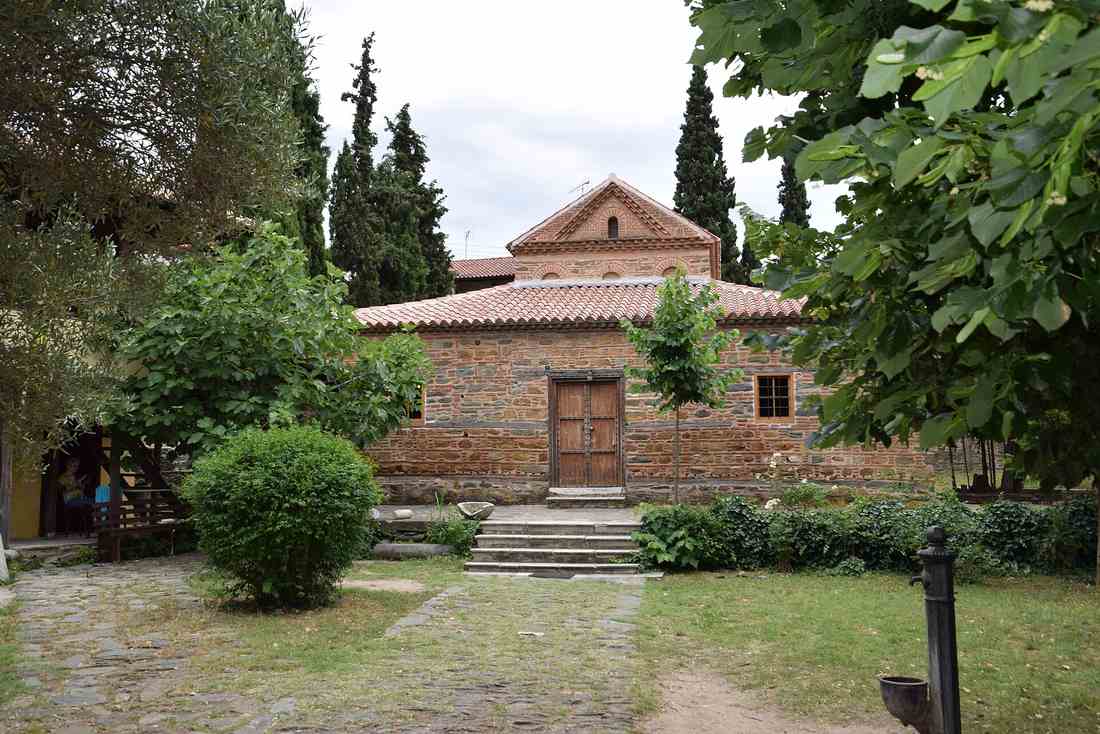
Nestled in the charming upper town of Thessaloniki, Agios Nikolaos Orfanos is a small early fourteenth-century church that captivates visitors with its rich history and exquisite art. Despite its modest exterior, the church is celebrated for its remarkable interior, featuring one of the most complete cycles of Palaiologan wall paintings in the city. Over 180 scenes depicting the life of Christ, the Virgin, and the saints adorn its walls, offering a glimpse into the artistic and religious fervour of the Byzantine era. The church’s name, Orphanos, is linked either to its founder or to a legacy of caring for orphans. Unlike many other churches in the area, it was never converted into a mosque, preserving its artistic heritage intact with My Greece Tours.
Agios Nikolaos Orfanos is situated among the winding lanes and gardens below the acropolis walls of Ano Poli, a district rich with history and tradition. This church is part of the UNESCO Palaeochristian and Byzantine Monuments of Thessaloniki, recognised for its cultural and historical significance. The sections below cover various aspects of this fascinating site, from its architecture to its preservation, offering insights into the artistic achievements of the Byzantine period. Explore further with our Thessaloniki tours and discover the nearby wonders that make this area a treasure trove for history enthusiasts.
What is the historical significance of Agios Nikolaos Orfanos?
Agios Nikolaos Orfanos holds great historical significance as an example of Byzantine religious art and architecture, featuring one of the most complete cycles of Palaiologan wall paintings.
Agios Nikolaos Orfanos stands as a testament to the rich Byzantine heritage that flourished in Thessaloniki during the fourteenth century. The church was originally part of a monastery complex, serving as its katholikon, or main church. Its location in the upper town, below the acropolis walls, places it within a historically significant area known for its religious and cultural importance. The church’s construction and decoration reflect the artistic and theological developments of its time, showcasing the Palaiologan Renaissance’s influence on ecclesiastical art. As part of the UNESCO Palaeochristian and Byzantine Monuments of Thessaloniki, it contributes to our understanding of the Byzantine Empire’s cultural achievements.
The church’s historical significance is closely tied to its preservation of Byzantine art. Unlike many other churches in Thessaloniki, Agios Nikolaos Orfanos was never converted into a mosque during the Ottoman era, which allowed its interior decorations to remain largely intact. This preservation offers a rare and valuable glimpse into the religious and artistic practices of the Byzantine period. The church’s wall paintings, in particular, provide insight into the iconographic and stylistic trends of the Palaiologan period, making it an invaluable resource for historians and art enthusiasts alike.
Agios Nikolaos Orfanos also plays a role in the broader narrative of Thessaloniki’s religious heritage. The city’s numerous Byzantine churches, including Agios Nikolaos Orfanos, reflect the city’s historical position as a major centre of Christianity during the Byzantine Empire. The church’s dedication to Saint Nicholas, a popular figure in both Eastern and Western Christianity, further underscores its religious significance. Through its well-preserved art and architecture, Agios Nikolaos Orfanos offers a window into the spiritual and cultural life of Byzantine Thessaloniki, allowing visitors to connect with the city’s rich past.
What makes the architecture of Agios Nikolaos Orfanos unique?
Agios Nikolaos Orfanos is unique for its modest three-aisled basilica design with an ambulatory, showcasing Byzantine architectural principles in a harmonious and understated form.
The architecture of Agios Nikolaos Orfanos is a fine example of Byzantine design, characterised by its modest yet harmonious structure. The church is a three-aisled basilica with an ambulatory, a feature that allows for circulation around the nave, enhancing the spatial experience for worshippers. Despite its plain exterior, the church’s design reflects the architectural principles of the Byzantine era, focusing on creating a sacred space that facilitates the liturgical functions of the church. The use of an ambulatory is particularly notable, as it provides a processional path that enriches the spiritual atmosphere within the church.
The spatial arrangement of Agios Nikolaos Orfanos is designed to accommodate the religious practices of the time. The basilica layout, with its three aisles, supports the division of space necessary for different aspects of worship. This architectural form was popular in Byzantine ecclesiastical buildings, as it allowed for both communal gatherings and individual reflection. The church’s structure is augmented by its setting within a walled garden, which adds to the sense of tranquillity and retreat from the bustling city. This setting underscores the church’s role as a place of spiritual refuge and contemplation, reinforcing its significance within the monastic tradition.
Agios Nikolaos Orfanos also exemplifies the integration of art and architecture, a hallmark of Byzantine ecclesiastical design. The church’s interior, adorned with a complete cycle of Palaiologan wall paintings, seamlessly blends with its architectural features, creating a unified and immersive environment. This integration highlights the Byzantine emphasis on creating a total work of art, where architecture and decoration work together to evoke a sense of the divine. The church’s design, both in its spatial arrangement and its artistic embellishments, offers a remarkable example of the Byzantine architectural legacy, inviting visitors to appreciate the interplay between form and function in sacred spaces.
How are the Palaiologan wall paintings in Agios Nikolaos Orfanos preserved?
The Palaiologan wall paintings in Agios Nikolaos Orfanos are preserved due to the church’s avoidance of conversion into a mosque, maintaining their integrity.
The preservation of the Palaiologan wall paintings in Agios Nikolaos Orfanos is largely attributed to the church’s historical trajectory. Unlike many other religious structures in Thessaloniki, this church was never converted into a mosque during the Ottoman era. This fortunate circumstance has allowed the paintings to remain in their original context, free from the alterations and damage that often accompanied such conversions. The church’s protected status within the UNESCO Palaeochristian and Byzantine Monuments of Thessaloniki also underscores the importance of its preservation, ensuring that these invaluable artworks continue to be safeguarded for future generations.
The wall paintings themselves are a remarkable example of Byzantine art, depicting more than 180 scenes from the life of Christ, the Virgin, and the saints. These frescoes are celebrated for their vivid colours, intricate details, and expressive figures, reflecting the artistic achievements of the Palaiologan Renaissance. The preservation efforts focus on maintaining the paintings’ original beauty while preventing further deterioration. This involves careful monitoring of the church’s environment to control factors such as humidity and temperature, which can affect the longevity of the frescoes. Conservation specialists employ meticulous techniques to clean and stabilise the paintings, ensuring their continued vibrancy and clarity.
The church’s location within a walled garden further contributes to the preservation of its wall paintings. This setting provides a natural buffer against environmental pollutants and urban noise, creating a serene atmosphere that enhances the experience of viewing the artworks. The garden’s presence is a reminder of the church’s monastic origins, offering a peaceful retreat that complements the spiritual and artistic significance of the site. Visitors to Agios Nikolaos Orfanos can appreciate not only the visual splendour of the paintings but also the efforts taken to preserve this unique cultural heritage, which remains a testament to the enduring legacy of Byzantine art and architecture.
What can visitors experience at Agios Nikolaos Orfanos?
Visitors to Agios Nikolaos Orfanos can experience the tranquillity of its walled garden, the architectural beauty of the basilica, and the rich iconography of its Palaiologan frescoes.
Visitors to Agios Nikolaos Orfanos are greeted by the serene atmosphere of its walled garden, a tranquil oasis that sets the stage for the spiritual journey within. This garden, with its lush greenery and quiet pathways, provides a peaceful retreat from the bustling city, inviting contemplation and reflection. The presence of the garden is a nod to the church’s monastic past, offering a glimpse into the ascetic lifestyle that characterised the religious communities of the Byzantine era. As visitors approach the church, the modest exterior belies the artistic treasures housed within, creating a sense of anticipation for the revelations that await inside.
The interior of Agios Nikolaos Orfanos is a feast for the senses, with its intricate Palaiologan wall paintings adorning every surface. These frescoes, depicting scenes from the life of Christ, the Virgin, and the saints, are celebrated for their vivid colours, expressive figures, and detailed narratives. Visitors can explore the rich iconography, gaining insights into the theological and artistic traditions of the Byzantine period. Each scene offers a story, inviting viewers to engage with the spiritual and historical themes depicted in the artwork. The church’s architecture, with its three-aisled basilica design and ambulatory, enhances the experience, guiding visitors through a harmonious space that echoes with the echoes of centuries past.
Agios Nikolaos Orfanos also offers an opportunity to connect with the broader historical and cultural context of Thessaloniki. As part of the UNESCO Palaeochristian and Byzantine Monuments of Thessaloniki, the church is a key site in understanding the city’s Byzantine heritage. Visitors can explore nearby landmarks, such as Ano Poli and the walls of Thessaloniki, to gain a deeper appreciation of the region’s historical significance. The church’s location in the upper town provides stunning views of the city and the surrounding landscape, offering a unique perspective on Thessaloniki’s rich tapestry of history and culture.
Why is Agios Nikolaos Orfanos part of UNESCO’s Palaeochristian and Byzantine Monuments?
Agios Nikolaos Orfanos is part of UNESCO’s Palaeochristian and Byzantine Monuments due to its exceptional Palaiologan wall paintings and its representation of Byzantine religious architecture.
UNESCO recognises Agios Nikolaos Orfanos as part of the Palaeochristian and Byzantine Monuments of Thessaloniki due to its outstanding artistic and historical value. The church’s Palaiologan wall paintings are among the most complete and best-preserved examples of this artistic movement, offering invaluable insights into Byzantine religious art. These frescoes, with their vibrant colours and intricate details, exemplify the artistic achievements of the Palaiologan Renaissance, a period marked by a revival of classical themes and techniques in Byzantine art. The church’s inclusion in the UNESCO list underscores its significance as a cultural treasure, highlighting its contribution to our understanding of Byzantine civilisation.
The architectural design of Agios Nikolaos Orfanos further enhances its status as a UNESCO World Heritage site. As a three-aisled basilica with an ambulatory, the church exemplifies the architectural principles of the Byzantine era, focusing on creating a sacred space that facilitates worship and spiritual reflection. This design, combined with the church’s setting within a walled garden, creates a harmonious and contemplative environment that is characteristic of Byzantine monastic architecture. The church’s preservation and continued use as a place of worship underscore its enduring importance to the local community and its role in the religious heritage of Thessaloniki.
Agios Nikolaos Orfanos is part of a broader network of Byzantine monuments in Thessaloniki, each contributing to the city’s rich historical and cultural landscape. The church’s inclusion in UNESCO’s list of Palaeochristian and Byzantine Monuments highlights the interconnectedness of these sites, offering a comprehensive view of the city’s Byzantine past. Visitors can explore other UNESCO sites, such as Byzantine churches of Thessaloniki, to gain a deeper understanding of the artistic and architectural achievements of this era. Agios Nikolaos Orfanos serves as a gateway to this rich cultural heritage, inviting visitors to delve into the history and artistry of Byzantine Thessaloniki.
What is the significance of the name Agios Nikolaos Orfanos?
The name Agios Nikolaos Orfanos is linked either to a founder or to a legacy of caring for orphans, reflecting its historical and cultural roots.
The name Agios Nikolaos Orfanos carries with it a sense of mystery and historical intrigue, offering clues to the church’s origins and purpose. The term ‘Orfanos’ is believed to be associated with either the church’s founder or its historical function as a place of care for orphans. This dual possibility adds a layer of depth to the church’s history, highlighting its role within the community as both a religious and social institution. The dedication to Saint Nicholas, a revered figure in both Eastern and Western Christianity, further underscores the church’s religious significance and its connection to broader Christian traditions.
The association with orphans suggests that Agios Nikolaos Orfanos may have played a role in providing shelter and support to those in need, reflecting the charitable missions often undertaken by Byzantine monastic communities. This aspect of the church’s history is particularly poignant, offering a glimpse into the social responsibilities embraced by religious institutions during the Byzantine period. The church’s location within the upper town of Thessaloniki, an area known for its religious and cultural heritage, further supports the idea that it served as a centre for both spiritual and social outreach, contributing to the well-being of the community.
The name Agios Nikolaos Orfanos also invites visitors to explore the rich tapestry of stories and legends that surround this historic site. As part of the UNESCO Palaeochristian and Byzantine Monuments of Thessaloniki, the church is a focal point for those interested in the intersection of history, art, and spirituality. The name adds an element of intrigue and invites further exploration of the church’s origins and significance. Visitors can delve into the church’s history and its place within the broader context of Byzantine Thessaloniki, uncovering the layers of meaning and tradition that make Agios Nikolaos Orfanos a unique and captivating destination.
How does Agios Nikolaos Orfanos connect to the wider history of Thessaloniki?
Agios Nikolaos Orfanos connects to Thessaloniki’s history through its representation of Byzantine religious and artistic traditions, contributing to the city’s cultural and spiritual heritage.
Agios Nikolaos Orfanos is intricately linked to the wider history of Thessaloniki, serving as a testament to the city’s rich Byzantine heritage. As one of the many religious sites that dot the landscape of Thessaloniki, the church reflects the city’s historical role as a major centre of Christianity during the Byzantine Empire. Its well-preserved Palaiologan wall paintings offer insights into the theological and artistic developments of the era, highlighting the city’s importance as a hub of religious and cultural activity. The church’s connection to Thessaloniki’s history is further underscored by its inclusion in the UNESCO Palaeochristian and Byzantine Monuments, which collectively narrate the city’s Byzantine past.
The location of Agios Nikolaos Orfanos in the upper town, or Ano Poli, places it within a historically significant area known for its concentration of Byzantine and Ottoman-era structures. This district, with its narrow lanes and traditional architecture, provides a window into the city’s past, offering visitors a chance to explore the layers of history that have shaped Thessaloniki over the centuries. The proximity of the church to other landmarks, such as Osios David, further enhances its historical context, inviting visitors to embark on a journey through the city’s rich cultural landscape.
Agios Nikolaos Orfanos also connects to the wider history of Thessaloniki through its role in preserving the city’s artistic traditions. The church’s Palaiologan wall paintings are a testament to the city’s artistic achievements, reflecting the influence of the Palaiologan Renaissance on Byzantine art. These frescoes, with their vivid colours and expressive figures, contribute to our understanding of the broader artistic movements that shaped the Byzantine Empire. Visitors to the church can appreciate not only the beauty of the paintings but also their significance in the context of Thessaloniki’s cultural heritage, gaining a deeper appreciation of the city’s historical and artistic legacy.
Frequently Asked Questions
What is Agios Nikolaos Orfanos known for?
Agios Nikolaos Orfanos is renowned for its exceptional Palaiologan wall paintings, which depict over 180 scenes from the life of Christ, the Virgin, and the saints. These frescoes are among the most complete examples of Byzantine religious art in Thessaloniki, celebrated for their vivid colours and intricate details.
Is Agios Nikolaos Orfanos part of a larger historical site?
Yes, Agios Nikolaos Orfanos is part of the UNESCO Palaeochristian and Byzantine Monuments of Thessaloniki. This designation recognises the church’s cultural and historical significance, highlighting its contributions to our understanding of Byzantine art and architecture within the broader context of Thessaloniki’s rich heritage.
Can visitors access the interior of Agios Nikolaos Orfanos?
Visitors can access the interior of Agios Nikolaos Orfanos, where they can admire its remarkable Palaiologan wall paintings. These frescoes cover the walls with vivid depictions of religious scenes, offering a captivating glimpse into the artistic and spiritual traditions of the Byzantine era.
How does Agios Nikolaos Orfanos differ from other Byzantine churches in Thessaloniki?
Agios Nikolaos Orfanos differs from other Byzantine churches in Thessaloniki in that it was never converted into a mosque during the Ottoman era. This has allowed its interior frescoes to remain largely intact, offering an unparalleled view of Palaiologan art within its original context.
Why is the church named Agios Nikolaos Orfanos?
The name Agios Nikolaos Orfanos is linked either to the church’s founder or its historical role in caring for orphans. This dual association adds depth to its history, reflecting its significance as both a religious and social institution within the Byzantine community.
What should visitors expect when visiting Agios Nikolaos Orfanos?
Visitors to Agios Nikolaos Orfanos can expect to experience the tranquillity of its walled garden, the architectural beauty of its basilica, and the rich iconography of its Palaiologan frescoes. The church offers a serene and culturally enriching environment, inviting reflection and exploration of Byzantine history.