
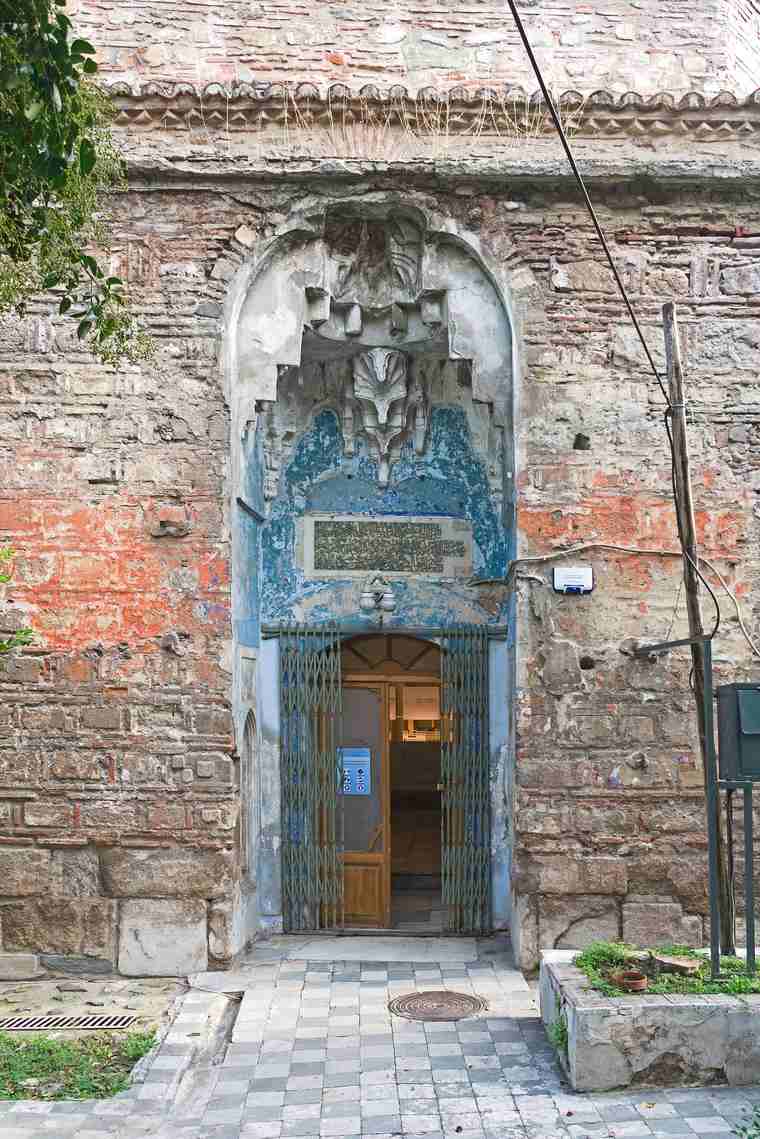
Bey Hamam, also known as the Paradise Baths, is a remarkable Ottoman bathhouse located on Egnatia Avenue in Thessaloniki. Constructed in the mid-fifteenth century by the order of Sultan Murad II, it stands as the first and largest Ottoman hammam in the city. The bathhouse features separate sections for men and women, each with a sequence of cold, warm, and hot rooms. The stunning architecture includes star-shaped and polygonal skylights that illuminate the marble chambers. Although no longer a functioning bath, Bey Hamam now serves as a protected monument and exhibition space, offering a glimpse into the past with My Greece Tours.
Bey Hamam, an iconic piece of Thessaloniki’s Ottoman heritage, captivates visitors with its historical and architectural significance. The hammam’s intricate carvings and painted decorations provide insight into the artistic expressions of the era. The sections below cover the bathhouse’s history, architectural features, and significance. For those planning a visit, the location near the Panagia Chalkeon church offers a perfect starting point for exploring Thessaloniki tours.
What is the historical significance of Bey Hamam?
Bey Hamam holds historical significance as the first and largest Ottoman bathhouse in Thessaloniki.
Bey Hamam was commissioned by Sultan Murad II in the mid-fifteenth century, marking a significant development in Thessaloniki’s urban landscape. It was the first Ottoman bathhouse constructed in the city, symbolising the Ottoman empire’s influence and the introduction of new architectural styles. The bathhouse served as a hub of social interaction and daily life for centuries, reflecting the cultural practices of the time. Its construction on Egnatia Avenue highlights the strategic importance of the location, bridging the city’s past and present. The hammam’s presence also underscores the cultural transitions that Thessaloniki underwent during the Ottoman era.
The architectural style of Bey Hamam reflects the fusion of Roman and Ottoman influences. The bathhouse’s design incorporates elements like the frigidarium, tepidarium, and caldarium, which were inherited from the Roman tradition. This blend of architectural styles illustrates the cultural exchange and adaptation that occurred during the Ottoman era. The hammam’s continued use into the twentieth century demonstrates its enduring role in the community and its significance as a cultural landmark. The preservation of such structures is crucial for understanding the historical narratives embedded within Thessaloniki’s urban fabric.
Bey Hamam stands today as a protected monument, preserving the history of Thessaloniki’s Ottoman past. Its transformation from a working bathhouse to an exhibition space allows visitors to explore its historical context and appreciate its architectural beauty. The bathhouse’s preservation is crucial for maintaining the cultural heritage of Thessaloniki, offering a tangible link to the city’s rich and diverse history. Visitors exploring Ottoman Thessaloniki will find Bey Hamam an essential stop in understanding the city’s past, making it a cornerstone for heritage tourism in the region.
How is the architecture of Bey Hamam unique?
Bey Hamam’s architecture is unique due to its combination of Ottoman and Roman design elements.
The architectural design of Bey Hamam is remarkable for its incorporation of both Ottoman and Roman influences. The layout includes separate sections for men and women, each featuring a sequence of rooms with varying temperatures. The frigidarium, tepidarium, and caldarium reflect the Roman tradition of bathing, which the Ottomans adopted and adapted. This blend of styles showcases the cross-cultural influences that characterised the region during the Ottoman period. The architectural harmony achieved in Bey Hamam offers a glimpse into the sophisticated design principles of its time.
One of the most striking features of Bey Hamam is its domes, pierced with star-shaped and polygonal skylights. These architectural elements not only provide natural light to the marble-lined chambers but also create a visually captivating experience. The light filtering through these skylights casts intricate patterns on the walls and floors, enhancing the aesthetic appeal of the space. This design choice reflects the Ottomans’ appreciation for beauty and functionality in architecture, merging practicality with artistic flair.
The interior decoration of Bey Hamam includes carved stucco and painted motifs, remnants of which can still be seen today. These decorative elements offer insight into the artistic expressions and cultural values of the time. The craftsmanship displayed in the stucco work and paintings illustrates the attention to detail and skill of the artisans who contributed to the bathhouse’s construction. Visitors can appreciate these historical details while exploring the Thessaloniki walking tour, gaining a deeper understanding of the artistic legacy left by the Ottoman era.
Why are the skylights in Bey Hamam significant?
The skylights in Bey Hamam are significant for their architectural and aesthetic contributions.
The skylights in Bey Hamam are a distinctive feature that enhances both the functionality and aesthetic of the bathhouse. Designed in star-shaped and polygonal patterns, these openings in the domes allow natural light to flood the interior spaces. This not only illuminates the marble-lined chambers but also creates a dynamic play of light and shadow, adding a serene and contemplative atmosphere to the baths. The use of natural lighting is a hallmark of Ottoman architecture, showcasing their innovative approach to design. Such design ingenuity highlights the Ottomans’ ability to integrate natural elements into their architectural practices.
Beyond their practical purpose, the skylights contribute significantly to the visual appeal of Bey Hamam. As light passes through the intricate shapes, it casts unique patterns on the walls and floors, highlighting the architectural details and craftsmanship of the bathhouse. This interplay of light and shadow transforms the space into a living artwork, where visitors can experience the beauty of historical design principles in a tangible way. The decorative use of skylights reflects the Ottomans’ mastery in blending form and function, creating spaces that are both useful and artistically inspiring.
The skylights also serve as a historical link to the past, connecting Bey Hamam to the broader tradition of Islamic architecture. Similar lighting techniques can be found in other Ottoman structures, underscoring the cultural exchange and adaptation that took place across the empire. The preservation of these skylights in Bey Hamam allows contemporary visitors to appreciate the ingenuity and artistic vision of the architects who designed it. Exploring these features can be part of things to do in Thessaloniki, offering an enriching experience for those interested in architectural history.
What role did Bey Hamam play in Ottoman Thessaloniki?
Bey Hamam played a central role as a social and cultural hub in Ottoman Thessaloniki.
In Ottoman Thessaloniki, Bey Hamam was more than just a place for bathing; it was a vital social and cultural institution. The bathhouse served as a communal space where people from different walks of life could gather, relax, and engage in conversation. This social aspect made it an integral part of daily life, facilitating interactions and fostering a sense of community among its patrons. The hammam provided a setting for both personal reflection and social interaction, making it a cornerstone of urban life in the city. Its role as a social hub reflects the communal values and cultural practices of the period.
The presence of Bey Hamam also highlighted the Ottoman emphasis on hygiene and wellness. Regular visits to the hammam were considered essential for maintaining health and wellbeing, reflecting the cultural values of the time. The bathhouse’s design, with its sequence of cold, warm, and hot rooms, was intended to promote relaxation and purification, aligning with the holistic approach to health embraced by the Ottomans. This focus on wellness contributed to the hammam’s popularity and longevity as a cherished institution in the city. The integration of health and socialising made Bey Hamam a multifunctional space in the community.
Bey Hamam stands as a testament to its historical role in the community, offering insight into the social dynamics of Ottoman Thessaloniki. As a protected monument, it continues to attract visitors interested in exploring the city’s rich cultural heritage. The bathhouse’s enduring legacy is a reminder of the importance of communal spaces in fostering social cohesion and cultural exchange. Exploring the hammam’s history is an integral part of understanding Ottoman Thessaloniki. Its historical significance and cultural impact make it a vital piece of Thessaloniki’s past, offering a window into the social fabric of the era.
How can visitors explore Bey Hamam today?
Visitors can explore Bey Hamam as a protected monument and exhibition space in Thessaloniki.
Bey Hamam, no longer functioning as a bathhouse, now serves as an exhibition space that invites visitors to explore its historical and architectural significance. The transformation from a working bath to a cultural monument allows for a deeper understanding of its past and the role it played in Thessaloniki’s history. Visitors can walk through the marble-lined chambers, observing the intricate details and architectural features that have been preserved over the centuries. This experience offers a unique opportunity to connect with the city’s Ottoman heritage and appreciate the craftsmanship of the period.
The location of Bey Hamam on Egnatia Avenue makes it easily accessible to those exploring central Thessaloniki. Situated near the Panagia Chalkeon church, it is part of a cluster of historical sites that showcase the city’s diverse cultural influences. Visitors can include a visit to Bey Hamam as part of a broader exploration of Thessaloniki’s historical landmarks. The hammam’s proximity to other attractions provides a convenient starting point for a day of discovery in the city, enhancing the overall experience of visiting Thessaloniki. Its strategic location makes it an ideal stop for cultural enthusiasts.
Guided tours and exhibitions held at Bey Hamam provide additional context and insight into its historical significance. These tours often highlight the architectural features and historical narratives associated with the bathhouse, enriching visitors’ understanding of its role in the community. Participating in a guided tour can enhance the experience, offering a deeper appreciation for the craftsmanship and cultural heritage embodied in the hammam. Visitors planning their itinerary can find more details about the bathhouse and other attractions through Thessaloniki tours. These tours provide a holistic view of the city’s historical landscape.
What are the key architectural elements of Bey Hamam?
Key architectural elements of Bey Hamam include its domed chambers, skylights, and marble-lined interiors.
The architectural elements of Bey Hamam are a testament to the skill and creativity of the artisans who constructed it. The bathhouse features domed chambers that house the frigidarium, tepidarium, and caldarium, each designed to provide a different thermal experience. These domes are not only structurally significant but also aesthetically pleasing, contributing to the bathhouse’s grandeur. The star-shaped and polygonal skylights embedded in the domes are a distinctive feature, allowing natural light to illuminate the marble interiors and enhance the hammam’s visual appeal. Such elements highlight the architectural ingenuity of the Ottoman period.
The interior of Bey Hamam is lined with marble, a material chosen for its durability and elegance. This choice reflects the Ottomans’ appreciation for luxury and beauty in architectural design. The marble surfaces provide a cool and polished texture that complements the warm and humid environment of the bathhouse. This material choice also signifies the importance of the hammam as a public space, where craftsmanship and quality were paramount. The combination of marble and natural light creates a serene and inviting atmosphere for visitors to enjoy, making it a sensory experience.
Decorative elements such as carved stucco and painted motifs add an additional layer of beauty and complexity to Bey Hamam. These artistic features offer insight into the cultural and aesthetic values of the Ottoman period. The stucco carvings and painted decorations, though weathered over time, illustrate the artisans’ attention to detail and their ability to create intricate designs. These elements are an integral part of the bathhouse’s identity, providing a visual narrative that complements its historical significance. Exploring these features can be part of a visit to Panagia Chalkeon and other nearby sites, enriching the historical context of the visit.
Why is Bey Hamam a must-visit for history enthusiasts?
Bey Hamam is a must-visit for history enthusiasts due to its rich cultural heritage and architectural significance.
Bey Hamam offers a unique opportunity for history enthusiasts to delve into the Ottoman era of Thessaloniki. As the first and largest Ottoman bathhouse in the city, it provides valuable insights into the social and cultural practices of the time. The bathhouse’s architectural features, such as its domes and skylights, reflect the fusion of Roman and Ottoman design elements, showcasing the cross-cultural influences that defined the region. This historical context makes Bey Hamam an essential stop for those interested in exploring the city’s diverse heritage and understanding its historical transformations.
The preservation of Bey Hamam as a protected monument allows visitors to appreciate the craftsmanship and artistry of the Ottoman period. The bathhouse’s intricate details, including its carved stucco and painted decorations, offer a glimpse into the aesthetic values and artistic expressions of the time. For history enthusiasts, these elements provide a tangible connection to the past, allowing for a deeper understanding of the cultural and architectural legacy of Thessaloniki. The hammam’s enduring presence in the cityscape serves as a reminder of the vibrant history that continues to shape the city’s identity, making it a focal point for historical exploration.
Visiting Bey Hamam is an enriching experience that complements other historical explorations in Thessaloniki. The bathhouse’s location near key landmarks such as the Roman forum provides an opportunity to explore the city’s multi-layered history. History enthusiasts can enjoy a comprehensive journey through time, discovering the various influences that have shaped Thessaloniki over the centuries. The combination of historical significance and architectural beauty makes Bey Hamam a must-visit destination for anyone seeking to immerse themselves in the city’s rich past. Its role as a historical and cultural landmark ensures its place as a key attraction for visitors interested in the Ottoman legacy.
Frequently Asked Questions
What is Bey Hamam?
Bey Hamam, also known as the Paradise Baths, is an Ottoman bathhouse located in Thessaloniki. Built in the mid-fifteenth century by Sultan Murad II, it is the first and largest Ottoman hammam in the city. The bathhouse features separate sections for men and women and includes cold, warm, and hot rooms. It now functions as a protected monument and exhibition space.
Where is Bey Hamam located?
Bey Hamam is situated on Egnatia Avenue in central Thessaloniki, near the Panagia Chalkeon church. Its central location makes it easily accessible for visitors exploring the city’s historical sites. The bathhouse’s proximity to other attractions offers a convenient starting point for discovering Thessaloniki’s rich cultural heritage.
Can you still bathe at Bey Hamam?
No, Bey Hamam no longer functions as a working bathhouse. It now serves as a protected monument and exhibition space, where visitors can explore its historical and architectural significance. The bathhouse’s preservation allows for a deeper understanding of its past and its role in Thessaloniki’s history.
What are the architectural features of Bey Hamam?
The architectural features of Bey Hamam include domed chambers, star-shaped and polygonal skylights, and marble-lined interiors. These elements reflect a blend of Ottoman and Roman design influences, showcasing the cross-cultural exchange of the period. The bathhouse’s architectural beauty and historical significance make it a must-visit for those interested in cultural heritage.
Is Bey Hamam part of a guided tour?
Yes, Bey Hamam can be explored as part of guided tours that highlight its historical and architectural significance. These tours provide additional context and insight into the bathhouse’s role in Ottoman Thessaloniki, enriching visitors’ understanding of the city’s past. Participating in a guided tour enhances the overall experience of visiting Bey Hamam.
What makes Bey Hamam significant?
Bey Hamam is significant for its historical, cultural, and architectural value. As the first Ottoman bathhouse in Thessaloniki, it reflects the city’s Ottoman heritage and the cultural practices of the time. The bathhouse’s architectural features, such as its domes and skylights, demonstrate the fusion of Ottoman and Roman design elements, making it a key site for those interested in history and architecture.