
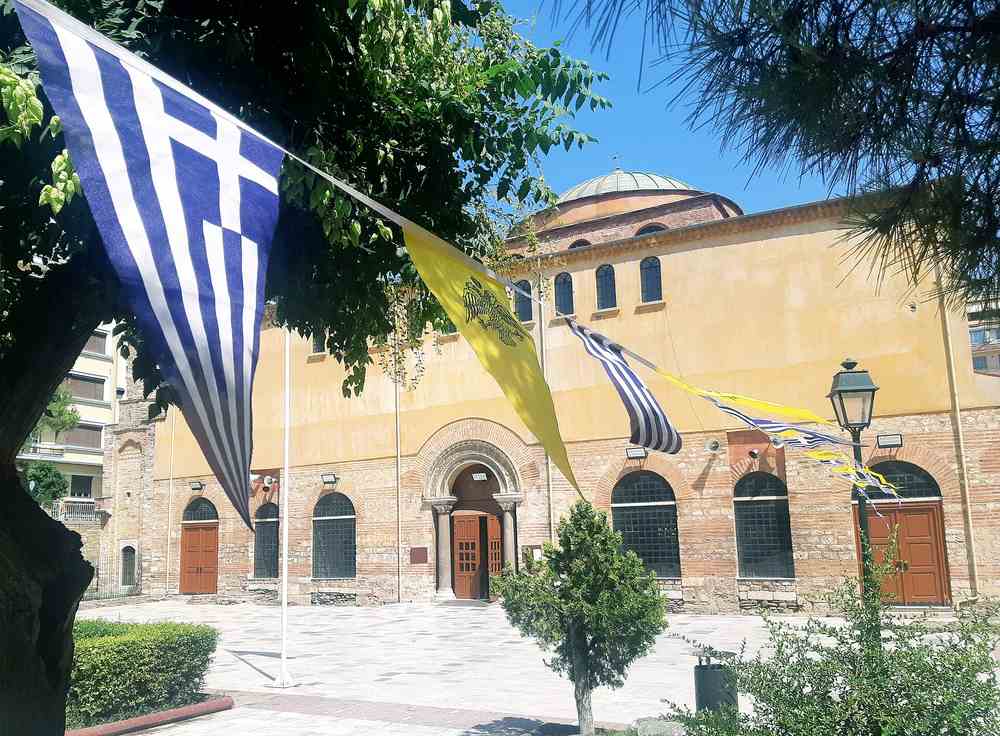
Agia Sofia in Thessaloniki stands as a testament to Byzantine architectural prowess. This eighth-century church, dedicated to the Holy Wisdom of God, mirrors its namesake in Constantinople. With a distinctive domed basilica design, Agia Sofia blends the early basilica with the later cross-in-square style. The church’s mosaics, including the Ascension of Christ and the Virgin and Child, are pivotal artworks of the era. Inscribed as a UNESCO Palaeochristian and Byzantine Monument, Agia Sofia remains a key attraction in Thessaloniki. Its historical transformation from a church to the Ayasofya mosque during Ottoman rule adds to its rich narrative. Discovering Agia Sofia is essential for understanding Thessaloniki’s Byzantine heritage with My Greece Tours.
Agia Sofia is not just a church; it is a journey through time, showcasing the evolution of Byzantine art and architecture. The sections below cover its historical significance, architectural style, and cultural impact. As visitors explore, they can appreciate the intricate mosaics and the church’s role throughout history. This site remains a focal point for understanding the religious and cultural tapestry of Thessaloniki. For those interested in Byzantine landmarks, Agia Sofia is a cornerstone. Learn more about the surrounding attractions and how they interconnect with Thessaloniki tours.
What is the historical significance of Agia Sofia?
Agia Sofia is a vital Byzantine monument, reflecting the religious and cultural shifts from the Byzantine to Ottoman eras, inscribed as a UNESCO site.
Agia Sofia, dedicated to the Holy Wisdom of God, was constructed in the eighth century, symbolising the Byzantine Empire’s religious devotion. It mirrors the architectural grandeur of the Hagia Sophia in Constantinople. This period was marked by theological debates and iconoclasm, influencing the artistic choices within the church. The building’s endurance through these tumultuous times highlights its significance as a religious and cultural beacon. As a focal point of worship, Agia Sofia attracted pilgrims and scholars, becoming a centre for theological discourse and artistic expression. Its strategic location in Thessaloniki, a hub of commerce and culture, further amplified its importance in the Byzantine Empire.
Under Ottoman rule, Agia Sofia transformed into the Ayasofya mosque, reflecting the changing religious and political landscapes. This conversion involved architectural modifications, such as the addition of a mihrab and minaret, which have since been removed. The mosque’s presence in Thessaloniki lasted until the early twentieth century, leaving an indelible mark on the city’s cultural fabric. Its adaptation to Islamic practices while retaining Christian elements showcases the city’s rich tapestry of religious coexistence. The mosque served as a testament to the city’s ability to embrace diverse cultures and traditions.
Agia Sofia stands as a symbol of Thessaloniki’s diverse past, recognised by UNESCO as part of the Palaeochristian and Byzantine Monuments of Thessaloniki. This designation underscores its global cultural value. Visitors can explore its architectural and artistic elements, offering insights into Byzantine and Ottoman influences. The church’s role in the city’s history as a hub of religious and cultural life continues to draw historians and enthusiasts alike, eager to uncover the stories embedded in its walls. Its enduring presence in the heart of Thessaloniki makes it a must-visit for those exploring the city’s historical landmarks.
How does Agia Sofia’s architecture reflect Byzantine design?
Agia Sofia exemplifies the transitional architectural style between early basilica and cross-in-square, with a prominent domed basilica structure.
Agia Sofia is a prime example of Byzantine architectural innovation, showcasing a transitional style between the early basilica and the later cross-in-square design. This evolution is evident in its domed basilica structure, where a broad dome rests on a square core. The architectural layout reflects the shift towards more centralised and vertical designs, a hallmark of Byzantine church architecture. The building’s structure allows for a vast, open interior that draws the eye upward, creating a sense of connection between the earthly and the divine. This design not only enhances the spiritual atmosphere but also demonstrates the engineering prowess of Byzantine architects.
The church’s dome is a defining feature, supported by four arches that create a square base. This structural ingenuity allowed for the expansive interior space and the inclusion of grand mosaics. The dome’s design facilitated the depiction of celestial scenes, such as the Ascension of Christ, which adorns its interior. This architectural choice was both aesthetic and symbolic, enhancing the spiritual experience. The use of light and shadow within the church further accentuates the mystical atmosphere, inviting contemplation. The dome serves as a visual anchor, guiding the congregation’s focus during religious ceremonies.
Agia Sofia’s architectural elements, including its use of natural light and spacious nave, contribute to its serene ambiance. The church’s design encourages contemplation and reverence, qualities central to Byzantine religious practice. Its enduring structure has inspired generations of architects, illustrating the timeless appeal of Byzantine architectural principles. The balance between form and function in Agia Sofia’s design is a testament to the advanced engineering and artistic vision of its creators. The church’s ability to withstand the test of time speaks to the durability and ingenuity of its construction methods.
What are the key artistic features of Agia Sofia?
Agia Sofia’s mosaics, including the Ascension of Christ and the Virgin and Child, are central to its artistic legacy.
The mosaics of Agia Sofia are among its most celebrated artistic features. The dome’s mosaic depicts the Ascension of Christ, surrounded by the Virgin, two angels, and the twelve apostles. This artwork is a testament to the sophistication of Byzantine mosaic art, which used small tesserae to create detailed and vibrant depictions. The iconography reflects religious themes central to Byzantine spirituality. Each figure is meticulously crafted to convey a sense of divinity and grace, drawing viewers into the biblical narrative. The mosaics’ vibrant colours and intricate designs continue to captivate visitors and art historians alike.
Another significant mosaic is located in the apse, portraying the enthroned Virgin and Child. This depiction serves as a focal point for worshippers, embodying the veneration of the Virgin Mary within Orthodox Christianity. The use of gold tesserae enhances the divine aura of the figures, a common technique in Byzantine art to convey spiritual significance. The mosaics’ preservation allows for continued appreciation of Byzantine artistic mastery. The Virgin’s serene expression and the Child’s gentle gesture invite reflection on themes of motherhood and divinity. These mosaics offer a window into the religious beliefs and artistic techniques of the Byzantine era.
Traces of an earlier mosaic, a plain cross from the iconoclast period, survive beneath the later depictions. This remnant provides insight into the religious and artistic shifts during the Byzantine era, particularly the iconoclastic controversy. The presence of both iconoclastic and post-iconoclastic art within Agia Sofia offers a unique window into the theological debates of the time, enriching its historical narrative. The juxtaposition of these artistic elements reflects the dynamic interplay between tradition and innovation within Byzantine art. These mosaics are not just decorative elements; they are integral to understanding the church’s historical and cultural context.
How did Agia Sofia function during the Ottoman era?
During the Ottoman era, Agia Sofia served as the Ayasofya mosque, incorporating Islamic architectural elements.
The transformation of Agia Sofia into the Ayasofya mosque during the Ottoman era marked a significant chapter in its history. This conversion involved architectural modifications, such as the addition of a mihrab, which indicated the direction of Mecca. The mosque’s role as a place of Islamic worship lasted for several centuries, reflecting the religious diversity of Thessaloniki during Ottoman rule. The mihrab, intricately designed, became a focal point for prayer, integrating Islamic religious practices with the existing Christian architecture. This blend of architectural styles illustrates the adaptability of the structure to different religious functions.
The Ottomans’ adaptation of Agia Sofia also included the construction of a minaret, a common feature in mosques for the call to prayer. Although the minaret no longer stands, its historical presence is a reminder of the church’s multifaceted past. The coexistence of Christian and Islamic elements within Agia Sofia exemplifies the city’s complex cultural and religious dynamics during this period. The call to prayer, once echoing from the minaret, would have mingled with the sounds of the bustling city, a testament to the harmonious coexistence of diverse communities. This period of transformation is a significant aspect of Thessaloniki’s multicultural heritage.
The Ottoman influence on Agia Sofia extended beyond architectural changes. The mosque became a centre for community gatherings and religious education, playing a vital role in the social fabric of Thessaloniki. Its history as a mosque adds a layer of cultural depth to Agia Sofia, making it a symbol of Thessaloniki’s multicultural heritage and historical continuity. The legacy of this era is still felt today, as visitors explore the layers of history that have shaped the church’s identity. Agia Sofia’s ability to serve different religious communities over time highlights its importance as a cultural and historical monument.
Why is Agia Sofia a UNESCO World Heritage site?
Agia Sofia is a UNESCO site for its architectural innovation and historical significance within the Palaeochristian and Byzantine Monuments of Thessaloniki.
Agia Sofia’s designation as a UNESCO World Heritage site highlights its global cultural and historical importance. As part of the Palaeochristian and Byzantine Monuments of Thessaloniki, Agia Sofia is recognised for its architectural innovation and artistic achievements. Its transitional style, combining the basilica and cross-in-square designs, represents a pivotal moment in Byzantine architecture. The church’s ability to adapt and evolve over centuries underscores its resilience and enduring relevance. Its recognition by UNESCO ensures that Agia Sofia is preserved for future generations, allowing them to appreciate its historical and cultural significance.
The church’s mosaics, particularly the Ascension of Christ and the Virgin and Child, contribute to its UNESCO status. These artworks exemplify the advanced techniques and religious themes of Byzantine mosaic art. The preservation of these mosaics allows for continued study and appreciation of Byzantine artistry, offering insights into the spiritual and cultural values of the era. The vibrant colours and intricate details of the mosaics continue to captivate scholars and art lovers worldwide. Their presence within Agia Sofia enhances the church’s reputation as a centre of artistic and religious expression.
Agia Sofia’s historical narrative, including its transformation into a mosque during the Ottoman era, adds to its UNESCO significance. This layered history reflects the religious and cultural shifts in Thessaloniki over the centuries. As a UNESCO site, Agia Sofia is protected and preserved for future generations, ensuring its continued role as a source of inspiration and education. The church stands as a beacon of cultural exchange and dialogue, bridging the past with the present. Its inclusion in the UNESCO list highlights its role as a cultural and historical landmark in Thessaloniki.
What can visitors experience at Agia Sofia today?
Visitors to Agia Sofia can explore its architectural beauty, historical mosaics, and serene surroundings, gaining insight into Byzantine culture.
Visitors to Agia Sofia today can immerse themselves in the architectural grandeur and historical significance of this Byzantine masterpiece. The church’s domed basilica design offers a glimpse into the architectural innovations of the Byzantine era. As visitors enter, they are greeted by the serene ambiance created by the church’s spacious nave and natural light, enhancing their appreciation of the spiritual experience. The interplay of light filtering through the windows casts a warm glow on the mosaics, highlighting their intricate details. The church’s tranquil setting provides an ideal environment for reflection and exploration.
The mosaics within Agia Sofia are a highlight for art and history enthusiasts. The intricate depictions of the Ascension of Christ and the Virgin and Child are accessible for close observation, allowing visitors to appreciate the craftsmanship and religious symbolism of Byzantine art. These mosaics serve as a testament to the church’s enduring artistic legacy, offering insights into the spiritual and cultural values of the time. The vivid imagery and delicate artistry invite a deeper reflection on the narratives they portray. The church’s art pieces are not just relics of the past; they are living testimonies to the Byzantine era’s artistic achievements.
Agia Sofia’s location in a tree-shaded square provides a tranquil setting for reflection and exploration. A short walk from the seafront, the church is easily accessible and offers a peaceful retreat from the bustling city. Nearby, visitors can explore other Byzantine sites, such as Byzantine churches of Thessaloniki, enriching their understanding of Thessaloniki’s historical and cultural landscape. The surrounding area offers a blend of historical charm and modern vibrancy, making it an ideal starting point for further exploration. Agia Sofia’s serene environment complements its historical richness, providing a holistic experience for all visitors.
How does Agia Sofia connect with Thessaloniki’s cultural landscape?
Agia Sofia is integral to Thessaloniki’s cultural landscape, linking Byzantine history with modern exploration opportunities.
Agia Sofia is a cornerstone of Thessaloniki’s cultural landscape, offering a tangible link to the city’s Byzantine past. Its historical and architectural significance connects visitors to the region’s rich heritage, serving as a gateway to understanding the broader cultural and religious dynamics of the Byzantine Empire. The church’s presence in Thessaloniki underscores the city’s historical importance as a centre of Byzantine art and architecture. This connection enriches the cultural tapestry of Thessaloniki, drawing visitors from around the world. Agia Sofia’s historical narrative adds depth to the city’s cultural identity, making it an essential part of Thessaloniki’s historical exploration.
Exploring Agia Sofia provides an opportunity to engage with Thessaloniki’s vibrant cultural scene. The church’s location facilitates easy access to other historic sites, such as the Rotunda and Agios Dimitrios, creating a cohesive narrative of the city’s Byzantine history. These sites collectively offer a comprehensive understanding of Thessaloniki’s development through the ages and its role in shaping Byzantine culture. The interconnectedness of these landmarks paints a vivid picture of the city’s storied past. Visitors can explore these sites to gain a deeper understanding of Thessaloniki’s cultural evolution.
Agia Sofia’s integration into Thessaloniki’s modern cultural offerings enhances its appeal. Visitors can engage with the city’s contemporary arts and cultural events, enriching their overall experience. Nearby attractions, such as the Museum of Byzantine Culture, provide further context and depth to the exploration of Byzantine heritage. Agia Sofia remains a vital part of Thessaloniki’s cultural identity, bridging past and present. The church’s legacy continues to inspire both locals and tourists, fostering a deeper appreciation of Thessaloniki’s dynamic cultural landscape. Its enduring presence in the city is a testament to its historical and cultural significance.
Frequently Asked Questions
What is the architectural style of Agia Sofia?
Agia Sofia is a transitional architectural style between the early basilica and the later cross-in-square design. This Byzantine church features a domed basilica layout, with a broad dome resting on a square core. Its style reflects the evolution of Byzantine church architecture, emphasising centralised and vertical designs.
What mosaics can be found in Agia Sofia?
Agia Sofia houses several significant mosaics, including the Ascension of Christ in the dome and the enthroned Virgin and Child in the apse. These mosaics exemplify Byzantine artistic techniques and religious themes, offering insights into the spiritual and cultural values of the era.
How did Agia Sofia change during the Ottoman period?
During the Ottoman period, Agia Sofia was converted into the Ayasofya mosque. This transformation involved architectural changes, such as the addition of a mihrab and minaret. The mosque served as a place of Islamic worship, reflecting Thessaloniki’s religious diversity during Ottoman rule.
Why is Agia Sofia significant to Thessaloniki’s history?
Agia Sofia is significant to Thessaloniki’s history due to its architectural innovation and religious importance. As a major Byzantine monument, it reflects the city’s role in the Byzantine Empire and its transformation during the Ottoman era. The church’s rich history contributes to Thessaloniki’s cultural and religious heritage.
What can visitors see and do at Agia Sofia?
Visitors to Agia Sofia can explore its architectural beauty, historical mosaics, and serene surroundings. The church’s domed basilica design and intricate mosaics offer insights into Byzantine culture. Its location in a tree-shaded square provides a peaceful setting for reflection and exploration.
How does Agia Sofia relate to other Thessaloniki attractions?
Agia Sofia is closely related to other Thessaloniki attractions through its historical and cultural significance. It connects with sites like the Rotunda and Agios Dimitrios, offering a cohesive narrative of the city’s Byzantine history. These connections enhance visitors’ understanding of Thessaloniki’s cultural landscape.