
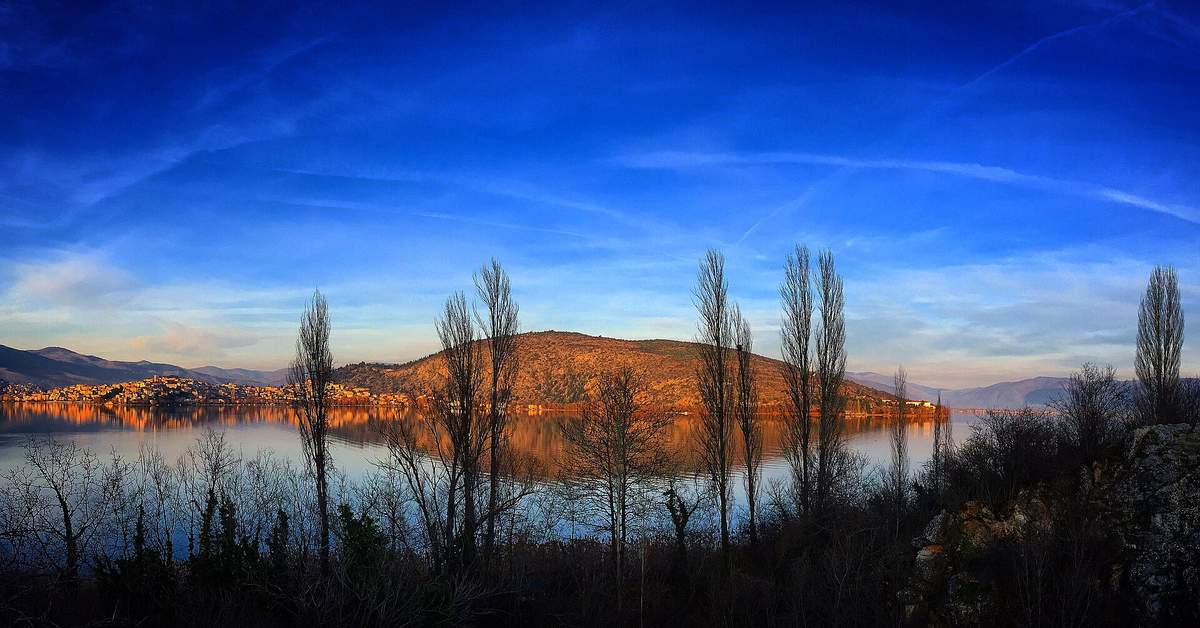
Kastoria sits on a wooded peninsula that reaches into Lake Orestiada in the mountains of western Macedonia. A day trip from Thessaloniki covers about two hundred and ten kilometres and takes a little over two hours by road. The town packs Byzantine churches, timber mansions, a lakeside cave, and a centuries-old fur trade into a compact core ringed by water. Follow the shore, read the frescoes, and place the town within a wider Macedonian tour with My Greece Tours.
The trip rewards a full day rather than a rushed stop, given the drive and the spread of the sights. Its lanes hold post-Byzantine churches, its waterfront frames the peninsula, and its quarters carry the story of the fur trade. The sections below cover what the day trip involves, how to reach the town, and what to see around the lake, in the churches, and in the fur quarter. The later parts turn to the itinerary and how to fold the town into the guided Thessaloniki tours.
What is a Kastoria day trip from Thessaloniki?
A Kastoria day trip is a full-day excursion from Thessaloniki to the lakeside town on Lake Orestiada in western Macedonia. It pairs Byzantine churches, timber mansions, and the fur trade within one compact peninsula.
The town rises on a peninsula that pushes into the lake from the western shore, so water frames it on three sides. Its old quarters climb the slopes above the waterline, packed with churches and merchant mansions from its centuries as a trading town. A day visitor walks the stone lanes, reads the frescoes in the small churches, and circles part of the shore on foot or by car. The setting joins a mountain lake, a dense historic core, and a working fur industry within one stop. That mix marks Kastoria as one of the fuller day trips out of the city. The drive across the Macedonian uplands rewards travellers who want more than one theme in a day.
The distance sets the shape of the day more than any single sight. The road runs about two hundred and ten kilometres each way, which fills close to two and a quarter hours behind the wheel. A traveller who leaves the city in the morning reaches the lake before midday and keeps the afternoon for the churches and the shore. The return covers the same ground, so an early start earns the fuller day. The town sits far enough west that it seldom folds into a half-day, unlike the nearer stops on the plain. That reach places it among the longer runs on the list of Thessaloniki day trips that leave the city for the day.
The town suits a traveller who wants history, nature, and craft in a single outing rather than one theme. Its churches draw those who follow Byzantine art across northern Greece. Its lake and the cave on the shore draw walkers and photographers after quiet water and reflections. Its fur workshops and showrooms draw shoppers who track the trade to its Greek root. A guided day ties the three threads together and handles the long drive, so the visitor spends the hours on the town rather than the road. The breadth makes Kastoria a rewarding choice for a second or third excursion from a base in the city, once the closer sights are done.
How do you get to Kastoria from Thessaloniki?
Kastoria lies about two hundred and ten kilometres west of Thessaloniki, a drive of roughly two hours to two hours and a quarter by the national road. A rental car or a guided tour reaches it most directly.
The route follows the Egnatia Odos motorway west from the city toward the mountains of western Macedonia. The road climbs steadily off the coastal plain into higher country of ridges and upland basins. A marked exit near the town leaves the motorway for the final stretch down to the lake. The drive stays straightforward on modern road for almost its whole length, with mountain scenery for the closing leg. Drivers who want the freedom to break the run and stop for the views along the way often pick up a Thessaloniki car rental before setting out. The one road west keeps the navigation simple even for a first visit to the region.
The guided option removes the drive and the navigation from the day. A tour gathers travellers in the city, covers the motorway run, and delivers them to the lakeside town with a guide to read its churches and its trade. That arrangement suits those who would rather watch the mountains than the road, or who lack a licence for the long haul. The guide also sequences the sights so the compact core and the shore fit the hours on the ground. A traveller on a tour skips the parking, the fuel stops, and the return leg at the wheel. The day then runs on the town and the lake rather than on the logistics of getting there and back.
Public transport reaches the town but rarely suits a day trip on its own. Long-distance coaches link the city to Kastoria, yet the schedule and the journey time leave a thin window on the ground for a same-day return. A traveller without a car often finds the guided run or a private transfer the surer way to see the town and get back by evening. Those who base themselves in the city for a spell can weigh the wider choices in a guide to getting around Thessaloniki. The long distance to the lake rewards the steadier forms of transport over a patched-together coach plan.
What can you see around Lake Orestiada in Kastoria?
Lake Orestiada wraps the Kastoria peninsula on three sides and frames the town’s best views. Its shore holds the Dragon’s Cave, quiet walking paths, and the prehistoric lakeside settlement of Dispilio a short way south.
The lake, known as Lake Orestiada or Lake Kastoria, spreads around the peninsula and gives the town its mirror of water and sky. A path traces much of the shore below the old quarters, level and shaded for a slow walk. Herons, cormorants, and other water birds work the reed beds along the margin, so the stroll doubles as quiet birdwatching. The water reflects the churches and the timber houses that climb the slope above the shore. That loop of shoreline ranks among the calmer walks in northern Greece. It offers an easy counter to the climb through the steep lanes of the upper town, and it reads best in the soft light of morning or late afternoon.
The Dragon’s Cave, the Spilaio tou Drakou, opens in the rock on the northern shore of the peninsula. The cave runs back through a series of chambers hung with stalactites and set with small underground lakes. A lit walkway leads visitors through the linked halls, past the rock formations and the still pools below. Local legend tied the cave to a guardian dragon, which lends the site its name and its stories. The cave adds an underground leg to a day otherwise spent among churches and along the open shore. Its cool chambers make a welcome break on a warm afternoon, and the short circuit fits neatly between the lake path and the town.
Dispilio lies on the southern shore of the lake, a short drive from the town, and holds the traces of a prehistoric lakeside settlement. Archaeologists uncovered the remains of a village built on posts over the shallows, one of the older such sites known in Europe. A reconstruction on the shore raises timber huts on stilts to show how the lake dwellers once lived above the water. Finds from the dig, among them worked wood and pottery, fill a small museum at the site. The settlement stretches the town’s story back far beyond its Byzantine and Ottoman centuries. It lets a visitor read the lake as a place of human life for thousands of years, not merely a scenic backdrop.
Which Byzantine churches and mansions define Kastoria?
Kastoria holds dozens of Byzantine and post-Byzantine churches, among them the domed Panagia Koumbelidiki and the lakeside Mavriotissa Monastery. Its old quarters keep grand timber archontika, the mansions of the fur merchants.
Panagia Koumbelidiki stands in the upper town, marked by the tall drum and dome that give the church its name. The small stone church carries frescoes across its interior and a rare painted image of the Holy Trinity in the dome. Its high cylindrical drum sets it apart from the low, barn-like churches common across the rest of the town. The building ranks among the signature monuments of Kastoria and fills many a photograph of the old quarter. A visitor reads in it the wealth and the faith that raised so many churches in one small town. The church rewards a slow look at the painted walls, where the figures and the scenes repay the climb up the lanes.
The Mavriotissa Monastery sits on the southern shore of the lake, a walk or a short drive from the centre through the trees. Its main church carries frescoes on the outer wall as well as within, including a row of Byzantine emperors along the façade. Peacocks roam the grounds beside the water, and a café nearby draws walkers off the shore path for a rest. The setting, hard by the lake and under the trees, ranks among the most peaceful of the town’s monuments. The monastery pairs a fine fresco cycle with the quiet of the far shore. A visit here rounds off the lake walk and ties the water to the Byzantine art that fills the town.
The old quarters keep the archontika, the tall timber mansions that the fur merchants raised in the Ottoman centuries. Their upper floors jut out over the lanes on carved brackets, and their windows run in long bands beneath painted ceilings. Several of the grandest now serve as museums, so a visitor climbs the stairs and reads the panelled rooms of a merchant house. The mansions cluster in the Doltso and Apozari quarters, where the lanes keep their old scale and their stone. They stand as the domestic face of the wealth that the churches show in sacred form. Together the mansions and the churches map the fortune that the fur trade poured into the town over the centuries.
Why is Kastoria known for fur?
Kastoria built a centuries-old fur trade on the skill of its furriers, who stitched offcuts into finished garments. The craft shaped the town’s wealth, its mansions, and its trade links across Europe, and it still anchors the local economy.
The fur trade grew from a local skill in working small scraps of pelt into whole garments. Kastoria’s furriers gathered offcuts left over from larger workshops abroad and stitched them into linings, trims, and coats. That craft turned waste into value and built a trade that reached the fairs and markets of central Europe. The merchants who ran it grew rich enough to raise the mansions and endow the churches that fill the town today. The trade set Kastoria apart from other lake towns and tied its name to fur across the continent. It gave a remote mountain settlement a reach into markets far beyond the borders of its own region.
The craft passed down through families and workshops across the generations of the town. Furriers learned the sorting, the cutting, and the sewing that joined many small pieces into a seamless whole. That inherited skill kept the trade in local hands even as the sources of pelt and the markets shifted over time. The workshops trained each new generation on the bench, so the knowledge stayed rooted in the town rather than the distant factory. The continuity explains how a small mountain town held a lasting place in a trade run mostly from far larger centres. Each household that worked the pelts added to a pool of skill that no rival town could match with ease.
The trade still shapes the town that a day visitor sees along the road in and out. Showrooms and workshops line the approaches and cluster in parts of the centre, where finished coats hang for the trade and for visitors. An international fur fair draws buyers to the town and keeps its links to the wider market alive. A traveller curious about the craft can watch the shopfronts and read the trade in the fabric of the streets. The fur story runs alongside the churches and the lake as the third thread of a full day in Kastoria. It roots the town’s history in a working craft rather than in monuments alone.
How do you plan a Kastoria day trip itinerary?
A Kastoria day trip works best with an early start, given the two-hour-plus drive each way. Reach the lake by midday, spend the afternoon on the churches, the shore, and the fur quarter, then return by evening.
The drive sets the frame, so the day opens early to earn full hours on the ground. A start soon after dawn puts the traveller at the lake before midday, with the light still soft on the water. The morning suits the shore walk and the Dragon’s Cave on the northern side, before the town warms and the paths fill. A lunch in one of the old quarters breaks the day between the lake and the churches. That order keeps the driving to the ends of the day and the sights to the middle. It also spares the walker the steepest climbs in the heat, and leaves the shaded shore for the cooler hours.
The afternoon fits the churches, the mansions, and the fur quarter within the compact core. A route through the Doltso and Apozari lanes links the archontika, the small painted churches, and the museum houses on foot. Panagia Koumbelidiki and a cluster of the frescoed churches slot into a walk of an hour or two through the upper town. The Mavriotissa Monastery on the far shore rounds off the day for those with the time before the road home. The tight scale of the town lets a visitor see the core without a rush across the afternoon. A guide can trim the route to the hours in hand, so nothing central drops off the plan.
The town pairs well with the other western runs for travellers who base themselves in the city for several days. A separate day can take the waterfalls at Edessa or the vineyards of Naoussa across the same uplands. Those who plan a string of outings often set Kastoria as the longest single run and keep the nearer plain stops for other days. A guide can build the day around the drive and the light, so the hours land on the town rather than the road. Read the neighbours in the guides to the Edessa waterfalls day trip and the Naoussa wine day trip to sketch a fuller week in Macedonia.
How does a Kastoria visit compare with the nearer western day trips?
Kastoria demands the longest drive of the western day trips, so it fills a whole day on its own. The nearer runs to Veria, Edessa, and Naoussa sit closer to the city and pair more easily with a second stop.
The distance is the plain difference between Kastoria and the closer western towns. The lake sits about two hundred and ten kilometres from the city, well beyond the plain stops that lie an hour or so out. A visitor gains a mountain lake, a rare church heritage, and a working fur trade for that longer drive. The trade-off is a day given wholly to one town, with little room for a second stop on the way. Travellers who weigh the run against the nearer towns balance the richer single target against the shorter reach of the alternatives.
The nearer western towns each carry a clear theme that shapes a shorter day. Veria holds Byzantine churches, a Jewish quarter, and the ancient site where the apostle Paul once preached. Edessa spreads around its waterfalls, where the river drops through the town in a set of cascades. Naoussa anchors a wine country of vineyards and cellars in the foothills above the plain. A traveller can read the town of Veria in its own guide and set it against the longer haul to the lake.
The choice turns on the time in hand and the taste of the traveller. A single free day near the city fits the closer towns with room to spare and a gentler drive. A day set aside for the deeper west, with an early start and an evening return, suits the lake and its churches. Those who stay several days can take both, pairing Kastoria as the long run with the plain towns on other days. The western map rewards a week over a weekend, so the drives spread across the days rather than crowd into one.
Frequently Asked Questions
How far is Kastoria from Thessaloniki?
Kastoria lies about two hundred and ten kilometres west of Thessaloniki. The drive runs roughly two hours to two hours and a quarter along the Egnatia Odos motorway, with a short final stretch down to the lake. The distance calls for an early start if the plan is a same-day return.
Is a Kastoria day trip worth it?
Yes. Kastoria packs Byzantine churches, timber mansions, a lakeside cave, and a centuries-old fur trade onto one compact peninsula in the lake. The mix of history, nature, and craft rewards the drive, though the distance calls for a full day rather than a half.
What is Kastoria famous for?
Kastoria is famous for its fur trade and its Byzantine churches. Its furriers built wealth by stitching offcuts into finished garments, which funded the mansions and the churches of the old town. The setting on Lake Orestiada, a peninsula ringed by water, adds the natural draw.
What are the main churches to see in Kastoria?
Panagia Koumbelidiki, marked by its tall drum and dome, heads the list in the upper town. The Mavriotissa Monastery on the southern shore carries frescoes inside and out. Dozens of smaller Byzantine and post-Byzantine churches fill the old quarters of Doltso and Apozari.
Can you visit the Dragon’s Cave in Kastoria?
Yes. The Dragon’s Cave, the Spilaio tou Drakou, opens on the northern shore of the peninsula. A lit walkway leads visitors through linked chambers of stalactites and small underground lakes. The cave adds an underground stop to a day of churches and shore walks.
What else can you combine with a Kastoria day trip?
A Kastoria day trip fills a whole day on its own, given the drive, so it rarely pairs with another town in one outing. Travellers with several days often set it alongside separate runs to the Edessa waterfalls, the Naoussa vineyards, or the town of Veria across the same western uplands.