
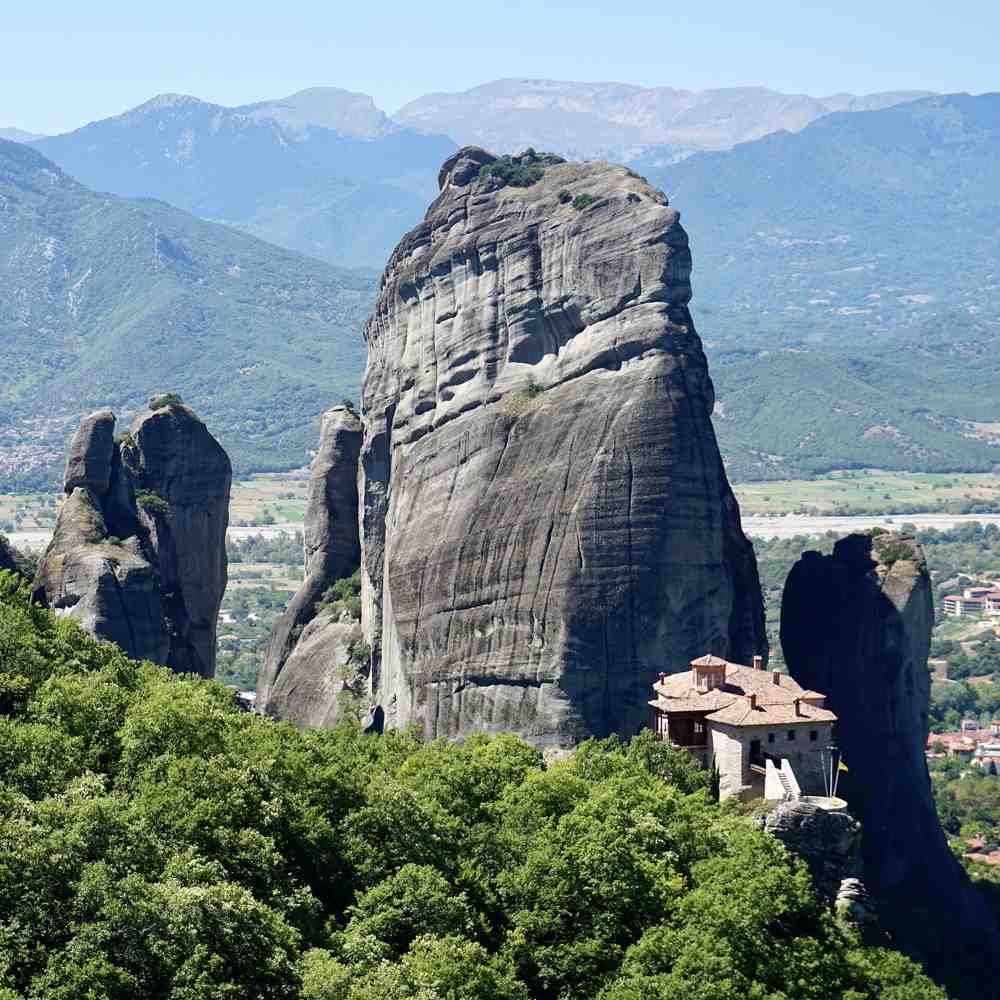
Meteora ranks among the most recognisable landmarks in Greece, and the drive south from Thessaloniki puts it within reach of a single long day. The monasteries perch on sandstone pillars above the Thessalian plain, a landscape that rewards the early start the distance demands. A day trip trades a relaxed pace for a dawn departure, yet the payoff is a UNESCO World Heritage site seen without an overnight stop. This guide maps the logistics of the run: how to travel, how long it takes, and how to shape the hours on the rock. Plan the outing from the northern capital with My Greece Tours.
The sections below cover the trip end to end, from the first question of whether it fits one day to the final choice of monastery. Early answers weigh the distance and the payoff, then the guide compares the three ways to travel: a guided coach, a self-drive, and the train to Kalambaka. Later parts set out the dress code, the shape of a typical day, the strongest season, and the travellers the outing rewards. Read it against your own dates, then match the plan to the guided Thessaloniki tours that reach the rocks without the wheel.
Is a Meteora day trip from Thessaloniki worth it?
Meteora rewards the day trip from Thessaloniki despite a three-hour drive each way. An early start buys enough time for two or three clifftop monasteries, the viewpoints between them, and lunch in Kalambaka before the return.
The monasteries crown a forest of rock towers that rise straight from the plain of Thessaly. Orthodox monks built the retreats on the summits during the late medieval centuries, hauling food and timber up by rope and net. Six of the original two dozen still function as living communities. Each keeps its own visiting rhythm and its own weekly closing day. The scale astonishes on arrival, with chapels and cells balanced on stone hundreds of feet above the valley floor.
The drive is the honest cost of the outing. Roughly two hundred and thirty kilometres separate the two, most of it fast motorway, and the run takes about three hours in each direction. That math turns the trip into a dawn-to-dusk commitment rather than a casual half-day. The reward justifies the hours behind glass for travellers who value rare sights over easy ones. Reading the distance clearly keeps the plan honest and the expectations grounded.
A single day covers the essentials without strain. Two monasteries with unhurried stops leave room for the viewpoints on the connecting road, where the whole massif fills the windscreen. The deeper geological and monastic background sits in the dedicated Meteora guide for readers who want the full story before they climb. What a day cannot cover is all six houses, so the visit turns on a smart choice of which two or three to enter.
The verdict lands firmly on the worthwhile side. Standing on a pillar of rock beside a working monastery, with the valley falling away on every side, is a rare sight in Europe. The long transfer fades against that memory by the time the coach rolls home. Travellers short on days still fold Meteora into a northern base, treating the drive as the price of a landmark that earns it.
How do you get from Thessaloniki to Meteora?
Three routes link Thessaloniki with Meteora: a guided coach or minivan tour, a self-drive down the motorway, or the train to Kalambaka. The guided option handles the logistics, while the car and the train trade convenience for freedom or scenery.
The guided tour is the simplest way to reach the rocks. A coach or minivan collects travellers in the morning, runs the motorway south, and returns after the monasteries close. A guide plans the route around the day’s open houses and adds the history that a self-guided visit would miss. The format removes the fatigue of six hours at the wheel and the guesswork over which monasteries welcome visitors that day. It suits anyone who wants the sight without the logistics.
A self-drive hands over total control of the timing. The route runs southwest on fast motorway for most of the distance, then climbs a twisting road up between the pillars. Drivers set their own departure, linger at the viewpoints, and stay for the light on the rock at the end of the day. The trade is the effort of the round trip and the search for parking at each monastery gate. Meteora sits among the headline entries on any list of day trips from Thessaloniki for drivers who prize independence.
The train offers the calmest and greenest approach. A line runs from Thessaloniki toward Kalambaka, the town at the foot of the rocks, often with a change along the way. The carriages roll through the Thessalian countryside and deliver passengers within sight of the pillars. The catch is the timetable, which fixes the arrival and the departure and leaves the monasteries a short taxi or bus ride from the station. The route rewards travellers who prefer to read and watch the landscape over steering through it.
Each route answers a different priority. The coach wins on ease, the car on freedom, and the train on scenery and calm. Groups and first-timers lean toward the guided option, while confident drivers and rail fans choose their own path. Matching the route to the traveller matters more than chasing the fastest option on paper.
How far is Meteora and how long does the trip take?
Meteora lies roughly two hundred and thirty kilometres southwest of Thessaloniki, about a three-hour drive each way. A full day tour runs from an early departure to an evening return, giving three to four hours on the rocks between transfers.
The distance breaks into two clear halves. The motorway carries the bulk of the run at speed, which keeps the three-hour figure realistic outside holiday traffic. The final stretch slows on the mountain road that curls up to the monastery car parks. Planning around that split helps: the fast section eats the kilometres, and the slow climb asks for patience near the end.
The clock rules a Meteora day more than the map does. A first-light departure from Thessaloniki reaches the rocks before the midday coaches and the harshest sun on the exposed stone. The middle of the day covers the monastery visits and a break in Kalambaka. The late afternoon holds the return drive, with an option to wait for the light to soften over the pillars before turning north.
Total elapsed time runs to a long day by any measure. Six hours of driving plus three or four on site adds up to something close to eleven or twelve hours from door to door. That length rewards a good night’s sleep beforehand and a light, early breakfast. Slotting the outing into a wider Thessaloniki itinerary works well on a day flanked by gentler city plans on either side.
Buffer time protects the day from small delays. A fuel stop, a coffee break, and the walk from car park to gate all draw on the schedule. Building slack into the plan keeps the visit calm rather than rushed. The monasteries reward slow looking, and a tight timetable robs the day of its quiet.
Which Meteora monasteries should you choose?
Six monasteries stay open, and each closes on a set weekday, so a day trip usually enters two or three. The Great Meteoron is the largest, with Varlaam, Roussanou, Saint Nicholas, Saint Stephen and the Holy Trinity completing the group.
The Great Meteoron stands as the oldest and grandest of the group. It crowns the highest pillar, and its old refectory now holds a museum of icons, manuscripts and monastic tools. A rock-hewn chapel and a vaulted cellar reward the climb up the carved steps. The scale and the views from its terrace make it the anchor of most itineraries.
Varlaam sits a short distance across the way and pairs naturally with its larger neighbour. Its main church carries vivid frescoes, and an old winch tower still displays the net that once hauled goods and monks to the summit. Roussanou perches lower on a slender rock, framed by trees, and now houses a community of nuns. Its balconies deliver one of the finest views back across the valley.
The smaller houses each hold their own appeal. Saint Nicholas Anapafsas guards a small church painted by a noted Cretan artist. Saint Stephen sits easiest of all, reached over a short bridge rather than a long stair, which suits travellers wary of heights. The Holy Trinity demands the stiffest climb and repays it with the most isolated setting on its own tall pillar.
The closing days shape the final choice. Each monastery shuts on one fixed weekday, so no single day opens all six. A guide reads the weekly pattern and builds a route that pairs an open grand house with a quieter neighbour. Self-drivers check the closures before setting out, then aim for two contrasting monasteries rather than a rushed sweep of four.
What is the dress code and etiquette at the monasteries?
The monasteries enforce a modest dress code: covered shoulders and knees for everyone. Women are expected to wear a skirt rather than trousers, and wraps usually hang at the entrance for anyone who arrives unprepared.
The code applies inside every working monastery. Men keep to long trousers, and women cover the shoulders and the knees. A skirt below the knee meets the standard for women, and a shawl over bare arms completes it. The rule reflects the fact that these are places of active worship, not museums, home to monks and nuns who follow a daily round of prayer.
Wraps wait at the gates for travellers caught short. A rack of long skirts and shawls usually sits by each entrance for visitors to borrow and return. Relying on them works, though carrying a light scarf and a pair of long trousers avoids the queue and the guesswork. Comfortable, grippy shoes matter alongside the dress code, since the routes involve carved steps and uneven rock.
Quiet respect governs the interiors. Voices drop inside the churches, hats come off, and photography inside the painted naves is often restricted. Following the marked routes and the signs keeps visitors clear of the monks’ private quarters. A calm, unhurried manner fits the setting and earns a warmer welcome at the gate.
Small courtesies smooth the visit. A modest cash offering at the entrance supports the upkeep of the buildings and the community. Keeping voices low near services and stepping aside for residents costs nothing and honours the place. The monasteries open their doors to outsiders on the understanding that the sacred routine comes first.
What does a typical Meteora day trip look like?
A typical day starts with a first-light departure from Thessaloniki and a three-hour drive south. Midday brings the monastery visits and a break in Kalambaka. The late afternoon holds a viewpoint stop and the return north before dark.
The early morning belongs to the road. Travellers leave Thessaloniki in the dark or the first grey light, coffee in hand, and settle in for the motorway run. A rest stop breaks the drive near the halfway mark. The pillars announce themselves from a distance, rising abruptly from the plain as the road nears Kalambaka, and the first sight of them tends to silence the coach.
Midday centres on the monasteries themselves. The group climbs to the first house, tours the church and the museum, and drinks in the valley from the terrace. A short drive along the ridge reaches a second monastery, chosen for its open hours and its contrasting character. Photo stops on the connecting road frame the whole massif, and the guide fills the gaps with the story of the monks and the rock.
The middle of the day also makes room for lunch. A break in Kalambaka or the stone village of Kastraki, tucked right under the towers, offers a taverna meal and a pause in the shade. This is the moment to refill water bottles and rest the legs before the drive home. The pace eases, and the rocks loom overhead from the village streets.
The late afternoon turns back toward Thessaloniki. Drivers and tours who can spare the time linger for the softer light that warms the sandstone near the end of the day. The return run retraces the motorway across the plain, reaching the city in the evening. A long day closes with the image of monasteries floating above the valley fixed firmly in mind.
Which season suits a Meteora day trip?
Spring and autumn suit a Meteora day trip most, with mild air for the climbs and green or golden slopes around the rocks. Summer works with an early start to dodge the heat, and winter brings crisp, quiet, misty visits.
Spring dresses the valley in wildflowers and fresh green. The air stays cool enough for the climbs, and the light is soft for photographs of the rocks. Daylight stretches long enough for an unhurried visit and a viewpoint at the end. The shoulder months draw thinner crowds than the peak of summer, which eases the pressure at each gate.
Autumn mirrors that comfort with warm colour. The slopes turn gold and russet, and the heat of high summer fades into pleasant walking weather. Clear skies open the long views across the plain toward the mountains. The season rewards travellers who want the mild air and the quieter paths of spring in a different palette.
Summer demands respect for the heat. The exposed rock and the open terraces bake under a strong sun by the middle of the day. A first-light departure beats both the worst of the temperature and the thickest of the tour traffic. Water, a hat and shade at midday turn a potentially draining day into a manageable one.
Winter trades warmth for atmosphere. Cold, clear mornings sharpen the pillars against the sky, and low mist can wrap the monasteries in cloud for a scene of rare drama. Shorter daylight and the chance of snow on the high road ask for a careful eye on the forecast. Thin crowds and a hushed calm reward those who wrap up and go.
Who does a Meteora day trip from Thessaloniki suit?
The Meteora day trip suits history lovers, photographers and active travellers happy to trade an early start for a landmark. It fits a short northern stay built around one big excursion rather than a slow, gentle day.
History readers gain the most from the day. The monasteries stack medieval faith, Byzantine art and an ambitious feat of building into one compact site. A guide unlocks the frescoes, the founding stories and the daily life of the monks. The rock itself carries a geological tale of an ancient river delta turned to stone, which deepens the visit for curious minds.
Photographers and active travellers find their reward too. The pillars, the perched monasteries and the shifting light reward the camera at every turn. The carved steps and short climbs suit walkers who enjoy earning a view. The outing pairs naturally with the city’s own highlights, and travellers often slot it beside the classic things to do in Thessaloniki on a longer northern break.
Families manage the day with a little planning. Older children take to the climbs and the drama of the setting, while the drive asks for patience from younger ones. Choosing the easier monasteries, such as Saint Stephen with its bridge, keeps the day comfortable for mixed ages. Snacks, water and a screen for the long drive smooth the transfers.
The trip fits less neatly for certain travellers. Anyone set on a lazy, stay-put holiday may find the eleven-hour round trip too demanding. A base near the centre makes the dawn start easier, so it helps to weigh where to stay in Thessaloniki before booking. For everyone drawn to a landmark worth the effort, though, Meteora repays the long day in full.
Frequently Asked Questions
Is Meteora worth visiting as a day trip from Thessaloniki?
Yes. The three-hour drive each way buys a UNESCO World Heritage site of monasteries on rock pillars, seen in a single long day. An early start makes two or three monasteries and the viewpoints comfortable.
How long is the drive from Thessaloniki to Meteora?
The drive covers roughly two hundred and thirty kilometres and takes about three hours in each direction, most of it on fast motorway. A full round trip with monastery time runs close to eleven or twelve hours.
Can you visit Meteora from Thessaloniki without a car?
Yes. A guided coach or minivan tour handles the whole trip, and a train runs from Thessaloniki to Kalambaka at the foot of the rocks. The train ties you to a timetable and a short transfer to the monasteries.
Can you see every Meteora monastery in one day?
A day trip usually takes in two or three of the six open monasteries. Each closes on a fixed weekday, so the exact pair depends on the day of the week and the route the guide or driver plans.
What should you wear to the Meteora monasteries?
Cover the shoulders and knees. Men wear long trousers, and women wear a skirt below the knee with a wrap over bare arms. Borrowed skirts and shawls hang at the entrances for anyone unprepared.
Which months are good for visiting Meteora?
Spring and autumn offer mild air and thin crowds. Summer works with a dawn start to beat the heat, and winter brings crisp, quiet mornings with the chance of dramatic mist around the pillars.