
Thessaloniki holds the title of Greece’s food capital for concrete reasons. The city fuses recipes carried by refugees from Asia Minor, Sephardic Jewish baking, and Ottoman spice traditions into one dense street-food culture. A food tour here reads the port through its markets, bakeries, grill houses, and seafront meze tables. Travellers taste custard bougatsa at dawn, a sesame koulouri from a street cart, mussels beside the gulf, and syrup-soaked pastries between stops. This guide maps what to eat, where each dish lives, and how a market walk slots into a wider trip planned with My Greece Tours.
The sections below cover breakfast pastries, grilled street food, seafood, sweets, the covered markets, and the districts where locals eat late. Each answer names a dish and its home ground, so the plan serves a solo taster or a family alike. A guided market walk turns a first visit into a route with context, and it pairs naturally with the broader lineup of Thessaloniki tours. Read on for the eating order, the vegetarian picks, and the timing that matches Greek dining hours.
What Makes Thessaloniki Greece’s Food Capital?
Thessaloniki earns the food-capital title through layered migration. Cooks from Asia Minor, Sephardic Jewish bakers, and Ottoman kitchens reshaped its markets and recipes, giving the city a wider street-food range than anywhere else in Greece.
The population exchange of the early twentieth century moved cooks from Smyrna, Constantinople, and the Pontic coast into the city within a short span of years. They arrived with recipes for spiced meatballs, stuffed vegetables, and syrup-heavy pastries that met local Macedonian produce head-on. The blend leans on peppers, cumin, and sesame rather than the lighter olive-and-herb palette of the islands. A tasting walk through the centre fits inside the wider list of things to do in Thessaloniki, and it explains the flavours that sit behind the Roman and Byzantine landmarks along the same streets.
Sephardic Jewish families shaped the city’s baking and preserving for close to five centuries before the war years thinned their number. Ottoman rule layered coffee houses, sweet syrups, and charcoal grills onto the same lanes across four hundred years. Each community left a dish that still sells daily in the covered markets. Custard bougatsa, sesame koulouri, and cumin-scented soutzoukakia all trace back to this mixed inheritance rather than to one narrow Greek region. The layering is why a food tour reads more like a map of migration than a simple restaurant crawl.
Geography locks the mix in place. The harbour drew traders, spices, and fresh catch into a compact grid beside the Thermaic Gulf, and the grid still holds the markets today. Farmland across central Macedonia fills the stalls with peppers, beans, and stone fruit, and the gulf supplies mussels and small fish to the tavernas. A guide who reads these threads turns a food route into a clear account of how the port ate through each century. The distances stay walkable, so one afternoon links refugee grills, Jewish bakeries, and Ottoman sweet shops on foot.
What Should You Eat for Breakfast in Thessaloniki?
Breakfast in Thessaloniki centres on bougatsa, a filo pie filled with semolina custard, cheese, or minced meat. Locals pair it with a sesame koulouri bread ring and a strong coffee from the same street counter.
Bougatsa defines the morning. Bakers stretch filo paper-thin, fill it with sweet semolina custard or salty feta, bake it in wide trays, then cut it into squares and dust the sweet version with sugar and cinnamon. The minced-meat variant, kreatopita, turns the same pastry into a savoury handful for a heartier start. A food tour usually opens at a bougatsa counter, because the dish shows the Asia Minor filo craft at its clearest and sets the tone for the tasting order that follows through the rest of the walk.
Koulouri Thessalonikis is the second breakfast fixture. Vendors ring the sesame-crusted bread rings over their arms at kiosks near Aristotelous Square and every major junction, and office workers grab one on the move for the price of a coin or two. The crust carries a deep sesame flavour, and the crumb stays chewy rather than soft. Paired with a wedge of bougatsa, the koulouri makes a walking breakfast that needs no table and costs almost nothing, which is why guides use it as the between-stop snack on a market route.
Coffee ties the morning together. The city runs on freddo espresso and freddo cappuccino, iced and whipped, alongside the slower Greek coffee brewed in a briki. Cafes cluster around Navarinou and the seafront, and locals linger over a single glass for an hour at a stretch. A guided breakfast stop reads this ritual as culture rather than a quick refuel, and it explains why the eating clock in Thessaloniki runs later than first-time visitors expect, with mornings stretching gently toward a mid-afternoon lunch. The coffee break also gives a guide the moment to set out the tasting order for the hours ahead.
Which Sweets Define a Thessaloniki Food Tour?
Thessaloniki’s signature sweet is trigona Panoramatos, a cone of crisp filo piped full of cream. Syrup pastries from Asia Minor recipes and almond-topped tsoureki round out the dessert stops on a food tour.
Trigona Panoramatos take their name from the suburb of Panorama on the hills above the city. Bakers roll filo into a triangle, bake it until it shatters like glass, soak it lightly in syrup, then pipe the hollow full of thick custard cream. The contrast of crackling pastry and cool cream makes the trigono the dessert most tour guides save for the final stop. A single piece rewards a slow coffee, and the best versions come from bakeries that fry and fill the cones to order rather than in advance.
Syrup sweets carry the deepest Asia Minor roots. Refugee bakers brought recipes for nut-packed pastries, semolina cakes soaked in syrup, and milk-based puddings that now fill the display cases across the centre. The style favours honey, walnuts, and rosewater over the plainer sweets found further south. A tasting route pauses at a traditional zaharoplasteio, where the counter reads like a museum of the population exchange, and the baker can name the town each recipe travelled from before it settled in the northern port.
Tsoureki closes the sweet map. The brioche-like braided bread, enriched with mahleb and mastic, arrives plain, topped with flaked almonds, or filled with chocolate and chestnut cream in the city’s modern bakeries. Locals eat it year-round rather than only at Easter, and Thessaloniki treats tsoureki as a point of civic pride. A slice pairs with the same freddo that opened the day, and it gives a food tour a soft, aromatic finish that balances the crisp filo of the trigono and the syrup of the refugee sweets.
What Grilled and Street Dishes Belong on the Route?
Grilled street food anchors the savoury half of a food tour. Gyros and souvlaki wraps, plus cumin-spiced soutzoukakia in tomato sauce, carry the Asia Minor influence that defines Thessaloniki’s meat cooking.
Gyros is the workhorse of the city’s street food. Pork or chicken turns on a vertical spit, gets shaved thin, then rolls into a warm pita with tomato, onion, tzatziki, and a handful of fries. The wrap costs the price of a bus ticket and feeds a walker between market stops. Souvlaki, skewered and charcoal-grilled, offers the leaner cousin of the same tradition. A food tour treats both as fuel for the route, and it points out the grill houses that still cut meat from a real spit rather than a factory cone.
Soutzoukakia mark the clearest Asia Minor signature on the plate. Refugee cooks from Smyrna brought the recipe for cumin-and-garlic meat rolls simmered in a rich tomato-and-wine sauce, and the dish carries the old name of the city on menus as soutzoukakia Smyrneika. Served over rice or with crusty bread, they show how migration reshaped the northern Greek table. A guide uses the plate to link the food directly to the population exchange, turning a lunch stop into a history lesson that a monument alone cannot deliver.
Smaller grilled bites fill the gaps between the headline dishes. Bifteki patties, spicy sausage from the mountain villages, grilled peppers, and skewered halloumi appear across the tavernas of the centre. Vendors around the markets sell roasted corn and chestnuts through the cooler months. A tasting walk samples the range in small portions rather than committing to one full plate, so a group can move through five or six grills in an afternoon and still leave room for the sweets and the seafood that follow.
Where Do You Eat Mussels and Seafood in Thessaloniki?
Thessaloniki eats mussels in quantity. Fried, steamed, or baked with rice as mydia saganaki, they headline the seafront tsipouradika, where small fish and shellfish meze arrive alongside the local spirit.
Mussels, or mydia, run through the city’s seafood culture. Cooks fry them in a light batter as mydia tiganita, steam them open with wine and pepper as mydia achnista, or bake them with rice, tomato, and feta as mydia saganaki. The Thermaic Gulf and the nearby farms off the Halkidiki coast supply the shellfish fresh through most of the year. A food tour that reaches the water builds a plate of mussels as its seafood centrepiece, because the dish is cheap, local, and tied directly to the port’s working harbour.
Small fish and shellfish fill out the seafood meze. Fried anchovies, grilled sardines, marinated gavros, and boiled shrimp arrive in shared plates rather than large mains, matching the grazing rhythm of the tsipouro table. The style rewards a group that orders across the menu and passes the plates around. A guide steers the table toward the day’s catch and away from the frozen imports, and the shared format keeps the seafood stop light enough that a food walk can carry on to the sweets afterward without stalling.
The seafront and the market lanes host the best of the seafood. Tsipouradika near the old harbour and the fishmongers inside Kapani sell the catch that the kitchens cook steps away. Eating shellfish within sight of the boats keeps the chain short and the flavour clean. A tasting route uses this proximity to explain the difference between market-fresh and reheated seafood, and it gives travellers a rule they can carry to any coastal Greek city on the rest of their trip.
How Does the Tsipouro and Meze Table Work?
The tsipouro table works as rounds of small plates. Each glass of the pomace spirit brings a fresh meze, so seafood, cheese, and cured meats appear in sequence rather than as one large course.
Tsipouro is the northern Greek pomace spirit, distilled from the skins and stems left after the wine harvest. Locals drink it in small carafes, chilled and neat, or in the anise-scented version that clouds white with water and mirrors ouzo. The tsipouradiko, the tavern built around the drink, orders food in rounds: one carafe, one plate of meze, repeat. The rhythm slows the meal and turns eating into a long social sitting. A food tour that includes a tsipouradiko shows how the city drinks with the same care it brings to the table.
Meze culture drives the format. Rather than a single main plate, the table fills with shared dishes: grilled octopus, fried cheese saganaki, cured meats, roasted peppers, and dips of fava and taramosalata. Each glass earns a new plate, and the table grows through the evening. The style suits a group and rewards patience over speed. A guide explains the unwritten order, from lighter seafood early to richer meats later, so a first-time visitor reads the meal the way a local does rather than ordering everything at once.
Ouzo shares the same table with a different accent. The anise spirit anchors the ouzeri, the meze tavern of the south and the islands, and Thessaloniki keeps both traditions side by side. Diners choose tsipouro for a drier, grappa-like edge and ouzo for the sweeter anise note, and the meze plates stay the same across either choice. The pairing of spirit and small plate is the social engine of a Thessaloniki evening, and it is the reason dinner here stretches past midnight rather than ending in an hour.
Which Markets and Districts Anchor a Thessaloniki Food Tour?
Two covered markets anchor a Thessaloniki food tour: Kapani for spices, produce, and cured goods, and the restored Modiano for sit-down meze. Ladadika, Valaoritou, and Ano Poli supply the tavernas around them.
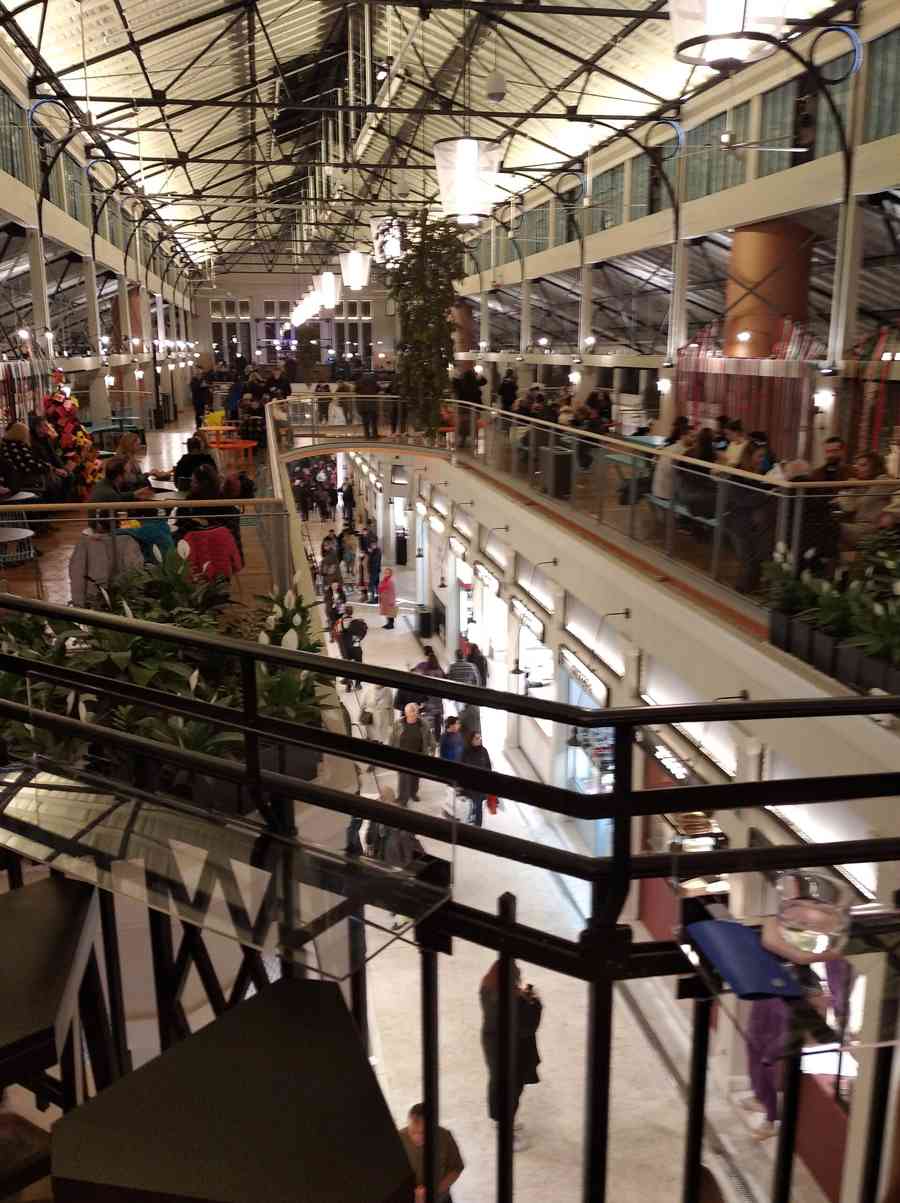
Kapani, the older of the two markets, packs its lanes with spice sellers, fishmongers, butchers, and produce stalls under a low roof off Aristotelous Square. The air carries cumin, dried oregano, and smoked paprika, and vendors call out prices across narrow aisles. A food tour starts here to read the raw ingredients before tasting the cooked dishes. The restored Modiano market nearby now holds sit-down counters serving meze, wine, and small plates under a restored steel-and-glass hall, giving the same produce a modern table within a short walk of the stalls.
Ladadika turns the old oil-and-spice warehouse quarter into an eating district. The low stone buildings near the port once stored the city’s olive oil, and the lanes now hold tavernas, ouzeris, and bars along pedestrian streets. Valaoritou, the former textile district three blocks inland, has grown into the city’s late-night bar and meze quarter, where old workshops now pour tsipouro past midnight. Choosing where to base a stay shapes the eating each evening, so a look at where to stay in Thessaloniki pays off before booking.
Ano Poli, the upper town that survived the great fire, rewards the climb with traditional tavernas and gulf views. The old Ottoman quarter above the walls keeps wood-fired kitchens serving mountain sausage, slow-cooked greens, and grilled meats away from the tourist crush of the seafront. Tables here look down over the whole city to the water. A food tour that reaches Ano Poli trades the market bustle for a quieter, village-style meal, and it shows the produce of inland Macedonia cooked in the plainer, older style of the hill neighbourhoods. The climb also rewards a walker with the last stretch of Byzantine wall and a coffee stop before the descent back to the harbour and its late tables.
What Does a Guided Thessaloniki Food Tour Cover?
A guided food tour threads markets, bakeries, and meze tables into one narrated route. It suits first-time visitors, gives vegetarians clear picks, and times the walk around the late Greek eating clock across three to four hours.
A typical guided food walk runs three to four hours and stops at six to eight tasting points. The route opens with bougatsa and coffee, moves through Kapani for spices and cured goods, samples grilled street food, pauses at a tsipouradiko for meze, and closes on trigona and tsoureki. A local guide handles the ordering, explains each dish, and paces the eating so the group leaves full rather than overwhelmed. The format suits first-time visitors who want the map of the city’s food without the guesswork of choosing stalls alone.
Vegetarians eat well on the same route. Bougatsa with cheese, sesame koulouri, fried saganaki, roasted peppers, fava dip, dolmades, grilled halloumi, and the full range of sweets all skip the meat without leaving the table thin. A guide flags the plant-based plates at each stop and adjusts the order for the group. The meze format helps here, since a shared table can carry meat and vegetarian plates side by side, and the market produce gives cooks the raw material for a full spread that does not lean on the grill.
Timing shapes the whole experience. Greek meals run late, with lunch past two in the afternoon and dinner rarely before nine at night. A food tour reads this clock and slots its stops into the natural rhythm rather than fighting it. Pairing the walk with a wider plan works well, whether that means day trips from Thessaloniki to Halkidiki and Mount Olympus or a tighter city Thessaloniki itinerary that folds the food route between the White Tower, the Rotunda, and the seafront promenade.
Frequently Asked Questions
How long does a Thessaloniki food tour last?
Most guided food tours run three to four hours and cover six to eight tasting stops on foot. The route stays inside the compact centre, linking the markets, bakeries, and meze tavernas within a short walking radius so the group never rushes between bites.
What is the one dish to try in Thessaloniki?
Bougatsa is the dish that defines the city. The paper-thin filo pie, filled with semolina custard, cheese, or minced meat, shows the Asia Minor craft at the heart of the food culture. Trigona Panoramatos, the cream-filled filo cone, runs a close second for the sweet finish.
Are Thessaloniki food tours suitable for vegetarians?
Yes. Bougatsa with cheese, koulouri, fried saganaki, fava dip, dolmades, roasted peppers, and the sweets all leave out meat. A guide adjusts the ordering at each stop, and the shared meze format lets a table mix plant-based and meat plates without changing the route.
Where should a food tour start in Thessaloniki?
A food tour starts at a bougatsa counter near Aristotelous Square, then moves into the Kapani market for spices and produce. Reading the raw ingredients first sets up the cooked dishes that follow at the grills, the seafront tsipouradika, and the sweet shops.
What is the difference between tsipouro and ouzo?
Tsipouro is a pomace spirit distilled from grape skins and stems, drunk neat with a drier, grappa-like edge. Ouzo carries a stronger anise flavour and clouds white with water. Thessaloniki keeps both on the meze table, and the small plates stay the same across either choice.
When is the best time of day to eat in Thessaloniki?
Greek meals run late, so lunch lands past two in the afternoon and dinner rarely starts before nine at night. A food tour times its stops to this clock, opening with a morning bougatsa and building toward a long evening meze table by the port.