
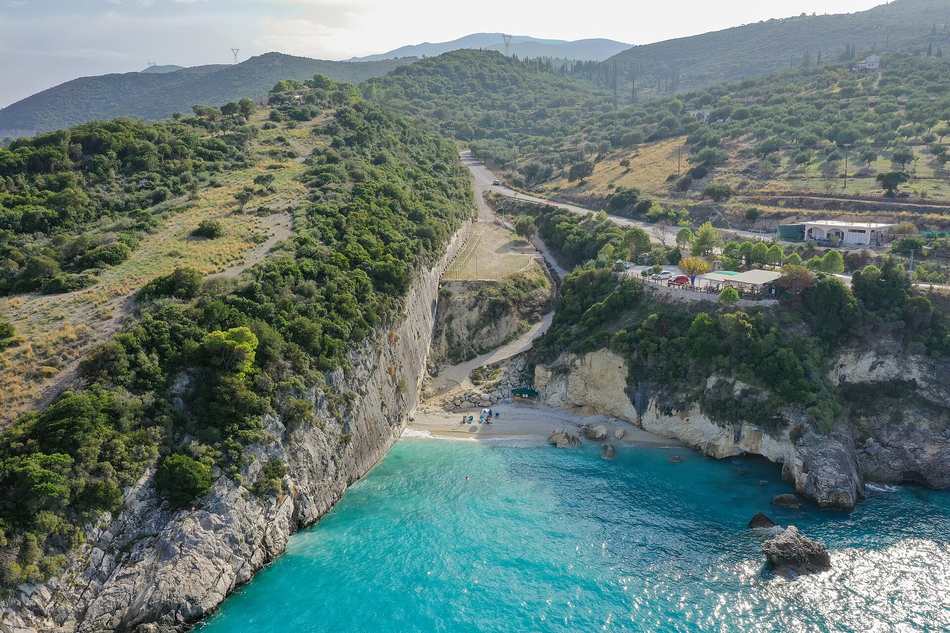
Xigia is a small pebble cove on the northeast coast of the Ionian island of Zakynthos, set below steep cliffs clad in dark cypress and pine. Its fame comes from natural springs that seep sulphur and other minerals into the sea, giving the water a faint sulphur smell and pale, milky swirls. Visitors speak of it as a natural spa, said to be good for the skin. The cove has clear, cool water and a backdrop of green cliffs, and it can grow crowded in the middle of the day. Plan your visits with My Greece Tours.
The sections below cover everything you need to know about this distinctive natural bathing spot among the beaches of Zakynthos. Xigia lies between the resorts of Alykes and the far north cape, offering a unique experience with its mineral-rich waters. A cliffside cafe and sunbeds serve the beach, reached by steps down from the coast road. The water is deep close to shore, so swimmers should be confident. For more island ideas, read our full Zakynthos travel guide before setting off.
Where is Xigia Beach located on Zakynthos?
Xigia sits on the northeast coast of Zakynthos, set between the resorts of Alykes and the far north cape. Steep cliffs clad in dark cypress and pine rise above this small pebble cove on the Ionian island.
The northeast coast of Zakynthos offers a striking stretch of shoreline, and Xigia stands out among the Zakynthos beaches for its mineral springs. Set below steep cliffs clad in dark cypress and pine, the cove rewards those who descend the steps from the coast road. The Ionian Sea here is clear and cool, with pale, milky swirls near the spring outlets where sulphur and other minerals enter the water. Visitors prize the spot for its natural spa qualities, said to benefit the skin. The backdrop of green cliffs adds to the sense of a secluded natural bathing spot, tucked away from the busier resort areas on the island.
Xigia lies between the resorts of Alykes and the far north cape, making it a distinctive destination for those exploring the northern shoreline of Zakynthos.
The area surrounding Xigia Beach includes notable landmarks and rugged coastline along the northern tip of Zakynthos. The far north cape, close to Cape Skinari, features dramatic cliffs and rocky headlands that characterise this stretch of the Ionian island. Pine and cypress cling to the steep slopes above the cove, casting shade and releasing scent into the warm air. The coast road winds above the beach, giving views across the clear water toward the distant mainland on the horizon. Steps carved into the hillside lead down to the small pebble shore, where sunbeds and a cliffside cafe await visitors.
The deep water close to shore means swimmers can plunge straight in, surrounded by the milky, mineral-rich swirls that drift from the natural springs along the rocks.
Xigia Beach lies on the northeastern coast of Zakynthos, tucked below tall white cliffs between Alykes and the northern cape. The cove sits off the main coast road, reached by a steep path that drops from a small parking area above. The setting is dramatic, with pale rock walls framing a narrow strip of white pebbles and cool, clear water. The area holds three small beaches close together, the central one known for its sulphur springs. The cliffs shelter the cove and cast shade across the water for part of the day.
This northeastern position keeps Xigia away from the crowds of the southern resorts, and the short scramble down from the road adds to the sense of a hidden spot along the rugged coast.
What makes the water at Xigia Beach smell of sulphur?
Natural springs seep sulphur and other minerals into the sea at this cove, giving the water a faint sulphur smell and pale, milky swirls. This mineral content earns the spot its reputation as a natural spa for the skin.
The sulphur springs at Xigia give this cove a character unlike other bathing spots on the island. Cold, mineral-rich water seeps from fissures in the cliffs and rocks, mixing with the sea to create pale, milky patches visible on the surface. The faint sulphur smell that accompanies these springs is a sign of the minerals carried in the water. Visitors describe the experience as bathing in a natural spa, with the sulphur and other dissolved minerals said to be good for the skin. The effect is most noticeable near the rocks where the springs emerge, where the water turns cloudy and takes on a distinctive colour.
Swimmers moving away from these spots find clearer, cooler water that still carries a trace of the mineral content.
The mineral springs at Xigia have drawn curious visitors for generations, attracted by the milky water and its reputed skin benefits. The cove lies on the northeast coast, not far from Agios Nikolaos, placing it within easy reach of those touring the northern part of the island. The combination of sulphur and other minerals entering the sea gives the water its distinctive appearance and faint smell. Sunbeds line the small pebble shore, and a cliffside cafe serves refreshments to those resting between swims in the cool, clear water. The water deepens quickly close to shore, so less confident swimmers should take care.
The setting below steep cliffs clad in dark cypress and pine adds to the sense of a natural, unspoiled bathing spot on the Ionian coast.
The water at Xigia carries the scent of sulphur because natural springs feed it through karst caves at the base of the cliffs. Rainwater seeping through the limestone dissolves sulphur compounds underground before surfacing at the shore, giving the sea its milky turquoise tint and its faint smell. The same springs cool the water, so Xigia stays cooler than other beaches on the island. Locals value the sulphur water for its effect on skin, muscles, and joints, and a short soak of about twenty minutes is the traditional dose. The smell fades within minutes as the nose adjusts, and most visitors find it mild rather than off-putting.
This blend of mineral spring and sea gives Xigia its character as a natural spa, a rare feature along the Ionian coast.
What facilities does Xigia Beach Zakynthos have?
A cliffside cafe and sunbeds serve visitors at this small pebble cove. Steps lead down from the coast road to the beach, where clear, cool water meets a backdrop of green cliffs on the northeast coast of Zakynthos.
Facilities at Xigia are modest but adequate for a cove of this size. Sunbeds are available for hire on the pebble beach, giving visitors a place to rest between dips in the cool, clear water. A cliffside cafe perched above the shore offers drinks and light meals, with views across the Ionian Sea. Steps lead down from the coast road to the beach, and the descent is manageable for most visitors in sturdy footwear. The cove is small, so the available sunbeds fill quickly during the busiest hours of the day. The backdrop of green cliffs, clad in dark cypress and pine, creates a sheltered atmosphere.
The water is deep close to shore, which suits confident swimmers who want to plunge straight into the clear, mineral-rich sea.
The northeast coast of Zakynthos holds dramatic scenery beyond Xigia, including sea caves and rocky arches carved into the limestone cliffs. Visitors exploring the area around the cove can continue along the coast road toward the Blue Caves, where light reflects off the water in brilliant shades of blue along the shore. The same coastline leads to the far north cape, marked by rugged headlands and pine-covered slopes that plunge into the sea. Back at Xigia, the small pebble cove offers a quieter alternative to the larger resort beaches, with its natural sulphur springs providing a distinctive bathing experience.
The cliffside cafe serves as a convenient base for the day, offering shade and refreshments to those who have climbed the steps from the shore. The green cliffs above complete the setting.
Xigia Beach carries light organisation, with a small number of sunbeds and umbrellas for rent along the narrow strip of white pebbles. A modest bar above the cove serves drinks and snacks, lowering refreshments to the beach by a small pulley when the path proves too steep. There are no large facilities, changing rooms, or shops, in keeping with the cove’s tucked-away setting. The pebbles and the rocky entry make water shoes useful for comfort in and out of the sea. Shade comes partly from the cliffs and partly from the rented umbrellas, as natural cover is limited. Parking sits at the top of the path above the beach, and the walk down is short but steep.
These simple amenities suit a cove valued for its sulphur water and its quiet, dramatic setting rather than for resort comforts.
How do visitors reach Xigia Beach from the coast road?
Visitors reach the beach by steps descending from the coast road above. The cove lies between the resorts of Alykes and the far north cape, making it accessible yet tucked below steep cliffs clad in dark cypress and pine trees.
Reaching Xigia involves a short walk down steps carved into the cliffside from the coast road above. The descent takes visitors past dark cypress and pine trees clinging to the steep slopes, with glimpses of the clear, cool water below. The steps are sturdy but steep in places, so visitors should wear suitable footwear and take their time. At the bottom, the small pebble cove opens out, with sunbeds arranged along the shore and a cliffside cafe nearby. The coast road connects Xigia to the resorts of Alykes and the far north cape, making the cove a straightforward stop on a driving tour of the northeast coast.
The deep water close to shore means swimmers can step off the rocks and into the sea without wading through shallows first.
The coast road along the northeast shore of Zakynthos links Xigia to other attractions within a short drive. Those heading north pass through rugged terrain toward the far north cape, while a drive south leads to busier resort areas and eventually to the famous Navagio Beach on the western side of the island. Xigia itself sits below steep cliffs clad in dark cypress and pine, with steps leading down from the road to the small pebble shore. The clear, cool water and natural sulphur springs make the cove a worthwhile stop for anyone exploring the northeast coast.
A cliffside cafe and sunbeds provide comfort for visitors, and the deep water close to shore invites confident swimmers to dive straight into the mineral-rich sea from the rocks.
Reaching Xigia calls for a rental car or an excursion, as no public bus serves this stretch of the northeastern coast. The main coast road linking Alykes with the north passes above the cove, and a small parking area marks the top of the path. From there a steep track drops down through the rock to the beach below, a short walk that rewards care on the loose surface. Some van tours heading to the shipwreck cove include a stop at Xigia, giving those without a car a way to visit. The narrow parking fills quickly in peak season, so an early arrival secures a space and a quieter beach.
The drive along the coast road offers wide sea views before the descent. This effort to reach the cove keeps its crowds smaller than the easily reached beaches of the south.
Is Xigia Beach crowded in the middle of the day?
The cove can grow crowded in the middle of the day. This small pebble beach on the northeast coast of Zakynthos draws visitors for its natural sulphur springs and clear, cool water, so early or late visits are best.
The small size of Xigia means the cove fills with visitors during the middle of the day, particularly in the height of summer. Sunbeds line the pebble shore, but their limited number means late arrivals may find the beach full. The clear, cool water and the reputation of the sulphur springs as a natural spa draw steady crowds, and the cliffside cafe above adds to the appeal. Early morning and late afternoon tend to be quieter, offering a more peaceful experience of the milky, mineral-rich water. The backdrop of green cliffs, clad in dark cypress and pine, provides shade as the sun moves across the sky.
The water remains deep close to shore throughout the day, and the cool temperature offers relief from the heat even at peak hours.
Visitors keen to avoid the busiest periods at Xigia can plan their trip for early or late in the day, or explore the coastline by sea. Zakynthos boat tours often pass the northeast coast, giving passengers a view of the cove from the water and the green cliffs that rise above it. The cove can grow crowded in the middle of the day, with sunbeds and the cliffside cafe serving a steady stream of visitors drawn by the sulphur springs and their reputed skin benefits. The small pebble beach lies between the resorts of Alykes and the far north cape, so those arriving by car should factor in the steep steps down from the coast road.
The deep, clear water close to shore remains inviting throughout the day for confident swimmers.
Xigia grows busy through the middle of the day in peak season, as its small size fills quickly once the tour vans and cars arrive. The narrow strip of pebbles holds a limited number of sunbeds, so latecomers may find little room on the shore. The cove sits in cliff shade for part of the morning, then catches full sun as the day warms, drawing visitors to the cool sulphur water. An early arrival, before mid-morning, brings the calmest water, the easiest parking, and the beach at its quietest. By early afternoon the small cove can feel crowded, and the parking area above fills to capacity.
Visitors seeking a peaceful soak in the mineral water do best to come soon after the beach opens. The compact scale that gives Xigia its charm also limits how many people it holds at once.
Frequently Asked Questions
Is the sulphur smell at Xigia Beach strong?
The sulphur smell at Xigia is faint rather than overpowering. Natural springs seep sulphur and other minerals into the sea, creating pale, milky swirls visible on the surface of the clear, cool water. The scent is most noticeable close to the rocks where the springs emerge, and it tends to dissipate as swimmers move into deeper water. Visitors describe the experience as bathing in a natural spa, with the mineral content said to be good for the skin. The smell does not deter the steady stream of people who descend the steps from the coast road to enjoy the cove.
Sunbeds and a cliffside cafe serve the small pebble beach, which can grow crowded in the middle of the day. The faint sulphur aroma is part of what makes Xigia a distinctive natural bathing spot among the beaches of Zakynthos. The setting below steep cliffs clad in dark cypress and pine adds to the unique character of the cove.
Can children swim at Xigia Beach?
Children can swim at Xigia, but parents should be aware that the water is deep close to shore. The small pebble cove drops away steeply, meaning there is little shallow water for younger or less confident swimmers to stand in. The clear, cool water and the milky, mineral-rich swirls from the sulphur springs make the cove visually striking, and the natural spa reputation draws families as well as individual travellers. Sunbeds line the shore, and a cliffside cafe offers refreshments and shade. Steps lead down from the coast road, so the descent requires care with young children. The cove can grow crowded in the middle of the day, and its small size means space is limited.
Xigia lies between the resorts of Alykes and the far north cape on the northeast coast of Zakynthos. The backdrop of green cliffs clad in dark cypress and pine frames the cove, creating a dramatic setting for a family swim in the Ionian Sea.
What should visitors bring to Xigia Beach?
Visitors to Xigia should bring sturdy footwear for the steps down from the coast road to the small pebble cove. The descent passes through steep cliffs clad in dark cypress and pine, and the path can be uneven. Sun protection is essential, as the cove offers limited natural shade despite the green cliff backdrop. Sunbeds are available for hire on the beach, and a cliffside cafe serves drinks and light meals, so visitors need not carry heavy supplies. The clear, cool water is deep close to shore, so confident swimmers will benefit from goggles to observe the milky, mineral-rich swirls where the sulphur springs enter the sea.
The cove can grow crowded in the middle of the day, so arriving early helps secure a sunbed. Xigia lies between the resorts of Alykes and the far north cape on the northeast coast of Zakynthos, making it a distinctive natural bathing spot worth the descent for those touring the island.
How long should you stay in the sulphur water at Xigia?
Local tradition suggests a soak of about twenty minutes in the sulphur water at Xigia to gain its benefits. The mineral content is valued for easing muscle and joint aches and for its effect on the skin, and a short immersion is thought to give the desired result without overdoing it. The water runs cooler than at other beaches on the island, fed by the underground springs, so a longer stay can feel chilly even in high summer. Visitors often alternate short dips with time on the warm pebbles to keep comfortable. The faint sulphur smell fades within minutes as the nose adjusts, and most swimmers find it mild.
Water shoes help with the pebbly entry and the rocky seabed. Rinsing off afterward removes any residue, though the bar above the cove offers limited facilities. The cool, mineral-rich water makes Xigia a natural spa stop rather than a place for a long, lazy swim, so a focused soak followed by a rest suits the cove best.