
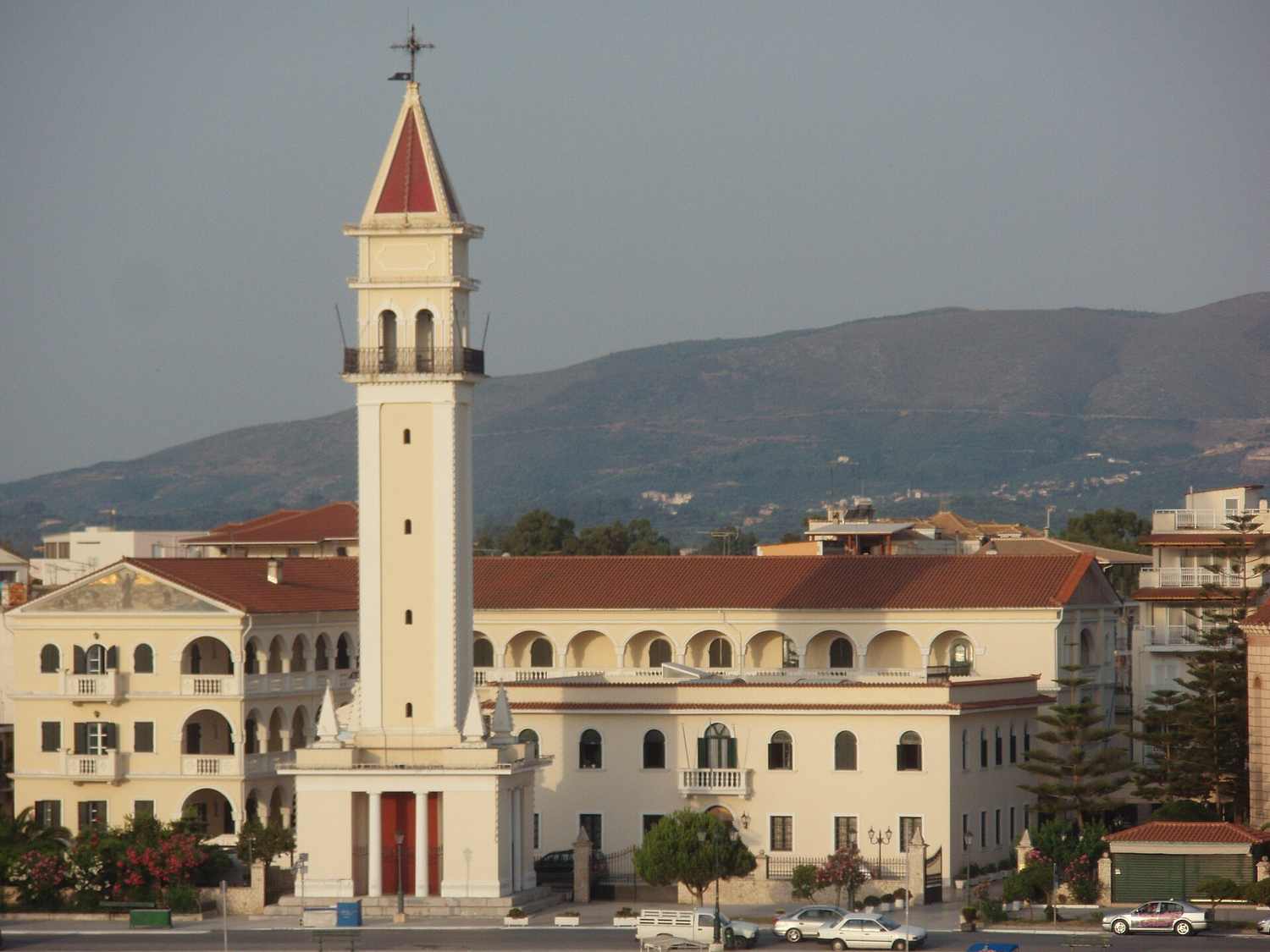
Saint Dionysios stands at the heart of Zakynthos, binding the faith, history and identity of the island together like no other figure. Born into the noble Sigouros family in the sixteenth century, he devoted his life to the church and became a monk and later a bishop. His life of mercy and his famous act of forgiving his brother’s killer made him the most revered holy figure on the island. His incorrupt body rests in the grand church of Agios Dionysios on the waterfront of the capital. Visitors can explore his story and lasting legacy with My Greece Tours.
The island of Zakynthos holds Saint Dionysios as its spiritual anchor, and his presence is felt across churches, monasteries, and local traditions that have endured for centuries. The sections below cover his noble origins on the island, his path from monk to bishop, his legendary act of mercy and forgiveness, the discovery of his incorrupt relics, and the feast days that bring processions through the streets of the capital. To deepen your visit and plan your time on the island, consult our Zakynthos travel guide for itineraries, maps, and practical travel tips.
Who was Saint Dionysios of Zakynthos?
Saint Dionysios was born on Zakynthos into the noble Sigouros family in the sixteenth century. He chose a religious path, becoming a monk and later a bishop. He served at the Monastery of Anafonitria in the northwest hills.
The noble Sigouros family gave Saint Dionysios a privileged beginning and a deep, lifelong connection to Zakynthos from birth. In the sixteenth century, he entered religious life and rose to become a bishop, dedicating himself fully to God. He guided the island faithful with great compassion and unwavering humility throughout his ministry. Part of his service unfolded at the Anafonitria Monastery, a quiet and peaceful refuge set among the green northwest hills of the island. There, he practiced constant prayer far from the wealth of his noble origins. The monastery still stands as a cherished place of pilgrimage. Faithful visitors come to walk the same paths the saint once walked.
They reflect on his lasting legacy of devotion to Zakynthos and its enduring Orthodox faith.
His journey from a noble household to the life of a monk shaped the spiritual character of Zakynthos itself. The transition from privilege to spiritual discipline defined his calling in profound ways. He became known for his deep humility and his pastoral care across the island community. Pilgrims who visit his relics in Zakynthos Town can see the grand church that houses his incorrupt body on the bustling waterfront. The tall bell tower rises above the harbor as a prominent landmark for both the faithful and travelers arriving by sea. His role as bishop gave him genuine authority, yet he remained known for his gentleness and warm approachability.
The people of Zakynthos see in his life a model of devoted service rooted in love rather than power or earthly status.
The saint carried the baptismal name Draganigos Sigouros before he entered monastic life on the island. Teachers among the local priests trained him in Greek, Italian, and Latin during his youth. He took monastic vows and received the name Daniel at his ordination as a priest. Church authorities later raised him to Archbishop of Aegina and Poros, a post of real weight in the Ionian church. He stepped down from that high office and returned to serve as an abbot on Zakynthos. His command of three languages marked him as a learned figure of his era.
The path from a titled bishop back to a quiet island monastery reveals the humility that defines his memory among the faithful today. Scholars point to his years abroad as the source of his broad learning and pastoral skill.
What act of forgiveness is Saint Dionysios known for?
Saint Dionysios forgave the man who murdered his own brother. He gave the killer shelter and mercy instead of revenge. This act of compassion became the defining story of his life and spread across the island of Zakynthos.
The act of forgiving his brother’s killer defines the enduring memory of Saint Dionysios on Zakynthos. Rather than seeking revenge, the saint offered shelter and protection to the man who had taken his brother’s life. This decision stunned the entire island community and became a powerful story passed down through generations. It revealed a remarkable depth of mercy that elevated him in the eyes of all the faithful. The tale is retold in churches and homes across Zakynthos as a lesson in Christian love and radical pardon. His choice to protect the guilty man demonstrated that genuine faith could overcome grief and human anger.
The story continues to shape how the people of the island understand forgiveness, divine mercy, and the teachings of their most beloved patron saint.
The story of his pardon resonates far beyond the stone churches of Zakynthos. It speaks to the universal human struggle between justice and mercy, between vengeance and grace. Travelers exploring the island’s dramatic coastline, from the famous cliffs near Navagio Beach to the quiet coves of the west coast, encounter a rugged landscape shaped by centuries of faith and tradition. The tale of forgiveness is woven deeply into the cultural fabric of the entire island. Locals share it with genuine pride, seeing in it the highest expression of their Orthodox Christian heritage. The saint’s willingness to shelter a killer rather than condemn him set a moral standard that still endures on Zakynthos.
His example of radical mercy defines the spiritual identity of the island to this very day.
Tradition holds that the fugitive reached the monastery gate and begged the abbot for protection from pursuers. The abbot gave him food, shelter, and a hidden place to rest for the night. Only during their conversation did the man confess that he had killed Constantine, the brother of the saint. The abbot mastered his grief and helped the killer escape rather than hand him to the searching party. This restraint at the height of personal loss lifted the story above ordinary piety. Chroniclers of the Ionian church recorded the account, and preachers repeat it across the island each year.
The tale gives Saint Dionysios his lasting title as the saint of forgiveness among Orthodox believers throughout Greece and the diaspora.
Where are the relics of Saint Dionysios kept?
The relics of Saint Dionysios rest in the grand church of Agios Dionysios on the waterfront of Zakynthos, the island’s capital. The church features a tall bell tower that stands as a prominent landmark visible from the harbor.
The grand church of Agios Dionysios dominates the waterfront of the capital with its imposing architecture and its towering bell tower. Inside, the relics of the saint draw both devoted pilgrims and curious travelers throughout the entire year. The church sits at the heart of civic and religious life on the island. Visitors arriving from trips to Zakynthos beaches often stop here to light a candle and pay their respects. The silver reliquary holds the incorrupt body of the saint, preserved through the centuries as a powerful sign of holiness. The faithful line up quietly to reverence the remains and offer their private prayers.
The church itself stands as a living monument to the enduring bond between Saint Dionysios and the people of the island he still protects.
The discovery that the body of Saint Dionysios remained incorrupt after his death deepened his veneration across Zakynthos in profound ways. The faithful viewed this preservation as a clear divine confirmation of his holiness. His relics became the central focal point of the grand church on the waterfront, a building that draws the eye of every visitor approaching the capital by ferry. The bell tower ranks among the tallest structures on the island, visible from boats touring the northern coast toward the Blue Caves. Inside the church, the atmosphere is one of deep reverence and quiet devotion. The silver casket containing his body is opened on feast days so the faithful can draw near.
The relics bind the saint to his island in a tangible and lasting way.
Pirates raided the island during the eighteenth century and cut the hands from the body of the saint. The relics survived the attack, and the faithful read their preservation as a further sign of grace. A silver reliquary crafted by a local silversmith holds the body inside the church today. The great earthquake of the twentieth century levelled most of the capital, yet the church of the saint stood almost unharmed. Locals count that survival among the miracles tied to their patron. The body gives off a scent that pilgrims describe as flowers mixed with incense. The reliquary opens on the major feasts so the faithful can draw near and venerate the remains of their protector.
Guards keep watch beside the reliquary throughout the busy pilgrimage season each year.
How does Zakynthos celebrate the feast days of Saint Dionysios?
Zakynthos celebrates two feast days for Saint Dionysios each year. Both occasions feature solemn processions that carry his relics through the streets of the capital. The faithful gather to honor their patron saint with prayers, hymns, and deep devotion.
The two annual feast days transform the streets of Zakynthos into a living stage for collective faith. Processions carry the relics of Saint Dionysios through the capital as crowds line the entire route. Bells ring from the tall tower of the church, and the scent of incense fills the air along the waterfront. The entire community participates, from local officials to families with young children. The processions follow a well-worn path through the old streets, past landmarks that have witnessed these rites for centuries. Visitors staying on the southern coast near the Keri Caves travel into town to join the annual celebrations.
The feast days blend solemn religious ritual with a deep shared sense of island identity and communal pride that reinforces the bond between the saint and his people.
The feast days bring an outpouring of devotion that unites every corner of Zakynthos. Shops close and families dress in their finest clothes to attend liturgy in the grand church. The streets fill with the sound of chanting as the procession moves slowly from the waterfront through the old neighborhoods. Children carry candles, and elders bow their heads as the reliquary passes. The atmosphere balances joy with solemnity. The celebrations also draw Greek Orthodox faithful from the mainland and the wider Ionian region. The feast days are not merely religious observances. They are a public declaration that Saint Dionysios remains central to the life of the island.
His presence is felt in the music, the prayers, and the shared meals that follow the processions through the historic streets of the capital.
The December feast marks the day the saint fell asleep in the Lord, and it anchors the winter calendar of the island. The August feast marks the transfer of his relics to the capital and fills the streets with visitors. Each celebration runs across three days rather than a single date, extending the liturgies and the processions. Clergy from across the Ionian islands join the local priests for the great services. A military and civic guard escorts the reliquary along the waterfront route. The dates fall on the twenty-fourth of August and the seventeenth of December in the church calendar.
The three-day span lets pilgrims arrive by ferry, attend the vigil, and join the main procession before they return home.
Why is Saint Dionysios so important to Zakynthos?
Saint Dionysios binds the faith, history, and identity of Zakynthos together. His life of mercy, his incorrupt relics, and his role as patron saint make him the most revered figure on the island. He represents the spiritual soul of Zakynthos.
The figure of Saint Dionysios transcends ordinary religious devotion on Zakynthos. He is woven into the identity of the island itself. His story of forgiveness speaks to values that the community holds at its core. Every church on the island bears his name or his image in one form or another. The grand church on the waterfront serves as the spiritual heart of the capital, drawing the faithful and travelers alike. His incorrupt body is a source of pride and wonder. The annual feast days are the most important events on the civic calendar. Schools teach his story. Families pass it to their children.
Through centuries of change, the saint has remained a constant point of unity for the people of Zakynthos and a symbol of their shared Orthodox heritage.
The legacy of Saint Dionysios reaches into every aspect of public and private life on Zakynthos. His example of radical forgiveness sets a moral compass for the island community. The story of his mercy toward his brother’s killer is taught as the highest expression of Christian love. His relics in the grand church on the waterfront draw pilgrims throughout the calendar year. The tall bell tower serves as a navigational landmark for sailors and fishermen returning to the harbor. The two feast days rank as the most significant dates in the island’s cultural and religious calendar.
Through his life, his death, and the preservation of his body, Saint Dionysios binds together the threads of faith, history, and identity that define Zakynthos and its enduring people.
The survival of the church through the great earthquake bound the saint even closer to the identity of the island. Residents saw the standing walls as proof that their patron still guarded the capital. The relics draw pilgrims from the mainland, the wider Ionian region, and the Greek communities abroad. Icon painters across the island depict the saint in his bishop’s robes holding a staff. Newborn boys receive his name in baptism generation after generation. The waterfront church anchors the civic map of the capital as firmly as the harbour itself. Faith, memory, and daily life meet in the figure of the saint.
He remains the single thread that ties the long history of Zakynthos to the living community of the present.
Frequently Asked Questions
When was Saint Dionysios born?
Saint Dionysios was born on the island of Zakynthos during the sixteenth century. He came from the noble Sigouros family, one of the most prominent households on the island at that time. His noble birth gave him access to education and privilege, yet he chose a different path. He entered religious life and committed himself to the service of the church and the Orthodox faithful. Over time, he became a monk and later ascended to the role of bishop, guiding the spiritual life of the community with humility and devotion. Part of his life was spent at the Monastery of Anafonitria in the northwest hills of Zakynthos, where he lived in prayer and quiet service.
His upbringing in a noble family did not define his legacy. Instead, his acts of mercy, his pastoral care, and his deep commitment to God shaped the memory that the people of Zakynthos carry to this day.
Can visitors see the relics of Saint Dionysios?
Yes, visitors can see the relics of Saint Dionysios in the grand church of Agios Dionysios, located on the waterfront of Zakynthos, the capital of the island. The church is open to the public and welcomes both pilgrims and travelers throughout the year. The relics rest in a silver reliquary inside the church. On the two annual feast days, the reliquary is carried through the streets in solemn procession, offering the faithful a chance to draw close to their patron saint. The body of Saint Dionysios was found incorrupt after his death, a discovery that deepened his veneration across the island and beyond.
The grand church itself is a landmark, distinguished by its tall bell tower that rises above the harbor. Visitors arriving in the capital by ferry can spot the tower from the sea. The church stands as a focal point for anyone wishing to understand the faith and identity of Zakynthos and its people.
Why was the body of Saint Dionysios found incorrupt?
The incorrupt body of Saint Dionysios is regarded by the Orthodox faithful as a sign of divine favor and holiness. The discovery that his remains had not decayed after death deepened the veneration of the saint across Zakynthos and the wider Greek world. In Orthodox tradition, incorrupt relics are viewed as a physical confirmation that a person lived a life of genuine sanctity and closeness to God. The faithful see the preservation of his body as a miracle that validates the stories of his mercy and compassion. The relics were placed in the grand church of Agios Dionysios on the waterfront of the capital, where they remain to this day.
The church and its tall bell tower have become the most recognizable landmark on the island. Pilgrims travel from across Greece and beyond to reverence the incorrupt body. The relics serve as a tangible link between the living community of Zakynthos and their beloved patron saint.
What is the story of the saint and the pirates?
During the eighteenth century, pirates raided the church that held the relics of Saint Dionysios and attacked the body of the saint. Accounts from the island record that the raiders cut the hands from the incorrupt body before they fled. The relics endured the assault, and the faithful of Zakynthos understood their survival as a clear sign of divine protection. The episode deepened the devotion that the community already held for their patron. The body of the saint rests today in a silver reliquary inside the waterfront church of the capital. A local silversmith crafted the reliquary in the early nineteenth century, and it remains the centrepiece of the church interior.
The great earthquake of the twentieth century destroyed most of the town, yet the church of the saint stood almost untouched. Islanders count that survival among the miracles attributed to Saint Dionysios. The pirate story, the incorrupt body, and the standing church together form the core of the devotion that binds the saint to the people of Zakynthos.