
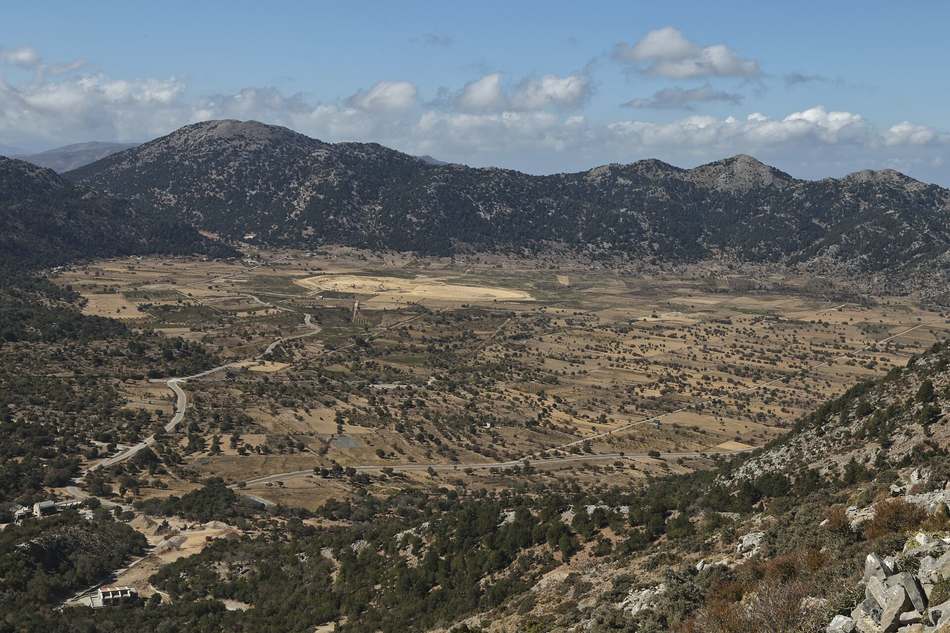
Omalos is a high mountain plateau in the White Mountains of western Crete, a flat, fertile basin sitting at around eleven hundred metres above sea level and ringed by bare limestone peaks. A small village of the same name spreads across the basin, serving the walkers and climbers who arrive here through the year. The plateau is best known as the starting point of the Samaria Gorge, where the trailhead at Xyloskalo drops toward the Libyan Sea. Cool air, deep quiet and star-filled skies set it well above the summer heat of the coast. Plan your climb to this mountain basin with My Greece Tours.
The road up from Chania climbs through the village of Lakki to the Omalos pass, then opens onto the wide basin at the heart of the White Mountains. Snow covers the plateau in winter and the ground can flood, while spring fills the meadows with wildflowers under the ridge that carries the Kallergi refuge. The sections below cover how to reach the plateau, the Samaria trailhead at Xyloskalo, the peaks of Gigilos and Melindaou, and how Omalos works as a mountain base. For the wider region, our Crete travel guide sets this corner of Chania against the whole island.
Where is the Omalos plateau in Crete?
Omalos sits in the White Mountains of western Crete, inside the Chania district, a flat basin at around eleven hundred metres above sea level. Bare limestone peaks ring the plateau, and a village of the same name fills the floor.
The plateau lies deep in the White Mountains, the tallest range in western Crete, and belongs to the Chania district that stretches from the north coast to the Libyan Sea. Its floor is a closed basin at around eleven hundred metres, fertile and flat, walled in on every side by bare limestone summits that hold snow into late spring. The road from the coast climbs through the village of Lakki before cresting the Omalos pass, and the change in air is immediate: the coastal heat gives way to cool mountain quiet. This high, enclosed position explains both the plateau’s farming and its role as a launch point for the ranges above.
Travellers weighing wider itineraries can set it against the things to do in Crete spread across the island’s four districts.
The village of Omalos spreads across the basin floor rather than clustering on a single street, its rooms and tavernas built to serve hikers and climbers rather than beach crowds. The plateau is closed and low-lying within the range, so meltwater and winter rain gather on the floor, and the ground can flood before the snow clears from the surrounding peaks. That same water feeds the meadows, which fill with bright wildflowers in spring once the basin finally drains. The surrounding peaks of Gigilos and Melindaou rise straight from the plateau edge, turning the flat floor into a natural amphitheatre walled by pale rock.
This high mountain setting, remote and quiet above the resorts, places Omalos firmly among the hidden gems in Crete that reward travellers willing to climb away from the coastal beach towns.
How do you reach the Omalos plateau from Chania?
Drive south from the coast through the village of Lakki, climbing the mountain road to the Omalos pass, which opens onto the basin. The route rises steadily from Chania into the White Mountains, gaining eleven hundred metres of height.
The approach begins on the north coast and works south through the foothills of the White Mountains. The road threads the village of Lakki, a cluster of houses clinging to the slope, before the final climb to the Omalos pass and the sudden opening of the plateau ahead. The drive gains height steadily, trading the warm coast for thin mountain air, and the temperature drop is sharp enough to feel through an open window. The port city of Chania is the natural base for the trip, with its Venetian harbour and old town a short drive from the mountain road.
Setting out early rewards drivers with quiet switchbacks and the first light striking the limestone walls that guard the basin’s southern rim, well before the tour buses begin their steady climb to the pass.
The plateau’s altitude shapes when the road is worth taking. Snow covers the basin in winter and can close or slow the approach, so the reliable season runs from late spring, once the meadows dry, through the warm months when coastal travellers seek cool air. The final stretch before the pass is steep and winding, and drivers should expect slow going behind buses carrying gorge walkers to the trailhead. Reaching the basin by mid-morning leaves room to explore the village, the meadows and the ridge paths before the afternoon light fades. The wider network of hiking in Crete runs through this pass.
Omalos serves as the road head for the ranges and gorges of the whole White Mountains massif. The gorge descent and the high summit trails both leave straight from the plateau’s quiet floor, joined by the ridge paths.
What makes Omalos the gateway to the Samaria Gorge?
The Samaria trailhead sits at Xyloskalo on the plateau’s southern edge, where walkers begin the long descent toward the Libyan Sea. Buses and cars from the coast reach the basin, making Omalos the road head for the gorge walk.
Xyloskalo marks the point where the flat plateau breaks and the ground falls away toward the south coast. Here, on the basin’s southern edge, walkers begin the long descent that carries them through the gorge toward the Libyan Sea. The trailhead is the practical reason the plateau draws crowds through the warm months: every walker starting the route passes through Omalos first, arriving by road from the north coast and setting off on foot at the plateau’s rim. The full descent of the Samaria Gorge runs from this high edge down to sea level, one of the longest gorge walks in Europe.
The plateau’s rooms and tavernas fill early with hikers fuelling up before the drop and resting after the climb back out at day’s end.
The plateau earns its gateway role through height and position alike. Its floor sits high enough that the gorge walk is almost entirely downhill, sparing walkers the grind of a long ascent and letting gravity carry them toward the sea. The Xyloskalo trailhead crowns the descent, and the cool basin air gives walkers a gentle start before the heat of the lower gorge. The ridge above the plateau holds the Kallergi mountaineering refuge, a base for those linking the gorge with the peaks. Travellers planning a full mountain day can weigh the gorge against the wider sweep of White Mountains routes that radiate from the same plateau.
Ridge walks and summit climbs on the bare limestone crown above each leave from the basin the gorge walkers know.
Which Crete peaks rise above the plateau for climbers?
Gigilos and Melindaou rise straight from the plateau’s edge, drawing climbers into the White Mountains. The Kallergi mountaineering refuge on the ridge above the basin serves as a base for reaching these bare limestone summits.
The peaks of Gigilos and Melindaou stand over the plateau, their bare limestone flanks rising straight from the basin floor to frame the western skyline. Climbers treat Omalos as the road head for these summits, walking out from the village or the ridge and gaining height fast on rock that stays snow-streaked well past spring. Gigilos in particular draws scramblers with its steep, exposed lines above the gorge, while Melindaou offers longer ridge walking across the massif. The Kallergi mountaineering refuge, set on the ridge above the basin, gives climbers a bed and a start point higher than the village.
This is high mountain country, where the thin air and cool temperatures of eleven hundred metres and above reward an early start and steady legs on the ascent.
Beyond the named summits, the ridge lines around the plateau open a network of walks that climbers link across full days. The Kallergi refuge sits at the hinge of these routes, connecting the gorge descent below with the peaks above, so a single stay can combine both. The bare, waterless limestone demands care: climbers carry their own supplies, since the mountains above the plateau hold little shade and few springs. The reward is the deep quiet of the high White Mountains and views that stretch across western Crete to both coasts. The same trail network threads the wider walking circuit of the massif.
The paths above Omalos rank among the most demanding, built for climbers rather than gentle walkers seeking a level stroll. Easy, marked ground with a taverna waiting at the finish lies far below, down on the coast.
When is the best time to visit Omalos?
Late spring through early autumn suits the plateau best, once the snow clears and the meadows dry. Spring fills the basin with wildflowers, while summer draws travellers seeking cool mountain air well above the coastal heat.
The plateau’s altitude gives it a mountain calendar that differs sharply from the coast below. Snow covers the basin in winter, the ground floods as the meltwater gathers, and the road over the pass turns unreliable through the cold months. Spring changes the floor entirely: the snow retreats up the peaks, the basin drains, and the meadows fill with wildflowers across the fertile ground. This is the plateau at its most striking, cool and green while the coast already warms. The gorge walkers and climbers arrive as the trails dry, and the village rooms and tavernas open for the season.
Travellers building a spring itinerary can slot Omalos among the mountain outings that come alive once the island’s high country sheds its winter cover and the meltwater drains from the fertile floor of the basin below the peaks. On the climb up from Chania, the balcony village of Lakki offers a last mountain view before the plateau.
Summer turns the plateau into a refuge from the heat. The basin sits high enough that the air stays cool while the coast bakes, and the star-filled skies over the quiet floor reward an overnight stay. This is peak season for the gorge, so the trailhead and the village fill in the early hours, then quieten once the walkers descend. Autumn brings clearer air and thinner crowds before the first snows return to close the high routes. Walkers weighing the season against difficulty can measure the plateau’s paths against the gorge descent below, from the long walk to the sea to the exposed summit climbs on the ridge.
The plateau’s deep quiet and cool nights hold through the warm months, a steady contrast to the crowded beaches far below on both of the island’s coasts.
Frequently Asked Questions
How high is the Omalos plateau?
The Omalos plateau sits at around eleven hundred metres above sea level, a flat basin cradled among the peaks of the White Mountains in western Crete. That height sets it well above the coastal resorts and gives the plateau its cool air, deep quiet and star-filled skies through the warm months. The surrounding limestone summits climb higher still, holding snow into late spring while the basin floor drains and greens. This altitude shapes everything about a visit. The road up from Chania climbs steadily through the village of Lakki to the Omalos pass, and the meadows bloom late. The gorge walk that starts at the plateau’s edge runs almost entirely downhill toward the sea.
The elevation also explains the flooding, since the closed basin gathers meltwater and rain on its floor before the ground dries. For travellers escaping the summer heat, the plateau’s height is its chief draw, a pocket of mountain cool at the heart of the White Mountains, cradled by the pale limestone summits that ring its floor.
Can you stay overnight on the Omalos plateau?
Yes. The village of Omalos spreads rooms and tavernas across the basin floor, built to serve the hikers and climbers who use the plateau as a base rather than passing through in a day. Staying overnight puts walkers at the Samaria trailhead before the buses arrive from the coast, and it rewards visitors with the plateau’s star-filled skies and deep quiet once the day crowds descend into the gorge. Climbers heading for the peaks of Gigilos and Melindaou can climb higher still to the Kallergi mountaineering refuge on the ridge above the basin, a base set closer to the summits than the village.
An overnight stay also spreads a mountain visit across two cool days, leaving time for the meadows, the ridge paths and the gorge alike. The village works well as a launch point for the Samaria walk. Walkers wake already on the plateau’s southern edge, ready to start the long descent at first light rather than after a long drive up from the coast to the pass.
Is Omalos worth visiting without hiking the Samaria Gorge?
Yes. Even without the gorge descent, the plateau rewards a visit for its high mountain setting, cool air and wide basin ringed by bare limestone peaks. Spring fills the meadows with wildflowers, summer offers an escape from the coastal heat, and the star-filled skies over the quiet floor reward an overnight stay in the village. The road up from Chania through Lakki to the Omalos pass is a scenic drive in its own right, climbing eleven hundred metres into the White Mountains. Ridge walkers and climbers use the plateau as a base for the peaks of Gigilos and Melindaou and the Kallergi refuge above. The trailhead at Xyloskalo is only one route leaving the basin.
The village tavernas serve mountain fare far from the beach resorts, and the deep quiet sets the plateau apart from the crowded coast. Travellers seeking quiet corners will find Omalos among the mountain retreats that reward the long drive up into the island’s high interior, well away from the beach resorts of the northern shore.