
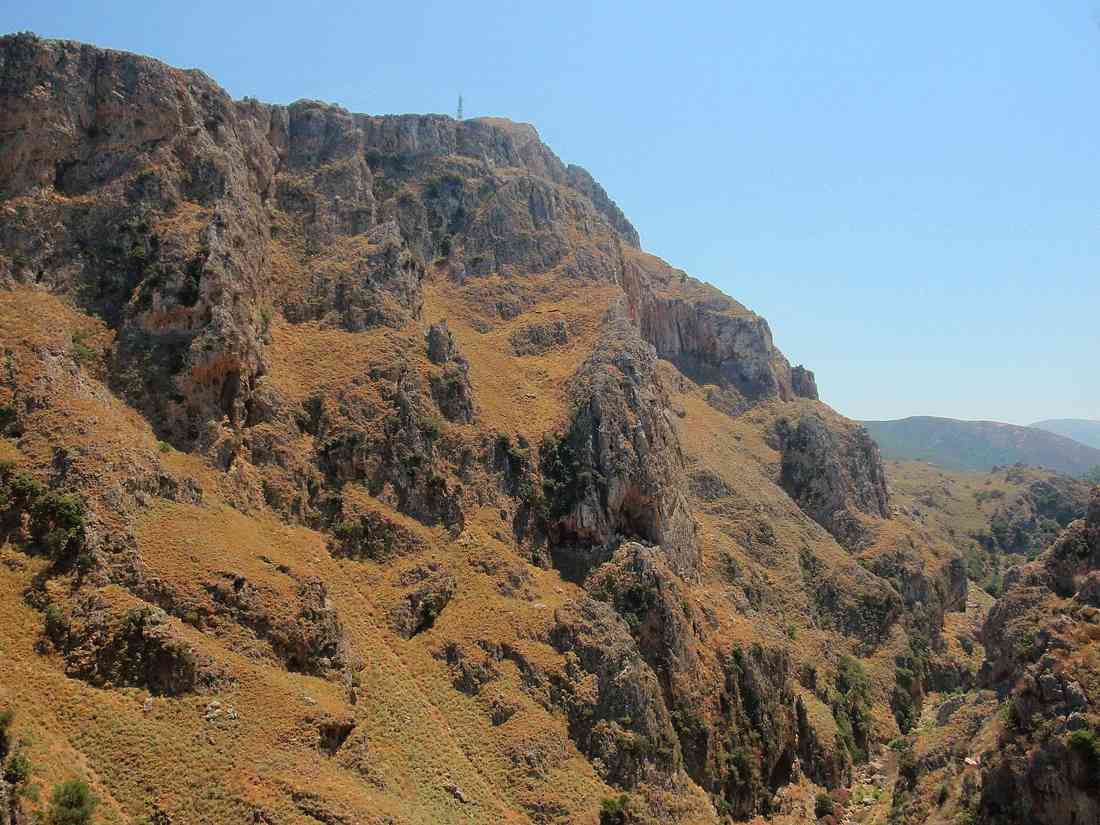
The Topolia Gorge cuts a dramatic green corridor through the mountains of western Crete, where the road from Kissamos winds south toward the beaches and villages of the island’s remote southwest. Steep rock walls rise on either side as the route threads through a narrow tunnel carved into the cliff face, with plane trees and chestnut woods clinging to the slopes. The village of Topolia perches above, its old church watching over the ravine, and a stepped path climbs to the Agia Sofia cave, a stalactite-filled cavern holding a chapel that has drawn worshippers since prehistoric times. Discover this scenic route and more with My Greece Tours.
The gorge sits in the Kissamos district, offering an easy, picturesque drive between the north coast and the southern hinterland. Birdsong fills the air beneath the canopy of trees, and the village of Koutsomatados marks the southern end of the ravine. The sections below cover the geology and route of the gorge, the sacred cave chapel, the surrounding villages, the natural beauty of the landscape, and practical tips for visiting. Our Crete travel guide provides additional context for planning your journey through this corner of the island.
What makes Topolia Gorge a notable feature of Crete’s landscape?
Topolia Gorge is a steep-walled ravine carved by a river in western Crete’s Kissamos district. The road south passes through a dramatic tunnel cut into the rock, with green slopes, plane trees and chestnut woods rising on either side.
The gorge forms a natural gateway between the northern coast and the southern reaches of western Crete, carrying the main road toward the beaches and villages of the southwest. Sheer rock faces frame the narrow passage, and the river that carved this corridor over millennia continues to shape the landscape. The road engineers chose to tunnel directly through the cliff rather than build switchbacks, creating a memorable passage that plunges drivers into the heart of the ravine. Plane trees shade the lower reaches, their roots anchored in the rocky streambed, and chestnut woods climb the upper slopes where the village of Topolia spreads across the hillside.
The old church in the village stands as a landmark visible from the gorge floor, marking the human presence in this wild terrain.
The gorge ranks among the most accessible things to do in Crete for travelers heading to the southwest, requiring no special equipment or hiking skills to experience. The tunnel itself measures just wide enough for two vehicles to pass, with rough rock walls close on either side and daylight visible at both ends. Birdsong echoes off the stone faces, and the temperature drops noticeably in the shade of the ravine. The village of Koutsomatados sits at the southern foot of the gorge, where the valley opens and the road continues toward the coast.
The entire passage takes only minutes to drive, yet the contrast between the open plateau to the north and the enclosed ravine creates a striking transition in the landscape.
What is the significance of the Agia Sofia cave in Topolia Gorge?
The Agia Sofia cave is a large cavern with stalactites partway along the gorge, reached by a stepped path from the road. It holds a small chapel inside and has served as a place of worship since prehistoric times.
The cave opens high on the gorge wall, its entrance visible from the road below where a parking area and the start of the stepped path await visitors. The climb takes roughly fifteen minutes, ascending through switchbacks cut into the rock face with metal railings for support. The cavern interior stretches back into the mountain, with stalactites hanging from the ceiling and natural formations that inspired reverence in ancient inhabitants. Archaeological evidence points to continuous religious use spanning thousands of years, from prehistoric rituals through pagan worship to the Christian chapel that occupies the space today.
The chapel itself is modest, with icons, candles and a simple altar tucked beneath the stone vault, creating an atmosphere of quiet devotion amplified by the natural acoustics of the cave.
Visitors to the cave find the temperature cool and constant year-round, a welcome respite during summer heat. The stalactites continue to grow at an imperceptible rate, fed by mineral-rich water seeping through the limestone above. The cave floor has been leveled and paved to accommodate worshippers and tourists, though the natural rock formations remain untouched beyond the chapel area. The view from the cave entrance looks out over the gorge and the road threading through it, with the village of Topolia visible on the opposite slope.
The site remains an active place of pilgrimage, particularly on the feast day of Agia Sofia, and the chapel is maintained by local faithful who keep candles burning and icons fresh throughout the year.
Which villages are associated with Topolia Gorge in western Crete?
The village of Topolia sits on the slopes above the gorge, with its old church visible from the road below. Koutsomatados lies at the southern foot of the ravine, where the valley opens toward the Chania hinterland.
Topolia village spreads across the hillside on the eastern side of the gorge, its stone houses and narrow lanes typical of mountain settlements in this part of the island. The old church serves as the spiritual center of the community, and the village maintains traditional agricultural practices on terraced plots surrounding the settlement. Olive groves, vegetable gardens and small orchards occupy the available land, and the villagers have long relied on the water flowing through the gorge for irrigation and daily needs. The proximity to the main road has brought some tourism to Topolia, with a handful of tavernas offering meals to travelers passing through, but the village retains its quiet, rural character.
The population remains small, with most residents connected to farming or small-scale hospitality.
Koutsomatados marks the transition from the enclosed gorge to the broader valley beyond, sitting where the road emerges from the ravine and continues south. The village serves as a waypoint for travelers heading to Elafonisi beach and other southwestern destinations, though it sees less tourist traffic than coastal settlements. Traditional architecture dominates the village center, and the pace of life follows the rhythms of agriculture and animal husbandry that have sustained the community for generations. The surrounding landscape opens into rolling hills and cultivated valleys, a contrast to the steep walls of the gorge just to the north.
Both villages maintain connections to Kissamos on the coast, the nearest town with full services and the administrative center for this district of western Crete.
What natural features characterize the environment of Topolia Gorge?
Plane trees and chestnut woods line the gorge, creating a green canopy along the ravine. Birdsong fills the air, and the river that carved the passage continues to flow through the rocky channel beneath the road.
The vegetation in the gorge thrives on the moisture provided by the river and the protection offered by the steep walls, which create a microclimate cooler and damper than the surrounding plateau. Plane trees cluster near the water, their broad leaves providing shade and their roots stabilizing the banks against erosion. Chestnut woods climb the slopes where soil has accumulated in crevices and on ledges, their canopy dense enough to block direct sunlight in places. The understory includes ferns, mosses and flowering plants that prefer shade and consistent moisture, creating a lush environment that contrasts sharply with the drier scrubland on the plateau above.
The gorge functions as a green corridor for wildlife, offering food, water and shelter to birds, insects and small mammals throughout the year.
The birdsong that characterizes the gorge comes from resident and migratory species that use the ravine as habitat and a navigation landmark during seasonal movements. The rock walls amplify sound, so even distant calls echo through the passage, creating a constant backdrop of natural music. The river flows year-round, though its volume fluctuates with seasonal rainfall, swelling in winter and spring and diminishing to a trickle during the driest summer months. The water has carved the gorge over geological time, exploiting weaknesses in the limestone and gradually deepening the channel. The same erosive process continues today, imperceptibly altering the landscape.
The combination of water, vegetation and sheltered terrain makes the gorge one of the hidden gems in Crete for nature enthusiasts seeking respite from coastal crowds.
How can travelers best experience Topolia Gorge on a visit to Crete?
The gorge makes an easy, scenic drive on the road from Kissamos toward Elafonisi and the southwest. A short walk up the stepped path leads to the Agia Sofia cave, and the villages offer traditional tavernas for refreshment.
Travelers heading south from the north coast will encounter the gorge roughly twenty minutes after leaving Kissamos, with the landscape transitioning from coastal plain to rolling hills before the road descends into the ravine. The tunnel through the rock provides the most dramatic moment of the drive, and parking areas near the Agia Sofia cave path allow visitors to stop and explore on foot. The climb to the cave takes fifteen to twenty minutes at a moderate pace, with the stepped path well-maintained and suitable for most fitness levels. The cave itself rewards the effort with its stalactite formations, chapel and panoramic view over the gorge.
The entire stop, including the climb and time in the cave, typically requires forty-five minutes to an hour, making it an easy addition to a day trip to the southwest beaches.
The villages of Topolia and Koutsomatados offer opportunities to experience local life and sample traditional Cretan cuisine at family-run tavernas that serve dishes prepared with ingredients from nearby farms and gardens. The gorge also serves as a starting point for those interested in hiking in Crete, with trails extending into the surrounding mountains for more ambitious walkers. The best times to visit are spring and autumn, when temperatures are moderate and the vegetation is at its most lush, though the gorge remains passable and attractive throughout the year. The drive continues south from Koutsomatados toward Chania prefecture’s remote villages and beaches, making the gorge a natural waypoint on a broader exploration of western Crete’s landscapes and communities.
Frequently Asked Questions
How long does it take to visit the Agia Sofia cave in Topolia Gorge?
The visit to the Agia Sofia cave typically requires forty-five minutes to an hour in total, including the climb up the stepped path, time spent inside the cavern and chapel, and the descent back to the road. The path itself takes fifteen to twenty minutes to ascend at a comfortable pace, with metal railings providing support on the steeper sections. The steps are uneven in places, carved into the natural rock and supplemented with concrete where necessary, so sturdy footwear is advisable. Once inside the cave, visitors usually spend ten to fifteen minutes exploring the stalactite formations, viewing the chapel and taking in the atmosphere of this ancient sacred site.
The temperature inside remains cool year-round, offering a pleasant break from summer heat. The descent takes slightly less time than the climb, and the entire excursion fits easily into a broader day trip to the southwest coast or the mountain villages of the Kissamos district.
Is Topolia Gorge suitable for families with children?
Topolia Gorge is suitable for families with children, though the stepped path to the Agia Sofia cave requires supervision for younger visitors. The drive through the gorge itself presents no difficulties beyond the narrow tunnel, which is wide enough for vehicles to pass safely and well-lit by natural light from both ends. The parking area near the cave path provides a safe place to leave the car, and the steps, while steep in sections, are manageable for children old enough to climb stairs confidently. The railings offer security on the exposed portions of the path.
Inside the cave, the floor is level and paved, eliminating tripping hazards, though the dim lighting and cool temperature may be intimidating for very young children. The villages of Topolia and Koutsomatados have tavernas that welcome families, and the overall experience of driving through the green ravine, spotting birds and exploring a cave chapel creates memorable moments for children interested in nature and adventure. The entire visit requires minimal physical exertion beyond the cave climb, making it accessible for most family groups.
What other attractions are near Topolia Gorge in western Crete?
Topolia Gorge sits on the main road connecting Kissamos on the north coast with the southwestern beaches and villages, placing it within easy reach of multiple attractions. Elafonisi beach, with its pink-tinged sand and shallow turquoise waters, lies roughly forty-five minutes south by car, making the gorge a natural stopping point on the journey. The town of Kissamos itself offers archaeological sites, a harbor, tavernas and accommodations, and serves as the gateway to the Gramvousa peninsula and Balos lagoon. The mountain villages of the Chania hinterland, including Elos with its chestnut forests and Kefali with its traditional architecture, are accessible via roads branching from the main route through the gorge.
The Chania region encompasses the Samaria Gorge, the White Mountains and the historic Venetian harbor town of Chania, all within a day’s drive. The Topolia Gorge thus functions as a hub for exploring western Crete’s diverse landscapes, from coastal beaches to mountain trails to traditional villages that preserve centuries-old ways of life.