
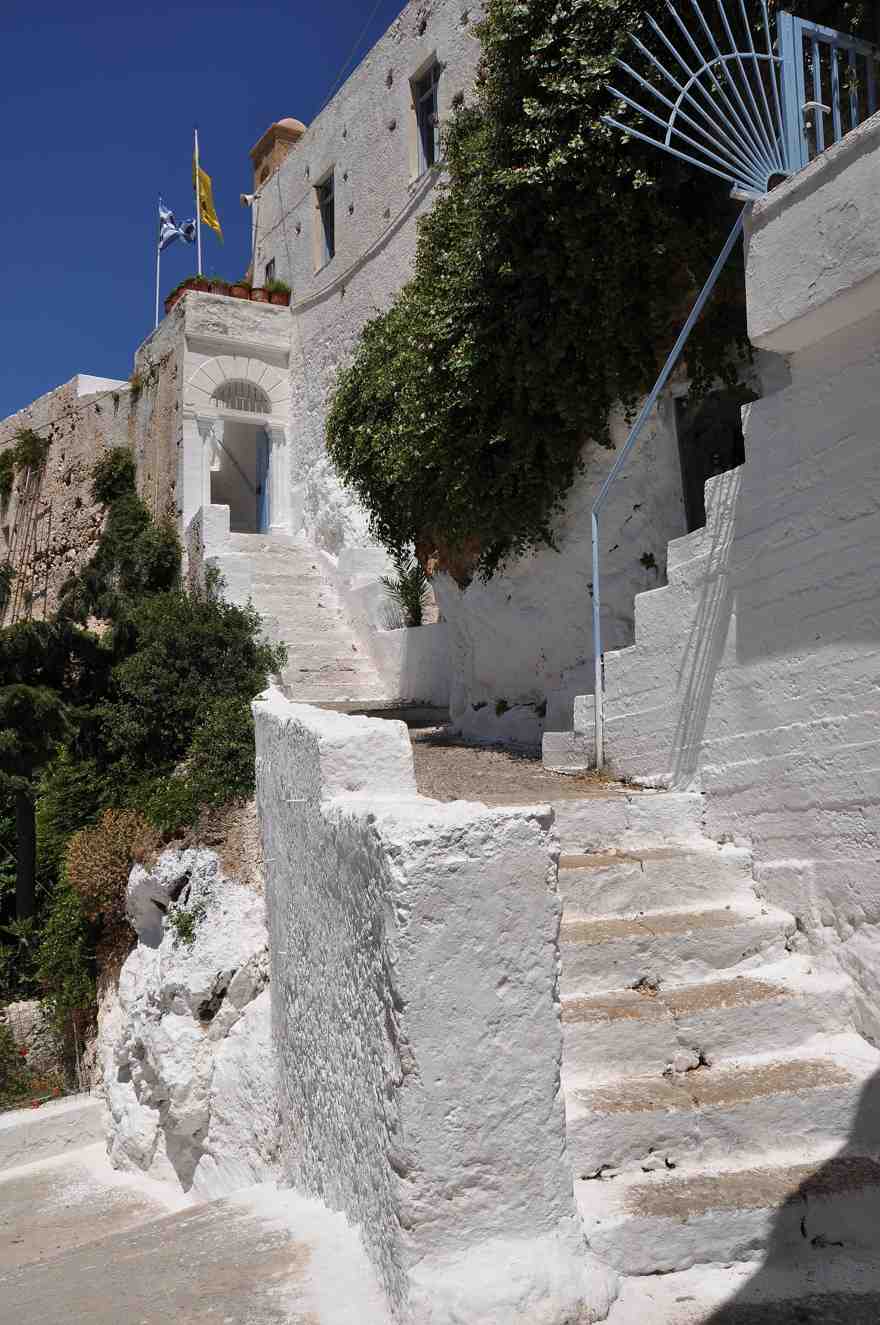
Chrysoskalitissa Monastery rises from a rocky outcrop above the turquoise waters of southwest Crete, its brilliant white walls gleaming against the deep blue Mediterranean. Perched in the remote Chania region, this working convent draws visitors with its legendary golden step, sweeping coastal panoramas, and serene spiritual atmosphere. The monastery stands a short drive north of the famous pink-sand lagoon at Elafonisi, making the two sites natural companions for a day of exploration. Ninety steps climb to the entrance, where a small church, icon museum, and tranquil courtyards await those who make the ascent. Discover this clifftop sanctuary with My Greece Tours.
The monastery’s name translates to ‘golden step’, drawn from the belief that one step among the ninety appears golden only to visitors free from sin. Medieval foundations support the current structures, rebuilt after pirate attacks in centuries past. A working religious community maintains the site today, welcoming respectful visitors who observe the dress code requiring covered shoulders and knees. The sections below cover the monastery’s history, the golden step legend, practical visiting information, and how to combine your trip with nearby coastal attractions. Explore more destinations in our comprehensive Crete travel guide.
What is the history of Chrysoskalitissa Monastery in Crete?
The monastery dates to the medieval period and has withstood centuries of change on Crete’s remote southwestern coast. Pirate raids damaged the original structures, prompting reconstruction that created the whitewashed buildings visible today.
Chrysoskalitissa Monastery occupies one of the most dramatic settings among Crete’s religious sites, clinging to a rock formation that juts into the Libyan Sea. The original foundation stretches back to medieval times, though the exact century of establishment remains wrapped in local tradition rather than documented record. The monastery served as a beacon of faith for scattered communities along this isolated coastline, offering spiritual guidance and physical refuge during turbulent periods. Pirate incursions from North Africa plagued Crete’s southern shores for generations, and Chrysoskalitissa suffered damage during these raids. The religious community rebuilt the complex, creating the structures that stand today with their characteristic Cretan architecture.
The monastery’s position atop ninety steps carved into the rock provided both defensive advantage and symbolic separation from the worldly concerns below. This remote location preserved the contemplative life even as coastal settlements faced repeated threats from the sea.
The rebuilding efforts maintained traditional monastic design principles while adapting to the challenging clifftop site. Thick whitewashed walls reflect the intense summer sun and create cool interior spaces for prayer and daily life. The small church at the heart of the complex houses icons that span centuries, some rescued from earlier iterations of the monastery. A museum now displays these sacred images alongside agricultural tools and household implements that illustrate monastic self-sufficiency through the ages. The working religious community continues traditions established generations ago, maintaining the rhythm of prayer, work, and hospitality. Visitors to Chania often venture to this southwestern corner to experience the monastery’s timeless atmosphere.
The site represents continuity with Crete’s Byzantine and Venetian past, a living connection to the island’s layered spiritual heritage that complements explorations of things to do in Crete.
What is the legend of the golden step at Chrysoskalitissa?
Legend holds that one of the ninety steps ascending to the monastery appears golden, but only to visitors entirely free of sin. The story adds mystical dimension to the climb and invites pilgrims to reflect on virtue.
The golden step legend forms the heart of Chrysoskalitissa’s spiritual identity and explains the monastery’s evocative name. Tradition teaches that among the ninety stone steps carved into the rock face, one step gleams with golden light, visible only to those who have achieved perfect purity of heart and freedom from sin. Pilgrims have climbed these stairs for centuries, searching for the miraculous step and examining their own spiritual state during the ascent. The legend functions as both literal treasure hunt and metaphorical journey, transforming a simple climb into an opportunity for self-examination. No consensus exists about which step holds the golden quality, and accounts differ about whether anyone has truly seen it shine.
The ambiguity serves the story’s deeper purpose, reminding visitors that spiritual perception differs from ordinary sight. The climb itself becomes a meditative practice, each step an opportunity to consider one’s actions and intentions. The white stone stairs contrast sharply with the blue sea below, creating a visual path between earth and sky that reinforces the monastery’s role as a threshold between material and spiritual realms.
The legend connects to broader traditions of hidden sanctity and divine reward found throughout Orthodox Christian culture. Sacred objects reveal themselves only to the worthy, testing faith and humility rather than offering universal display. Visitors climb the steps with curiosity and reverence, aware that the golden step can remain invisible to them yet still present in the stone. The story has drawn pilgrims to this remote corner of Crete for generations, adding spiritual significance to what would otherwise be simply a scenic clifftop monastery. The tale complements the natural beauty of the setting, where dazzling white walls meet cobalt water in combinations that seem almost supernatural.
The monastery ranks among the hidden gems in Crete for travelers seeking sites that blend legend with landscape. The golden step narrative ensures that even visitors who come for views and architecture leave contemplating deeper questions about perception, virtue, and the nature of sacred space.
How do I visit Chrysoskalitissa Monastery from Crete’s main towns?
The monastery sits in southwest Crete, accessible by car from Chania via a scenic coastal drive. The journey takes roughly two hours. Modest dress covering shoulders and knees is required for entry to the monastery grounds.
Reaching Chrysoskalitissa requires commitment to the journey, as the monastery occupies one of the most remote corners of Crete’s coastline. The primary approach begins in Chania, the nearest major town, from which the drive stretches approximately two hours through increasingly wild terrain. The road winds south and west through the Chania region, passing through small villages and olive groves before reaching the more barren landscape of the southwestern peninsula. Public transportation to this area remains limited, making a rental car the most practical option for independent travelers. The final stretch of road offers glimpses of the Libyan Sea and the monastery’s white walls perched on their rocky promontory.
Parking is available near the base of the steps, from which visitors begin the ninety-step ascent. The climb is manageable for most fitness levels, though the sun can be intense during summer months. Early morning or late afternoon visits offer cooler temperatures and softer light for photography. The monastery observes traditional dress codes, requiring visitors to cover shoulders and knees before entering the church and interior spaces.
The location pairs naturally with a visit to Elafonisi beach, situated just a short drive south along the coast. Most travelers combine both destinations in a single day trip from Chania or the nearby coastal town of Paleochora. The monastery typically welcomes visitors during daylight hours, though specific opening times can vary with the religious calendar and the community’s schedule. A small donation is customary upon entry, supporting the maintenance of the buildings and the work of the resident nuns. The site includes a modest museum displaying icons and historical artifacts, accessible after climbing the main steps.
The terrace offers sweeping views along the coastline, with the pink sands of Elafonisi visible in the distance on clear days. Photography is generally permitted in outdoor areas, though visitors must ask before photographing inside the church or museum. The remote setting means limited facilities, so bringing water and sun protection is advisable for the visit and the journey.
What can I see inside Chrysoskalitissa Monastery?
The monastery contains a small church adorned with icons, a museum displaying religious art and traditional tools, and a peaceful courtyard. The terrace provides panoramic views of the coastline and the sea stretching toward the horizon.
The monastery’s interior spaces reflect centuries of devotion and the practical realities of religious life in this isolated setting. The church forms the spiritual center, a compact sanctuary decorated with icons that range from recent works to pieces salvaged from earlier structures damaged in pirate raids. The iconostasis displays traditional Orthodox imagery, and the scent of incense lingers in the cool air. Candlelight flickers before the icons, lit by pilgrims and maintained by the resident community. The intimate scale of the church creates an atmosphere of concentrated prayer, distinct from the grander monasteries found elsewhere on the island.
Beyond the church, the museum occupies adjoining rooms where visitors can examine religious artifacts, vestments, and historical photographs documenting the monastery’s past. Agricultural implements and household tools illustrate the self-sufficient lifestyle maintained by monastic communities through the centuries. The collection provides context for understanding how faith and daily work intertwined in this remote location, where the nearest settlements offered limited support or resources.
The courtyard and terrace areas offer respite from the intensity of the interior spaces, opening views across the Libyan Sea that stretch uninterrupted to the African coast. The brilliant white walls create stark contrasts with the deep blue water and sky, a color combination that defines Aegean architecture and appears especially vivid in this clifftop setting. Flowering plants soften the stone surfaces, maintained by the nuns who continue the monastery’s traditions. The terrace serves as a contemplative space where visitors can absorb the landscape and understand why this location was chosen for spiritual retreat.
The pink sands of Elafonisi shimmer in the distance, connecting the monastery to the natural wonder that draws most travelers to this corner of Crete. The site shares spiritual significance with Arkadi Monastery in northern Crete, though Chrysoskalitissa’s smaller scale and remote position create a more intimate encounter. The combination of sacred art, historical artifacts, and natural beauty makes the monastery a multifaceted destination that rewards the journey to reach it.
Why should I combine Chrysoskalitissa with Elafonisi Beach?
The monastery and Elafonisi Beach lie just minutes apart, offering contrasting experiences of spiritual contemplation and natural beauty. Together they create a full day exploring southwest Crete’s most distinctive attractions in a single efficient journey.
The proximity of Chrysoskalitissa Monastery and Elafonisi Beach creates an ideal pairing for travelers willing to venture to Crete’s southwestern corner. The monastery sits approximately ten minutes by car from the beach, making it practical to visit both sites without backtracking or adding significant driving time. The two destinations offer complementary experiences that balance spiritual reflection with natural wonder. The monastery provides quiet contemplation, historical depth, and sweeping views from its clifftop perch, while Elafonisi delivers one of the Mediterranean’s most photographed beaches, where pink sand meets turquoise lagoons in shallow, warm water. Visiting both locations in a single trip maximizes the value of the long drive from Chania or other base towns.
The journey to this remote region represents a commitment of time and effort, so combining multiple attractions makes practical sense. The monastery visit typically requires one to two hours, allowing ample time to climb the steps, explore the church and museum, and absorb the views before continuing to the beach for swimming and relaxation.
The contrast between sacred and natural spaces enriches the overall experience of southwest Crete. The monastery’s whitewashed walls and icon-filled church create an atmosphere of timeless devotion, while the beach offers pure sensory pleasure in the form of warm sand, clear water, and dramatic coastal scenery. The two sites together illustrate the range of attractions that make Crete compelling beyond its famous archaeological sites and resort towns. Travelers interested in the island’s spiritual heritage can appreciate the monastery’s continued religious function, then transition to the secular joys of one of Europe’s most beautiful beaches. The combination appeals to diverse interests within a single day, satisfying both cultural curiosity and the desire for natural beauty.
The route between the two passes through stark, beautiful landscape where the island’s wild character remains visible. This corner of Crete rewards those who venture beyond the northern coast, offering experiences that feel genuinely remote and distinct from the island’s more developed regions and crowded attractions.
Frequently Asked Questions
What should I wear when visiting Chrysoskalitissa Monastery?
Chrysoskalitissa maintains traditional Orthodox dress codes that require modest clothing for all visitors entering the monastery grounds. Shoulders must be covered, ruling out tank tops, sleeveless shirts, and strapless garments. Knees must also be covered, so shorts, short skirts, and short dresses are not appropriate. Lightweight long pants, skirts that fall below the knee, and shirts with sleeves are ideal choices, particularly in summer when the heat can tempt visitors toward more revealing clothing. The monastery is a working religious site where nuns continue their devotional life, and respectful dress honors their community and the sacred nature of the space.
Visitors who arrive without appropriate clothing can be denied entry or asked to cover up with scarves or wraps, though it is better to plan ahead. Comfortable walking shoes are advisable for climbing the ninety steps and exploring the rocky terrain around the monastery. The combination of sun exposure and physical activity makes breathable fabrics practical. Hats and sunglasses are acceptable in outdoor areas but must be removed inside the church. The dress code applies equally to all visitors regardless of gender, and parents must ensure children are also appropriately dressed for this sacred site.
Is there an entrance fee for Chrysoskalitissa Monastery?
Chrysoskalitissa Monastery does not charge a fixed entrance fee, but donations are expected and appreciated to support the maintenance of the buildings and the work of the resident religious community. A donation box is typically located near the entrance or inside the church, and visitors must plan to contribute a few euros as a gesture of respect and support. The monastery relies on these voluntary contributions along with sales from a small shop that can offer religious items, postcards, and local products. The lack of a mandatory ticket price reflects Orthodox tradition regarding access to sacred spaces, which are generally open to pilgrims and visitors without commercial transaction.
The donation system trusts visitors to contribute according to their means and appreciation for the site. The monastery’s remote location and small community mean that tourist revenue plays an important role in funding repairs, utilities, and daily operations. Visitors who spend time exploring the church, museum, and terrace must consider this when determining an appropriate donation. The contribution supports not just building maintenance but also the continuation of religious life in this historic location, preserving a tradition that stretches back to medieval times and enriches Crete’s cultural landscape.
Can I take photographs inside Chrysoskalitissa Monastery?
Photography policies at Chrysoskalitissa Monastery vary between outdoor and interior spaces, and visitors must observe posted signs and ask permission when uncertain. The exterior areas, including the brilliant white walls, the terrace with its coastal views, and the dramatic approach up the ninety steps, are generally acceptable subjects for photography. The spectacular setting makes the monastery a popular destination for photographers, and capturing the architecture against the blue sea and sky is typically welcomed. Interior photography, particularly inside the church, can be restricted or require permission from the resident nuns. Flash photography is usually prohibited in sacred spaces to protect delicate icons and frescoes and to maintain the contemplative atmosphere.
The museum areas can have specific rules about photographing the displayed artifacts and religious items. Respectful visitors ask before photographing inside any building and refrain from taking pictures during religious services or of the nuns without explicit permission. The monastery remains an active religious site, not primarily a tourist attraction, so photography must never interfere with worship or community life. The outdoor vistas and architectural details provide ample opportunity for memorable images without intruding on sacred spaces or private areas of the monastery complex.