
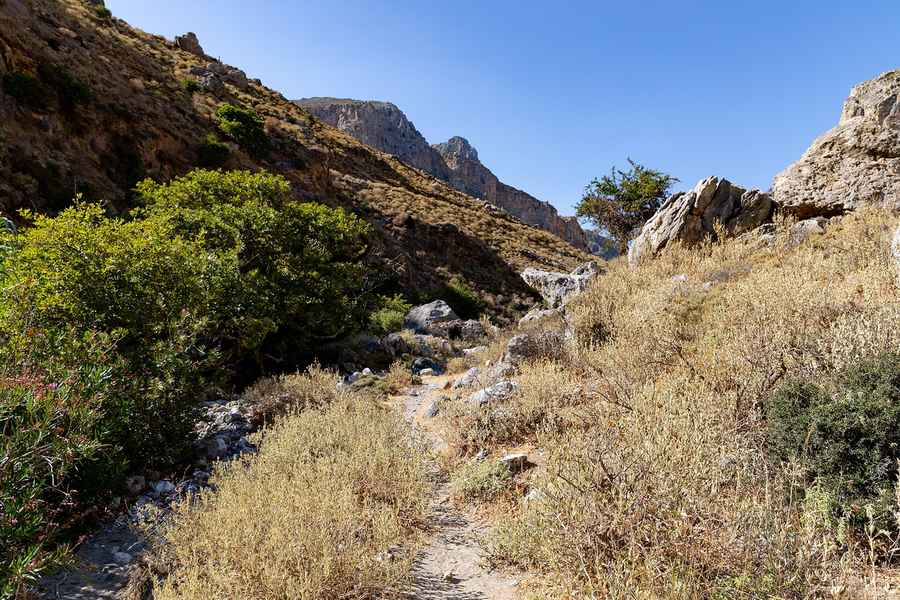
Crete stands out among Greek islands for its exceptional network of hiking trails that wind through dramatic gorges, climb to mountain summits and trace the coastline between remote villages. Walkers discover landscapes ranging from the towering rock walls of the White Mountains to green ravines sheltering waterfalls in the east. The island’s long-distance paths connect traditional settlements, while day routes lead into deep canyons and onto high ridges. Spring wildflowers and autumn’s cooler temperatures create ideal conditions for exploring these trails with My Greece Tours.
The sections below cover the island’s signature gorge walks, the trans-island E4 route, summit climbs and practical advice for planning your walking holiday. Trails suit different fitness levels, from gentle riverside rambles to challenging descents through narrow chasms. Proper preparation ensures safe and rewarding experiences on these paths. Our comprehensive Crete travel guide offers additional resources for your visit, including accommodation near trailheads and transport connections to starting points across the island.
Which gorge walks define hiking in Crete?
The Samaria Gorge in the White Mountains leads the roster, followed by the shorter Imbros Gorge in Sfakia. Eastern Crete offers the green Richtis Gorge with its waterfall, while Agia Irini and Aradena provide alternative canyon experiences.
The Samaria Gorge stretches sixteen kilometres from the Omalos plateau down to the Libyan Sea, passing through the famous Iron Gates where vertical cliffs narrow to just four metres apart. Walkers descend more than one thousand metres through pine forests and rocky passages, typically completing the route in five to seven hours. The gorge operates from late spring through mid-autumn, closing during winter when snowmelt creates dangerous conditions. Rangers monitor the trail and enforce closure dates to protect hikers from flash floods and rockfall. The route ends at Agia Roumeli, a coastal village accessible only by boat or on foot, where ferries carry tired walkers to Hora Sfakion or Sougia.
The Imbros Gorge offers a gentler alternative at eight kilometres, requiring three hours for most walkers and staying open longer into the season. The Richtis Gorge in eastern Crete leads through lush vegetation to a twenty-metre waterfall, creating a verdant contrast to the arid western canyons. Agia Irini Gorge provides a seven-kilometre walk with less dramatic walls but reliable water sources and shade. The Aradena Gorge challenges experienced scramblers with technical sections and rope-assisted passages. Each canyon reveals distinct geology and ecosystems, from the limestone formations of the White Mountains to the schist and volcanic rock of eastern ranges.
How does the E4 path cross Crete?
The European E4 long-distance trail enters Crete from coast to coast, then follows the southern shoreline connecting villages. The south-coast section between settlements offers multi-day walking through remote terrain with overnight stops in traditional communities.
The E4 enters Crete at Kissamos on the northwest coast and traverses the island to Kato Zakros in the far east, covering roughly three hundred kilometres of varied terrain, passing near the forest eco-retreat of Milia in the west. The route climbs through the White Mountains, crosses the Lasithi plateau and descends into eastern gorges before reaching the Libyan Sea. Walkers typically break the trans-island journey into ten to fourteen daily stages, staying in mountain villages and coastal settlements. The path uses old mule tracks, shepherds’ routes and connecting trails that predate modern roads. Waymarking varies in quality, with yellow-and-black diamonds appearing regularly on some sections while other stretches require map-reading skills and local knowledge to navigate confidently.
The south-coast segment between Hora Sfakion and Loutro, continuing east to Agia Roumeli and beyond, ranks among the most scenic stretches. This coastal E4 section links villages accessible only by boat or foot, passing above cliffs that plunge into turquoise water. Walkers encounter Byzantine chapels, abandoned settlements and caves used by resistance fighters during the twentieth century. The terrain alternates between sea-level beaches and headland crossings at two hundred metres elevation. Spring transforms the route with wildflower displays including orchids, anemones and endemic Cretan species. Autumn brings grape harvests in terraced vineyards and cooler temperatures that make the exposed coastal sections comfortable for day-long walks.
What mountain peaks attract walkers in Crete?
Psiloritis stands as the island’s tallest peak, drawing summit seekers to its two-thousand-four-hundred-metre height. The White Mountains offer ridge walks and multiple summits, while eastern ranges provide less-crowded alpine routes with expansive views.
Psiloritis, also called Mount Ida, dominates central Crete and holds significance in Greek mythology as the legendary birthplace of Zeus. The standard ascent from Nida plateau takes five to six hours return, climbing through alpine meadows and bare rock to the summit at two thousand four hundred fifty-six metres. Snow lingers on the upper slopes into late spring, and winter conditions require mountaineering equipment. The peak offers panoramic views across the entire island on clear days, from the north coast to the Libyan Sea. Shepherds’ stone huts dot the lower slopes, and the Ideon Cave near the trailhead attracts visitors interested in ancient cult sites associated with Zeus worship.
The White Mountains contain more than thirty summits exceeding two thousand metres, with Pachnes reaching two thousand four hundred fifty-three metres as the range’s highest point. Multi-day treks traverse the high plateaus and connect peaks via exposed ridges where chamois graze on sparse vegetation. The Lefka Ori, as locals call these mountains, retain snow patches through summer in sheltered gullies. Eastern ranges including Dikti and Thripti offer quieter alternatives with well-defined trails leading to summits around two thousand metres. These peaks provide things to do in Crete for experienced mountain walkers seeking solitude away from the popular gorge routes and coastal paths.
When should walkers plan hiking trips to Crete?
Spring brings wildflowers and moderate temperatures ideal for long walks, while autumn offers cooler air after summer’s heat. High summer bakes lower trails, making early starts essential. Winter closes high routes and gorges due to snow and flooding.
April and May deliver peak conditions for gorge walking and coastal trails, with daytime temperatures ranging from eighteen to twenty-five degrees and wildflowers carpeting hillsides in colour. The best time to visit Crete for hiking extends through early June before intense heat arrives. Samaria and other major gorges open in late April or early May depending on snowmelt and trail conditions. Spring rains occasionally close gorges temporarily, but the moisture sustains streams and waterfalls that dry up by midsummer. Daylight extends to eight in the evening, allowing long walking days without predawn starts.
September and October bring autumn’s advantages: cooler temperatures, fewer tourists on popular trails and grape harvests in mountain villages. Summer’s heat persists into early September, but by month’s end, daytime highs drop to comfortable levels for strenuous walks. Autumn storms can arrive suddenly, particularly in the mountains, requiring waterproof gear and flexibility in itineraries. Winter walking from November through March suits low-elevation coastal paths and olive-grove rambles, but snow closes mountain routes and gorges shut due to flood risk. July and August demand early-morning starts for any walking, with shade scarce on exposed trails and temperatures exceeding thirty-five degrees by midday in lower elevations.
What practical preparations does Crete hiking require?
Sturdy hiking shoes with ankle support handle rocky terrain, while sun protection including hat and high-SPF cream prevents burns on exposed trails. Carrying sufficient water proves essential, and checking gorge opening status before departure avoids wasted journeys.
Rocky, uneven surfaces characterize most Cretan trails, making proper footwear critical for ankle stability and sole protection. Lightweight boots or substantial trail shoes with good tread prevent slips on loose stones and provide comfort during long descents. The Kourtaliotiko Gorge and similar routes include stream crossings where quick-drying materials and spare socks prove valuable. Sun exposure intensifies at elevation and on treeless coastal paths, requiring fifty-plus SPF sunscreen, wide-brimmed hats and lightweight long sleeves for sensitive skin. Trekking poles reduce knee strain on steep descents and aid balance on uneven ground, particularly useful in gorges with boulder-hopping sections.
Water sources remain unreliable on most routes, making it necessary to carry two to three litres per person for full-day walks. Springs marked on older maps often run dry by midsummer, and relying on village fountains requires route planning around settlement locations. Gorge opening status changes with weather conditions and seasonal schedules, so checking with local tourist offices or park authorities prevents arriving at closed gates. Basic first-aid supplies, emergency whistle and charged mobile phone provide safety backup, though network coverage fails in deep gorges and remote mountain areas. Informing accommodation hosts of your planned route and expected return time creates a safety net for solo walkers tackling challenging trails.
Frequently Asked Questions
Can beginners enjoy hiking in Crete or do trails require advanced skills?
Crete accommodates all ability levels with trails ranging from easy coastal walks to technical mountain routes. Beginners find suitable options in shorter gorges like Imbros, which requires no scrambling or climbing skills, and coastal E4 sections between villages that offer gentle gradients and clear paths. Richtis Gorge provides an accessible introduction to canyon walking with a well-maintained trail and the reward of a waterfall at the turnaround point. Fitness matters more than technical skill for most routes, as the length and cumulative elevation gain challenge stamina rather than requiring specialized techniques. Guided walks with local operators offer supported introductions to popular trails, providing navigation assistance and local knowledge about flora, history and safe passage.
Families with older children successfully complete routes like Agia Irini Gorge, which avoids the extreme length of Samaria while delivering authentic gorge-walking experiences. Gradual progression from shorter, easier trails to longer routes builds confidence and fitness for tackling the island’s more demanding walks.
Do I need to book gorge walks in advance or can I just turn up?
Most gorge walks require no advance booking, allowing walkers to arrive at trailheads and pay entrance fees directly. Samaria Gorge charges a five-euro fee collected at the entrance gate, with no reservation system or capacity limits during operating season. Independent walkers arrange their own transport to starting points, either by rental car, public bus or taxi, and organize return transport from exit points. The exception involves guided group tours offered by operators in resort towns, which include transport, guide services and sometimes meals in package prices that require advance booking. These organized trips suit visitors without rental cars or those preferring structured group experiences.
Checking opening status before departure remains essential, as gorges close without notice following heavy rain or when rangers identify safety hazards. Tourist information offices, park websites and accommodation hosts provide current status updates. Early-morning starts prove advantageous for popular routes like Samaria, where arriving by eight allows walkers to complete the descent before afternoon heat and avoid the largest tour-group crowds that arrive mid-morning.
What wildlife might I encounter on Cretan hiking trails?
The Cretan wild goat, known locally as kri-kri, represents the island’s most iconic mountain animal, inhabiting the White Mountains and protected gorge areas including Samaria. These agile climbers with curved horns graze on cliff faces and rocky slopes, often visible to patient observers in early morning or late afternoon. Griffon vultures soar above gorges and mountain peaks, their three-metre wingspans making them unmistakable in flight as they ride thermal currents. Smaller birds including Cretan warblers, rock nuthatches and alpine choughs inhabit different elevations, with endemic subspecies found nowhere else. Reptiles sunning on rocks include Balkan green lizards, Erhard’s wall lizards and occasional snakes, though venomous species remain rare and non-aggressive.
Spring walkers encounter butterflies including swallowtails and festoons feeding on wildflowers. Mammals stay elusive, with badgers, martens and weasels active primarily at night. The island lacks large predators, making wildlife encounters gentle experiences rather than safety concerns. Observing animals from distance without feeding or approaching protects both wildlife and visitors while allowing natural behaviors to continue undisturbed.