
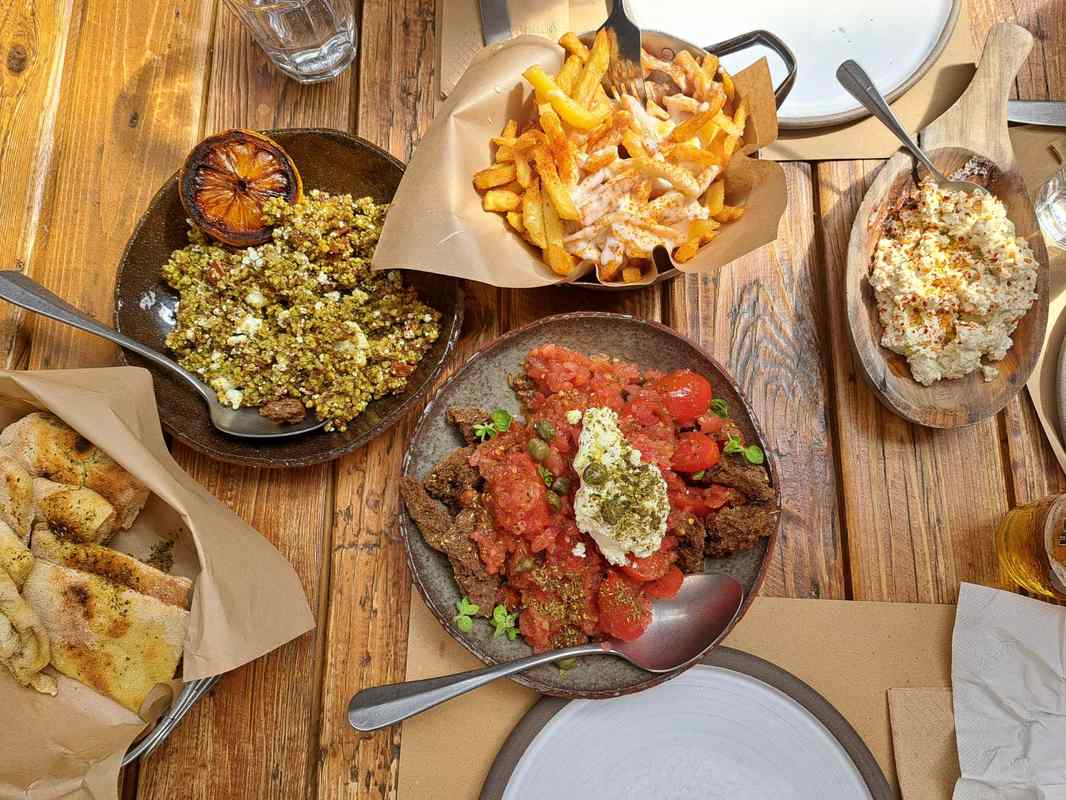
Cretan food is one of the great reasons to visit the island, and it forms a cornerstone of the Mediterranean diet that researchers link to local longevity. Meals here are built on olive oil, wild greens, pulses, cheese and only small amounts of meat, so every plate feels light yet deeply satisfying. You will taste the difference in a simple dakos, a bowl of boiled greens, or a wedge of fresh graviera. Eating well is woven into daily life, from village festivals to family tavernas where food is always shared. This guide walks you through the flavours of the island with My Greece Tours.
Use this page alongside our wider Crete travel guide to plan a trip that puts good eating at its heart. Cretan cuisine rewards curiosity, and the more you order beyond the familiar names, the richer your table becomes. Look for what the season and the village offer, and let your host guide the choices. The sections below cover the signature dishes, the cheeses and honey, the drink poured to welcome you, and the hospitality that turns a meal into a memory you carry home.
What is Cretan food and why does it matter?
Cretan food is a plant-forward cuisine of olive oil, wild greens, pulses, cheese and modest meat that anchors the Mediterranean diet and is tied to the island’s noted longevity and its deep culture of hospitality.
Cretan cuisine grows straight out of the land. Olive oil is the foundation of nearly every dish, poured generously over vegetables, greens and rusks rather than used sparingly. Pulses such as chickpeas, lentils and broad beans carry a variety of meals, while wild greens gathered from the hillsides add flavour and nutrition at little cost. Meat appears in smaller portions, often reserved for festivals and family gatherings. This balance is exactly what nutritionists point to when they study the island’s long-lived villages, and it is a big part of why the food tastes so honest.
Beyond nutrition, the cuisine reflects a way of living. Families still press their own oil, keep a handful of goats, and gather greens in season, so the table changes month to month. When you explore things to do in Crete, a long lunch in a mountain village is as memorable as any ruin or beach. The food is unhurried and communal, meant to be lingered over. Understanding this rhythm helps you order well and appreciate why locals treat a shared meal as the true centre of the day.
Which signature dishes should you try on Crete?
Start with dakos, boiled horta, fried snails, slow-roasted lamb or goat such as antikristo and tsigariasto, the rich wedding pilaf gamopilafo, and small cheese pastries called kalitsounia for a full taste of the island.
Dakos is the dish everyone remembers. A hard barley rusk is moistened and topped with grated ripe tomato, crumbled mizithra cheese, a pour of olive oil and a scatter of oregano. Simple, fresh and filling, it captures the whole cuisine in one plate. Horta, boiled wild greens dressed with oil and lemon, appears alongside almost everything. For something bolder, chochlioi bourbouristi are snails fried in oil and finished with rosemary or vinegar, a beloved meze that surprises a variety of first-time visitors with how good it is.
For a feast, the island turns to meat cooked slowly and with care. Antikristo is lamb or goat spit-roasted upright beside an open fire, while tsigariasto is braised until tender in its own juices. Gamopilafo, the celebrated wedding pilaf, is rich rice cooked in meat stock and served at big occasions. Kalitsounia, small pastries filled with cheese or herbs, round out the table sweet or savoury. In the harbour tavernas of Chania you can sample most of these in a single relaxed evening by the water.
What cheeses, honey and sweets define Cretan cuisine?
Crete is famous for graviera, mizithra and anthotyros cheeses, thyme honey drizzled over walnuts and thick yoghurt, and small kalitsounia pastries, giving the cuisine a distinctive dairy-rich and gently sweet character.
Cheese sits at the heart of the Cretan table. Graviera is the hard, nutty cheese most people love first, aged until it turns firm and golden. Mizithra is softer and milder, crumbled fresh over dakos and pasta or dried for grating. Anthotyros is a delicate white cheese, mild enough to eat with honey for breakfast. Each village and family has its own dairy traditions, so the same cheese can taste noticeably different from one region to the next, rewarding travellers who taste as they go.
For dessert the island keeps things natural. Thyme honey, prized for its aroma, is spooned over walnuts and thick local yoghurt for a simple sweet that never disappoints. Kalitsounia turn up again here in their sweet form, filled with sweetened mizithra and sometimes dusted with cinnamon. In the old town of Rethymno you will find bakeries and cafes serving these treats fresh, often with a small glass of something to finish. It is a gentle, honest way to end a Cretan meal without heavy pastries.
What is raki and how do you drink it on Crete?
Raki, also called tsikoudia, is the local grape-pomace spirit that Cretans pour to welcome guests, offered freely at the end of a meal or on arrival as a warm gesture of hospitality rather than a formal drink.
Raki, known on the island as tsikoudia, is distilled from the grape skins left after the Cretan wine harvest. Clear and strong, it is not sipped as a fine spirit but shared as a symbol of welcome. A host will bring a small carafe and little glasses almost the moment you sit down, and refusing entirely can feel like turning away friendship. It usually arrives with a handful of bites of food, so it is enjoyed slowly and in company rather than rushed, keeping the mood relaxed and generous.
The custom runs deep across the island, from mountain villages to the tavernas of the coast. Autumn brings raki-making gatherings where families and neighbours distil together, cook over the fire and celebrate late into the night. When you plan where to stay in Crete, a stay in a village or agrotourism guesthouse often means being offered tsikoudia by your hosts. Accept it in the spirit given, and you will quickly understand how central this simple drink is to Cretan warmth and welcome.
How does hospitality shape eating on Crete?
Cretan hospitality, or philoxenia, centres daily life on shared food, from family tavernas to village festivals where long tables, roasted meat, music and raki bring the whole community together around a common meal.
Philoxenia, the love of guests, is more than a word on Crete. Sit at a family taverna and the owner may bring an extra dish you did not order, or finish your meal with fruit and raki on the house. Portions are generous, and the goal is that no one leaves hungry. Meals stretch on because eating is a social act, not a task to complete. This warmth is genuine and widely felt, and a variety of travellers say the welcome at the table is the memory they treasure most from the island.
Village festivals, or panigyria, show this spirit at its fullest. Whole animals roast over fire, long communal tables fill the square, and music and dancing carry the celebration late. Food is cooked for hundreds and shared without ceremony. In and around Heraklion and the villages beyond it, summer brings a steady calendar of these gatherings tied to local saints and harvests. Joining one, even as a passing visitor, is the surest way to taste real Cretan cooking and feel the hospitality that gives it meaning.
Frequently Asked Questions
Is Cretan food good for vegetarians?
Cretan cuisine is one of the most vegetarian-friendly in the Mediterranean, so travellers who avoid meat eat very well here. The whole tradition leans plant-forward, built on olive oil, pulses, wild greens and cheese, with meat treated as an occasional treat rather than the centre of the plate. Classic dishes suit vegetarians naturally: dakos topped with tomato and mizithra, boiled horta dressed with oil and lemon, gigantes beans baked in tomato, stuffed vegetables, and cheese or herb kalitsounia. Fresh graviera, mizithra and anthotyros give ample protein, while thyme honey over yoghurt and walnuts makes a satisfying dessert. Tavernas are used to accommodating guests and will happily point you to the meatless options.
The main thing to watch is that certain vegetable dishes are cooked in meat stock, so a quick question to your host clears that up. Vegans should ask about cheese and eggs in pastries, but even then the range of pure-vegetable dishes remains wide and genuinely delicious.
What should you eat on your first day on Crete?
For a first taste of the island, order a spread of small dishes rather than one big plate, so you sample the range of Cretan cooking in a single sitting. Begin with dakos, the barley rusk piled with grated tomato, crumbled mizithra and olive oil, which sums up the whole cuisine in one bite. Add a bowl of boiled horta with lemon, and a plate of fried chochlioi bourbouristi if you feel adventurous with snails. Include a wedge of fresh graviera and certain warm kalitsounia to round out the flavours. If a slow-roasted meat such as tsigariasto or antikristo is available, share a portion between the table.
Finish with thyme honey over thick yoghurt and walnuts, and accept the small glass of raki your host is almost certain to bring. Eating this way mirrors how locals dine, unhurried and shared, and it gives you a clear map of the tastes you will want to explore further across the rest of your stay.
Why is Cretan cuisine linked to longevity?
Cretan cuisine is often cited in studies of long life because it reflects the original Mediterranean diet in its purest form. The island’s traditional way of eating is heavy in olive oil, wild greens, pulses, fresh vegetables, fruit, nuts and whole grains, with fish and small amounts of cheese, and meat eaten only now and then. This pattern is rich in healthy fats, fibre and plant nutrients while low in processed food and sugar, a combination researchers connect to lower rates of heart disease. The wild greens gathered on Crete are especially nutrient-dense, and the generous use of unrefined olive oil supplies protective compounds.
Just as important is the way people eat: meals are shared slowly with family and friends, portions of meat stay modest, and daily life has long involved physical activity in the fields and hills. Modern habits are changing this picture in certain places, yet in the traditional villages the old diet endures, and it remains the model that nutrition experts around the world still study and recommend.