
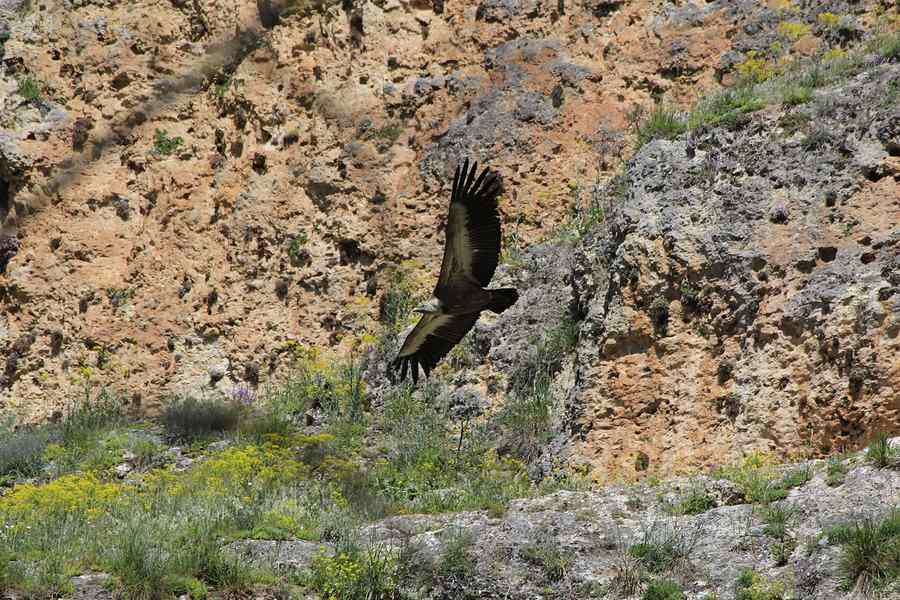
Meteora is famous for its monasteries perched on sandstone pillars, yet the same cliffs shelter one of central Greece’s richest bird-of-prey communities. The rock towers and the oak forest of the Antichasia mountains below form a protected Natura network site, valued across Europe for its nesting raptors. Egyptian and griffon vultures ride the thermals above Kastraki, golden eagles patrol the ridges, and jackdaws pour from the cliff pockets at dusk. This guide covers the birds, mammals, reptiles and best watching spots, so you can pair rock-climbing scenery with real wildlife on your trip with My Greece Tours.
Watching wildlife here rewards patience and an early start, since raptors soar on warming air and forest animals move at first and last light. Our Meteora travel guide sets the practical scene for a visit, while this page focuses on the living landscape around the pillars. You will learn which vultures and eagles nest on the conglomerate rock, where foxes, wild boar and tortoises live in the woodland, and how spring migration transforms the skyline. The sections below cover the birds of prey, the forest mammals and reptiles, the protected status of the site, and exactly when and where to look.
Which birds of prey live in Meteora?
Meteora hosts Egyptian and griffon vultures, golden and short-toed eagles, peregrine falcons and common kestrels. These raptors nest on the conglomerate cliffs and hunt across the pillars and the forested Antichasia slopes below the rock towers.
The griffon vulture is the signature bird of Meteora, a heavy scavenger with a wingspan close to two and a half metres that circles the pillars on rising thermals. The rarer Egyptian vulture, smaller and white with black flight feathers, arrives each spring to breed on the conglomerate rock and departs south by autumn. Golden eagles hold territories along the Antichasia ridges, while the short-toed eagle hovers over open ground hunting snakes and lizards. Peregrine falcons stoop on pigeons and jackdaws at high speed, and the common kestrel hunts small mammals from a hover above the meadows. The cliffs give each species the ledges, pockets and updrafts it needs to nest and forage.
Smaller cliff birds share the same rock faces and add movement to every viewpoint. Alpine swifts scream past the towers in tight flocks through summer, and crag martins flicker along the vertical walls where they glue their mud nests. The blue rock thrush sings from exposed ledges, its slate-blue plumage catching the light near Kastraki. Jackdaws and ravens nest in the deeper pockets and caves, wheeling out in noisy groups at dawn and dusk. Ravens tumble and roll in display flights above the monasteries, their deep calls echoing between the stacks. This mix of scavengers, hunters and cliff specialists makes the airspace over Meteora one of the most active raptor theatres in mainland Greece.
What mammals and reptiles does the Meteora forest hold?
The oak and hornbeam woodland below the Meteora pillars supports red foxes, wild boar, badgers and hares, plus tortoises and lizards on sunny slopes. Snakes emerge in spring, and butterflies fill the clearings during the warmer months.
Below the bare rock, the Antichasia forest of oak and hornbeam gives cover to a solid range of mammals. Red foxes trot along the ring road at dusk and leave tracks on the footpaths, while wild boar root through the leaf litter and cross clearings at night. Badgers dig setts on the wooded slopes and forage after dark, and brown hares break from the grassy margins in daylight. The forest edge, where woodland meets meadow, concentrates this activity because it offers both shelter and feeding ground.
Walkers on the hiking in Meteora trails often spot fox scat, boar wallows and hare forms long before they glimpse the animals themselves, which stay hidden through the bright middle of the day.
Reptiles thrive on the warm conglomerate and the stony southern slopes that hold heat late into the day. Hermann’s tortoises graze the spring vegetation and can be found crossing paths after rain, moving slowly across open ground toward fresh growth. Wall lizards and green lizards bask on rocks and dart into crevices when disturbed, and snakes emerge from hibernation as temperatures climb through spring. Most snakes here are harmless grass and whip snakes, though walkers should watch where they place hands and feet on rocky ledges. Spring also brings clouds of butterflies to the wildflower meadows, from swallowtails to blues and fritillaries feeding on the fresh bloom.
This lower woodland world balances the raptor spectacle overhead with quieter, ground-level wildlife worth slowing down for.
Why is the Meteora area a protected Natura site?
Meteora and the Antichasia mountains form a protected Natura network area recognised for breeding raptors and habitat diversity. The conglomerate cliffs, oak forest and river valleys support vultures and eagles, earning the site legal protection across the European conservation framework.
The protection rests on the combination of vertical rock and continuous forest, a pairing that few places in Greece offer at this scale. The conglomerate pillars provide undisturbed ledges and caves where vultures and eagles can nest away from ground predators, and the surrounding Antichasia woodland supplies the hunting ground and carrion that feed them. This link between the geology of the cliffs and the living community is direct, which is why the geology of Meteora matters to conservation as much as to sightseeing. The Natura network status obliges landowners and authorities to keep these breeding sites safe from disturbance, quarrying and unregulated development, protecting the raptor population that depends on the pillars year after year.
Conservation and tourism sit close together here, so responsible behaviour protects the very wildlife visitors come to admire. The same rock towers that draw pilgrims to the Meteora monasteries hold active nests, and loud groups or drones near the cliffs can flush breeding vultures from their ledges at a critical moment. Climbers follow seasonal access agreements that close certain faces during nesting, giving eagles and falcons the quiet they need to raise young. Keeping to marked footpaths, taking litter home and watching raptors from a respectful distance all help the site meet its protected-area duties.
Understanding why Meteora carries Natura status turns a simple sightseeing trip into a visit that leaves the rocks and their birds undamaged for the next season.
When and where is the best time for Meteora wildlife watching?
Dawn and dusk deliver the best Meteora wildlife watching, when raptors soar and forest animals move. Spring from March to May adds migrant birds and wildflowers, making it the richest season across the ring road and footpaths.
Timing shapes what you see more than location does, because activity peaks at the edges of the day. Early morning brings foxes and hares onto the ring road before traffic builds, and the first thermals lift vultures off their roosts by mid-morning. Late afternoon into dusk returns the raptors to the cliffs and sends jackdaws streaming into their pockets in loud, wheeling flocks. The heat of midday flattens the action, so plan a lie-in break and return for the golden hour. This rhythm suits photographers well, and pairing wildlife with the Meteora photography golden light gives you soaring birds against warm rock, the strongest images the site can offer at any season.
Spring stands out as the peak wildlife window across the whole area, from March through May. Migrant raptors pass through and settle to breed, Egyptian vultures return to their cliff ledges, and short-toed eagles hunt the newly active snakes on the warming slopes. Wildflowers carpet the meadows and draw the first butterflies, and tortoises move about after winter dormancy. For families planning a nature-focused day, the accessible viewpoints along the ring road make this an easy outing, and our advice on visiting Meteora with kids pairs well with slow wildlife watching.
Autumn offers a quieter second pass as migrants head south, while summer suits swifts and martins overhead but bakes the forest floor into stillness through the long, hot afternoons.
How can visitors spot raptors safely around Meteora?
Scan the sky from the paved ring-road viewpoints and quiet footpaths, using binoculars and patience rather than approaching nests. Watch the thermals above the pillars mid-morning, keep noise low, and let soaring vultures come into view naturally.
The paved ring road that loops the pillars gives the easiest raptor watching, with several pull-offs where the sky opens above the rock towers. Park safely, step away from the car, and scan the thermals rising off sun-warmed cliffs where griffon vultures gather to soar. A pair of binoculars turns distant specks into identifiable birds, letting you separate a broad-winged vulture from a golden eagle or a fast peregrine. The footpath up from Kastraki toward the monasteries also passes prime airspace, and moving slowly along it keeps birds relaxed.
The best time to visit Meteora for raptors is a clear, mild morning, since strong wind and heavy cloud suppress the thermals the big birds rely on to stay aloft.
Respect for nesting birds keeps both wildlife and visitors safe on the cliffs. Stay on marked paths, avoid scrambling toward ledges that may hold nests, and never fly a drone near the rock faces where it can panic breeding vultures. Keep voices low at viewpoints, since sudden noise scatters jackdaws and can push a raptor off its perch before you get a proper look. Good planning around best time to visit Meteora conditions matters, because calm mornings with rising thermals reward patient watchers most. Bring water, sun protection and a field guide, settle at one viewpoint rather than rushing between many, and let the birds work the airspace above you.
This unhurried approach yields longer, closer sightings and protects the very population that makes Meteora special.
Frequently Asked Questions
Are there really vultures at Meteora?
Yes, Meteora is one of the more reliable places in mainland Greece to watch vultures. Two species occur here: the large griffon vulture, present year-round, and the smaller Egyptian vulture, a spring and summer visitor that migrates south for winter. Griffon vultures nest on the conglomerate ledges and gather in the sky when thermals build, riding the warm air in slow, wide circles high above the pillars and the town of Kastraki. Egyptian vultures return each spring to breed on the same cliffs, recognisable by their white body, black wing edges and yellow face.
Both feed on carrion from the surrounding Antichasia forest and pastures, which is why the protected woodland below the rocks matters so much to them. Mid-morning on a clear, mild day gives the best chance, once the sun has warmed the cliffs enough to lift the birds off their roosts and out over the valley.
What is the best season to see Meteora wildlife?
Spring, from March through May, is the richest season for wildlife around Meteora. Migrant raptors move through and settle to breed, Egyptian vultures return to their cliff ledges, and short-toed eagles hunt the snakes that emerge as the slopes warm. Wildflowers bloom across the meadows and draw the first butterflies, while tortoises and lizards become active after winter. Forest mammals such as foxes, hares and wild boar are easiest to spot at dawn and dusk throughout the warmer half of the year. Summer keeps alpine swifts and crag martins busy overhead but bakes the forest floor quiet through the hot afternoons, so early starts are essential.
Autumn offers a second, gentler pulse of activity as migrants head south again, with pleasant temperatures for long walks. Winter is the quietest stretch, though resident griffon vultures, ravens and jackdaws stay on the cliffs and can be watched on calm, sunny days.
Where should I go to watch birds and animals at Meteora?
The paved ring road that loops the rock pillars is the simplest and safest base for wildlife watching, with several pull-offs where the sky opens over the cliffs. From these viewpoints you can scan the thermals for griffon vultures and eagles without leaving the roadside, which suits families and casual visitors. Footpaths climbing from Kastraki toward the monasteries pass prime cliff airspace and lead into the oak forest where foxes, hares and boar leave their tracks. The forest edge, where woodland meets meadow, concentrates mammal and reptile activity and rewards a slow, quiet approach on foot.
Bring binoculars, settle at one spot rather than rushing between many, and time your visit for the first hours after sunrise or the last before dusk. Stay on marked trails, keep noise low, and avoid approaching cliff ledges that may hold nests, so that breeding vultures, eagles and falcons stay undisturbed while you enjoy long, close sightings.