
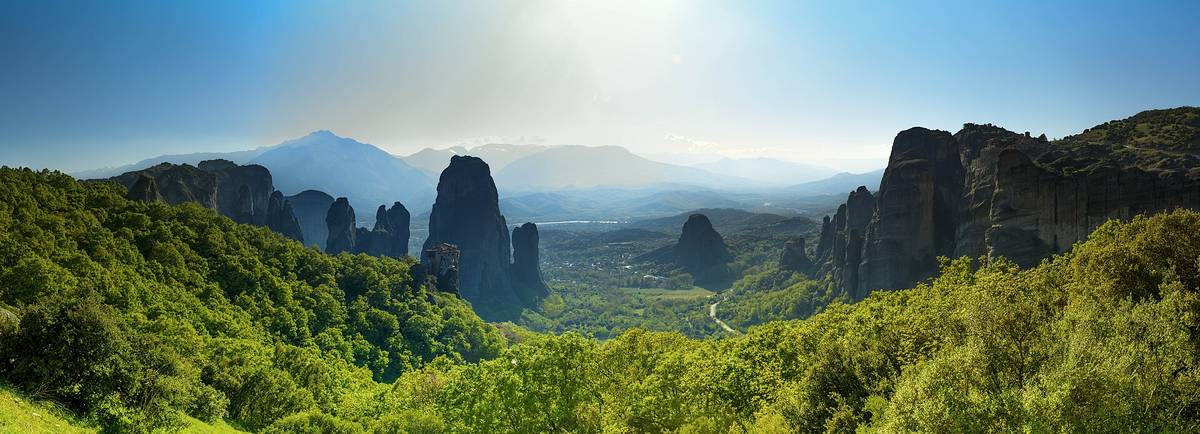
Thessaloniki, Greece’s second city, sits in the north, roughly 230 km northeast of the Meteora rock pillars above Kalabaka. The drive covers 2.5 to 3 hours on the A2 Egnatia motorway before you turn south toward Grevena and Kalabaka. Rail and intercity bus both link the two, and organised tours run direct. This transport node explains each route in concrete terms so you can pick the one that fits your dates, budget and appetite for a long day. Every option here connects a northern base to the monasteries in a single hop or one clean transfer, and each is bookable with My Greece Tours.
The 230 km gap between Thessaloniki and the monasteries shapes every decision on this page. A self-drive gives full control, a train removes the driving, a KTEL bus is the budget line, and a tour or transfer removes all logistics. Our wider Meteora travel guide frames the destination itself; this page focuses purely on the northern approach. The sections below cover the fastest routes, the driving line, the rail connection through Palaeofarsalos, the bus transfer at Trikala, and whether a single day works or an overnight in Kalabaka serves you better.
How do you get from Thessaloniki to Meteora?
Four routes link Thessaloniki with Meteora: a 230 km self-drive of 2.5 to 3 hours, a train to Kalabaka via Palaeofarsalos, a KTEL bus transferring at Trikala, and organised day tours or private transfers running direct.
The self-drive is the fastest door-to-door option and the one most travellers pick. You leave Thessaloniki on the A2 Egnatia Odos heading west, then turn south near Grevena toward Kalabaka, the gateway town beneath the rock pillars. The full run measures about 230 km and takes 2.5 to 3 hours without stops. A rental car also lets you drive the 17 km monastery loop once you arrive, which frees you from bus timetables. If you would rather not steer for six hours across a day, the alternatives below carry you north to south without a wheel in hand.
Booked Meteora tours bundle the transport with a guided visit, and a private transfer drops you at your Kalabaka hotel with no navigation required.
The train is the most relaxed self-guided choice. Services from Thessaloniki reach Kalabaka station, sometimes direct and sometimes with a change at Palaeofarsalos junction, which sits on the main north-south line. Kalabaka’s station is a short walk or taxi ride from the base of the rocks. The KTEL intercity bus is the budget route: you ride to Trikala, the regional capital 21 km east of Kalabaka, then transfer to a local connection for the final leg. Both land you car-free in Kalabaka, where the monasteries rise directly overhead. For moving between the six monasteries once there, our guide to getting around Meteora sets out the local options.
Is the drive to Meteora from Thessaloniki straightforward?
Yes. The A2 Egnatia motorway runs west from Thessaloniki as a modern toll road, then you branch south toward Grevena and Kalabaka. The 230 km route is well signed and takes 2.5 to 3 hours.
The A2 Egnatia Odos is a dual-carriageway motorway with tunnels and viaducts through the northern mountains, so the pace holds steady for most of the journey. You keep west from Thessaloniki, pass the Grevena exits, then drop south on a national road toward Kalabaka. Tolls apply on the motorway sections, so carry coins or a card for the booths. The final approach into the plain of Thessaly opens up the first view of the sandstone towers, which makes the last twenty minutes the memorable part of the drive. Parking sits at the base of each monastery, though spaces fill by mid-morning in peak season.
Our two days in Meteora plan pairs well with a self-drive, since the car handles the loop across both mornings.
Timing the departure matters more than the distance. Leaving Thessaloniki by 07:00 puts you at the first monastery gate near opening, ahead of the tour coaches that arrive from Kalabaka hotels. Fuel stations line the Egnatia, so there is no need to top up before you set off. Winter driving demands care on the southern stretch near the mountains, where snow can reach the road between December and February; check conditions before you commit to a day trip in that window. Once parked, walking paths and short drives connect the clifftop Meteora monasteries, each with its own opening days. A rental returned in Thessaloniki keeps the trip flexible from the northern base.
Can you reach Meteora from Thessaloniki by train?
Yes. Trains run from Thessaloniki to Kalabaka station, either direct or with one change at Palaeofarsalos junction on the main north-south line. Kalabaka station sits a short walk from the rock base.
Rail removes the driving and lets you watch the Thessalian plain unfold through the window. The line runs south from Thessaloniki toward the interior, and the connection to Kalabaka often passes through Palaeofarsalos, where you switch to the branch that terminates beneath the rocks. Some departures run through without a change, so check the specific service when you book rather than assuming a transfer. Kalabaka’s terminus is the end of the line, which makes it hard to miss your stop. From the station, the lower monastery paths and the town’s hotels are within walking distance or a two-minute taxi.
Once you have arrived, our advice on where to stay in Meteora helps you pick a base near the trailheads rather than out on the plain.
The train suits travellers who want to read, nap or work rather than concentrate on mountain roads. Booking ahead secures a seat on busier departures, and reserved tickets cost little more than walk-up fares on this route. Arriving car-free changes how you tour the monasteries: you either join a local minibus, hike the connecting footpaths, or hire a taxi for the clifftop loop. That trade-off is worth weighing before you commit. Travellers approaching from the capital instead should read our Meteora day trip from Athens guide, which mirrors this northern approach from the opposite direction. From Thessaloniki, the rail journey pairs naturally with an overnight, since a same-day return leaves little slack for a leisurely visit.
How does the KTEL bus route to Meteora work?
The KTEL intercity bus is the budget line. You ride from Thessaloniki to Trikala, the regional capital 21 km east of Kalabaka, then transfer to a local connection that covers the final leg to the rock base.
KTEL operates Greece’s intercity coach network, and its buses are clean, air-conditioned and reliable. The Thessaloniki service heads south into Thessaly and drops you at Trikala’s bus terminal rather than at the rocks themselves. From Trikala you cross the platform to a local Kalabaka-bound bus for the last 21 km, a short ride that runs through the day. Confirm the connection time before you leave so the transfer lines up without a long wait at Trikala. This route costs less than the train and considerably less than a car rental, which makes it the choice for budget travellers who do not mind a change.
Once in town, the practical guide to getting around Meteora covers the local buses that climb toward the monastery gates.
The bus rewards planning over spontaneity, because a missed connection at Trikala can cost an hour or more. Buy the Thessaloniki-to-Trikala leg in advance during summer weekends, when seats sell out. Arriving by coach means you tour the monasteries without a car, so factor in the local minibus that runs a fixed circuit from Kalabaka up to the clifftops. A guided outing solves that final-mile problem entirely; booked Meteora tours collect you in town and drive the loop with a guide who explains each monastery’s history. The bus works best for travellers staying overnight, since the transfer timings make a tight same-day return from Thessaloniki hard to pull off with time to enjoy the site.
Is a Meteora day trip from Thessaloniki worth it?
A day trip is doable but long, filling twelve hours or more once you count the round drive and the visit. An overnight in Kalabaka delivers sunrise light, a calmer pace and time for a second monastery cluster.
The 230 km each way means a self-drive day trip runs to five or six hours behind the wheel plus the monastery visit, so you leave Thessaloniki early and return after dark. It works if your dates are fixed and Meteora is the single goal, and an organised tour absorbs the driving so you arrive rested. The gain from staying over is real, though: an overnight in Kalabaka lets you photograph the pillars at sunset and sunrise, when the light turns the sandstone gold and the coaches have gone. Our two days in Meteora plan spreads the six monasteries across two mornings so none feels rushed.
That pacing is hard to match on a single long day from the north.
Choosing between the two comes down to your schedule and your reason for going. A day trip keeps your Thessaloniki hotel and adds no packing, which suits a city break with one big excursion. An overnight opens the town’s tavernas, the quieter evening trails and a dawn visit before the first arrivals. For accommodation near the trailheads, our guide to where to stay in Meteora compares hotels in Kalabaka and the village of Kastraki right under the rocks. Either way, the northern approach from Thessaloniki is shorter than the run up from Athens, so a compact visit is achievable whichever pace you set.
Frequently Asked Questions
How far is Meteora from Thessaloniki and how long does it take?
Meteora sits about 230 km southwest of Thessaloniki, above the town of Kalabaka in the Thessalian plain. The self-drive covers that distance in 2.5 to 3 hours without stops, running west on the A2 Egnatia motorway before turning south toward Grevena and Kalabaka. The train reaches Kalabaka station either direct or with one change at Palaeofarsalos junction, and journey length varies by service, so check the timetable when you book. The KTEL bus routes through Trikala, 21 km east of Kalabaka, adding a transfer to the total travel time. Distance aside, the practical difference is the driving effort: the car is fastest door to door, while rail and bus let you rest but tie you to timetables.
For touring the clifftops after arrival, see our guide to getting around Meteora, which covers the local loop between the monastery gates.
Which route from Thessaloniki to Meteora is best for me?
Pick the route by your priorities. A self-drive wins on speed and flexibility, since it handles both the 230 km approach and the 17 km monastery loop, so it suits travellers who want full control of the day. The train removes the driving and lets you relax through the Thessalian plain, landing you car-free at Kalabaka station near the rock base. The KTEL bus is the budget line, transferring at Trikala, and rewards planners who confirm the connection in advance. An organised tour or private transfer erases all logistics: a guide collects you and drives the loop. If you are car-free after arriving, our advice on where to stay in Meteora helps you base near the trailheads.
Travellers coming from the capital instead should read our Meteora day trip from Athens guide, which handles the southern approach in the same practical detail.
Should I visit the Meteora monasteries as a day trip or stay overnight?
Both work from Thessaloniki, and the answer turns on time and light. A day trip is doable but long, running twelve hours or more once you fold in the round drive of roughly five to six hours plus the visit, so you leave early and return late. It suits a city break where Meteora is the single headline excursion. An overnight in Kalabaka is the calmer choice: you catch sunset and sunrise on the sandstone pillars, eat in the town’s tavernas, and spread the six clifftop monasteries across two unhurried mornings. Our two days in Meteora plan lays out that slower pace step by step. Winter days shorten the window, which pushes the balance toward staying over.
The Meteora monasteries also keep varying opening days, so a second day guards against finding your target site closed.