
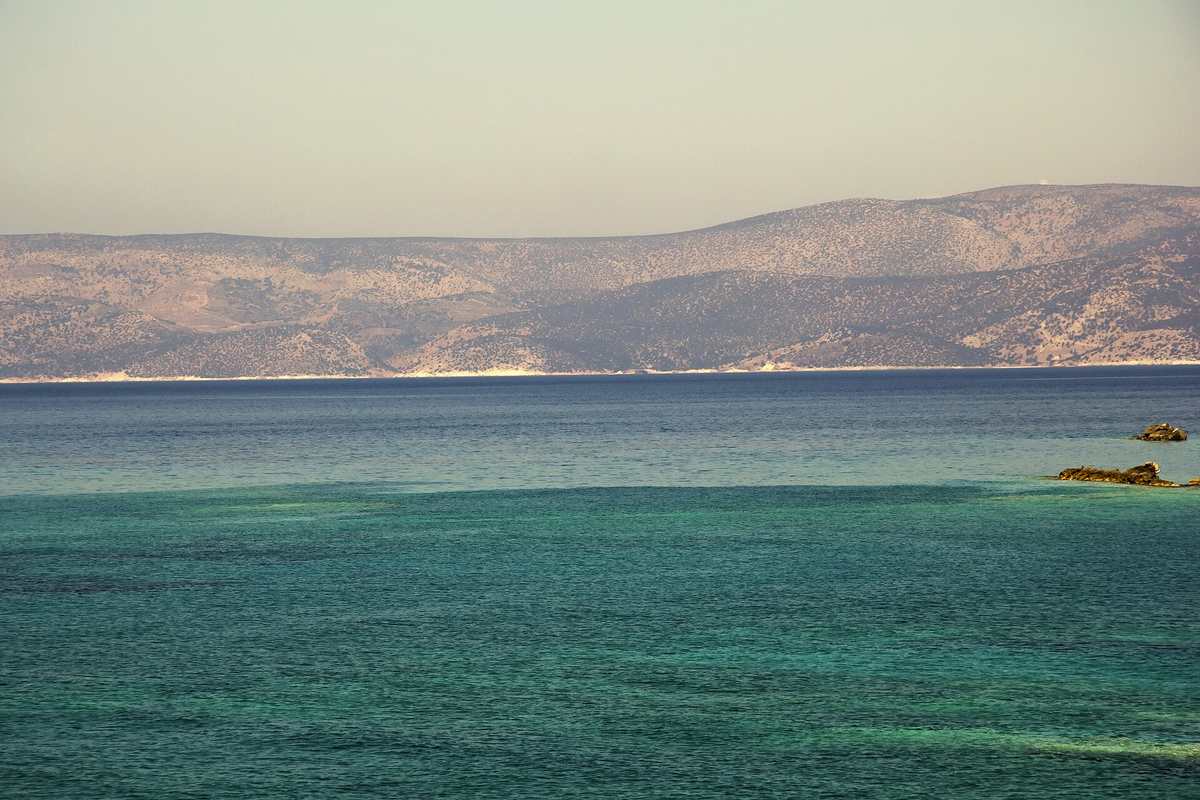
Panormos beach marks the far southeastern corner of Naxos, a wide sandy bay that most visitors never reach. The road narrows past Sangri and turns to gravel, deterring casual traffic and preserving a rare stretch of empty coast. Shallow turquoise water spreads over pale sand, warming quickly under the Aegean sun. One seasonal taverna serves the bay, and development stops almost entirely at the shoreline. This is a beach for travellers who want isolation, silence, and a horizon free of umbrellas. Get your bearings, plan the drive, and arrange the wider trip with My Greece Tours.
Reaching Panormos rewards preparation more than luck, and our Naxos travel guide frames where this bay sits within the island’s varied coast. The final kilometres demand a capable vehicle, water, shade, and food carried well in advance of the drive. Careful timing and a full tank matter as much as any packing list here. The sections below cover the drive itself, the water and sand, the single taverna, the ancient traces nearby, and the traveller who will feel most at home on this remote southeastern shore.
Where is Panormos beach on Naxos?
Panormos lies at the southeastern extremity of Naxos, well beyond Sangri and the end of the paved network. The bay faces open sea, sheltered by low rocky headlands, and sits far from Chora and the main western resort belt.
Panormos occupies the island’s quiet southeastern flank, a coastline that sees a fraction of the traffic reaching the western resorts. The drive runs inland from Chora toward Sangri, then swings south across dry hills dotted with old terraces and grazing goats. Tarmac gives way to a graded dirt track that twists toward the coast. The bay finally opens below, a broad arc of sand meeting flat blue water. Compare this remoteness with the developed western strands documented in our guide to the beaches of Naxos, where tavernas and sunbeds line the shore. Panormos offers the opposite: raw space, a single building, and the sound of wind across scrub.
The setting suits travellers chasing genuine emptiness rather than the amenities of the busier resort coast nearer town.
The final approach separates Panormos from casual day-trippers and defines its character. The track surface loosens into gravel and rock, and ruts deepen after winter rain. Passing places are rare, so oncoming vehicles negotiate carefully. The village of Sangri serves as the last practical waypoint for fuel awareness, supplies, and a final stretch of reliable tarmac. Beyond it, signage thins and the landscape empties. The reward for persistence is a bay almost entirely to yourself, even at the height of summer. Distance from the airport and port runs to well over an hour by road, and longer still at cautious speeds.
Treat the journey as part of the experience rather than an obstacle, and Panormos delivers a wide, unspoilt shore that very few travellers on the island ever manage to see.
What is the water and sand like at Panormos?
The bay holds shallow, exceptionally clear turquoise water over soft pale sand. The gradient stays gentle far out from shore, warming the shallows quickly and creating calm, easy swimming conditions on settled days across most of the season.
Panormos rewards swimmers with water of striking clarity and a shallow, forgiving profile. Pale sand carpets the seabed, tinting the shallows a luminous turquoise that deepens gradually toward the mouth of the bay. The gentle gradient lets you wade a long way before the water reaches your chest, warming the surface quickly through summer. Calm mornings turn the surface glassy, ideal for slow swimming and floating under an open sky. The clarity rivals the celebrated shallows at Alyko beach on the island’s southwest, though Panormos trades cedar dunes for bare, sun-struck simplicity. Fish dart across the sand in the clear water, easily watched from the surface.
The bay’s orientation offers some shelter, yet swells build on windy afternoons, so plan longer swims for the calmer early hours.
The sand itself runs soft and pale across a generous arc, backed by low dunes and dry scrub rather than buildings. Space is abundant, and even a busy August day leaves wide gaps between visitors. There are no sunbeds, no umbrellas for hire, and no marked swimming zones. Bring your own shade, since the bay offers almost none once the morning sun climbs. The exposed setting means afternoon winds can whip fine sand along the shore, a common trait on the island’s less sheltered coasts such as Pyrgaki beach. Underfoot the sand stays clean and free of the seaweed banks that gather on some bays.
The combination of clear shallow water, soft sand, and total absence of infrastructure defines the swimming experience and rewards those who arrive fully self-sufficient.
What facilities exist at Panormos beach?
One seasonal taverna serves the bay during summer, offering simple food and cold drinks. Beyond it there are no shops, sunbeds, lifeguards, or reliable services, so visitors must arrive entirely self-sufficient with water, shade, and supplies.
Panormos operates on near-total self-sufficiency, a defining feature rather than a drawback. A single seasonal taverna sits above the sand, opening through the warmer months and serving simple grilled dishes, salads, and cold drinks. Its hours flex with demand and weather, so treat it as a welcome bonus rather than a guarantee. No mini-markets, kiosks, or rental stands break the emptiness. Carry ample drinking water, food, sun protection, and a fully charged phone, since mobile coverage weakens along this coast. The nearest reliable resupply lies back toward Sangri and the inland villages, a long drive on rough road.
This absence of commerce keeps the bay unspoilt and quiet, closer in spirit to the untouched inlets near Agiassos beach than to any organised resort. Preparation transforms the visit from a gamble into a rewarding day.
Practical planning matters more here than at any serviced beach on the island. Fuel up before leaving the paved network, since no station sits near the bay and the round trip consumes a tank on rough terrain. Pack a basic first-aid kit, a spare tyre, and enough water for the heat of the day. Shade is the scarcest resource, so a beach umbrella or shelter earns its space in the car. There are no waste bins, so carry everything out and leave the sand as you found it. The seasonal taverna aside, the bay offers nothing else, and that emptiness is precisely the appeal.
Travellers used to the tavernas and boat links of Moutsouna on the east coast should recalibrate expectations. Panormos asks for effort and repays it with rare, uncrowded solitude. The rocky fringes of the bay hold clear water ideal for snorkelling in Naxos.
Are there ancient or Cycladic traces near Panormos?
The wider southeastern district holds scattered ancient and Cycladic remains, including old settlement sites and lonely rural chapels. These traces sit inland and along the approach roads rather than directly on the sand at the bay of Panormos itself.
The southeastern corner of Naxos carries a quiet archaeological depth that most beachgoers overlook. The broader district around Panormos and Sangri preserves scattered evidence of long habitation, from Cycladic-era settlement traces to later rural chapels standing alone in the fields. Sangri itself anchors this heritage, sitting near the celebrated Temple of Demeter, a restored classical sanctuary set among terraced hills. The route to the bay passes stone walls, threshing floors, and small churches that mark centuries of farming and worship. These features reward a slow drive with eyes open to the landscape. The full context of the island’s antiquity fills a chapter of our Naxos travel guide, which maps the monuments worth a detour.
The traces near Panormos are subtle and unlabelled, adding a layer of interest to a journey already defined by isolation and space.
Cycladic culture shaped these islands across the Bronze Age, and Naxos ranked among its most productive centres for marble and figurines. The southeastern hills held small farming communities whose remains survive as low foundations and pottery scatters, best left undisturbed. Rural chapels along the tracks often reuse ancient stone, a common thread across the interior. None of this sits directly on the beach, so the traces demand curiosity and a willingness to explore the approach rather than the shore. Respect protected areas and touch nothing, since these fragile sites carry legal protection. Pair the beach day with a stop at the Sangri temple for the clearest window into the region’s past.
The combination of empty coast and deep history gives Panormos a resonance that busier, more developed strands nearer town simply cannot match for the reflective traveller.
Who is Panormos beach best suited to?
Panormos suits self-reliant travellers, experienced drivers, and lovers of solitude who plainly value emptiness over comfort. It rewards those willing to prepare fully and forgive the long rough road in exchange for a rare, unspoilt southeastern shore.
Panormos rewards a specific kind of visitor and frustrates others, so honesty about expectations matters. The bay fits confident drivers comfortable with loose gravel, ruts, and long distances between services. It fits swimmers who love clear shallow water and can bring their own shade, food, and drink. It fits photographers, walkers, and anyone chasing silence and open horizons away from crowds. The bay does not fit travellers seeking sunbeds, easy access, beach bars, or a quick dip near town. Families with small children can enjoy the gentle shallows, though the drive and the lack of shade demand extra planning.
Those who prefer serviced coves will find a friendlier fit among the organised strands catalogued in the beaches of Naxos. Panormos is a destination for the self-sufficient, not a casual afternoon stop.
The ideal Panormos day begins early, before the heat and the afternoon wind, with the car loaded for total independence. Arrive with a full tank, plenty of water, packed food, sturdy footwear for the rough parking area, and a plan to leave no trace behind. Reward yourself with hours of uninterrupted swimming, reading, and quiet before the light softens for the drive home. Pair the trip with the antiquities near Sangri or a longer loop through the quiet southeastern interior for a richer and more varied day out. This corner of Naxos remains one of the least compromised stretches on the whole island, a genuine escape for those prepared to earn it.
Load the car the night before and set out early to enjoy the calm morning hours. Plan your visit and tours through our Naxos travel guide.
Frequently Asked Questions
Do I need a 4×4 to reach Panormos beach?
A high-clearance vehicle is strongly recommended, though a compact car can manage the track in dry conditions with careful, slow driving. The final kilometres past Sangri turn to graded dirt and gravel, with ruts, loose stone, and occasional washouts after winter rain. Low-slung rental cars risk scraping their undersides and often carry insurance clauses that void cover on unpaved roads, so check your rental agreement before setting out. A small SUV or crossover handles the surface comfortably and removes most of the stress. Drive slowly, keep well right on blind bends, and watch for oncoming traffic in the rare passing places.
Rain transforms the surface into a slick, uneven mess, so avoid the route during or immediately after a storm. Allow well over an hour from Chora, longer at cautious speeds. Preparation and a suitable vehicle turn a daunting drive into a manageable and memorable approach to a truly remote bay.
When is the best time to visit Panormos beach?
Late spring through early autumn offers the warmest water and most settled conditions, with June and September striking the finest balance of heat, calm, and quiet. High summer brings reliable sun and warm shallows, yet the exposed bay catches strong afternoon winds that whip fine sand along the shore. Morning visits reward you with glassy water and gentle air before the breeze builds. The single seasonal taverna operates through the warmer months, closing outside the season, so a shoulder-month trip may find it shut. Spring paints the surrounding hills green and wild, while autumn holds the sea warm from summer heat.
Avoid days with a strong northerly forecast, since the swell and blown sand can spoil the experience on an unsheltered coast. Start early regardless of month to enjoy the calmest water and to complete the rough drive in good light. The bay stays quiet across the whole season, rarely filling even on a peak August weekend, which is its enduring charm.
Can I combine Panormos with other places on Naxos?
The southeastern route lends itself to a rewarding loop rather than a single stop. Sangri, the last village on the paved network, holds the restored Temple of Demeter, a peaceful classical sanctuary set among terraced hills that pairs naturally with a beach day. The inland villages of the Tragea valley, with their Byzantine churches and olive groves, sit within reach for travellers extending the drive. The east-coast settlement of Moutsouna and the old emery-mining landscape offer another direction for a longer expedition, connected by scenic mountain roads. Combining the beach with Sangri’s antiquities makes the most of the effort spent reaching this corner.
Fuel up before leaving the tarmac, carry supplies for the whole day, and plan your timings around the heat and the afternoon wind. A well-planned loop turns a remote swim into a full and varied day exploring the island’s quieter, less visited southeastern interior and coast, far from the crowds of the western resorts.