
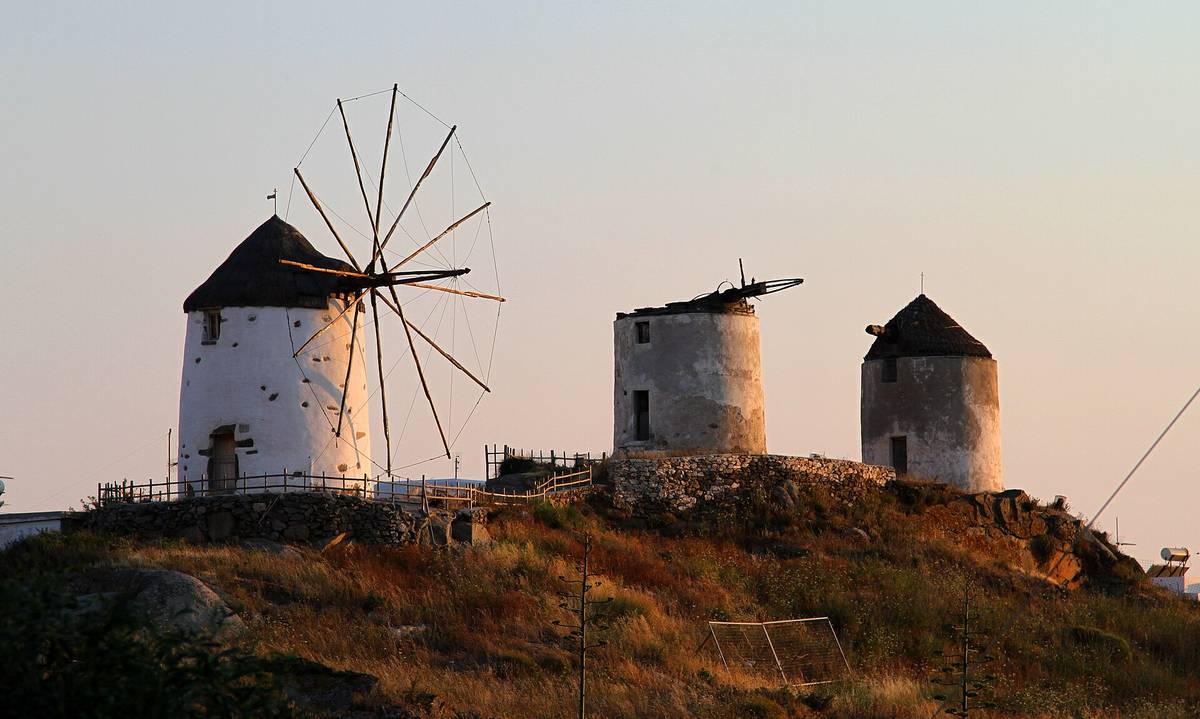
Vivlos, still widely called Tripodes, sits on the fertile southwest plain of Naxos, halfway between the harbour town and the long west-coast beaches. The village greets you with whitewashed lanes, blue shutters and three hilltop windmills that mark its skyline from a distance. Around it stretch vineyards, olive groves and the famous potato fields that supply tables across the island. Rural life carries on here at an unhurried pace, with tavernas, small churches and farmers working the land much as their families always have. This inland stop rewards travellers who want authentic Naxian character within easy reach of the coast, and you can weave it into a wider island itinerary with My Greece Tours.
Tripodes anchors the productive heart of central Naxos, a landscape of farms, chapels and gentle ridges that feeds much of the island. Our Naxos travel guide places the village within the wider network of inland settlements and nearby shores, so you understand how it connects to the rest of Naxos. The sections below cover the origin of the Tripodes name, the windmills and whitewashed lanes, the farming produce that made the plain prosperous, the church of Agios Ioannis Theologos and its festival, and how the village works as a quiet base near the beaches.
Why is Vivlos also called Tripodes?
Tripodes means “three feet” in Greek, a name locals link to three separate hamlets that gradually merged into one village. The older name endures in everyday speech, on signposts and among residents across the plain.
The “three feet” reading of Tripodes points to three small neighbourhoods that grew together over generations into the single settlement standing today. Residents still use Tripodes far more than the official Vivlos, and you hear it in directions, on bus stops and in taverna conversation. The merged-hamlet story explains why the village spreads across gentle rises rather than clustering on one hill, with lanes linking what were once distinct clusters of homes. Walking through, you sense the old boundaries in the way chapels and squares repeat across the layout.
This layered past sits within the broader story of the villages of Naxos, each carrying its own etymology and settlement pattern shaped by farming, defence and family ties across the fertile interior of the island.
The dual name reflects a deep local identity rooted in the land rather than in tourism. Vivlos appears on maps and administrative records, yet Tripodes remains the living name that farmers and elders prefer. This attachment to an older toponym marks the village as a place with continuity, where the same families have tended the same fields for a very long time. The three-hamlet origin also shaped social life, giving the community several small cores instead of one dominant centre. Visitors who take time to wander notice churches and gathering spots distributed across the village, a physical record of that merged history.
Understanding the name helps you read the landscape, and it sets Vivlos apart from coastal resorts as a genuine working settlement on the Naxian plain that has kept its rural soul intact through the years.
What do the windmills and whitewashed lanes look like?
Three restored windmills crown a low hill above Vivlos, visible across the plain and lit warmly at sunset. Below them, narrow whitewashed lanes wind past blue doors, flowering courtyards and small squares in classic Cycladic style.
The hilltop windmills are the signature image of Vivlos, their stone towers and conical caps standing out sharply against the sky. They once ground grain harvested from the surrounding plain, and their restoration keeps that agricultural memory alive for visitors. Climb toward them for a wide view over vineyards, potato fields and the sea beyond, a vista that explains why the site was chosen. Down in the village, whitewashed lanes twist between low houses with painted shutters, bougainvillea and stone thresholds worn smooth by use. The layout invites slow walking rather than a fixed route, so you drift from one quiet square to the next.
This Cycladic character echoes the whitewashed cores of the villages of Naxos, yet Vivlos keeps a working, lived-in feel rather than a polished one.
Photographers favour the golden hour here, when the setting sun warms the windmill stone and throws long shadows across the fields. The contrast of bright white walls against green vineyards and brown earth gives the village a distinctive palette that changes through the day. Small details reward attention: hand-painted numbers on doors, drying herbs on windowsills and old wells set into courtyards. The lanes stay pleasantly cool in summer thanks to their narrow width and tall walls, making an afternoon stroll comfortable. Unlike the busy waterfront of Naxos Town, Vivlos offers calm, near-empty streets where you meet residents rather than crowds.
This authentic atmosphere, framed by the windmills above, is a large part of why travellers add the village to an inland loop across the plain.
What produce makes the Vivlos plain famous?
The fertile plain around Vivlos yields prized Naxian potatoes, robust wines and fine olive oil. Vineyards, olive groves and vegetable fields cover the land, supplying markets across the island and giving local tavernas their fresh, seasonal ingredients.
Naxian potatoes are the star crop of this plain, grown in rich soil and sold across Greece for their firm texture and full flavour. Farmers here rotate potatoes with other vegetables, keeping the land productive through the seasons and stocking island kitchens with genuinely local produce. Vineyards climb the gentle slopes, feeding a long winemaking tradition that pairs naturally with a session of wine tasting in Naxos. Olive groves fill the gaps between fields, pressing into a green, peppery oil used in every taverna dish. This abundance is no accident: the southwest plain enjoys deep soil and reliable water, making it the agricultural engine of the island.
Eating in Vivlos means tasting that harvest directly, from potato-based mains to salads dressed in oil pressed a short walk away from your table.
Rural life in Vivlos still revolves around the farming calendar, with planting, tending and harvest marking the year for households. This working rhythm shapes the village atmosphere, where tractors share lanes with strolling visitors and produce stands appear beside doorways. Local tavernas lean on this bounty, serving dishes built around the day’s vegetables, cheeses and meats from nearby holdings. The result is honest, seasonal cooking that reflects the land rather than a tourist menu. Travellers who value provenance find real satisfaction here, tasting exactly what the plain produces in its proper season. The village pairs beautifully with the wider countryside around Sangri, another inland area rich in farms, chapels and history.
Together these settlements show how the interior of Naxos feeds and sustains the coast that most visitors know first.
What is the church of Agios Ioannis Theologos and its festival?
Agios Ioannis Theologos is the village’s principal church, dedicated to Saint John the Theologian. Its annual festival brings the community together with a liturgy, shared food, music and dancing that fill the square well into the night.
Agios Ioannis Theologos stands as the spiritual heart of Vivlos, a whitewashed church whose bell and courtyard anchor village life. Its feast day is the highlight of the local calendar, a panigyri that draws families home and visitors in from across the plain. The celebration opens with a church service, then flows into the square where long tables carry local dishes, wine from the vineyards and homemade sweets. Musicians play traditional island tunes while dancers form lines that welcome newcomers to join. This festival captures the communal spirit that defines Vivlos, a village bound by faith, farming and shared history. Smaller chapels dotted through the settlement echo the merged-hamlet past, each with its own name day.
Attending the panigyri offers a rare, warm glimpse of authentic Naxian tradition far removed from any staged tourist show.
Beyond the main festival, the church shapes the everyday rhythm of the village through weddings, baptisms and quiet Sunday gatherings. Its architecture follows the plain Cycladic style, with a white facade, a modest bell tower and a shaded courtyard that offers respite from the sun. Villagers maintain the building with evident pride, and its doors often stand open for a quiet moment inside. The festival food deserves special mention, since it showcases the plain’s produce at its best, from potato dishes to grilled meats and local cheeses. Sharing that table is the surest way to feel part of the community for an evening.
The tradition connects Vivlos to a broader network of village feasts across the villages of Naxos, each celebrating its patron saint with the same generous hospitality that makes the island’s interior so rewarding.
How does Vivlos work as a base near the west-coast beaches?
Vivlos sits within easy reach of the long west-coast sands, making it a calm, affordable base away from the crowds. You gain quiet nights, authentic tavernas and a short drive to some of the island’s best swimming.
The position of Vivlos on the southwest plain places it minutes from the west coast, where wide golden beaches stretch for kilometres. A short drive brings you to Plaka beach, a long ribbon of soft sand and shallow water ideal for families and long swims. Continue south and you reach Mikri Vigla, a windswept headland loved by kitesurfers and anyone seeking dunes and open sea. Basing yourself inland means you swap crowded beachfront rooms for a quiet village with real character, then travel to the sand by day. Evenings back in Vivlos bring calm lanes, home-style cooking and star-filled skies over the fields.
This balance of rural peace and coastal access is exactly why so many independent travellers choose the plain over a busy resort strip.
Staying in Vivlos also puts the whole island within comfortable range, from mountain villages to the harbour and its ferries. Car rental makes the most of the location, opening up beaches, wineries and inland trails on flexible days out. The village itself offers enough tavernas, bakeries and small shops to cover daily needs without a long trip to town. Families appreciate the safe, quiet streets, while couples enjoy the unhurried, authentic mood. Provisions and produce come straight from the surrounding farms, so meals stay fresh and genuinely local. This combination of central position, low prices and rural charm makes Vivlos a smart choice for exploring Naxos at your own pace.
Plan your visit and tours through our Naxos travel guide.
Frequently Asked Questions
How do I get to Vivlos from Naxos Town?
Vivlos lies roughly ten kilometres southwest of the harbour, a drive of about fifteen to twenty minutes along a well-surfaced road across the plain. A rental car gives the most freedom, letting you combine the village with beaches and wineries on the same outing. Local KTEL buses also run between the port and the southwest villages, stopping near Vivlos on routes toward the beaches, though schedules thin out in the low season. Taxis offer a reliable alternative for a direct trip, and hotels arrange transfers on request. The road passes through open farmland, giving you a first taste of the fertile interior before you arrive.
The village makes an easy half-day excursion from the coast or a peaceful overnight base. Setting out early rewards you with quiet lanes and soft morning light on the windmills. Combining the drive with a coastal stop turns a short trip into a full, satisfying day across central Naxos.
What is there to eat and buy in Vivlos?
Vivlos serves honest, seasonal Naxian cooking rooted in the produce of the surrounding plain. Tavernas feature dishes built around the famous local potatoes, grilled meats, fresh vegetables and island cheeses, all dressed in olive oil pressed nearby. Bakeries turn out breads, savoury pies and sweet treats that make a fine picnic for the beach. Small shops and roadside stands sell farm vegetables, honey, wine and preserves straight from local growers, so you taste the harvest at its source. Village wine, poured from the vineyards on the plain, pairs naturally with a hearty meal. Meals here favour tradition over trends, giving you a genuine sense of Naxian home cooking.
Prices tend to sit below the coastal resorts, adding value to the authentic experience. Buying produce directly from farmers supports the rural economy that keeps the village alive. A leisurely lunch in a shaded courtyard, followed by a stroll to the windmills, captures the relaxed spirit of the place perfectly.
Is Vivlos worth visiting on a Naxos trip?
Vivlos rewards travellers who want authentic village life away from the busy coast, offering whitewashed lanes, hilltop windmills and a working agricultural landscape. The dual name and merged-hamlet history give it a genuine local character rarely found in resort areas. Its central position on the southwest plain places beaches, wineries and inland villages within easy reach, making it a practical base as well as a charming destination. Food lovers appreciate the honest cooking rooted in the prized potatoes, wines and olive oil of the plain. The church of Agios Ioannis Theologos and its lively festival reveal the community’s deep traditions, especially for visitors timing their trip to the panigyri.
Photographers treasure the windmills at sunset, framed by green fields and blue sky. Travellers seeking crowds and nightlife should look to the coast, yet those wanting peace, provenance and real Naxian culture find Vivlos a memorable stop that adds depth to any island itinerary.