
Milos facts cover the home of the Venus de Milo, the Island of Colours, its volcanic origins, the prehistoric obsidian trade, the sacred catacombs and over 70 beaches. Plan a fact-filled trip through My Greece Tours.
A few facts add depth to the Milos travel guide. The sections below cover what Milos is famous for, the Venus de Milo, the Island of Colours, its history and what makes it unique.
What is Milos famous for?
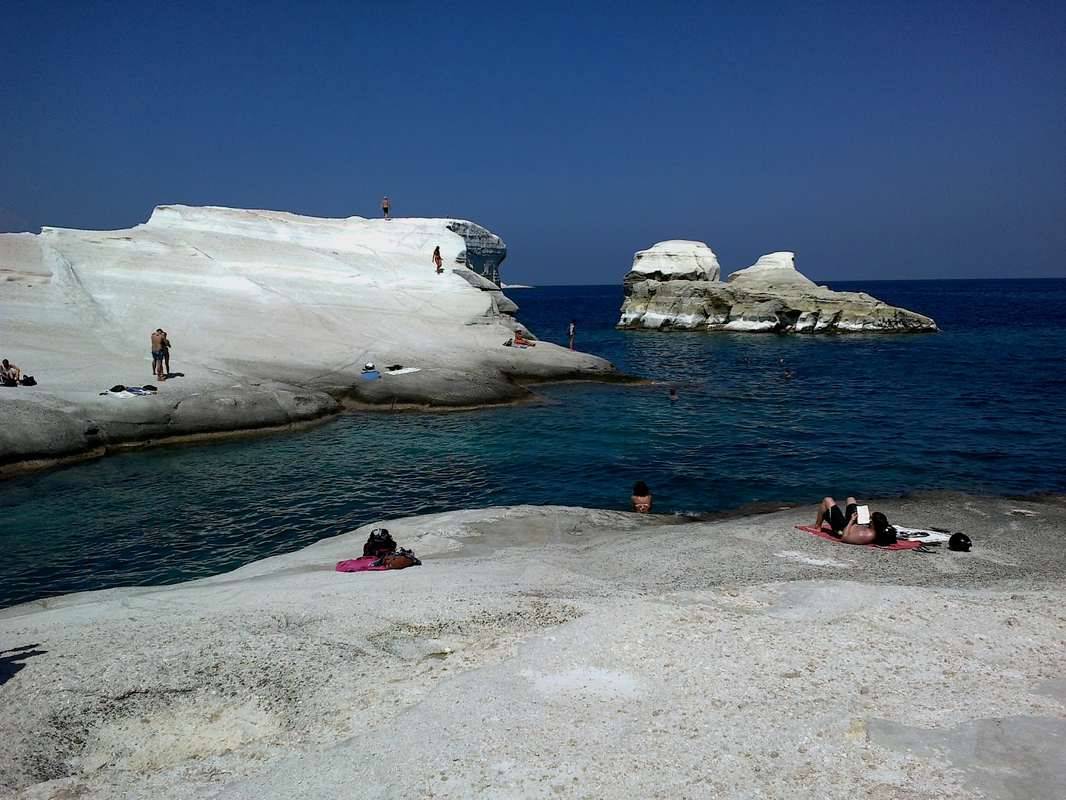
Milos is famous as the home of the Venus de Milo, as the Island of Colours for its volcanic beaches, and for the lunar Sarakiniko and the sea caves of Kleftiko.
Milos is known for the Venus. The famous statue came from here. The find made the island world-famous. The name endures.
The island earns a colourful name. Volcanic beaches glow in many shades. The coast dazzles with colour. The nickname fits.
The signature sights amaze. Sarakiniko shines like a moonscape. Kleftiko hides sea caves. The scenery draws crowds.
The heritage runs deep. Mining and obsidian shaped the island. Our guide to Milos history tells the story. The next section covers the Venus de Milo.
Milos packs a remarkable amount of fame into a small island. It is best known worldwide as the home of the Venus de Milo, one of the most celebrated statues in history, found here in the early nineteenth century. Beyond the statue, the island is famed for its extraordinary volcanic coast, which earns it the nickname the Island of Colours, with beaches in shades of white, red, grey and pink scattered across more than 70 coves.
The island’s signature sights have made it a star of the Cyclades. Sarakiniko, a beach of bleached white volcanic rock, looks like a lunar landscape, while Kleftiko, a complex of sea caves and arches once used as a pirate hideout, is reachable only by boat. Add a deep mining heritage, a prehistoric obsidian trade and a status as a sacred island, and Milos offers far more than beautiful beaches, blending dramatic scenery with a rich and unusual history.
Where did the Venus de Milo come from?
The Venus de Milo was found on Milos in the early nineteenth century by a local farmer.
The statue came from Milos. A local farmer uncovered it. The find dates to the early nineteenth century. The island gave it its name.
The figure is ancient. It belongs to the Hellenistic period. The carving dates to the second century BC. The marble is Parian.
The statue depicts a goddess. It portrays Aphrodite of Milos. The Romans called her Venus. The name stuck worldwide.
It now stands in Paris. The Louvre displays the masterpiece. Our guide to the Venus de Milo tells it in full. The next section covers the Island of Colours.
The Venus de Milo is the island’s most famous export, and its story is one of the great facts of Milos. A local farmer uncovered the marble statue on the island in the early nineteenth century, near the ancient city. Properly known as the Aphrodite of Milos, named for the goddess of love and beauty, it was renamed Venus by the Romans. Carved from Parian marble, it stands over two metres tall and is missing both arms, which only adds to its mystery.
The statue dates to the Hellenistic period, with the modern consensus placing it around the second century BC. After its discovery, it was acquired by France and has been displayed at the Louvre in Paris ever since, where it draws crowds from around the world as one of the most celebrated works of ancient Greek art. A cast of the statue is kept in the Archaeological Museum of Milos, keeping the island’s connection to its most famous daughter alive.
The Venus de Milo is the island’s most famous export. A local farmer uncovered the marble statue near the ancient city in the early nineteenth century. Properly known as the Aphrodite of Milos, named for the goddess of love, it was renamed Venus by the Romans. Carved from Parian marble during the Hellenistic period, around the second century BC, it stands over two metres tall and is missing both arms, which only adds to its mystery. The original now draws crowds at the Louvre in Paris, while a cast is kept in the island’s Archaeological Museum, keeping the connection alive.
Why is Milos called the Island of Colours?
Milos is called the Island of Colours because volcanic and hydrothermal activity stained its rock in many shades. Its beaches glow white, red, orange, grey and pink, from the lunar Sarakiniko to the cliffs of Paleochori, a palette unmatched among the Cyclades.
The colours come from the rock. Volcanic activity laid down minerals. Hydrothermal water altered the stone. The shades streak the coast.
The beaches glow in many tones. White, red and grey mix. Orange and pink streak the cliffs. The palette dazzles.
The signature beaches show it. Sarakiniko gleams snow-white. Paleochori burns red and orange. The contrast amazes.
The name fits the island. No Cyclades coast matches it. The lunar Sarakiniko beach leads them all. The next section covers the history.
The nickname Island of Colours is one of the most fitting facts about Milos, and it comes straight from the island’s geology. Volcanic activity and hydrothermal water altered the rock over millions of years, staining it in an extraordinary range of shades. The result is a coast unlike any other in the Cyclades, with beaches glowing white, red, orange, grey and even pink, depending on the minerals in the rock and the angle of the sun.
The signature beaches show the palette at its best. Sarakiniko gleams a bleached, lunar white, while Paleochori and Firiplaka streak the cliffs with reds and oranges from iron and sulphur. Across more than 70 beaches, the island offers a new colour at almost every cove. This volcanic spectacle, packed into a small island, is the heart of the Island of Colours nickname and the reason its coast is among the most photographed in Greece.
What are some interesting facts about Milos history?
Milos has been inhabited for around twelve thousand years, and its volcanic obsidian was traded across the prehistoric Aegean. The island is declared sacred for its early-Christian catacombs, and its mining heritage runs from ancient obsidian to modern bentonite and perlite.
The island runs deeply ancient. People have lived here for millennia. The settlement dates to prehistory. The roots run deep.
Obsidian made it an early hub. The volcanic glass was prized for tools. Prehistoric traders carried it across the Aegean. The commerce ran early.
The catacombs mark it sacred. They rank among the oldest Christian sites. The Holy Synod named it a sacred island. The faith runs deep.
Mining shaped its long story. Bentonite and perlite drive it now. Our guide to Milos geology covers it. The next section covers what makes it unique.
The history of Milos is full of remarkable facts. The island has been inhabited almost continuously for around twelve thousand years, since prehistoric times, making it one of the longest-settled places in the Aegean. Its great early advantage was obsidian, the sharp volcanic glass that forms in its rock, which early people prized for tools and blades and traded across the prehistoric Aegean, making Milos one of the earliest trading centres in the Mediterranean.
The island’s heritage runs deep in other ways too. Milos is officially a sacred island, declared so by the Holy Synod largely because of its early-Christian catacombs near Trypiti, among the most ancient Christian monuments in Greece. Its mining story stretches from that prehistoric obsidian through ancient sulphur to the modern extraction of bentonite and perlite, of which the island is a leading European producer. Few small islands carry such a long and layered history.
The history of Milos holds remarkable depth. The island has been inhabited almost continuously since prehistoric times, for around twelve thousand years, making it one of the longest-settled places in the Aegean. Its great early advantage was obsidian, the sharp volcanic glass that early people prized for tools and traded across the prehistoric Aegean, making Milos one of the earliest trading centres in the Mediterranean. The island is also officially sacred, declared so for its early-Christian catacombs, and its mining story runs from that ancient obsidian to the modern bentonite and perlite of which it is a leading European producer.
What makes Milos unique?
Milos is unique for its volcanic landscape, with over 70 coloured beaches, sea caves and thermal springs found on few other islands.
The volcanic landscape sets it apart. Coloured beaches ring the coast. Sea caves and thermal springs feature. The scenery feels otherworldly.
The history adds depth. The Venus de Milo and obsidian trade endure. The sacred catacombs run ancient. The heritage is rich.
The calm completes it. Milos stays quieter than the famous islands. The crowds thin even in August. The peace draws travellers.
The mix makes Milos unique. Scenery, history and calm combine. Plan the highlights through our things to do in Milos guide and the wider Milos mythology.
Frequently Asked Questions
What is Milos famous for?
Milos is famous above all as the home of the Venus de Milo, one of the most celebrated statues in history, found on the island in the early nineteenth century. It is also known as the Island of Colours for its extraordinary volcanic coast, with beaches in shades of white, red, grey and pink across more than 70 coves. Its signature sights include the lunar Sarakiniko and the sea caves of Kleftiko, once a pirate hideout. Beyond scenery, Milos is famed for its mining heritage, prehistoric obsidian trade and its sacred early-Christian catacombs.
Was the Venus de Milo found on Milos?
Yes, the Venus de Milo was found on the island of Milos, which gives the statue its name. A local farmer uncovered the marble figure on the island in the early nineteenth century, near the ancient city. Properly known as the Aphrodite of Milos, named for the goddess of love, it was renamed Venus by the Romans. Carved from Parian marble during the Hellenistic period, around the second century BC, it stands over two metres tall and is missing both arms. The original is now displayed at the Louvre in Paris, with a cast kept in the island’s Archaeological Museum.
Why is Milos called the Island of Colours?
Milos is called the Island of Colours because volcanic and hydrothermal activity stained its rock in an extraordinary range of shades over millions of years. The result is a coast unlike any other in the Cyclades, with beaches glowing white, red, orange, grey and even pink depending on the minerals in the rock. Sarakiniko gleams a bleached, lunar white, while Paleochori and Firiplaka streak the cliffs with reds and oranges. Across more than 70 beaches, the island offers a new colour at almost every cove, making its coast among the most photographed in Greece.