
Milos geology explains the volcanic origin of the island, why its beaches are so colourful, the minerals it has mined for millennia and the hot springs. Plan geology-rich tours through My Greece Tours.
The volcanic story underpins the whole Milos travel guide. The sections below cover the volcanic origin, the colourful beaches, the minerals, the obsidian trade and the hot springs.
Why is Milos a volcanic island?
Milos is volcanic because it sits on the South Aegean Volcanic Arc, formed where the African plate dives beneath the Aegean. Volcanic activity built the island from lava, ash and rock, shaping its dramatic coastline, sea caves and a vast natural harbour.
Milos rose from the sea floor. It sits on the South Aegean Volcanic Arc. The same arc holds Santorini and Nisyros. The plates drive the volcanism.
The tectonics explain the origin. The African plate dives beneath the Aegean. Magma rose and built the island. Lava, ash and rock layered up over time.
The activity shaped the coast. Eruptions carved cliffs and sea caves. A huge crater forms the natural harbour. The bay of Adamas fills an old caldera.
The volcano still simmers below. Hot springs and steam mark the ground. The island sleeps but is not dead. The geology drives the wider things to do in Milos. The next section covers the colourful beaches.
The volcanic story underpins everything on Milos. The island rose on the South Aegean Volcanic Arc. The arc runs from Methana through to Nisyros. Plate collision sparked the volcanism roughly three million years back. Magma, lava and ash built the land in layers. Eruptions carved the cliffs and sea caves. A vast crater forms the natural harbour at Adamas. The bay fills an old, drowned caldera. The volcano sleeps now rather than dies. Hot springs and steam still mark the ground, and the simmering heat below ties directly to the colour and minerals that define the island today.
Why are the beaches of Milos so colourful?
The beaches of Milos are colourful because volcanic and hydrothermal activity stained the rock in many shades. Minerals, ash and altered stone give shores of white, red, orange, grey and pink, earning Milos the nickname the Island of Colours among the Cyclades.
The colours come from the rock. Volcanic activity laid down varied minerals. Hydrothermal water altered the stone. The shades streak the cliffs and sand.
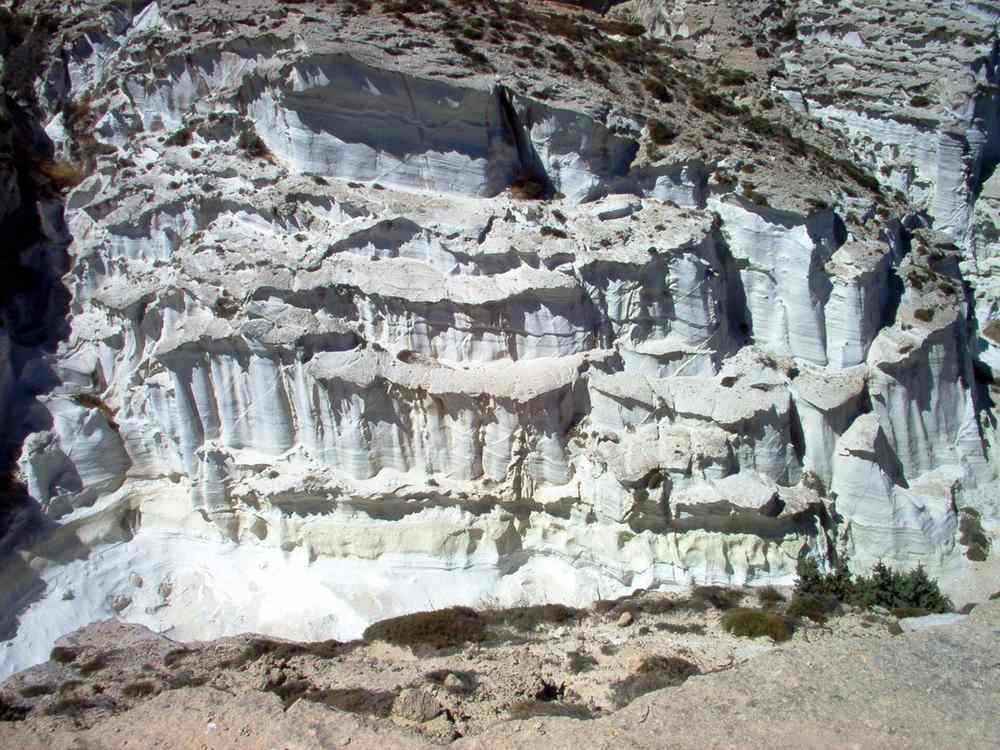
The white beaches stun the eye. Sarakiniko glows like a moonscape. Volcanic ash bleached the rock pale. The wind and sea smoothed it.
The reds and oranges burn bright. Paleochori and Firiplaka streak with colour. Iron and sulphur tint the cliffs. The hues shift through the day.
The variety defines the island. More than 70 beaches show the palette. Each cove reveals a new shade. The lunar Sarakiniko beach leads them all. The next section covers the minerals.
The coloured coast follows straight from the geology. Volcanic activity laid down a range of minerals. Hydrothermal water then altered the rock further. Iron, sulphur and ash tint the cliffs and sand. Sarakiniko glows pale from bleached volcanic stone. Paleochori and Firiplaka burn red and orange. Wind and sea smoothed the rock over ages. The shades shift with the angle of the sun. The island counts 70-plus beaches in the palette. The variety earns Milos its name as the Island of Colours, and each cove shows a new face of the same volcanic chemistry.
What minerals does Milos have?
Milos is rich in industrial minerals, including bentonite, perlite, kaolin, sulphur and pozzolan. The island is one of Europe’s leading producers of bentonite and perlite, and mining has shaped its economy and landscape since ancient times, when obsidian was the prize.
Milos is a mineral treasure. The volcanic ground holds many ores. Bentonite and perlite lead the list. The island ranks among Europe’s top producers.
The minerals serve modern industry. Bentonite binds and seals in many uses. Perlite lightens soil and building products. Kaolin and pozzolan add to the mix.
Sulphur once drove the mines. The yellow mineral was dug for decades. The old sulphur mines still scar the east. The ruins draw curious visitors.
Mining shaped the island’s life. It built the economy and the towns. The scars mark the landscape. Our Milos Mining Museum guide tells the story. The next section covers the obsidian trade.
The volcanic ground made Milos a mineral treasure. The island ranks as a top European producer. Bentonite and perlite lead its modern output. Kaolin and pozzolan add to the mining mix. Hot fluids deposited ores deep in the rock. Gold, silver and manganese formed in the cracks. Sulphur once drove the mines in the east. The abandoned sulphur works still scar the coast. Mining shaped the island’s economy and towns. The story runs from prehistoric obsidian to today’s quarries, and the Mining Museum in Adamas lays out the full sweep of the island’s mineral wealth.
What was the Milos obsidian trade?
Milos obsidian was prized across the prehistoric Aegean for sharp tools and blades. The island’s volcanic glass was traded widely thousands of years ago, making Milos one of the earliest and most important trading centres in the Mediterranean.
Obsidian was the island’s first export. The volcanic glass forms in eruptions. It breaks into razor-sharp edges. Early people prized it for tools.
The trade reached far and wide. Milos obsidian travelled across the Aegean. Tools made from it turn up far away. The commerce ran thousands of years back.
The trade made Milos important. The island became an early hub. Its wealth grew on the glass. It was a Mediterranean centre in prehistory.
The legacy runs deep. The obsidian story predates the classical age. It shaped the island’s long history. Our guide to Milos history covers it in full. The next section covers the hot springs.
Obsidian gave Milos its first claim to fame. The volcanic glass forms when lava cools fast. The rock breaks into razor-sharp edges and blades. Early people prized it for tools and weapons. The black Melian glass anchored prehistoric trade. Extraction sites worked at Nychia and Demenegaki. Tools of Milos obsidian turn up far across the Aegean. Finds reach back thousands of years. The trade made the island an early hub of commerce. Long before the Venus de Milo, obsidian set Milos at the centre of the Aegean’s earliest exchange networks.
The volcanic past still shapes daily life on Milos. Mining remains a working industry on the island. Quarries supply bentonite and perlite to the world. The geology built the harbour that shelters the ferries. The same forces drew the beaches travellers chase today. The Mining Museum in Adamas frames the long story. The sulphur mines in the east stand as ruins to visit. The geothermal heat warms beaches like Paleochori. The island wears its geology in plain sight, and a curious traveller can read three million years of volcanic history across its coast and quarries.
Does Milos have hot springs?
Yes, Milos has hot springs and thermal waters, a sign that the volcano still simmers below. Warm water bubbles up at several beaches, including Paleochori, where the sand and shallows heat up. The geothermal activity also feeds steam vents and warm patches around the coast.
The volcano warms the ground. Hot springs rise at several spots. The thermal water proves the volcano lives. The heat seeps up from below.
Paleochori shows it best. The sand and shallows warm to the touch. Steam rises where the water meets heat. Tavernas once cooked food in the hot ground.
Other coves share the warmth. Warm patches dot the coastline. Steam vents mark the geothermal field. The activity hums beneath the surface.
The springs add to the appeal. They turn geology into experience. A warm swim caps a beach day. The colourful Paleochori beach is the place to feel it.
The hot springs prove the volcano still lives. Thermal water rises at points around the coast. The heat seeps up from the magma below. Paleochori shows the effect most clearly. Its sand and shallows warm to the touch. Steam rises where hot ground meets the sea. Tavernas once cooked food in the heated earth. Warm patches and steam vents dot the shoreline. The geothermal field hums beneath the surface. A warm swim at Paleochori caps a beach day, and it turns the island’s deep geology into something a visitor can feel firsthand.
Seeing the geology firsthand asks for little effort. A boat trip reveals the layered, coloured cliffs from the sea. The white rock of Sarakiniko shows the volcanic ash up close. Paleochori’s warm sand proves the heat below. The sulphur mines display the island’s mineral wealth. The Mining Museum explains the science behind the colours. A short drive links these stops across the island. The geology turns a beach holiday into a lesson. For travellers curious about the earth, Milos lays out its volcanic story along an accessible, scenic and richly varied coast.
The geology explains the whole character of Milos. The island rose on the South Aegean Volcanic Arc. Eruptions shaped its cliffs, caves and harbour. Hydrothermal water painted the beaches in colour. The same ground yields bentonite, perlite and more. Obsidian made the island an early trading hub. Hot springs show the volcano still simmers below. Mining has shaped the island for thousands of years. The Venus de Milo only adds to its fame. For travellers curious about how an island forms, Milos reads like an open-air lesson in volcanic geology.
Frequently Asked Questions
Why is Milos volcanic?
Milos is volcanic because it sits on the South Aegean Volcanic Arc, the same chain that includes Santorini and Nisyros. The arc formed where the African tectonic plate dives beneath the Aegean, melting rock that rose as magma and built the island from layers of lava, ash and volcanic stone. This activity shaped the dramatic coastline, the sea caves and a vast natural harbour set in an old crater at Adamas. The volcano is dormant rather than extinct, and hot springs and steam vents show it still simmers below.
Why are Milos beaches different colours?
The beaches of Milos are different colours because volcanic and hydrothermal activity stained the rock in many shades. As magma, ash and mineral-rich waters altered the stone over time, they left shores of white, grey, red, orange and pink. Sarakiniko glows lunar-white from bleached volcanic ash, while Paleochori and Firiplaka streak red and orange from iron and sulphur. This remarkable variety, packed into a small island with more than 70 beaches, earns Milos its nickname as the Island of Colours among the Cyclades.
What is Milos mined for?
Milos is mined for industrial minerals, above all bentonite and perlite, making it one of Europe’s leading producers of both. The volcanic ground also yields kaolin, pozzolan and, historically, sulphur, whose abandoned mines still scar the east of the island. Mining has shaped Milos since prehistoric times, when its volcanic obsidian was traded across the Aegean for sharp tools and blades. Today the industry remains central to the island’s economy, and its story is told in the Mining and Mineralogical Museum in Adamas.