
Milos history spans 9,000 years, from Neolithic obsidian trade to the Venus de Milo, Venetian rule and modern mining of bentonite and perlite. Plan visits to the historic sites through My Greece Tours.
The deep past is a thread through the whole Milos travel guide. The sections below cover the obsidian trade, the Venus de Milo, the long mining story and how to explore the island’s history today.
What is the history of Milos?
Milos has a 9,000-year history shaped by its volcanic rock. From Neolithic obsidian trade to a Bronze Age city, a centre of classical mining, the Venus de Milo, Venetian rule and modern quarrying, the island has long worked the earth.
Milos has worked the earth for 9,000 years. The volcanic rock drew people from the earliest times. They mined, traded and built across the ages. The island’s story runs deep in its geology.
The past spans many eras. The Neolithic obsidian trade opened the story. A Bronze Age city rose at Phylakopi. Classical mining, the Venus and Venetian rule followed in turn.
The island linked the ancient world. Milian obsidian travelled far across the seas. The trade made the island a hub of its age. Later minerals carried the trade onward.
The history shapes a visit today. Ancient sites, museums and ruins dot the island. The deep past adds depth to the beaches and villages. Exploring it ranks among the most rewarding things to do in Milos. The next section covers obsidian.
The island’s deep past runs through its rock. Milos has worked the earth for some 9,000 years. The volcanic ground drew people from the earliest times. They mined, traded and built across the ages. The Neolithic obsidian trade opened the long story. A Bronze Age city rose at Phylakopi. Classical mining, the Venus and Venetian rule followed in turn. Milian obsidian and later minerals tied the island to distant lands. The past shapes a visit through ancient sites and museums. The deep history adds real depth to the beaches and villages of Milos for any curious traveller.
Why was Milos important for obsidian?
Milos was a major source of obsidian, the sharp volcanic glass used for tools and blades. From around 7,000 BC in the Neolithic age, Milian obsidian was traded across the Aegean, reaching Crete, the Peloponnese, Egypt and southern Europe.
Obsidian opened the island’s story. The volcanic glass forms from rapidly cooled lava. Its sharp edges made fine tools and blades. Milos held some of the best deposits in the region.
The trade began in the Neolithic age. Crews worked the obsidian from around 7,000 BC. They shaped it into tools and weapons. The craft made the island valuable early.
Milian obsidian travelled far. Archaeologists have found it across the ancient world. It reached Crete, the Peloponnese, Egypt and southern Europe. The trade tied Milos to distant lands.
The Bronze Age deepened the trade. Around 1,800 BC the island traded obsidian and pottery. The making of ceramics and medicine from kaolin began. The obsidian story shows how mining shaped Milos from the start. The next section covers the Venus.
Obsidian made Milos famous in the ancient world. The volcanic glass forms from rapidly cooled lava. Its sharp edges made fine tools and blades. The island held some of the best deposits in the region. Crews worked the obsidian from around 7,000 BC. They shaped it into tools and weapons in the Neolithic age. Milian obsidian travelled far across the seas. Archaeologists have found it in Crete, the Peloponnese, Egypt and southern Europe. Around 1,800 BC the Bronze Age trade grew further. The obsidian story shows how mining shaped Milos from the very start of its long history.
What is the story of the Venus de Milo?
The Venus de Milo is a marble statue of Aphrodite, carved around 130 to 100 BC. A local farmer found it on Milos in 1820, near the ancient theatre. It has been displayed at the Louvre Museum in Paris ever since.
The Venus is the island’s most famous treasure. The marble statue shows the goddess Aphrodite. Sculptors carved it around 130 to 100 BC. It stands among the great works of ancient art.
A farmer made the discovery. He unearthed the statue on Milos in 1820. The find lay near the ruins of the ancient city. The chance discovery made history.
The statue left the island. It travelled to France soon after the find. The Louvre Museum in Paris has displayed it ever since. The Venus became a symbol of classical beauty.
The discovery site survives on Milos. A sign marks the spot near the ancient theatre and catacombs. A visit there links the island to the famous statue. Our guide to the Venus de Milo tells the full story. The next section covers mining.
The Venus de Milo is the island’s most famous treasure. The marble statue shows the goddess Aphrodite. Sculptors carved it around 130 to 100 BC. It stands among the great works of ancient art. A local farmer unearthed the statue on Milos in 1820. The find lay near the ruins of the ancient city and theatre. The statue soon travelled to France after the discovery. The Louvre Museum in Paris has displayed it ever since. A sign on Milos marks the discovery site near the theatre. A visit there links the island directly to the world-famous statue of Aphrodite.
How did mining shape Milos through the ages?
Mining shaped Milos from antiquity to today. Classical Milos worked lead, silver and copper; the Venetians and Ottomans exploited its minerals and sulfur; and modern mining from 1862 made the island the largest producer of bentonite and perlite in the European Union.
Classical Milos mined metals. The island worked deposits of lead, silver and copper. The Greeks prized them for coins and weapons. Mining made the island a centre of metallurgy.
Later rulers worked the minerals. The Venetians held Milos for centuries and mined its wealth. The Ottomans encouraged sulfur mining for gunpowder. Each era added to the long mining story.
The modern era began in the 19th century. The first mine concession came in 1862. It opened the production of sulfur, kaolin, bentonite, perlite and more. The industry grew into a pillar of the island.
Mining still drives the island today. Milos is the largest producer of bentonite and perlite in the European Union. The working quarries continue the ancient tradition. The Milos Mining Museum tells the full story. The next section covers how to explore it.
Mining shaped Milos from antiquity to the present. Classical Milos worked lead, silver and copper deposits. The Greeks prized them for coins, weapons and metalwork. The Venetians held the island for centuries and mined its wealth. The Ottomans encouraged sulfur mining for gunpowder. Modern mining began with the first concession in 1862. It opened the production of sulfur, kaolin, bentonite, perlite and more. The industry grew into a pillar of the island economy. Milos is now the largest producer of bentonite and perlite in the European Union. The working quarries continue a tradition that stretches back 9,000 years.
How do you explore the history of Milos today?
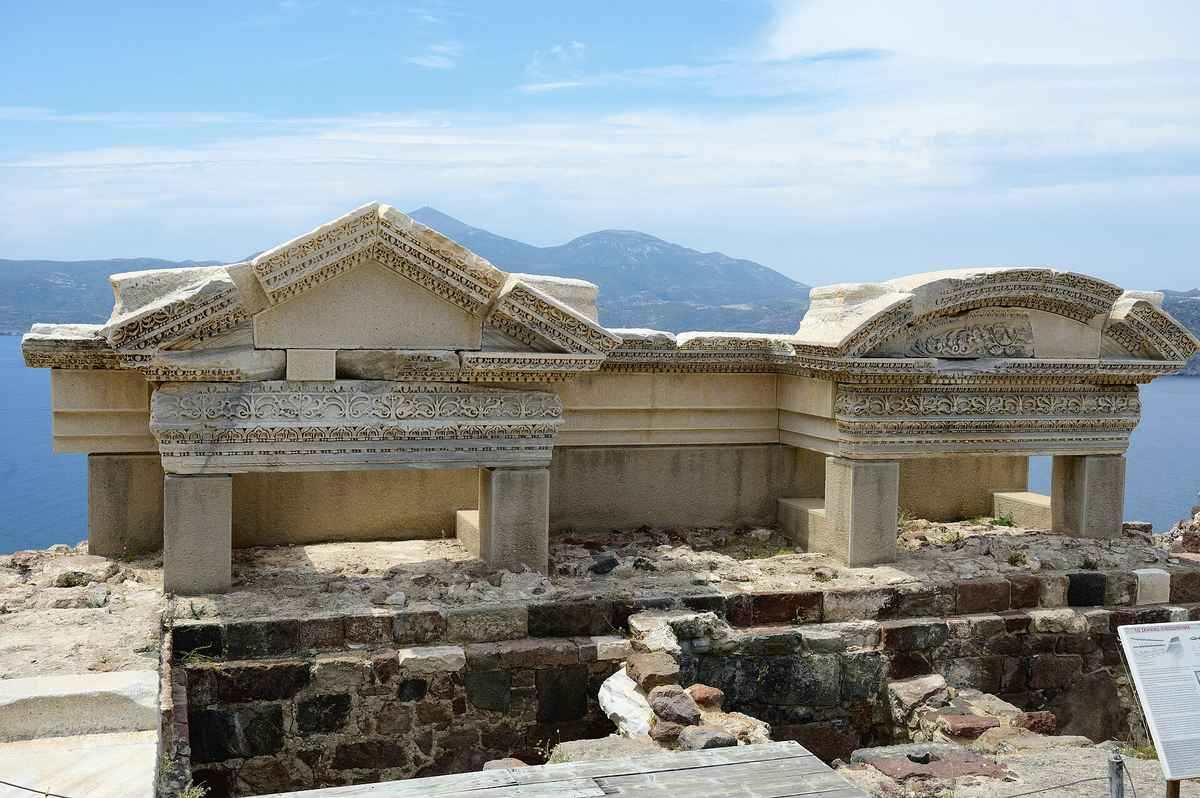
You explore the history of Milos at its ancient sites and museums: the Bronze Age city of Phylakopi, the catacombs, the Roman theatre, the Venus discovery site, the Mining Museum and the Folklore Museum in Plaka.
The ancient sites bring the past to life. The Bronze Age city of Phylakopi shows the island’s early urban life. The early Christian catacombs hold carved tombs from the first centuries AD. Both are open to visit.
The classical heritage clusters above Klima. The Roman theatre of Parian marble still hosts events. The Venus discovery site sits a short walk away. The historic core packs into a small area.
The museums tell the wider story. The Mining Museum traces the obsidian-to-perlite mining heritage. The Folklore Museum in Plaka shows island daily life. Together they round out the picture.
A history tour links them in a day. The sites and museums sit within easy reach by car. A guided or self-led route covers the highlights. The deep past deepens any visit to Plaka and the wider island of Milos.
The history comes alive at the island’s sites. The Bronze Age city of Phylakopi shows early urban life. The early Christian catacombs hold carved tombs from the first centuries AD. The Roman theatre of Parian marble still hosts events. The Venus discovery site sits a short walk away. The Mining Museum traces the obsidian-to-perlite heritage. The Folklore Museum in Plaka shows island daily life. The sites and museums sit within easy reach by car. A guided or self-led route links the highlights in a day. The deep past deepens any visit to the villages and beaches of Milos.
The deep past rewards curious travellers on the island. The 9,000-year story runs from obsidian to modern minerals. The Venus de Milo links Milos to world-famous ancient art. The mining heritage stretches from the Neolithic to today. The ancient sites and museums bring the past to life. Phylakopi, the catacombs and the Roman theatre stand open. The Mining and Folklore Museums tell the wider story. The sites sit within easy reach by car in a day. The history adds real depth to the beaches and villages. For travellers drawn to the past, Milos rewards a day among its ancient treasures.
Frequently Asked Questions
How old is the history of Milos?
The history of Milos spans around 9,000 years, going back to the Neolithic age when the island became a major source of obsidian. From around 7,000 BC, Milian obsidian was traded across the Aegean, reaching Crete, the Peloponnese, Egypt and southern Europe. A Bronze Age city rose at Phylakopi, and the island later became a centre of classical mining and the home of the Venus de Milo. The island has worked the earth continuously into the present day.
When was the Venus de Milo found on Milos?
The Venus de Milo, a marble statue of Aphrodite carved around 130 to 100 BC, was found on Milos in 1820 by a local farmer, near the ruins of the ancient city and the Roman theatre. The statue was soon taken to France and has been displayed at the Louvre Museum in Paris ever since. A sign on Milos marks the discovery site near the ancient theatre and the catacombs, which visitors can see today.
What is Milos known for in mining?
Milos has been a mining island for some 9,000 years, from Neolithic obsidian to modern industrial minerals. In antiquity it traded obsidian and worked lead, silver and copper; the Venetians and Ottomans later exploited its minerals and sulfur. Modern mining began in 1862, and today Milos is the largest producer of bentonite and perlite in the European Union. The Mining Museum in Adamas and the abandoned sulphur mines at Thiorichia tell this long story.