
A Nafplio day trip from Athens combines the elegant former Greek capital with the ancient citadel of Mycenae and the acoustically perfect Theatre of Epidaurus, all in the beautiful Peloponnese. Book a hassle-free guided day trip with transport from My Greece Tours for the easiest way to see all three.
This classic Peloponnese loop is one of the best day trips in the Athens travel guide. The sections below cover Nafplio, Mycenae, Epidaurus, how to get there and tips in full.
Is Nafplio a good day trip from Athens?
Yes, Nafplio makes an excellent day trip from Athens, usually combined with Mycenae and Epidaurus, around two hours away. The trio pairs a Venetian seaside town with two great archaeological sites in a full day of about 10 hours.
A day trip to Nafplio is one of the most rewarding excursions from Athens, and it is most often enjoyed as part of a classic Peloponnese loop that also takes in the ancient sites of Mycenae and Epidaurus. Lying around two hours’ drive south-west of Athens, across the Corinth Canal in the Argolis region of the Peloponnese, this route packs an extraordinary amount into a single day. You get the elegant, romantic seaside town of Nafplio, the first capital of modern Greece, with its Venetian fortresses, neoclassical streets and harbour charm, combined with two of the most important ancient sites in the country: Mycenae, the great Bronze Age citadel of the legendary King Agamemnon, and the Theatre of Epidaurus, world-famous for its perfect acoustics.
Together they offer a superb blend of ancient history, mythology, culture and picturesque beauty, all within a comfortable full-day excursion of around ten hours. Whether by organised tour or independently, it is a highlight of any Athens trip, set out alongside the guide to things to do in Athens. Nafplio itself is a delight.
What can you see in Nafplio?
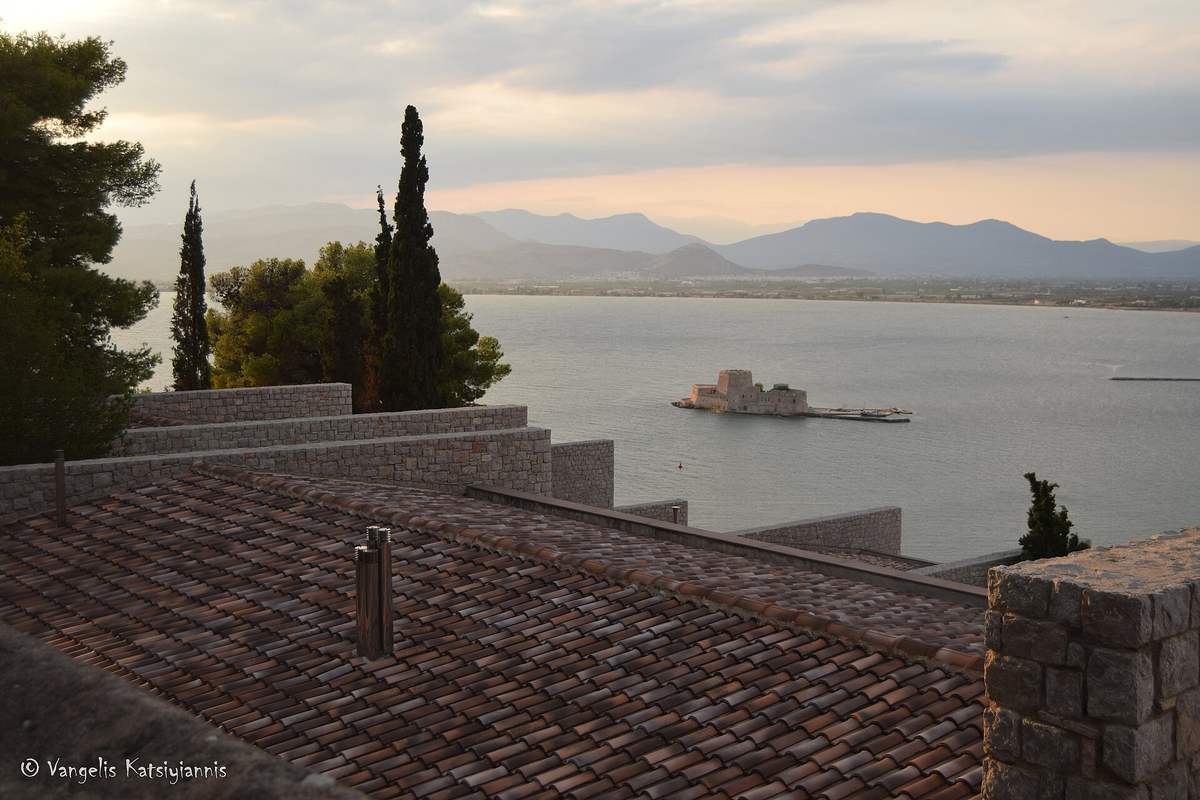
In Nafplio you can stroll the neoclassical old town, see the Bourtzi fortress on its harbour islet, climb the Palamidi castle for panoramic views, and relax in the waterfront squares. As Greece’s first capital, it blends Venetian, Ottoman and Greek heritage.
Nafplio is widely regarded as one of the most beautiful and romantic towns in Greece, and it is a delight to explore. The town served as the first capital of modern Greece after independence, before Athens, and its architecture reflects layers of Venetian, Byzantine, Ottoman and modern Greek influence. The compact old town is a joy to wander, with elegant neoclassical mansions, narrow stone lanes draped in bougainvillea, charming squares and a lively waterfront lined with cafes and tavernas. Its standout landmark is the Bourtzi, a picturesque little Venetian fortress sitting on a tiny islet in the harbour, one of the most photographed sights in Greece.
Towering above the town is the mighty Palamidi castle, a vast Venetian fortress reached by climbing nearly a thousand steps, or by road, rewarding visitors with breathtaking panoramic views over the town and the sea. The lower Acronauplia walls and bastions add more history and viewpoints. With its beauty, history and relaxed seaside atmosphere, Nafplio charms everyone who visits, set out alongside the guide to the best time to visit. Mycenae is steeped in myth.
What is Mycenae and what can you see there?
Mycenae was the greatest citadel of the Bronze Age Mycenaean civilisation, the legendary kingdom of Agamemnon. At the site you can see the Lion Gate, the royal grave circles, the palace ruins, and the beehive Treasury of Atreus, plus the museum.
Mycenae is one of the most important and evocative archaeological sites in Greece, the heart of the powerful Mycenaean civilisation that dominated the Greek world in the late Bronze Age, around 1350 BC. In Greek myth and Homer’s epics, it was the kingdom of Agamemnon, the king who led the Greek forces against Troy in the Trojan War, giving the ruins a powerful legendary resonance. Exploring the hilltop citadel, you pass through the famous Lion Gate, the monumental entrance crowned by two carved lionesses, one of the most iconic images of ancient Greece.
Within the walls lie Grave Circle A, the royal shaft graves where the spectacular gold treasures, including the so-called Mask of Agamemnon, now in the National Archaeological Museum, were found, along with the ruins of the royal palace and houses. Nearby stands the magnificent Treasury of Atreus, also called the Tomb of Agamemnon, a vast, beautifully constructed beehive-shaped tomb. The on-site museum displays many finds. Mycenae brings Bronze Age Greece and its myths vividly to life, set out alongside the guide to the National Archaeological Museum. Epidaurus completes the trio.
What is the Theatre of Epidaurus?
The Theatre of Epidaurus is a beautifully preserved ancient Greek theatre, world-famous for its near-perfect acoustics, where a coin dropped on the stage is heard in the back rows. It dates to the 4th century BC and seats around 14,000.
The final highlight of the classic Peloponnese day trip is the Theatre of Epidaurus, one of the best-preserved ancient theatres in the world. The theatre dates to the 4th century BC and stands on the slopes of a hill. It formed part of the great Sanctuary of Asklepios, the god of healing, an important ancient medical and religious centre where the sick came seeking cures.
The theatre has perfectly proportioned tiers of stone seating for around 14,000 spectators. It is renowned above all for its extraordinary, near-perfect acoustics. A word spoken softly, a coin dropped, or a match struck on the central stage can be heard clearly even in the highest rows, a fact visitors love to test for themselves.
Its remarkable state of preservation lets you appreciate the genius of ancient Greek theatre design, and it remains a living venue, hosting performances of ancient drama each summer during the Athens Epidaurus Festival. Standing in this acoustic marvel is a memorable experience. It crowns the day trip, set out alongside the guide to the Odeon of Herodes Atticus. Getting there and tips are worth knowing.
How do you get to Nafplio from Athens and what tips help?
Nafplio is about two hours from Athens by road. The easiest way to see all three sites is a guided day tour with transport and an archaeologist guide. You can also drive yourself or take the KTEL bus. Start early and allow around 10 hours.
A few practical points help you plan a Nafplio day trip from Athens. The town and the ancient sites lie around two hours’ drive south-west of Athens in the Peloponnese, and there are three main ways to visit. The easiest and most popular, especially to combine all three of Nafplio, Mycenae and Epidaurus in one day, is an organised guided day tour, which handles the driving, provides an expert archaeologist guide to bring the ancient sites alive, and includes the entrance fees and often lunch, typically lasting around ten hours. Alternatively, you can drive yourself in a hire car, which gives full flexibility to explore at your own pace, as the roads are good.
The budget option is the KTEL public bus from Athens to Nafplio, though it does not easily cover Mycenae and Epidaurus in a day, so it suits visiting Nafplio town alone. Whichever you choose, start early to fit everything in, wear sturdy, comfortable shoes for the archaeological sites and the climb to Palamidi, and bring sun protection, a hat and water, as the sites are exposed. With a full day and good planning, the trip is unforgettable, set out alongside the guides to multi-day ancient Greece tours and a Delphi day trip. The questions below cover the points visitors ask most.
When is the best time for a Nafplio day trip and what should you know?
The best time for a Nafplio, Mycenae and Epidaurus day trip is spring (April to June) or autumn (September to October) for pleasant weather and fewer crowds. Summer is hot for the exposed sites, so start early. Allow around 10 hours and wear sturdy shoes.
A little planning helps you get the most from a Nafplio day trip from Athens. The ideal seasons are spring, from April to June, and autumn, from September to October, when the weather is warm and pleasant for exploring the open archaeological sites of Mycenae and Epidaurus and wandering Nafplio’s streets, and the crowds are thinner than in peak summer. Summer can be very hot, especially at the shadeless ancient sites and on the steep climb to Nafplio’s Palamidi fortress, so if you visit then, start early and pace yourself through the heat. Because the trip covers a lot of ground, three destinations spread across the Argolis, allow a full day of around ten hours and accept that it is busy but rewarding.
Wear sturdy, comfortable shoes for the uneven ancient ruins and the many steps, and bring sun protection, a hat, sunglasses and plenty of water. To truly appreciate the history and mythology of Mycenae and Epidaurus, a guided tour with an expert archaeologist guide adds enormous value, bringing the sites and legends alive, though independent visits by car are also rewarding. Booking ahead in peak season is wise. With this preparation, the day trip is a highlight, set out alongside the guides to the best time to visit and a Delphi day trip. The questions below cover the points visitors ask most.
How do you travel from Athens to Nafplio?
You reach Nafplio from Athens by self-drive in about two hours, by KTEL intercity bus, or on an organised day tour. The tour is the only option that easily combines Nafplio, Mycenae and Epidaurus in one day. There is no direct train.
Nafplio sits around two hours south-west of Athens, and the route crosses the Corinth Canal into the Argolis. Self-drive gives the most freedom. You hire a car in Athens, follow the national road toward Corinth, and branch south toward the Argolid, which lets you set your own pace at each site. The roads are good and well signed, so an independent visit is straightforward for confident drivers.
The KTEL intercity bus is the budget route and runs from the Kifissos terminal in Athens to the Nafplio bus station. This option suits travellers who want the town itself rather than the wider Argolid, because the ancient sites are hard to reach by public transport in a single day. An organised day tour removes the driving and links all three destinations with a guide, which is why most visitors choose it. No direct railway line serves Nafplio today.
Where should you eat in Nafplio and what should you try?
Eat at the waterfront tavernas in the Nafplio old town and around Syntagma Square, where Peloponnese specialities, fresh seafood and local wine feature. Nafplio is also known for its ice cream and gelato, and for relaxed coffee stops in the shaded squares between sightseeing.
Nafplio has a strong food culture that rewards a lunch break between the fortresses and the ancient sites. The old town tavernas serve Peloponnese cooking such as slow-cooked meats, oven dishes, seasonal vegetables and mezze, while the harbour spots focus on fresh fish and seafood. Local olive oil, cheeses and regional wine from the Nemea vineyards nearby round out a classic Greek table.
The town is well known across Greece for its ice cream and gelato, and a cone by the waterfront is a popular way to cool down in the heat. Syntagma Square, the elegant paved heart of the old town, is lined with cafes that make an easy coffee stop. A short, unhurried meal here fits neatly into the full-day itinerary without slowing the visit to Mycenae and Epidaurus. Sweet shops in the old town sell traditional Greek pastries and spoon sweets, and small delis stock regional cheeses and olives that travel well. A simple picnic bought here also works for the drive between the ancient sites. Most tavernas open for a long, relaxed lunch through the early afternoon.
Frequently Asked Questions
Is Nafplio worth a day trip from Athens?
Yes, Nafplio is well worth a day trip from Athens, usually combined with ancient Mycenae and the Theatre of Epidaurus. The trio pairs a beautiful Venetian seaside town, Greece’s first capital, with two of the country’s greatest archaeological sites, blending history, mythology and charm in a rewarding full-day excursion of around 10 hours.
How far is Nafplio from Athens?
Nafplio is about two hours’ drive south-west of Athens, around 140 km across the Corinth Canal in the Argolis region of the Peloponnese. The easiest way to visit Nafplio together with Mycenae and Epidaurus is a guided day tour, though you can also drive yourself or take the KTEL bus to Nafplio town.
What do you see on a Nafplio, Mycenae and Epidaurus day trip?
On this classic Peloponnese day trip you see the charming Venetian town of Nafplio with its Bourtzi and Palamidi fortresses, the Bronze Age citadel of Mycenae with its Lion Gate and royal tombs, and the acoustically perfect ancient Theatre of Epidaurus. It blends a beautiful seaside town with two major archaeological sites.
How long do you need in Nafplio itself?
Allow around two to three hours to enjoy Nafplio itself on a day trip, which covers the old town, Syntagma Square, the waterfront and a climb or drive up to the Palamidi castle. On a combined tour with Mycenae and Epidaurus, the Nafplio stop is usually shorter, so plan a return visit if you want more time.