
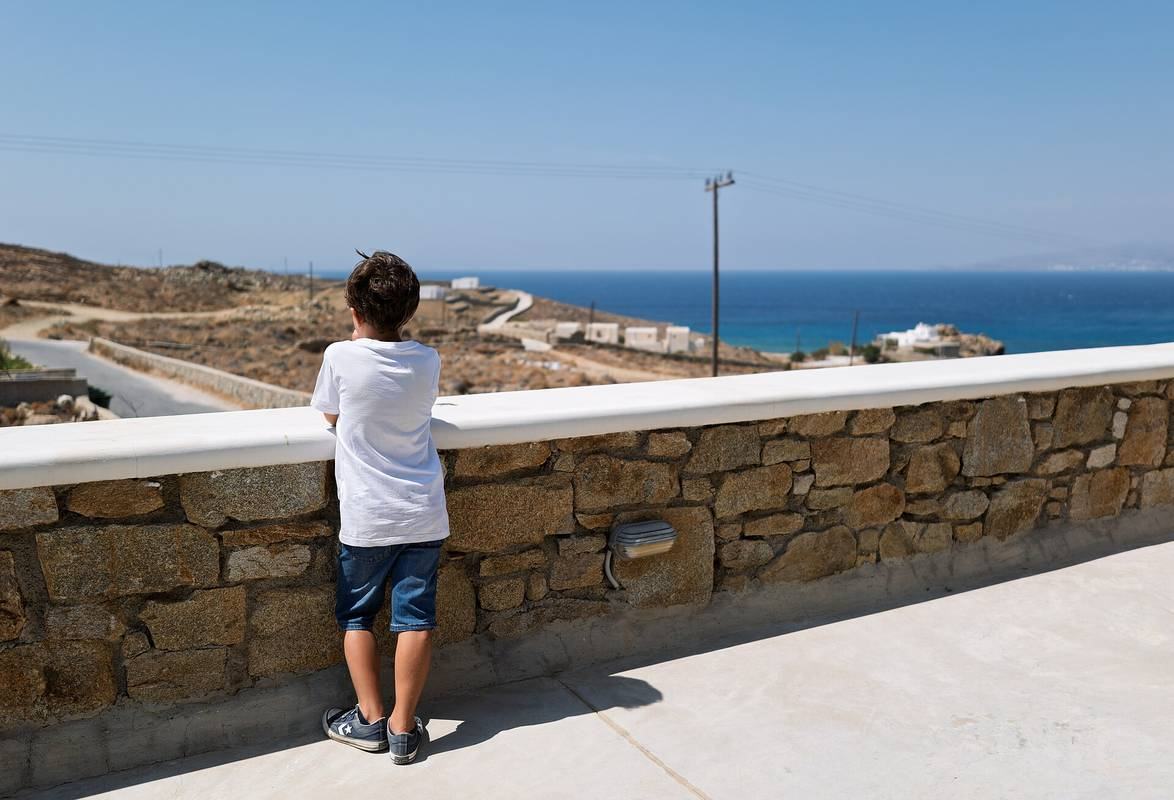
Houlakia beach on Mykonos is a pair of small north-west coves famous for their smooth, colourful, perfectly round pebbles, a protected natural area near Agios Stefanos with a quiet, scenic character distinct from the island’s sandy beaches. This guide covers the unique pebbles, the coves, how to get there, the facilities and what to do.
Houlakia is one of the most distinctive and unusual beaches in the Mykonos travel guide, prized for its remarkable stones. The sections below cover it in full.
What is Houlakia beach like?
Houlakia is made up of two small neighbouring coves on the north-west coast of Mykonos, about 6 km from town, with shores of smooth, colourful round pebbles rather than sand. A quiet, scenic and protected natural area near Agios Stefanos, it is distinctive for its unique stones and calm, low-key atmosphere.
Houlakia, sometimes spelled Choulakia, lies about 6 kilometres north of Mykonos Town on the north-west coast, near Agios Stefanos, and is one of the island’s most unusual and characterful beaches. Rather than a single sandy stretch, it comprises two small neighbouring coves whose shores are covered with smooth, rounded, colourful pebbles instead of sand, giving the beach its distinctive look and its name. The setting is quiet, scenic and natural, a protected environmental area that has escaped heavy development, so it has a calm, low-key feel quite different from the busy sandy beaches of the south. The left side has some sandy patches and an organised area, while the right side is more secluded, with a footpath leading to lovely views over the pebble shore. For visitors who appreciate something out of the ordinary, a peaceful atmosphere and natural beauty, Houlakia offers a memorable change from the island’s famous sandy beaches, set out alongside the wider guide to the beaches. Its pebbles are truly unique.
What makes the Houlakia pebbles special?
Houlakia takes its name from its smooth, perfectly round, colourful pebbles, which are considered unique in the world and date back to prehistoric times. The beach is now a protected natural area, and removing the pebbles is strictly forbidden, so visitors can admire them but must leave them in place to preserve the rare environment.
The defining feature of Houlakia, and the source of its name, is its extraordinary pebbles. The shore is covered with beautiful, smooth stones that are remarkably round and richly colourful, the result of long natural processes, and they are considered genuinely unique in the world, dating back to prehistoric times. These rare pebbles give the beach its striking appearance and are the main reason many visitors seek it out, a natural curiosity as much as a place to swim. Because of their rarity and ecological value, the beach and its pebbles are now a protected natural area, and taking the pebbles away as souvenirs is absolutely forbidden, so it is important to admire and photograph them but leave every stone in place to help preserve this special environment for the future. Respecting this protection is part of visiting responsibly. The chance to see and walk on these one-of-a-kind colourful pebbles makes Houlakia a fascinating, distinctive stop on the island, set out alongside the guide to things to do. The two coves each have their own feel.
What are the two coves of Houlakia like?
Houlakia has two neighbouring coves. The left cove has some sandy patches and an organised area, making it more suited to swimming and relaxing, while the right cove is more secluded and natural, with a footpath offering views over the pebble shore. Together they give a choice of a livelier or quieter spot.
Houlakia’s character varies between its two adjoining coves, giving visitors a choice within the same beach. The left-hand cove is the more accessible and organised of the two, with some sandy patches mixed among the pebbles and a small organised sunbathing area, making it the more comfortable spot for settling down, swimming and relaxing, and the easier place to spend the day. The right-hand cove is more secluded and natural, reached by a footpath that leads to lovely views over the pebble-covered shore and the sea, ideal for those seeking solitude and scenery away from any facilities. Because Houlakia is a protected area with a particular natural environment, swimming is generally recommended in the more sheltered, suitable spot in the small cove behind the rocky shoreline rather than everywhere, so it is worth choosing where you enter the water with care. This pairing of a livelier organised cove and a quiet natural one means Houlakia can suit both a relaxed swim and a peaceful, scenic escape, set out alongside the guide to Agios Stefanos. Reaching the beach is straightforward.
How do you get to Houlakia beach?
Houlakia is about 6 km north of Mykonos Town near Agios Stefanos, reachable by car or motorbike with a small parking area. By bus, you take the Agios Stefanos service and walk the roughly 1 km to Houlakia. Its quiet, slightly out-of-the-way location keeps the beach peaceful and uncrowded.
Houlakia is reasonably easy to reach despite its quiet, natural feel. The beach lies about 6 kilometres north of Mykonos Town on the north-west coast, close to the resort area of Agios Stefanos. The simplest way to get there is by car or motorbike, a short drive from town, with a small parking area available near the beach, making your own transport the most convenient option. For those relying on public transport, there is no bus directly to Houlakia, but you can take the KTEL bus that serves Agios Stefanos from the Old Port station in Mykonos Town and then walk the remaining distance of roughly 1 kilometre to reach the coves, a pleasant short stroll. This slightly out-of-the-way access, just beyond the main Agios Stefanos beach, helps keep Houlakia peaceful and uncrowded compared with the busier, more central beaches. Combining a visit with nearby Agios Stefanos makes for an easy north-west coast outing, set out alongside the guides to the bus and car rental. The facilities are modest.
What facilities does Houlakia have, and what to bring?
Houlakia has only modest facilities, with a small organised area on the left cove and limited services, so bring water, sun protection and water shoes for the pebbles. The nearby Agios Stefanos area has tavernas, shops and accommodation, so you can combine Houlakia with the amenities there for a comfortable day.
Houlakia is a quiet, natural beach with only modest facilities, so a little preparation helps. The left-hand cove has a small organised area with some sunbeds, but overall the beach is low-key and undeveloped, without the rows of clubs and tavernas found on the popular sandy beaches, so it is wise to bring your own water, snacks, sun protection, a hat and a towel for the day. Because the shore is covered in pebbles rather than soft sand, a pair of water shoes or sturdy sandals is genuinely useful for walking on the stones and entering the water comfortably. Helpfully, the beach sits right next to the well-equipped Agios Stefanos area, which has tavernas, cafes, mini-markets, accommodation and more facilities just a short distance away, so you can easily pop over for a meal, drinks or supplies and combine the two beaches in one outing. Coming prepared with water, shade and suitable footwear lets you enjoy Houlakia’s unique pebbles and calm in comfort, set out alongside the guide to where to stay. There is plenty to enjoy nearby.
What is there to do at and around Houlakia?
At Houlakia you can admire and photograph the unique pebbles, swim in the sheltered spots, relax in the quiet coves and walk the footpath for views. Nearby Agios Stefanos offers beaches, tavernas and sunset views over Delos, while Mykonos Town and the ports are close, making an easy north-west coast day.
Houlakia is a place to slow down and enjoy its natural curiosities, with easy variety close by. On the beach itself you can admire and photograph the remarkable smooth, colourful pebbles that make it famous, swim in the calmer, sheltered spots, relax in the quiet, scenic coves away from the crowds, and walk the footpath on the right side for lovely views over the pebble shore and the sea. Just next door, the family-friendly Agios Stefanos beach offers calm swimming, tavernas, cafes and beautiful sunset views over the water towards Delos, an easy and rewarding addition to your day. Because the beach is close to Mykonos Town, only about 6 kilometres away, and near the New Port at Tourlos, you can readily combine Houlakia with the town’s sights, shopping and nightlife or with a boat trip to Delos. This blend of a unique, peaceful beach and the amenities and sights of the nearby north-west coast and town makes Houlakia a worthwhile, distinctive stop, set out alongside the guides to Delos and Mykonos Town. Timing helps you enjoy it best.
When is the best time to visit Houlakia?
The best time to visit Houlakia is the shoulder season of May, June, September and October for warm, calm days and few people. It stays quiet even in peak summer thanks to its low-key character, and calmer days are best for swimming among the pebbles in this protected, scenic area.
Houlakia rewards good timing, and its quiet nature means it is enjoyable across much of the warm season. The shoulder months of May, June, September and October are ideal, offering warm sunshine, sea comfortable for swimming and the fewest people, so the calm, scenic character of the coves and the beauty of the pebbles can be appreciated in peace. Thanks to its low-key, protected nature and slightly out-of-the-way location near Agios Stefanos, Houlakia stays noticeably quieter than the busy sandy beaches even in the peak of July and August, making it a peaceful choice when the island is at its busiest, though arriving earlier in the day helps secure a spot in the small organised cove. Calmer, less windy days are best for swimming among the pebbles and exploring the sheltered spots, so checking the forecast is worthwhile, and the area is comfortable and scenic whenever you visit. Pairing a Houlakia visit with neighbouring Agios Stefanos and its sunset makes for a lovely north-west coast day, set out alongside the guides to when to visit and Mykonos weather. The questions below cover the points travellers ask most.
Is Houlakia worth visiting?
Houlakia is worth visiting for its unique, protected colourful pebbles found nowhere else, its quiet, scenic coves and its easy combination with nearby Agios Stefanos. It is more a distinctive natural curiosity and a peaceful spot than a classic swimming beach, so it rewards those who appreciate something different.
Whether Houlakia is worth your time depends on what you are looking for, but for many visitors it is a rewarding and memorable stop precisely because it is so distinctive. Its claim to fame, the smooth, perfectly round, colourful pebbles that are considered unique in the world and date to prehistoric times, makes it a genuine natural curiosity that you will not find on the island’s sandy beaches, and simply seeing and walking among these protected stones is an experience in itself. The two quiet coves offer a peaceful, scenic escape from the crowds, with a calmer, more natural atmosphere than the busy organised beaches, and the footpath on the right side rewards you with lovely views. Because it sits right next to the well-equipped Agios Stefanos, with its tavernas, sunbeds, sunset views and bus link, you can easily combine the two for a comfortable north-west coast day, enjoying Houlakia’s character alongside Agios Stefanos’s amenities. The main caveat is that the pebble shore is less suited to easy sunbathing and swimming than soft sand, so water shoes help and it works best as a scenic, curious stop rather than a full beach day. For those who appreciate the unusual and the peaceful, Houlakia is well worth including, set out alongside the guide to Agios Stefanos. Its unique pebbles are the lasting impression.
Frequently Asked Questions
What makes Houlakia beach special?
Houlakia takes its name from its smooth, perfectly round, colourful pebbles, which are considered unique in the world and date back to prehistoric times. The beach is a protected natural area, and removing the pebbles is strictly forbidden, so visitors can admire them but must leave them in place.
Is Houlakia a sandy beach?
No, Houlakia is a pebble beach, made up of two small coves whose shores are covered with smooth, colourful round stones rather than sand, though the left cove has some sandy patches. Water shoes are useful for walking on the pebbles and entering the water comfortably.
How do you get to Houlakia beach?
Houlakia is about 6 km north of Mykonos Town near Agios Stefanos, reachable by car or motorbike with a small parking area. By bus, you take the Agios Stefanos service and walk the roughly 1 km to Houlakia. Its quiet, slightly out-of-the-way location keeps the beach peaceful and uncrowded.