
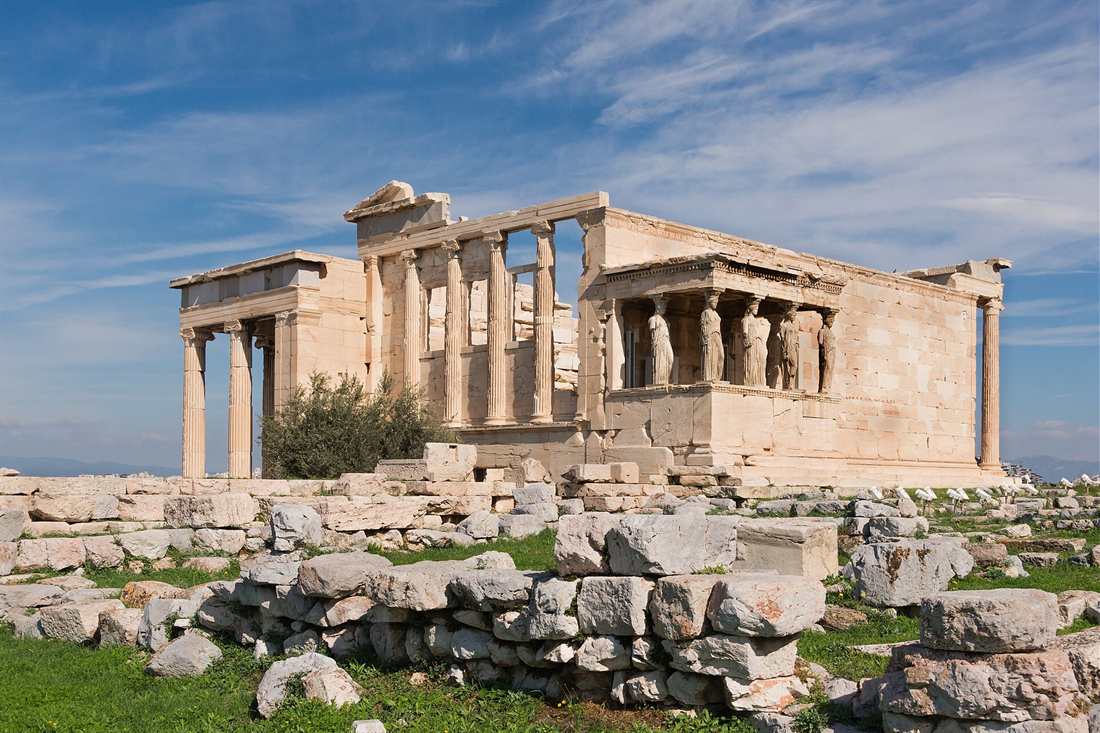
Shoulder season Athens is milder than July. March days run more than 17 degrees cooler than July on average. September brings 12.3 millimetres of rain, and the sea off the city reaches 25.0°C.
Leisure visitors from abroad split an 11-day stay in Greece with just three days in the capital. To pick the island for the other days, browse boat trips and day tours by region on the Greece Tours homepage.
What is shoulder season Athens, and which months does it cover?
Shoulder season Athens means the quieter weeks beside the summer peak. Fewer visitors arrive, but conditions stay good for travel. This page counts March to late spring and September to November. Exact dates change from one destination to the next.
A US travel organisation describes shoulder season as the time when visitation is lower than at the peaks. Conditions are still good for travel. It adds that timing shifts with a destination’s climate and events, so no one calendar fits every city.
A travel magazine’s Athens guide recommends visiting from March to late spring and from September to November. It says spring leaves more room at the Acropolis and Ancient Agora, because the heaviest crowds arrive in summer. It calls June to August hot and crowded. Those two windows set the shoulder season Athens calendar used on this page.
A second travel magazine lists April and late spring, then September and October, as shoulder periods. It pairs the spring months with good weather before the summer crowds. It pairs the autumn months with cooler temperatures and slower tourism.
That magazine adds January and February for certain destinations only. The winter window stays outside shoulder season Athens here, because the Athens guide names only spring and autumn. Both lists agree on April, late spring, September and October.
The Athens guide adds March and November. Together that gives six months of shoulder time on this page. A shoulder season Athens trip in March or November sits at the edge of a window.
The Ministry of Culture lists two periods for the Archaeological Museum of Delphi. Winter runs from 1 November to 31 March. Summer runs from 1 April to 31 October. March therefore falls in the winter period, April to October in the summer period, and November back in winter.
Airport slots follow another calendar. The IATA calendar of coordination activities lists 25 October as a winter season start. It lists 28 March as the next summer season start. The winter season after that starts on 31 October. Airline and museum dates differ, so check both when you plan shoulder season Athens dates.
How do temperatures and daylight in shoulder season Athens compare with July?
Mean daily highs in Athens reach 17.0°C in March and 29.6°C in September, against 34.3°C in July. Each month of shoulder season Athens has cooler days and shorter daylight than July. Mid-month daylight runs from 10 hours 8 minutes in November to 14 hours 14 minutes in late spring.
The temperature figures come from the climate table for downtown Athens, which cites the National Observatory of Athens. The sun times use the 15th of each month, so every month gets the same point of comparison. They show one day, not a monthly average.
Athens has a hot-summer Mediterranean climate. The weather station near the city centre records a mean annual temperature of 19.2°C. The list below sets each shoulder season Athens month beside July’s 34.3°C high.
- March: mean high 17.0°C, mean low 9.2°C. Sunrise 6:36 a.m., sunset 6:32 p.m., daylight 11 hours 56 minutes.
- April: mean high 21.1°C, mean low 12.3°C. Sunrise 6:49 a.m., sunset 8:01 p.m., daylight 13 hours 12 minutes.
- Late spring: mean high 26.5°C, mean low 17.0°C. Sunrise 6:14 a.m., sunset 8:28 p.m., daylight 14 hours 14 minutes.
- July: mean high 34.3°C, mean low 24.2°C. Sunrise 6:15 a.m., sunset 8:47 p.m., daylight 14 hours 33 minutes.
- September: mean high 29.6°C, mean low 20.4°C. Sunrise 7:07 a.m., sunset 7:33 p.m., daylight 12 hours 26 minutes.
- October: mean high 24.4°C, mean low 16.2°C. Sunrise 7:34 a.m., sunset 6:48 p.m., daylight 11 hours 14 minutes.
- November: mean high 18.9°C, mean low 12.2°C. Sunrise 7:06 a.m., sunset 5:13 p.m., daylight 10 hours 8 minutes.
Set against July, March highs are 17.3°C lower and April highs are 13.2°C lower. Late spring highs are 7.8°C lower. September highs are 4.7°C lower, and October highs are 9.9°C lower.
November highs are 15.4°C lower than July, and its lows are 12.0°C lower. Daylight is 3 hours 19 minutes shorter than in July during October. November daylight is 4 hours 25 minutes shorter, which matters for shoulder season Athens evening plans.
The daily mean, the average of day and night, is 16.7°C in April and 21.8°C in late spring. It is 20.3°C in October and 15.6°C in November. The yearly mean of 19.2°C falls between each of those pairs.
Daylight grows from March to late spring, then shrinks from September to November. For a wider look at the climate, read Athens weather by month. Outdoor plans for shoulder season Athens can start from the mid-month figures above.
How warm is the sea in shoulder season Athens?
The sea off Athens averages 15.2°C in March and 25.0°C in September. Late spring averages 18.5°C and November 19.1°C. For swimmers in shoulder season Athens, the warmest water comes in early autumn and the coolest in March.
The monthly sea table gives average water temperatures for Athens. The urban area lies on the north coast of the Saronic Gulf. The port of Piraeus sits on the gulf’s north-eastern edge. The table is a regional guide, not a reading for every cove.
March averages 15.2°C and April 15.7°C. The sea table calls both months cool. The sea warms by only 0.5°C between them, while the mean air high rises by 4.1°C. A shoulder season Athens swim in March or April means cool water.
Late spring averages 18.5°C, and the table still calls it cool. The municipal visitor site for Voula Beach says the beach does not operate in winter, though free access is possible. In its summer months of operation, lifeguards supervise the beach daily. Check the opening dates of a beach before you go.
September averages 25.0°C and October 22.2°C, and the table calls both quite warm. September water is 6.5°C warmer than late spring, and October water is 3.7°C warmer. The sea then cools by 2.8°C into October and by 3.1°C into November. For a swim, early autumn gives shoulder season Athens its warmest sea.
November averages 19.1°C, and the table calls it mild. July averages 25.7°C. September sits only 0.7°C below it, and November is 6.6°C cooler. November is still 0.6°C warmer than late spring and 3.9°C warmer than March.
Air and sea tell different stories. In late spring the mean high is 26.5°C, but the sea is 18.5°C. That 8.0°C gap is the widest of any shoulder month. In November the sea at 19.1°C is slightly warmer than the 18.9°C mean high.
The southern parts of the Athens area see less extreme temperature swings, because the Saronic Gulf moderates the climate there. The Athens Riviera beaches guide covers that coast, and these sea figures apply to any shoulder season Athens beach plan.
Which Athens sights change their hours in shoulder season Athens?
Hours change on fixed dates during shoulder season Athens. State sites move to summer hours on 1 April and to winter hours on 1 November. The closing time steps down through autumn. The two big museums keep separate schedules.
The Ministry of Culture’s pages give the Ancient Agora, the Kerameikos and the Temple of Olympian Zeus the same dates. From 1 April to 31 August, all three open at 08:00 and close at 20:00. From 1 November to 31 March, they open at 08:00 and close earlier.
- Ancient Agora: winter closing time of 17:00.
- Kerameikos: winter closing time of 15:00.
- Temple of Olympian Zeus: winter closing time of 15:00.
March is the only spring month on winter hours within shoulder season Athens. Last admission is 20 minutes before closing time at all three sites.
The days shorten in autumn, so the closing time drops in four steps. It is 19:30 from 1 to 15 September and 19:00 from 16 to 30 September. It is 18:30 from 1 to 15 October and 18:00 from 16 to 31 October.
Three of the closing days sit inside shoulder season Athens: 25 March, Labour Day and Easter Sunday. All three Athens sites close on each of them. They also close on 1 January and on 25 and 26 December. On Good Friday they open from 12:00 to 17:00. On Holy Saturday they open from 08:30 to 15:30.
The National Archaeological Museum sets its own dates for shoulder season Athens. Its winter schedule runs from 16 November to the third day of late spring. Wednesday to Monday it admits visitors between 08:30 and 15:30, and the last visitor enters at 15:00. On Tuesday the doors are open from 13:00 to 20:00.
Its summer schedule starts on the fourth day of late spring and ends on 15 November. The doors then stay open from 08:00 to 20:00 on every day except Tuesday. Last admission is at 19:30. On a Wednesday, October gives 12 opening hours and March gives 7.
The Acropolis Museum runs its summer schedule from 1 April to 31 October. Anyone on a shoulder season Athens trip in April already meets it. Monday runs from 09:00 to 17:00. From Tuesday to Sunday the museum opens from 09:00 to 20:00, and Friday runs until 22:00.
In winter the excavation beneath the museum opens daily from 09:00 to 17:00. On Good Friday the museum opens from 12:00 to 18:00, and on Holy Saturday from 09:00 to 15:00.
Which day trips from Athens suit shoulder season Athens?
Delphi, Cape Sounion, the Argolid trio of Mycenae, Epidaurus and Nafplio, and Meteora all operate throughout shoulder season Athens. Delphi and Mycenae close at 15:30 in winter. Cape Sounion opens at 09:30 and closes at sunset in every month.
The Delphi archaeological site opens from 08:30 to 15:30 between 1 November and 31 March. From 1 April to 31 August it opens from 08:00 to 20:00. The autumn steps then end at 18:00 for 16 to 31 October.
One Delphi listing lasts 10 hours and covers the site, the museum and the mountain village of Arachova. It runs in English, German, French, Dutch, Italian, Japanese and Spanish. Its calendar skips 25 and 26 December, 1 January, 25 March and Labour Day.
Any March or November date in shoulder season Athens falls in the winter schedule. The visit has to fit inside the 15:30 closing time. The route and the stops are set out in the Delphi day trip from Athens guide.
Cape Sounion has one rule for every shoulder season Athens month. The temple site opens at 09:30 and closes at sunset. Last entry is 20 minutes before sunset. These sunset times at the cape show how far the closing time moves.
- March: 18:17 on the 1st and 19:45 on the 31st.
- Late spring: 20:13 on the 1st and 20:38 on the 31st.
- September: 19:54 on the 1st and 19:09 on the 30th.
- November: 17:26 on the 1st and 17:06 on the 30th.
One listing for Cape Sounion lasts 5 hours 30 minutes. It includes 2 hours of free time on the temple site. The calendar has departures in all twelve months.
Between 1 November and 31 March, shoulder season Athens visitors find the Mycenae site open from 08:30 to 15:30. In April it opens from 08:00 to 19:00. From the first day of late spring it closes at 20:00.
Epidaurus opens from 08:00 to 17:00 between 1 November and 28 February, and from 08:00 to 18:00 in March.
One listing combines Mycenae, Epidaurus and Nafplio in 11 hours and offers pickup. A virtual reality device comes with an audio guide in 8 languages. Its calendar lists departures in March, April, late spring, September, October and November.
Meteora is the longest of these shoulder season Athens day trips. Wikivoyage puts the drive from Athens at about 4 hours. Each monastery closes one day a week from April to October. Winter schedules can close a monastery on more days. Great Meteoron closes on Tuesday in summer and opens only from Friday to Monday in winter.
One Meteora listing lasts 14 hours. The bus has air conditioning and departs Athens at 9 am. It goes inside 3 monasteries, sees all 6, and adds the Hermit Caves and a sunset stop. Its calendar spans every month.
Do ferries and cruises from Athens run in shoulder season Athens?
Yes, ferries and day cruises sail across shoulder season Athens, but timetables thin out outside summer. One operator lists up to 3 daily routes from Rafina in summer and up to 2 in the other months.
Three ports handle ferry travel in shoulder season Athens: Piraeus, Rafina and Lavrio. According to its port authority, Piraeus connects the mainland with the Aegean islands and Crete. Ferries from the port reach the Saronic islands, the Cyclades, Crete, the Northern Aegean and the Dodecanese.
Behind Piraeus, Rafina ranks as the second port of Athens, with ferries to southern Euboea and the Cyclades. Kea lies about 1 hour by ferry from Lavrio and is the Cycladic island closest to Attica. Ship speed and weather set the Kythnos crossing, which takes one to four hours from Piraeus or Lavrio.
The operator’s Rafina page names Andros, Tinos and Mykonos. From 1 November to the 24th of late spring, it lists one to two daily routes. October has the same band. From the 25th of late spring to 30 September it lists one to three. Paros joins the schedule from 13 June to 13 September.
March, April, October and November sit in the lower band. September keeps the summer band, with up to 3 daily routes. A shoulder season Athens ferry plan to the Cyclades therefore changes between September and October.
Two Saronic day cruise listings fit shoulder season Athens dates and cover Hydra, Poros and Aegina. Each lasts 12 hours, offers pickup and includes a buffet lunch. Both calendars show departures in every month. One cruise leaves from the old port in Faliro and adds live music on board.
The other listing runs in Portuguese, Japanese, German, Italian, French, Spanish and English, with an optional audio guide. The Faliro listing notes that Hydra is car-free and that donkeys still provide public transport. The Saronic Islands tours guide describes each island on the route.
Wikipedia says the Etesian winds blow from about the middle of late spring to mid-September. They can reach force 7 to 8 on the Beaufort scale. In shoulder season Athens, March, April, October and November sit outside that window. Our guide to ferry travel in Greece covers boarding and cancellations in strong wind.
Which outdoor walks work in shoulder season Athens?
Paved promenades, stair routes up Lycabettus and marked Hymettus trails all work for a walk in shoulder season Athens. Official sources give each route’s length, climb and opening rules. Use them to match a walk to your legs and to the daylight.
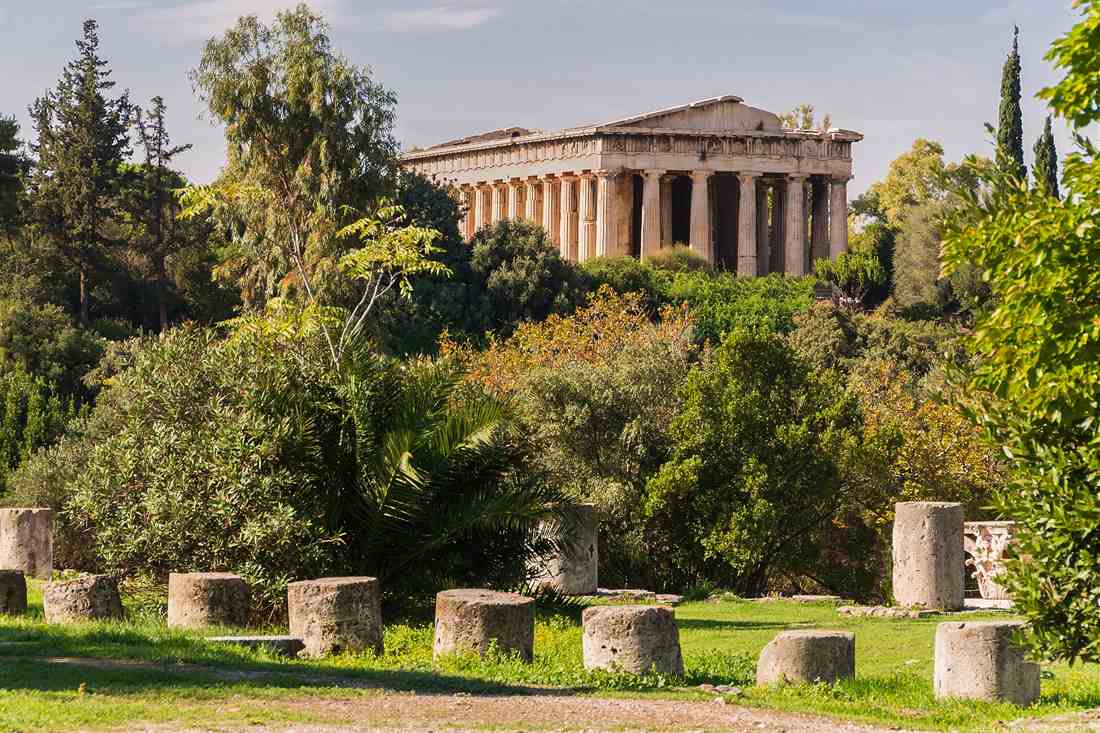
Start with Dionysiou Areopagitou, a paved promenade that runs alongside the Acropolis. The official Athens guide gives its length as 700 metres, with 11 metres of elevation and stone paving. A walk that short and that low is an easy first day in shoulder season Athens.
The National Garden covers 156,000 square metres. It is open daily from sunrise to sunset. The city’s green-space site says hours can change for emergencies or security reasons. It posts notices at the entrances or on social media. Public toilets stand on the grounds. Visitors with disabilities can use every entrance except Vasilissis Sofias and Jean Moreas.
Lycabettus Hill stands 277 metres above sea level. The official Athens guide calls it the second highest viewpoint in wider Athens, after Tourkovounia. You can head up by cable car or take the stairs for a workout. A shoulder season Athens plan can keep the stairs for a different day from the promenade.
The Ministry of Culture describes two stone-paved routes in the Western Hills. One heads towards the Acropolis site. The other ends on a plateau called the Andiron, on Philopappos Hill. From there you see the Acropolis monuments. The site is open 24 hours. A notice on the same page shows one closure for forest-entry restrictions.
Mount Hymettus has ten marked routes with a combined length of 30.1 kilometres. The municipality of Papagou-Cholargos delivered them. Route 2 is an easy one-hour loop around Petrokorakas hill. Route 3 is a circular walk of moderate difficulty, and its 600-metre uphill path gains 160 metres. These options give shoulder season Athens walkers choices beyond the city centre.
The Region of Attica lists a 14.5-kilometre Athens Riviera route. It runs from a cultural centre on the southern beaches to Voula beach. You cover it on foot and by tram, and the main part is accessible to people with disabilities. A coastal day like this adds a sea-level option to the shoulder season Athens walking list.
Daylight limits every shoulder season Athens route. A sunset table for Athens gives 6:47 pm on 15 October and 5:27 pm on 31 October. That is 1 hour 20 minutes earlier within 16 days. The longest Hymettus route takes three hours, so start it in the morning.
Which travellers does shoulder season Athens suit?
School closures, the Piraeus cruise peak and airport arrival shares give shoulder season Athens a dated calendar. Families, university visitors, walkers, photographers and visitors with limited mobility each have facts to weigh, from term dates to lifts.
A presidential decree on nursery and primary schools sets the dates. Schools close from 24 December to 7 January. The Easter break runs from Holy Monday to the Friday of Bright Week. The third school term ends on 15 June, and the summer break starts on 22 June.
Families have an easy trail on Hymettus. Route 1 takes one hour and 15 minutes and has no significant elevation differences. The municipality aims it at all ages, including families with children and people new to hiking. It is a gentle start for a family on a shoulder season Athens trip.
The law school at the National and Kapodistrian University of Athens teaches from 28 September to 8 January. Its spring teaching runs from 15 February into late spring, and exams follow each block. The philosophy school starts spring teaching on 22 February. Shoulder season Athens plans for a university visit need that school’s own calendar.
The Piraeus Port Authority puts the cruise peak season between July and October. Its half-year report counts 316 cruise ship arrivals from January to June, against 288 a year earlier. Those numbers describe the port, not the city’s streets. Treat them as port facts when you pick shoulder season Athens dates.
Athens International Airport reports incoming leisure arrivals by quarter. In the reported year, 28% came in the second quarter and 38% in the third. The first quarter took 12% and the fourth took 22%. For all passengers, the third quarter holds about 33% of annual demand and the second about 27%.
The airport also reports its strongest growth outside the summer peak. International traffic grew by double digits from January to April and again in November and December. The airport calls this an extension of the tourism season beyond the traditional summer peak. That growth is the background to any shoulder season Athens booking.
Photographers visiting in shoulder season Athens have the Lycabettus panorama. From the top you see the Acropolis and the Hellenic Parliament. The panorama also holds the Panathenaic Stadium. In view as well is the Temple of Olympian Zeus. Check the sunset times above before you plan a late shot.
Walkers who want a longer day can try the Papagou to Paiania trail on Hymettus. It is 4.3 kilometres one way and suits hikers in good physical condition. The first 3.1 kilometres climb gently, with a total gain of 400 metres.
Step-free planning for shoulder season Athens starts with specific access details. The metro operator states that all 47 stations on Lines 2 and 3 have lifts. The National Garden’s main entrance has no step. Its ground is stone paving, followed by soil with fine gravel.
The Western Hills site is accessible to wheelchair users with a companion. On a shoulder season Athens outing, they can go from the central entrance to the Pnyx. Access towards the Philopappos monument is possible up to about the middle of the route. The guard post at the central entrance holds tactile plans and Braille leaflets in Greek and English.
How does shoulder season Athens fit with a Greek island trip?
A shoulder season Athens stay pairs with one island when you check sailings and hotel dates for your travel week. The airport gives a starting split. International leisure visitors spend an average of three days in Athens within an 11-day stay in Greece.
One ferry operator states that daily itineraries run to and from Aegina, Agistri, Hydra, Poros and Spetses. A second operator lists Aegina, Agistri, Methana and Poros as destinations with daily routes. Detailed departure times show at booking. Our guide to islands near Athens covers the places themselves.
Naxos is a Cyclades example. A ferry operator states that daily routes run to and from Naxos. The page lists 14 islands linked to Naxos, including Paros, Santorini, Milos and Syros. These links help if you plan Greek island hopping once the city days are done.
Hotels need a separate check. A survey assigned by the Hellenic Chamber of Hotels reports that 62% of Greek hotels operate seasonally. These hotels hold 74% of the total room capacity. Seasonal hotels averaged 5.8 operating months. Four-star ones averaged 6.2 months and five-star ones 6.4.
The airport also reports where leisure visitors go next. In the reported year, 35% of incoming leisure passengers continued to another Greek destination, down from 43% a year earlier. The airport reads this as visitors spending a larger part of their stay in Athens. The other 65% stayed in Athens and its catchment area.
A second chart shows 44% of incoming leisure visitors staying in Greece for up to a week. Another 40% stay two weeks. For a one-week trip, the airport’s averages point to three days in Athens and four on one island. That split keeps shoulder season Athens as the base and the island as the add-on.
The hotel figures are national, so confirm the opening dates of the island hotel you choose. A seasonal hotel operates for under six months on average, which leaves the rest of the year closed. Add the island days to your shoulder season Athens plan only after the hotel dates are confirmed.
What can go wrong in shoulder season Athens?
Rain is the main risk in shoulder season Athens, from 12.3 millimetres in September to 60 millimetres in November. Cold seas in March and April and shorter winter museum hours add limits, so keep an indoor backup.
March brings 40 millimetres of rain over eight days, and April brings 25 millimetres over six days. The last month of spring brings 14.3 millimetres over four days.
September is the driest of the six months, with 12.3 millimetres over three days. October brings 45 millimetres over five days. November is the wettest, with 60 millimetres over eight days.
These totals make shoulder season Athens manageable, but not rain-free. A full year brings 365 millimetres of rain to the city, and November supplies 60 of them.
The climate record says the chance of rain rises by mid-October. It adds that rain can be violent and concentrated in time. Check the forecast each morning, then follow the rainy day in Athens plan when a downpour is due.
Totals differ by weather station. A table for downtown Athens lists 70.8 millimetres for November, while a table for coastal Elliniko lists 60.1 millimetres. In October the order flips, with 38.6 millimetres downtown and 45.9 at Elliniko. Plan for the higher figure if you stay in the city centre.
Average wind speed is 9.6 kilometres per hour in March and 8.8 in April. It is 8.5 in the last month of spring and 9.7 in September. October averages 8.6 and November 8.8.
Snowfall in Athens is relatively uncommon, and it falls more easily in the north of the city. Mount Parnitha still received more than 10 centimetres in one late-spring cold spell. Traffic police closed Parnitha Avenue from the cable car upwards. Check mountain conditions before you travel there.
The sea is cold for swimming in March and April. It measures 15 degrees Celsius in March and 15.9 degrees in April. Choose museums or city sights over a beach stop on those days.
Winter schedules shorten the day. The Acropolis Museum runs its winter hours from 1 November to 31 March. From Monday to Thursday it opens at 9 am, takes last entry at 4:30 pm and closes at 5 pm. Clearance of the galleries begins 15 minutes before closing.
Build shoulder season Athens days around those closing times. Visit indoor sites early on wet days and leave open-air sites for dry spells.
How do you book tickets and tours for shoulder season Athens?
Booking for shoulder season Athens starts with the route. Buy tickets for state sites online through the Ministry of Culture system or at official ticket offices. Group tickets go through licensed travel and tourist agencies.
The Ministry of Culture runs an electronic ticketing system at etickets.tap.gr. It covers selected archaeological sites, monuments and museums in Athens, Crete and the Peloponnese. Check whether your site is on that list before you plan around it.
The Ministry says tickets are to be bought only online or at the official ticket offices. Use that route for any state site on your shoulder season Athens list.
The Acropolis Museum sells general admission at its ticket desk and through e-ticketing. The desk takes cash or card. Reduced and free tickets are sold only at the desk, and eligible visitors show documents there. One ticket opens every gallery and the excavation under the building.
The eligibility lists cover more than one group. Free entry covers, among other groups, children up to age 5 from non-EU countries who show a passport. Reduced entry covers, among other groups, children and young people under 25 from non-EU countries who show a passport.
Each ticket is one-use only and valid only for the date it is issued. Pick the date after you read the forecast, because the ticket will not work on another day. The Acropolis tickets guide explains the options for the hill itself.
Groups of 16 to 40 people must reserve a visit to the Acropolis Museum. A group without a reservation cannot enter. Even a booked group can wait to enter at peak hours.
Group bookings go by email or by phone on weekdays between 9 am and 5 pm. School visits that come on their own also need a booking by phone or email. Send the request first, then set the tour date.
The museum offers a digital guide, and a family audio guide is free. Guides for live tours can be contacted through the tour guide association. Settle the guide type first, then match the visit to your shoulder season Athens dates.
An X-ray scanner screens visitors at the entrance, and large bags are discouraged. Leave large purses, bags and backpacks in the cloakroom. Two cloakrooms stand on the ground floor, one for independent visitors and one for groups. Keep fragile and valuable items with you, because the museum is not responsible for items left there.
What do travellers ask about shoulder season Athens?
Sightseeing works in shoulder season Athens when visitors accept changeable rain and shorter winter schedules. Climate tables name spring and autumn as the times to visit, and the common questions are answered here.
The dry climate of the Athens basin comes from a rain shadow effect caused by the Pindus mountain range. That is why even the wettest months stay modest next to a full year of 365 millimetres.
Is shoulder season Athens warm enough for sightseeing?
Yes. The climate source calls March mild, April very mild and the last month of spring warm. It calls September warm to hot, October warm and November very mild. Rain and wind still change comfort, so keep one indoor option ready.
Do the islands feel quiet in shoulder season Athens?
Crowds differ from island to island, so the island sections of this guide cover them. In the city, the Acropolis Museum requires groups to reserve because of high traffic on peak days and hours.
Is a coat needed in shoulder season Athens evenings?
Evening comfort depends on the date, so check the forecast before you leave. On Fridays the winter schedule keeps the museum open until 10 pm, with last entry at 9:30 pm. That puts an evening visit indoors.
Are tours cancelled for rain in shoulder season Athens?
Cancellation terms belong to each booking, so read them at checkout before you pay. An Acropolis Museum ticket is tied to one date, so check the forecast first and keep an indoor backup.
Is November still shoulder season Athens?
Yes, this guide counts November in the period. The climate tables list it as the wettest of the six months. The winter museum schedule starts on 1 November, so plan for earlier closings.
Weekends run longer in winter. In the winter schedule, the Acropolis Museum closes at 8 pm on Saturday and Sunday. Last entry is at 7:30 pm.
The museum has ramps for wheelchairs and strollers at all entrances. Elevators and accessible toilets serve all floors, and wheelchairs can be borrowed at the visitor services desk.
Photography rules are simple for a shoulder season Athens museum day. Amateur photography is allowed in all areas except the Archaic Acropolis Gallery. Flash, portable lights and tripods are not allowed.