
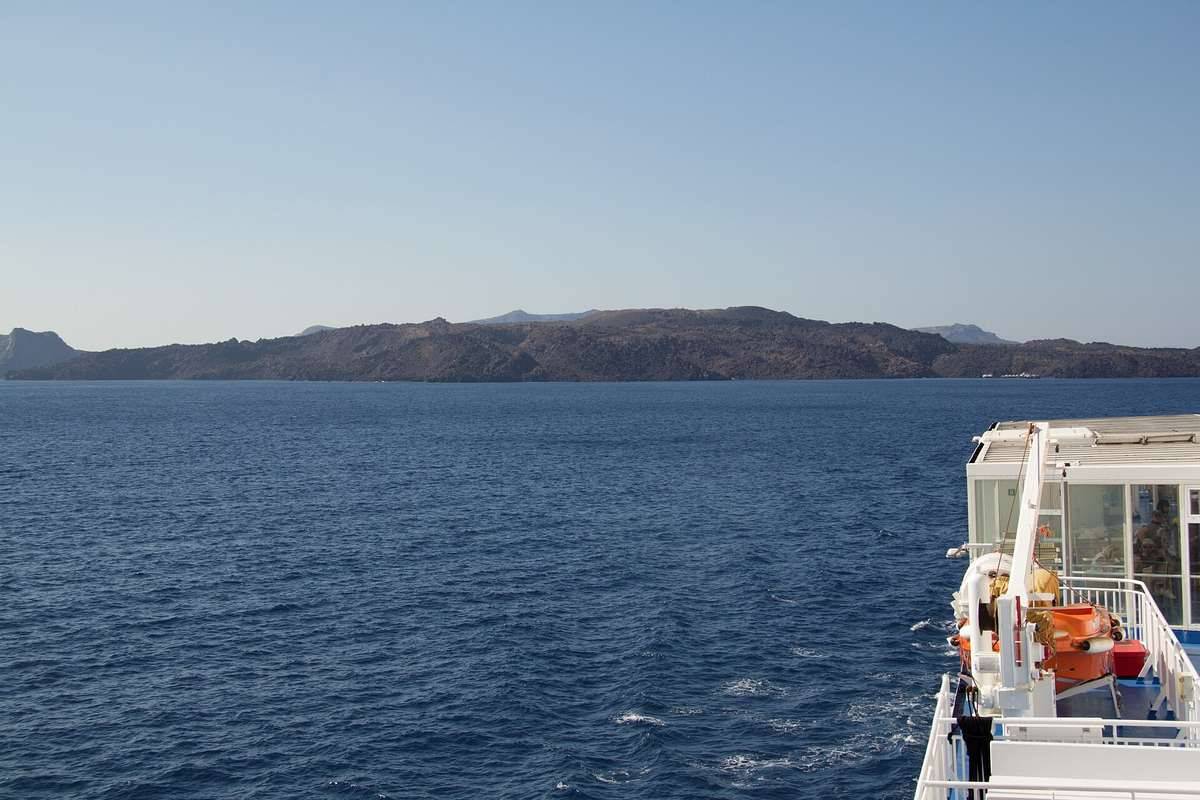
The Santorini volcano lies at the heart of the caldera on the islet of Nea Kameni, an active volcanic island you can hike to steaming craters, usually paired with a swim in the warm, iron-rich hot springs of Palea Kameni. This guide covers the volcano, the hot springs, the boat tours and how to visit.
The volcano created Santorini and remains its dramatic centre, a highlight of the wider Santorini travel guide. It rises from the middle of the flooded caldera. The sections below cover the visit.
What is the Santorini volcano?
The Santorini volcano is the active volcanic system at the centre of the caldera, its visible peak the dark islet of Nea Kameni. A huge eruption blew out the island’s centre, creating the flooded caldera, and the volcano is still active.
Santorini itself is a volcano, and its caldera is the crater. The catastrophic Minoan eruption of around sixteen hundred years before Christ, one of the largest in human history, destroyed the centre of the island and left the vast sea-filled caldera ringed by cliffs that defines Santorini today. In the middle of that caldera rise two dark volcanic islets, Nea Kameni and Palea Kameni, built up by eruptions over the following centuries.
Nea Kameni is the active peak that visitors can climb. The volcano is dormant but not extinct, and its most recent eruption came in the middle of the twentieth century. Hot springs, warm ground and rising sulphur fumes are the living evidence that magma still stirs below. Scientists monitor the caldera closely for changes in gas, ground swelling and small tremors, set within the wider things to do in Santorini and the island’s caldera. Nea Kameni is the island you hike.
What is the Nea Kameni volcano hike?
The Nea Kameni hike climbs a volcanic path to the craters at the heart of the active islet, taking about 20 to 30 minutes up. You walk on warm lava rock among rising sulphur fumes, with a small entrance fee of a few euros.
Setting foot on the volcano is a memorable experience. Boats land at Nea Kameni, the bare, brown-black islet in the caldera, where a marked path of crunching volcanic gravel and lava climbs gently to the crater area, a walk of roughly 20 to 30 minutes up and 15 back down. Along the way you cross warm ground, see the layered lava flows of past eruptions and catch the sharp smell of sulphur from steaming vents.
The views back to the white-topped caldera cliffs are spectacular, and the summit craters still steam gently. The highest point of the islet rises around 130 metres above the sea, and the whole climb covers only a short distance, so most visitors of average fitness manage it comfortably. A small entrance fee of around five euros applies, and a licensed guide adds the geology and eruption history. The ground is uneven and shadeless, so sturdy shoes, a hat and water matter, especially at midday, set out alongside the guide to Santorini boat tours. The hot springs come next.
What are the hot springs like?
The hot springs are at Palea Kameni, where warm, iron-rich volcanic water mixes with the cooler sea in a sheltered bay. Boats anchor offshore and you swim in to the lukewarm, rust-coloured water, around 30 to 33 degrees in the warmest spots.
The hot springs are the relaxing counterpoint to the volcano hike. At the islet of Palea Kameni, warm volcanic water seeps up and mixes with the Aegean in a sheltered cove, and boats anchor a short distance out, leaving you to swim in to the warmest patches near the shore. The water is lukewarm rather than hot, around 30 to 33 degrees Celsius at best and cooler further out.
The springs are stained a rusty orange by the iron and manganese that geologists believe give the water its curative properties. Those same minerals can darken jewellery and stain pale swimwear, so an old swimsuit is wise, and the swim from boat to shore is a short one against a light current. The tiny chapel of Agios Nikolaos stands on the shore above the cove, set out alongside the guides to the hot springs and Santorini beaches. A boat tour ties it all together.
How do you do a volcano tour?
You visit the volcano on a boat tour from the Old Port of Fira, with half-day trips of three to four hours combining the Nea Kameni hike and a hot-springs swim. Tours typically cost 20 to 40 euros, departing daily.
A boat tour is the only way to reach the volcano, and a rewarding half-day out. Trips set off from the Old Port below Fira, reached by cable car or on foot, with the classic volcano and hot springs tour lasting around three to four hours and combining the Nea Kameni crater hike with the swim at Palea Kameni, often for a modest 20 to 40 euros. Wooden kaiki boats run the shorter, cheaper trips, while catamarans offer smaller groups, shade and more comfort, and some private charters let you set your own pace across the caldera.
Many cruises extend the trip with a stop at the quiet island of Thirassia for lunch, or build toward the famous sunset off Oia on a longer sailing. The volcano and springs make a fine outing for families and independent travellers alike, and departures run through the day so you can pick a morning trip to beat the heat or an evening sailing for the sunset, set out alongside the guides to Santorini sailing tours and Thirassia. The questions below cover the points travellers ask most.
When is the best time to visit the volcano?
The best time to visit the volcano is from May to October, when boats run daily and the sea is warm enough for the hot-springs swim. Morning trips avoid the fiercest heat on the shadeless crater path; sunset cruises add the famous view.
The volcano rewards a well-timed visit. Boats run daily from spring into autumn, roughly May to October, when the sea is warm enough for the swim at Palea Kameni and the weather settled. The crater path on Nea Kameni is bare and shadeless, so a morning departure keeps you off the hot rock at midday, while an afternoon or evening cruise pairs the climb and swim with the sunset off Oia.
High summer brings the calmest seas but the busiest boats, so the shoulder months of late May, June and September give warm water with more room. The strong meltemi wind of July and August can occasionally choppy up the crossing, though the caldera itself is sheltered. Outside the season, from November to March, most boats stop running and the swim is too cold, so the volcano is best kept for the warmer half of the year, set out alongside the guide to the best time to visit Santorini. The questions below add the practical detail.
Frequently Asked Questions
Is the Santorini volcano still active?
The Santorini volcano is dormant but still active, not extinct. Its visible peak is the islet of Nea Kameni in the caldera, built by eruptions over recent centuries, where steaming sulphur vents and the nearby warm hot springs are living evidence of ongoing volcanic activity monitored by scientists.
Can you walk on the Santorini volcano?
You can walk on the volcano at Nea Kameni, reached by boat tour from the Old Port of Fira. A marked path climbs to the craters in about 20 to 30 minutes, crossing warm lava rock among sulphur fumes, with a small entrance fee of a few euros and fine caldera views.
How much is a Santorini volcano and hot springs tour?
A Santorini volcano and hot springs boat tour typically costs around 20 to 40 euros for a half-day trip of three to four hours, combining the Nea Kameni crater hike with a swim at the warm springs. Longer cruises adding Thirassia or the sunset cost more.
Can you swim in the Santorini hot springs?
You can swim in the hot springs at Palea Kameni, where boats anchor offshore and you swim in to the warm, rust-coloured water near the shore. The water reaches around 30 to 33 degrees in the warmest patches, stained orange by iron, so wear an old swimsuit.