
The 8-day Argosaronic cruise is a round trip from Athens on a small motor vessel through the islands and harbours of the Saronic and Argolic gulfs. Tours across the rest of the country are listed on Greece Tours.
The sections below cover what the Argosaronic cruise includes, the ports, the islands, the Peloponnese harbours, life on board, season and booking, with links into the Saronic islands tours pages. The tours shown are checked on GetYourGuide and Viator.
What is the 8-day Argosaronic cruise?
The Argosaronic cruise is an 8-day, 7-night small-ship sailing trip with a round-trip route from Athens. It starts in Salamina and calls at Epidaurus, Poros, Hydra, Ermioni and Aegina. It then returns to Salamina.
The motorised ocean vessel begins check-in at Salamina on Saturday afternoon. Departure follows on Sunday morning, while check-out takes place the following Saturday morning. Day eight is reserved for departure after the final overnight period. The first day covers embarkation, while the last day covers departure after the return to Salamina.
The route combines on-shore cultural visits with time in harbours, coastal waters, and private swimming areas. The listing describes the Harmony Cruise as a social sailing option for young-at-heart travellers. Evening socialisation forms part of the stated onboard atmosphere.
Epidaurus introduces a mainland port on the Argolid coast. Poros and Hydra bring island calls, while Ermioni adds a Peloponnese harbour before the route reaches Aegina. For travellers comparing an Argosaronic cruise, this sequence gives separate itinerary days to each named stop.
Two of the eight cruise days can use secluded-bay anchorage instead of port docking. The captain can alter the itinerary when conditions or island availability require a change. The listing presents the day plan as a general reference rather than an unchangeable timetable.
What does the Argosaronic cruise include?
The Argosaronic cruise includes standard en-suite accommodation, an operating crew, half board, and selected onboard services. It also covers daily fuel, port fees, a welcome lunch, the captain’s dinner and swim stops.
Every cabin has an individual bathroom with shower, hairdryer, electric fan, reading lights, and air conditioning. Air conditioning remains subject to stated limitations, including the separate overnight option. These features place private washing facilities inside every listed cabin.
- Standard en-suite accommodation and professional operating crew
- Half board, welcome lunch, and captain’s dinner
- Fuel coverage for up to four hours of cruising each day
- Private beach and swim stops with snorkeling equipment
- Basic toiletries, cellular Wi-Fi, air conditioning, and V.A.T.
- Port fees
Snorkeling equipment supports the included swim stops, while free cellular Wi-Fi has stated limitations. The package also includes basic toiletries and V.A.T., alongside the cabin facilities. Fuel coverage applies for up to four hours of daily cruising.
Travel insurance and hotel stays before or after the sailing sit outside the package. So do excursions, SUP, kayaks, overnight air conditioning, dinners, drinks and special events. This distinction matters when comparing an Argosaronic cruise with a shorter outing that has a different service list.
The package includes half board rather than every meal or drink during the week. The welcome lunch and the captain’s dinner are named separately. Other dinners and drinks stay outside the package.
Which islands and ports does the Argosaronic cruise visit?
The Argosaronic cruise visits Salamina, Epidaurus, Poros, Hydra, Ermioni, and Aegina in the listing’s stated order. Salamina is both the embarkation point and the final call. The route forms a loop through the Saronic and Argolid coasts.
- Salamina for embarkation and the final return
- Epidaurus on day two
- Poros on day three
- Hydra on day four
- Ermioni on day five
- Aegina on day six
Salamina is the largest Saronic island, while Aegina, Poros, and Hydra belong to the wider island group. The group lies close to mainland Greece, with ferry links serving ports around the gulf. The listing begins and ends the sailing at Salamina.
Poros sits in the southern Saronic Gulf and includes the town of Poros beside a narrow channel. Its town has neoclassical buildings and a clock tower dating from the early twentieth century. The Argosaronic cruise places this island call on day three.
Hydra has one principal town around a crescent-shaped harbour. Wheeled vehicles are not permitted there, so steep stone streets connect the waterfront with the settlement. The cruise schedule assigns Hydra to day four, between Poros and Ermioni.
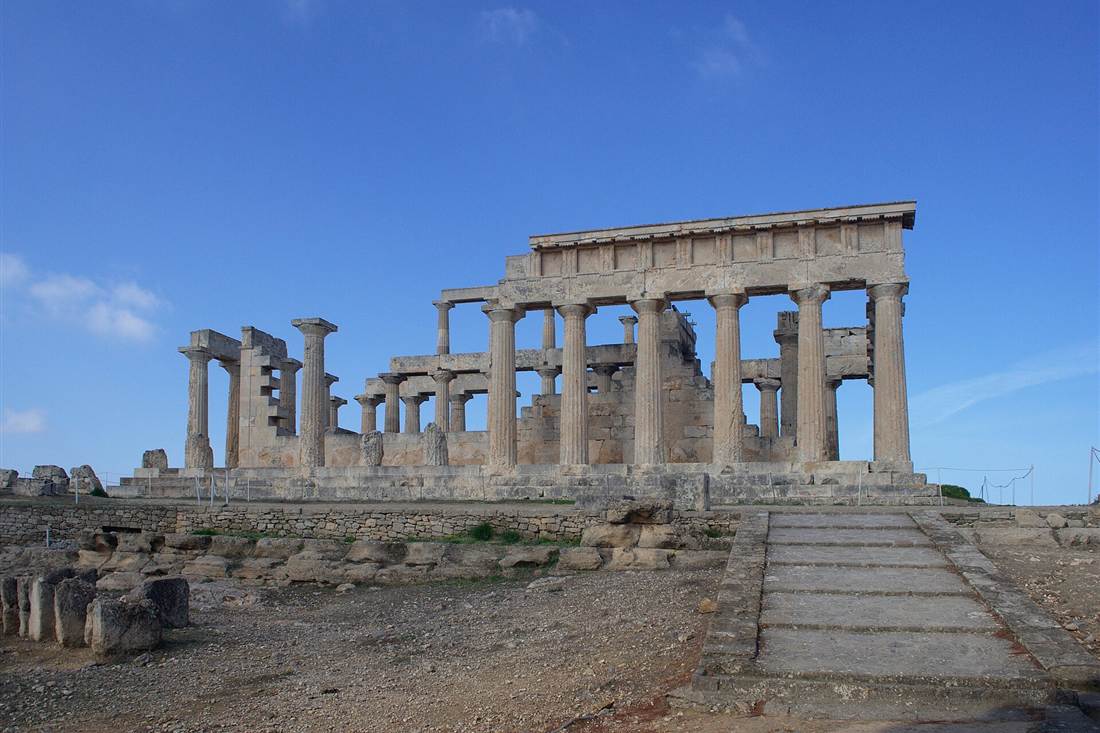
Aegina lies about 27 kilometres from Athens. It holds the Temple of Aphaia, an ancient temple from about the sixth century BCE. Ermioni is a coastal town in the Argolis region. Together, these calls add an island and mainland coast to the route.
How does it differ from a one-day Saronic cruise from Athens?
The Argosaronic cruise differs from a one-day Saronic cruise in length, cabins and route. It runs for 8 days and 7 nights, with overnight cabins. Instead of returning to Athens the same day, it follows a planned island-and-coast circuit from Salamina.
A one-day sailing leaves limited time for each call because its route must return within one calendar day. This cruise assigns separate days to Epidaurus, Poros, Hydra, Ermioni, and Aegina. An Argosaronic cruise therefore follows a continuous route without a same-day Athens return.
The overnight format also places the cabin at the centre of the itinerary. Each room has a private bathroom, while half board and two named meals form part of the package. That structure gives the Argosaronic cruise a fixed onboard base between coastal calls. It also provides a private bathroom during each overnight stay.
Its starting point is Salamina rather than an Athens city departure. An Athens island excursion package presents a different format for travellers comparing day-based plans. The starting port remains separate from the city-centre departure point in Athens.
The route also differs from Athens cruise boat tours designed around shorter outings. A private vessel, such as an Athens yacht charter, follows separate arrangements. The included crew, cabin, and meal structure also differs from a short sightseeing boat outing. Those alternatives do not use the same seven-night schedule or listed port order.


What is the Argosaronic Gulf?
The Argosaronic cruise crosses the Saronic Gulf and reaches the entrance of the Argolic Gulf. It lies between Attica and the Peloponnese, linking islands, ancient sites, and coastal towns. It connects island waters with mainland history.
The Saronic Gulf forms part of the Aegean Sea and borders the eastern side of the Corinthian Isthmus. The Corinth Canal meets its western end, while Athens occupies the northern shoreline.
An Argosaronic cruise places Salamina, Aegina, and Poros within a wider island group. Hydra and Spetses sit toward the Argolic Gulf entrance, where the island chain meets the Peloponnese coast.
The gulf carries commercial ships, ferries, fishing boats, and leisure craft. Its partly sheltered waters give sailors a different setting from the open Aegean.
- Salamina marks the gulf’s northern island gateway.
- Aegina lies between Athens and the Peloponnese.
- Poros stands beside a narrow mainland channel.
- Hydra sits between the Myrtoan Sea and Argolic Gulf.
- Spetses belongs to the southern Saronic island group, near the Argolic Gulf entrance.
What do Aegina and Poros show on an eight-day route?
On an eight-day route, the Argosaronic cruise pairs Aegina’s temple landscape with Poros’s narrow channel and pine-covered hills. Short distances across the gulf link their sacred sites, neoclassical towns and harbours.
The published day plan for the Argosaronic cruise places Poros before Hydra and Aegina later in the sailing. Each island appears as a stage. The sequence moves from the southern island-pair toward Aegina, closer to Athens.
Poros consists of Sphaeria and Kalaureia, joined across a narrow strait. The town rises above the water, with neoclassical buildings and a 20th-century clock tower. Pine forest covers nearby slopes.
A Poros call adds a clear mainland relationship to the Argosaronic cruise. Galatas faces the island across a channel about 200 metres wide. The Sanctuary of Poseidon stands on northern Kalaureia.
Aegina brings a different historical scale. The Temple of Aphaia stands on the island. Its town keeps 19th-century neoclassical buildings from its role in the early Greek state. Its position made it a trading crossroads between regions.
Local identity also changes within the Argosaronic cruise. Poros is known for pine forests and sea views. Aegina is known for pistachios and the monastery of Agios Nektarios.
For island details before sailing, read the information about Aegina and the page about Poros. These links separate each island’s landmarks from the shared gulf setting and its coastal character.

What do Hydra and Spetses show on the route?
Hydra gives the Argosaronic cruise a vehicle-free harbour and a strong maritime past. Spetses adds a southern comparison, with carriages, shipyards and memories of the Greek War of Independence. Both islands sit near the entrance of the Argolic Gulf.
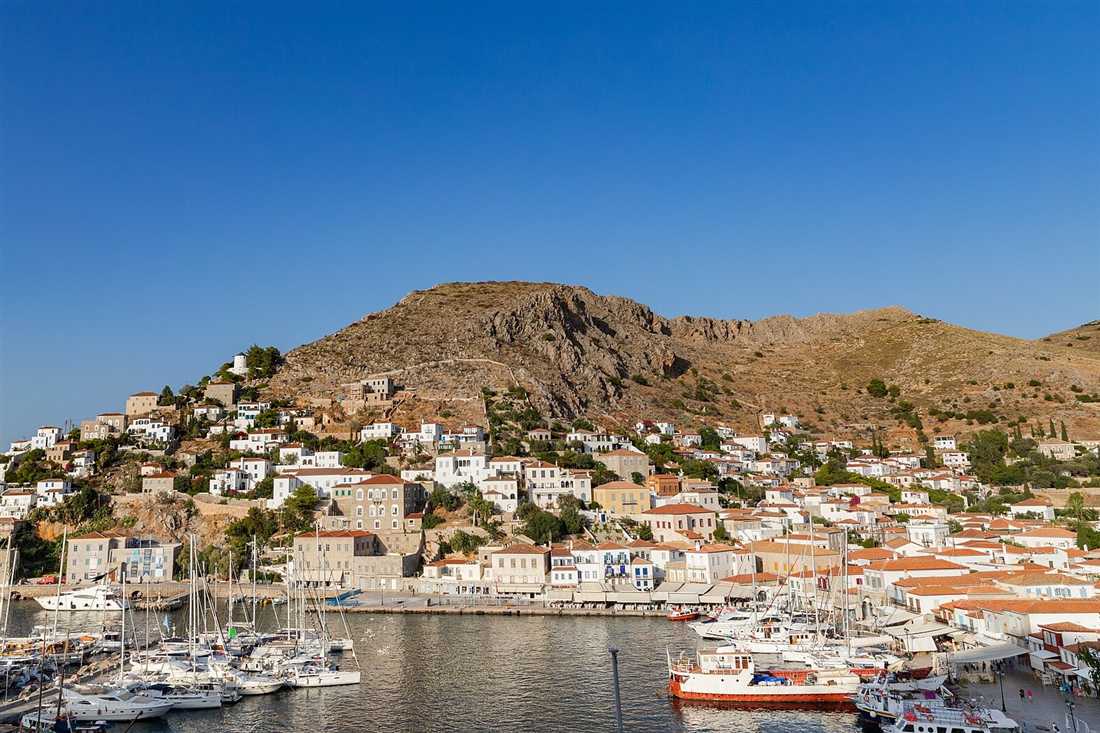
The Argosaronic cruise names Hydra as a call after Poros. Its main town curves around a harbour. Steep stone streets climb between houses, shops and galleries. The compact layout keeps the port central to daily life.
Wheeled vehicles are not permitted on Hydra. Horses, mules, donkeys and water taxis move people around the town. That rule keeps cars away from the harbour streets during the Argosaronic cruise call.
Hydra’s stone mansions reflect the wealth of sea captains and merchants. Former residences now hold collections or serve cultural institutions, including a branch of the National Historical Museum. Their stone façades connect the harbour with maritime history.
Spetses is not named among the cruise’s scheduled calls, so it belongs here as a wider gulf comparison. The island’s town restricts private automobiles, while carriages, bicycles, mopeds, and motorcycles serve local movement.
Spetses also carries a naval history from the Greek War of Independence. Laskarina Bouboulina is commemorated at the main dock, and traditional shipyards preserve a link with maritime craft.
The islands offer distinct views of the Argosaronic cruise region. Hydra centres on car-free stone streets. Spetses combines pine hills and seafaring memory.
The pages about Hydra and Spetses cover each island in more depth.
Which Peloponnese harbours join an Argosaronic route?
The Peloponnese calls on an Argosaronic cruise include Epidaurus and Ermioni. Together, they add an archaeological coast and a small port town. The route joins the Saronic islands with the Argolid mainland. Epidaurus comes on day two and Ermioni on day five.
Epidaurus appears on the second day of the stated plan. Ancient Epidaurus stood on the Argolid Peninsula beside the Saronic Gulf. Its sanctuary of Asklepios remains the area’s main landmark.
The ancient theatre belongs to the fourth century BC and seats up to 14,000 people. Its design uses the surrounding landscape as part of the setting and uses limestone seating.
Ermioni follows Hydra in the published route. This small port town lies on the southeastern Argolid Peninsula, facing Hydra and Dokos across the Aegean-facing coast. Its harbour remains the town’s central meeting point.
Ermioni has a long settlement history and ancient links with shipbuilding. Its position facing Hydra explains its place on this mainland route. Its earlier economy also included porphyra, a red dye used for military clothing in the ancient world.
- Epidaurus: an Argolid coastal area with the Sanctuary of Asklepios.
- Palaia Epidavros: a modern coastal town carrying the ancient name.
- Ermioni: a small port town facing Hydra and Dokos.
These mainland places change the texture of the Argosaronic cruise. It shifts from island harbours and narrow channels to archaeological grounds, an Argolid port, and the Peloponnese shoreline. Each setting adds a coastal landmark within the gulf system.
What is life on board the small ship like?
Life on board the Argosaronic cruise combines en-suite comfort with relaxed sea time and practical daily services. Every cabin has a private bathroom, shower, hairdryer, electric fan, reading lights, and air conditioning. The vessel also provides Wi-Fi, basic toiletries, and a professional operating crew.
The small-ship setting keeps the day close to the water. Daily fuel coverage allows up to four hours of cruising. Private beach and swim stops add time outside the cabin.
Half board covers scheduled meals, with a welcome lunch and a captain’s dinner included. Dinners and drinks remain separate, so guests need a clear plan for evening dining. The Argosaronic cruise keeps these arrangements simple through one onboard meal plan.
- En-suite cabin with shower
- Air conditioning and electric fan
- Reading lights and hairdryer
- Free cellular Wi-Fi, subject to limitations
- Snorkeling equipment for included swim stops
Snorkeling equipment supports the included swim stops, while SUP use, kayaks, excursions, and activities cost extra. Overnight air conditioning is also optional, and onboard food or drinks cannot be brought aboard. The Argosaronic cruise separates included equipment from optional activities.
Every cabin offers a private bathroom rather than shared facilities. The listing describes a motorised ocean vessel, not a hotel or a ferry service.


Which season suits the Argosaronic cruise?
Late spring through early autumn suits the Argosaronic cruise. Warm, dry conditions support deck time, swimming, and open-air visits. Summer adds festival activity at Epidaurus, while early autumn brings Aegina’s pistachio celebration and a cooler atmosphere.
Salamina has hot, dry summers and mild winters, with beaches and pine-covered areas suited to warm-weather stops. Aegina also has a hot semi-arid climate, with July and August bringing the highest daytime temperatures. These conditions give the Argosaronic cruise its clearest swimming season.
Epidaurus connects seasonal travel with theatre culture. Its annual festival runs in the summer months. Performances use the ancient theatre during the summer period. The Argosaronic cruise therefore fits cultural visits beyond the hottest weeks.
Hydra has its driest conditions in summer, especially July and August. The Miaoulia Festival takes place in the last week of June. This fixed date adds cultural planning value. The Argosaronic cruise also suits June planning around that event.
Ermioni holds events and maritime traditions in summer, while its Bisti grove supports walks in every season. The Argosaronic cruise follows a Saturday boarding pattern, so weather and event timing need planning. Poros receives its largest visitor numbers in summer, while its harbor serves fishing boats and yachts. Aegina is a year-round destination, with its pistachio festival held every September.
How do you book and cancel the Argosaronic cruise?
Booking the Argosaronic cruise requires a Saturday boarding plan, passenger details, and attention to the stated cancellation window. The listing shows free cancellation up to 24 hours before departure. Advance booking, transport choices, and personal records affect preparation.
The cruise begins with check-in in Salamina at 17:00 on Saturday. Check-out follows at 09:00 on the next Saturday, after the listed seven-night schedule. The Argosaronic cruise uses these times for practical arrival and departure planning.
Guests provide each traveller’s full name, birth date, nationality, passport number, contact number, and dietary requirements. Available flight details also belong in the record. The operator requests these details at least one month before boarding.
- Select the private-group cruise and Saturday boarding
- Submit the requested passenger and dietary details
- Choose optional pickup or wider transportation separately
- Review the 24-hour cancellation deadline
- Arrange travel insurance before arrival
Pickup and overall transportation are optional rather than included. Hotel nights before or after sailing also remain optional. Port fees, value-added tax, and half board appear among the listed inclusions.
Wheelchair access needs careful review because the listing displays wheelchair accessibility but also excludes people with mobility impairments. Confirm with the operator before booking if access equipment or assistance is required.
For planning before boarding, the Athens summer planning page helps frame time in the capital. For another island option, Aegina boat trips provide separate coastal planning context.
Frequently Asked Questions
How long does the cruise last?
The cruise lasts eight days and seven nights. The listing also shows a duration of 7.5 days. Check-in takes place on Saturday afternoon, and departure occurs on the following Sunday morning. Check-out follows on Saturday morning after the route returns to Salamina.
Where does the cruise start?
The vessel starts from Salamina, also called Salamis, in the Saronic Gulf. The stated check-in time is 17:00 on Saturday. The schedule then names Epidaurus, Poros, Hydra, Ermioni, Aegina, and Salamina before departure. The route returns to Salamina before departure on the eighth day.
What are the cabins like?
Every cabin has an individual bathroom with a shower. Cabins also include a hairdryer, electric fan, reading lights, and air conditioning. The accommodation is standard en-suite, with air conditioning subject to limitations. Overnight air conditioning is listed separately as optional.
Which meals are included?
Half board is included, along with a welcome lunch and a captain’s dinner. Dinners and drinks are not included beyond the stated meal provisions. Guests cannot bring food or drinks aboard, so evening dining arrangements need attention before sailing.
Is the cruise wheelchair accessible?
The listing displays wheelchair accessibility. Its full safety information says the activity is not suitable for people with mobility impairments. That conflict requires direct accessibility confirmation before booking. The vessel also excludes guests with certain medical conditions and motion-related concerns.
Does the cruise have reviews?
The activity is marked as new and has no reviews yet on the listing. That status provides no guest-review history for judging cabins, meals, crew service, or the day-to-day route. The published inclusions and restrictions therefore remain the available planning details.