
Olympia Olive Oil Tasting
An Olympia olive oil tasting is a guided session in the olive country around Ancient Olympia, where you taste fresh extra virgin oil the way trained tasters do, see how the mill makes it and walk the groves it comes from. Greece Tours covers every Olympia olive oil tasting format on sale, from mill visits to grove lunches and cooking classes.
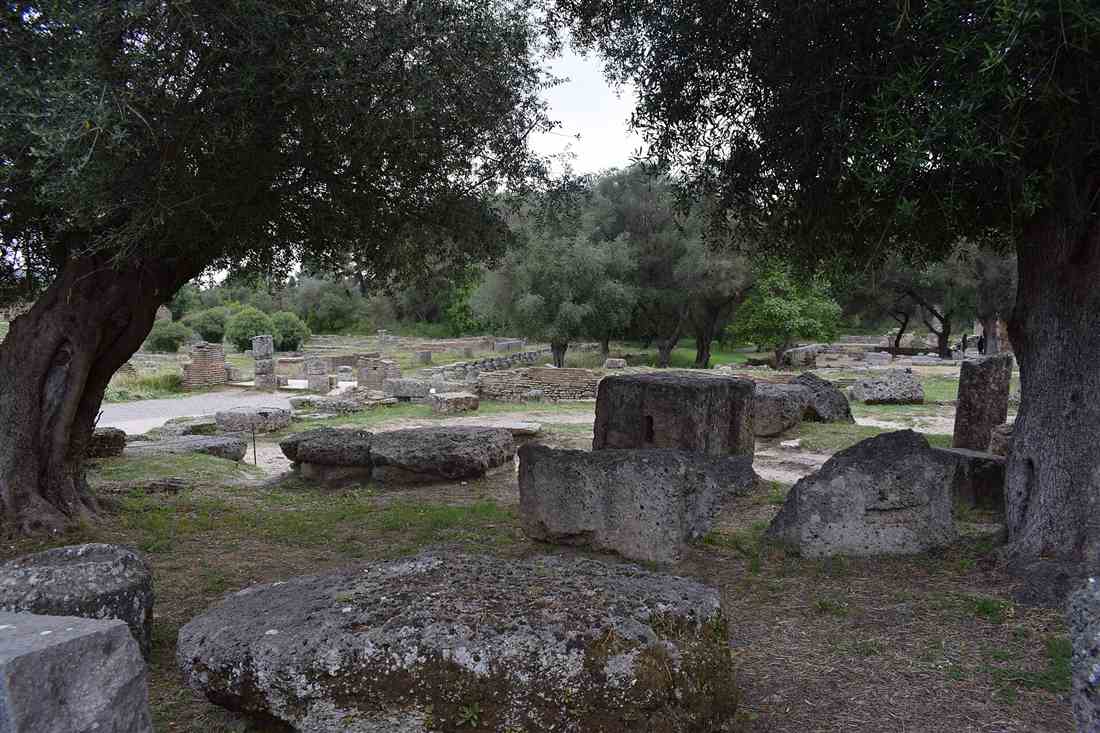
Each Olympia olive oil tasting draws on the same land: the Alpheios valley in Elis (Ilia), where a wild olive once crowned the winners of the ancient Games. Tours leave from the village of Archaia Olympia, from the cruise port of Katakolo and from Athens.
What is an Olympia olive oil tasting?
An Olympia olive oil tasting is a guided session near Ancient Olympia in which a local producer or guide pours fresh olive oil into small glasses and teaches you to judge its aroma, taste and quality like a trained panel taster.
Each Olympia olive oil tasting takes place on a working farm, in an olive mill or in a village tavern in the countryside of Elis. The host pours different oils side by side, for example an early-harvest oil next to a riper one, so the contrast is easy to notice. Bread, olives and local cheese follow, and some formats add a full lunch, a cooking class or a walk through the grove.
The tasting sits inside an older story. Olive trees have grown in the Alpheios valley since antiquity, the ancient Games crowned their winners with wild olive, and the modern region of Ilia remains one of the main olive belts of the Peloponnese. For that reason an Olympia olive oil tasting fits into a visit to the sanctuary, and the Olympia destination hub lists every sight, route and tour in the area.
Which Olympia olive oil tasting tours can you book?
Olympia olive oil tasting tours on sale include a mill tour with tasting, a tavern oil-factory experience, grove visits with lunch, grove cooking classes, wine and olive tastings, a private tour from Athens and Katakolo excursions adding a beach or Lake Kaiafas.
In the village of Archaia Olympia, two formats stay close to the ruins. The first is a guided olive oil mill tour followed by a tasting, where the miller explains each machine before pouring. The second is a tavern olive oil factory experience, which joins a look at the pressing room with food at the table. Both suit visitors who have seen the site and want an Ancient Olympia olive oil tasting nearby.
Most other formats start at Katakolo port and pair the site with an olive grove and Greek cooking, a wine and olive tasting, a family grove lunch, a private tour with lunch or Lake Kaiafas. One short tour adds an olive oil press and St Andrew beach. From the capital, a private tour adds wine to the Olympia olive oil tasting, as the Ancient Olympia day trip from Athens page explains.
How does a guided olive oil tasting run?
A guided Olympia olive oil tasting runs in four steps: the oil goes into a coloured glass, you warm it in the hand, smell it, then sip it while slurping air, so aroma, bitterness and pungency show clearly.
At an Olympia olive oil tasting the host pours a small amount of oil into a dark blue tasting glass. The colour of the glass hides the colour of the oil, because a green or golden shade says nothing about quality and only biases the taster. You cover the glass with one palm, cup it in the other hand and hold it until it feels warm, which releases the aromas locked in the oil.
Next you lift the palm and breathe in: green fruit smells of cut grass, ripe fruit of apple. Then you sip and draw air sharply through the teeth with a loud slurp, which sprays the oil across the palate. Bitterness shows on the back of the tongue, and a peppery catch in the throat follows, caused by polyphenols such as oleocanthal. Fruity, bitter and pungent are the positive attributes; the defects below fail an oil.
- Rancid – stale nuts or old paint, from air and age.
- Fusty – fermented fruit, from olives piled before milling.
- Musty – mould, from olives stored damp.
- Winey – wine or vinegar, from fermentation.
How does an olive mill near Olympia make oil?
An olive mill near Olympia works the harvest from October to January: it washes olives, crushes them into paste, malaxes the paste, spins oil from water in a centrifuge and keeps the paste below 27°C for cold extraction.
Farmers pick the olives with hand rakes or electric combs, or shake the branches over nets spread under the trees, and bring the crop to the mill in crates or sacks. Quality mills press the fruit soon after picking, because olives left in piles start to ferment. On an Olympia olive oil tasting in the harvest months, visitors watch the intake area fill with the fresh crop of the day.
Two technologies exist side by side in olive country. Traditional mills crushed the olives under granite stones and squeezed the paste in hydraulic presses between fibre mats. Modern mills use a hammer crusher and a horizontal centrifuge called a decanter, which works faster and keeps the oil away from air. An Olympia olive oil tasting at a mill explains both, along with the rule that cold-extracted oil stays below 27°C.
- Washing – blowers strip leaves and water rinses fruit.
- Crushing – hammers or stones grind olives to paste.
- Malaxing – slow mixing lets oil drops join.
- Separation – a centrifuge spins oil from water.
What makes olive oil extra virgin rather than virgin?
The oil poured at an Olympia olive oil tasting is extra virgin: under EU rules it has a free acidity of 0.8% or less and no taste defects, while virgin olive oil allows acidity up to 2% and slight defects.
Free acidity measures the free fatty acids in the oil, expressed as oleic acid. It rises when olives are bruised, stored too long or attacked by the olive fly, so low acidity signals sound fruit and fast milling. Acidity itself has no taste. A laboratory measures it, and a trained panel tastes the oil; one defect pushes an oil out of the extra virgin grade, however low the acidity reads.
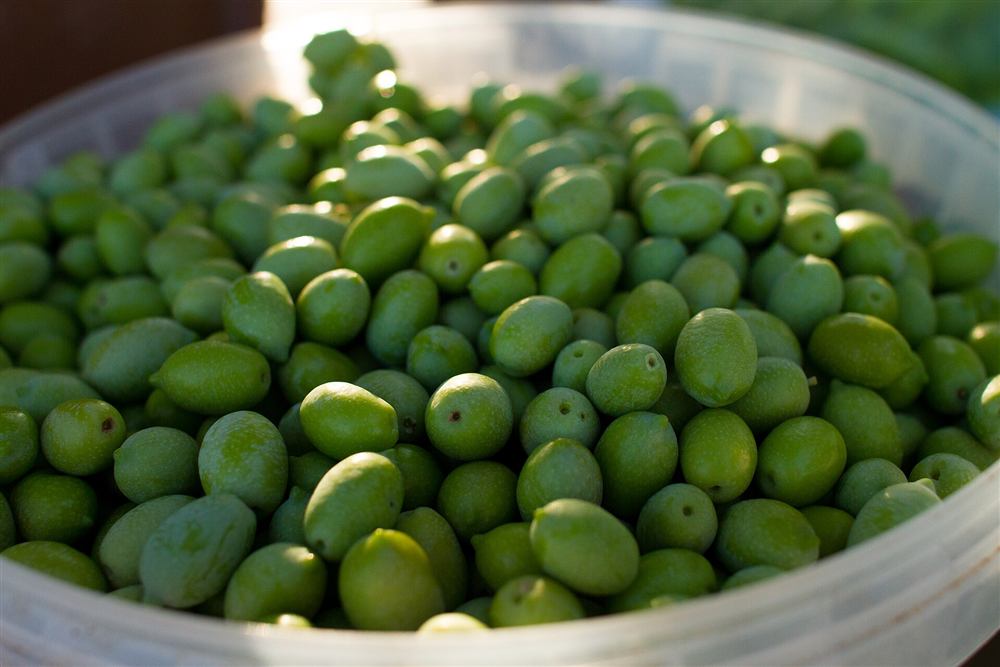
Early-harvest oil, called agourelaio in Greek, comes from green olives picked at the start of the season. Green fruit yields less oil but far more polyphenols, the antioxidants behind the bitterness and the peppery bite. Later oils from riper, darker olives taste softer and rounder, with notes of apple and almond, and hold fewer polyphenols. An Olympia olive oil tasting that pours both side by side shows the difference at once.
Why is Elis around Olympia olive country?
Elis, called Ilia in Greek, lies in the western Peloponnese, where the Alpheios valley below Kronos hill has mild winters, hot dry summers and fertile soil; the Peloponnese and Crete lead Greek oil production, and Koroneiki is the main variety.
Greece ranks among the largest olive oil producers in the world, and the western Peloponnese forms one of its densest belts of groves. Around Ancient Olympia, olive trees cover the low hills on both banks of the Alpheios and the plain toward Pyrgos. Village families tend groves of their own and carry the crop to a local mill each winter, and some of those mills host an Olympia olive oil tasting.
Koroneiki, named after the town of Koroni in Messinia, is the main oil olive of the Peloponnese. Its small fruit carries a high share of oil and gives a green, fruity, bitter and pungent profile that keeps well in the bottle. The larger Kalamata olive goes mostly to the table rather than the mill. For that reason Koroneiki is the oil most visitors meet at an Olympia olive oil tasting.
What did the olive mean at the ancient Olympic Games?
At the ancient Olympic Games the olive was the prize itself: a sacred wild olive tree, the kotinos, grew near the Temple of Zeus, and wreaths cut from its branches crowned every victor, because Olympia gave no other reward.
Ancient writers called the tree Kallistephanos, the olive of the fair crowns. A boy whose parents were both alive cut its branches with a golden sickle, and the judges, the Hellanodikai, crowned the winners on the last day of the festival. Pindar tells that Heracles brought the wild olive to Olympia from the land of the Hyperboreans. The Zeus mythology of Olympia sets this story beside the cult of the god.
Olive oil also ran through daily life at the sanctuary. Athletes rubbed oil into their skin before training and scraped it off afterwards, with sweat and sand, using a curved bronze tool called a strigil. Oil fed the lamps of the sanctuary, dressed the food of pilgrims and carried perfume for offerings. An Olympia olive oil tasting today continues that thread in the same river valley as the ancient stadium.
How do you combine the tasting with the site and museum?
Visit the archaeological site and museum in the cooler morning, then move to the Olympia olive oil tasting and lunch at midday; book tickets ahead, carry water and a hat, and check whether the tour includes entry.
The sanctuary lies in the open Alpheios valley, and summer afternoons there turn hot. Starting at the ruins early and ending at a shaded farm or tavern table spreads the effort across the day and saves the strongest heat for lunch. Check whether the tour listing includes entry to the site and the museum, or only transport and the tasting, and read the Olympia tickets page for ticket types and entry rules.
The modern village of Archaia Olympia sits right next to the site, with shops, cafes and tavernas along its main street. Visitors walk from the ruins to an Ancient Olympia olive oil tasting in the village, or shop for oil after a mill tour. Travellers with a free afternoon pair the museum in the morning with a grove lunch or a grove cooking class in the late afternoon, once the heat eases.
How does an Olympia olive oil tasting work from Katakolo port?
Katakolo is the cruise port on the coast near Pyrgos, about 35 km from Olympia; an Olympia olive oil tasting shore excursion meets passengers at the port, visits the site and a farm or mill, and returns before the ship sails.
Cruise ships call at Katakolo for the day, so the schedule is tight. Shore excursions built around an Olympia olive oil tasting follow the ship timetable, and the listing states the meeting point at the port. Passengers keep the all-aboard time in mind and choose a tour that confirms its return before departure. The Katakolo port page covers the pier, the town and the options for the day ashore.
Each Katakolo tour builds a different day around the Olympia olive oil tasting. Some lead to an olive grove for Greek cooking, a small-group cooking class or a family lunch under the trees. Others pair wine with olives, serve an authentic lunch or run private with a meal. One format adds Lake Kaiafas, the thermal lake on the coast to the south, and another ends at St Andrew beach.
Which foods and lunch dishes go with the oil?
Fresh bread, olives, feta, ripe tomatoes and village salad go with an Olympia olive oil tasting at most tables, and lunches add dishes cooked in olive oil, such as green beans, baked vegetables and boiled wild greens with lemon.
Hosts match the oil to the food. A robust early-harvest Koroneiki stands up to bitter greens, grilled meat, beans and pulses, while a softer late oil suits fish, salads and cheese. Bread is the carrier: tasters dip it after the glass round, add a pinch of salt and oregano, and notice how the bitterness softens. Lemon and oil together form ladolemono, the classic Greek dressing for greens and fish.
Lunch on an Olympia olive oil tasting tour follows the Greek oil kitchen. Ladera, the family of vegetable dishes cooked slowly in olive oil, includes green beans in tomato, briam of baked vegetables and stuffed tomatoes called gemista. Cooking classes in the grove teach a few of these dishes, and the exact menu differs by tour, so check the tour listing. Elis wine appears on the wine and olive tastings.
- Bread – carries the oil and cleans the palate.
- Olives – show the fruit behind the oil.
- Feta – balances bitter oil with salt.
- Greens – take the strongest oil with lemon.
How do you buy olive oil to take home?
Buy extra virgin oil from the latest harvest at the end of an Olympia olive oil tasting, in a tin or dark glass bottle, check the label for grade, harvest date and origin, and pack large containers in checked luggage.
Mills and farms that host an Olympia olive oil tasting sell the oils poured at the table, so visitors buy the exact oil they liked. Light, heat and air are the enemies of olive oil, which is why tins and dark glass protect it better than clear bottles. A harvest date on the label shows freshness; oil tastes best within its first year and fades once the container is open.
For flights, cabin rules at most airports limit liquids in hand luggage, so larger tins travel in the checked bag. Wrap each container in a plastic bag, then roll it in clothes in the middle of the suitcase. Metal tins survive knocks better than glass. Cruise passengers check the ship policy on liquids brought back aboard, and travellers flying outside the EU check the import rules of their home country.
- Grade – look for extra virgin on the label.
- Harvest date – pick the latest season.
- Container – choose a tin or dark glass bottle.
- Storage – keep the oil cool, dark and closed.
When is the best time for an Olympia olive oil tasting?
The harvest from October to January is the best time for an Olympia olive oil tasting, because mills run and new oil is fresh; spring brings mild days and green groves, and summer tastings suit mornings or evenings.
In the harvest months, visitors see olives arrive in crates, hear the machines and taste new oil only days or hours old. The first green oil of October and November is the most bitter and peppery of the year. Rain and cool days arrive in winter, so a waterproof layer helps in the grove. Some farms invite visitors to pick with them; check the tour listing for that harvest option.
Outside the harvest the mill stands still, and a mill tour explains the machines at rest while the host pours stored oil from the latest season. Spring brings green grass and wildflowers under the trees and easy walking for an Olympia olive oil tasting in the grove. Summer days in the Alpheios valley run hot, so tours start early or late. Early autumn, in September, brings ripening fruit and a warm sea.
- Harvest – October to January, with mills at work.
- Spring – March to May, with green groves.
- Summer – June to August, with early starts.
Can children join an olive oil tasting at Olympia?
Yes, families join most Olympia olive oil tasting formats: children dip bread in the oil, explore the grove, help in cooking classes and watch the mill, and one Katakolo tour centres on a family grove lunch; check the listing for age rules.
Children enjoy the practical side of an Olympia olive oil tasting more than the sipping. Picking an olive from a branch in season, watching the crusher turn and dipping bread in fresh green oil keep them busy while adults work through the glasses. The loud slurping technique turns into a game at the table. The Olympia with kids page lists more family ideas at the site and in the village.
Groves have uneven ground, low branches and no paving, so sturdy shoes suit children better than sandals, and strollers struggle between the trees. Bring water, sun hats and sunscreen for summer visits. The wine on the combined tours is for adults only. A family Olympia olive oil tasting fits best after the morning at the site, when children have spent their energy and welcome a seated lunch in the shade.
Is an Olympia olive oil tasting worth it?
Yes, an Olympia olive oil tasting is worth it for travellers who want the living olive culture of Elis beside the ancient site, because it teaches a lasting skill, explains the oil behind the Games and fills the day with local food.
The ruins show where the olive crowned athletes, and the tasting shows the same tree at work today in the groves of Elis. A visitor leaves able to tell fresh oil from stale, fruity from rancid and extra virgin from lower grades, a skill that works in any shop at home. For cruise passengers, an Olympia olive oil tasting turns a single port day into both ancient history and local food.
The right format depends on the travel plan. Travellers staying in the village pick a mill tour or the tavern factory experience; cruise passengers pick a Katakolo excursion with a grove, a cooking class, a beach or Lake Kaiafas; travellers from the capital pick the private tour with wine. Each Olympia olive oil tasting adds a food chapter to a day that already centres on the ancient sanctuary of Zeus.
Frequently Asked Questions
How long does an Olympia olive oil tasting last?
The length of an Olympia olive oil tasting depends on the format: a mill tour with tasting is the shortest, while grove lunches, cooking classes and Katakolo shore excursions fill a larger part of the day. Check the tour listing for the exact duration.
Do you need any knowledge of olive oil to join?
No knowledge is needed to join an Olympia olive oil tasting. The host explains the glass, the smelling, the slurping and the defects step by step, and first-time tasters learn to tell fresh extra virgin oil from stale oil within the session.
What clothes suit an olive grove visit?
Wear closed walking shoes, light clothes and a sun hat for an Olympia olive oil tasting in the grove, since the ground is uneven and the summer sun is strong; in the winter harvest, add a waterproof layer for rain and cool mornings.
Why does fresh olive oil catch in the throat?
The peppery catch in the throat comes from polyphenols, above all oleocanthal, which fresh extra virgin oil carries in high amounts. At an Olympia olive oil tasting, a cough after the sip marks a green, early-harvest oil rich in these compounds.
Can vegans and vegetarians join the lunch?
Olive oil, bread, olives, salads and vegetable dishes cooked in oil are plant-based, so vegetarian and vegan guests find dishes to eat at an Olympia olive oil tasting lunch; state dietary needs when booking, because menus differ by tour.