
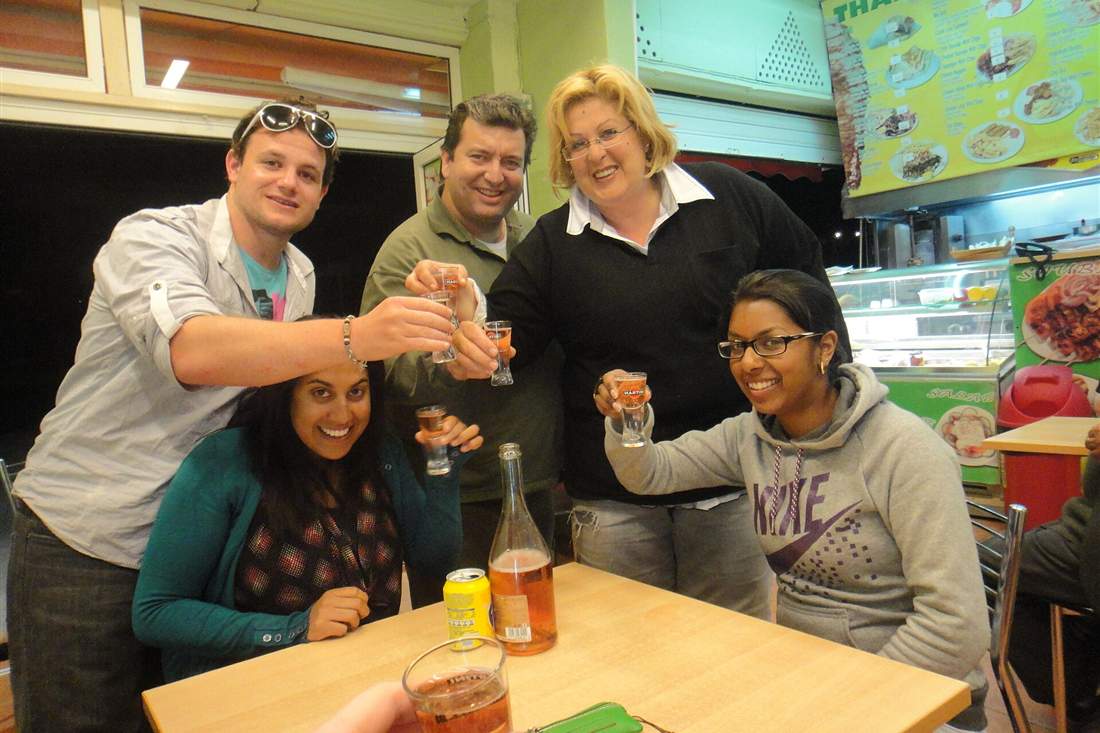
A Rethymno food tour walks the Venetian and Ottoman lanes of the old town, stopping at bakeries, cheese shops and tavernas for Cretan dishes. Plan the rest of the trip with Greece Tours.
What does a Rethymno food tour include?
A guided evening walk through the old town with six food stops, Cretan dishes and desserts at family-owned places, raki, rakomelo and local wine, and a visit to a historic Venetian mansion with a phyllo workshop and a taste of fresh baklava.
The evening start avoids the daytime heat.
The tastings add up to a dinner.
A guide tells stories about local culture and cuisine at each stop.
Groups cap at 12 people.
The walk is at a low pace.
The old town walk side sits at Rethymno walking tour.
How long does a Rethymno food tour take?
Three hours for the six-stop evening food tour and for the walking and gastronomy tour, three hours for the family treasure-hunt walk, four to five hours for the cooking experience, and about five hours for the olive oil and wine day tours.
The evening tour starts at 18:00.
It runs Monday to Saturday.
The olive oil and honey tour includes lunch.
The winery and olive mill tour runs a full day.
Walking between stops is short.
The tour ends with dessert.
Where does a Rethymno food tour start?
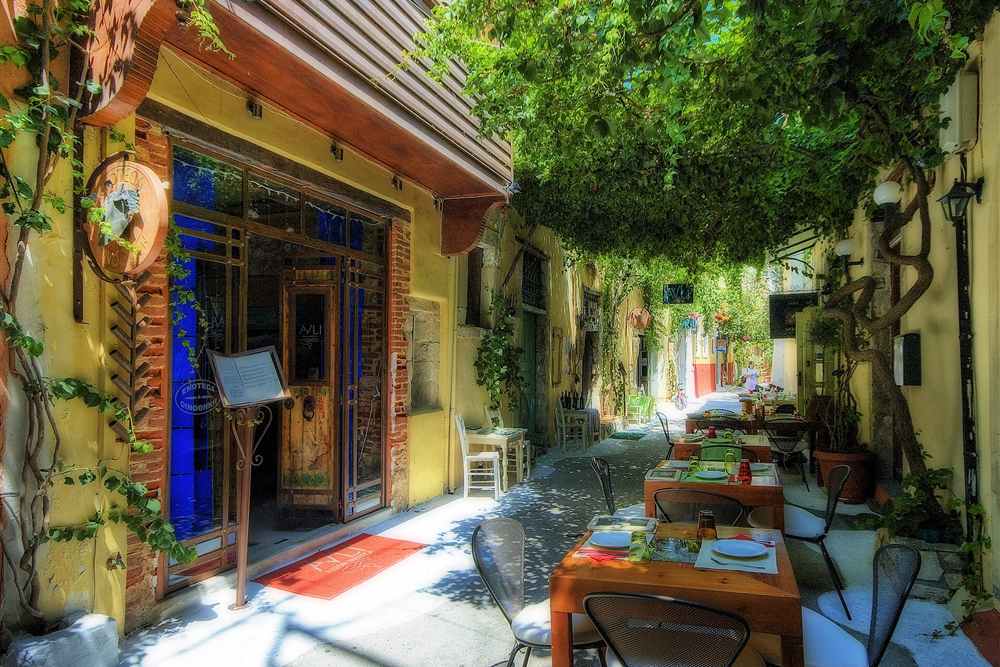
In the old town, with one operator starting from the Four Martyrs square at the border between the walls of the historic centre and the new town, and others naming a meeting point on the booking.
The old town is compact and walkable.
Meeting points are sent with the confirmation.
Day tours pick up from hotels in the Rethymno district.
The walk ends in the old town.
Taxis wait near the old town gates.
Private tours set their own start.
What are the six stops on the evening food tour?
A family-owned tavern with raki and three local dishes, a bakery for a Cretan treat, a Venetian mansion with a phyllo workshop and baklava, a tavern with six traditional flavours and local wine, a meze tavern with rakomelo and four plates, and a finish with lokma donuts.
The route avoids the typical tourist spots.
Extra baklava pieces are saved for later in the tour.
The fourth stop is a decorated tavern.
The meze stop shows communal Cretan dining.
The donuts are soaked in honey.
The tour substitutes for dinner.
What is the phyllo workshop?
The workshop of Giorgos Chatziparaschos in a historic Venetian mansion in the old town, where the craft of making kataifi and baklava phyllo is shown by hand and visitors taste freshly made baklava.
Kataifi is a fine shredded pastry dough.
Phyllo is stretched into thin sheets by hand.
The workshop is one of the old crafts still alive in the town.
Another phyllo shop sculpts sweets like dragons and floral wreaths from bread.
The visit is part of the evening food tour.
A walking tour with a meal also visits a phyllo workshop.
What is raki?
Tsikoudia, the Cretan grape pomace brandy of 40 to 65 per cent alcohol, made by distilling what remains of the grapes after pressing, called raki in eastern Crete and served with the first dishes of the food tour.
The pomace ferments for about six weeks in a sealed barrel.
It is similar to tsipouro of mainland Greece.
It belongs to the family of grappa and marc.
Raki is poured as a welcome.
It is distilled from grape pomace.
Juice replaces it for children.
What is rakomelo?
A warm mixed drink of raki and honey, a digestive spirit that Greeks traditionally use as a home remedy for a sore throat or cough, served at the meze stop of the evening food tour.
The name joins raki and meli, the Greek word for honey.
It is served warm.
Honey softens the spirit.
It pairs with meze plates.
It is a traditional home remedy.
Non-drinkers skip it.
What is dakos?
A Cretan salad of soaked paximadi rusk topped with tomato and cheese such as feta or mizithra, flavoured with dried oregano and finished with olives, capers or caper berries.
It is also called koukouvagia.
It resembles Italian panzanella.
Capers add a salty note.
The rusk softens under the tomato.
Olive oil finishes the dish.
It is a staple of Cretan tables.
What are kalitsounia?
Small Cretan cheese or herb pies, salty with mizithra or wild herbs, or sweet with mizithra and honey, with different fillings and shapes from one region of Crete to another.
The filling mixes grated whey cheese with eggs and herbs.
In Lasithi they are mainly sweet with cinnamon.
In Chania both salty and sweet versions are found.
Mizithra is a mild whey cheese.
Sweet versions are topped with honey.
They are served across the whole island.
What is graviera?
A hard cheese made in wheels, whose Cretan version is made from sheep’s milk and ripened for at least five months, slightly sweet with a burnt caramel flavour, and Greece’s second most popular cheese after feta.
The name comes from Swiss gruyere.
The rind carries the crisscross pattern of its draining cloth.
It is fried as saganaki.
It is grated over pasta.
Crete, Lesbos, Naxos and Amfilochia make the main varieties.
Wine tastings in Rethymno serve cheese and rusks with the wines.
What is staka?
A Cretan roux made from the fat of goat milk, one of the dairy dishes of the island that appears among the traditional flavours of Cretan taverns, rich and eaten in small amounts with bread.
Staka is a roux, a cooked fat base.
It is made from goat milk fat.
A little goes a long way.
Guides explain it at the table.
It belongs to village cooking.
Tavern menus list it among the meze.
What are lokma donuts?
Balls of leavened dough deep fried and soaked in syrup or honey, sometimes coated with cinnamon, a dessert described as early as the thirteenth century and the final stop of the evening food tour.
In Greek they are called loukoumades.
The medieval name meant judge’s morsels.
They are honey-drenched.
Cinnamon coats some versions.
The tour ends with them.
They suit children as well as adults.
What is baklava in Rethymno?
Layers of hand-stretched phyllo with nuts and syrup, made fresh at the phyllo workshop in the old town and tasted on the evening food tour, with extra pieces kept back for the group later on.
The phyllo is made at the workshop.
Baklava phyllo is made in the workshop by hand.
The tasting comes fresh from the workshop.
The group shares the extra pieces.
The workshop sits in a Venetian mansion.
Kataifi uses the same workshop’s shredded dough.
What is bougatsa?
A Greek breakfast or mid-morning pastry, sweet or savoury, with the most popular version, bougatsa krema, filled with semolina custard, found in bakeries across Greece and Crete.
It is eaten in the morning or at midday.
Sweet versions are served as dessert.
Savoury versions are filled with cheese.
It suits a morning tasting walk.
Bakeries are part of the food tour route.
The bakery stop shows the island’s baking traditions.
What wine does the food tour pour?
Local Cretan wine with six traditional flavours at the fourth stop, from grapes such as Vidiano, a white variety grown mainly around Rethymno, and red varieties such as Liatiko, Kotsifali and Romeiko.
Vidiano has aromas of peach, apricot, melon, honey and herbs.
Liatiko ripens in July.
Kotsifali is blended with Mandilaria.
Romeiko thrives around Kissamos.
Wine has been made on Crete since the Bronze Age.
The wine side sits at Rethymno wine tasting.
What is the Rethymno walking and gastronomy tour?
The pace is easy.
Tastings are part of the route.
The guide explains Venetian and Ottoman Rethymno.
It suits a first day in town.
Private versions are available.
It runs from the old town.
What is the family treasure-hunt food walk?
Children follow the clues.
The walk is easy.
Tastings keep the energy up.
The map and clues lead through the old town.
It suits families with school-age children.
Booking is direct with the operator.
What is the evening tasting tour?
An evening taste experience in the old town of Rethymno with a local guide, run by a curated experiences company based in Agios Georgios near Armenoi, alongside a daytime food tour of the old town.
The daytime tour starts at the Four Martyrs square.
The company also runs wine tastings.
Private tours are designed on request.
Tastings follow the guide’s choice of places.
The evening suits summer heat.
Booking is by form or phone.
What is the olive oil and honey tour?
A private tour from Rethymno with lunch that visits the olive oil mill of the Paraschakis family and the Apithano Honey and Museum in the traditional village of Melidoni.
The mill shows how Cretan olive oil is made.
The honey museum shows beekeeping.
Lunch is included.
Transport comes from Rethymno.
The tour is private.
The cave near the village has its own page at Melidoni Cave.
What is the winery and olive mill tour from Rethymno?
The route crosses the Mylopotamos area.
An off-road stretch gives panoramic views.
The mill shows traditional and modern olive pressing.
The return runs on an easy asphalt road.
Lunch is taken in Melidoni.
The olive oil side sits at Crete olive oil tasting.
What is the cooking experience near Rethymno?
The pace is easy.
Ingredients come from the garden.
The meal is shared at the end.
Recipes go home with the guests.
It complements the walking food tour.
The class side sits at Rethymno cooking class.
What is the Cretan Diet and Wine Festival?
A summer festival held every year in the municipal garden of Rethymno, a park dating from the Ottoman period, celebrating the Cretan diet and the island’s wine.
The garden dates from the Ottoman period.
The festival runs in summer.
Food and wine are the theme.
It suits visitors in town on those dates.
The Renaissance Festival runs at the Fortezza in summer too.
Guides share the dates with their groups.
What is the Cretan diet?
The traditional way of eating on Crete built on the old Mediterranean triad of olive oil, bread and wine, whose dishes, cheeses, pies and spirits fill every stop of a Rethymno food tour.
Wine, oil and bread formed the backbone of the old Mediterranean diet.
Grape seeds have been found in Early Bronze Age vessels.
Homeric heroes added copious meat at their banquets.
Paximadi rusks form the base of dakos.
Cretan graviera is made from sheep’s milk.
The island food day sits at Crete food tour.
Is a Rethymno food tour a full meal?
Yes: the six-stop evening tour is designed as a dinner-like experience that can substitute for dinner, with three dishes at the first tavern, six flavours at the fourth stop, four plates at the meze stop and dessert to finish.
Guests arrive hungry.
The portions are tastings, not full plates.
Together they make a meal.
Drinks come with the food.
Extra orders are paid separately.
Is a Rethymno food tour good for families?
Juice replaces raki and wine for children.
The evening start avoids the heat.
Three hours suits school-age children.
The treasure hunt keeps children engaged.
Private tours set a family pace.
The old town is pedestrian.
Can dietary needs be met on the tour?
Operators ask for needs at booking: vegetarian options are included on the olive oil and wine day tours, and the walking tour operators take requests for allergies and preferences at booking.
Cheese appears at many stops.
Meat appears at some stops.
Wheat is in the rusks and pastries.
Allergies go on the booking.
Non-drinkers receive soft drinks.
Guides check needs at the start.
When is the best time for a Rethymno food tour?
Evenings through the season, when the 18:00 start avoids the daytime heat, with the summer festivals in the municipal garden and at the Fortezza adding food, wine and music to the town.
The evening tour runs Monday to Saturday.
Summer evenings are warm and lively.
Spring and autumn are mild.
The first night of a stay is a good time to learn what to order.
Winter brings fewer departures.
Booking ahead secures a place in summer.
What do you bring on a Rethymno food tour?
An empty stomach, comfortable shoes for the old town lanes, a light layer for spring and autumn evenings, water in summer, and cash for tips and any extra food or drinks.
The lanes are paved in stone.
The pace is slow.
Cards work at most stops for extras.
A small bag holds purchases.
Phones capture the dishes.
Evenings cool down after sunset.
What are the common Rethymno food tour mistakes?
Eating a big meal before the tour, booking dinner for the same evening, not naming allergies at booking, drinking every raki and rakomelo poured, and taking the tour at the end of the stay instead of the first night.
The tastings add up to dinner.
Needs named late are hard to meet.
Raki is 40 per cent or more.
Guests learn what to order on other nights.
Evening departures fill in summer.
Tips are optional but customary.
How do you book a Rethymno food tour?
Book the evening food tour online with secure checkout, choose the walking and gastronomy tour or the family treasure hunt directly with the operator, and give dietary needs and group size at booking.
Groups cap at 12 on the evening tour.
Private tours are available on request.
Confirmation gives the meeting point.
Day tours confirm the pickup window.
The town page sits at Rethymno.
What does the food tour show of the old town?
The small Venetian harbour with its fishing boats and the Egyptian lighthouse of the late Ottoman era, Venetian palazzos and Ottoman konaks, the Loggia, the lion fountain, minarets beside churches, and carved Venetian and Ottoman door frames.
The lion of St Mark sits beside Ottoman symbols in the carvings.
Renaissance and Baroque details mark the Venetian houses.
A school built 250 years ago still works.
Another old school is now a hotel.
A workshop still makes the Cretan lyra.
The food stops sit among these streets.
What is Rethymno?
A city of more than 35,000 people on the north coast of Crete, capital of the Rethymno regional unit, believed to stand on the site of the ancient city of Rhithymna, with a Venetian and Ottoman old town that the food tours walk.
The municipal unit has nearly 40,000 residents.
The Italian name was Retimo.
Ancient coins of the city show Apollo or dolphins.
Dolphins remain the emblem of Rethymno.
The White Mountains rise to the west and Mount Ida to the east.
The town page sits at Rethymno.
What is the Fortezza?
The sixteenth century Venetian fortress on the hill above the old town, standing where the ancient temple of Apollo stood, whose grounds host the Renaissance Festival of Rethymno with artists and musicians every summer.
Apollo and Artemis were the patron gods of ancient Rethymno.
The view reaches the White Mountains and Mount Ida.
The festival runs on summer nights.
Food tours stay in the old town below.
A visit fits before an evening food tour.
The fortress has its own page at Rethymno Fortezza.
What is the Secret Gorge dinner?
A shared-table dinner at a secluded restaurant hanging from the side of the Zourida gorge in Rethymno, with a nine-course Cretan feast and a twelve-part tasting of local wines and spirits, rated 5.0 from 233 reviews.
Guests share one table with other travellers.
Menus are tailored to allergies on request.
Sunset suits the arrival.
The evening runs over nine courses.
Reservations are made online.
It suits a special occasion.
What is Malvasia wine?
Wines named for Candia and Crete were valued in the fourteenth to sixteenth centuries.
Candia is the Italian name for Heraklion.
Under Rome, Crete exported a sweet wine called protropos to Italy.
Modern Cretan appellations include Peza, Archanes, Dafnes and Sitia.
Guides tell this history with the wine stop.
Dessert wines close the Rethymno tastings.
What is marouvas?
The traditional Cretan old-style wine, similar to a sherry, made from the Romeiko grape, which tour guides describe as a taste unlike any western wine that mellows with long ageing.
Romeiko grows prominently around Chania and Kissamos.
Its pomace is distilled into tsikoudia.
Romeiko vineyards ripen late and yield heavily.
Guides compare it to an immature sherry.
Kissamos red and Clos de Creta white also come from Romeiko.
It shows the island’s older wine tradition.
What does a Rethymno food tour taste?
Dakos with rusk, tomato and mizithra, graviera cheese, wild greens, snails, kaltsounia pastries, local sausage and yoghurt with honey.
Dakos is the standard Cretan plate of barley rusk dressed with oil.
Kaltsounia are small pies filled with cheese or greens.
Snails are cooked with rosemary and vinegar on the island.
Where does a Rethymno food tour walk?
Through the Venetian and Ottoman lanes of the old town, past the Rimondi fountain and the market street, with stops at bakeries, cheese shops, delis and tavernas.
Everything on the route is within the old quarter.
The lanes are shaded and flat between the harbour and the fountain.
The walk ends near the Venetian harbour.
What is Cretan about the food in Rethymno?
Olive oil in everything, barley rather than wheat in the rusks, wild greens gathered in the hills, sheep and goat cheese, and honey from thyme.
The island diet is built on oil, bread, pulses and greens.
Meat appears at feasts rather than every day.
Raki closes the meal.
How long does a Rethymno food tour take?
Three to four hours on foot, with five to seven stops and enough food to replace a meal.
Groups stay small so the tables fit the party.
The route is level through the old town.
Evening tours finish after dark.
When does a Rethymno food tour run?
Late morning for markets and bakeries, early evening for tavernas, with the hottest hours left out in summer.
Shops close in the early afternoon.
Tavernas fill from about nine in the evening.
Spring and autumn are the easiest seasons for walking.
Does a Rethymno food tour suit families?
Yes. The route is flat, the stops are short and the dishes are plain: bread, cheese, tomato, pies, chicken and honey.
Portions are shared at the table.
Dietary needs are given at booking.
Tables are booked ahead so the group sits together.
Frequently Asked Questions
How much is a Rethymno food tour?
Does the tour replace dinner?
Yes. The six-stop evening tour is designed as a dinner-like experience and can substitute for dinner.
How big are the groups?
The evening food tour caps its groups at 12 people, and private tours are available on request.