
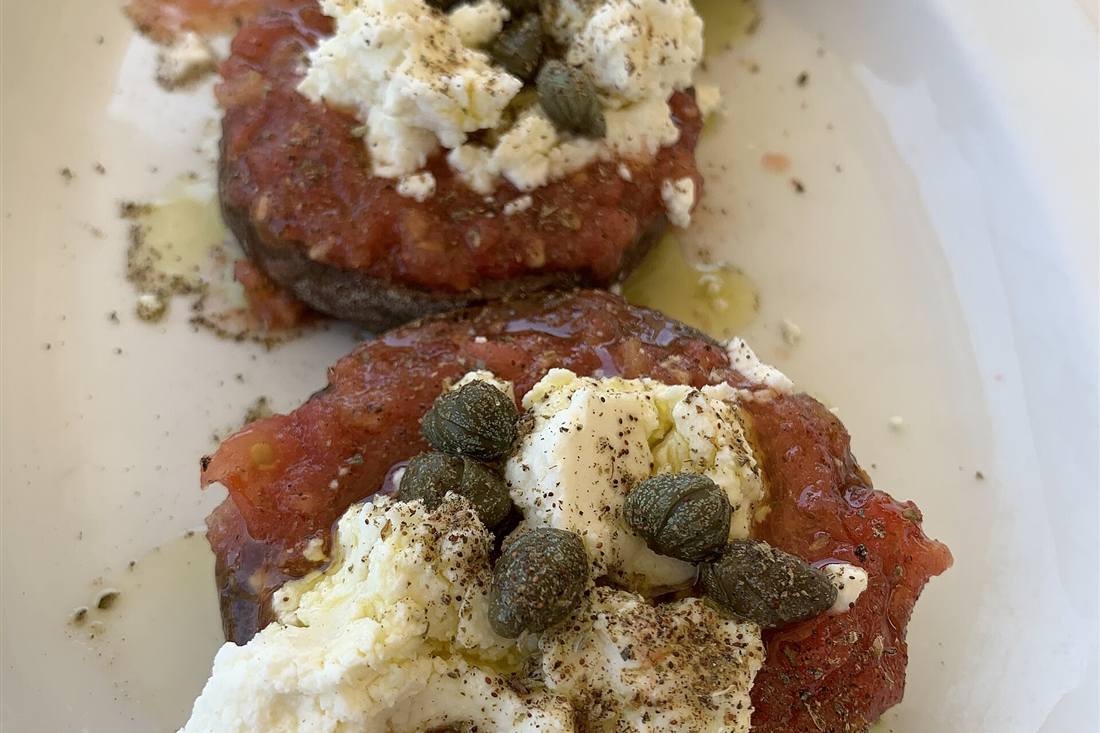
A Crete food tour is a guided tasting walk through the old towns of Heraklion and Chania, taking in the open-air market, a family bakery, an olive mill and a cheese counter, with every tasting included. Plan the whole trip with Greece Tours.
This guide covers the Crete food tour in full: what each Heraklion and Chania tour covers, what you taste, the olive oil, raki and cheese stops, how long the tours run, the group size, what they cost, the dietary options, the cruise-call format, the season, and how to book.
What is a Crete food tour and what does it include?
This is a guided walking route through a market, a bakery, a dairy counter and four to six tasting stops, led by a local guide who explains where each product comes from, how it is made and why the island eats it this way.
Every Crete food tour starts with the meeting point and the plan for the walk. A Crete food tour is booked ahead for a fixed, agreed price per person. The format pairs a walk through an old town with a fixed sequence of tastings booked in advance with named producers. A guide meets the group at a set point, sets the pace for two to six hours depending on the route, and carries the group from a market stall to a bakery counter to a taverna table, translating labels, explaining ingredients and answering questions on the spot. The island of Crete runs this format from both of its main cities, Heraklion and Chania, each with its own market, its own bakers and its own version of the walk.
The open-air market on 1866 Street anchors the Heraklion Crete food tour. Planning a Crete food tour ahead beats the scramble for a summer date. What separates a food tour from a self-guided market visit is access: a guide who knows the cheese seller by name gets the group behind the counter, into the ageing room or onto the roastery floor, stops a self-guided visitor rarely reaches on the same morning. The tastings are pre-arranged, so the producer sets stock aside, plates it, and talks the group through the batch rather than serving a queue of unannounced walk-ins between other customers.
A Crete food tour includes the hotel transfer where the operator offers it. The set price on a Crete food tour covers the guide, the food and the drinks. Every version of the tour follows the same skeleton: an opening tasting near the meeting point, three to five stops through the historic core, and a closing course that ties the walk together, either a light meze plate or a full sit-down lunch. Between stops the guide narrates the district’s history, pointing out a Venetian arch, a Turkish fountain or a market hall built a century earlier, so the walk reads as a history lesson carried by food rather than dates recited on a street corner.
A Crete food tour carries water and shade stops through the summer months. Booking confirms the date, the start time and the headcount, and the operator locks in the producers for that slot. A sold-out morning slot does not add a second group into the same stops; producers are not double-booked, and the tasting portions stay generous rather than stretched thin across an unplanned extra table.
What does the Heraklion food and city tour cover?
The Heraklion food and city tour walks the old town for three and a half hours, stopping at the open-air market on 1866 Street for olive oil and cheese tastings while the guide threads in the city’s Venetian and Ottoman layers between stalls.
Every Crete food tour starts with the meeting point and the plan for the walk. For a first day on the island, a Crete food tour sets the ground for the rest of the trip. The route opens near the harbour or a central square and works inward through narrow lanes lined with shopfronts selling herbs, dried fruit, honey and knives. The market on 1866 Street is the spine of the walk: stallholders who have run the same pitch for decades hand out slices of aged cheese, a spoon of thyme honey or a taste of an early-harvest oil straight from the tin, while the guide asks the questions a solo visitor does not know to ask.
The open-air market on 1866 Street anchors the Heraklion Crete food tour. A Crete food tour is booked ahead for a fixed, agreed price per person. Cheese and oil sit at the centre of the tastings because both are produced within a short drive of the city, and the market stalls buy direct from the same mountain villages the guide names on the walk. A graviera wedge cut to order, a spoon of soft mizithra, and a comparison of two oils from different olive varieties give the group a working sense of what separates a mass-market bottle from a small producer’s harvest.
Planning a Crete food tour ahead beats the scramble for a summer date. History is folded into the walk rather than delivered as a separate stop: a Venetian loggia, a fountain, a stretch of city wall or a converted mosque gets a two-minute explanation as the group passes, timed to land between tastings so nobody stands still with an empty mouth for long. The three-and-a-half-hour length covers roughly a dozen short stops and enough walking to justify the lunch or heavy snack that closes the route.
The set price on a Crete food tour covers the guide, the food and the drinks. This version of a Crete food tour suits a first visit to Heraklion because it doubles as an orientation walk: by the end, a visitor knows the market’s layout, the old town’s main streets and a shortlist of stalls worth a return visit later in the trip.
A Crete food tour carries water and shade stops through the summer months. A stall near the market’s northern end sells dried oregano, rusks, honey and preserved fruit side by side, and most guides use it as the closing point before the group breaks for lunch or moves on to the harbour front. Nearby shopfronts sell knives, leather goods and woven baskets, giving the walk a second, non-edible layer of the city’s traditional trade for anyone who lingers after the tasting stops end.
What does the Heraklion history and culture walking tour with tasting cover?
This walk leads past Heraklion’s Venetian buildings and the Loggia, through the square around the Morosini fountain, and folds four to five tasting stops into the route so the group eats while the guide covers four centuries of the city’s rule.
A Crete food tour carries water and shade stops through the summer months. The choice of Crete food tour comes down to the city, the route and the length. The Loggia, a Venetian meeting hall restored on the city’s main square, anchors the opening stretch of the walk and gives the guide a fixed point to explain how Venice governed the island for close to five hundred years before Ottoman rule replaced it. From there the route drops into the old commercial quarter, past shopfronts that still sit on Venetian foundations under later Ottoman and modern facades.
Every Crete food tour starts with the meeting point and the plan for the walk. For a first day on the island, a Crete food tour sets the ground for the rest of the trip. The Morosini fountain, carved with lion figures and fed by an aqueduct built to bring water into the walled city, sits at the square that gives the tour its second landmark. Tasting stops are set close to these monuments rather than tacked on afterward, so a cheese sample or a raki pour happens within sight of the fountain or under the Loggia’s arches, and the guide’s commentary carries straight from architecture into the produce on the plate.
A Crete food tour is booked ahead for a fixed, agreed price per person. Hidden courtyards and side lanes off the main squares carry the smaller stops: a bakery working from a converted Ottoman house, a spice shop stocked from mountain villages, or a wine bar pouring from small Cretan producers. The guide picks a route that avoids the widest tourist streets in favour of lanes still used by residents doing daily shopping.
Planning a Crete food tour ahead beats the scramble for a summer date. Because the tastings are worked into a history walk rather than the reverse, the pace stays measured: standing time at each monument runs longer than at a pure food stop, and the guide’s commentary covers dates, rulers and sieges alongside the ingredients on the tasting plate.
The set price on a Crete food tour covers the guide, the food and the drinks. The final stretch returns to a square near the Loggia on most routes, closing the loop the walk opened with, and gives the guide a chance to point out a detail missed on the first pass, a carved date over a doorway or a coat of arms worked into a wall the group walked past an hour earlier without noticing.
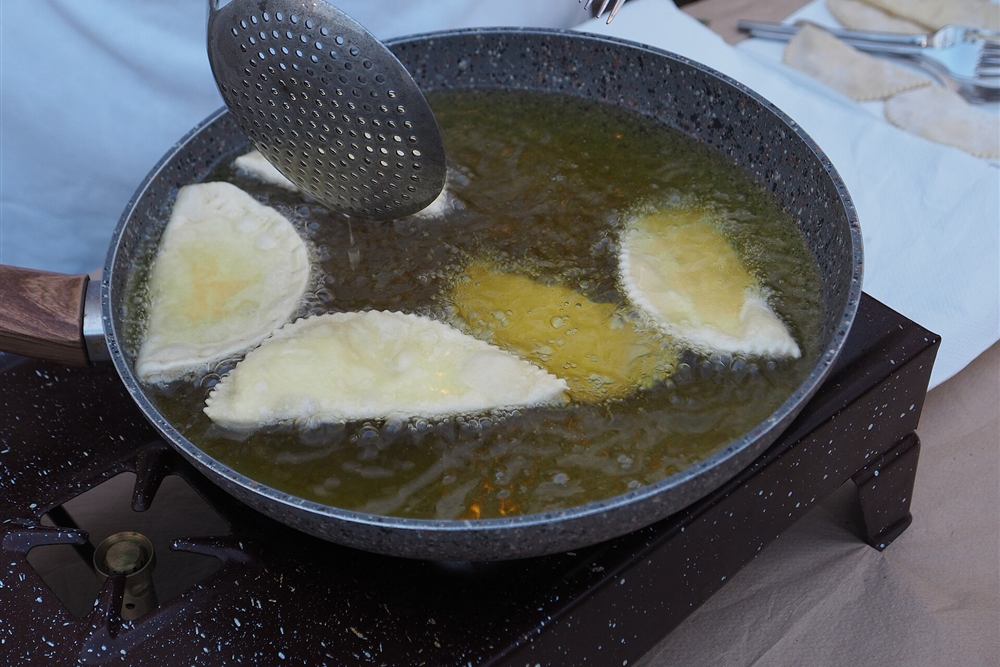
What is the Heraklion food tastings walking tour?
This tour is a tasting-first walk built around a family-run bakery, a stop for Greek coffee served with kalitsounia, and a sequence of raisin pies, cinnamon cookies, organic extra virgin olive oil and goat and sheep cheese, with the city’s landmarks kept in the background.
The set price on a Crete food tour covers the guide, the food and the drinks. A private Crete food tour keeps the walk to one party. The bakery stop sits early in the route and sets the tone: the same family has worked the ovens across two or three generations, baking kalitsounia (small cheese and herb pies), raisin pies and cinnamon-dusted cookies from recipes that have not changed. The group watches dough shaped and filled before tasting the finished pastry warm, still holding the shape of the baker’s hand.
A Crete food tour carries water and shade stops through the summer months. The choice of Crete food tour comes down to the city, the route and the length. Greek coffee, boiled in a small brass pot called a briki and served with the grounds settled at the bottom of the cup, is poured alongside the kalitsounia so the bitterness of the coffee cuts the sweetness of the pastry. The guide explains the difference between a sweet, medium and unsweetened cup, and the group orders whichever suits its taste for the rest of the walk.
For a first day on the island, a Crete food tour sets the ground for the rest of the trip. Olive oil tasting follows at a separate counter, where an organic extra virgin oil is poured onto a spoon and tasted on its own, without bread, so the group can judge the oil’s fruitiness, its bitterness and its peppery finish without anything to mask the flavour. The guide contrasts this oil against a milder, filtered supermarket bottle to make the difference concrete rather than abstract.
A Crete food tour is booked ahead for a fixed, agreed price per person. Cheese closes the tasting sequence: a firm aged goat cheese next to a soft, fresh sheep cheese, cut and served side by side so the group tastes the difference in fat, salt and ageing in a single mouthful rather than across two separate stops.
Planning a Crete food tour ahead beats the scramble for a summer date. The bakery’s oven, wood-fired and built into the back wall of the shop, runs from before dawn to mid-morning, and a tour timed for the first hour of trading catches the pastry trays coming out hot rather than reheated later in the day. A second batch of kalitsounia, filled with wild greens instead of cheese, appears on a portion of counters as a savoury variant worth pointing out to a group expecting only the sweet version.
What does a Chania food tour cover?
A Chania food tour walks the Venetian harbour and the old town’s narrow lanes, stops inside the covered market, adds street-food tastings through the traditional neighbourhoods, and runs for roughly three hours at an easy pace.
Planning a Crete food tour ahead beats the scramble for a summer date. The morning slot on a Crete food tour fills first in high season. The Venetian harbour, with its lighthouse and the shell of an old arsenal used to build and repair ships, gives the walk its opening view before the route turns inland into the old town’s grid of lanes. Chania kept more of its Venetian and Ottoman street plan intact than Heraklion, so the walk passes minarets, a former synagogue and stone houses with carved doorframes within a few minutes of each other.
The set price on a Crete food tour covers the guide, the food and the drinks. A private Crete food tour keeps the walk to one party. The covered market, built as a cross-shaped hall in the early twentieth century, holds meat, fish, cheese, spice and produce stalls under one roof, and the tour uses it as a central tasting stop: a cheese counter for graviera and mizithra, a spice stall for herbs gathered on the White Mountains, and a butcher’s counter for the island’s cured meats.
The choice of Crete food tour comes down to the city, the route and the length. Street-food stops carry the walk between the harbour and the market: a bougatsa shop serving the custard-filled pastry dusted with sugar and cinnamon, a souvlaki counter grilling to order, and a stand pouring loukoumades, the honey-soaked dough balls served hot. Each stop is short, standing-room only, and timed so the food is eaten within a minute or two of being handed over.
For a first day on the island, a Crete food tour sets the ground for the rest of the trip. The traditional neighbourhoods on the route, Splantzia and Topanas among them, keep a residential character the harbour front has lost to tourism, and the guide uses them to show where locals still buy bread, cheese and produce for their own kitchens rather than for visitors.
A Crete food tour is booked ahead for a fixed, agreed price per person. Laundry strung between buildings, a corner grocer stacked with crates of produce, and a neighbourhood church tucked behind a courtyard wall mark these streets out from the postcard view along the harbour, and the guide slows the pace here rather than treating the stretch as a corridor between the two main stops.
What is the Chania sightseeing and tastings tour?
This tour threads Chania’s Venetian monuments and Ottoman-era ruins into a walking route, placing a tasting stop between each landmark so the group eats while the guide explains the buildings, and keeps the group small enough to fit into narrow courtyards.
A Crete food tour is booked ahead for a fixed, agreed price per person. Families take a Crete food tour for the short walk and the seated stops. The route takes in the harbour fortifications, the remains of the Firkas fortress and stretches of the old city wall built to hold off naval attack, before turning into the backstreets where Ottoman-era fountains and a converted mosque sit beside newer shopfronts. The guide reads the layers of construction on a single wall, pointing out where a Venetian foundation carries an Ottoman upper storey.
Planning a Crete food tour ahead beats the scramble for a summer date. The morning slot on a Crete food tour fills first in high season. Tasting stops are set between these landmarks rather than clustered at the start or end, so the walk alternates a five-minute stretch of history with a five-minute stop for cheese, oil, raki or a sweet pastry. This rhythm keeps the group’s attention on both halves of the tour instead of treating the food as an afterthought once the sightseeing is finished.
A private Crete food tour keeps the walk to one party. Hidden courtyards, reached through unmarked doorways off the main lanes, hold a portion of the tasting stops: a family kitchen serving a small plate to a handful of visitors at a time, or a wine cellar built into a Venetian basement. These spaces cannot absorb a large crowd, which is the main reason the tour caps its numbers.
The choice of Crete food tour comes down to the city, the route and the length. A small group moving through a courtyard barely wide enough for a table means every visitor gets a seat, a full pour and a clear line of sight to the guide, rather than craning over a dozen other heads to hear the commentary on a cramped street corner.
For a first day on the island, a Crete food tour sets the ground for the rest of the trip. A number of these courtyard stops belong to families who live above the kitchen they open to visitors, and the guide’s long-standing arrangement with the household is what keeps the door open on a repeat basis rather than as a one-off favour granted for a single booking.
What do you taste on a Crete food tour?
This walk serves kalitsounia, dakos topped with barley rusk, graviera and mizithra cheese, thyme honey, extra virgin olive oil, bougatsa, loukoumades and cured local charcuterie, moving from savoury market stops to sweet pastry to a closing course of cheese or meat.
The choice of Crete food tour comes down to the city, the route and the length. A Crete food tour runs through the old towns of Heraklion and Chania. Dakos opens the savoury side of most routes: a barley rusk soaked lightly with olive oil, topped with grated fresh tomato, crumbled mizithra and a scatter of oregano, served as a single open-faced bite that sums up the island’s dry-climate cooking in one dish. The guide explains why barley rather than wheat carries the base, tied to the crop the island’s dry hillsides support.
For a first day on the island, a Crete food tour sets the ground for the rest of the trip. Families take a Crete food tour for the short walk and the seated stops. Cheese runs through nearly every stop in one form or another: graviera, a firm, nutty aged cheese, and mizithra, a soft fresh whey cheese, appear side by side so a first-time taster can compare texture and salt directly. Honey, poured over the softer cheese or tasted on its own from a spoon, adds the sweet counterpoint that closes the savoury sequence.
A Crete food tour is booked ahead for a fixed, agreed price per person. The morning slot on a Crete food tour fills first in high season. Pastry carries the sweet stops: bougatsa, a custard-filled filo pastry dusted with cinnamon and sugar, and loukoumades, deep-fried dough balls served hot and soaked in honey syrup, are the two most consistent sweet items across both cities’ routes. Both are served fresh from the pan or the oven rather than pre-made, so timing a stop around a bakery’s frying schedule matters to the operator.
A private Crete food tour keeps the walk to one party. Cured charcuterie, most commonly a dried or smoked pork product specific to mountain villages, closes out the savoury tastings on routes that run long enough to include a full lunch, paired with bread and a glass of the island’s dry white wine. A full account of these dishes, their regional variants and how each is cooked at home sits on the site’s Cretan food page rather than repeated here.
What olive oil experiences run as part of a Crete food tour?
Olive oil experiences on this walk include a mill visit where pressing is explained step by step, a side-by-side tasting of an early-harvest oil against a later-harvest bottle judged on acidity and peppery finish, and a Cretan lunch built around the same oil.
A private Crete food tour keeps the walk to one party. The price of a Crete food tour covers the guide, the tastings and the drinks. The mill visit walks the group past the equipment that separates oil from the pressed olive paste, a process largely mechanical now but still explained stage by stage: harvest, washing, crushing, malaxing and centrifugal separation. The guide or the miller points out the difference between a modern continuous-flow mill and the traditional stone press a portion of smaller producers still keep on site as a working relic.
The choice of Crete food tour comes down to the city, the route and the length. A Crete food tour runs through the old towns of Heraklion and Chania. The tasting itself follows a set order: oil is poured into a small glass, warmed briefly in the hand, and tasted on a spoon rather than dipped bread, so the group judges the oil on its own terms. An early-harvest oil, pressed from olives picked green, reads sharper, more bitter and more peppery on the throat; a later-harvest oil, pressed from riper fruit, reads rounder and milder, with less bite at the finish.
For a first day on the island, a Crete food tour sets the ground for the rest of the trip. Families take a Crete food tour for the short walk and the seated stops. Acidity comes up as a measurable figure rather than a vague quality claim: a low free-acidity number signals fruit pressed quickly after picking and handled with care, and the guide contrasts the numbers on the producer’s own bottles against the acidity ceiling set for the extra virgin grade.
The morning slot on a Crete food tour fills first in high season. The Cretan lunch that follows the tasting uses the same oil across the table, dressed over a Greek salad, drizzled on grilled vegetables and served alongside bread for dipping, so the group tastes the oil a second time in context, working with food rather than alone on a spoon.
What raki and wine tastings run on a Crete food tour?
Raki and wine tastings on this route cover a distillery visit during the autumn distilling season, the custom of pouring and drinking raki neat, the island’s Vidiano, Vilana and Liatiko grape varieties, and a winery stop that closes with dinner.
The morning slot on a Crete food tour fills first in high season. A Crete food tour runs two and a half hours or a full half day. Raki, a clear pomace spirit distilled from the skins and seeds left after winemaking, is produced across the island each autumn once the grape harvest finishes, and a handful of routes time their tastings to coincide with an active still. The guide explains the distilling process, the multiple passes a batch takes through the still, and the family and neighbourhood ritual built around a shared pot at harvest time.
A private Crete food tour keeps the walk to one party. The price of a Crete food tour covers the guide, the tastings and the drinks. The spirit is poured into small glasses and drunk neat, never mixed, and always alongside food rather than on an empty stomach; a plate of cheese, cured meat or a small pastry sits beside every raki glass on the table. The guide covers the etiquette: a short toast, a single unhurried sip, and a refill only once the glass is empty rather than topped up mid-pour.
The choice of Crete food tour comes down to the city, the route and the length. A Crete food tour runs through the old towns of Heraklion and Chania. Wine tastings introduce three grapes native to the island: Vidiano, a white variety giving a rounder, more textured wine than the island’s lighter whites; Vilana, a lighter, more floral white grown at altitude; and Liatiko, a red grape used for both dry reds and sweeter styles, among the oldest varieties still cultivated on Crete. Full detail on the island’s producers and their tasting rooms sits on the Crete wineries page.
Families take a Crete food tour for the short walk and the seated stops. The winery stop that runs longest ends with dinner: a set menu built around the wines poured during the visit, served at tables inside or near the vineyard, closing a five-hour private tour on a full meal rather than a final tasting glass.
What cheese and dairy stops run on a Crete food tour?
Cheese and dairy stops on this walk cover graviera, mizithra and anthotyros, explain the shepherd’s mitato where the cheese is made, walk through the ageing process, and serve the cheeses in a set tasting order from mild to strong.
Families take a Crete food tour for the short walk and the seated stops. The stops on a Crete food tour take in the market, a bakery and a cheese counter. Graviera, a firm cheese made from sheep milk or a sheep-and-goat blend and aged for a period ranging from a few months to over a year, carries the nutty, slightly sweet flavour most visitors associate with Cretan cheese. Mizithra, made from the whey left after harder cheeses are pressed, comes in a fresh, soft form eaten within days of production and a dried, salted form aged for grating.
The morning slot on a Crete food tour fills first in high season. A Crete food tour runs two and a half hours or a full half day. Anthotyros, another whey cheese close in method to mizithra but made with a higher proportion of milk added back into the whey, gives a creamier, richer texture and sits between the fresh and aged cheeses on the tasting board. The guide lines the three up so the group tastes texture change directly, moving from the softest to the driest cheese on the plate.
A private Crete food tour keeps the walk to one party. The price of a Crete food tour covers the guide, the tastings and the drinks. The mitato, a small stone hut built on the high mountain pastures where shepherds live during the grazing season, is where much of this cheese starts its life: milk collected at dawn, curdled the same day, and pressed into the wheel shapes sold weeks or months later in the towns below. A handful of tours arrange a visit to a working mitato as their centrepiece stop.
A Crete food tour runs through the old towns of Heraklion and Chania. Ageing rooms, whether a cellar under a market stall or a dedicated cave cut into rock, hold wheels stacked on wooden shelves for months at a time, and the guide points out the rind’s changing colour and texture as a visible marker of how long a given wheel has aged.
How long does a Crete food tour take?
This ranges from two and a half hours for a tasting-only walk up to six hours for a shore-excursion route, with a three-and-a-half-hour city and food tour as the standard format and a five-hour private wine and dinner tour at the long end.
A Crete food tour runs through the old towns of Heraklion and Chania. Booking a Crete food tour ahead secures the date and the place on the walk. The two-and-a-half-hour tasting walk is built for a visitor with a single free morning or evening: a market stop, a bakery, a cheese counter and a closing tasting, moving quickly enough to fit before a flight or a ferry without leaving the group rushed at any single stop.
Families take a Crete food tour for the short walk and the seated stops. The stops on a Crete food tour take in the market, a bakery and a cheese counter. The three-and-a-half-hour city and food tour is the format most first-time visitors book, long enough to combine a proper walk through the old town with five or six tasting stops and a short sit-down course at the end, without eating into a full day otherwise reserved for the beach or a second sight.
The morning slot on a Crete food tour fills first in high season. A Crete food tour runs two and a half hours or a full half day. The five-hour private wine and dinner tour extends the format into the evening: a winery visit, a tasting flight covering the island’s main grape varieties, and a full sit-down dinner paired with the wines poured earlier in the visit, run for a private group rather than a shared departure.
The price of a Crete food tour covers the guide, the tastings and the drinks. The six-hour shore excursion is built to fit a cruise ship’s call window, combining a food walk with a wider sightseeing loop, and timed with a built-in buffer so the group returns to the port well ahead of the ship’s scheduled departure rather than cutting it close.
How big are the groups on a Crete food tour?
Groups on this walk are capped small, most departures holding under a dozen people, with a private option available for a family or a couple who want the guide’s full attention and a producer stop that a large group crowds out.
The price of a Crete food tour covers the guide, the tastings and the drinks. A Crete food tour ends with the last tasting and a coffee or a raki. A small-group cap matters most at the stops that cannot physically hold a crowd: a family bakery’s kitchen counter, a mitato built for two or three people at a time, or a wine cellar with room for a single long table. Booking a route with a high cap risks a stop where half the group stands outside the door waiting for a turn rather than tasting alongside the guide’s commentary.
A Crete food tour runs through the old towns of Heraklion and Chania. Booking a Crete food tour ahead secures the date and the place on the walk. The private option removes the cap entirely, running the same route for one household at a booked time rather than a fixed shared departure. A private Crete food tour lets a family set its own pace, skip a stop that does not suit a child’s diet, or linger longer at a stop the group finds worth the extra time, none of which a shared group can accommodate.
Families take a Crete food tour for the short walk and the seated stops. The stops on a Crete food tour take in the market, a bakery and a cheese counter. Size affects the guide’s attention directly: in a group of six, every visitor gets a direct answer to a question asked mid-walk; in a group of twenty, the guide manages logistics, keeps the group together through narrow lanes and answers questions to the group as a whole rather than one at a time.
A Crete food tour runs two and a half hours or a full half day. A family bakery pouring coffee for six visitors keeps the same warmth and pace it gives a single couple; the same bakery serving twenty-five visitors on a single stop turns the counter into a queue, and the tasting portions and the conversation both suffer for it. A cap set at eight to ten visitors keeps this balance intact across a full season of bookings rather than only on quiet days.
Who guides a Crete food tour?
It is led by a local guide who knows the producers by name, introduces the group to the bakers, millers and cheesemakers met along the route, runs the tour in English and Greek at minimum, and answers questions on history, ingredients and cooking method throughout the walk.
The price of a Crete food tour covers the guide, the tastings and the drinks. The guide on a Crete food tour introduces the bakers, millers and shopkeepers. The guide’s relationship with the producers is the backbone of the format: a baker who opens the kitchen to a tour group, or a miller who walks visitors past the press, does so because the guide has arranged the visit in advance and returns with new groups on a regular schedule. This working relationship is what gets a group behind the counter rather than served at arm’s length.
A Crete food tour ends with the last tasting and a coffee or a raki. Producers met on the way, the bakery family, the cheese counter’s owner, the miller pressing the day’s batch, the raki distiller tending the still, each take a few minutes to speak directly to the group, either through the guide’s translation or in broken English of their own, giving the walk a set of voices beyond the guide’s narration.
Booking a Crete food tour ahead secures the date and the place on the walk. Languages run to the market the operator serves: English is the baseline on nearly every departure, with German, French and other languages added on specific dates or through a private booking that requests a guide fluent in a particular language ahead of time.
The stops on a Crete food tour take in the market, a bakery and a cheese counter. Questions on the walk range from the practical, where to buy the same cheese later in the trip, to the historical, why a fountain carries a particular carving, to the technical, how long a given cheese ages before sale, and the guide fields all three without breaking the pace of the route.
A Crete food tour runs two and a half hours or a full half day. A guide’s background varies from a trained tour professional with a history degree to a resident who grew up in the neighbourhood the walk covers, and both bring a different strength to the role: one carries the dates and the architecture, the other carries the family names behind every counter on the street.
What does a Crete food tour cost and what is included?
It is priced per person and agreed at booking, and the fee covers the guide, every tasting along the route, the drinks poured at each stop, the lunch or dinner on tours that carry one, and a hotel transfer on the routes an operator offers it for.
The stops on a Crete food tour take in the market, a bakery and a cheese counter. A Crete food tour crosses the market lanes, the harbour front and the old streets. The guide’s fee sits inside the headline price rather than added as a tip expectation, and covers the planning work behind the route: booking producers ahead of the date, confirming quantities, and walking the group through a route timed to each stop’s opening hours. A private booking carries a separate, higher fee that covers the guide exclusively for one party rather than split across a shared group.
A Crete food tour runs two and a half hours or a full half day. The guide on a Crete food tour introduces the bakers, millers and shopkeepers. Every tasting named in a tour’s description is included in the fixed price, not sold as an optional extra once the group reaches the stop; a route promising six tastings serves six, and any surprise seventh stop a producer throws in is a bonus rather than an expectation to plan around.
A Crete food tour ends with the last tasting and a coffee or a raki. Drinks poured with the tastings, coffee, raki, wine or a soft drink depending on the stop, are covered by the same fee, so a group does not carry cash for individual pours at each counter. Lunch or dinner, where the route description names one, is a fixed, pre-arranged meal rather than an à la carte order the group pays for separately.
Booking a Crete food tour ahead secures the date and the place on the walk. Hotel transfer is offered on a portion of routes, most commonly the ones running from a wider catchment of accommodation outside the old town centre; where it is not included, the meeting point sits at a fixed, central location the group reaches independently ahead of the start time. A shore-excursion booking through the ship itself bundles the transfer into the fare as a rule, since the operator controls the pickup schedule against the gangway timing.
Do Crete food tours cater for dietary requirements?
These tours substitute vegetarian and vegan dishes for the meat and dairy stops on request, ask for gluten and nut declarations at the time of booking, and pour an alcohol-free alternative at the raki and wine stops for anyone who does not drink.
The stops on a Crete food tour take in the market, a bakery and a cheese counter. For wine drinkers, a Crete food tour pairs with a winery visit and a dinner. Vegetarian substitution is the most straightforward adjustment: the mitato cheese stop, the bakery pastries and the vegetable dishes on a lunch menu already carry no meat, so a vegetarian booking mainly swaps out a cured-meat stop for a second cheese or vegetable course rather than reworking the whole route.
A Crete food tour crosses the market lanes, the harbour front and the old streets. Vegan requests take more advance planning because cheese, honey and yoghurt appear across nearly every stop; a producer told ahead of time swaps in olives, bread, vegetables and, where available, a plant-based pastry, but a request made on the day of the tour gives the kitchen no room to prepare a substitute.
The guide on a Crete food tour introduces the bakers, millers and shopkeepers. Gluten and nut declarations matter most at the bakery and pastry stops, where pies, cookies and bougatsa are made in a shared kitchen alongside wheat flour and, on a portion of recipes, ground almonds. Declaring these requirements at booking gives the operator time to check with the producer rather than leaving the guide to negotiate a substitute mid-walk.
A Crete food tour ends with the last tasting and a coffee or a raki. The kitchens need notice measured in days rather than hours for anything beyond a simple swap; a same-day request for a fully separate vegan or nut-free menu across five or six stops is harder to arrange than the same request made when the booking is confirmed.
Booking a Crete food tour ahead secures the date and the place on the walk. An alcohol-free option runs at every raki or wine stop for a visitor who does not drink: a non-alcoholic pour, most commonly a juice, a herbal infusion or a soft drink, replaces the glass without the group skipping the stop or standing by empty-handed while others taste. Naming this preference at booking gives the guide time to arrange the substitute pour with the same producer rather than working it out on the spot.
Which Crete food tours run from a cruise ship call?
Shore-excursion food tours run from both Heraklion and Chania on the days a cruise ship calls, timed against the ship’s scheduled departure, arranged with a transfer from the port, and built on a shorter route than the standalone city tours.
A Crete food tour ends with the last tasting and a coffee or a raki. The dietary requirements are declared before a Crete food tour is confirmed. Heraklion’s port sits within walking distance of the old town, so a shore excursion can start on foot from the ship rather than requiring a long transfer first; Chania’s cruise calls, where the ship docks further from the old town, add a short coach or taxi transfer into the route’s fixed schedule.
Booking a Crete food tour ahead secures the date and the place on the walk. For wine drinkers, a Crete food tour pairs with a winery visit and a dinner. Timing against the ship’s departure is the defining feature of this format: the operator builds in a buffer of an hour or more before the ship’s boarding cut-off, so the group returns to the port well ahead of the gangway closing rather than racing the clock on the final stop.
A Crete food tour crosses the market lanes, the harbour front and the old streets. The transfer, where the port sits outside comfortable walking distance, is arranged as part of the booking rather than left to the group to organise on the day, with a driver or the guide meeting the group at the gangway and returning them to the same point at the end.
The guide on a Crete food tour introduces the bakers, millers and shopkeepers. The route itself runs shorter than a standalone city and food tour, trimming the number of stops to fit the call window rather than cutting the tasting portions; a four-hour shore excursion covers fewer streets than a full-day version but keeps the same core stops at the market, the bakery and the cheese counter.
Is a Crete food tour suitable for children and for people with limited mobility?
This walk welcomes children from around six years old at a reduced child rate, but the cobbled lanes, market crowds and standing tastings make the walk harder for a wheelchair user or anyone with limited mobility, and this is worth checking with the operator before booking.
The guide on a Crete food tour introduces the bakers, millers and shopkeepers. A Crete food tour includes the hotel transfer where the operator offers it. Children old enough to walk the full route and sit through a tasting stop without needing a stroller are the best fit; younger children find the pace and the standing-room tastings harder to manage, and a handful of operators set a minimum age for exactly this reason. Child pricing runs at a reduced rate against the adult fee, reflecting a smaller tasting portion at each stop.
A Crete food tour ends with the last tasting and a coffee or a raki. The dietary requirements are declared before a Crete food tour is confirmed. Cobbled streets, uneven in both Heraklion and Chania’s old towns, and market crowds that build through the late morning, are the two obstacles that slow a family down mid-route most; a stroller manages the wider lanes but struggles on the narrower market aisles and the stepped side streets both cities are built on.
For wine drinkers, a Crete food tour pairs with a winery visit and a dinner. Walking distance across a standard three-and-a-half-hour route runs to a few kilometres split across a dozen short stretches rather than one continuous walk, which suits most children and most adults without a mobility limitation, but a visitor who tires quickly or uses a cane finds the standing time at each stop, not the walking itself, the harder part of the day.
A Crete food tour crosses the market lanes, the harbour front and the old streets. Shade and seating are limited at market stalls and street-food counters, most of which offer standing room only; a route that includes a sit-down lunch or a courtyard tasting gives the group a proper seated break partway through, and asking the operator which stops offer seating is worth doing ahead of a booking for anyone concerned about the heat or the standing time.
When is the best time and season for a Crete food tour?
The season runs from April to November, with morning market walks best for produce still fresh off the delivery truck, evening tastings suited to the summer heat, the olive harvest starting in November and raki distilling running through the autumn.
The guide on a Crete food tour introduces the bakers, millers and shopkeepers. The open-air market on 1866 Street anchors the Heraklion Crete food tour. April to November covers the window when the island’s markets, tasting rooms and outdoor courtyards run at full capacity; outside this window a portion of stops close for the winter or cut their hours back, and an operator running a tour in the coldest months trims the route to what stays open.
A Crete food tour includes the hotel transfer where the operator offers it. Morning departures, timed for the hour or two after the market opens, catch produce delivered that same morning: fish still wet from the boat, bread pulled from the oven within the hour, and cheese cut from a wheel opened for the day rather than one sitting out since the previous afternoon.
The dietary requirements are declared before a Crete food tour is confirmed. Evening tastings suit the peak summer months, when a midday walk through direct sun and standing crowds wears a group down faster than the food stops are worth; an evening route trades the market’s morning energy for cooler air, quieter lanes and tasting stops that stretch later into a meal rather than a quick bite.
For wine drinkers, a Crete food tour pairs with a winery visit and a dinner. The olive harvest, starting in November and running through the winter months, is when mills press the year’s fresh oil, and a tour timed to this window catches the sharpest, most peppery early-harvest oil straight from the press rather than a bottle aged for months on a shelf. Raki distilling follows the grape harvest in the autumn, giving September and October the best odds of catching a working still in action.
A Crete food tour crosses the market lanes, the harbour front and the old streets. The quieter shoulder months, spring before the summer crowds build and autumn after they thin, give a smaller group at each stop, an easier time booking a private slot, and a market working at its own pace rather than one crowded by a full season of visitors moving through at once.
What do you wear and bring on a Crete food tour?
This walk calls for comfortable closed shoes to handle the cobbles, a hat and sun protection for the exposed stretches, a bottle of water, a bag for produce bought along the way, and an appetite kept sharp by a light breakfast rather than a full meal beforehand.
For wine drinkers, a Crete food tour pairs with a winery visit and a dinner. Every Crete food tour starts with the meeting point and the plan for the walk. Closed, flat shoes with a solid sole handle the uneven cobbles and worn marble underfoot far better than sandals or new shoes not yet broken in; both Heraklion and Chania’s old towns carry stretches of polished, slippery stone that catch out a visitor in the wrong footwear, particularly after rain.
A Crete food tour crosses the market lanes, the harbour front and the old streets. The open-air market on 1866 Street anchors the Heraklion Crete food tour. A hat and sun protection matter most on the market stretches, where a corrugated roof gives only partial shade, and on any leg of the walk crossing an open square; the guide sets a pace that includes standing time in direct light, so sunscreen applied before the tour starts covers a group better than one applied halfway through.
A Crete food tour includes the hotel transfer where the operator offers it. Water carried in a reusable bottle covers the gaps between tasting stops, since not every stop pours a drink large enough to satisfy thirst on a hot morning; a bag, even a simple tote, gives the group somewhere to carry cheese, honey or a bottle of oil bought at a market stall along the way rather than juggling packages by hand for the rest of the walk.
The dietary requirements are declared before a Crete food tour is confirmed. A light breakfast beforehand, coffee and a small pastry rather than a full plate, keeps an appetite sharp enough to enjoy six or more tasting stops back to back; arriving already full blunts the impact of the first few tastings and leaves less room for the meal that closes a longer route.
How does a Crete food tour compare with a cooking class or a winery visit?
A food walk shows a market, a bakery and a cheese counter over two to four hours in a shared group, while a cooking class teaches hands-on technique in a kitchen over a similar length of time, and a winery visit narrows the focus to wine alone over a longer, slower afternoon.
For wine drinkers, a Crete food tour pairs with a winery visit and a dinner. A Crete food tour carries water and shade stops through the summer months. What a walking tour teaches is context: where an ingredient is grown, who presses the oil, who bakes the pastry, and how a dish’s ingredients look before they reach a plate. A kitchen class, by contrast, teaches a visitor to reproduce a dish at home, working hands-on with dough, a knife or a hot pan under direct instruction, a skill a walking tour does not provide since nobody cooks on the route.
Every Crete food tour starts with the meeting point and the plan for the walk. Time and group size split the two formats differently: a food walk runs two to four hours for a group that can stretch to twenty, while a Crete cooking class runs closer to three to five hours and caps its numbers lower, since every participant needs a station, a knife and space at a stove or a work counter.
The open-air market on 1866 Street anchors the Heraklion Crete food tour. Cost tracks the same pattern: a shared-group walking tour prices lower per person than a hands-on cooking class, which covers ingredients for a full meal and a smaller class size, while a private cooking class or a private winery visit both price above their shared-group equivalents for the same reason a private food tour does.
A Crete food tour includes the hotel transfer where the operator offers it. A winery visit narrows its scope to grapes and wine alone, running a tasting flight against a vineyard backdrop with little of the market bustle or the bakery stops a food tour carries; a walking tour shows the everyday market economy a winery visit never touches, and a winery shows the winemaking detail a food walk only covers in passing at its one wine stop.
The dietary requirements are declared before a Crete food tour is confirmed. A traveller with a single free day gains more from the walking tour, since it packs a market, a bakery, a dairy stop and a lunch into one outing; a traveller staying a full week gains more from splitting the three, taking the walk on one day, a wine afternoon on another and a hands-on class on a third, so each format gets the time it needs rather than being compressed into a single rushed day.
How do you book a Crete food tour and where does it fit in a trip?
Book it ahead of the date, since morning slots fill first in the high season; declare dietary requirements at the time of booking, confirm the meeting point and which city the tour departs from, and plan it as a half-day activity that leaves the rest of the day free.
A Crete food tour includes the hotel transfer where the operator offers it. The set price on a Crete food tour covers the guide, the food and the drinks. Booking ahead matters most from June through September, when the morning market walks sell out days in advance and a same-week booking is left choosing between an evening slot or a different date entirely; outside these peak months, a booking made a day or two ahead still reaches most of the available departures.
The dietary requirements are declared before a Crete food tour is confirmed. A Crete food tour carries water and shade stops through the summer months. Dietary requirements, vegetarian, vegan, gluten or nut-related, are best declared in the same message that confirms the booking rather than raised on the morning of the walk, since a producer needs the extra day or two to prepare a substitute dish rather than improvising one at the counter.
Every Crete food tour starts with the meeting point and the plan for the walk. Confirming the meeting point and the base city avoids the single most common mix-up: a visitor staying in one city booking a tour that departs from the other, or missing that a route starts at the harbour rather than the market square. A confirmation message from the operator names the exact meeting point, and checking it the evening before against a map removes any last-minute uncertainty.
The open-air market on 1866 Street anchors the Heraklion Crete food tour. A half-day tour, whether the two-and-a-half-hour tasting walk or the three-and-a-half-hour city and food tour, leaves an afternoon or a full evening free for a beach, a museum or a second sight, which is why most visitors slot a Crete food tour into the first or second day of a stay rather than saving it for the last morning before departure.
Frequently Asked Questions
How long is a Crete food tour?
The tasting walk runs two and a half hours. The Heraklion food and city tour runs three and a half hours, and the private wine and dinner tours in Chania run five hours with a shore-excursion format at six.
What is included in a Crete food tour?
The guide, every tasting on the route and the drinks that go with them. The longer tours add a Cretan lunch or dinner. Hotel transfer is included by the operators that offer it.
Where do Crete food tours run from?
Heraklion and Chania hold the walking tours, with the market on 1866 Street and the Venetian harbour as the anchors. Olive mill and winery visits run from both cities into the countryside.