
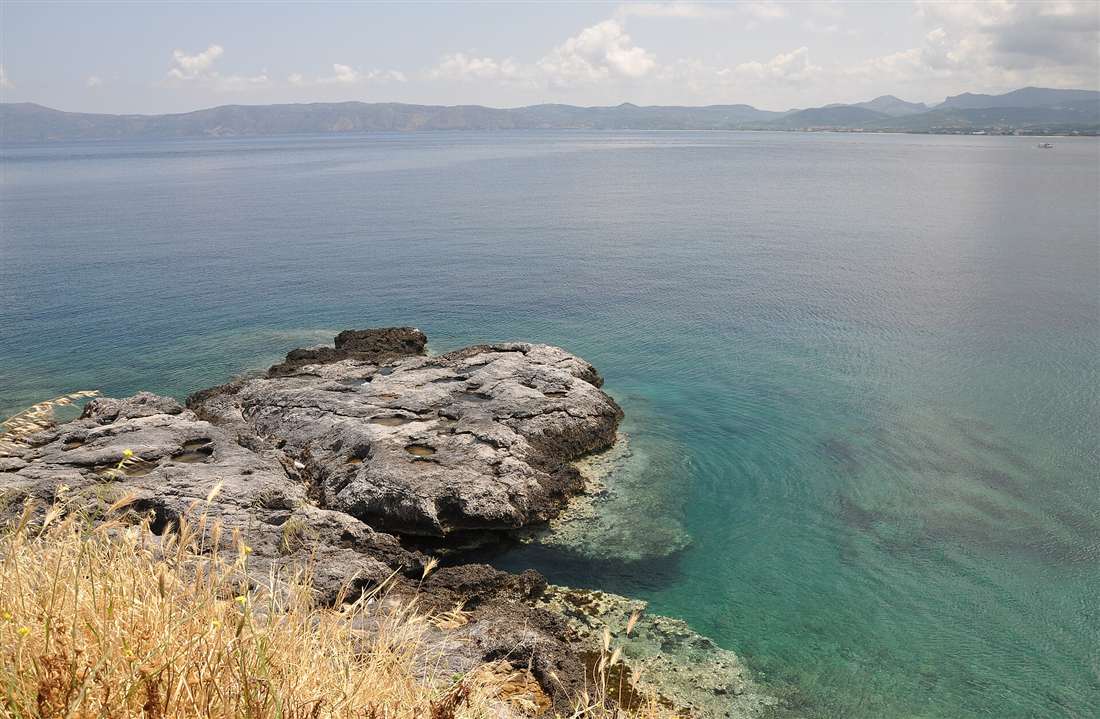
Kissamos beach means the long sandy Mavros Molos (Blue Flag) town beach and the pebble Telonio beach on the wide bay of Kissamos (Kastelli) in Chania, about 40 kilometres west of Chania, the harbour town that is the gateway to Balos and Gramvousa. Plan the whole trip with Greece Tours.
This guide covers the Kissamos beaches in full: Mavros Molos and Telonio, whether they suit families, why Kissamos is the launch point for the Balos and Gramvousa cruises, the other west-coast beaches at Falassarna and Nopigia, the town of Kastelli and its museum, where to eat and stay, how to get there from Chania, the best time, and whether the Kissamos beaches are worth visiting.
What are the beaches at Kissamos?
Kissamos has two main beaches on its wide bay: the long sandy Mavros Molos, a Blue Flag town beach with shallow water and tamarisk shade, and the pebble-and-sand Telonio beach beside the harbour, about 40 km west of Chania.
Kissamos, known to locals as Kastelli, sits at the head of a broad bay on the north-west coast of Crete. The town beaches line the shore right at the edge of the settlement, so a swim, a coffee and a plate of fish stay within a short walk of one another. Mavros Molos stretches west from the town centre in a long ribbon of soft grey-gold sand, while Telonio runs east toward the working port, its shoreline turning to smooth pebble and clear turquoise water.
The two beaches read as a matched pair rather than rivals. Mavros Molos delivers the classic organised sand experience, with sunbeds, umbrellas and beach bars along a promenade lined with tamarisk trees. Telonio trades the crowds for a quieter, gravel-floored bay where the water runs glass-clear over pale stones. Between them the town supplies tavernas, bakeries and a small archaeological museum, which turns a beach day at Kissamos into a full day out rather than a single strip of sand.
Kissamos also functions as the launch pad for two of the most photographed shores in Crete. The daily boats to Balos lagoon and Gramvousa island leave from the town harbour, so the beaches here double as a relaxed base for the wider region. The setting places calm, family-friendly town sand within reach of the wild peninsulas of the far north-west.
Where is Kissamos and how far is it from Chania?
Kissamos lies on the north-west coast of Crete, about 40 km west of Chania town, in the regional unit of Chania. The drive along the national road runs roughly 40 minutes, and KTEL buses connect the two towns through the day.
The town occupies the shore between two great peninsulas, Rodopou to the east and Gramvousa to the west, with the wide Gulf of Kissamos opening to the north. This position at the corner of Crete gives the beaches their sheltered feel, the bay curving inward and softening the open sea. The old name Kastelli still appears on road signs and bus timetables, a reminder of the Venetian castle that once guarded the harbour.
From Chania the route follows the E65 national road west, past Kolymbari and the Rodopou turn-off, before dropping toward the coast at Kissamos. The road is fast and modern for most of its length, which keeps the transfer short. Chania International Airport at Souda sits east of Chania town, adding roughly 15 km and 20 minutes to the trip, for a total of about 55 km from the runway to the Kissamos seafront.
The wider Chania region rewards a longer stay, and the coast toward Chania holds a string of old-town streets, Venetian harbours and mountain villages within easy reach. Kissamos anchors the far western end of that coastline, the last sizeable town before the road climbs into the empty hills of the Gramvousa peninsula.
What is Mavros Molos beach like?
Mavros Molos is the long sandy Blue Flag town beach of Kissamos, a broad grey-gold strand with shallow, gently shelving water, rows of sunbeds and umbrellas, tamarisk trees for shade and a promenade of beach bars and tavernas directly behind it.
The beach runs for more than a kilometre along the western edge of the town, its sand fine underfoot and its slope into the sea slow and even. Swimmers wade out a long way before the water reaches shoulder depth, which makes the shallows a natural paddling ground. The Blue Flag award marks clean water, safe access and lifeguard presence through the peak season, and the flag flies over the central stretch year after year.
A line of tamarisk trees fringes the back of the sand, throwing feathery shade across towels and picnic spots for those who skip the paid loungers. Behind the trees the seafront road carries a run of beach bars, caf\u00e9s and fish tavernas, so cold drinks and lunch stay a barefoot walk away. Showers, changing points and parking sit along the promenade, and the flat sand gives easy passage for buggies and wheelchairs.
The name Mavros Molos, “black pier”, nods to the dark volcanic tint in the sand near the town end, which pales to gold further west. Sunsets here face straight out across the gulf toward the Gramvousa headland, turning the water copper as the light drops. The combination of length, shade, shallow water and town amenities makes this the everyday beach of Kissamos and the first place visitors reach for.
What is Telonio beach at Kissamos?
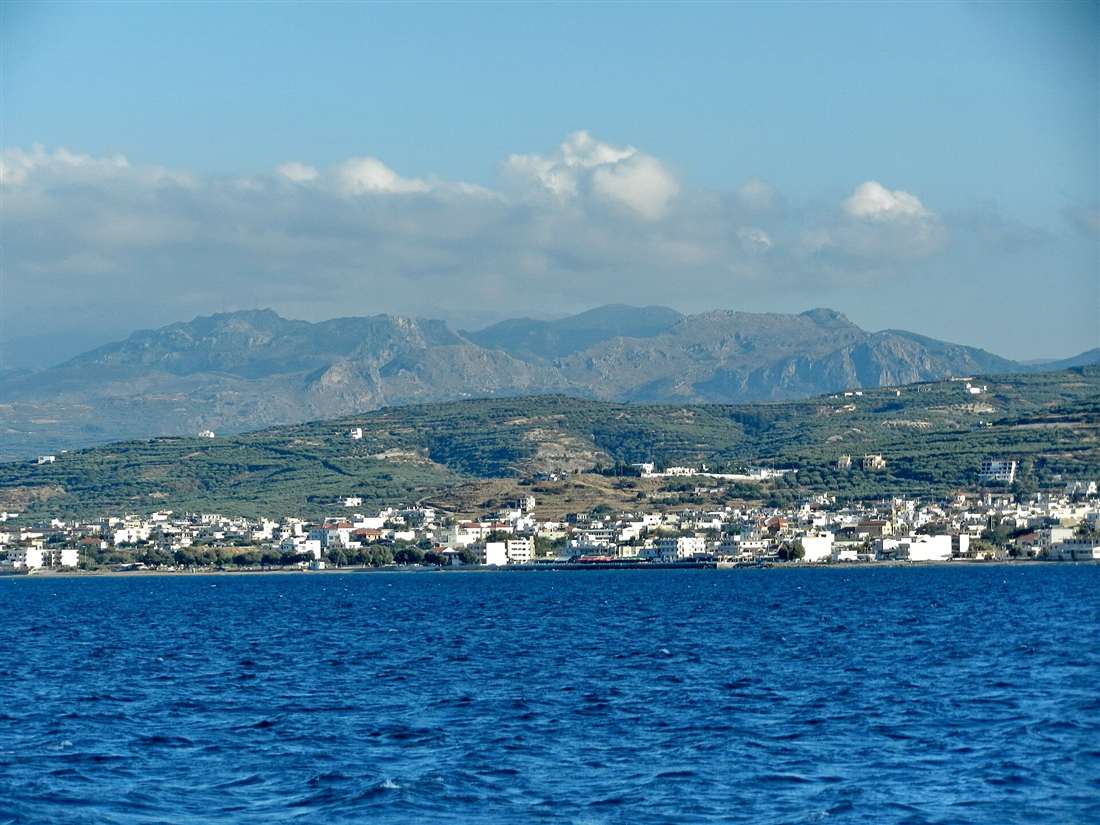
Telonio is the pebble-and-sand beach beside the Kissamos harbour, east of the town centre. Its clear turquoise water runs over smooth pale stones, the seabed drops away faster than at Mavros Molos, and the setting stays quieter than the main town strand.
Telonio takes its name from the old customs house, the telonio, that stood near the port. The beach begins where the sand of the town shore gives way to rounded pebbles and gravel, and the change in texture keeps the water strikingly transparent. Snorkellers work the rocky edges for small fish, and the deeper, cooler feel of the bay draws swimmers who prefer a proper stroke to a paddle.
The beach sits within a short walk of the port from which the Balos and Gramvousa boats depart, so a morning cruise and an afternoon swim link up without a car. A scatter of tamarisks and low cliffs give patches of natural shade, and a taverna or two nearby handle lunch and coffee. Telonio suits visitors who value clear water and calm over the full sunbed-and-bar scene of the main beach.
Are the Kissamos beaches good for families?
Yes. The Kissamos beaches suit families well: Mavros Molos offers shallow, calm, gently shelving water, soft organised sand, sunbeds, showers and lifeguards, and the town behind the beach supplies shops, pharmacies, tavernas and shade within a short walk of the shoreline.
The long, slow slope of Mavros Molos into the sea gives small children a wide zone of ankle-to-knee water before the depth builds, and the sheltered curve of the bay keeps waves low through most of the summer. Lifeguards watch the central stretch in peak season, and the flat sand makes an easy surface for sandcastles, buggies and beach games. Tamarisk shade behind the sand protects young skin during the strongest midday sun.
Because the beach fronts the town rather than a remote cove, the practical needs of a family day stay close at hand. A pharmacy, a bakery, a mini-market and a run of tavernas line the streets a block back from the sand, so a forgotten sun hat, a lunch or an ice cream involves a two-minute stroll. Free parking along the promenade and public transport into the centre remove the stress of a long transfer at the end of a tiring beach day.
Telonio adds a second option for older children who enjoy snorkelling, its clear water and pebble floor revealing fish along the rocks. Families who alternate the two beaches get soft sand and shade at Mavros Molos and clear-water snorkelling at Telonio, both within the same town.
Why is Kissamos the gateway to Balos and Gramvousa?
Kissamos is the gateway to Balos and Gramvousa because the daily cruise boats to the pink-sand lagoon and the Venetian fortress island depart from its harbour. The port sits minutes from the town beaches, making Kissamos the natural base for the far north-west.
The Gramvousa peninsula stretches north from Kissamos into the wildest coast in Crete, ending at the twin islets of Imeri and Agria Gramvousa. On Imeri Gramvousa a ruined Venetian fortress crowns the rock, its walls surveying the sea from a height above a small horseshoe beach and a shipwreck rusting in the shallows. The lagoon of Balos lies on the western side of the peninsula, a shallow sweep of turquoise and rose-tinted water enclosed by a sandbar and a headland.
Reaching both by land involves a rough drive and a long walk down to Balos, so the sea route from Kissamos carries the bulk of visitors. The cruise boats leave the town port through the morning, call at Gramvousa island for the fortress and the shipwreck beach, then anchor off Balos for a swim in the lagoon before returning by late afternoon. The full lagoon story, the sandbar and the boat timings appear on the dedicated Balos lagoon guide.
This harbour link is what raises Kissamos above an ordinary beach town. A single base delivers calm town sand for the morning, a legendary lagoon for the day cruise and a quiet return for the evening, all without changing hotels or driving remote dirt tracks.
What other beaches are near Kissamos?
Near Kissamos lie Falassarna, a long golden west-coast beach famous for sunsets, the Balos lagoon on the Gramvousa peninsula, and Nopigia to the east. The wild Gramvousa headland and the exposed west coast hold a run of sandy bays within a short drive.
Falassarna sits about 16 km west of Kissamos on the open west coast, a wide beach of pale sand backed by dunes and the ruins of an ancient city. Its west-facing sweep turns it into one of the finest sunset stages in Crete, and its size absorbs a summer crowd with room to spare. The afternoon breeze that rakes this coast draws windsurfers and keeps the sand cool underfoot.
Nopigia lies a few kilometres east of Kissamos toward the Rodopou peninsula, a quieter mix of sand and pebble with shallow water and a lower-key feel than the town beaches. Northward, the Gramvousa peninsula guards Balos at its tip, reached by boat from the town or by the long track and walk from the road’s end. Each of these shores trades on a different mood, from the organised town sand of Mavros Molos to the raw dunes of Falassarna and the lagoon at Balos.
The wider Chania coastline holds still more, from the pink sand of Elafonissi in the south-west to the town beaches near Chania itself. A full survey of the region’s shores, ranked and mapped, sits in the Chania beaches guide, which places Kissamos and its neighbours in the context of the whole prefecture.
What is Kissamos (Kastelli) town like?
Kissamos is a working port town on a wide bay, its life built around the harbour, the fishing boats and the surrounding vineyards. The centre holds an archaeological museum with Roman mosaics, everyday shops, seafront tavernas and a relaxed, un-touristy Cretan rhythm.
Kastelli grew up around a Venetian castle above the harbour, and the modern town keeps the unhurried air of a place that earns its living from the sea and the land rather than from postcards. Fishing boats and the Balos cruise vessels share the port, tractors move through the streets at harvest time, and the squares fill with locals in the evening. This lived-in quality gives Kissamos a texture that purpose-built resorts lack.
The Archaeological Museum of Kissamos occupies a restored building on the central square and displays finds from ancient Kissamos, including detailed Roman floor mosaics of sea creatures and hunting scenes lifted from local villas. The surrounding plain of the Gulf of Kissamos ranks among the leading wine districts of Crete, and the indigenous Romeiko grape and the local tsikoudia spirit fill the tavernas and roadside cellars. A short drive inland reaches hill villages, gorges and the vineyards that supply the town’s tables.
The streets away from the seafront reveal the everyday face of a Cretan town: a covered market, family workshops, a Sunday church crowd and kafeneia where the older men hold court over coffee and backgammon. The Venetian and Ottoman layers survive in doorways, fountains and the ruined castle above the port, and the plane-shaded squares fill with families in the cool of the evening. This unpolished authenticity is the town’s quiet asset.
The result is a town that works as a base rather than a spectacle. Visitors get a genuine Cretan port with a museum, a market, a beach on the doorstep and a harbour that fires the day-trip to Balos, all wrapped in a pace that stays calm even at the height of summer.
Where do you eat at Kissamos beach?
You eat at the seafront fish tavernas that line the Mavros Molos promenade and the harbour, where the day’s catch, grilled octopus, Cretan meze and local Kissamos wine come to the table a few steps from the sand. The town squares add bakeries and kafeneia.
The strongest concentration of tavernas runs along the beach road behind Mavros Molos and around the port. Fish and seafood lead the menus here, landed by the town’s own boats and served whole from the grill or fried as small meze. Grilled octopus, marinated anchovies, sea urchin and shrimp saganaki appear beside the Cretan staples of dakos, boiled greens, snails and slow-cooked lamb.
The Kissamos plain supplies much of what reaches the plate. Local olive oil dresses every table, the vineyards behind the town pour their own reds and whites, and the meal closes with tsikoudia, the Cretan grape spirit, poured as a matter of course. Prices in this working town run below the resort strips further east, and the tavernas keep a local clientele that vouches for the cooking.
For a lighter beach day, the bakeries and kafeneia around the central square turn out bougatsa, cheese pies, fresh bread and strong coffee from early morning. A picnic of local produce carried onto the tamarisk-shaded sand works as well as a taverna lunch, and the mini-markets a block back stock everything the beach basket needs.
The evening turns the seafront into the social heart of the town. Tables spill onto the promenade as the light drops over the gulf, the grills fire up along the harbour, and the meal stretches late over refilled carafes of local wine. A dinner here faces the sunset straight down the bay toward Gramvousa, which pairs the food of the Kissamos plain with the finest view the town owns.
Where do you stay in Kissamos?
You stay in Kissamos in the town hotels, guesthouses and self-catering apartments, with beachfront rooms along Mavros Molos and quieter options set back in the streets. The town works as a calm, affordable base for exploring the whole north-west of Crete.
Accommodation clusters around the seafront and the town centre, ranging from small family-run hotels and studios to apartment blocks a short walk from the sand. Beachfront rooms on Mavros Molos put the water and the promenade tavernas at the doorstep, while properties in the back streets and the surrounding villages trade the sea view for lower prices and deeper quiet. Larger resort complexes sit along the coast toward Nopigia and the peninsulas.
The town’s position turns it into a strategic base rather than a mere overnight stop. Balos and Gramvousa leave from the harbour, Falassarna lies twenty minutes west, and the beaches, gorges and villages of western Crete radiate from Kissamos in every direction. Staying here places a visitor at the launch point for the wild north-west while keeping a real town, a museum and a beach within a stroll of the bed.
For travellers who prefer the buzz of the old town and the Venetian harbour, Chania town offers a denser base 40 km east, trading Kissamos’s calm for nightlife and choice. Kissamos rewards those who value early starts for Balos, quiet evenings and a shorter reach to the west-coast beaches.
How do you get to Kissamos from Chania and the airport?
You reach Kissamos from Chania by driving about 40 km west on the E65 national road, a trip of roughly 40 minutes, or by KTEL bus from the Chania station. From the airport the total runs about 55 km, and the town port also handles ferries to the Peloponnese.
By car the route is direct: pick up the E65 national road heading west out of Chania and follow it past Kolymbari to the Kissamos exit, then drop down into the town. The road is fast dual-carriageway for most of the way, which keeps the drive short and simple. Chania Airport at Souda lies east of the city, so arrivals add roughly 15 km and a further 20 minutes to the Chania figure, for about 55 km and an hour in total.
KTEL buses link Chania’s central bus station with Kissamos through the day, with extra services in summer, and the ride takes under an hour. From Kissamos, local buses and the cruise boats fan out to Balos, Gramvousa and Falassarna in peak season, which makes a car optional for a beach-focused stay. Taxis wait at the Chania rank and the airport for a direct door-to-door transfer.
The port of Kissamos adds a rarer link: ferries sail across the sea to the Peloponnese, connecting Crete with Gythio, Kalamata and the island of Kythira. This ferry service turns the town into an entry and exit point for the whole island as well as a beach base, a role few small Cretan ports hold. Drivers heading on to Elafonissi, Falassarna or the southern gorges refuel and stock up in Kissamos, the last full-service town before the roads narrow into the west.
When is the best time to visit the Kissamos beaches?
The best time to visit the Kissamos beaches runs from late spring through early autumn, when the sea warms and the sun holds. The peak of July and August brings the warmest water and the strongest afternoon wind, while the shoulder months of late spring and early autumn stay calmer.
The sea reaches comfortable swimming warmth from late spring and holds it into October, with the peak of August delivering the warmest, calmest bathing on the sheltered town beaches. High summer packs the promenade and the Balos boats to capacity, and the north-westerly meltemi wind rises through the afternoon, whipping the exposed west coast at Falassarna while leaving the inward-facing bay of Kissamos more protected.
The shoulder months reward a visit with warm water, thinner crowds and lower prices. Late spring brings green hills, wildflowers and long light, early autumn holds the summer sea after the crowds thin, and both windows favour the Balos cruise, which runs smoother on a calm sea. Spring and autumn also suit walkers heading into the Gramvousa peninsula and the gorges inland, where the summer heat eases. The vineyards behind the town turn gold at harvest, and the roadside cellars fill with the year’s first pressing, which adds a second reason to visit as the beach season winds down.
For the calmest water on any given day, the morning beats the afternoon, since the meltemi builds as the day heats. Early starts also secure a place on the Balos boats and a parking spot on the Mavros Molos promenade before the town fills.
What facilities do the Kissamos beaches have?
The Kissamos beaches carry full town facilities: sunbeds, umbrellas and beach bars along Mavros Molos, freshwater showers, changing points, lifeguards in peak season, free promenade parking, and a run of tavernas, mini-markets and pharmacies a block back from the sand.
Mavros Molos operates as an organised beach through the summer. Rows of paid sunbeds and umbrellas cover the central stretch, beach bars serve cold drinks and snacks to the loungers, and the Blue Flag standard guarantees clean water, marked access and lifeguard cover on the main section. Freshwater showers and changing cabins line the promenade, and public toilets sit near the beach bars.
Parking runs free along the seafront road and in the streets behind the beach, which removes the transfer headache that dogs the remote coves further west. The town centre sits within a short walk, so a pharmacy, a bakery, a bank and a supermarket back up a beach day without a drive. Telonio keeps a lighter footprint, its facilities limited to a nearby taverna and natural shade, in keeping with its quieter character.
Accessibility works better here than at most Cretan beaches. The flat, firm sand of Mavros Molos and the level promenade give buggies and wheelchairs a clear path to the shoreline, and the shallow, waveless water eases entry for the young and the elderly. This combination of organised comfort and town backup defines the practical appeal of the Kissamos shore.
What is there to do beyond the beach at Kissamos?
Beyond the beach, Kissamos offers the Balos and Gramvousa cruise, the Archaeological Museum with its Roman mosaics, wine tasting on the Kissamos plain, walks into the Gramvousa peninsula and nearby gorges, and day trips to Falassarna, Elafonissi and the Chania old town.
The headline outing is the sea cruise to Balos and Gramvousa, which fills a full day from the town harbour. Back on land, the Archaeological Museum of Kissamos displays Roman floor mosaics and finds from the ancient city on the central square, and a stroll through the port and the old streets reveals the Venetian and everyday life of the town. The surrounding vineyards open their cellars for tastings of the local Romeiko wine and tsikoudia spirit.
Walkers and drivers reach a spread of destinations from Kissamos. The Gramvousa peninsula holds rough tracks to wild bays and the fortress viewpoint, the gorges of the interior cut down toward the coast, and the pink sand of Elafonissi lies within a scenic drive to the south-west. Falassarna’s dunes and sunsets sit twenty minutes west, and the Venetian harbour and market of Chania town wait 40 km east for an evening or a rainy day.
This depth of choice turns Kissamos into a week-long base rather than a single beach. A visitor alternates lazy town-sand mornings with cruises, museum visits, wine roads and west-coast beach runs, all returning to the same quiet harbour town each night.
What is the water and sand like at the Kissamos beaches?
Mavros Molos has fine grey-gold sand and shallow, clear water that shelves slowly into the bay, while Telonio holds smooth pale pebbles and deeper, glass-clear turquoise water. The sheltered Gulf of Kissamos keeps both beaches calm through most of the summer.
The sand at Mavros Molos runs soft and fine, darker near the town where the volcanic tint gives the beach its name and paler gold toward the western end. The seabed slopes gently, so the water stays shallow and warm across a wide band before it deepens, a texture that favours paddlers and long lazy floats. The inward curve of the bay shields the shore from the swell that batters the open west coast.
Telonio changes the character entirely. Rounded pebbles and gravel replace the sand, and the harder floor keeps the water exceptionally clear, its turquoise deepening quickly a short way out. The faster drop-off rewards swimmers who want real depth close to shore, and the transparency turns the rocky margins into a snorkelling ground. Water shoes ease the walk over the stones into the sea.
Across both beaches the Gulf of Kissamos delivers water that reads clean and bright, protected by the two peninsulas that frame the bay. The contrast between soft golden sand at one beach and clear pebble-floored turquoise at the other lets a visitor choose the exact texture of the swim within the same town.
Are the Kissamos beaches worth visiting?
Yes. The Kissamos beaches are worth visiting as a relaxed sandy base in the north-west of Crete and the launch point for Balos and Gramvousa. Blue Flag town sand, clear-water pebble bays, a genuine port and easy access to the finest lagoons combine here.
Judged on their own, Mavros Molos and Telonio deliver a strong day: a long Blue Flag strand with shallow water, shade and tavernas, and a clear-water pebble bay beside the harbour, both fronting a working Cretan town rather than a resort strip. Judged as a base, Kissamos rises higher still, the harbour firing the daily cruise to the pink lagoon of Balos and the fortress island of Gramvousa, with Falassarna’s sunset dunes twenty minutes west.
The town adds the depth that turns a beach stop into a destination. An archaeological museum with Roman mosaics, seafront fish tavernas, a wine plain and a ferry port give Kissamos a life beyond the sand, and the prices stay below the eastern resorts. Families gain shallow, safe water and town amenities on the doorstep, while explorers gain a launch pad for the wildest coast on the island.
The verdict is clear. Kissamos earns its place for travellers who want calm town beaches, real Cretan character and the shortest route to Balos and Gramvousa, all from a single, unhurried base at the corner of Crete.
Frequently Asked Questions
What are the beaches at Kissamos?
Kissamos has the long sandy Mavros Molos beach, a Blue Flag town beach with shallow water and sunbeds, and the pebble-and-sand Telonio beach by the harbour. Both line the wide bay of Kissamos (Kastelli), about 40 kilometres west of Chania.
Why is Kissamos the gateway to Balos and Gramvousa?
Kissamos harbour runs the daily cruise boats to the Balos lagoon and the Venetian fortress island of Gramvousa. Most visitors to the turquoise lagoon sail from Kissamos, making the town the launch point for western Crete’s most famous beach.
How do you get to Kissamos from Chania?
Kissamos lies about 40 kilometres west of Chania, a 45-minute drive on the national road or a KTEL bus from the Chania station. The port also runs ferries to the Peloponnese, and Chania airport sits about 55 kilometres east.