
Vamos is a traditional stone hill village in the green Apokoronas of Chania, Crete, about 25 kilometres east of Chania and inland from the Almyrida coast, a pioneer of Cretan agrotourism set among olive groves and old plane trees. Plan the whole trip with Greece Tours.
This guide covers Vamos in full: what and where it is, the agrotourism cooperative that restored the stone houses, the old village to walk, the cooking and craft workshops, the olive oil, wine and raki, the walks and countryside, the nearby Kournas Lake and beaches, whether it suits families or couples, where to stay and eat, how to get there from Chania, the best time, and whether Vamos is worth visiting among the day trips.
What is Vamos in Crete?
Vamos is a traditional stone hill village in the Apokoronas region of Chania, about 25 km east of Chania town. Restored stone houses, olive groves and old plane trees frame it, and the village stands as a pioneer of Cretan agrotourism.
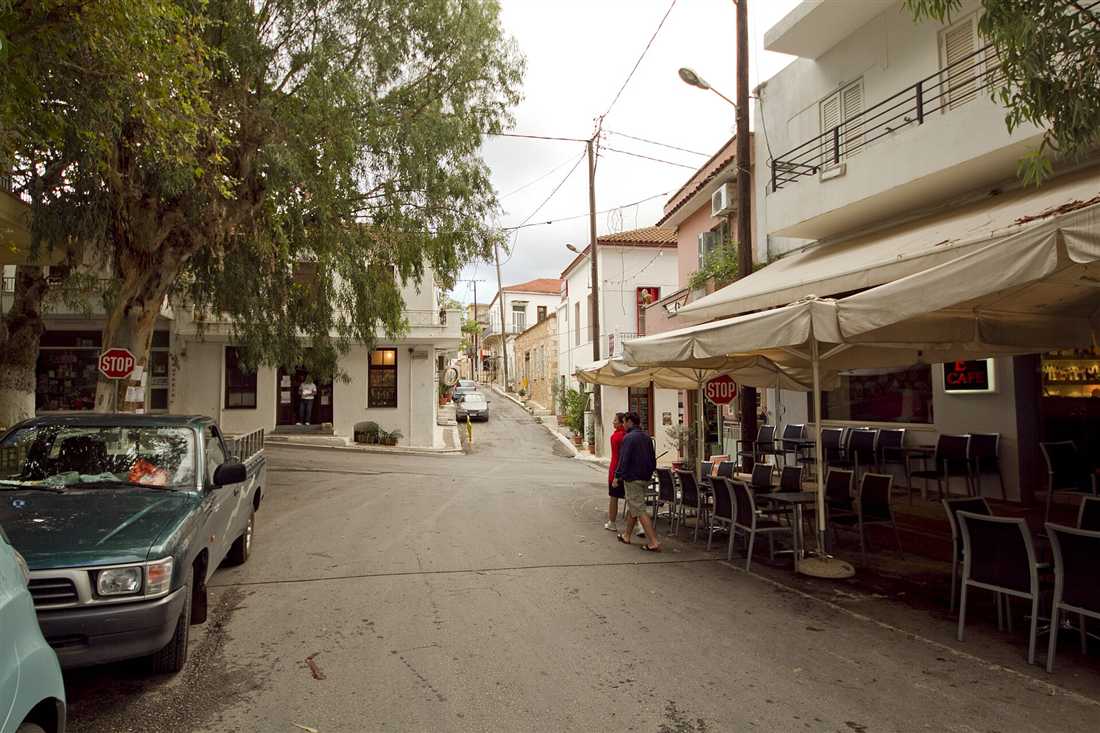
Vamos sits on a low green ridge inland from the north coast, surrounded by centuries-old olive terraces, cypress lines and shaded squares. The core of the village keeps its original architecture: thick-walled stone houses, timber balconies, vaulted arches and narrow lanes that open onto a plane-shaded platia. The buildings carry the weathered honey colour of local stone rather than fresh render, and the scale stays low and human.
The village earns its place on the map through its role in Cretan agrotourism rather than through beaches or resorts. A local cooperative restored the abandoned stone houses into guesthouses and turned the surrounding olive-oil, wine and raki traditions into hands-on experiences for visitors. Vamos serves as a base for a slow, rooted version of Crete, where the day runs on cooking, walking and village life rather than sunbeds.
Administratively Vamos anchors the wider Apokoronas district, a green belt of villages set between the White Mountains and the sea. The area draws travellers who want authentic inland Crete within a short drive of the coast, and Vamos ranks as its best-known agrotourism address. For the wider region, the Chania guide sets out the town and its surroundings in full.
Where is Vamos and how far is it from Chania?
Vamos lies in the Apokoronas region roughly 25 km east of Chania town, inland from the coastal resorts of Almyrida and Kalyves. The drive from Chania runs about 30 minutes along the national road and a short climb into the hills.
From Chania the route follows the E75 national road east toward Rethymno, then turns off onto the Apokoronas road that climbs gently through olive country to the village. The final stretch winds past Gavalochori and the smaller hamlets that ring Vamos, with the White Mountains rising to the south and the Souda Bay coast falling away to the north.
The coast sits within a few kilometres. Almyrida and Kalyves, the two nearest beach villages, lie about 6 to 8 km downhill, so a stay in Vamos pairs quiet inland nights with easy seaside afternoons. Kournas Lake, the only freshwater lake on Crete, sits about 15 km to the south-east. This central position makes Vamos a practical hub for touring the whole Apokoronas.
The village stands at roughly 200 metres above sea level on a broad hill, which lifts it clear of the summer heat that settles on the coast. From the higher lanes the view runs north over Souda Bay and the Drapano peninsula and south to the snow-line of the White Mountains. Rethymno lies about 40 km east along the national road, so Vamos also works as a midpoint for travellers crossing between the two western towns of Crete.
What is the agrotourism story of Vamos?
A village cooperative restored the abandoned stone houses of Vamos into guesthouses and built a model of sustainable, community-run tourism. The project revived local building crafts, kept residents in the village and turned olive-oil, raki and cooking traditions into visitor experiences.
As young people left the Apokoronas for the cities and the coast, the old stone houses of Vamos emptied and fell into ruin. A group of villagers formed a cooperative to reverse the decline. They rebuilt the houses with traditional materials and methods, kept the original stonework, arches and timber, and reopened them as guesthouses that fund the village rather than an outside chain.
The cooperative reaches beyond accommodation. It runs cooking classes, olive-harvest days, raki-distilling sessions, herb walks and craft workshops, and it channels the income back into local families, farmers and artisans. The model spread a name for Vamos as the place where Cretan agrotourism took a concrete, working form.
The result reads as a living village rather than a museum. Residents still farm the surrounding olive terraces, tend the vines and gather in the kafeneia, and visitors join that rhythm rather than watching it from outside. This authenticity marks Vamos out from the coastal resorts a short drive downhill.
What is the traditional stone village of Vamos like to walk?
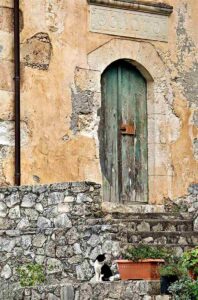
Vamos rewards slow walking. Narrow lanes thread between honey-coloured stone houses, stone arches span the alleys, and a plane-shaded square holds the old kafeneia. Craft workshops, an olive-oil store and small tavernas line the streets of the restored core.
The heart of the village centres on the platia, where a broad plane tree shades tables outside the traditional kafeneia. Older men gather over Greek coffee and raki, and the pace stays unhurried through the day. From the square, lanes branch out past stone doorways, vaulted passages and courtyards heavy with bougainvillea and pots of basil.
Along the walk visitors pass workshops where local crafts continue: weaving, ceramics, olive-wood carving and the village store selling estate olive oil, wine, honey and herbs. The restored architecture stands out at every turn, with dry-stone walls, arched openings and timber balconies preserved in their original form. The whole core covers a compact area that a slow stroll of an hour takes in.
Small stone chapels punctuate the edges of the village, and restored fountains and wells mark the old water points of the settlement. The light shifts through the day across the honey stone, and the plane trees drop deep shade over the tables at midday, which turns the square into the natural centre of village life from morning coffee to evening raki.
What is there to do in Vamos?
Vamos centres on hands-on Cretan experiences: cooking classes in a village kitchen, olive-oil and raki tastings, craft workshops, and guided walks through the olive groves and gorges of the Apokoronas. The cooperative organises the programme, and each activity draws on local producers.
The signature experience is the Cretan cooking class, where a village cook guides visitors through dishes built on the island diet: wild greens, cheeses, pulses, olive oil and slow-baked meats, finished at a shared table. Olive-oil tastings explain the harvest, the press and the grades, and raki sessions follow the distilling of the grape marc into the clear village spirit.
Beyond the kitchen, the programme runs to pottery and weaving workshops, herb and wildflower walks, guided hikes into nearby gorges, cycling through the olive country, and seasonal harvest days in autumn. The village works as a launch point for wider touring too; the day trips from Chania guide sets out the excursions within reach of the region.
What food and produce is Vamos known for?
Vamos builds its name on estate olive oil, Apokoronas wine, village raki and the Cretan cooking classes that use them. The taverna serves the local diet of wild greens, cheeses, pulses and slow-cooked meat, and the village store sells the produce direct.
Olive oil leads the list. The terraces around Vamos yield the green, peppery extra-virgin oil that anchors every Cretan meal, and the harvest runs from late autumn into winter. Wine comes from the vineyards of the surrounding Apokoronas, and raki, the clear pomace spirit distilled after the grape pressing, closes every meal and every welcome.
The Cretan cooking class turns these ingredients into the dishes of the island diet: dakos rusks with tomato and mizithra cheese, wild-green pies, gigantes beans, snails, and lamb baked slowly with herbs. The village store and the cooperative sell the oil, wine, honey, herbs and preserves that come off the surrounding land, so visitors carry the produce home.
This grounding in real produce marks the difference between Vamos and a resort restaurant strip. The food traces directly to the terraces and vines a short walk from the table, and the recipes follow the seasons of the Apokoronas.
What walks and nature are around Vamos?
Vamos sits in green walking country. Marked trails cross the olive groves and terraces, link the surrounding villages, and drop into the gorges of the Apokoronas. The landscape stays lush by Cretan standards, with cypress, plane trees, springs and wildflowers in spring.
Short walks lead straight out of the village into the olive terraces, past dry-stone walls, old chapels and grazing land, with the White Mountains filling the southern horizon. Longer routes connect Vamos to neighbouring Gavalochori, Kefalas and the string of Apokoronas hamlets, following old paths and quiet country lanes.
The gorges add a wilder note. Streams cut down toward the coast through narrow rock corridors thick with plane trees and oleander, and guided hikes trace them in the cooler hours. Spring turns the whole district green and floods the terraces with wildflowers, while autumn brings the harvest colours and the scent of pressing olives. Birdlife, herbs and wild greens fill the ground between the trees.
Foragers walk the terraces for the wild greens, capers and herbs that define the Cretan table: oregano, thyme, sage, fennel and mountain tea grow across the hillsides and scent the paths in the warmth. Guided herb walks from the village name each plant and explain its place in the kitchen and the old remedies of the Apokoronas, then carry the harvest back to the cooking table.
What is near Vamos to visit?
Vamos sits within easy reach of Kournas Lake, the beaches of Almyrida and Kalyves, Chania old town and the Imbros Gorge. Each lies a short drive from the village, which makes Vamos a practical touring base for the whole west of Crete.
Kournas Lake, the only freshwater lake on Crete, lies about 15 km south-east, ringed by mountains and open for pedal boats and lakeside tavernas. Almyrida and Kalyves, the nearest beaches, sit 6 to 8 km downhill with shallow water and seafront dining; the Almyrida guide covers the resort in detail.
Chania old town lies about 25 km west, with its Venetian harbour, lighthouse, covered market and Ottoman lanes. To the south the Imbros Gorge cuts through the White Mountains toward the Libyan Sea and delivers a walkable alternative to the busier Samaria Gorge. Gavalochori, with its folklore museum and stone wells, sits barely 3 km away, and the Frangokastello fortress lies on the south coast within reach for a longer day out.
Is Vamos good for families or couples?
Vamos suits both. The calm, authentic village gives couples a quiet, romantic base of stone guesthouses and shaded squares, while families gain space, safety, private courtyards and a programme of hands-on activities that keeps children engaged.
For couples, Vamos delivers a slow, undiluted Crete: private stone houses with plunge pools, candlelit taverna dinners, sunset walks through the olive groves and the raki-and-conversation rhythm of the platia. The absence of resort crowds and nightlife noise makes the village a retreat rather than a party base.
For families, the restored guesthouses offer room to spread out, enclosed courtyards and gardens, and a village setting free of traffic and coastal bustle. Children join cooking classes, pottery workshops and harvest days, and the nearby beaches of Almyrida and Kalyves add shallow, calm swimming a short drive away. The mix of learning, nature and safety fits both ends of the family.
Where do you stay in Vamos?
Vamos offers restored stone guesthouses, self-catering cottages and private villas, most run through the village cooperative and its agrotourism model. The houses keep their original architecture outside and modern comforts inside, and range from studios to family villas with pools.
The cooperative guesthouses form the core of the stock. These are the original village houses rebuilt in stone, with thick walls, timber ceilings, fireplaces and courtyards, updated with kitchens, en-suite bathrooms and air conditioning. Guests stay inside the living village, steps from the square, the taverna and the workshops.
Beyond the cooperative, independent villas and stone cottages spread through the lanes and the edge of the village, a number of them with private pools and garden terraces that look out over the olive country. The choice covers couples in a compact studio, families in a two-bedroom house and groups in a larger villa. Booking direct through the cooperative keeps the income in the village and holds to the agrotourism principle that built Vamos.
Where do you eat in Vamos?
The village taverna anchors dining in Vamos, serving the Cretan diet built on local olive oil, wild greens, cheeses, pulses and slow-cooked meat. The kafeneia on the square pour Greek coffee and raki, and the cooking classes turn the same produce into a shared table.
The taverna in the heart of the village works from the surrounding land: dakos with tomato and mizithra, boiled wild greens dressed in estate oil, gigantes beans, cheese pies, grilled meats and lamb baked slowly with herbs, closed with raki and a dish of fruit or spoon sweets. The menu follows the seasons rather than a fixed tourist list.
The kafeneia under the plane tree double as social hubs and light-meal stops, with coffee, raki, meze plates and the slow talk of the platia. For a hands-on meal, the cooperative cooking class ends in a full spread cooked by the guests themselves. The eating in Vamos ties directly to the produce of the Apokoronas rather than to imported resort fare.
Meals follow the Cretan order that underpins the island’s long life expectancy: olive oil on everything, wild greens and pulses at the centre, cheese and honey in abundance, and meat as an accent rather than the main event. The tavernas of the nearby villages add their own tables, so a stay in Vamos ranges across Gavalochori, Kefalas and Douliana for dinner as readily as the home square.
How do you get to Vamos from Chania and the airport?
Vamos lies about 25 km east of Chania town and roughly 30 km from Chania airport, a drive of about 30 to 35 minutes. A hire car gives the most freedom; private transfers and taxis serve the village, and buses run to the Apokoronas from Chania.
By car from Chania, the route takes the E75 national road east toward Rethymno, exits onto the Apokoronas road and climbs through the olive villages to Vamos. From Chania airport on the Akrotiri peninsula, the drive skirts Souda Bay and joins the same national road east. The roads stay paved and well signed the whole way.
A hire car serves best because it unlocks the beaches, Kournas Lake, the gorges and the surrounding villages that make Vamos a touring base. Private transfers meet flights at the airport and drop guests at the guesthouse door, and taxis run from Chania. Public buses reach the main Apokoronas stops, with a short local connection or taxi to the village core.
When is the best time to visit Vamos?
Spring and autumn suit Vamos best. Spring turns the Apokoronas green and fills the terraces with wildflowers, while autumn brings the olive and grape harvest and the mildest light. Both shoulder seasons stay calm, warm and free of the peak-summer crowds.
Spring, from March into late spring, delivers the greenest version of the village, with wildflowers across the olive groves, full streams in the gorges and comfortable walking temperatures. The countryside peaks in colour, and the beaches downhill warm through for early swimming by late spring.
Autumn, from September to November, tracks the harvest. The grape pressing and raki distilling run first, then the olive picking begins, and the cooperative harvest days let visitors join the work. The heat drops, the sea stays warm from summer, and the light softens over the terraces. Summer brings hot, dry days ideal for pairing the cool inland village with the coast, while winter turns quiet, green and mild for a slow retreat.
What is the history of Vamos?
Vamos carries a long history as a headland village of the Apokoronas. It served as an administrative and market centre for the surrounding olive country, and its stone houses date back generations. The agrotourism revival rebuilt that heritage rather than replacing it.
The village grew as a hilltop settlement above the fertile terraces, a defensive and trading position that drew the farming families of the district. For a long stretch it acted as the district seat of the Apokoronas, with courts, schools and market functions that gave it a weight beyond its size. The solid stone houses, arched lanes and public buildings reflect that former standing.
Through the twentieth century the pull of the coast and the cities emptied the older houses, and the historic core slid toward ruin. The cooperative restoration reversed the loss by rebuilding with the original stone, timber and craft, so the history stays legible in the streets rather than buried under concrete. Walking Vamos reads as walking a preserved chapter of inland Cretan life.
What villages surround Vamos in the Apokoronas?
Vamos sits at the centre of a ring of Apokoronas stone villages. Gavalochori, Kefalas, Douliana, Xirosterni and Aspro spread within a few kilometres, each with its own square, chapels and olive terraces, and together they form the green heart of the district east of Chania.
Gavalochori, barely 3 km away, keeps a folklore museum, old Venetian wells and a tradition of kopaneli lacework. Kefalas rises higher into the hills with wide views over Souda Bay and the White Mountains. Douliana and Xirosterni preserve tight lanes of arched stone houses and shaded tavernas that see few crowds. Each village makes an easy morning or evening outing from a Vamos base.
The villages link by quiet country roads and old footpaths, so a stay in Vamos opens a mesh of small destinations to explore on foot or by car. The whole cluster shares the same architecture, the same olive economy and the same slow pace, and touring between them gives a full picture of the Apokoronas beyond the single village.
What crafts and workshops does Vamos offer?
Vamos runs pottery, weaving, olive-wood carving and cooking workshops through the village cooperative. Local artisans lead the sessions, and each draws on the materials and traditions of the Apokoronas. The village store sells the finished crafts alongside the estate produce.
Pottery workshops shape Cretan forms from local clay at the wheel, and weaving sessions revive the loom patterns of the district. Olive-wood carving turns the pruned branches of the surrounding groves into bowls and utensils, and herb and soap-making sessions use the wild plants gathered on the walks. The cooking class stands as the most-booked workshop of the set.
These experiences carry the agrotourism principle into practice, keeping traditional skills alive and paying the artisans who hold them. Visitors leave with a made object and a learned skill rather than a mass-produced souvenir, and the crafts trace directly to the land and history of Vamos.
How long do you stay in Vamos?
Three to four days suit Vamos as a base. That span covers the cooking class and workshops, the village walks, a day at Kournas Lake and the beaches, a Chania old-town trip and time for the surrounding Apokoronas villages, without rushing the slow rhythm that defines the place.
A single night undersells the village, because the value of Vamos lies in settling into its pace: the morning coffee under the plane tree, an afternoon in the groves, an evening at the taverna. Two nights fit a cooking class and a beach afternoon. Three to four nights add the lake, the gorges, the neighbouring villages and a full day in Chania town.
Travellers who tour the whole west of Crete use Vamos as a fixed base for a week and radiate out on day trips, returning each night to the quiet of the hills. The central position between the mountains, the sea and Chania makes that approach work, and it keeps a single unpacking for the length of the stay.
A tight itinerary still finds its shape. Day one settles into the village and its square, day two takes the cooking class and an afternoon at Almyrida, day three drives to Kournas Lake and the neighbouring villages, and day four gives Chania old town its due. The plan leaves the evenings open for the taverna and the raki, which is where the Apokoronas does its best work.
Is Vamos worth visiting?
Vamos is worth visiting for anyone who wants authentic inland Crete and a slow agrotourism base. The restored stone village, the cooking and craft experiences, the green Apokoronas walks and the short drive to beaches and Chania town combine into a rooted, unhurried stay.
The village delivers what the coastal resorts do not: a living Cretan community, real produce, hands-on tradition and quiet nights under the plane trees. Travellers who value depth over sunbeds find in Vamos a place that rewards a stay of days rather than a passing photo stop.
Its position seals the case. Vamos sits within a short drive of Almyrida and Kalyves for the sea, Kournas Lake and the gorges for nature, and Chania old town for history and dining, while keeping the calm of the hills at its centre. For a base that balances authentic village life with easy touring of west Crete, Vamos stands as a firm yes.
Frequently Asked Questions
What is Vamos in Crete?
Vamos is a traditional stone hill village in the Apokoronas about 25 kilometres east of Chania, Crete. A village cooperative restored its old houses into guesthouses, making Vamos a pioneer of Cretan agrotourism, ringed by olive groves and green countryside.
What is there to do in Vamos?
Vamos rewards a walk through its restored stone lanes, cooking and craft workshops, olive-oil and raki tastings, and countryside trails. Kournas Lake, the Almyrida and Kalyves beaches and the Chania old town all lie a short drive away.
Is Vamos worth visiting?
Vamos rewards visitors after authentic inland Crete, with its restored stone village, agrotourism guesthouses, workshops and olive-grove walks. Its calm, traditional character makes it a rewarding slow base away from the coastal resorts.