
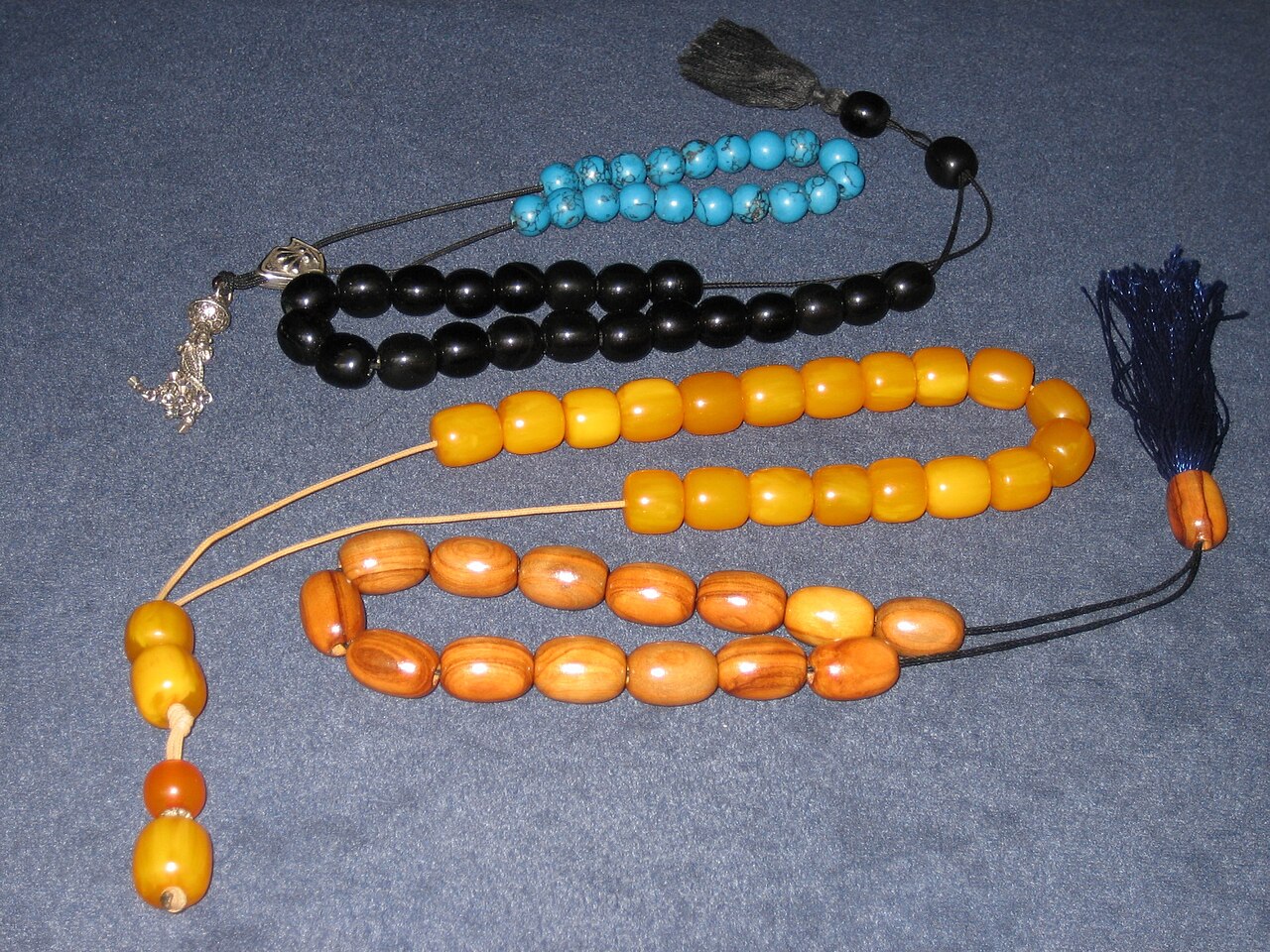
The Komboloi museum in Nafplio is the only museum in the world devoted to worry beads, the komboloi that Greeks traditionally handle to relax and pass the time. Set in a two-storey house on the taverna street of Staikopoulou in the old town, it holds a collection of hundreds of old worry beads and prayer ropes, gathered over decades and dating across four centuries, laid out in four themed halls with a workshop and shop below. Small, charming and utterly unique, it is one of the most distinctive attractions not just of Nafplio but of Greece, and a favourite quirky stop on any visit to the town.
This guide covers the Komboloi museum in full: what a komboloi is, who founded the museum, its collection and four halls, the materials of the beads, the workshop and shop, and how to visit. Read it beside the full Nafplio travel guide, the guide to the Nafplio museums and the guide to Nafplio old town.
What is the Komboloi museum in Nafplio?
The Komboloi museum in Nafplio is the only museum in the world devoted to worry beads, the komboloi. Set in a two-storey house on Staikopoulou Street in the old town, it displays a collection of hundreds of old worry beads and prayer ropes in four themed halls, with a workshop and shop on the ground floor.
It is unique in the world. The Komboloi museum is the only one of its kind anywhere, devoted entirely to the worry beads and prayer beads of the world, so it is one of the most distinctive attractions of Nafplio and of Greece.
It holds a rich collection. The museum displays hundreds of old worry beads and prayer ropes, gathered over decades and dating across four centuries, so it traces the custom of handling beads through many cultures and eras.
It sits in the old town. Housed in a two-storey building on the taverna street of Staikopoulou in the heart of the old town, with exhibition halls upstairs and a workshop and shop below, it is easily added to a walk through the quarter, as the guide to the Nafplio museums describes.
What is a komboloi, or worry beads?
A komboloi is a loop of beads that Greeks handle to relax and pass the time, slipping the beads through the fingers or swinging them in the hand. Unlike prayer beads, the komboloi has no religious purpose; it is a companion for relaxation and a familiar part of everyday Greek life.
It is a Greek institution. The komboloi is a loop of beads, threaded on a cord with a tassel, that Greek men in particular handle to relax and occupy their hands, so it is a familiar and much-loved part of everyday life across Greece.
It is not for prayer. Unlike the prayer beads of many religions, the Greek komboloi has no religious function; it is purely a companion for relaxation and passing the time, so it differs from the rosaries and prayer ropes it resembles.
It is handled in many ways. The beads are slipped one by one through the fingers, swung in loops or simply held and counted, so handling a komboloi is a quiet, almost meditative habit, a way to ease the mind and the hands.
Who founded the Komboloi museum?
The Komboloi museum was founded in the late twentieth century by Aris Evangelinos and Rallou Gromitsari, who had collected and studied worry beads for decades. Their private collection, gathered over many years, became the basis of the museum, the first and only one in the world devoted to the komboloi.
It grew from a private passion. The founders, Aris Evangelinos and Rallou Gromitsari, had collected and studied worry beads and prayer beads for decades before opening the museum, so it grew from a genuine, long-held passion for the craft.
It opened in the old town. In the late twentieth century they founded the museum in Nafplio, the first and only one of its kind, so their collection was made public in the heart of the old town for visitors to enjoy.
It remains a labour of love. The museum continues as a family passion, with a workshop that conserves old beads and makes replicas, so it keeps the craft alive as well as displaying its history, a personal and heartfelt institution.
What is in the collection of the Komboloi museum?
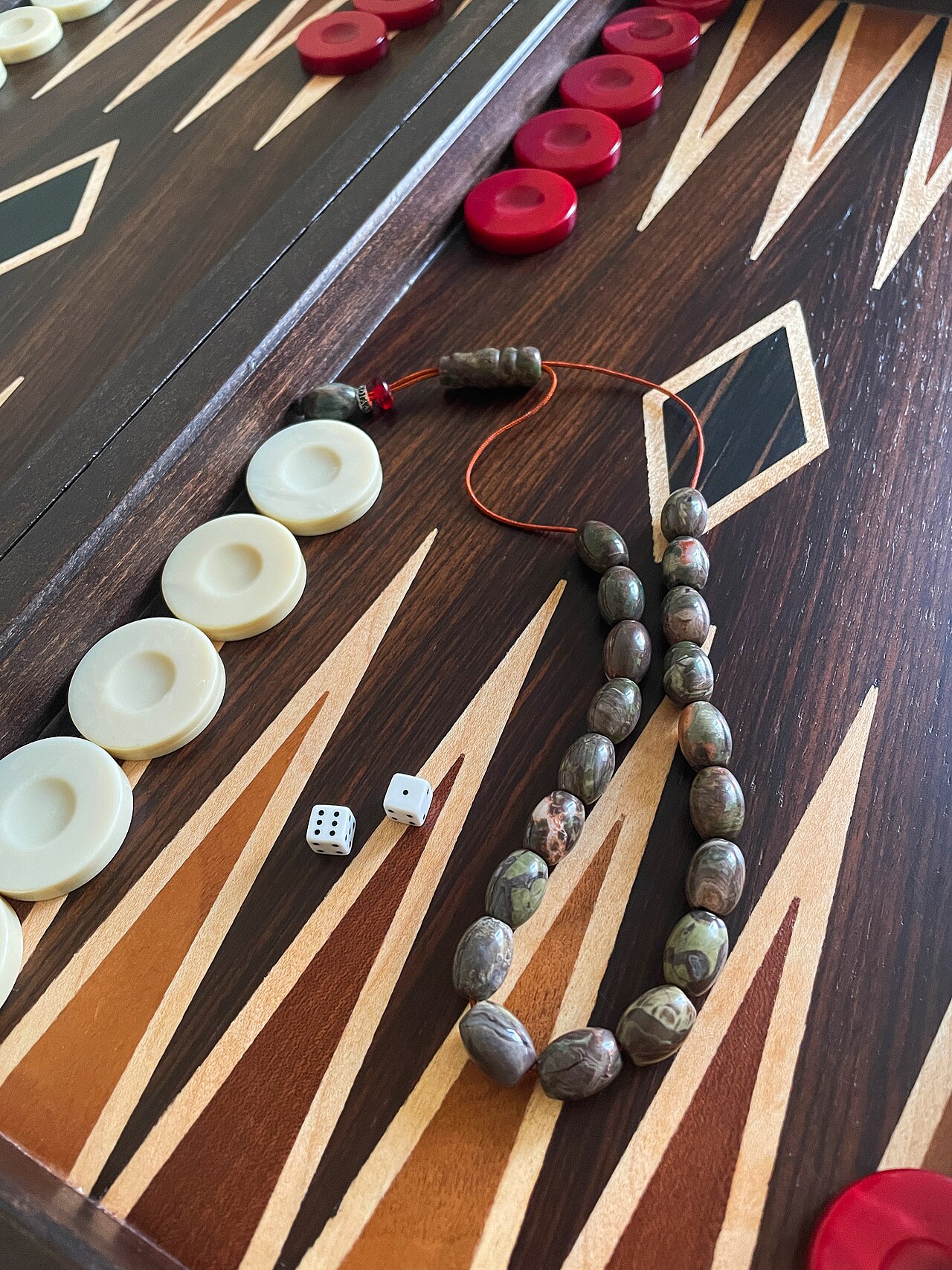
The collection of the Komboloi museum holds hundreds of old worry beads and prayer beads, dating from the sixteenth to the twentieth century, made of amber, coral, ivory, bone, horn and other materials. It spans the prayer beads of many religions and the Greek komboloi, a rich and varied display.
It holds hundreds of pieces. The museum displays hundreds of old worry beads, prayer beads and prayer ropes, so it is a substantial collection despite the small size of the building, gathered over many years by the founders.
It spans four centuries. The beads date from the sixteenth to the twentieth century, so the collection traces the custom across centuries, showing how the handling of beads developed and spread through different periods.
It crosses cultures. From the prayer beads of the great religions to the secular Greek komboloi, the collection crosses cultures and faiths, so it shows the worry bead and prayer bead as a shared human habit found around the world.
What are the four halls of the Komboloi museum?
The Komboloi museum is arranged in four themed halls: the first showing Hindu, Buddhist and Muslim prayer beads, the second Christian Orthodox and Catholic prayer beads, and the third and fourth the Greek komboloi. Together they trace the bead from religious prayer to secular relaxation.
The first hall shows Eastern prayer beads. The first hall displays the prayer beads of the Hindu, Buddhist and Muslim traditions, so it opens the collection with the religious beads of the East, showing the ancient roots of the custom.
The second shows Christian beads. The second hall holds the prayer beads of the Christian Orthodox and Catholic traditions, so it continues the story with the rosaries and prayer ropes of the Christian world.
The last halls show the komboloi. The third and fourth halls are devoted to the Greek komboloi, the secular worry beads, so they bring the story to Greece and to the beads for which the museum is named, tracing the shift from prayer to relaxation.
What materials are the beads made of?
The beads in the Komboloi museum are made of amber, coral, ivory, bone, horn and other natural materials, with amber the most prized. The colour, weight and feel of each material give the beads their character, and the finest old amber komboloi are valued and collected pieces.
Amber is the most prized. Amber is the most sought-after material for worry beads, warm to the touch and glowing in colour, so the finest and most valuable komboloi in the collection are made of old amber, treasured by collectors.
Natural materials give character. Coral, ivory, bone and horn each give the beads a different colour, weight and feel, so the material is central to a komboloi, affecting how it looks in the light and how it moves in the hand.
The feel matters most. Because a komboloi is handled constantly, the weight and smoothness of the beads are as important as their look, so the choice of material shapes the pleasure of using it, a point the museum brings out well.
Where is the Komboloi museum and how do you visit?
The Komboloi museum is at 25 Staikopoulou Street in the old town of Nafplio, a short walk from Syntagma Square. Admission is a couple of euros, and most visitors spend about an hour to an hour and a half exploring the four halls, with the shop and workshop on the ground floor.
It is on Staikopoulou Street. The museum stands at 25 Staikopoulou, the taverna-lined street in the heart of the old town, a short walk from Syntagma Square, so it is easily found on a wander through the quarter.
Admission is inexpensive. The entrance fee is only a couple of euros, so the museum is a cheap and easy visit, and it is worth every cent for its unique collection and charm.
Allow an hour or so. Most visitors spend about an hour to an hour and a half exploring the four halls and the shop, so the museum makes a short and rewarding stop, easily combined with the other museums and sights of the old town.
What is the workshop and shop at the museum?
On the ground floor of the Komboloi museum are a workshop and a shop. The workshop conserves old beads and makes exact replicas of those on display, while the shop sells a wide variety of worry beads and materials, including beads made by monks, so visitors can buy a komboloi of their own.
The workshop keeps the craft alive. On the ground floor a workshop conserves the old beads of the collection and produces exact replicas of those exhibited, so the craft of making worry beads is kept alive alongside the museum’s history.
The shop sells komboloi. The shop offers a wide variety of worry beads and materials, from inexpensive everyday sets to fine amber pieces, so it is the place to buy a komboloi as a souvenir of Nafplio.
Some beads are made by monks. Among the beads for sale are some made by monks, so the shop offers pieces of real craft and provenance, making a komboloi from the museum a distinctive keepsake, as the guide to Nafplio old town notes for shopping.
What is the komboloi’s role in Greek culture?
The komboloi holds a cherished place in Greek culture as a symbol of relaxation, patience and old-world ease. Handled in cafes, squares and at home, especially by older men, it embodies the unhurried Greek attitude to time, and it appears in songs, films and everyday life as an emblem of Greek character.
It symbolises ease. The komboloi stands for a relaxed, unhurried attitude to life, so handling the beads is bound up with the Greek love of taking time, sitting in a cafe and letting the hours pass without rush.
It belongs to daily life. Seen in the hands of men in cafes and squares across Greece, the komboloi is a familiar part of everyday life, so it is more than an object; it is a habit woven into the rhythm of the day.
It appears in art and memory. The komboloi features in Greek songs, films and stories as an emblem of character and of a gentler past, so it carries a nostalgic and cultural weight, which the museum in Nafplio celebrates and preserves.
What is the difference between a komboloi and prayer beads?
The difference between a komboloi and prayer beads is purpose: prayer beads, such as the Muslim misbaha, the Catholic rosary and the Orthodox prayer rope, are used to count prayers, while the Greek komboloi has no religious function and is handled purely for relaxation. The museum traces this shift from prayer to leisure.
Prayer beads count prayers. In many religions a string of beads is used to count prayers or devotions, from the Muslim misbaha to the Catholic rosary and the Orthodox knotted prayer rope, so prayer beads have a sacred purpose.
The komboloi is secular. The Greek komboloi, by contrast, has no religious use; it is handled simply to relax and pass the time, so it is a rare secular version of a custom that elsewhere remains religious.
The museum shows both. Because the museum’s halls move from the prayer beads of the great religions to the secular komboloi, a visit shows both the sacred origins and the Greek transformation of the bead, making the difference clear.
Why is Nafplio associated with the komboloi?
Nafplio is associated with the komboloi because it is home to the world’s only worry-bead museum, and the beads are sold in shops throughout the old town. The museum and the craft have made the komboloi one of the classic souvenirs of Nafplio, tying the town to the Greek tradition.
The museum made it a symbol. Because the only museum in the world devoted to worry beads is in Nafplio, the town has become associated with the komboloi, so visitors link the beads with the town and its old quarter.
The shops sell them everywhere. Worry beads are sold in shops throughout the old town, from the museum’s own shop to specialist bead sellers, so the komboloi is a familiar sight and a classic souvenir of Nafplio.
It ties the town to tradition. The komboloi connects Nafplio to a wider Greek tradition of ease and relaxation, so the beads have become part of the town’s character, a small emblem of its old-world charm, as the guide to Nafplio old town describes.
How do you use a komboloi?
You use a komboloi by slipping the beads one by one through the fingers, swinging the loop in the hand, or simply holding and counting the beads. It has no fixed method and no religious rule; it is handled to relax, occupy the hands and pass the time, a quiet and soothing habit.
You slip the beads through your fingers. The commonest way to handle a komboloi is to move the beads one by one along the cord with the thumb and fingers, so it becomes a gentle, repetitive motion that eases the mind and hands.
You can swing it in the hand. Skilled users swing the loop of beads back and forth over the fingers in a rhythmic, almost showy way, so the komboloi becomes a small performance as well as a companion, a familiar sight in Greek cafes.
There is no fixed rule. Because the komboloi is secular and personal, there is no set method or count, so each person handles it in their own way, making it a relaxed and individual habit rather than a ritual.
What is the history of worry beads?
Worry beads grew from the prayer beads of the great religions, which the museum traces from Hindu, Buddhist and Muslim traditions to the Christian rosary. In Greece the beads lost their religious purpose and became the secular komboloi, a companion for relaxation, the form for which the museum is named.
They began as prayer beads. The handling of a string of beads to count prayers is ancient and found across many religions, so the worry bead descends from the prayer beads of the Hindu, Buddhist, Muslim and Christian worlds, as the museum’s halls show.
They became secular in Greece. In Greece the beads gradually lost their religious function and became the komboloi, handled purely for relaxation, so the Greek worry bead is a rare secular offshoot of a religious custom.
They spread through daily life. Once secular, the komboloi became a familiar part of everyday Greek life, especially among men in cafes and squares, so it grew into the cultural institution the museum celebrates, a symbol of Greek ease and character.
How do you choose a komboloi?
You choose a komboloi by its material, the number and size of the beads, and above all how it feels in the hand. Amber is the most prized, warm and light, while the weight, smoothness and sound of the beads matter as much as their look, so a komboloi is best chosen by handling it.
The material sets the character. Amber, coral, bone, horn and other materials each give a different colour, weight and feel, so the material is the first choice, with old amber the most valued for its warmth and glow.
The beads and length matter. A komboloi has an odd number of beads with a larger head bead and a tassel, and the size and spacing affect how it moves, so the count and size are part of choosing one that handles well.
The feel decides it. Because a komboloi is handled constantly, the way it feels, its weight, smoothness and the sound of the beads, matters most, so the best way to choose one is to hold and handle it, which the museum shop allows.
Is the Komboloi museum good for families?
Yes, the Komboloi museum is good for families, small and quick enough not to tire children, with colourful beads and an unusual subject that holds their interest. The shop below lets children handle and choose a komboloi, so the museum makes a fun and inexpensive family stop in the old town.
It is small and quick. Because the museum is compact and takes only about an hour, it does not tire children, so it suits families who want a short, interesting museum rather than a long one.
The beads catch the eye. The colourful beads of amber, coral and bone and the unusual subject of worry beads catch children’s interest, so the museum engages young visitors more than a room of pottery does.
The shop is hands-on. In the shop below, children can handle and choose a komboloi of their own, so the visit ends with a fun, inexpensive souvenir, making the museum a good family stop, as the guide to the Nafplio museums notes.
What is near the Komboloi museum?
The Komboloi museum sits on Staikopoulou Street in the heart of the old town, so it is surrounded by the sights of Nafplio: Syntagma Square and the Archaeological Museum, the tavernas of Staikopoulou, the churches, the shops, and a short walk away the waterfront and the foot of Palamidi.
The square and museums are close. Syntagma Square, with the Archaeological Museum, lies a short walk from the Komboloi museum, and the Folklore Foundation museum is nearby, so the museums of the old town cluster close together.
The tavernas are on the doorstep. Because it sits on Staikopoulou, the taverna street of the old town, the museum is surrounded by places to eat, so a visit easily combines with lunch or a coffee in the lane.
The sights are all near. The churches, the shops, the waterfront and the foot of the Palamidi steps all lie within a short walk, so the Komboloi museum fits naturally into a wander through the old town, as the guide to the things to do in Nafplio describes.
Frequently Asked Questions
What is the Komboloi museum in Nafplio?
The Komboloi museum in Nafplio is the only museum in the world devoted entirely to worry beads, the komboloi that Greeks traditionally handle to relax and pass the time. Founded in the late twentieth century by two collectors who had gathered and studied worry beads for decades, it is housed in a two-storey building on Staikopoulou Street in the heart of the old town, with the exhibition halls upstairs and a workshop and shop on the ground floor. The collection holds hundreds of old worry beads, prayer beads and prayer ropes dating from the sixteenth to the twentieth century, made of amber, coral, ivory, bone and horn, arranged in four themed halls that trace the bead from the prayer beads of the Hindu, Buddhist, Muslim, Orthodox and Catholic traditions to the secular Greek komboloi. Admission is only a couple of euros and a visit takes about an hour to an hour and a half, so it is a cheap, quick and utterly distinctive stop, one of the most charming and unusual attractions in Nafplio.
How much does the Komboloi museum cost and how long does it take?
Admission to the Komboloi museum is only a couple of euros, making it one of the cheapest attractions in Nafplio, and the ticket gives access to the four themed halls on the upper floor of the building on Staikopoulou Street. Most visitors spend about an hour to an hour and a half exploring the collection, which is enough time to appreciate the hundreds of worry beads and prayer beads on display, learn about the history and craft of the komboloi, and browse the workshop and shop on the ground floor. Because the museum is small and compact, it does not demand a long visit, so it is easily combined with the other museums and sights of the old town, such as the Archaeological Museum on Syntagma Square, the Folklore Foundation museum and the churches, on a walk through the quarter. The shop below sells worry beads of every kind, from inexpensive everyday sets to fine amber pieces and beads made by monks, so many visitors leave with a komboloi of their own.
Can you buy worry beads at the Komboloi museum?
Yes, you can buy worry beads at the Komboloi museum, which has a shop on its ground floor beneath the exhibition halls. The shop offers a wide variety of komboloi and materials, from inexpensive everyday sets suitable as small souvenirs to fine pieces of old amber, coral and bone that collectors prize, so there is something at every price. The workshop attached to the museum conserves old beads and produces exact replicas of those on display, and some of the beads for sale are made by monks, giving them real craft and provenance. Because a komboloi is best chosen by how it feels in the hand, the shop lets you handle the beads before buying, weighing their smoothness, weight and the sound they make. A komboloi from the Komboloi museum is one of the most distinctive and characteristic souvenirs of Nafplio, a small, personal keepsake that carries the culture of the town and of Greece, so many visitors leave with one, whether a simple set for themselves or a finer piece as a gift.
Is the Komboloi museum worth visiting?
Yes, the Komboloi museum is well worth visiting, and it is one of the most charming and distinctive attractions in Nafplio. As the only museum in the world devoted to worry beads, it offers something found nowhere else, tracing the handling of beads from the prayer beads of the great religions to the secular Greek komboloi through a collection of hundreds of pieces gathered over decades. The beads themselves, in amber, coral, ivory and bone, are beautiful, and the story of the komboloi as a companion for relaxation rather than prayer is a window onto Greek culture and everyday life. The museum is small, cheap and quick to visit, taking about an hour, and it sits in the heart of the old town on the taverna street of Staikopoulou, so it is easily added to a walk through the quarter. With a workshop that keeps the craft alive and a shop selling worry beads to take home, it is a rewarding and memorable stop, especially for those curious about the quirks of Greek culture, and a fine complement to the town’s other museums.