
Psalidi forms the first stretch of coast beyond the harbour of Kos, offering a continuous sand\u2011and\u2011shingle shoreline backed by hotels, sunbeds and beach bars. It lies about three to four kilometres east of the historic centre. Plan the whole trip with Greece Tours.
The east\u2011facing beach catches the summer meltemi wind, creating ideal conditions for windsurfing and kitesurfing, while its clean. Deepening water makes it a popular base for families, cyclists and day\u2011trippers heading toward Agios Fokas and Therma.
Where is Psalidi located in relation to Kos Town?
Psalidi sits directly east of Kos Town, forming the first continuous shoreline beyond the harbour and stretching about three kilometres along the coast toward Agios Fokas and the Therma hot springs.
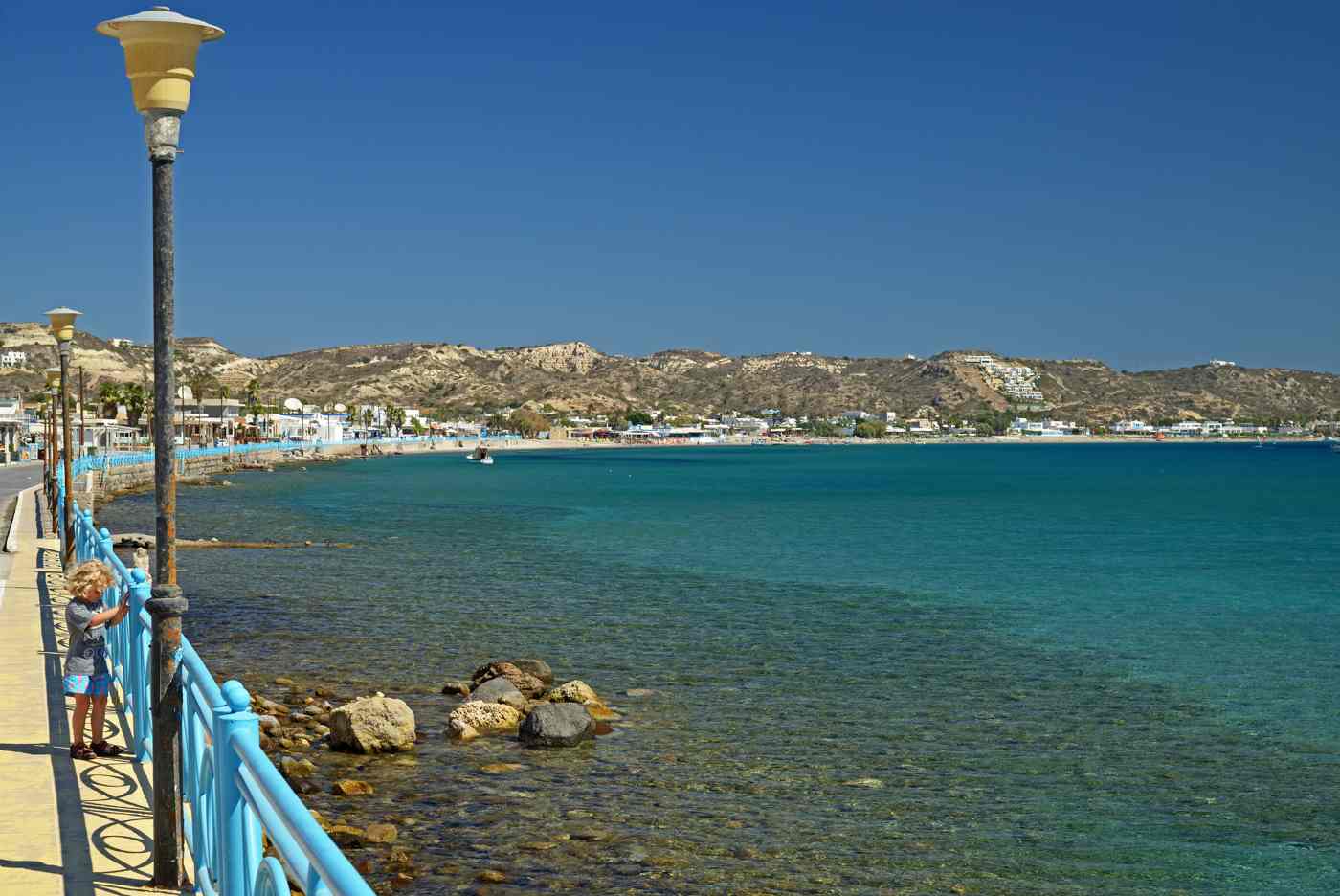
Psalidi Beach lies just beyond the harbour of Kos Town, marking the first uninterrupted stretch of coastline running east. The shoreline extends about three kilometres and mixes fine grey sand with smooth pebbles across its whole length. Sunbeds and compact beach bars line the sand, giving visitors drinks, shade and quick access to the water. The sea deepens steadily, reaching about five metres within a short swim from the edge, which suits confident swimmers and calmer paddlers alike. Grey limestone hills rise behind the resort strip, framing the bay and screening it from the road and harbour traffic of the town.
The distance from the historic centre stays close enough for an easy morning transfer on foot, by bike or by local bus without booking any transport ahead.
Psalidi’s resort strip backs the beach with a row of about five mid\u2011range hotels, each sitting within thirty metres of the sand. The hotels place sunbeds and parasols directly on the shoreline, so guests step onto the beach after a walk of barely a minute from reception. Compact beach bars serve cold drinks, snacks and light meals through the day, keeping the strip busy from mid\u2011morning onward. The facilities stay open until late afternoon, matching the operating hours common on the northeast coast of the island. Low\u2011rise buildings dominate the strip, preserving the open feel of the bay and keeping the sea visible from the coastal road.
The layout concentrates services in a compact zone, so families rarely walk more than two hundred metres for any beach amenity they need.
Psalidi can be reached from Kos Town on foot by following the flat coastal promenade that runs parallel to the sea. The walk covers about three kilometres and takes around twenty minutes at a moderate pace along a well\u2011maintained surface. Cyclists prefer the same route, riding a gentle gradient with open sea views for an easy twelve\u2011minute trip east. Local buses stop at the main resort area every thirty minutes in summer, giving a quick public link for travellers without a car. The promenade stays level for its full length, avoiding steep climbs and making the route practical for children and older visitors.
Rental bicycles waiting near the harbour let arriving tourists pick up a bike and roll straight out to the beach within roughly ten minutes of landing on the strip.
Psalidi works as a base for exploring the eastern part of the island, linking directly to the road that leads toward Agios Fokas and the Therma hot\u2011spring cove. The road runs close to the beach, giving quick access to the monastery site at Agios Fokas about six kilometres further east. Visitors often combine a beach day with a short drive to the natural hot springs at Therma, around eight kilometres from Psalidi along the same coastal highway. Signposts mark the turn\u2011offs clearly, guiding drivers through olive groves and small settlements toward the two eastern sites. The flat terrain and short distances let travellers pair a morning swim with an afternoon of sightseeing without a long transfer.
A single hire car covers both stops in one relaxed loop back to the beach.
What is the composition of the sand and shingle at Psalidi?
Psalidi combines fine grey sand with smooth rounded pebbles across its three\u2011kilometre length, creating a comfortable surface that stays cooler underfoot than pale sand during the hottest afternoons of the summer.
Psalidi’s shoreline presents a blend of fine grey sand and rounded shingle, running the full three\u2011kilometre length of the bay. The sand feels soft underfoot, while the pebbles provide a stable base for beach chairs and sunbeds on the firmer sections. The mixed surface reduces heat build\u2011up during hot summer afternoons, keeping the ground pleasant for barefoot walking between the water and the bars. The composition also supports clear water, as fine particles settle quickly away from the swimming zone and leave the shallows transparent. Wave action sorts the material naturally, so the finest sand gathers at the waterline while coarser grains sit higher up the slope.
This gradient gives sunbathers a soft strip for towels and a firmer band closer to the sea for setting down chairs and parasols.
Psalidi’s shingle sections concentrate at the western part of the beach, near the hotel row and the water\u2011sports launch area. The pebbles range from about two to five centimetres across, giving a tactile contrast to the surrounding sand underfoot. Beachgoers often pick up two or three smooth stones as keepsakes, noting the polish formed by constant wave action against the shore. The shingle also protects the coast from erosion during the strong meltemi winds that build through July and August. Water shoes make the pebble stretches easier to cross for children and barefoot swimmers heading into the sea.
The firmer footing on the shingle helps windsurfers and kitesurfers rig their gear without sinking into loose sand before they carry the boards down to the waterline for a session.
Psalidi’s fine sand traces back to the limestone geology of the island, which breaks down over centuries into soft grey granules. The sand colour stays consistently grey, lacking the bright gold tones seen on other Kos beaches such as Tigaki and Marmari on the north coast. This uniform hue blends into the surrounding sea, creating a calm visual transition between the shore and the water. The sand depth averages about twenty centimetres over the firmer base, enough for comfortable lounging without heavy compaction under towels and chairs. The grey tone also absorbs less glare than pale sand, easing the strain on the eyes through the brightest midday hours.
Fine grains near the waterline stay damp and firm, giving joggers a solid strip for an early run along the bay.
Psalidi’s mixed surface supports a range of activities, from beach volleyball on the softer sand to launch zones for boards on the firmer shingle. The combined ground lets families set up play areas safely, since children move between sand and pebbles without sharp stones underfoot in the main zone. Vendors sell small buckets and spades near the central bars, reinforcing the beach’s appeal for young children building sandcastles. The firmer pebble bands double as anchor points where beachgoers wedge parasols against the afternoon breeze. Groups often split their space, keeping ball games on the open sand while sunbathers claim the quieter shingle nearer the hotels.
This natural division spreads visitors along the three kilometres and keeps the busiest central section from feeling crowded even at the height of summer.
How do the meltemi wind and water sports shape a day at Psalidi?
Psalidi faces east and catches the summer meltemi each afternoon, driving reliable windsurfing and kitesurfing, while calmer morning water suits paddle\u2011boarding, snorkelling and gentle swimming close to the beach bars.
Psalidi’s east\u2011facing orientation catches the steady meltemi that builds over the Aegean through July and August. These winds usually reach eight to twelve knots by early afternoon, giving consistent lift for sail\u2011powered and kite\u2011powered boards. The open sea beyond the shallow near\u2011shore band lets windsurfers accelerate without obstruction across the bay. Local schools time their lessons to match the wind’s peak, so beginners learn in conditions strong enough to plane yet controlled enough to stay safe. Morning air stays calmer, which makes the early hours better for swimming and paddle work before the breeze arrives. The wind runs roughly parallel to the shoreline.
Letting riders travel back and forth along the coast while holding a safe line clear of the marked swimming zones and the family band.
Psalidi’s water\u2011sports area centres on a marked launch zone on the western shingle, where kitesurfers lay out and secure their lines before heading out. The launch zone sits about one kilometre from the main hotel row, offering clear space for a safe take\u2011off away from swimmers. Safety flags rise during the windier afternoon hours to warn bathers when kite and sail traffic increases across the bay. Instructors keep beginners on the inside line, close to shore, until they control the board and read the gusts confidently. The shingle gives a firm base for rigging, so riders assemble kites and sails without dragging gear through loose sand.
Riders travel parallel to the coast on each run, using the along\u2011shore wind to build speed while staying well outside the buoyed bathing area.
Psalidi’s calmer water near the beach bars suits stand\u2011up paddle\u2011boarders who want a gentle push rather than strong gusts. The paddle area stays quieter than the windsurfing zone, since the breeze weakens closer to the sheltered shore. Boards rent by the hour from the launch stations, and the shallow two\u2011metre depth near the sand lets novices practise balance without fear of deep water. Snorkelling works well around the rocky outcrops by the shingle, where small fish, sea urchins and the occasional octopus gather among the submerged stones. Clear water there stays transparent down to about five metres, so masks and fins reveal marine life close to shore.
Guided tours often pair a short paddle with a snorkel stop at a quiet cove before returning along the bay to Psalidi.
Psalidi’s rental businesses hire out windsurfing and kitesurfing boards, sails, kites, harnesses and safety gear by the hour and the day. Staff give a quick briefing on the day’s wind before each session, and prices stay fixed per hour with reductions for group bookings. The stations run from about eight in the morning until sunset, tracking the daily meltemi schedule closely. Beginners start with larger sails suited to gentle breezes, while stronger afternoon gusts call for smaller kites and boards. Floating buoys divide the sea into bands for families, swimmers and board riders, keeping the fast water\u2011sports traffic apart from bathers.
The mix of steady wind, firm launch ground and organised zones makes Psalidi one of the more practical water\u2011sports beaches within reach of Kos Town.
Is Psalidi suitable for families and swimming?
Psalidi offers shallow, gradually deepening water, lifeguard cover through the day, changing rooms and shaded beach bars, which together make it a practical and safe choice for families with young children.
Psalidi’s water depth increases gradually, reaching about two metres within ten metres of the shoreline and creating a safe zone for young swimmers. Lifeguard stations sit at regular intervals along the beach, giving a quick response if anyone gets into difficulty in the water. The clear shallows let parents watch children easily, while the gentle slope avoids sudden drop\u2011offs close to the sand. Floating buoys mark a family band where the sea stays under two metres for the first fifteen metres out. Beach bars set back from the water offer shaded seating where families rest between swims through the hottest hours.
The calm morning conditions suit the youngest bathers best, before the meltemi picks up and the water\u2011sports traffic shifts toward the western end of the bay.
Psalidi’s facilities include changing rooms and public restrooms grouped near the central hotel block, within easy reach of the family swimming band. The changing areas keep separate sections for men, women and children, each fitted with benches and hooks for clothes and bags. Restrooms get cleaned through the day, holding the hygiene standard that visitors to the northeast coast expect. Signage in Greek and English guides families to the amenities without confusion on a first visit. Freshwater showers near the exits let bathers rinse off sand and salt before walking back to the promenade.
The compact layout keeps every service close, so parents carrying gear and young children never cross more than about two hundred metres from the water. A baby\u2011changing space inside the family section adds practical comfort for parents travelling with infants.
Psalidi’s beach bars serve child\u2011friendly meals such as grilled fish, salads and fresh fruit, covering a range of dietary needs. The menus list ingredients clearly, letting parents make quick, informed choices for children with allergies or preferences. Shaded seating under umbrellas and pergolas protects young diners from direct sun through the peak afternoon hours. High chairs and space to park a stroller add practical comfort for families with toddlers and babies. Fresh water and soft drinks stay available all day, helping parents keep children hydrated during active beach time. The bars sit only a short walk from the family swimming band. A group can move between a meal.
A rest in the shade and a swim without packing up their whole pitch each time.
Psalidi’s calmer water near the shingle zone gives beginners a good spot for introductory paddle\u2011board lessons under supervision. Instructors focus on basic balance and steering, using the gentle inshore breeze to help novices find their feet on the board. Lessons run about ninety minutes and finish with a short swim in the shallow, buoyed family area. Rental shops also stock small boards and snorkelling gear sized for children who join in with an adult. Families often follow a session with a relaxed walk along the coastal promenade, taking in the view of the hills behind the bay.
The steady progression from shallow swimming to guided paddle work lets children build water confidence in stages without leaving the sheltered eastern end of the beach. Parents book these lessons at the rental desks along the strip.
How does Psalidi connect to Agios Fokas and Therma?
Psalidi sits on the main coastal road running east from Kos Town, placing the Agios Fokas monastery about six kilometres away and the Therma hot\u2011spring cove around eight kilometres further along.
Psalidi’s spot on the coastal highway puts it about six kilometres from the monastery of Agios Fokas, a short drive of roughly ten minutes. The road runs parallel to the shoreline, offering continuous sea views for travellers heading east from the beach. Signposts mark the turn\u2011offs for the monastery, guiding visitors through olive groves and small settlements before the hilltop site. The monastery overlooks the bay, giving wide views over the surrounding coastline and the water below. Buses on the eastern route pass close to the site, so travellers without a car still reach it easily from the beach.
The short distance lets a group swim at Psalidi in the morning and walk the monastery grounds in the afternoon without a long transfer either way.
Psalidi also gives easy access to the Therma hot\u2011spring cove, about eight kilometres further east along the same coastal road. The drive to Therma takes roughly fifteen minutes, passing through a narrow valley dotted with pine trees before the shore. The cove holds natural warm pools that emerge from the volcanic activity beneath the island, drawing visitors who want a therapeutic soak. Bathers sit where the hot spring meets the sea, mixing warm mineral water with the cooler Aegean at the waterline. The proximity lets beachgoers pair a sunbathing day at Psalidi with a relaxing dip in the mineral\u2011rich pools.
Late afternoon suits the trip, once the meltemi eases and the low sun softens the light along the eastern coast toward the cove. Buses on the eastern route drop bathers close to the cove too.
Psalidi’s coastal path runs alongside the road, giving cyclists a scenic, traffic\u2011free route toward Agios Fokas and Therma. The flat path stretches about ten kilometres east, with a gentle incline that suits riders of most abilities. Cyclists stop at rest points along the way, where water fountains and shaded benches break up the ride in the heat. The surface mixes compacted sand and gravel, holding firm even when the afternoon wind blows across the exposed sections. Riders reach the monastery in about fifteen minutes and continue to Therma at a relaxed pace afterward.
The route ties the beach into a wider network of eastern trails, so active travellers link a morning swim, a cultural stop and a hot\u2011spring soak on two wheels. The path stays flat enough for e\u2011bikes and standard hire cycles alike.
Psalidi’s local bus service includes a stop near the hotel block, with routes that continue east to Agios Fokas and Therma. Buses run about every thirty minutes through the summer season, giving an affordable option for travellers without private transport. The fare stays consistent across the island network, and tickets sell directly from the driver on boarding. The eastern line ties Psalidi into the wider tourism circuit, connecting the beach with both the monastery and the hot springs on one route. Passengers watch the coast unfold through the windows as the bus tracks the shoreline east from the resort strip.
The regular timetable lets day\u2011trippers plan a swim, a monastery visit and a soak at Therma around clear departure times without arranging a car. The driver announces the eastern stops for first\u2011time riders.
What accommodation options exist at Psalidi?
Psalidi holds a compact strip of about five mid\u2011scale beachfront hotels with direct sand access, on\u2011site dining, pools and excursion desks, suiting both short breaks and longer family holidays by the sea.
Psalidi’s hotel row gathers about five mid\u2011scale properties, each set within thirty metres of the shoreline on a shared promenade. The promenade leads straight onto the sand, so guests reach the beach without leaving the resort area or crossing a road. Room sizes run from about twenty\u2011five to forty square metres, with double beds, private bathrooms and balconies facing the sea. The buildings keep a low\u2011rise profile, preserving the open feel of the bay and the sight lines from the coastal road. Direct beach access ranks among the strip’s main draws, cutting the walk to the water to under a minute for most rooms.
Travellers weighing where to stay in Kos often pick Psalidi for this balance of quiet sand and quick access to Kos Town.
Psalidi’s hotels run on\u2011site restaurants serving Mediterranean dishes built around fresh fish, local vegetables and traditional Greek salads. Breakfast usually comes as a buffet, with breads, cheeses, fruit and hot drinks laid out for guests each morning. Evening menus lean on grilled seafood and meat, paired with wines from the island and the wider Aegean region. The dining areas overlook the beach, giving diners open sea views as the sun drops behind the town to the west. Half\u2011board rates let families settle the main meals in advance and keep the day free for the sand and the water.
The kitchens cater to children and dietary needs on request, so mixed groups eat together without hunting for options along the strip each evening. The bar tabs settle to the room on most half\u2011board plans.
Psalidi’s hotels add facilities such as swimming pools, small fitness rooms and compact spa sections for guests. The pools warm through the cooler months, holding a comfortable temperature around twenty\u2011two degrees Celsius for early and late\u2011season stays. Fitness rooms carry basic cardio machines and free weights, letting guests keep a routine while on holiday by the sea. Spa sections offer massages and body treatments that draw on locally sourced oils and herbs from the island. Poolside sunbeds give an alternative to the beach on the windier afternoons when the meltemi picks up across the bay.
The mix of pool, gym and spa lets a hotel hold guests on site through a gusty afternoon without anyone feeling confined to a room. Kids’ pools sit beside the main pool at two of the hotels.
Psalidi’s hotels also arrange excursions to nearby attractions, including guided visits to the Agios Fokas monastery, boat trips to the island’s western coves and stops at the Therma hot\u2011spring cove. The tour desks operate daily, offering both group and private options at set prices. Comfortable minibuses handle the transport, with departure times arranged around the hotel breakfast and check\u2011out schedules. These services let guests explore the wider island without hiring a car for the whole stay. Staff at the desks advise on the meltemi forecast, steering water\u2011sports trips toward the calmer morning hours. Day boats to Nisyros and Kalymnos also feature on the boards, linking Psalidi to the neighbouring Dodecanese islands.
The desks book ferries and airport transfers too, covering the practical end of a family holiday on the coast.
How can visitors reach Psalidi on foot or by bike from Kos Town?
Psalidi links to Kos Town by a flat, well\u2011lit coastal promenade, covering about three kilometres in roughly twenty minutes on foot or twelve minutes by bike, with rental bicycles waiting near the harbour.
Psalidi is reachable from Kos Town along the paved promenade that runs parallel to the harbour wall and continues east toward the beach. The path stays level and well\u2011lit, making it practical for pedestrians of every age at any hour of the day. The walk covers about three kilometres and takes around twenty minutes at a moderate pace along the seafront. Travellers pass small cafes, seafront benches and occasional souvenir stalls that break up the route and add interest on the way. Open sea views run the length of the promenade, keeping the water in sight from the town to the resort strip.
The flat surface and clear line of the path make navigation simple, so first\u2011time visitors follow the coast east without needing a map or directions.
Psalidi rewards cyclists with a smooth ride along the same promenade, helped by a gentle gradient that asks little effort. The bike ride from Kos Town to the beach takes about twelve minutes over the three\u2011kilometre distance. Marked lanes separate cyclists from pedestrians on the busier central stretches, improving safety for both groups in high season. Rental stations near the harbour hand out bicycles for short\u2011term use, letting tourists pick up a bike and ride straight to the sand. The island’s reputation for flat, cycle\u2011friendly terrain shows clearly on this eastern route toward the resort strip.
Riders lock up at racks near the beach bars, swim through the morning and pedal back to the town for lunch without arranging a car or a bus ticket.
Psalidi’s promenade carries rest areas fitted with benches, water fountains and shaded pergolas spaced about one kilometre apart. These stops let walkers and cyclists pause and rehydrate on the warmest days without leaving the seafront route. Information panels at the rest points describe the local plants, historic landmarks and marine life of the eastern coast. Visitors use the panels to learn about the surroundings while taking a short break from the walk or ride. Families with young children lean on the regular stops to split the three kilometres into shorter, manageable stages.
The shade at each pergola gives real relief through the midday heat, so the route stays comfortable even when the sun sits high over the bay in summer. Cyclists refill bottles at the fountains without leaving the seafront.
Psalidi’s access route ties into the island’s wider pedestrian and cycle network, linking on to coastal paths that head toward Agios Fokas and Therma. Signage in Greek and English points travellers to the next destination, keeping navigation clear at each junction. The flat terrain and the lack of steep climbs make the route popular with families and older visitors who prefer a gentle pace. Cyclists extend the ride past the beach toward the eastern sites, chaining three or four stops along one continuous seafront corridor. The connected paths reward a full day out, moving from the town to the sand and on to the monastery under human power alone.
This car\u2011free option keeps traffic off the coast and suits travellers who want to explore the eastern shore slowly.
What dining options are available along Psalidi’s beachfront?
Psalidi’s beachfront holds casual beach bars, a taverna near the hotel row and a snack kiosk, serving grilled fish, Greek meze, salads, gyros and cold drinks from morning until sunset each day.
Psalidi’s main beach bar sits directly on the sand, serving grilled fish, Greek salads, olives and local wines. The bar runs from about eight in the morning until sunset, giving sunbathers a relaxed spot through the whole day. Large umbrellas shade the outdoor seating, protecting guests from the midday sun near the waterline. Staff pour fresh fruit juices, coffee and the island’s retsina alongside cold beer and soft drinks. The location a short walk from the swimming band lets bathers eat and drink without walking back to the hotels.
Tables fill fastest around the lunch hour, so groups often claim a shaded spot early before the busiest stretch of the afternoon arrives on the central section of the beach. The bar takes card and cash at the counter through the day.
Psalidi’s taverna near the hotel row offers indoor and outdoor dining areas, both with clear views over the sea. The kitchen builds its menu around traditional Greek meze such as dolmades, tzatziki and feta cheese for sharing. Evening service brings grilled lamb and octopus, followed by desserts like baklava to close the meal. The venue takes both cash and card, which suits a broad mix of international visitors on the strip. Sunset seating on the terrace draws diners who want the low light over the water with their meal. The taverna sits within a short walk of every hotel on the row.
Guests reach a full sit\u2011down dinner without leaving the resort area or arranging transport into the town. The terrace seats fill fastest at sunset in high season.
Psalidi’s beachside snack kiosk serves quick bites such as gyros, souvlaki and fresh fruit smoothies for hungry bathers. The kiosk trades through the peak hours, from about ten until six, catering to travellers who want a fast, affordable option. The menu marks ingredient origins, giving health\u2011conscious visitors clear information before they order. Reusable cups cut waste and support a cleaner beach, keeping single\u2011use plastic off the sand. The kiosk stands close to the water\u2011sports zone, so riders grab a snack between sessions without a long walk. Short queues move fast at the counter, which helps families feed children quickly before heading back to the swimming band or the shaded seating a short walk along the sand.
Cold water and soft drinks stay stocked through the hottest hours.
Psalidi’s dining venues take reservations, which helps through the high season when the terraces with the best sea views fill early. The venues offer set lunch menus with a starter, main and drink at a fixed price, simplifying budgeting for travellers. Staff across the strip speak Greek and English, smoothing communication with the international crowd on the beach. The spread of a beach bar, a taverna and a kiosk covers every pace, from a quick snack to a full evening meal. Prices stay in line with other northeast\u2011coast resorts, so diners know roughly what to expect before sitting down.
The compact strip keeps every option within a short walk, letting a group graze across the day without moving their base on the sand. Card payment works at every counter along the strip.


How does Psalidi integrate with the overall Kos beach experience?
Psalidi bridges the busy Kos Town seafront and the quieter eastern beaches, adding a sand\u2011and\u2011shingle stretch, water sports and a flat cycle path that ties the coast into one connected day out.
Psalidi’s spot just east of Kos Town makes it a natural transition between the busy harbour and the quieter eastern coastline. The beach’s three\u2011kilometre length leaves ample room for both relaxation and active pursuits along the bay. Its sand\u2011and\u2011shingle mix differs from the pure sand beaches further east, adding variety to the island’s coastal range. The seamless link encourages visitors to sample more than one beach environment across a single day. Cyclists and walkers pass through Psalidi on the way east, folding it into a longer coastal circuit. This bridging role gives the beach a steady flow of day\u2011trippers alongside the guests based in its own hotel strip.
Keeping the sand lively without the crowding of the town beaches nearer the harbour. Foot traffic peaks in the late morning as day\u2011trippers arrive.
Psalidi’s facilities match those of other Kos beaches, offering sunbeds, beach bars and water\u2011sports rentals to a familiar standard. The consistency lets travellers move between beaches while keeping a known level of comfort and service. The clean water and gradual depth line up with the safety standards seen across the island’s shoreline network. This uniformity supports the island’s reputation as a family\u2011friendly beach destination in the eastern Aegean. Visitors who base themselves at Psalidi find the same amenities they meet at Tigaki or Marmari on the north coast. The reliable service pattern removes guesswork for first\u2011time visitors, who reach the sand and find sunbeds.
Shade, food and board hire arranged in the compact way they expect from a Kos resort beach. The steady standard reassures parents planning a first island trip.
Psalidi’s proximity to the eastern coastal road folds it into a wider run of historic and natural attractions. Visitors pair a morning at the beach with an afternoon at the Agios Fokas monastery or the Therma hot\u2011spring cove nearby. The short travel times between these sites encourage multi\u2011day stays that take in culture, nature and the sea. Local tour operators list Psalidi as a stop on their day\u2011trip routes along the eastern shore. The beach acts as a comfortable pause between two sightseeing legs, offering a swim and a meal in the middle of a full itinerary.
This position at the head of the eastern circuit gives Psalidi a role beyond sunbathing, tying the coast’s beaches and landmarks into one route. Guides pace the day around a midday swim and lunch at Psalidi.
Psalidi’s role as a base for cyclists, walkers and water\u2011sports fans strengthens the connectivity of the island’s tourism network. The flat promenade to Kos Town joins longer coastal trails that reach toward the western part of the island. This creates a continuous corridor for active travellers moving under their own power along the shore. The car\u2011free option supports lower\u2011impact tourism, keeping traffic off the coast and easing pressure on the resort roads. Board riders, swimmers and families share the bay without crowding, since the wind zones and swimming bands spread them along three kilometres.
The result places Psalidi at a junction of the island’s beaches and routes, serving both a relaxed day on the sand and an active tour of the eastern coast. The bay handles both crowds without either group crowding the other.
What practical tips help visitors enjoy Psalidi safely?
Psalidi rewards visitors who apply strong sunscreen, drink water often, keep inside the lifeguard\u2011marked zones and check the meltemi forecast before any wind\u2011dependent water sport on the exposed eastern bay.
Psalidi’s sun turns intense through July and August, so visitors apply sunscreen of at least factor thirty and reapply every two hours. Light clothing such as a hat and a loose shirt cuts the risk of burning during the long hours on the sand. Beach bars provide shaded seating where bathers rest between swims through the hottest part of the day. Frequent water breaks head off dehydration, which matters most during active spells of windsurfing or paddling. The exposed eastern bay carries little natural shade beyond the umbrellas, so a parasol earns its space in the bag.
Early morning and late afternoon bring gentler sun for young children, leaving the fierce midday hours for shaded rest rather than long stretches out on the open beach.
Psalidi’s lifeguard stations operate from about nine in the morning until five in the afternoon, covering the main swimming zones. The lifeguards wear bright uniforms and carry rescue gear, ready to respond quickly across the central section of the beach. Visitors stay safest inside the marked bathing areas and follow any warnings shown on the flags along the sand. Flag colours signal water conditions such as strong currents or high wind, guiding when to swim and when to wait. Board riders keep to the western launch zone, well clear of the buoyed family band near the hotels.
Respecting the zones and the flags keeps swimmers and water\u2011sports traffic apart, which matters most on windy afternoons when the meltemi pushes fast boards across the bay near the bathers.
Psalidi’s wind\u2011dependent sports call for a check of the daily meltemi forecast, posted at local kiosks and on weather services. Winds above fifteen knots suit experienced riders rather than beginners, who do better booking a certified school. Instructors match sail and kite size to the strength of the day, dropping to smaller gear as the afternoon gusts build. Novices start in the calmer morning window, when lighter air makes balance and steering easier to learn. Riders check the flags and the forecast together before heading out, reading both the posted wind and the sea state.
These simple checks cut the risk of being overpowered offshore, keeping a session inside the rider’s skill level rather than at the mercy of a strong afternoon breeze. A quick word with the school staff confirms the day’s limits.
Psalidi’s beach bars and rental shops take cash and card, though visitors do well to carry small notes for quick buys like water or a snack. The public restrooms get cleaned through the day, but travellers keep personal hygiene items handy as a sensible backup. Bins along the promenade let beachgoers dispose of waste properly rather than leaving it on the sand or in the sea. Respecting the natural setting keeps the bay clean for the marine life around the rocky outcrops and the swimmers who follow. A light dry bag protects phones and cards from sand and spray during a paddle or a swim.
These small habits keep a day at Psalidi smooth, safe and easy on the coast that draws people to the eastern shore of Kos.
Frequently Asked Questions
What makes Psalidi different from other Kos beaches?
Psalidi stands out by pairing a long sand\u2011and\u2011shingle shoreline with a compact resort strip that offers direct beach access. Steady meltemi winds for water sports and a flat coastal path straight to Kos Town. The beach faces east, so it catches reliable afternoon wind for windsurfing and kitesurfing while the calmer mornings suit swimming and paddling. The sea deepens gradually, giving families a safe shallow band, and the mixed sand and pebble surface stays cooler underfoot than pale sand through the hottest hours. Psalidi’s spot as the first eastward stretch beyond the harbour turns it into a natural bridge between the busy town seafront and the quieter eastern coves.
The same road links it to the Agios Fokas monastery and the Therma hot springs, so visitors combine a beach day with sightseeing along one short, well\u2011signed coastal route east. The flat cycle path from Kos Town gives an easy car\u2011free arrival that few resort beaches on the island match.
Can I rent windsurfing equipment at Psalidi?
Psalidi runs rental stations that supply windsurfing boards, sails, harnesses and safety gear for hire by the hour and the day. The shops open from about eight in the morning until sunset, tracking the daily meltemi wind that builds through the afternoon. Staff give a short safety briefing and basic guidance before each rental, so beginners understand the wind and handle the equipment safely. Prices stay fixed per hour and per day, with reductions for group bookings arranged at the counter. The launch zone sits close to the hotel strip on the firm western shingle, letting guests rig up and start a session quickly.
Beginners take larger sails suited to gentle breezes, while stronger afternoon gusts call for smaller boards and rigs. Certified instructors run lessons alongside the hire service, which suits first\u2011timers who want structured coaching before they head out onto the bay alone. Booth staff also store gear between sessions, so riders leave boards safely while they break for lunch on the sand.
Is there a lifeguard presence at Psalidi?
Psalidi keeps lifeguard stations that operate daily from about nine in the morning until five in the afternoon, covering the main swimming zones along the beach. The lifeguards wear bright uniforms and carry rescue gear such as flotation aids and first\u2011aid kits for a fast response. They watch the water conditions, enforce the safety bands marked by flags and assist swimmers who get into difficulty across the central section. The trained cover improves safety for families, children and water\u2011sports fans through the busiest beach hours of the day. Floating buoys separate the shallow family band from the western launch zone, keeping fast board traffic clear of bathers.
Flag colours signal currents and wind strength, guiding visitors on when to swim and when to wait on the sand. This organised setup makes Psalidi a practical, well\u2011supervised choice for a relaxed family swim near Kos Town. The lifeguards also brief water\u2011sports beginners on the day’s currents before they launch from the western shingle.
What transport options exist for reaching Psalidi from Kos Town?
Psalidi lies about three to four kilometres east of the historic centre of Kos Town, close enough for three easy transport choices. Walkers follow the level coastal promenade and cover the distance in around twenty minutes at a moderate pace along the seafront. Cyclists ride the same flat route in about twelve minutes, helped by a gentle gradient and marked lanes on the busier central stretches. Local buses stop near the hotel block roughly every thirty minutes through the summer season, giving an affordable option for travellers without a car. Rental bicycles wait near the harbour, so arriving visitors pick up a bike and ride straight to the sand within minutes.
Every option runs beside open sea views and reaches the beach without a steep climb. The short travel time makes Psalidi an easy day trip for tourists based in the heart of Kos Town. Taxis from the town rank cover the short hop in under ten minutes for travellers carrying heavy beach gear.
Are there family\u2011friendly facilities at Psalidi?
Psalidi offers a full set of family\u2011friendly amenities, starting with a shallow swimming band that stays under two metres deep for the first fifteen metres from shore. Changing rooms near the central hotel block keep separate sections for men, women and children, each fitted with benches and hooks for belongings. Public restrooms get cleaned through the day, and freshwater showers let bathers rinse off sand and salt before leaving the beach. Beach bars provide shaded seating, high chairs and child\u2011friendly meals such as grilled fish and fresh fruit for younger diners. Lifeguards watch the family band through the day, adding cover for children in the water near the hotels.
Rental shops stock small paddle\u2011boards and snorkelling gear sized for supervised children who want to try the calmer water. The compact layout keeps every service within about two hundred metres of the swimming band for parents carrying gear. Shaded seating at the bars gives parents a base within sight of the buoyed swimming band throughout the day.
How does Psalidi connect to the historic site of Agios Fokas?
Psalidi sits on the main coastal road that runs east toward the Agios Fokas monastery, a historic site about six kilometres from the beach. The drive takes roughly ten minutes, passing through olive groves and small settlements before the hilltop monastery, which looks out over the surrounding bay. Cyclists follow the flat coastal path beside the road and cover the distance in about fifteen minutes on a relaxed ride. Buses on the eastern route pass close to the site, so travellers without a car still reach it easily from the resort strip. The short distance lets visitors combine a beach day at Psalidi with a cultural stop at the monastery in a single outing.
The same road continues to the Therma hot\u2011spring cove, so a trip east often takes in both the monastery and the springs before returning along the coast to the beach. The eastern bus line links all three points, so travellers without a car still combine the swim, the monastery and the springs.
What water activities are suitable for beginners at Psalidi?
Psalidi suits beginners with paddle\u2011boarding in the calm water near the beach bars, snorkelling around the shallow rocky outcrops and introductory windsurfing lessons from local schools. Paddle\u2011board sessions run about ninety minutes and cover basic balance and steering, with instructors giving hands\u2011on guidance in the sheltered inshore water. Snorkelling areas near the shingle carry clear water that stays transparent down to about five metres, letting novices watch small fish and marine life safely. Windsurfing schools offer short courses on sail handling, safety and basic navigation, using larger sails suited to the gentle morning meltemi. Beginners start in the calmer early hours before the afternoon wind builds and the water\u2011sports zone gets busier.
Floating buoys keep the beginner areas apart from the fast board traffic further west along the bay. Rental shops size gear for children too, so families try the calmer activities together under supervision. Instructors match sail size to the light morning meltemi, keeping first lessons controlled before the afternoon wind builds across the bay.