
Magic Beach, also known as Sunny Beach, is a wide, sandy expanse located in Kefalos Bay on the southwestern coast of Kos. This organized beach is a favorite for its calm, shallow waters and family-friendly atmosphere. Plan the whole trip with Greece Tours.
Situated between Paradise Beach and Camel Beach, Magic Beach is easily accessible from Kos Town, approximately 40 km away. Its south-facing orientation offers protection from the northern meltemi winds, ensuring a serene beach day.
What makes Magic Beach on Kos unique?
Magic Beach ranks among the widest sandy strips in Kefalos bay, backed by a large sand dune. Its south-facing position blocks the meltemi, keeping the shallow water calm on the windiest afternoons.
Magic Beach forms a wide band of pale sand along the south-facing shore of Kefalos bay, in the southwest of Kos. The sand shelves gently into clear water, so the depth stays low for 20 metres or more from the waterline. This flat gradient suits children and weaker swimmers, who reach chest-high water only well out from shore. The strip runs about 700 metres between two low headlands, leaving room for sunbeds near the bars and open sand toward the ends. Locals also call this beach Sunny Beach, a name that fits its open, unshaded aspect through midday. The pale grains stay firm underfoot near the water, which makes the long shoreline easy to walk.
The bay faces the open sea to the south, with no island directly offshore.
A large sand dune rises behind the middle of Magic Beach, separating the sand from the road and the dry hills inland. This dune blocks much of the northerly airflow that crosses Kos, which adds to the shelter the south-facing bay already provides. Low, scrub-covered hills stand behind the dune and run west toward Kefalos village, framing the whole strip. The ground behind the beach stays dry and open, with tamarisk trees near the bars giving the main patches of natural shade. Walking paths cross the dune at two or three points, linking the parking areas to the sand.
The height of the dune also hides the beach from the road, so the shore feels set apart from passing traffic despite the short distance. The crest rises about four metres high.
Beach bars line the back of Magic Beach, set on wooden decks at the foot of the dune. These bars rent sunbeds and umbrellas in paired rows, with the front rows closest to the water. Cold drinks, coffee, and light plates come from the same bars through the day, so visitors rarely leave the sand for refreshments. Watersports operators work from stations near the bars, offering windsurf boards, stand-up paddleboards, and pedal boats for hire. The steady side-shore breeze that skirts the bay draws windsurfers to the eastern end, where the launch is clear of swimmers. Sunbed prices sit at about the same level as the neighbouring Kefalos-bay beaches, and umbrellas come as a pair with two loungers.
Showers and a small changing point stand behind the central bar.
Magic Beach sits about 40 kilometres southwest of Kos Town, near the far end of the island. The drive takes about 45 minutes on the main road toward Kefalos, then a short descent to the bay. Buses from the capital of Kos run to Kefalos through the day, and the beach stop leaves a walk of about 300 metres down to the sand. Magic Beach lies on the long south-facing strip between Paradise beach to the east and Camel beach to the west, so all three share the same sheltered water. Parking areas behind the dune hold cars and rented scooters close to the walking paths.
The position near the strip’s centre makes the beach an easy base for reaching either neighbour on foot. Taxis also serve the route from the town.
How can visitors reach Magic Beach from Kos Town?
Buses and rental cars both reach Magic Beach from Kos Town, about 40 kilometres to the southwest. The drive along the Kefalos road takes about 45 minutes and ends with a short descent to the bay.
The public bus network links Kos Town with Kefalos through the day, and Magic Beach shares the Kefalos-bound route. Departures leave from the main station near the harbour, and the ride to the Kefalos-bay stops takes about an hour. Fares stay low, at about the same level as other long island routes, which makes the bus a steady choice for visitors without a car. The driver calls the beach stops along the top of the bay, and a signed path drops from the road down to the sand. Return buses run to the capital through the afternoon and early evening, so a full beach day fits the timetable.
Printed schedules at the station and the bar boards list the day’s departures, and the frequency rises across the summer weeks.
Rental cars give the most direct route to Magic Beach, and agencies cluster in Kos Town and at the airport. The road runs southwest through Antimachia and past the airport turn, then continues toward Kefalos on well-marked tarmac. The final stretch drops from the Kefalos ridge into the bay, where signs point left to the beach and its parking. The drive covers about 40 kilometres and takes about 45 minutes, with the airport roughly halfway along the route. Scooters and quad bikes offer a cheaper hire option for two travellers, though the exposed ridge road carries strong crosswinds near the top. Parking behind the dune stays free and sits within about 300 metres of the sand.
A single main road serves the whole southwest, so the way stays simple to follow.
Organised excursions reach the Kefalos-bay beaches as part of island tours from the northern resorts. Coach trips pair Magic Beach with stops at Kefalos village and the Agios Stefanos viewpoint over Kastri islet. Boat trips also run along the southwest coast in summer, anchoring off the bay so passengers swim from the sheltered side. These excursions bundle the transport, so travellers staying in Tigaki, Marmari, or Kos Town skip the drive. Guides on the coach tours add background on the Kefalos peninsula, the old windmills, and the bay’s line of beaches. The boat option gives a different approach, reaching the sand from the water rather than the ridge road.
Prices for the coach and boat trips vary by operator, and the desks in the resorts hold the current departure times.
Arrival at Magic Beach follows clear signage once the road reaches the top of Kefalos bay. Signs mark each beach in turn along the bay road, so drivers pick the Magic Beach or Sunny Beach turn without backtracking. The access track runs a short way down to the parking behind the dune, then a footpath crosses to the sand. Cars, scooters, and the bus stop all share the same top-of-bay approach, which keeps the arrival point simple. The walk from the parking to the waterline covers about 300 metres over firm, level ground. Wheeled cool boxes and prams roll along the packed path without trouble.
The bay’s shape means the sea stays in view for most of the descent, so first-time visitors orient themselves quickly on the way down.
What facilities are available at Magic Beach?
Magic Beach runs as an organised beach, with sunbed rows, umbrellas, and beach bars along the dune. Watersports stations rent windsurf boards and paddleboards, while showers and a changing point serve swimmers.
Sunbed rows fill the front of Magic Beach, set out by the bars in pairs under shared umbrellas. The front line sits closest to the water, with two or three rows stepped back toward the decks. Each umbrella covers two loungers, and staff from the bars set out fresh towels and clear used ones through the day. Hire runs on a daily rate at about the level of the other Kefalos-bay beaches, and the fee often includes a drink from the bar. The wooden decks raise the bar seating above the sand, giving a clear view along the strip toward Camel beach.
Cushioned loungers and simpler flat beds both appear in the rows, so groups pick the comfort level they want. Space stays open at the quieter ends for those bringing their own mats.
Beach bars anchor the back of the strip, each on a raised deck at the foot of the dune. Coffee, cold drinks, and juices come through the morning, and the kitchens add toasted sandwiches, salads, and grilled plates by midday. Prices track the other Kefalos-bay beaches, and paying for sunbeds at the same bar keeps a tab simple. Music from the decks stays low enough for conversation, which fits the calm, family tone of Magic Beach. Staff carry orders down to the loungers, so a group holds its spot near the water through lunch. The bars close in the evening once the last bus and the boat trips have gone.
Fresh water and soft drinks stay stocked all day, which matters on the open, unshaded sand.
Watersports stations sit at the eastern end of Magic Beach, clear of the main swimming rows. Operators rent windsurf boards, stand-up paddleboards, kayaks, and pedal boats by the hour or half-day. The steady side-shore breeze that runs down the bay gives windsurfers a reliable pull without the meltemi’s force. Instructors offer short lessons for first-timers, launching from the marked corridor that keeps boards away from swimmers. Buoyancy aids come with every hire, and the shallow water lets beginners stand and recover within easy reach of the sand. Snorkel sets rent from the same desk, and the clear water off the rocky western point rewards a short swim.
The flat, sheltered sea suits paddleboard beginners, who cross the bay toward Camel beach and back on calm mornings.
Freshwater showers, a changing cabin, and toilets stand behind the central bars at Magic Beach. The nearest full shops and pharmacies sit up the hill in Kefalos, about 4 kilometres from the bay. Sunscreen, water, and simple beach kit sell from the bars, which covers the basics for a spur-of-the-moment stop. Lifeguard cover is not fixed on this stretch, so families with young children keep to the shallow inner rows. Mobile signal holds along the whole bay, and the bars share their wifi with paying guests. Waste bins line the path behind the sunbeds, and staff rake the front sand each morning before the crowds arrive.
The dune crest also holds a viewpoint over the full strip, useful for judging the day’s wind and choosing a spot.
What is the beach environment like at Magic Beach?
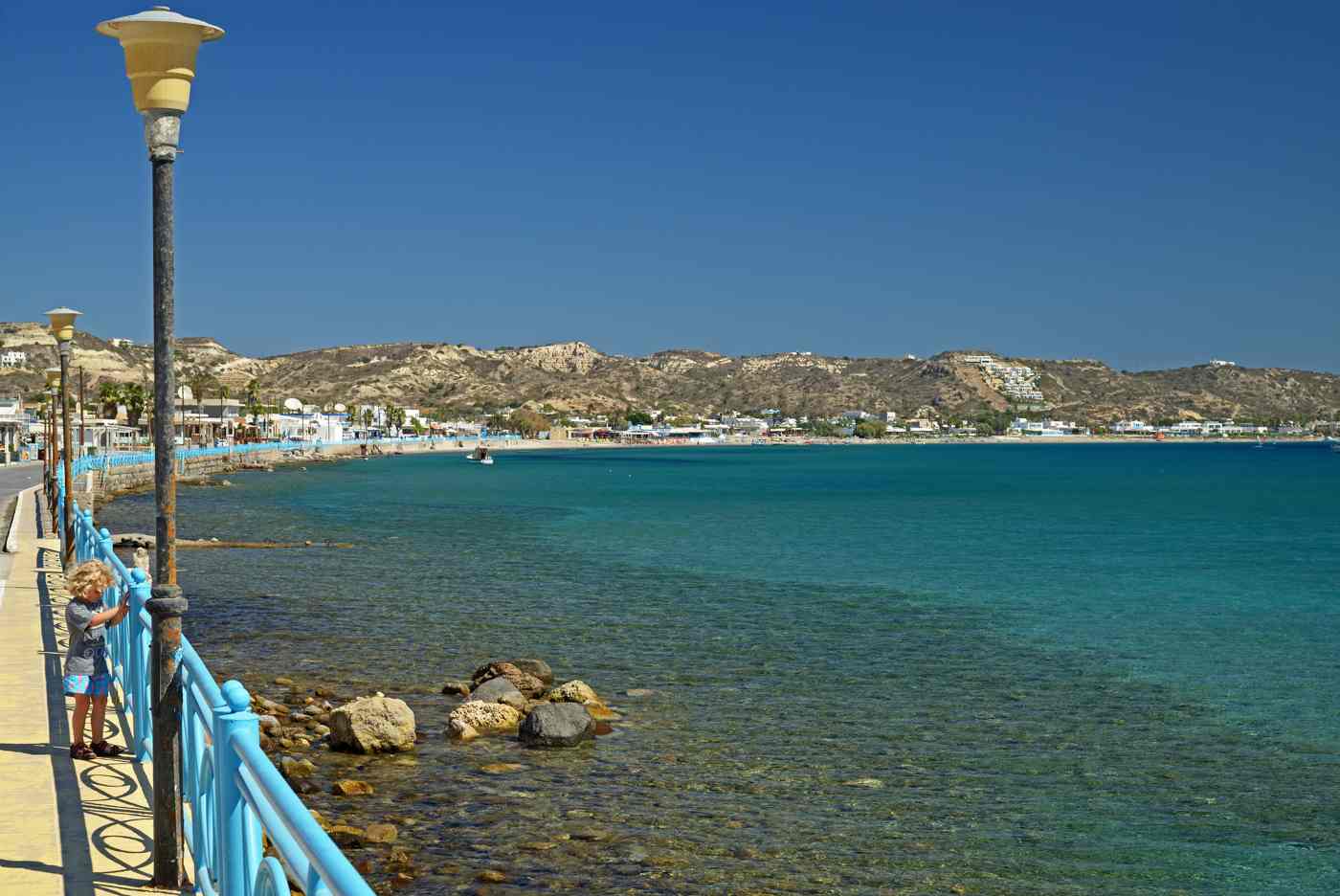
Magic Beach spreads pale, soft sand along a south-facing shore, backed by a tall dune and low hills. The clear water shelves gently, and the meltemi shelter keeps the surface calm through the afternoon.
The sand at Magic Beach runs pale and fine, with a firm belt near the water and softer grains higher up. This mix gives a solid surface for walking at the shoreline and a comfortable patch for towels behind the sunbed rows. The strip stays almost free of pebbles, so bare feet cross it without care, even at midday when the surface warms. The pale colour throws back much light, which brightens the shallow water to a clear turquoise close to shore. Fine sand also settles fast after a swimmer stirs it, so the water clears within a minute of the shallows being disturbed.
The open grade of the beach leaves room for sandcastles and beach games well back from the loungers. The wide belt of dry sand stays usable even at high summer crowds.
Clear water fills the bay in front of Magic Beach, shelving so gently that the depth stays waist-high for 20 metres or more. The seabed keeps the same pale sand as the shore, with no sudden drop-offs or rock shelves along the swimming zone. This even floor gives a wide, safe area for children and cautious swimmers close to the loungers. The south-facing aspect turns the bay away from the meltemi, so the surface stays glassy on afternoons when the north coast churns. Light swell rolls in only during a southerly blow, which is rare through the summer. The clarity holds well out from shore, letting swimmers see their feet on the sand in chest-deep water.
Warmth builds fast in the shallows, so the sea reaches a comfortable temperature by late morning.
A large sand dune rises behind the centre of Magic Beach, one of the tallest on the Kefalos-bay shore. Wind-blown sand has built the ridge over centuries, and marram-type grasses hold its slopes in place. Low, dry hills stand behind the dune and climb west toward the Kefalos peninsula, framing the strip against bare rock and scrub. The backdrop stays open and treeless, apart from the tamarisks planted by the bars for shade. The dune’s height screens the beach from the road and adds a second wind-break behind the natural southern shelter. Footpaths cross the crest at marked points, and the top gives a clear line of sight along the whole bay.
The contrast of pale sand, blue water, and brown hills defines the look of the southwest coast.
Magic Beach sits within a line of south-facing beaches that fills the sweep of Kefalos bay. The same strip carries Paradise beach, Camel beach, and Agios Stefanos, each sharing the pale sand and sheltered water. This concentration makes the bay one of the strongest stretches among the island’s Kos beaches, set apart from the northern resorts at Tigaki and Marmari. The southwest beaches trade the salt-pan lagoons of the north for open dunes and clearer, deeper blue. Kastri islet and its chapel mark the far western end of the bay off Agios Stefanos, a landmark visible from the Magic Beach sand. The bay’s single orientation means one wind decision covers every beach along it.
Walkers move between the beaches on the firm sand at the water’s edge.
How does Magic Beach compare to nearby beaches?
Magic Beach keeps calmer water and a quieter tone than its neighbours, backed by the tall dune. Paradise beach draws watersports crowds to its seabed bubbles, while Camel beach fills a smaller cove between rocks.
Magic Beach holds the middle ground of Kefalos bay, both in position and in mood. The wide sand and shallow water pull families and swimmers who want space and a calm sea. Fewer loud bars line this stretch than at the busier ends, so the noise level stays low through the day. The tall dune behind the sand blocks the road and marks the beach as the most open of the three. Swimmers reach deep water slowly here, which suits children better than the quicker drop at the cove beaches. The long strip spreads the crowds, so even a full day rarely feels packed near the water.
This balance of size, shelter, and quiet sets Magic Beach apart from its two close neighbours on the bay.
Paradise beach lies east of Magic Beach along the same south-facing shore, a short drive or walk away. Locals also call it Bubble beach, after the streams of gas that rise through the shallows from the volcanic seabed. Swimmers feel the warm bubbles against their skin in the knee-deep water, a trait unique to Paradise beach among the bay’s sands. The stretch runs busier than Magic Beach, with jet-ski and banana-boat operators working the water through the day. Sunbeds pack the front in tight rows, and the bars play louder music into the afternoon. The sand and shelter match Magic Beach, but the tone leans toward action and noise.
Visitors often pair the two, swimming the bubbles at Paradise and returning to the calmer sand next door.
Camel beach sits west of Magic Beach, tucked into a smaller cove framed by rocky spurs. The name comes from a camel-shaped hump of rock above the sand, visible from the approach road. A steep set of steps drops from the car park to the cove, which keeps Camel beach quieter and less built-up than the open strips. The sand runs coarser and the water deepens faster than at Magic Beach, so strong swimmers favour the cove. One small bar serves the beach, and sunbed rows fill the limited flat ground near the water. The enclosed shape blocks even more wind, giving a sheltered pocket on gusty days.
Walkers reach the cove from Magic Beach along the shore in about ten minutes at low water.
Choice among the three beaches turns on the kind of day a group wants. Magic Beach fits families and long, calm swims on wide, open sand with full bar service. Paradise beach suits travellers chasing watersports, the seabed bubbles, and a louder crowd. Camel beach rewards those after a smaller, sheltered cove reached by a short flight of steps. All three share the Kefalos-bay shelter, the pale sand, and the clear water, so no choice loses the core appeal. A single day covers the trio on foot or by car, since the whole strip runs about 3 kilometres end to end.
Wind, crowd tolerance, and swimming confidence guide the pick more than distance, which stays short between every beach on the bay. One look at the water settles the choice on arrival.
What activities can families enjoy at Magic Beach?
Families swim, wade, and build on the sand at Magic Beach, helped by the shallow water and firm shore. Beach games, paddleboard trips, and shaded sunbeds fill a full day for mixed-age groups.
The shallow water at Magic Beach gives young children a wide, safe zone close to the loungers. Depth stays knee- to waist-high for 20 metres out, so a parent wades alongside without losing footing. The flat, sandy floor holds no rocks or weed along the main swimming rows, which lowers the risk of slips. Warmth builds early in the shallows, so children swim comfortably from mid-morning rather than waiting for the afternoon. The meltemi shelter keeps the surface calm, so small swimmers face gentle ripples instead of breaking waves. Buoyancy aids from the watersports desk fit toddlers and older children alike.
Parents watch the whole shallow belt from a front-row sunbed, since the open sand hides no dips or channels. This mix makes the beach a steady pick for families with young swimmers.
The wide belt of dry sand behind the water gives families room for games well clear of the loungers. Fine, firm grains pack into strong sandcastles near the shoreline, where the damp sand holds its shape. Beach volleyball, bat-and-ball, and frisbee all fit the open flat between the sunbeds and the dune. The gentle slope keeps a rolling ball from running into deep water, so games stay on the sand. Kite-flying works on breezy afternoons, when the side-shore wind lifts a kite without dragging it out to sea. The dune itself draws older children, who climb the marked paths for the view along the bay.
Space stays open at the quieter western end for larger groups spreading out mats and shade. Long summer daylight leaves hours for play between swims.
Family comfort at Magic Beach rests on the bar service, the shade, and the short walk from the car. Umbrellas over paired loungers give reliable cover through midday, which matters on the open, treeless sand. The bars carry water, juice, ice cream, and simple plates, so a family stays fed without leaving the beach. Freshwater showers behind the central bar rinse salt and sand off children before the drive home. The 300-metre path from the parking runs level and firm, so prams and wheeled cool boxes roll easily. Staff move sunbeds together on request, letting a group build a shaded base for grandparents and toddlers alike. Waste bins and morning sand-raking keep the family rows clean.
This spread of small services turns a long beach day into a manageable outing for mixed-age groups.
The calm, sheltered water sets the tone for a relaxed family day at Magic Beach. The south-facing bay turns its back on the meltemi, so afternoons stay swimmable when the north coast blows out. Gentle ripples and a slow shelf lower the worry that comes with steeper cove beaches nearby. The open sightlines across the flat sand let parents track wandering children from the loungers. Quiet bar music and spread-out crowds keep the noise down, which suits early bedtimes and daytime naps. The lack of fixed lifeguard cover means families still watch the water themselves, keeping to the shallow inner rows. Firm sand and clear signage make the beach easy to reach, settle into, and leave.
These conditions explain why Kefalos-bay regulars bring children to this strip year after year.
Why is Magic Beach ideal for swimming?
Magic Beach offers a slow-shelving, sandy floor and clear, warm water that suit swimmers of every level. The south-facing shelter blocks the meltemi, so the surface stays calm through most summer afternoons.
The seabed at Magic Beach slopes so gently that swimmers wade far out before the water passes their chest. This slow gradient gives beginners and children a long, safe zone within standing depth of the sand. The floor keeps the same pale, fine sand as the beach, free of rock shelves or sudden holes along the swimming rows. Firm footing underwater lets swimmers stand and rest anywhere across the shallow belt. The even bottom also warms fast, so the shallows reach a comfortable temperature by late morning. Weed and stones stay off the main stretch, which keeps entry and exit easy on bare feet. Confident swimmers still find open water for longer strokes past the shallow belt.
The wide, clean floor sets Magic Beach apart from the coarser, quicker-dropping cove beaches on the same bay.
The south-facing position of Magic Beach turns the bay away from the meltemi that sweeps Kos from the north. This shelter keeps the surface calm on afternoons when Tigaki and Marmari on the north coast churn with whitecaps. The tall dune and low hills behind add a second wind-break over the beach itself. Swimmers face gentle ripples rather than breaking waves, so a steady stroke stays easy along the shore. Rip currents rarely form on the even, gently sloping floor, which lowers the risk for weaker swimmers. Southerly winds are the only ones that push swell into the bay, and they stay rare through summer.
This wind pattern makes Magic Beach a reliable swimming choice when the rest of the island turns rough. The calm water also suits early-morning laps before the crowds settle in.
Clear water fills the bay in front of Magic Beach, letting swimmers see the sandy floor in chest-deep depth. The fine sand settles within a minute of being stirred, so the sea clears fast after a busy spell. Warmth builds early in the shallows, and the sheltered surface holds that heat through the afternoon. Snorkelers find the best clarity off the rocky western point, where the sand gives way to low reef. Visibility drops only during a rare southerly swell, which briefly lifts sand into the water. The turquoise tone near shore comes from the pale floor throwing light back through the shallow water.
These conditions reward long, unhurried swims parallel to the sand, well within sight of the loungers. The clean water also draws snorkelers who follow the reef line toward the western rocks.
Swimmer safety at Magic Beach rests on the calm water, the firm floor, and the clear sightlines across the bay. The shallow inner belt gives families a natural nursery zone within easy reach of the sunbeds. Watersports launch from a marked corridor at the eastern end, which keeps boards and jet-skis clear of swimmers. Lifeguard cover is not fixed on this stretch, so groups still watch their own party in the water. Buoyancy aids rent from the watersports desk for children and weaker swimmers. The gentle shelf means a swimmer who tires simply stands up on the sand rather than fighting deep water. Buoys mark the swimming zone on busier days, separating it from the board-launch lane.
This blend of shelter and layout keeps the beach among the safest swims on the southwest coast.
What is the best time to visit Magic Beach?
Magic Beach reaches its best from late spring to early autumn, when warm, dry weather settles over Kefalos bay. The south-facing shelter extends good swimming into the breezy weeks that unsettle the north coast.
The core summer weeks bring long, dry days and warm sea temperatures to Magic Beach. Daytime heat climbs into the low-to-mid thirties Celsius, tempered on the sand by the side-shore breeze off the bay. The south-facing aspect turns the beach away from the meltemi, so the strong midsummer north wind rarely disturbs the water. Sunshine holds through the day with clear skies, giving reliable conditions for swimming and sunbathing. The bars, sunbeds, and watersports all run at full service across these weeks. Crowds peak in the middle of summer, when the parking fills by late morning on the hottest days.
Early arrival secures a front-row umbrella and a shaded base before the coach and boat trips reach the bay. The long evenings stretch a beach day well past the last swim.
Late spring and early autumn give quieter days at Magic Beach with warm, settled weather. The sea holds its summer warmth well into autumn, so swimming stays comfortable after the peak crowds thin. Sunbed rows sit half-empty on shoulder-season mornings, and the parking rarely fills. The side-shore breeze feels lighter in these weeks, which suits sunbathing over watersports. Bars and rentals still open, though one or two close earlier in the day than at peak. The softer light of spring and autumn suits long walks along the strip toward Camel beach. Travellers who prefer space and calm over full-summer buzz find these shoulder weeks the strongest window on the bay.
Cooler nights in autumn also make the drive back over the ridge more comfortable. Autumn water stays warm after the summer heat.
Wind decides the beach choice on Kos more than heat, and Magic Beach answers the meltemi head-on. The meltemi blows from the north through midsummer, roughing the Tigaki and Marmari beaches on the opposite coast. The south-facing Kefalos bay stays sheltered on these days, so Magic Beach fills when the north empties. Afternoons bring the strongest gusts, and the dune plus the hills keep the beach in a wind shadow. Windsurfers still catch a workable side-shore breeze at the eastern end without the meltemi’s full force. Southerly winds, which do reach the bay, stay rare and short through the season. Checking the forecast for wind direction, not just strength, points a traveller to the calmer coast each day.
This single choice often decides between a calm swim and a windblown afternoon.
Timing within the day shapes a visit to Magic Beach as much as the season. Morning brings the calmest water and the easiest parking, before the coach and boat trips arrive. Midday delivers the strongest sun on the open, treeless sand, so umbrella shade earns its hire fee. The side-shore breeze builds through the afternoon, which cools the sand and lifts the windsurf conditions. Late afternoon empties the beach as the day-trippers head back, leaving the sand quiet for a final swim. The last buses to the capital run through early evening, setting the practical limit on a bus-based day. A dawn-to-dusk plan by car captures the full swing from calm morning water to breezy afternoon sport.
Drivers also beat the queue at the ridge descent by arriving before mid-morning.


How does Magic Beach cater to watersports enthusiasts?
Magic Beach runs windsurfing, paddleboarding, kayaking, and pedal-boat hire from stations at its eastern end. The sheltered bay and steady side-shore breeze suit both first lessons and confident open-water sessions.
Windsurfing anchors the watersports at Magic Beach, drawing on the steady side-shore breeze that runs down Kefalos bay. The south-facing shelter strips the meltemi of its force, leaving a workable wind without the north coast’s chop. Operators rent boards and rigs by the hour or half-day, with sizes for beginners through to advanced sailors. Instructors run short first lessons from the marked launch corridor, keeping boards clear of the swimming rows. The shallow inner water lets a learner stand and restart within easy reach of the sand. Flat water close to shore builds confidence before a sailor heads for the stronger breeze further out.
The eastern end catches the cleanest wind, which is why the rental stations cluster there rather than mid-beach. Regular sailors return across the summer for the reliable afternoon breeze.
Stand-up paddleboarding suits the flat, sheltered water that Magic Beach holds through most mornings. The calm surface gives a stable platform, so first-timers stand and paddle within a short session. Boards rent by the hour from the eastern stations, with a leash and buoyancy aid included. Paddlers cross the bay toward Camel beach or the rocky western point, staying inside the sheltered water. Kayaks rent from the same desk, doubling the reach along the coast for a morning trip. The clear shallows let paddlers spot fish and the sandy floor beneath the board. Early hours give the glassiest water, before the side-shore breeze builds and favours the windsurfers instead.
Both craft return easily to the wide, gently sloping sand for launch and landing. Guided paddle trips also run west toward Agios Stefanos on calm days.
Pedal boats and inflatable rides fill out the watersports menu at Magic Beach for casual groups. Pedal boats carry two to four people on a slow loop of the sheltered bay, a low-effort option for families. Snorkel sets rent from the stations, and the rocky western point holds the clearest water and low reef to explore. Banana-boat and ringo rides run from the busier neighbour at Paradise beach, a short walk east along the shore. Kayak-and-snorkel combinations let a paddler reach the point, anchor, and swim the reef in one trip. The shallow, calm water keeps every activity within a safe, sheltered zone close to the sand.
Buoyancy aids come with each hire, and the marked launch lane separates the craft from swimmers. Families rotate between the pedal boat and the shallows through the afternoon.
Watersports at Magic Beach work because of the layout as much as the wind. The marked launch corridor at the eastern end keeps boards and boats clear of the family swimming rows. The gentle shelf lets learners stand, rest, and restart, which speeds progress in a first lesson. Morning calm suits paddleboards and kayaks, while the afternoon breeze lifts the windsurf sessions. Instructors and rental staff base themselves at the stations through the day across the summer. Southerly winds are the only ones that build swell, and they stay rare through the season. This reliable split between calm mornings and breezy afternoons lets a group plan two different water activities in a single visit to the bay.
The sheltered bay also shortens the walk of shame back to shore after a fall.
What nearby attractions can be explored from Magic Beach?
Magic Beach sits within reach of Kefalos village, Agios Stefanos with Kastri islet, and the neighbouring bay beaches. The Kefalos peninsula adds windmills, viewpoints, and the ruins above the sand.
Kefalos village stands about 4 kilometres uphill from Magic Beach, on the ridge above the bay. The old settlement holds narrow lanes, a hilltop windmill, and tavernas serving the southwest corner of the island. A ruined Venetian-era castle and a chapel crown the height, giving a view over the whole line of bay beaches. Shops and a pharmacy in the village cover supplies that the beach bars do not stock. The bus between the capital and the bay stops in Kefalos, so a beach day pairs easily with a village visit. Evening tavernas draw beachgoers up the hill for dinner after the sand empties.
The village keeps a working, year-round feel rather than a resort strip, which sets it apart from the northern towns. The climb from the bay takes minutes by car.
Agios Stefanos lies at the western end of Kefalos bay, a short drive from Magic Beach. The site holds the ruins of two early Christian basilicas, with mosaic floors and standing columns above the sand. Kastri islet rises just offshore, topped by a small white chapel reached by a short swim or paddle. The beach below the ruins shares the bay’s pale sand and sheltered, south-facing water. Strong swimmers cross to Kastri from the shore, landing on the rocks below the chapel. The mix of ancient ruins and a swimmable islet makes this the standout stop at the bay’s far end.
A visit pairs a morning at Magic Beach with an afternoon among the columns and the islet swim. Boat trips from the bay also anchor off Kastri for a swim stop.
The Kefalos peninsula stretches west beyond the village toward the island’s southwest tip. Restored stone windmills stand on the ridge, catching the same wind that the beaches below shelter from. A rough road leads on to Limnionas, a small fishing cove with tavernas on the peninsula’s north side. The cape at the far end carries walking routes over open, treeless hills with sea on three sides. The peninsula’s height gives long views back over Kefalos bay and its line of south-facing beaches. Goat tracks and old chapels mark the slopes for those exploring on foot. This wilder western end contrasts with the organised sand of Magic Beach, a short drive back down the ridge.
The windmills catch the light best in the late afternoon. A short drive from the village reaches the windmills.
The neighbouring bay beaches give the easiest add-on to a day at Magic Beach. Paradise beach and its seabed bubbles lie a short way east, and Camel beach fills its cove to the west. A single afternoon covers the trio on foot along the shore or by car on the bay road. Further afield, Kos Town and its ancient sites sit about 40 kilometres northeast for a full-day trip. Kardamena, halfway back along the south coast, runs day boats to the volcano island of Nisyros. The airport near Antimachia lies on the same route, which suits a beach stop on an arrival or departure day.
This spread of beaches, ruins, and boat trips builds a full week around the southwest corner of the island. One coastal road links these stops on the way back.
Frequently Asked Questions
What is the best way to get to Magic Beach from Kos Town?
Buses and rental cars both connect Magic Beach with Kos Town, about 40 kilometres to the southwest. The public bus runs the Kefalos-bound route through the day from the main station near the harbour, and the ride to the Kefalos-bay stops takes about an hour. Fares stay low, at about the level of other long island routes, which suits travellers without a car. The driver calls the beach stops along the top of the bay, and a signed path drops about 300 metres to the sand. Rental cars give the most direct approach, following the main road southwest through Antimachia and past the airport turn before descending to the bay.
The drive covers about 40 kilometres in about 45 minutes. Scooters and quad bikes offer a cheaper hire for two travellers, though the ridge road carries strong crosswinds near the top. Free parking sits behind the dune, within about 300 metres of the waterline. Organised coach and boat trips also reach the bay from the northern resorts.
Is Magic Beach suitable for families with children?
Magic Beach ranks among the strongest family choices on Kos, thanks to its shallow water and firm, open sand. The sea shelves so gently that the depth stays knee- to waist-high for 20 metres from shore, giving young children a wide, safe zone beside the loungers. The sandy floor holds no rocks or weed along the main swimming rows, which lowers the risk of slips. The south-facing bay turns away from the meltemi, so the surface stays calm on afternoons when the north coast roughens. Umbrellas over paired sunbeds give reliable midday shade on the treeless sand, and the bars carry water, juice, and simple plates.
Freshwater showers behind the central bar rinse off salt and sand before the drive home. The 300-metre path from the parking runs level for prams and wheeled cool boxes. Buoyancy aids rent from the watersports desk. Lifeguard cover is not fixed here, so parents keep children to the shallow inner rows and watch the water themselves.
What are the weather conditions like at Magic Beach?
Magic Beach enjoys warm, dry weather from late spring to early autumn, the core beach season on Kos. Daytime heat through midsummer climbs into the low-to-mid thirties Celsius, tempered on the sand by the side-shore breeze off the bay. The south-facing aspect turns the beach away from the meltemi, the north wind that roughens the Tigaki and Marmari coast through summer. This shelter keeps the water calm on afternoons when the north side churns with whitecaps. Sunshine holds through the day under clear skies, giving reliable swimming and sunbathing conditions across the season. The sea warms early in the shallows and holds that heat well into autumn.
Southerly winds, the only ones that push swell into the bay, stay rare and short. Late spring and early autumn bring quieter days with the sea still warm from summer. Checking the wind direction, not just the temperature, points a traveller to the calmer coast on any given day.
Are there any watersports available at Magic Beach?
Magic Beach runs a full watersports operation from stations at its eastern end, clear of the main swimming rows. Windsurfing leads the offer, drawing on the steady side-shore breeze that the south-facing bay keeps free of the meltemi’s full force. Operators rent boards and rigs by the hour or half-day, with sizes from beginner to advanced, and instructors run short first lessons from the marked launch corridor. Stand-up paddleboards suit the flat morning water, giving a stable platform for first-timers who paddle toward Camel beach or the rocky western point. Kayaks rent from the same desk and extend the reach along the coast.
Pedal boats carry two to four people on a slow loop of the sheltered bay, a low-effort choice for families. Snorkel sets rent for the clear water off the western point and its low reef. Buoyancy aids come with every hire, and the marked launch lane keeps boards and boats separate from swimmers throughout the day.
What amenities are available at Magic Beach?
Magic Beach operates as an organised beach, so the front fills with sunbed rows under shared umbrellas set out by the bars. Each umbrella covers two loungers, and hire runs on a daily rate at about the level of the other Kefalos-bay beaches. Beach bars line the back of the strip on raised decks at the foot of the dune, serving coffee, cold drinks, toasted sandwiches, salads, and grilled plates through the day. Watersports stations at the eastern end rent windsurf boards, paddleboards, kayaks, and pedal boats. Freshwater showers, a changing cabin, and toilets stand behind the central bars.
Sunscreen, water, and simple beach kit sell from the bars for a spur-of-the-moment stop, while the nearest full shops and pharmacy sit up the hill in Kefalos, about 4 kilometres away. Free parking behind the dune sits within about 300 metres of the sand. Lifeguard cover is not fixed on this stretch, so swimmers keep to the shallow inner rows.
How does Magic Beach compare to other beaches in Kefalos Bay?
Magic Beach holds the calmest, most open ground of the three main Kefalos-bay beaches, backed by a tall sand dune. The wide sand and slow-shelving, shallow water pull families and swimmers who want space and a quiet sea. Paradise beach lies a short way east along the same shore and runs busier. Known for the warm bubbles that rise from its volcanic seabed and for jet-ski and banana-boat operators through the day. Camel beach sits west in a smaller cove framed by rocky spurs, reached by a steep flight of steps, with coarser sand and faster-deepening water that suit strong swimmers.
All three share the Kefalos-bay shelter, the pale sand, and the clear, south-facing water, so no choice loses the core appeal. Magic Beach spreads its crowds along the longest strip, which keeps it feeling open even at peak. A single day covers the trio on foot or by car, since the whole bay runs about 3 kilometres end to end.
What nearby attractions can be visited from Magic Beach?
Magic Beach sits within easy reach of the Kefalos peninsula’s mix of villages, ruins, and viewpoints. Kefalos village stands about 4 kilometres uphill, holding narrow lanes, a hilltop windmill, tavernas, and a ruined castle with a view over the whole bay. Agios Stefanos lies at the bay’s western end. Where the ruins of two early Christian basilicas overlook Kastri islet and its small chapel, reached by a short swim from the sand. The neighbouring beaches add the easiest stops, with Paradise beach and its seabed bubbles east and Camel beach in its cove to the west. Restored stone windmills and the fishing cove of Limnionas mark the peninsula further west.
Kos Town and its ancient sites sit about 40 kilometres northeast for a full-day trip, and Kardamena on the south coast runs day boats to the volcano island of Nisyros. This spread of ruins, villages, beaches, and boat trips fills a full week around the southwest corner of Kos.