
Camel Beach, known as Kamila in Greek, is a secluded gem nestled in the southwest of Kos, within the picturesque Kefalos Bay. This small sand-and-shingle cove is renowned for its unique camel-humped rock formation, offering a tranquil escape from the island’s more bustling beaches. Plan the whole trip with Greece Tours.
Accessible via a short, steep path from a clifftop car park, Camel Beach provides a peaceful retreat with clear, deep waters ideal for snorkelling. A single taverna offers refreshments and sunbeds, enhancing the serene experience. Its proximity to other notable beaches like Paradise and Magic makes it a must-visit spot for those exploring Kos.
What makes Camel Beach on Kos unique?
Camel Beach earns its name from the camel-humped rock on the hillside above the cove. The sheltered sand-and-shingle bay sits in Kefalos Bay, about 40 kilometres southwest of Kos Town.
Camel Beach, called Kamila in Greek, takes its name from a camel-humped rock rising on the hillside above the cove. The rounded stone ridge sits behind the bay and marks the beach from the clifftop road. The shore mixes fine sand with bands of pale shingle, so the surface stays firm near the waterline. Rocky headlands close both ends of the cove and frame a strip roughly 100 metres wide. The Kefalos Bay setting, about 40 kilometres southwest of Kos Town, keeps the beach smaller and quieter than the northern resorts at Tigaki and Marmari. The camel outline stays visible from the water, giving swimmers a clear landmark above the southwest coast of the island.
Salt-tolerant scrub and low cliffs enclose the sand, blocking wind from the north.
A steep path drops from a clifftop car park to the sand, giving Camel Beach its cut-off feel. Concrete steps and a worn track descend the slope in about three minutes on foot. A taverna sits at the top beside the parking area, marking the trailhead above the cove. The gradient discourages casual foot traffic, so numbers on the sand stay lower than at Paradise Beach next door. Sturdy sandals help on the loose gravel, and the return climb takes longer in midday heat. The car park holds around 30 vehicles and fills by late morning in peak season. Metal handrails guard the steeper section, where the drop reaches about 30 metres.
This descent keeps Camel Beach a small, self-selecting cove rather than a through-route along the Kefalos coast road.
Clear water fills the cove and deepens within about three metres of the shoreline. Rocky outcrops at each headland shelter small fish and make the ends the prime snorkelling ground. Visibility often reaches 10 metres on calm mornings, exposing the seabed of sand and stone. Swimmers reach deep water quickly, so the bay suits confident adults more than paddling toddlers. The southwest exposure keeps the surface flat when the meltemi wind blows from the north. Masks and fins reveal sea bream and wrasse threading the boulders below the camel rock. The steep underwater slope means the turquoise shallows give way fast to darker blue. Snorkellers trace the left-hand rocks toward the open bay for the best marine life.
This quick drop-off defines swimming at Camel Beach against the gentle shelving at Tigaki and Marmari.
One beach bar backs the sand and supplies sunbeds, umbrellas, and cold drinks through the day. Two rows of loungers face the water, with rental costing about the island average for a pair and parasol. The single bar keeps the cove low-key, without the water sports or tavernas lined along Paradise Beach. Cold coffee, toasted sandwiches, and beer cover the menu, so a full day needs no trip back up the steps. The operator sets out the beds each morning and clears them at dusk across the short season. Drinking water and ice arrive by van down the access track daily. This restraint, one bar and no shops, marks Camel Beach among the quieter Kos beaches.
Shade stays limited beyond the umbrellas, so an early arrival secures a front-row bed above the shingle.
How can you access Camel Beach from Kos Town?
Camel Beach lies about 40 kilometres southwest of Kos Town along the Kefalos road. Drivers reach the clifftop car park in around 50 minutes, then descend a steep path to the cove.
The drive from Kos Town runs southwest on the main island road toward Antimachia and Kefalos. The route passes the airport near Antimachia, roughly 25 kilometres out, before climbing the Kefalos peninsula. Clear signs point to Kefalos and Agios Stefanos, so the turn toward the southwest beaches stays easy to follow. The road covers about 40 kilometres in total and takes close to 50 minutes at a steady pace. Open countryside, low hills, and glimpses of the Aegean fill the second half of the journey. The final stretch skirts the ridge above Kefalos Bay, where the camel-shaped rock appears ahead. Petrol stations cluster near Antimachia, the last easy fuel stop before the peninsula.
This overland approach links Camel Beach to Kos Town without any ferry or boat transfer along the way.
The clifftop car park sits on the ridge between the southwest beaches and the Kefalos headland. Camel Beach falls just past Paradise Beach on the same coast road, about 2 kilometres beyond it. Drivers pass the larger Paradise car park first, then reach the smaller Camel pull-in beside the taverna. A painted sign and the taverna mark the descent, which is easy to miss at speed. Parking holds around 30 cars on packed gravel, with roadside space in reserve when full. The turn arrives about 3 kilometres before Kefalos village on the same road. The bay lies out of sight below the lip, so the sea only appears once you start down.
This position on the strip lets visitors pair Camel with the neighbouring beaches in a single outing.
The village of Kefalos sits about 3 kilometres past Camel Beach at the end of the peninsula. Drivers often combine the two, stopping in Kefalos for supplies before or after the beach. The village holds a bakery, mini-markets, and tavernas along its main street on the hill. Fuel, cash machines, and pharmacies cluster there, the last services before the empty southwest cape. A short detour into Kefalos adds around 10 minutes to the run from the coast road. The hilltop windmill and the old harbour at Kamari below draw visitors between beach hours. Kefalos runs the bus terminus, where the Kos Town service turns around. Its tavernas serve grilled fish and Dodecanese dishes through the season.
This pairing turns the drive into a loop, linking Camel Beach, Kefalos, and the wider Kefalos Bay coast.
Buses run from Kos Town to Kefalos through the season, but none stop at Camel Beach itself. Passengers leave the bus in Kefalos village and face a 3-kilometre walk or taxi to the cove. The KTEL service covers the route through the day, with a fare of about three euros each way. Renting a car or scooter suits the beach better, giving direct access and freedom to hop between coves. Rental desks fill Kos Town and the airport, with scooters cheaper for a couple exploring the southwest. A taxi from Kos Town runs higher, reflecting the 40-kilometre distance to Kefalos Bay. Drivers who skip the descent park in Kefalos and taxi to the sand.
This transport gap keeps Camel Beach easiest to reach on your own wheels above the coast road.
What activities are popular at Camel Beach?
Snorkelling ranks first at Camel Beach, drawing swimmers to the rocky headlands and clear water. Sunbathing on the sand-and-shingle shore, coastal walking, and swimming in the deep cove fill the rest of the day.
Snorkelling draws the steadiest crowd to Camel Beach, thanks to the rocks at both headlands. The left-hand outcrop below the camel ridge shelters sea bream, wrasse, and the odd octopus in its crevices. Water clarity often reaches 10 metres on still mornings, so the seabed stays in view from the surface. Swimmers follow the rock line outward, where depth builds to around 5 metres near the cove mouth. The absence of strong currents in the sheltered bay keeps the swim safe for competent snorkellers. Bringing a mask matters, since the beach bar carries no rental gear on the sand. Fins help against the light swell that reaches the outer rocks by midday.
Early hours before the afternoon breeze give the flattest water and the sharpest views of the rocky bottom below the camel rock.
Sunbathing fills the middle of the day on Camel Beach, spread across sand and pale shingle. Two rows of loungers from the single bar face the water, with parasols set between them. The mix of sand and stone stays firm, holding umbrellas better than the loose sand of the north coast. Shade runs short past the hired beds, so towels tucked against the rocks catch the only natural cover. The enclosing cliffs cut the north wind, keeping the cove warm through the afternoon. Sunbathers alternate between the loungers and quick dips in the deep, clear water a step away. Morning arrivals claim the front beds before the parking gravel above fills up.
This rhythm of sun and sea, with drinks from the bar, defines a slow day above the Kefalos coast.
Coastal walking links Camel Beach to the neighbouring coves along the southwest strip. A cliff path runs north toward Paradise Beach, about 2 kilometres over the headland with sea views throughout. Magic Beach and Agios Stefanos lie further along the same shore, each reached by short drives or longer hikes. Walkers climb back to the car park, then follow the ridge track between the pull-ins above the water. The dry hillside carries thyme, sea squill, and low scrub that scent the air in the heat. Sturdy shoes handle the loose stone, and a water bottle matters on the exposed, shadeless slope. The camel rock itself makes a short scramble for a view over the bay.
This walking network turns Camel Beach into one stop on a chain of beaches around Kefalos Bay.
The beach bar anchors the day, pouring cold drinks, coffee, and beer from morning to dusk. A short menu of toasted sandwiches, salads, and snacks covers lunch without a climb back to the car. Prices track the island norm for a beach bar, with a coffee around three euros and cold water cheaper. The bar rents the loungers and parasols too, so one stop books shade and food together. Staff carry orders down to the beds, keeping guests on the sand between swims. Ice and supplies arrive by van down the access track, since the cove has no shops of its own. Card payment works at the bar, though cash speeds the busy lunch hour.
This single kitchen lets a family stay from morning until the light fades over Kefalos Bay without leaving the beach.
What facilities are available at Camel Beach?
Camel Beach keeps facilities basic: one beach bar renting sunbeds and parasols and serving drinks and snacks. No shops, lifeguard, or water sports operate at the cove, so visitors pack their own extras.
One beach bar supplies every service at Camel Beach, set at the foot of the access path. The kitchen turns out coffee, cold drinks, beer, and light food from morning through the short season. Guests order at the counter or from the loungers, with staff walking trays down to the sand. The bar also handles lounger and parasol rental, the only paid extras on the beach. Supplies reach the cove by van down the track, since no road serves the sand directly. Opening hours track daylight, roughly nine in the morning until the sunbeds clear at dusk. A small deck beside the counter gives the only fixed shade off the sand.
This lone outlet covers food, drink, and shade, making an early note of its hours worthwhile before the descent.
Sunbeds and parasols form the main rental at Camel Beach, laid out in two rows above the shingle. A pair of loungers with a shared umbrella costs about the island average for the day. The firmer sand-and-shingle base holds the parasol poles steady against the afternoon breeze. Around 40 beds line the cove, enough for a normal day but tight when three coves share one crowd. Guests reserve a bed through the bar and settle the bill with drinks or lunch later. The front row facing the water goes first, so an early climb down secures the best spot. Parasol shade shifts through the day, so beds near the rocks gain late cover.
This modest set-up, two rows and no cabanas, keeps Camel Beach plainer than the loungers stacked along Paradise Beach.
No shops, hotels, or water-sports stands break the shoreline at Camel Beach beyond the single bar. The cove carries no lifeguard, so swimmers judge the quick-deepening water and rocky ends on their own. Toilets attach to the bar, the only fixed structure on the sand below the clifftop taverna. The lack of building keeps the bay close to its natural state, framed by scrub and bare rock. This restraint sets Camel apart from Kardamena and the resort beaches lined with bars and jet-ski hire. The trade-off falls on planning, since the nearest shop sits up in Kefalos, 3 kilometres away. Freshwater showers stay absent, so a bottle rinses off salt after the last swim.
This plainness draws visitors who want a quiet swim over the noise and clutter of the larger Kos resorts.
Packing ahead matters at Camel Beach, since the cove stocks only what the bar carries. Sunscreen tops the list, as shade runs out past the hired parasols on the open shore. Water and snacks stretch a long day, though the bar covers drinks and light lunch if needed. Snorkellers bring their own mask and fins, because no rental gear waits on the sand. Sturdy sandals ease the steep path, and a hat guards against the shadeless midday sun. Cash helps at the bar and for the Kefalos shops, the last supply point before the cape. A light wrap or shirt covers shoulders on the exposed climb back to the car park.
This short checklist keeps a beach day smooth, given the cove sits 40 kilometres from Kos Town and its stores.
What is the setting of Camel Beach in Kefalos Bay?
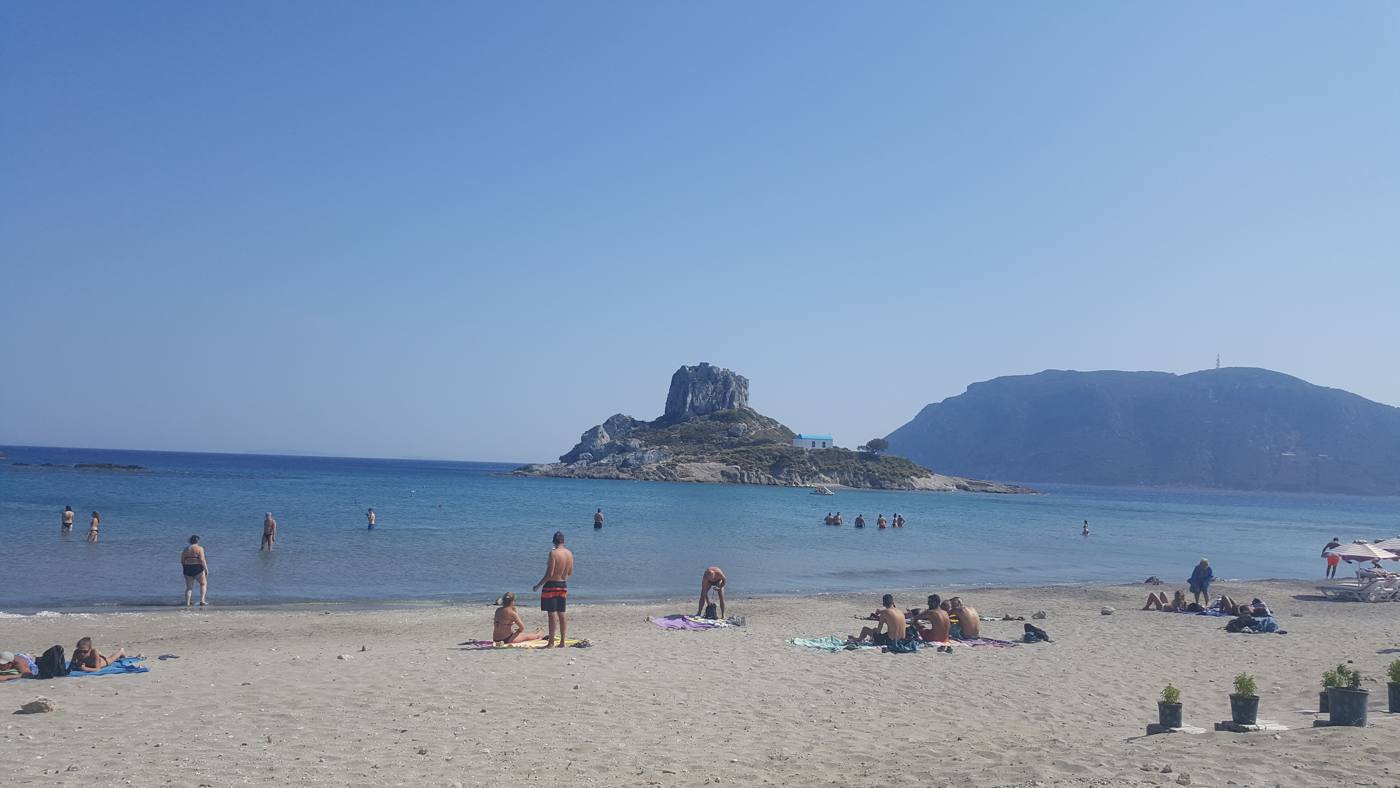
Camel Beach sits on the south side of Kefalos Bay, a sand-and-shingle cove framed by rocky cliffs. The camel-humped rock rises above it, with Paradise, Magic, and Agios Stefanos beaches along the same shore.
Kefalos Bay forms the wide, sheltered inlet at the southwest end of Kos, opening toward the west. Camel Beach occupies a small notch on the bay’s south side, cut into the base of the cliffs. The bay stretches about 7 kilometres from Kamari harbour to the Kefalos headland and the Agios Stefanos ruins. Hills climb behind the shore to the village of Kefalos on its ridge above the water. The west-facing mouth catches the afternoon and evening light across the sea toward the horizon. Kastri islet marks the bay’s far end, standing off Agios Stefanos with a chapel on the rock. The Kefalos peninsula shields the bay, so its water stays calmer than the open Aegean.
This broad bay gathers the southwest beaches, with Camel one of the smaller coves along its edge.
Rocky cliffs frame Camel Beach on three sides, closing it off from the road above. The camel-humped rock rises on the hillside behind the cove, its twin bumps clear from the water. Bare limestone and dry scrub cover the slope, with the taverna and car park perched on the lip. The headlands run out on both sides, their boulders sheltering the snorkelling grounds at each end. This bowl of rock cuts the north wind, so the cove stays swimmable when the meltemi builds. The enclosing walls also trap warmth, keeping the sand hot through the late afternoon. Erosion has rounded the ridge into the humped shape that named the beach below.
This tight frame of cliff and rock gives Camel Beach its cut-off character within the wider sweep of Kefalos Bay.
Paradise Beach lies about 2 kilometres north of Camel along the same coast road and cliff path. Locals also call Paradise the Bubble Beach, after the gas bubbles rising through the shallow sand there. Magic Beach, also known as Poema, sits just south of Paradise on the same open stretch of shore. Agios Stefanos and its early basilica ruins close the bay at the far southwest end near Kastri islet. All four beaches share the west-facing sweep, so a single day can string them together by car. Camel stays the smallest and most sheltered of the group, tucked into its rock bowl. A scooter covers all four in an afternoon, parking free above each cove.
This cluster of coves gives Kefalos Bay its name among the strongest beach stretches on Kos.
Kefalos Bay works as a base for the wider southwest, and Camel Beach anchors a day there. Kefalos village, 3 kilometres up the ridge, adds tavernas, shops, and the old windmill above the harbour. Boat trips leave Kamari for the islet coves and the Kefalos cape beyond the bay’s mouth. The Antimachia castle and the airport sit back along the main road toward the island’s centre. Beach-hopping, a village lunch, and a cliff walk fill a full outing built around the cove. Nisyros day boats also run from Kardamena, about 20 kilometres back toward the south coast. These options place Camel Beach within the broader list of things to do in Kos.
This central spot on the bay lets one stop lead into the rest of the southwest coast.
What is the best way to explore the surrounding area of Camel Beach?
A rented car or scooter opens the area around Camel Beach best, reaching the neighbouring coves and Kefalos village freely. Coastal walking paths and Kamari boat trips add slower ways to explore Kefalos Bay.
A car or scooter gives the freest run of the southwest, linking coves the bus never reaches. Rental desks fill Kos Town and the airport, with a scooter cheaper for a couple over the day. The coast road ties Camel Beach to Paradise, Magic, and Agios Stefanos within a 5-kilometre span. Parking sits free on gravel above each cove, so hopping between beaches costs only fuel and time. A scooter handles the narrow lanes into Kefalos village, where car parking tightens near the square. Fuel stops cluster at Antimachia, the last stations before the peninsula runs out at the cape. Helmets come with every scooter, and the coast road stays quiet outside peak hours.
This freedom to drive turns Camel Beach into one link in a self-guided loop around Kefalos Bay.
Walking suits those who want the coast at a slower pace around Camel Beach. A cliff path climbs from the car park and follows the ridge toward Paradise Beach, 2 kilometres north. The track passes above smaller rock coves, with the Aegean open to the west the whole way. Thyme, sea squill, and low scrub line the route, scenting the dry hillside in the summer heat. Walkers carry water and wear firm shoes, since the path holds loose stone and offers no shade. The camel rock itself makes a short scramble for a view down over the cove and bay. Early morning or late afternoon keeps the exposed climb cooler than the midday sun.
This walking option reveals the corners of Kefalos Bay that stay hidden from the road above the beaches.
Kefalos village rewards a stop between beach hours, set on the ridge 3 kilometres from the cove. Its main street holds a bakery, mini-markets, tavernas, and cafes along the climb to the church. The old stone windmill and the ruined Venetian castle above the village give wide views over the bay. Kamari, the harbour district below Kefalos, lines a longer sandy beach with more tavernas at the water. Boats leave Kamari for the offshore islet and the coves under the Kefalos cape past the bay. A village lunch of grilled fish or slow-cooked lamb breaks up a day of swimming and driving. A cash machine and a pharmacy sit near the square, the last before the cape.
This hilltop stop adds food, supplies, and history to the beaches strung along Kefalos Bay below.
Driving and walking together cover the southwest, and Camel Beach fits either plan well. A morning swim, a cliff walk to Paradise, and a Kefalos lunch fill a full day around the bay. The coast road handles the longer legs, while the ridge paths reach the coves between the road and sea. Boat trips from Kamari add the water angle, circling the islet and the cape beyond the bay mouth. Antimachia and its Venetian castle sit back toward the centre for a change from the beaches. This mix of car, foot, and boat lets each visitor shape the day around the cove. Sunset over the west-facing bay rewards those who stay into the evening near Kefalos.
This range of options makes exploring Kefalos Bay a core part of any stop at Camel Beach.
What are the snorkeling conditions like at Camel Beach?
Snorkelling conditions at Camel Beach run clear and calm, with visibility often near 10 metres. Rocky headlands at both ends and a quick-deepening seabed draw fish, making the cove a strong snorkelling spot.
Clear water sets the base for snorkelling at Camel Beach, with visibility often near 10 metres. The sheltered position inside Kefalos Bay cuts the swell, so silt rarely clouds the seabed. Sand and pale stone floor the shallows, reflecting light and lifting the clarity in the mornings. Depth builds to around 5 metres near the cove mouth, framing a clear column of blue water. The seabed reads plainly from the surface, letting swimmers spot rocks and fish before diving down. Calm early hours, before the afternoon breeze, give the flattest and clearest conditions of the day. Light from the west-facing mouth stays strong into the late afternoon on calm days.
This clarity ranks Camel among the better southwest coves for seeing the bottom without a boat or deep dive.
The rocky headlands at both ends of Camel Beach hold the richest marine life in the cove. Sea bream, wrasse, and damselfish shelter among the boulders, with octopus tucked into the deeper cracks. Swimmers follow the left-hand rocks below the camel ridge toward the open bay for the best sightings. The stone gives way to sand in patches, so the route mixes reef edges with clear open water. Depth along the rocks reaches around 4 metres, enough for fish without a demanding free dive. The sheltered bay keeps currents light, so snorkellers hold position over the reef with little effort. Sea urchins cling to the lower boulders, so fins and care keep feet clear.
This rock-and-sand mix along the headlands makes the ends of Camel Beach the core of its underwater draw.
Bringing your own mask and fins matters at Camel Beach, since the bar rents no snorkelling gear. Shops in Kefalos village, 3 kilometres up the ridge, sell basic sets before the drive to the cove. A rash guard or thin wetsuit guards against sun on the back and the odd jellyfish drifting in. The quick-deepening water suits confident swimmers, so weaker snorkellers stay near the shallow inner end. No lifeguard watches the cove, so each swimmer judges the depth and the rocks alone. Calm mornings cut the risk, while the afternoon breeze pushes light chop onto the outer rocks. A dry bag on the sand keeps phones and keys safe while both swimmers explore.
This self-equip and self-manage marks Camel Beach as a spot for prepared, water-confident snorkellers.
A rest on the sand follows a snorkel session, with the bar close for a drink and lunch. Loungers face the water, so swimmers dry off and watch the bay between trips to the rocks. The cove pairs the underwater draw with the plain comforts of shade, food, and cold drinks. Snorkellers ready for more drive on to Paradise or Agios Stefanos for a change of reef along the coast. Kastri islet near Agios Stefanos adds another snorkelling target across the far end of the bay. This blend of clear water, easy rest, and nearby coves places Camel among the top snorkelling stops in Kos.
A water bottle rinses salt from masks before the climb back to the car. This mix of sport and calm suits a full day spent in and beside the water.
How does Camel Beach compare to other beaches in Kos?
Camel Beach offers a smaller, quieter cove than the long resort beaches of Kos. Its sheltered rock frame, quick-deepening water, and single bar contrast with the wide sands and crowds at Tigaki or Kardamena.
The north-coast beaches of Tigaki and Marmari run for kilometres of flat, shallow sand backed by a salt lagoon. Camel Beach counters with a short cove, deep water, and a rocky frame under the camel ridge. Tigaki shelves so gently that families wade far out, while Camel drops to swimming depth within metres. Windsurfers favour the exposed north sands, where the meltemi blows straight onto the shore all afternoon. Camel faces west inside Kefalos Bay, so the same wind passes behind the sheltering cliffs. Sunbeds, bars, and tavernas line the Tigaki strip, against the lone bar at the smaller cove. Marmari also holds the salt-pan lagoon where flamingos feed in the cooler months.
This contrast pits the open, breezy north sands against the tight, sheltered swim of the southwest cove.
Kardamena packs the south coast with bars, tavernas, and water sports along a long sandy front. Camel Beach strips all that back to one bar, a rocky cove, and quiet water below the cliffs. Kardamena runs a nightlife and ferry harbour, with boats to Nisyros leaving through the day. Camel offers no shops, no music, and no harbour, just the sand and the sea under the camel rock. Families after facilities and a lively front lean to Kardamena, 20 kilometres east along the coast. Swimmers after calm and clear water pick the sheltered southwest cove instead of the resort strip. The airport near Antimachia sits close to Kardamena, so package resorts cluster on that side.
This split separates the busy, built-up south coast from the plain, natural setting of Camel Beach.
Paradise Beach, 2 kilometres north, shares the same bay but pulls a larger, busier crowd. Its wide sand, water sports, and three bars draw day-trippers, while Camel keeps to one quiet cove. The Bubble Beach name comes from gas rising through Paradise’s shallows, a feature Camel lacks entirely. Camel answers with better snorkelling, since its rocky headlands hold more fish than Paradise’s open sand. Depth also differs, as Paradise shelves gently while Camel drops fast to clear blue water. Parking overflows at Paradise on peak days, whereas Camel’s smaller lot limits the numbers on its sand. A cliff path links the two, so visitors can walk from Paradise to Camel directly.
This pairing lets one bay offer both a lively sand beach and a quiet snorkelling cove side by side.
Camel Beach fills a clear niche among the Kos beaches, between the big resorts and the wild coves. Tigaki, Marmari, and Kardamena win on facilities, length, and easy flat access for families with young children. Lambi and the Kos Town beaches sit close to the capital, handy but busy with hotels behind. Camel trades all that for seclusion, a rocky frame, and the strongest snorkelling on the southwest strip. The steep path filters the crowd, so the cove stays quieter than any road-level beach on the island. Swimmers who value clear, deep water over sunbed rows and bars choose Camel over the resorts. Therma, the hot-spring beach east of Kos Town, offers another niche entirely.
This place on the scale makes Camel Beach the pick for a calm, active swim away from the crowds.


What nearby attractions can be explored from Camel Beach?
Nearby attractions from Camel Beach cluster around Kefalos Bay: Kefalos village, Paradise Beach, and Agios Stefanos with its basilica ruins. Kamari harbour, boat trips, and the Antimachia castle sit within a short drive.
Kefalos village crowns the ridge 3 kilometres from Camel Beach at the end of the peninsula. Its main street climbs past a bakery, mini-markets, tavernas, and cafes toward the hilltop church. The old stone windmill stands above the houses, a landmark visible from the coast road below. The ruined Venetian castle nearby guards wide views over Kefalos Bay and the sea toward the cape. Kamari, the harbour quarter below, lines a long sandy beach with tavernas along the water. A lunch of grilled fish in Kefalos breaks a beach day and stocks supplies before the drive back. Buses to Kos Town turn around in Kefalos, so the village doubles as a transport link.
This village gives the southwest its main hub for food, shops, and services near the beaches.
Paradise Beach sits 2 kilometres north of Camel along the same coast road and cliff path. Its long sand and clear water draw a busier crowd than the small snorkelling cove to the south. Sun loungers, three bars, and water sports line the shore, so the day fills easily there. The nickname Bubble Beach comes from gas bubbling up through the warm shallow sand near the water’s edge. Parking sits above the beach, though the lot overflows onto the roadside on peak summer days. A short walk or a two-minute drive links Paradise to Camel, pairing the two coves in one visit. Windsurf and pedalo hire run from the Paradise sand through the main season.
This larger neighbour gives Kefalos Bay its lively sand beach beside the quiet camel cove next door.
Agios Stefanos closes the west end of Kefalos Bay, about 5 kilometres from Camel Beach. Two early Christian basilica ruins stand on the low headland above the sand, their mosaic floors still visible. Kastri islet rises just offshore, crowned by a small white chapel reached by a short swim on calm days. The beach below mixes sand and shingle, with a bar and loungers facing the islet across the channel. Boat trips and swimmers cross to Kastri, adding a snorkelling and photo stop to the bay’s far corner. The basilica ruins tie the beach to the island’s early Christian past under the Byzantine centuries. The channel to Kastri runs shallow, letting waders reach the islet in calm water.
This blend of ruins, islet, and sand makes Agios Stefanos the richest stop on the southwest coast.
Boat trips from Kamari harbour open the sea side of the southwest around Camel Beach. Day boats circle the Kefalos cape to hidden coves and the islet, with swimming stops along the way. Kamari itself, below Kefalos, lines a long sandy beach with tavernas and calmer water for children. The Antimachia castle sits back toward the island’s centre, a Venetian fort with views over the plain. Kardamena, 20 kilometres east, runs the ferries to the volcano island of Nisyros for a longer day out. These stops spread from sea to hilltop, so Camel Beach anchors a full week of southwest outings. Mastichari on the north coast runs its own ferries to Kalymnos for another island hop.
This spread of coves, ruins, and harbours makes Kefalos Bay a base rather than a single beach visit.
What is the best time to visit Camel Beach on Kos?
Late spring and early autumn suit Camel Beach best, with warm water, mild air, and thinner crowds. May, June, September, and October give steady sun without the peak heat or full car park of high summer.
Late spring, from May into June, brings warm days and thinner crowds to Camel Beach. Air temperatures sit around the mid-20s Celsius, warm for the sand but short of the July peak. The sea climbs through May, reaching comfortable swimming warmth by the middle of June. The car park fills late in the morning rather than at dawn, so a front-row bed comes easily. Wildflowers and green scrub still cover the Kefalos hills before the summer sun bleaches them brown. Snorkelling water runs clear and calm, with the meltemi wind still light this early in the season. The steep path stays easier in the cooler air before the July and August heat sets in.
This shoulder window pairs open space on the sand with water warm enough for a long swim.
Early autumn, through September and October, holds the warmest sea of the year at Camel Beach. The water keeps the heat stored over summer, so swimming and snorkelling stay comfortable well into October. Crowds thin as package tours wind down, leaving the cove and its car park easier to reach. Air temperatures ease from the summer high back toward the mid-20s Celsius by October. The light softens for the west-facing bay, giving long, warm afternoons over the water toward the cape. Sea temperatures often hold near 24 degrees Celsius through the first half of October. Kefalos village stays open for lunch, though the beach bar trims its hours late in October.
This autumn window matches warm water with quiet sand, a strong match for a calm swimming day.
High summer, July and August, brings the hottest air and the fullest car park to Camel Beach. Daytime temperatures climb past 30 degrees Celsius, so shade and water matter more in the midday hours. The meltemi wind blows hardest now, though the west-facing cove stays sheltered behind its cliffs. The steep path bakes in the sun, so an early descent beats both the heat and the crowd. Sunbeds and parking fill by mid-morning, since three coves share the same southwest strip in peak weeks. The sea sits at its warmest for swimming, and the bar runs full hours through the long days. Booking a lounger early and carrying extra water ease the busiest August afternoons.
This peak season trades warm, lively conditions for the busiest sand and the tightest parking of the year.
Timing within the day matters as much as the season at Camel Beach. Morning brings the calmest, clearest water for snorkelling, before the afternoon breeze ruffles the outer rocks. Early arrival also secures parking and a front-row bed, ahead of the mid-morning rush in summer. The west-facing bay saves its best light for the late afternoon, warm over the water toward the cape. Midday sun hits hardest on the shadeless sand, so a parasol or a swim breaks the heat. The last swimmers climb the path before dusk, when the bar clears its beds for the night. Sunset over Kefalos Bay draws swimmers to stay past the last dip for the view.
This daily rhythm, calm mornings and golden evenings, shapes a visit as much as the month on the calendar.
Frequently Asked Questions
Is Camel Beach suitable for families with children?
Camel Beach suits families who swim well, but the steep access path and quick-deepening water call for care. The descent from the clifftop car park runs down concrete steps and a loose track, hard with a pushchair or a toddler in arms. Older children handle the climb, though the return in midday heat takes longer than the way down. The water reaches swimming depth within about three metres of the shore, so young children need close watching at all times. The sheltered cove cuts the north wind and keeps the surface calm, which helps less confident swimmers. The single beach bar supplies drinks, snacks, and shade, so a family stays a full day without leaving.
No lifeguard watches the cove, placing safety fully on the parents beside the deep, clear water. Families with strong swimmers and school-age children find Camel rewarding, while those with babies or toddlers often pick the flat, shallow sand at Tigaki instead.
Are there any accommodations near Camel Beach?
No hotels stand on Camel Beach itself, but Kefalos village and Kamari, 3 kilometres away, hold most of the southwest’s beds. Kefalos offers guesthouses, studios, and small apartments along its ridge, within a short drive of the cove. Kamari, the harbour district below the village, lines its longer beach with hotels, rooms, and self-catering apartments near the water. Rates cover a wide range, from simple studios to larger hotels with pools, so most budgets find a match. Staying in Kefalos or Kamari puts tavernas, mini-markets, and a bus link to Kos Town within walking reach. A car or scooter helps, since Camel Beach sits down its own track away from the village and its services.
Kos Town, 40 kilometres northeast, holds the largest choice of hotels, though the daily drive to the cove adds up. Basing yourself in the Kefalos area keeps Camel Beach and the neighbouring coves within a short drive at the start of each day.
Is there public transportation to Camel Beach?
Public transport reaches Kefalos village but not Camel Beach itself, so the last stretch falls to foot, taxi, or your own vehicle. KTEL buses run from Kos Town to Kefalos through the season, covering the 40 kilometres in around an hour. The bus sets down in Kefalos, 3 kilometres from the cove, leaving a walk, a taxi, or a lift down the coast road. The fare runs about three euros each way, cheaper than a taxi but tied to a fixed timetable. Buses thin out in the shoulder season and stop earlier in the evening, so checking return times matters. Renting a car or scooter removes the gap, dropping you at the clifftop car park above the beach.
A scooter suits a couple exploring the southwest coves, while a car fits a family with gear and children. Relying on the bus works for reaching Kefalos, but the cove itself rewards visitors who arrive on their own wheels.
What I bring when visiting Camel Beach?
Camel Beach stocks only what the single bar carries, so packing ahead keeps a long day smooth. Sunscreen leads the list, since shade runs out past the hired parasols on the open sand-and-shingle shore. A hat and sunglasses guard against the midday sun, strongest on the shadeless cove around noon. Your own mask and fins matter, because the bar rents no snorkelling gear at the beach. Water and snacks stretch the day, though the bar covers drinks and light lunch when you want them. Sturdy sandals ease the steep path down from the car park and the climb back in the heat.
A rash guard or thin wetsuit adds sun cover and guards against the odd jellyfish over the rocks. Cash helps at the bar and in the Kefalos shops, the last supply point before the cape. A dry bag keeps phones and keys safe while both swimmers explore the rocky headlands at either end of the cove.
Can I rent snorkeling equipment at Camel Beach?
Renting snorkelling gear at Camel Beach is not reliable, since the single beach bar carries no equipment for hire. Bringing your own mask, snorkel, and fins is the safe plan for the clear water and rocky headlands. Shops in Kefalos village, 3 kilometres up the ridge, sell basic snorkelling sets before the drive down to the cove. Larger sports and dive shops in Kos Town, 40 kilometres away, stock a wider choice of masks, fins, and full sets. The rocks at both ends of the cove hold sea bream, wrasse, and octopus, so gear pays off here. Water clarity often reaches 10 metres on calm mornings, giving a clear view of the seabed and fish.
A rash guard or thin wetsuit adds sun protection over the back during a long session in the water. Arriving equipped means you never lose beach time hunting for a rental that the cove itself does not provide on the sand.
What dining options are available near Camel Beach?
Dining at Camel Beach comes down to the single beach bar, which serves cold drinks, coffee, beer, and light food. Toasted sandwiches, salads, and snacks cover lunch on the sand without a climb back up to the car. Kefalos village, 3 kilometres up the ridge, widens the choice with tavernas, cafes, and a bakery along its main street. The tavernas there serve grilled fish, slow-cooked lamb, and Dodecanese dishes through the season on the hill above the bay. Kamari, the harbour quarter below Kefalos, lines its beach with more tavernas and fish restaurants at the water’s edge. Prices at the beach bar track the island norm, with a coffee around three euros and cold water cheaper.
A village lunch in Kefalos pairs a beach morning with a fuller meal and a rest from the sun. Combining bar snacks on the sand with a taverna meal in Kefalos covers a full day of eating in the southwest.
Is Camel Beach accessible for people with mobility issues?
Camel Beach poses real challenges for visitors with mobility issues, mainly because of its steep access path. The route drops from the clifftop car park down concrete steps and a loose gravel track to the sand. Handrails guard the steeper section, but the gradient and uneven surface make wheelchairs and walking frames impractical. The climb back up in the midday heat demands more effort than the descent, so pacing and water help. No ramp, lift, or beach wheelchair serves the cove, and the bar sits at the foot of the same path. Visitors with limited mobility often choose flatter beaches such as Tigaki or Marmari, where the sand meets road-level parking.
Those beaches shelve gently and sit close to their car parks, easing access to the water’s edge. Camel Beach rewards visitors who manage the steps with a quiet, sheltered swim, but the descent stays the deciding factor for anyone weighing a visit with mobility concerns in mind.